Advertisement
Advertisement
July/August 2021
Designing Trials for Transcatheter Tricuspid Valve Interventions
Contemporary challenges and opportunities.
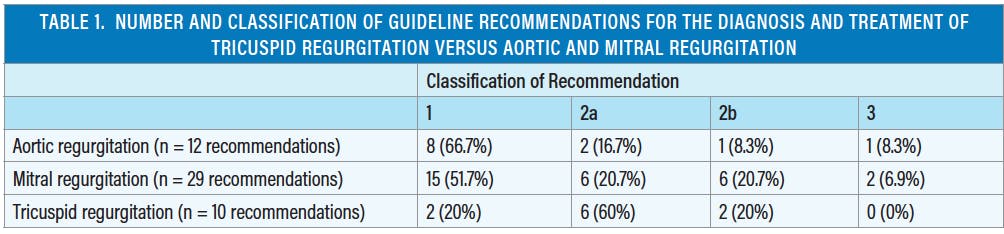
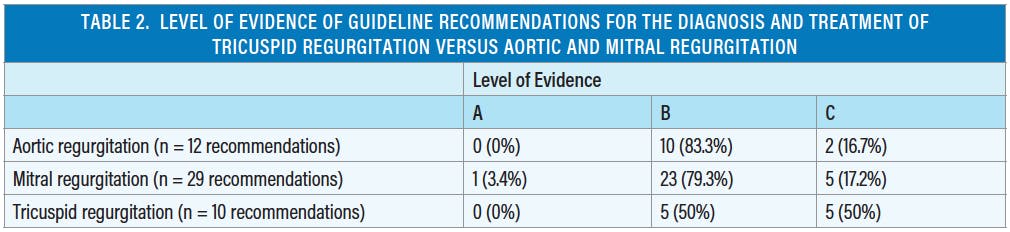
Tricuspid valve disease, particularly tricuspid regurgitation (TR), remains a major challenge in valvular heart disease. Surgical interventions for isolated TR have lagged compared to interventions for other valve diseases, and operative mortality remains high.1 Physicians remain hesitant about isolated surgical intervention on severe TR for multiple reasons. TR has historically been believed to be better tolerated compared to left-sided valve disease. Additionally, many have believed that treatment of left-sided disease would lead to the resolution of TR. However, evidence suggests severe TR is associated with increased heart failure (HF) hospitalizations and mortality when uncorrected.2 The majority of TR is secondary in etiology, commonly resulting from progressive pulmonary hypertension or dilated cardiomyopathies. As such, most patients with severe TR have a high burden of comorbidities. This places them at high risk of complications from surgical treatment of TR, including mortality, with multiple studies reporting an in-hospital mortality rate of approximately 10%.1,3 Importantly, there remains a lack of high level of evidence (LOE) demonstrating the efficacy of surgical interventions to treat severe TR (Table 1 and Table 2), particularly concerning which populations of patients with severe TR are most likely to benefit from intervention.
Emerging transcatheter tricuspid valve interventions (TTVIs) hold promise in alleviating severe TR and improving clinical outcomes without exposing patients to the risks of open surgical repair or replacement.4 With that said, existing and developing TTVI also have a lack of randomized data demonstrating efficacy and safety. Trials of TTVI are urgently needed to test whether existing and developing TTVI can improve quality of life (QOL) and survival in patients with severe TR.
GAPS IN EVIDENCE AND IMPLICATIONS FOR CLINICAL TRIALS
Although valve disease guidelines have often lacked high LOE to support their recommendations,5 this is particularly notable in tricuspid valve disease. There are relatively few data available to evaluate the efficacy and safety of medical therapies and surgical interventions for the treatment of severe TR. There are currently no class 1 recommendations for therapy of severe isolated TR.6 The only medical therapy recommendations for patients with severe primary TR remains diuretics (class of recommendation [COR] 2a, LOE C), whereas those with secondary TR should receive therapy targeted at the suspected cause of the TR (COR 2a, LOE C).6 Recommendations for surgical therapy include a class 2a recommendation for symptomatic stage D patients and a class 2b recommendation for asymptomatic stage C patients with progressive right ventricular (RV) dilation or RV systolic dysfunction. Thus, for randomized trials of TTVI among patients with primary TR, decisions will need to be made regarding (1) whether a surgical or medical comparator is more appropriate for patients at an acceptable surgical risk and (2) how to define and standardize adequate and appropriate medical therapy.
Unlike primary TR, guideline recommendations for therapy in secondary TR target treatment of the suspected cause of TR (COR 2a, LOE C),6 which may vary from atrial functional TR (TR caused by atrial enlargement, usually atrial fibrillation) to ventricular functional TR (TR caused by ventricular enlargement, usually from RV disease or pulmonary hypertension or left-sided disease). For surgical therapies, guidelines give a class 2a recommendation for valve surgery in patients with symptomatic stage D TR attributable to annular dilation and a class 2b recommendation for reoperation in patients with right-sided HF and stage D TR who have had previous left-sided valve surgery. Due to the lack of high-quality evidence and clear guideline recommendations regarding specific medical and surgical therapy in secondary TR, as well as the number of different etiologies of secondary TR, there is potential for wide variation in background medical therapies in these patients. This begs several questions for clinical trial design in secondary TR. First, given the variety of underlying comorbidities driving TR, should all patients with secondary TR be considered in clinical trials, or should only specific etiologies or subpopulations be considered? Second, what is the appropriate comparator for trials of TTVI in secondary TR? Is it medical therapy (and if so, which medical therapy) or surgical intervention in patients with acceptable surgical risk?
CHALLENGES IN TRIAL POPULATION SELECTION
Given the heterogeneity in causes of TR and limited guideline-directed medical therapy for TR, selecting the optimal target population for trials of TTVI is challenging. Although severe TR is predominately secondary to cardiomyopathies and pulmonary hypertension, event rates and potential change in symptoms are likely to vary greatly based on the etiology of a patient’s TR.7-9 Thus, if future trials were to include a broad group of patients across the spectrum of causes of TR without assessing for a balance in the etiologies of TR within the trial population, the trial risks a negative outcome with underlying heterogeneous treatment effect as a function of the underlying etiologies of TR. To circumvent this risk, investigators should consider two strategies: (1) prespecify the composition of any trial population to the etiologies of TR included via stratified randomization for designs inclusive of multiple etiologies, and (2) prespecify subgroup analyses within a given trial stratified by etiology of TR. This will allow clinicians and patients to evaluate the effectiveness in both a general severe TR population as well as stratified by specific etiologies of TR, where a benefit may be more or less pronounced.
Another critical consideration in trial population selection is the degree of TR compared to RV dysfunction. Lessons from trials in mitral regurgitation (MR) have shown that regurgitation out of proportion to impairment in ventricular function is more likely to have a mortality, HF, and quality-of-life benefit from transcatheter interventions versus medical therapy.10 Similar findings have been seen in small case series of surgical treatment of TR, with patients who have better RV function with lower rates of operative mortality and complications.11 A small registry analysis of TTVI also demonstrated a 1-year survival benefit for TTVI in patients with midrange RV function but not in those with severe or preserved RV function.12 As a result, initial trials of TTVI may need to limit trial populations to those with mild or perhaps moderate RV dysfunction.
Beyond the relative severity of TR versus RV function, appropriate assessment of TR severity represents both a challenge and opportunity. Ideally, for clinical trials, TR would be graded such that patients within the same severity grade would have similar prognoses to patient functional class, QOL, and mortality. As a corollary, the ideal grading system would adequately discriminate between reductions in TR that result in meaningful improvements in these same endpoints. Lastly, categories of TR should encompass similar ranges of measurement parameters, such as vena contracta and effective regurgitant orifice area (EROA). Multiple previous studies of TTVI have demonstrated that (1) patients with severe TR may have an EROA greater than twice the size of the current guideline-suggested value of 40 mm2, and (2) procedures resulting in residual TR remaining above the current guideline definition of severe are associated with clinically meaningful improvements in functional capacity and QOL.11,13,14 Thus, a five-stage classification of TR may offer a clearer understanding of clinically relevant degrees of TR severity, as well as the interplay between RV function, leaflet coaptation and chordal tethering, TR grade, and annular dilation. These potential advantages of the proposed five-grade system are critical to clinical trials in TR14; however, they may present challenges in translating the results of these studies to clinical practice in light of existing guidelines.
TRIAL DESIGN
Late-phase trials of tricuspid interventions compared to medical therapy or surgical repair or valve replacement are needed. Pivotal trials for transcatheter aortic valve replacement (TAVR) and MitraClip (Abbott) followed different paths in terms of design and comparators, in part based on the strength of the data supporting existing therapies. TAVR trials progressed from prohibitive-risk to low-risk surgical comparators because of the strength of the evidence in support of surgical aortic valve replacement (SAVR). Similarly, trials in degenerative MR have started with high/prohibitive-surgical-risk patients and are now progressing to lower-surgical-risk populations. However, in functional MR, where the strength of the evidence in support of surgical therapy is low and the strength of the evidence for medical therapy is comparatively higher, trials of transcatheter therapy have generally been compared against medical therapy. For isolated TR, in which evidence is lacking in both medical and surgical therapy, questions regarding the appropriate comparator remain. For trials of TTVI against medical therapy, there is a lack of a risk prediction tool or clinical consensus for determining the risk of short- and long-term mortality, making it important to define trial cohorts based on TR severity, RV and left ventricular function, and comorbidities, especially in secondary TR in which the underlying etiology may significantly impact prognosis. Similarly, for trials of TTVI against a surgical comparator, there is no multicenter validated risk score or clinical consensus for short- and long-term outcomes after isolated tricuspid valve surgery, making enrollment of a trial population with homogeneous risk more difficult.
An additional challenge facing future trials of TTVI includes enrollment after initial FDA approval of a transcatheter therapy for TR. Many trials of transcatheter interventions have struggled to enroll patients after initial pivotal trials are published and devices become available for commercial use. To combat this, regulatory agencies have entertained the use of real-world evidence for control arms. Large multicenter registries, such as the Society of Thoracic Surgeons Adult Cardiac Surgery Database, offer a potential source of historical data on tricuspid valve surgery. However, there is no large multicenter data source with historical control data for medical management of TR, and few studies have evaluated medical management of TR within claims-based data sets.2,4,12
The use of objective performance goals (OPGs) offers an alternative strategy for testing the efficacy of transcatheter interventions for TR without the issues of a control arm into which it would be difficult to enroll patients. A potential barrier to the effective use of OPGs is the lack of a clear literature precedent and unclear event rate targets for endpoints given that current data are limited to several small observational studies.2,15,16 Further research is needed to better define event rates within the medical and surgical treatment of TR if OPGs are to be a useful strategy in future trials of TR interventions.
ENDPOINTS IN TR INTERVENTIONS
Many endpoints in trials of TTVI can be drawn from previous trials of transcatheter valve disease and those that are standardized within the Valve Academic Research Consortium (VARC) criteria.17 However, there are notable differences between left- and right-sided valve disease that will affect endpoints of interest.18 In addition to traditional cardiovascular outcomes, endpoints focused on symptoms of right-sided HF should be key features of trials of TTVIs (Figure 1). End-organ targets related to venous congestion from severe TR include symptomatic peripheral edema, hepatic congestion, and renal function. Both short- and long-term effects from hepatic congestion are potential targets of endpoints, including coagulopathy, ascites requiring paracentesis, and progression to cirrhosis. Each of these endpoints will require careful definition and standardization as has previously been done for aortic valve disease and mitral valve disease in the VARC17 and Mitral Valve Academic Research Consortium19,20 documents, respectively.
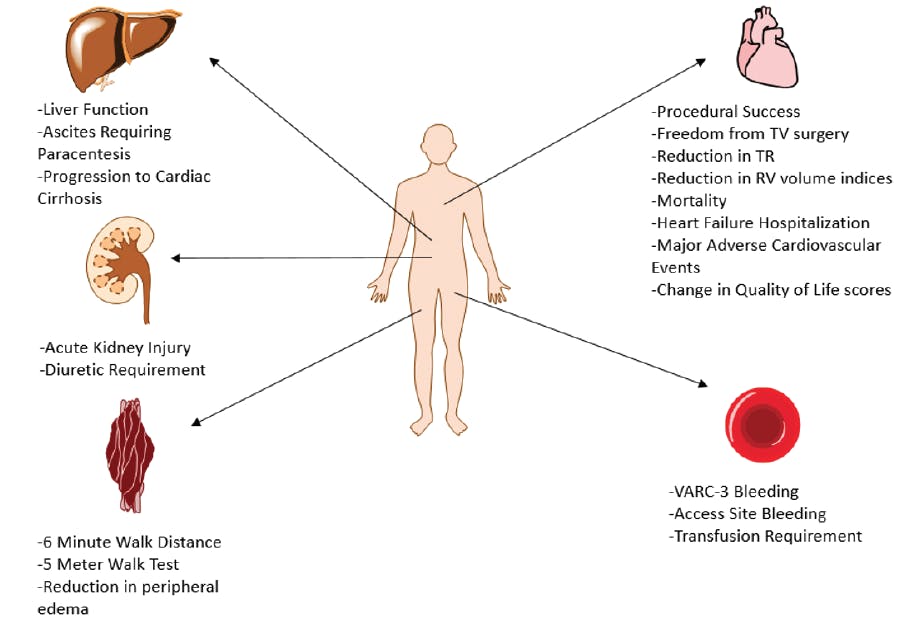
Figure 1. Potential endpoints for trials of TTVI. TV, tricuspid valve.
Some symptoms from TR remain hard to quantify as the patient experience from symptomatic severe TR has been poorly characterized. Patient-reported outcomes and improvement in functional status are likely to be important features of trials in TR interventions. Although there are currently no validated symptom questionnaires in TR, existing instruments such as the Kansas City Cardiomyopathy Questionnaire have been used to evaluate right-sided HF symptoms and comprise domains aimed at QOL and functional capacity. Although there is excitement about the potential of actigraphy as a measure of functional capacity in HF, valve disease, and TR trials, further work is necessary to standardize and validate actigraphy as an endpoint.
The high rates of comorbidities in patients with severe TR may complicate traditional time-to-event analyses as patients are likely to have recurrent hospitalizations and symptoms that may not be driven purely by their TR. One potential strategy for overcoming this limitation includes evaluating cumulative events for patients enrolled in trials. Alternatively, the use of a win ratio would allow for a hierarchical evaluation of a range of endpoints (from mortality to TR-specific QOL) within the primary outcome of the study. As pivotal studies within TTVI have developed, hierarchical endpoints have been used as the primary outcome in the TRILUMINATE study design.21
DESIGNS OF CURRENT PRE- AND POSTMARKET TTVI DEVICES AND IMPLICATIONS FOR CLINICAL TRIALS
Multiple transcatheter devices have been developed for or applied to the treatment of TR (Table 3). These devices are generally categorized as (1) direct annuloplasty devices, (2) coaptation enhancement devices, or (3) percutaneous valve replacement. Currently, limited feasibility and early phase studies are ongoing or have been completed for these devices.22-25 Pivotal studies are early in enrollment for some clip-based coaptation enhancement devices, as well as tricuspid valve replacement systems. However, no evidence is currently published directly comparing any of these devices to medical therapy, other transcatheter interventions, or surgical repair or replacement of the tricuspid valve.
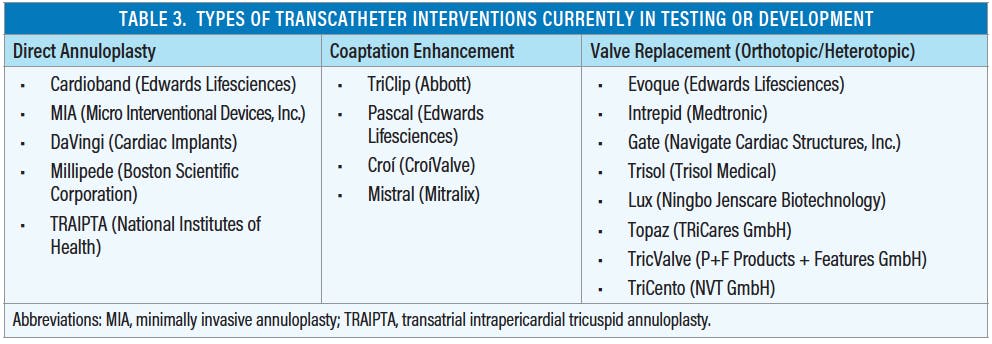
Although specific anatomic features may preclude the use of certain devices with certain patients, the overall trial design for pivotal trials is unlikely to be substantially different between devices. Instead, based on device design, specific safety and imaging endpoints may be appropriate. For instance, optimal imaging modalities and techniques for determining residual TR after TTVI may vary based on device strategy, with direct annuloplasty devices posing fewer technical challenges for echocardiography than leaflet clips (due to shadowing artifacts and creation of a double orifice). Similarly, concerning safety endpoints, a leaflet clip device could potentially result in leaflet perforation, whereas a direct annuloplasty device may impact the right coronary artery or perforation of the atria. After pivotal trials for specific devices, further studies will be needed to determine the optimal TTVI for particular etiologies of TR and particular patient conditions.
CONCLUSION
Severe TR is associated with worsening QOL, increased HF, and increased mortality when uncorrected. There are limited medical therapy options for severe TR, and surgery for isolated TR remains infrequent and associated with high in-hospital mortality. TTVI shows promise in safely reducing TR and improving survival. However, the evidence base for TTVI remains limited to small feasibility trials and observational data. Clinical trials to evaluate short- and long-term outcomes associated with TTVI are urgently needed to guide clinical care for patients with severe TR, but these trials face several challenges to achieve homogeneous patient populations and appropriate comparators and define right-sided specific endpoints.
1. Zack CJ, Fender EA, Chandrashekar P, et al. National trends and outcomes in isolated tricuspid valve surgery. J Am Coll Cardiol. 2017;70:2953-2960. doi: 10.1016/j.jacc.2017.10.039
2. Fender EA, Petrescu I, Ionescu F, et al. Prognostic importance and predictors of survival in isolated tricuspid regurgitation: a growing problem. Mayo Clin Proc. 2019;94:2032-2039. doi: 10.1016/j.mayocp.2019.04.036
3. Dreyfus J, Flagiello M, Bazire B, et al. Isolated tricuspid valve surgery: impact of aetiology and clinical presentation on outcomes. Eur Heart J. 2020;41:4304-4317. doi: 10.1093/eurheartj/ehaa643
4. Taramasso M, Benfari G, van der Bijl P, et al. Transcatheter versus medical treatment of patients with symptomatic severe tricuspid regurgitation. J Am Coll Cardiol. 2019;74:2998-3008. doi: 10.1016/j.jacc.2019.09.028
5. Tricoci P, Allen JM, Kramer JM, et al. Scientific evidence underlying the ACC/AHA clinical practice guidelines. JAMA. 2009;301:831-841. doi: 10.1001/jama.2009.205
6. Otto CM, Nishimura RA, Bonow RO, et al. 2020 ACC/AHA guideline for the management of patients with valvular heart disease: a report of the American College of Cardiology/American Heart Association Joint Committee on Clinical Practice Guidelines. Circulation. 2021;143:e72-e227. doi: 10.1161/CIR.0000000000000923
7. Muntane-Carol G, Taramasso M, Miura M, et al. Transcatheter tricuspid valve intervention in patients with right ventricular dysfunction or pulmonary hypertension: insights from the TriValve registry. Circ Cardiovasc Interv. 2021;14:e009685. doi: 10.1161/CIRCINTERVENTIONS.120.009685
8. Topilsky Y, Maltais S, Medina Inojosa J, et al. Burden of tricuspid regurgitation in patients diagnosed in the community setting. JACC Cardiovasc Imaging. 2019;12:433-442.
9. Prihadi EA, Delgado V, Leon MB, et al. Morphologic types of tricuspid regurgitation: characteristics and prognostic implications. JACC Cardiovasc Imaging. 2019;12:491-499.
10. Stone GW, Lindenfeld J, Abraham WT, et al. Transcatheter mitral-valve repair in patients with heart failure. N Engl J Med .2018;379:2307-2318. doi: 10.1056/NEJMoa1806640
11. Sala A, Lorusso R, Bargagna M, et al. Isolated tricuspid valve surgery: first outcomes report according to a novel clinical and functional staging of tricuspid regurgitation. Eur J Cardiothorac Surg 2021. doi: 10.1093/ejcts/ezab228
12. Schlotter F, Miura M, Kresoja KP, et al. Outcomes of transcatheter tricuspid valve intervention by right ventricular function: a multicentre propensity-matched analysis. EuroIntervention. 2021. doi: 10.4244/EIJ-D-21-00191
13. Winkel MG, Brugger N, Khalique OK, et al. Imaging and patient selection for transcatheter tricuspid valve interventions. Front Cardiovasc Med. 2020;7:60. doi: 10.3389/fcvm.2020.00060
14. Taramasso M, Gavazzoni M, Pozzoli A, et al. Tricuspid regurgitation: predicting the need for intervention, procedural success, and recurrence of disease. JACC Cardiovasc Imaging .2019;12:605-621. doi: 10.1016/j.jcmg.2018.11.03
15. Bartko PE, Arfsten H, Frey MK, et al. Natural history of functional tricuspid regurgitation: implications of quantitative Doppler assessment. JACC Cardiovasc Imaging 2019;12:389-397. doi: 10.1016/j.jcmg.2018.11.021
16. Prihadi EA, van der Bijl P, Gursoy E, et al. Development of significant tricuspid regurgitation over time and prognostic implications: new insights into natural history. Eur Heart J. 2018;39:3574-3581. doi: 10.1093/eurheartj/ehy352
17. VARC-3 Writing C, Genereux P, Piazza N, et al. Valve Academic Research Consortium 3: updated endpoint definitions for aortic valve clinical research. J Am Coll Cardiol. 2021;77:2717-2746. doi: 10.1016/j.jacc.2021.02.038
18. Hahn RT, Ben-Yehuda O, Leon MB. Endpoints for tricuspid regurgitation transcatheter therapy trials. Prog Cardiovasc Dis. 2019;62:479-81. doi: 10.1016/j.pcad.2019.11.019
19. Stone GW, Adams DH, Abraham WT, et al. Clinical trial design principles and endpoint definitions for transcatheter mitral valve repair and replacement: part 2: endpoint definitions: a consensus document from the Mitral Valve Academic Research Consortium. J Am Coll Cardiol. 2015;66:308-321. doi: 10.1016/j.jacc.2015.05.049
20. Stone GW, Vahanian AS, Adams DH, et al. Clinical trial design principles and endpoint definitions for transcatheter mitral valve repair and replacement: part 1: clinical trial design principles: a consensus document from the Mitral Valve Academic Research Consortium. J Am Coll Cardiol. 2015;66:278-307. doi: 10.1016/j.jacc.2015.05.046
21. TRILUMINATE Pivotal Trial. Clinicaltrials.gov website. Accessed June 12, 2021. https://clinicaltrials.gov/ct2/show/NCT03904147
22. Hahn RT, Kodali S, Fam N, et al. Early multinational experience of transcatheter tricuspid valve replacement for treating severe tricuspid regurgitation. JACC Cardiovasc Interv. 2020;13:2482-2493. doi: 10.1016/j.jcin.2020.07.008
23. Kodali S, Hahn RT, Eleid MF, et al. Feasibility study of the transcatheter valve repair system for severe tricuspid regurgitation. J Am Coll Cardiol. 2021;77:345-356. doi: 10.1016/j.jcin.2020.07.008
24. Nickenig G, Friedrichs KP, Baldus S, et al. Thirty-day outcomes of the Cardioband tricuspid system for patients with symptomatic functional tricuspid regurgitation: the TriBAND study. EuroIntervention. Published online May 18, 2021. doi: 10.4244/EIJ-D-21-0030
25. Nickenig G, Weber M, Lurz P, et al. Transcatheter edge-to-edge repair for reduction of tricuspid regurgitation: 6-month outcomes of the TRILUMINATE single-arm study. Lancet. 2019;394:2002-2011. doi: 10.1016/S0140-6736(19)32600-5
Advertisement
Advertisement