Advertisement
Advertisement
January/February 2026
Next-Generation Temporary Mechanical Circulatory Support for High-Risk PCI
Exploring next-generation tMCS platforms designed to deliver hemodynamic support for HRPCI and AMICS, emphasizing device innovation and evolving clinical evidence.
Patients undergoing high-risk percutaneous coronary intervention (HRPCI) are older, have more comorbidities (including left ventricular [LV] dysfunction), and present with advanced coronary disease, multivessel and/or left main disease, and severe calcification.1-3 Many of these patients are deemed ineligible for surgical revascularization, which increases the rate of high-risk percutaneous coronary revascularization.1-3 To treat this growing complex PCI patient population, the use of temporary mechanical circulatory support (tMCS) during HRPCI has increased in the past decade, primarily driven by the increased adoption of microaxial flow pumps.4 Despite widespread adoption, contemporary registry and cohort data indicate that complication rates, including bleeding, vascular injury, and renal dysfunction, have remained relatively unchanged.5
Trials and registries suggest that tMCS can stabilize hemodynamics and enable more complete revascularization, but the signal for improved outcomes is mixed and remains to be tested in large, randomized trials.6,7 In acute myocardial infarction complicated by cardiogenic shock (AMICS), the DanGer Shock trial recently demonstrated that early microaxial flow pump support (Impella CP; Abiomed, Inc.) improves survival.8 This improved survival came at the cost of higher rates of bleeding, limb ischemia, and renal complications. Although conducted in a shock population, the DanGer Shock trial highlights that current-generation devices can deliver meaningful hemodynamic support, but the associated complication rates remain significant.
The desire for greater hemodynamic support and lower access site complication rates with current tMCS devices is driving the development of next-generation platforms engineered to maintain or enhance circulatory support while reducing device-related complications.
DESIGN PRIORITIES FOR THE NEXT GENERATION OF tMCS
Designing the next generation of tMCS focuses on balancing three competing factors: access size, flow, and hemocompatibility. Pump miniaturization reduces bleeding and limb ischemia but limits the pump’s cross-sectional area, thereby reducing achievable flow. Smaller devices must therefore spin faster to maintain output, increasing shear stress and potentially leading to increased hemocompatibility-related complications, such as hemolysis and hemolysis-associated kidney injury, thrombosis, and acquired hematologic abnormalities. To address the inverse flow versus French size design conundrum, several next-generation devices expand inside the body, allowing delivery through a smaller sheath while achieving adequate flow at lower pump speeds. These platforms aim to decouple the insertion profile from the working pump diameter. Other systems emphasize cannula design and positioning to improve stability and reduce ventricular interaction, thereby lowering red blood cell hemolysis shear stress. The primary goal is to deliver high flow with minimal hemocompatibility-related complications through the smallest feasible arterial sheath to reduce bleeding and vascular complications.
Although many platforms are being developed for both HRPCI and cardiogenic shock (CS), the design targets for these indications are not identical. HRPCI typically involves elective support for 1 to 6 hours, with the primary goal of minimizing access size and vascular or bleeding complications as the risk of hemocompatibility-related complications is slightly less relevant with short-term use. In contrast, support in the setting of CS must deliver sustained high flow with robust hemocompatibility and stable device performance during prolonged use. The most versatile next-generation platforms will be those that meet access and safety priorities while providing durable support with low rates of hemocompatibility-related complications for use in CS.
NEXT-GENERATION tMCS DEVICES
Impella ECP
The Impella ECP device (Abiomed, Inc.) is an expandable, transvalvular, axial-flow pump designed to provide Impella CP–level support through a smaller arterial access (Figure 1). The 21-F pump is temporarily compressed for insertion and removal through a 9-F femoral sheath, with an external motor and flexible drive shaft. A soft, atraumatic cannula crosses the aortic valve without a wire and opens only when the pump is running. Future iterations are expected to be wire deliverable. At performance level P-9, the system provides an average flow of approximately 2.7 to 3.8 L/min, with peak systolic flows up to 5.5 L/min. The Impella ECP is intended for up to 6 hours of support in HRPCI.
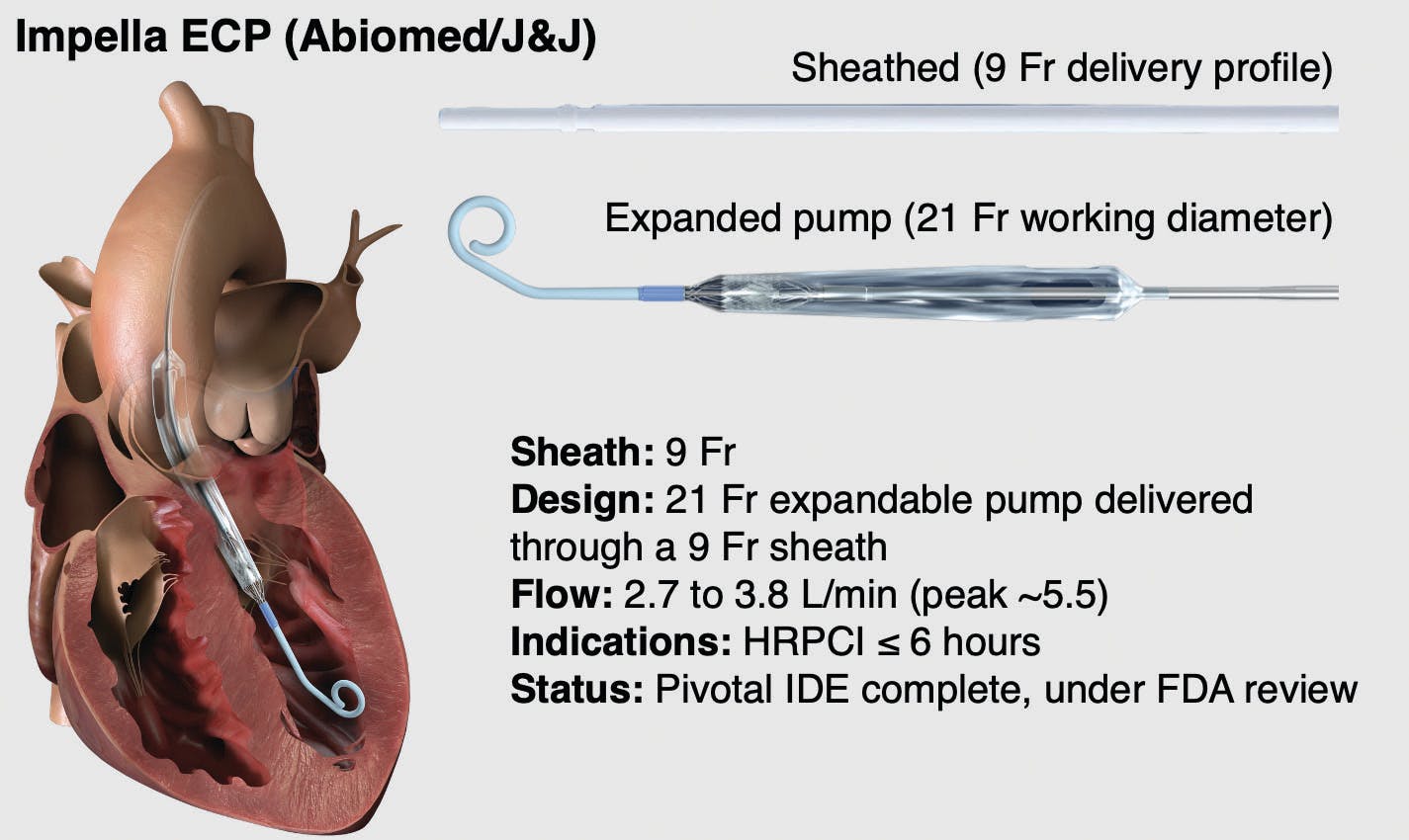
Figure 1. The Impella ECP device.
(Courtesy of Abiomed, Inc.)
The Impella ECP early feasibility study (NCT04477603) showed high technical success and acceptable short-term safety in patients undergoing HRPCI. Subsequently, the prospective, multicenter, pivotal investigational device exemption trial enrolled 256 hemodynamically stable patients undergoing HRPCI. The primary endpoint was 30-day major adverse cardiac and cerebrovascular events (MACCE) (death, stroke, myocardial infarction, or target vessel revascularization) tested against a performance goal of 24.4%. Among 238 patients, 30-day MACCE occurred in 6.3%, with an upper 95% confidence bound of 9.5%, meeting the prespecified performance goal. Device-related major bleeding (Bleeding Academic Research Consortium [BARC] ≥ 3) occurred in 5.9%.9
A continued access protocol is ongoing, and a premarket approval application has been submitted. Impella ECP remains investigational in the United States.
Elevate
The Elevate device (Magenta Medical) is a self-expanding, axial-flow pump device designed to provide high-output support through a 10-F femoral access (Figure 2). The pump is delivered over an 0.018-inch wire; once in the left ventricle, the device unsheathes to a 30-F pump. Elevate can deliver mean flows of approximately 5.4 L/min at a maximum rotational speed of 21,000 rpm, aiming to provide adequate support for HRPCI and AMICS.10
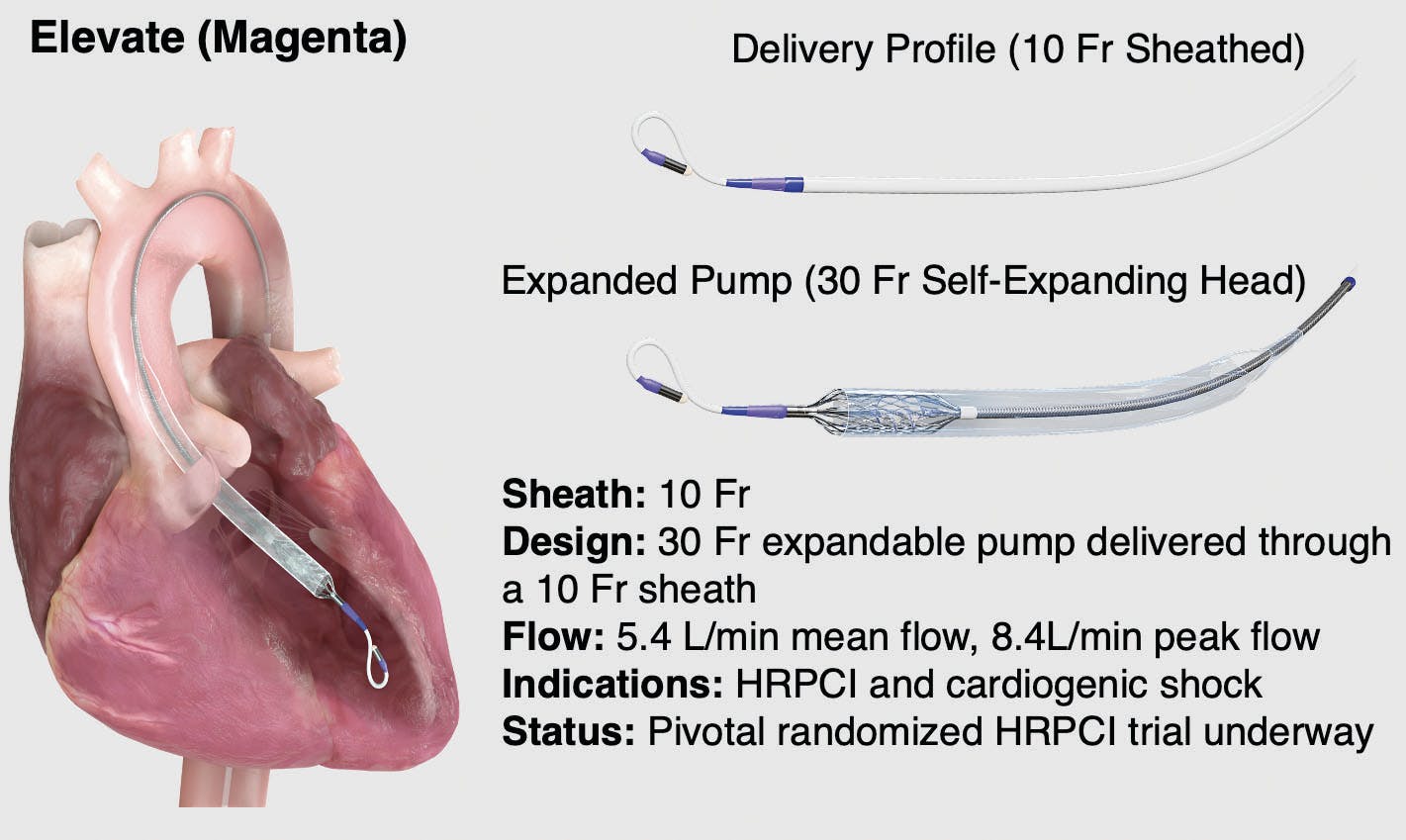
Figure 2. The Elevate device.
(Courtesy of Magenta Medical.)
In the first-in-human Elevate HRPCI study, 14 nonemergent HRPCI patients with LV dysfunction and complex anatomy underwent Elevate-supported procedures.10 There were no major device-related adverse events or deaths at 30 days. One patient (7%) had a BARC 3 access site bleed. ELEVATE III, a larger randomized trial (NCT07001332) is currently recruiting. Elevate is not yet commercially available.
Vitalyst
The Vitalyst system (Boston Scientific Corporation) is a next-generation transvalvular microaxial pump that aims to target HRPCI and AMICS. The device uses a 14-F pump with a 6- to 7-F drive line, a magnetically driven motor positioned in the ascending aorta, and a purgeless design (Figure 3). A novel inflow and outflow design and a double-bend shaft are intended to enhance positional stability and reduce hemolysis while providing > 4 L/min of flow at lower rotational speeds than currently approved pumps.
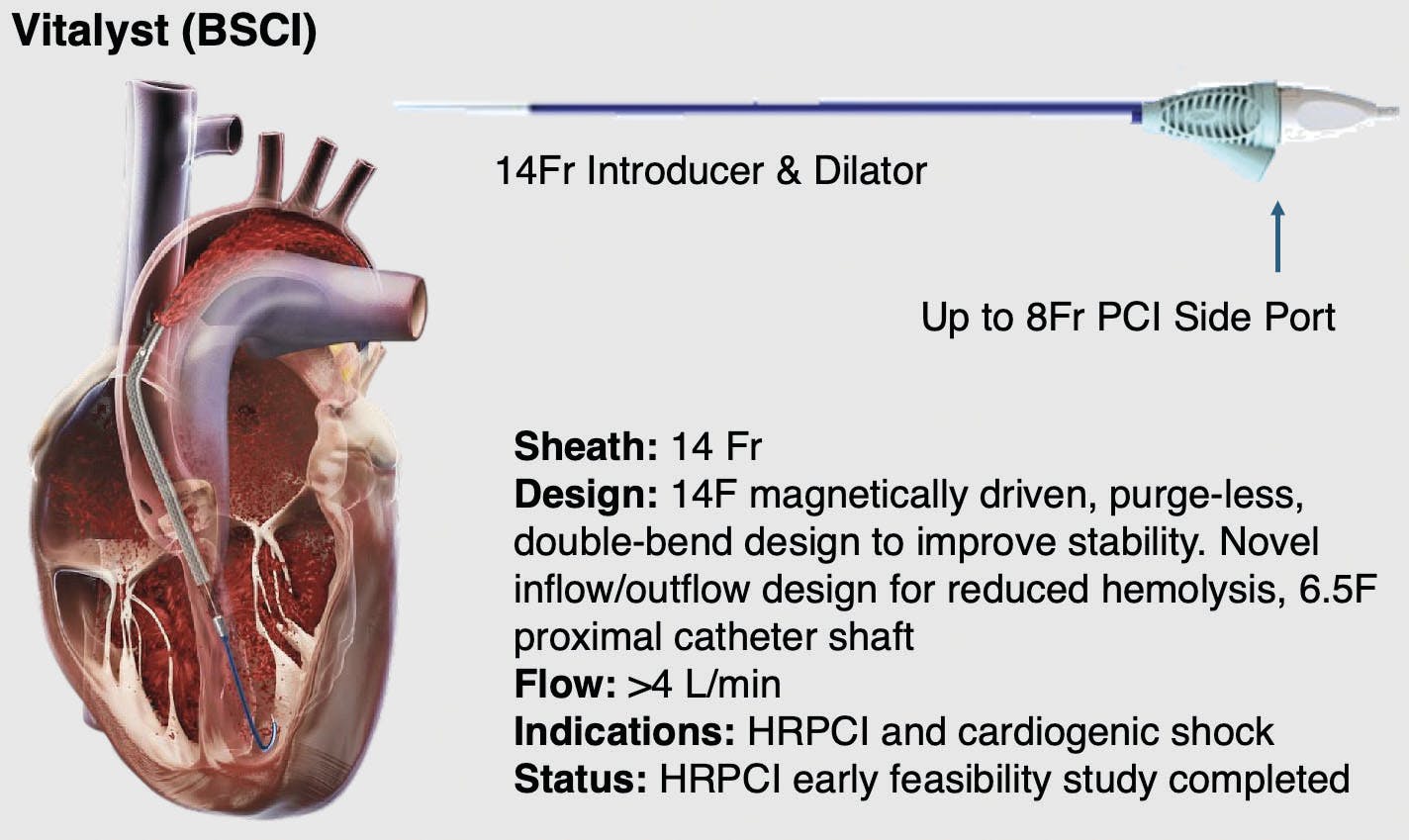
Figure 3. The Vitalyst device.
(Courtesy of Boston Scientific Corporation.)
The VITALYST early feasibility study is an open-label, single-arm trial in HRPCI patients with reduced LV ejection fraction and three-vessel disease, disease in the last remaining vessel, or unprotected left main.11 Technical success was achieved in all 15 patients, and clinical success through 72 hours or discharge was achieved in 14 of 15 (93%) patients. Major bleeding (BARC ≥ 3) occurred in three of 15 (20%) patients. Vitalyst remains investigational, with plans for a larger pivotal trial.
Supira
The Supira system (Supira Medical) is a low-profile, high-flow, next-generation tMCS device designed to deliver support through a 10-F femoral introducer (Figure 4). The catheter has a small delivery profile that expands to a 22-F axial flow pump across the aortic valve, with the impeller in the aortic position. It is delivered over an 0.018-inch wire into the left ventricle and is engineered for flexibility to limit LV wall interaction while providing up to 5.5 L/min of continuous flow for HRPCI and CS.
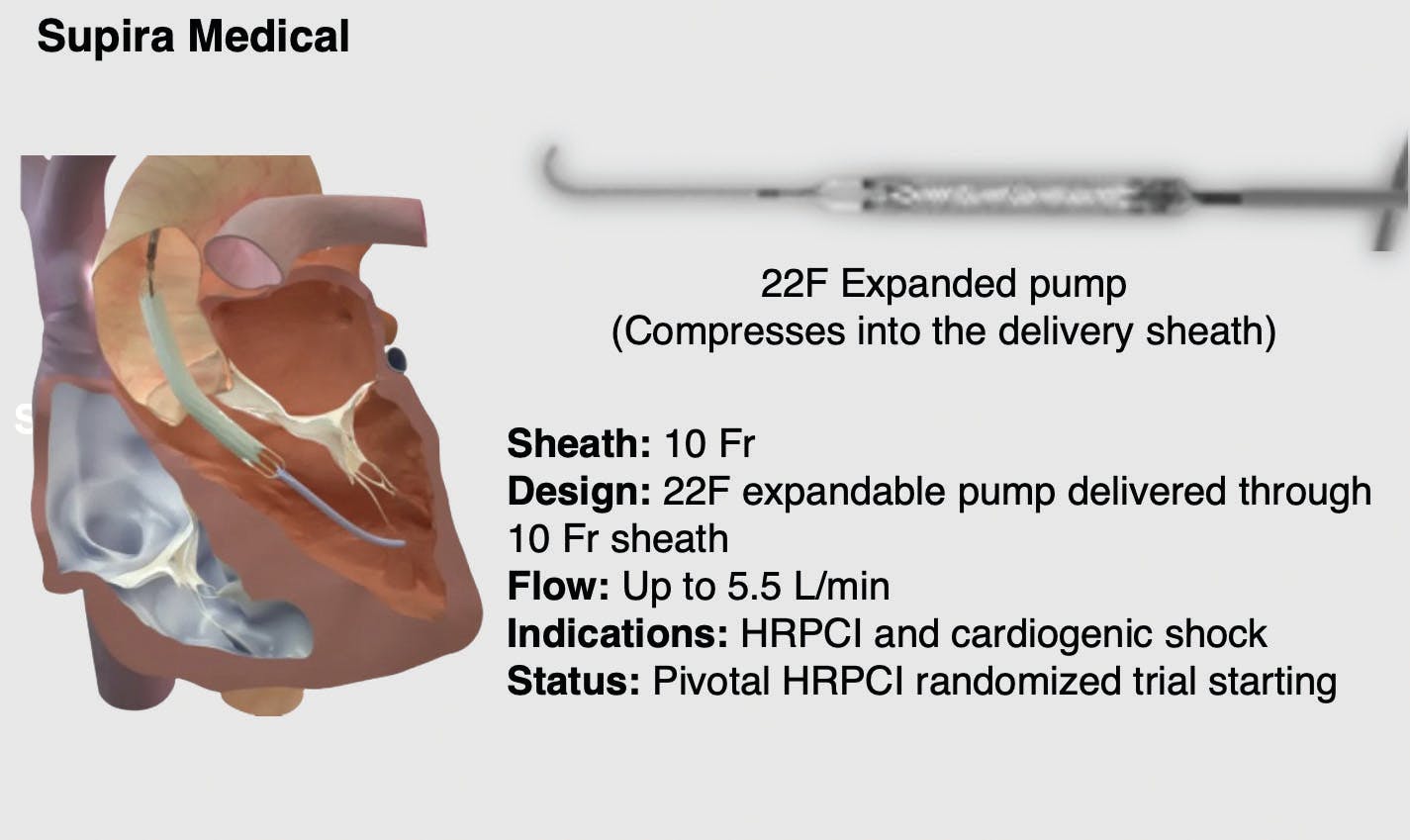
Figure 4. The Supira device.
(Courtesy of Supira Medical.)
The US SUPPORT I early feasibility study is a prospective, single-arm, multicenter trial in hemodynamically stable patients undergoing elective or urgent HRPCI in whom the heart team has recommended support.12 In the first 15 patients, procedural success was achieved in all cases. Major device-related adverse events from device insertion to removal occurred in one of 15 (6.7%) patients. Major bleeding (BARC ≥ 3) occurred in two of 15 (13.3%) patients. A larger pivotal HRPCI trial is planned, and the Supira system remains investigational.
NyokAssist
The NyokAssist (magAssist) is a small-bore transvalvular device designed to deliver 3.5 L/min mean flow and 5 L/min peak flow through a 9-F arterial sheath. The pump uses an expandable, catheter-mounted impeller that opens to 24 F in the LV outflow tract and ascending aorta, driven by an external motor (Figure 5).
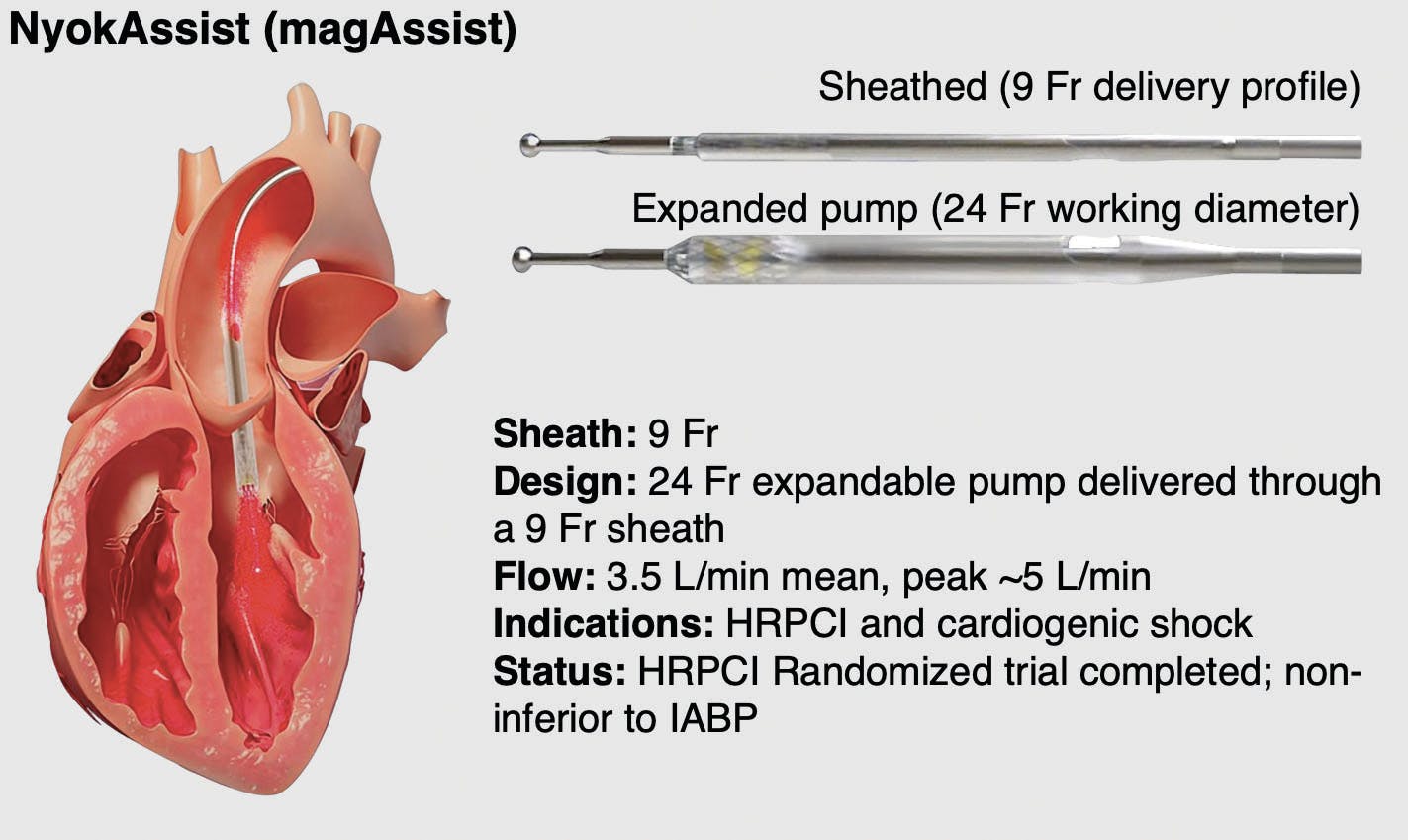
Figure 5. The NyokAssist device.
(Courtesy of magAssist.)
The SAVE-PCI trial is a prospective, randomized study conducted in China comparing NyokAssist with intra-aortic balloon pump (IABP) in 236 hemodynamically stable HRPCI patients with LV dysfunction or planned rotational atherectomy and high-risk anatomy (unprotected left main, last remaining vessel, or three-vessel disease). At 30 days, MACCE rates were low and similar between groups (4.4% with NyokAssist and 2.6% with IABP), with no major vascular complications.13 Follow-up is ongoing, and NyokAssist remains investigational. A protocol for a United States early feasibility study has been submitted and is expected to begin in 2026.
Cory P4
The Cory P4 system (Kardion Inc.) is a percutaneous support system that provides LV support during HRPCI using a transvalvular axial flow pump. Design details remain limited.
The PICANTE pivotal trial (NCT06445608) is a randomized study comparing Cory P4 with an established tMCS device in patients undergoing HRPCI who require hemodynamic support. The primary endpoint is 30-day safety and effectiveness, including MACCE and major vascular or bleeding events. PICANTE is currently enrolling, and Cory P4 remains investigational.
Narwhal Medical
Narwhal Medical is developing an ultra-low-profile, catheter-based device intended to have the smallest delivery sheath of any current device. Concept designs use self-expanding impeller elements that can be delivered through a very small arterial access and then expanded to an efficient pumping diameter, with the goal of providing meaningful LV support while broadening eligibility in patients with small or diseased vessels.
As of late 2025, the Narwhal platform remains in preclinical development with no registered human trials. The device is explicitly aimed at high-risk patients who are currently ineligible for conventional devices, with first-in-human evaluation planned once bench and animal testing is complete.
CONCLUSION
Next-generation devices for HRPCI aim to provide higher levels of hemodynamic support through smaller arterial access, often by separating the arterial insertion profile from the working pump diameter. If these design goals are realized, more patients with complex anatomy or challenging peripheral vasculature may become candidates for HRPCI, with a lower risk of vascular and hemocompatibility-related complications.
Ongoing trials, including ELEVATE III, SAVE-PCI, PICANTE, PROTECT IV, CHIP-BCIS3, and other dedicated HRPCI studies of newer platforms, will help determine whether tMCS-assisted revascularization translates into improved survival, lower MACCE rates, and better quality of life.13-15 As these data emerge, the next generation of novel devices has the potential to make complex PCI safer and more broadly accessible, while refining patient selection for an HRPCI strategy.
1. Moscardelli S, Masoomi R, Villablanca P, et al. Mechanical circulatory support for high-risk percutaneous coronary intervention. Curr Cardiol Rep. 2024;26:233-244. doi: 10.1007/s11886-024-02029-2
2. Di Muro FM, Bellino M, Esposito L, et al. Role of mechanical circulatory support in complex high-risk and indicated percutaneous coronary intervention: current indications, device options, and potential complications. J Clin Med. 2024;13:4931. doi: 10.3390/jcm13164931
3. Schäfer A, Alasnag M, Giacoppo D, et al. High-risk percutaneous coronary intervention in patients with reduced left ventricular ejection fraction deemed not suitable for surgical revascularisation: a clinical consensus statement from the EAPCI in collaboration with the ESC Working Group on Cardiovascular Surgery. EuroIntervention. 2025;21:22-34. doi: 10.4244/EIJ-D-23-01100
4. Zeitouni M, Marquis-Gravel G, Smilowitz NR, et al. Prophylactic mechanical circulatory support use in elective percutaneous coronary intervention for patients with stable coronary artery disease. Circ Cardiovasc Interv. 2022;15:e011534. doi: 10.1161/CIRCINTERVENTIONS.121.011534
5. Lemor A, Dabbagh MF, Cohen D, et al. Rates and impact of vascular complications in mechanical circulatory support. Catheter Cardiovasc Interv. 2022;99:1702-1711. doi: 10.1002/ccd.30150
6. O’Neill WW, Kleiman NS, Moses J, et al. A prospective, randomized clinical trial of hemodynamic support with Impella 2.5 versus intra-aortic balloon pump in patients undergoing high-risk percutaneous coronary intervention: the PROTECT II study. Circulation. 2012;126:1717-1727. doi: 10.1161/CIRCULATIONAHA.112.098194
7. O’Neill WW, Anderson M, Burkhoff D, et al. Improved outcomes in patients with severely depressed LVEF undergoing percutaneous coronary intervention with contemporary practices. Am Heart J. 2022;248:139-149. doi: 10.1016/j.ahj.2022.02.006
8. Møller JE, Engstrøm T, Jensen LO, et al. Microaxial flow pump or standard care in infarct-related cardiogenic shock. N Engl J Med. 2024;390:1382-1393. doi: 10.1056/NEJMoa2312572
9. Kaki A. Impella ECP pivotal trial: results of a novel 9 Fr expandable microaxial pump in high-risk PCI. Presented at: Transcatheter Cardiovascular Therapeutics (TCT); October 27-30, 2024; Washington, DC.
10. Schwammenthal E, Gogorishvili I, Sievert H, et al. High-output mechanical circulatory support in left main interventions: the Magenta Elevate high-risk PCI first-in-human study. JACC Cardiovasc Interv. 2024;17:2851-2862. doi: 10.1016/j.jcin.2024.09.017
11. Croce K. VITALYST next-generation percutaneous LVAD: early feasibility results in high-risk PCI. Presented at: Technology and Heart Failure Therapeutics (THT) 2025; February 11-13, 2025; Boston, Massachusetts.
12. Kandzari DE. Safety and feasibility of the Supira system in high-risk percutaneous coronary interventions: 90-day results from the US SUPPORT I early feasibility study. Presented at: Transcatheter Cardiovascular Therapeutics (TCT); October 25-28, 2025; Washington, DC.
13. Wang R. A prospective, randomized clinical trial of hemodynamic support with a newly developed PVAD versus IABP in patients undergoing high-risk percutaneous coronary intervention. Presented at: Transcatheter Cardiovascular Therapeutics (TCT); October 25-28, 2025; San Francisco, California.
14. Mangner N, Sharma SK, O'Connor C, et al. Mechanical circulatory support in high-risk elective PCI: rationale and design of the PROTECT IV trial. EuroIntervention. 2025;21:e1244-d1258. doi: 10.4244/EIJ-D-25-00486
15. Ryan M, Ezad SM, Webb I, et al; CHIP-BCIS3 investigators. Percutaneous left ventricular unloading during high-risk coronary intervention: rationale and design of the CHIP-BCIS3 randomized controlled trial. Circ Cardiovasc Interv. 2024;17:e013367. doi: 10.1161/CIRCINTERVENTIONS.123.013367
Advertisement
Advertisement