Advertisement
Advertisement
January/February 2025
AI for Lesion Assessment and Multivessel PCI Strategy
Leveraging AI to refine lesion assessment and enhance decision-making in coronary interventions.
By Ahmed Elamin, MBBS, MRCP; Hany Eissa, MBBCh, MRCP; Mohammed O A. Abubakr, MBBS, FRCP; Ryan Moran, MBBS, MRCP; Gabor G. Toth, MD, PhD, FESC; and Sadeek S. Kanoun Schnur, MBBCh, MRCP
Coronary revascularization via percutaneous coronary intervention (PCI) has significantly advanced, achieving ever-improving outcomes for high-risk patients, including those with multivessel disease and significant comorbidities. However, it remains essential that unnecessary interventions are avoided, particularly in stable coronary artery disease (CAD) or chronic coronary syndromes (CCS). Accurate lesion assessment and confirmation of functional significance are essential for optimal outcomes. Traditionally, visual assessment of coronary stenosis through coronary angiography has been used to determine whether physiologic evaluation is necessary to assess a lesion’s functional relevance. However, this method is subject to interobserver and intraobserver variability, leading to inconsistent evaluations of lesion severity. This article explores how artificial intelligence (AI) could enhance lesion assessment, integrate functional assessments, and optimize clinical decision-making in coronary interventions.
BACKGROUND
The benefits of coronary revascularization in acute coronary syndromes are clear. However, its role in addition to optimal medical therapy (OMT) for CCS or stable CAD compared to OMT alone has been a matter of debate and has faced significant challenges.1,2 Historically, reversing myocardial ischemia has been considered imperative due to its significant impact on outcomes, making its accurate identification crucial.3
Fractional flow reserve (FFR) was developed as a surrogate for identifying coronary lesion physiological significance (ie, those inducing substantial ischemia in a myocardial territory large enough to have potential prognostic implications), refining diagnostic accuracy. Its validation was first established in the 1990s,4 and its utility in guiding PCI in CCS was firmly demonstrated in three landmark FFR studies, showing improved outcomes when revascularization decisions are guided by physiologic relevance of lesions.5-7 Regardless of one’s stance on the debate, it is evident that if PCI is being considered in CCS, it should be reserved only for physiologically significant lesions. Historical evidence from Hachamovitch et al suggests that patients with > 10% to 12.5% ischemic myocardium may derive a survival benefit from revascularization compared to medical therapy alone.3 Figure 1 illustrates the timeline of landmark myocardial ischemia studies and their clinical applicability in guiding revascularization decisions in CCS.8
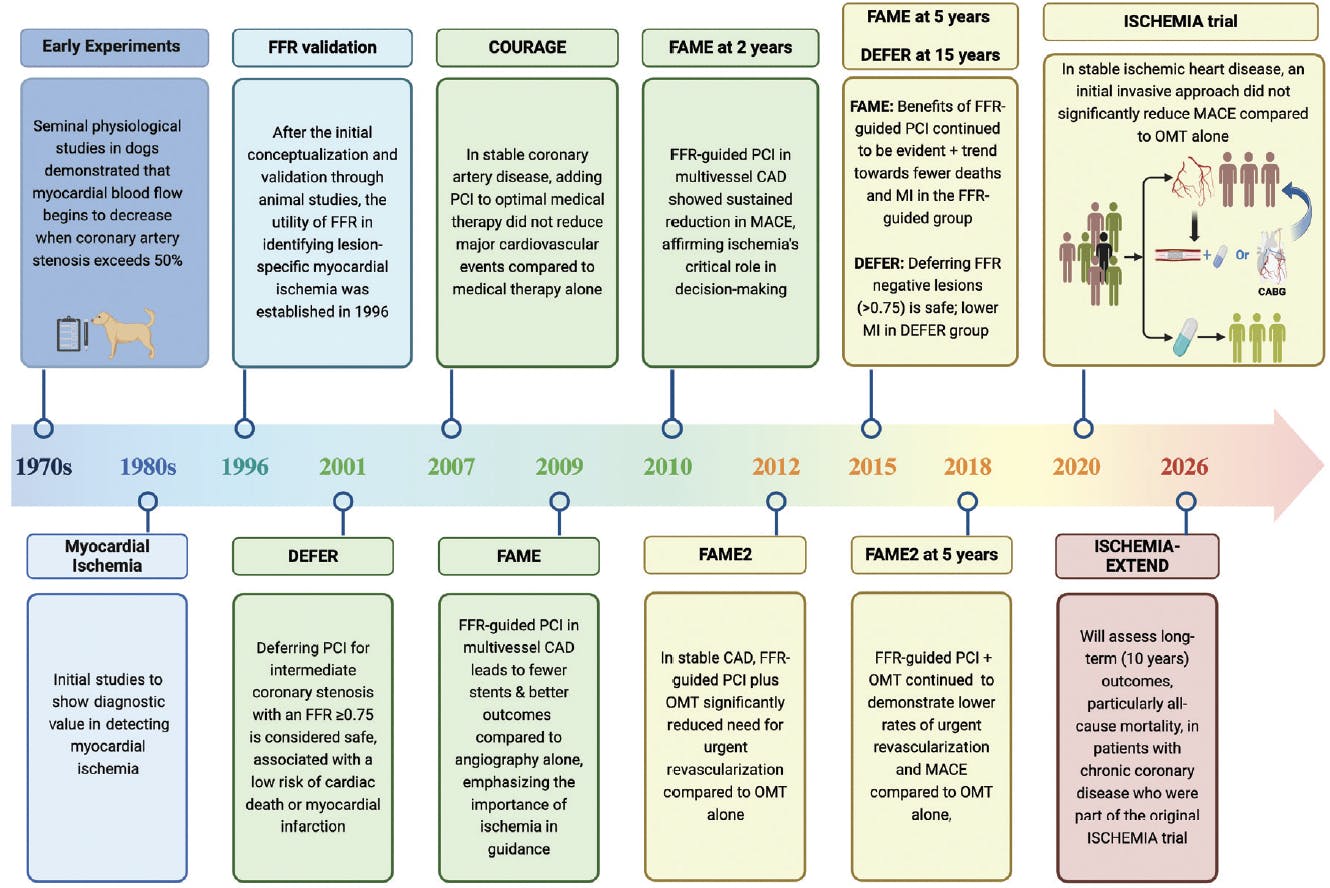
Figure 1. Chronology of landmark myocardial ischemia trials and their clinical impact on guiding revascularization in stable CAD. MACE, major adverse cardiovascular events; MI, myocardial infarction. Created in BioRender. Kanoun Schnur, S. (2025) https://biorender.com/e72d879
Beyond physiologic assessments, other aspects of lesion interrogation also continue to evolve, including intravascular imaging (IVI) techniques such as intravascular ultrasound (IVUS) and optical coherence tomography (OCT). These tools not only aid in diagnosis but also form an increasingly essential part of the interventional armamentarium—facilitating effective lesion preparation and optimal stent deployment by providing detailed anatomic insights such as precise lesion characterization, stent sizing, and detecting complications like dissections or stent malapposition. Both modalities have been shown to reduce major adverse cardiovascular events when used to guide PCI, particularly in procedurally challenging lesions.9-11
AI has evolved significantly since its inception, enabling machines to perform complex tasks such as data analysis, comprehension, and decision-making. The term artificial intelligence was coined in 1956 during the Dartmouth Conference, which is considered the birthplace of the AI field.12 Machine learning (ML) is a subset of AI that focuses on developing algorithms that allow computers to learn from data and improve over time without explicit programming. The concept of ML began to take shape in the 1950s and 1960s, with early efforts including the creation of programs that could play games, like checkers. Notably, Arthur Samuel at IBM developed a checkers-playing program in 1959, one of the earliest demonstrations of ML.13 Deep learning (DL) is an advanced subset of ML that uses multilayered neural networks to mimic human brain processes. Its roots trace back to the 1940s with the foundational work of Warren McCulloch and Walter Pitts on logical neural networks, which conceptualized how neurons might work together to perform computations.14
Although these foundational developments in AI have been instrumental, recent advancements in ML algorithms, increased computational power, and availability of large data sets have propelled AI into practical applications across various industries, including medicine, enhancing decision-making and operational efficiencies. Through ML and DL, early studies have demonstrated that AI’s diagnostic accuracy in some applications can match that of human experts.15,16 Figure 2 illustrates the hierarchy of AI methods, ranging from ML and DL to convolutional neural networks. One example in the figure is image interpretation, which involves these methods along with image enhancement algorithms (IEAs) to enable advanced feature extraction and enhance clinical imaging interpretation.17
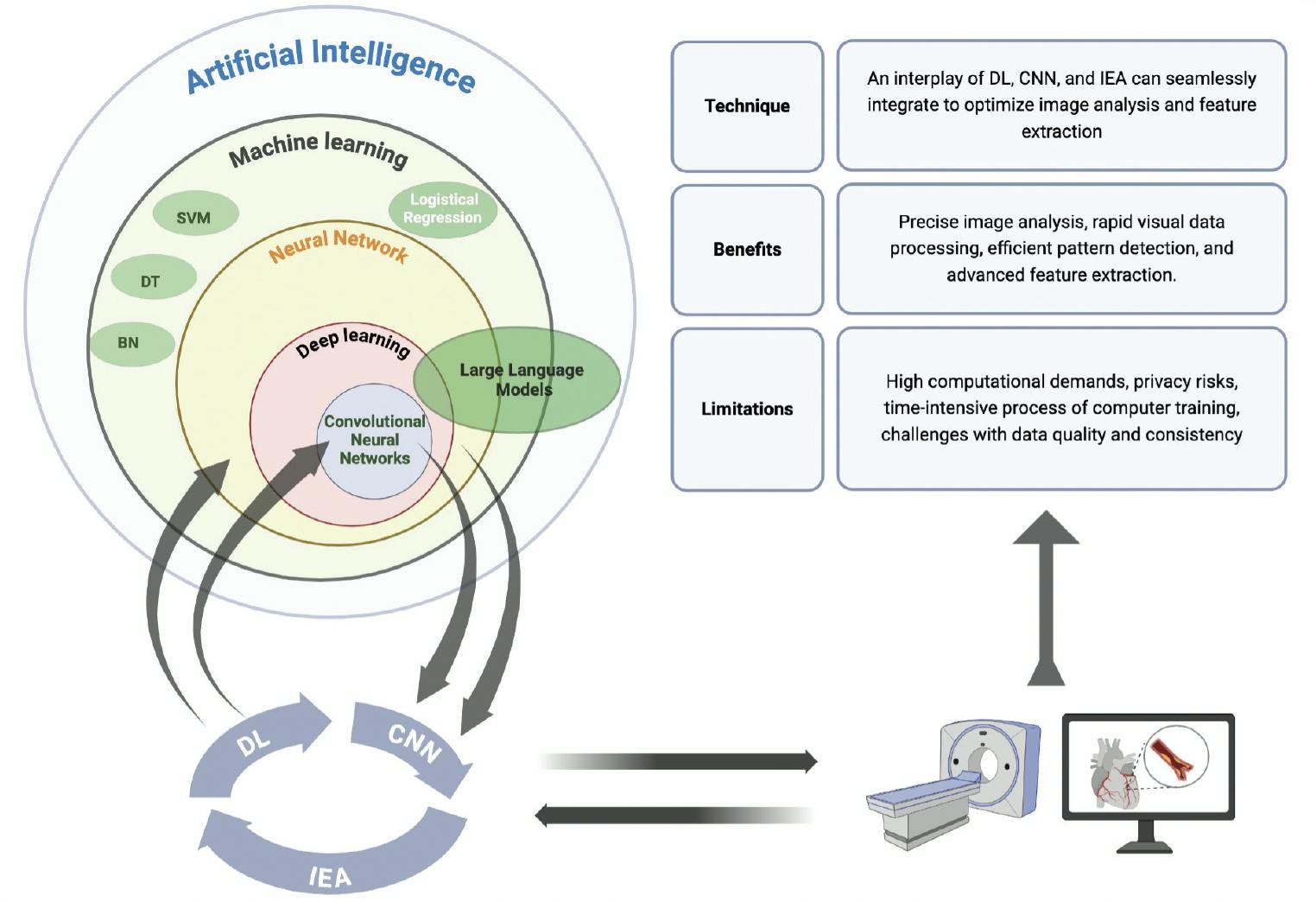
Figure 2. The hierarchy and integration of AI methods and their application in image analysis and feature extraction. The interplay of convolutional neural networks (CNN), DL, and IEA enhances clinical imaging interpretation. BN, Bayesian networks; DT, decision trees; LLM, large language models; SVM, support vector machines. Created in BioRender. Kanoun Schnur, S. (2025) https://biorender.com/w97c861
CURRENT LANDSCAPE AND DEVELOPMENTS
Coronary Physiology
Overtreatment via unnecessary revascularization and undertreatment by missing significant lesions both pose short- and long-term risks.5-7,18 Furthermore, the limitations of coronary angiography in identifying functionally significant stenoses19,20 have highlighted the superiority of function-guided strategies over angiography alone. However, functional guidance use remains low, varying by country, center, and operator. Adenosine-free methods have somewhat simplified the process, but functional guidance still only accounts for 15% to 20% of cases, even in high-use centers.19
Recent advancements have introduced non–wire-based functional assessments, such as quantitative flow ratio (QFR), which are increasingly integrated into clinical practice. These methods enable both immediate and retrospective evaluations of coronary stenosis functional relevance using three-dimensional angiogram-based calculations.21 However, the connection between visual assessment of coronary stenosis and a physiologic evaluation still depends on operator judgment. As studies suggest, all severities of stenosis angiographically can be misclassified functionally, not just moderate ones.22,23
IVI and Coronary Physiology
In the assessment of coronary lesion physiology, FFR serves as a reference standard against which other invasive physiologic measurements are validated. Therefore, establishing relationships between IVI cutoffs and physiologic flow correlations has been attempted by comparing IVUS-derived metrics such as minimal lumen area (MLA) to FFR values. Studies have explored MLA thresholds to predict ischemia-inducing lesions; however, these correlations can vary based on factors like lesion location, vessel size, and patient demographics, with studies overall showing a moderate correlation.24
Other recent studies have explored the correlation between OCT and FFR beyond MLA measurements. Notably, OCT-derived virtual FFR calculations use algorithms based on fluid dynamics equations to estimate pressure gradients across coronary lesions. Additionally, the optical flow ratio (OFR) method employs OCT imaging to estimate FFR without the need for pressure wires or hyperemic agents, offering a less invasive approach to functional assessment. Studies indicate that OFR correlates effectively with FFR, potentially surpassing QFR and conventional parameters in evaluating coronary stenosis significance. Crucially, the diagnostic accuracy of OFR seems unaffected by prior stent implantation.25
AI and Cardiology
As with all aspects of clinical medicine, cardiology involves managing vast data sets to craft tailored management plans and treat patients effectively. Although still in its early adoption phase in cardiology, AI is increasingly utilized, with several applications gaining validation and regulatory approval. For example, AI algorithms have been developed to interpret electrocardiograms with high accuracy.15,16 Devices like KardiaMobile (AliveCor) have even received FDA clearance for AI-driven ECG interpretation capabilities.
In interventional cardiology, DL is increasingly being explored to enhance procedural planning and execution. However, the majority of studies to date are small scale, typically from single centers and often lacking external independent validation.26
FUTURE DIRECTIONS
Integration of AI in cardiology, especially PCI, could address several key challenges faced by clinicians in daily practice. One significant issue is the variability in interpretation of clinical data and particularly in coronary angiography and other diagnostic tests, which can lead to inconsistent PCI planning and strategy selection. This variability arises from both interobserver differences between cardiologists and intraobserver variability within the same cardiologist.
AI, through DL and ML algorithms, offers a promising solution to standardize and enhance interpretation of diagnostic data—for instance, the identification of subtle patterns in angiographic images that might be otherwise interpreted differently by operators. By providing a more consistent analysis, AI may significantly reduce variability in decision-making processes. Figure 3 highlights the potential strategic points for AI integration to optimize diagnostic and therapeutic processes, including use of essential patient data such as demographics, frailty, and clinical symptoms to perform a comprehensive risk assessment.27,28 Additionally, AI could enhance PCI decision-making and strategy adoption by facilitating the selection of optimal interrogation techniques and seamlessly integrating coronary angiography–derived physiologic assessments. This ensures that only ischemia-producing stenoses are considered for revascularization, addressing a key limitation in coronary physiologic interrogation: the reliance on operator “eyeballing” to make decisions regarding lesion-level coronary physiologic assessments. The challenges in coronary physiology extend beyond the limited adoption of interrogative assessments for moderate lesions to include the functional misclassification of unsuspected lesions. This includes visually or anatomically mild stenoses that are functionally relevant but not selected for PCI, as well as visually severe stenoses that prompt stenting despite being functionally insignificant. These issues persist even in high-volume centers utilizing pressure wire studies and non–wire-based assessments.22,23 Furthermore, such misclassifications can impact SYNTAX scoring, which may potentially influence decisions regarding coronary artery bypass grafting (especially in multivessel disease) as well as make predictions regarding graft patency.29,30
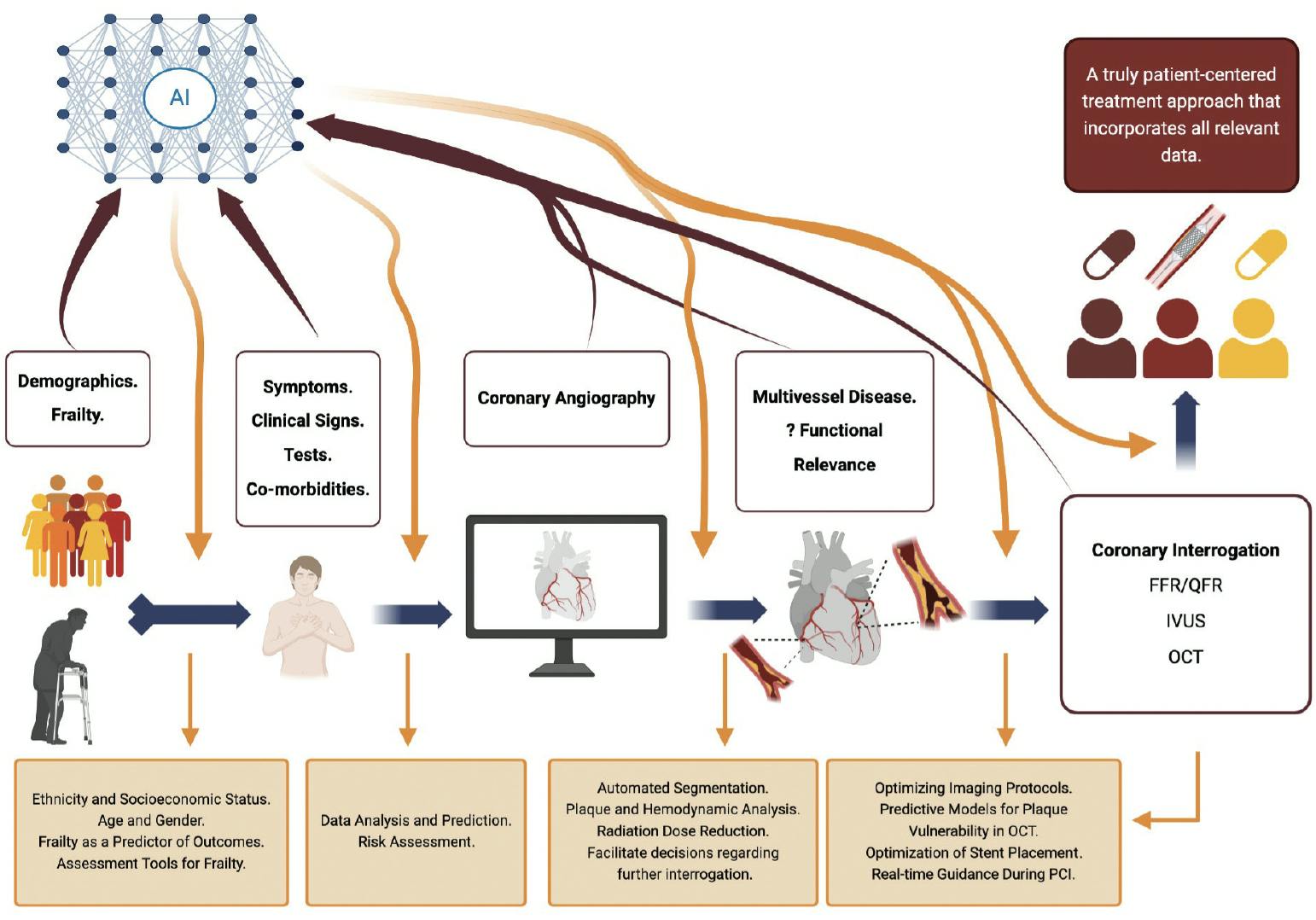
Figure 3. Types of data and potential AI inputs in clinical decision-making for multivessel disease, stable coronary disease, and PCI strategy selection. Created in BioRender. Kanoun Schnur, S. (2025) https://biorender.com/v97i577
Recent research has increasingly focused on plaque vulnerability and its role in predicting acute plaque rupture and myocardial infarction. OCT allows for the identification of plaque characteristics associated with vulnerability, including thin fibrous caps, large lipid cores, and inflammatory cell infiltration.31 However, the practical application of OCT findings during PCI is often hindered by a lack of expertise, and the time-sensitive nature of OCT analysis can impede swift decision-making. To address these challenges, AI-assisted OCT software platforms are being developed to enhance image interpretation and streamline the PCI workflow. For instance, Ultreon 2.0 (Abbott) uses AI to automate detection of key vascular features. This automation aims to reduce the cognitive load on physicians, enabling both experienced and inexperienced operators to interpret OCT images more efficiently.
CHALLENGES AND CONSIDERATIONS
Integration of AI in cardiovascular medicine presents significant regulatory challenges, particularly concerning patient safety and data privacy. The European Union has recently introduced the AI Act, which adopts a risk-based approach with requirements that scale according to the potential risk posed by AI systems. AI-enabled medical devices are classified as high risk and must comply with stringent criteria, including risk management, cybersecurity, data quality, human oversight, and quality management. While necessary, there is potential that this may hinder development and integration of AI in mainstream cardiovascular medicine. The European Society of Cardiology is actively addressing these challenges by engaging with the European Commission to clarify accountability and monitoring responsibilities, validate clinical evidence, assess data set quality, develop educational programs for health care professionals, and establish a European Union infrastructure to ensure data quality.32 AI-enabled medical devices in the United States face similar rigorous regulatory demands through the FDA, focusing on safety, effectiveness, and cybersecurity in their design and function.
CONCLUSION
Significant progress has been made in coronary physiology assessment and IVI. The integration of AI into these domains holds promise for standardizing interpretations and facilitating appropriate revascularization decisions. However, to fully realize and implement these technologies in clinical practice, further large-scale, multicenter studies with external validation are necessary.
1. Boden WE, O’Rourke RA, Teo KK, et al. Optimal medical therapy with or without pci for stable coronary disease. N Engl J Med. 2007;356:1503-16 doi: 10.1056/NEJMoa070829
2. Maron DJ, Hochman JS, Reynolds HR, et al. Initial invasive or conservative strategy for stable coronary disease. N Engl J Med. 2020;38:1395-1407. doi: 10.1056/NEJMoa1915922
3. Hachamovitch R, Hayes SW, Friedman JD, et al. Comparison of the short-term survival benefit associated with revascularization compared with medical therapy in patients with no prior coronary artery disease undergoing stress myocardial perfusion single photon emission computed tomography. Circulation. 2003;107:2900-2907. doi: 10.1161/01.CIR.0000072790.23090.41
4. Pijls NHJ, de Bruyne B, Peels K, et al. Measurement of Fractional flow reserve to assess the functional severity of coronary-artery stenoses. N Engl J Med. 1996;334:1703-1708. doi: 10.1056/NEJM199606273342604
5. Zimmermann FM, Ferrara A, Johnson NP, et al. Deferral vs. performance of percutaneous coronary intervention of functionally non-significant coronary stenosis: 15-year follow-up of the DEFER trial. Eur Heart J. 2015;36:3182-3188. doi: 10.1093/eurheartj/ehv452
6. van Nunen LX, Zimmermann FM, Tonino PAL, et al. Fractional flow reserve versus angiography for guidance of PCI in patients with multivessel coronary artery disease (FAME): 5-year follow-up of a randomised controlled trial. Lancet. 2015;386:1853-1860. doi: 10.1016/S0140-6736(15)00057-4
7. Xaplanteris P, Fournier S, Pijls NHJ, et al. Five-year outcomes with PCI guided by fractional flow reserve. N Engl J Med. 2018;379:250-259. doi: 10.1056/NEJMoa1803538
8. Kanoun Schnur SS, Achim A, Toth GG. Clinical application of results of the ISCHEMIA trial. Trends Cardiovasc Med. 2023;33:125-130. doi: 10.1016/j.tcm.2021.10.011
9. Stone GW, Maehara A, Lansky AJ, et al. A prospective natural-history study of coronary atherosclerosis. N Engl J Med. 2011;364:226-235. doi: 10.1056/NEJMoa1002358
10. Zhang J, Gao X, Kan J, et al. Intravascular ultrasound versus angiography-guided drug-eluting stent implantation: the ULTIMATE trial. J Am Coll Cardiol. 2018;72:3126-3137. doi: 10.1016/j.jacc.2018.09.013
11. Ali ZA, Maehara A, Généreux P, et al. Optical coherence tomography compared with intravascular ultrasound and with angiography to guide coronary stent implantation (ILUMIEN III: OPTIMIZE PCI): a randomised controlled trial. Lancet. 2016;388:2618-2628. doi: 10.1016/S0140-6736(16)31922-5
12. McCarthy J, Minsky, ML, Rochester N, Shannon CE. A proposal for the Dartmouth summer research project on artificial intelligence. AI Magazine. 1955;27:12. doi: 10.1609/aimag.v27i4.1904
13. Weiss EA. Biographies: eloge: Arthur Lee Samuel (1901-90). IEEE Ann Hist Comput. 1992;14:55-69. doi: 10.1109/85.150082
14. Schmidhuber J. Deep learning in neural networks: an overview. Neural Netw. 2015;61:85-117. doi: 10.1016/j.neunet.2014.09.003
15. Hughes JW, Olgin JE, Avram R, et al. Performance of a convolutional neural network and explainability technique for 12-lead electrocardiogram interpretation. JAMA Cardiol. 2021;6:1285. doi: 10.1001/jamacardio.2021.2746
16. Hannun AY, Rajpurkar P, Haghpanahi M, et al. Cardiologist-level arrhythmia detection and classification in ambulatory electrocardiograms using a deep neural network. Nat Med. 2019;25:65-69. doi: 10.1038/s41591-018-0268-3
17. Lüscher TF, Wenzl FA, D’Ascenzo F, et al. Artificial intelligence in cardiovascular medicine: clinical applications. Eur Heart J. 2024;45:4291-4304. doi: 10.1093/eurheartj/ehae465
18. Zimmermann FM, Omerovic E, Fournier S, et al. Fractional flow reserve-guided percutaneous coronary intervention vs. medical therapy for patients with stable coronary lesions: meta-analysis of individual patient data. Eur Heart J. 2019;40:180-186. doi: 10.1093/eurheartj/ehy812
19. Toth GG, Johnson NP, Wijns W, et al. Revascularization decisions in patients with chronic coronary syndromes: results of the second international survey on interventional strategy (ISIS-2). Int J Cardiol. 2021;336:38-44. doi: 10.1016/j.ijcard.2021.05.005
20. Toth GG, Toth B, Johnson NP, et al. Revascularization decisions in patients with stable angina and intermediate lesions: results of the international survey on interventional strategy. Circ Cardiovasc Interv. 2014;7:751-759. doi: 10.1161/CIRCINTERVENTIONS.114.001608
21. Westra J, Andersen BK, Campo G, et al. Diagnostic performance of in-procedure angiograpy-derived quantitative flow reserve compared to pressure-derived fractional flow reserve: the FAVOR II Europe-Japan study. J Am Heart Assoc. 2018;7:e009603. doi: 10.1161/JAHA.118.009603
22. Curzen N, Rana O, Nicholas Z, et al. Does routine pressure wire assessment influence management strategy at coronary angiography for diagnosis of chest pain? Circ Cardiovasc Interv. 2014;7:248-255. doi: 10.1161/CIRCINTERVENTIONS.113.000978
23. Kanoun Schnur SS, Pranevičius R, Stark C, et al. Operator decision-making in angiography-only guided revascularization for lesions not indicated for FFR: a QFR-based functional assessment in chronic coronary syndrome. Front Cardiovasc Med. Published online February 26, 2024. doi: 10.3389/fcvm.2024.1336341
24. Ben-Dor I, Torguson R, Gaglia MA, et al. Correlation between fractional flow reserve and intravascular ultrasound lumen area in intermediate coronary artery stenosis. EuroIntervention. 2011;7:225-233. doi: 10.4244/EIJV7I2A37
25. Huang J, Emori H, Ding D, et al. Diagnostic performance of intracoronary optical coherence tomography-based versus angiography-based fractional flow reserve for the evaluation of coronary lesions. EuroIntervention. 2020;16:568-576. doi: 10.4244/EIJ-D-19-01034
26. Molenaar MA, Selder JL, Nicolas J, et al. Current state and future perspectives of artificial intelligence for automated coronary angiography imaging analysis in patients with ischemic heart disease. Curr Cardiol Rep. 2022;24:365-376. doi: 10.1007/s11886-022-01655-y
27. Soong JTY, Tan LF, Soh RYH, et al. Development and validation of machine learning-derived frailty index in predicting outcomes of patients undergoing percutaneous coronary intervention. IJC Heart Vasc. 2024;55:101511. doi: 10.1016/j.ijcha.2024.101511
28. Borovac JA, Kovacic M, Harb S. Use of machine learning algorithms to predict outcomes among frail patients undergoing percutaneous coronary intervention: are we there yet? IJC Heart Vasc. 2024;55:101538. doi: 10.1016/j.ijcha.2024.101538
29. Andreka J, Maaroufi A, Bertolone D, et al. Impact of preoperative quantitative flow ratio on long term coronary artery bypass grafts patency. Eur Heart J. 2024;45(suppl 1):ehae666.2321. doi: 10.1093/eurheartj/ehae666.2321
30. Tian M, Xu B, Chen L, et al. Quantitative flow ratio and graft outcomes of coronary artery bypass grafting surgery: a retrospective study. J Thorac Cardiovasc Surg. 2024;168:121-132.e10. doi: 10.1016/j.jtcvs.2023.04.011
31. Kubo T, Ino Y, Mintz GS, et al. Optical coherence tomography detection of vulnerable plaques at high risk of developing acute coronary syndrome. Eur Heart J Cardiovasc Imaging. Published online February 23, 2021. doi: 10.1093/ehjci/jeab028
32. van Kolfschooten H, van Oirschot J. The EU artificial intelligence act (2024): implications for healthcare. Health Policy. 2024;149:105152. doi: 10.1016/j.healthpol.2024.105152
Advertisement
Advertisement