Advertisement
Advertisement
2025 Digital Exclusive No. 3
Pearls and Pitfalls to a Hub-and-Spoke Model for Cardiogenic Shock
Leaders in shock care offer insights into the use of a hub-and-spoke model to treat time-sensitive cases.
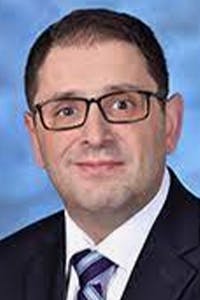
With Saraschandra Vallabhajosyula, MD, MSc; Shubhadarshini Pawar, MBBS, MPH; Behnam N. Tehrani, MD; Lindsey Cilia, MD; Alexander G. Truesdell, MD; Gerin R. Stevens, MD, PhD, FACC, FHFSA; and Robert O. Roswell, MD, FACC, FACP


PEARL 1. Early Transfer Saves Lives
Time-sensitive escalation is the cornerstone of shock care. “Hub” centers often offer advanced mechanical circulatory support, invasive hemodynamics, and multidisciplinary expertise—resources that may be limited at “spoke” sites. When patients are transferred early in their clinical course, before multiorgan failure sets in, outcomes improve dramatically.
PEARL 2. Shared Protocols Build Stronger Networks.
The best hub-and-spoke systems don’t just move patients—they move knowledge. Creating unified shock protocols across the network helps spoke teams recognize, triage, and stabilize patients rapidly. Regular training, feedback loops, and joint case reviews build trust and improve care at every level of the system.
PEARL 3. Hubs Deliver Efficiency—Not Just Complexity
Transferring a critically ill patient doesn’t have to mean higher costs or longer stays. With experienced teams and streamlined workflows, hub centers often reduce redundant testing, avoid delays in therapy, and shorten recovery times.
PITFALL 1. Transfer Delays Can Be Deadly.
Shock patients deteriorate quickly. Delays in recognition, activation, or transportation erase the benefits of centralization. Every spoke hospital should have clear criteria for shock team activation, and every minute spent waiting matters. Build systems that favor action.
PITFALL 2. Disparities Start at Triage.
Not every patient has equal access to transfer. Women, older adults, and those with atypical presentations may be underrecognized or underreferred. Systems should audit transfer patterns and actively work to close these equity gaps.
PITFALL 3. Spokes Need More Than a Phone Number.
A successful spoke hospital isn’t just a waypoint—it’s an extension of the network. When spokes lack tools, training, or buy-in, the whole system suffers. Regular education, simulation-based training, two-way closed feedback, and communication support help spoke centers stabilize patients and make timely decisions.

PEARL 1. Develop a Uniform Treatment Algorithm.
Given the high early mortality associated with cardiogenic shock, rapid identification of the shock state (via bedside physical examination and point-of-care laboratory tests and ultrasound evaluation) and triage to best initial therapies is paramount. Protocols should be simple and understandable to prehospital, emergency department, critical care, and cardiac specialty personnel. They should be tailored to shock etiology (eg, acute myocardial infarction, acute or chronic heart failure, valvular disease, with or without cardiac arrest or superimposed vasodilatory shock), phenotype, and stage. Such protocols will speed and homogenize decision-making regardless of time of day or day of week.
More detailed data collection via early invasive hemodynamic and metabolic assessment will drive next-step decision-making regarding coronary angiography, percutaneous coronary intervention, cardiac surgery, and mechanical circulatory support. In the end, the keys to a successful protocol are simplicity, binary decision points, appropriate initial triage (eg, to the cardiac catheterization laboratory, operating room, cardiac intensive care unit, futility and palliation), and ongoing active reassessment.
PEARL 2. Identify the Members of the Local and Regional Cardiogenic Shock Team.
Cardiogenic shock is a multiorgan system disease state. Similar to the management of trauma, sepsis, stroke, pulmonary embolism, and other time-sensitive lethal syndromes, the optimal management of cardiogenic shock requires the expertise and consultative services of multiple cardiovascular and noncardiovascular specialties. Although the composition of the cardiogenic shock team may vary from one center to another, key members who have been identified by early adopters of team-based cardiogenic shock care have included emergency and hospitalist medicine, cardiovascular critical care, interventional cardiology, advanced heart failure, and cardiac surgery. While each discipline may be primarily dedicated to select aspects of management, successful cardiogenic shock teams collaborate in a longitudinal manner throughout each patient’s care journey, from shock to survival to home.
PEARL 3. Partner With Medical and Administrative Leadership.
When it comes to implementing a regionalized network of care for cardiogenic shock, it is important to partner with the hospital or health system’s medical and administrative leadership to ensure that clinical and executive goals are fully aligned. This includes the use of a SWOT (strengths, weaknesses, opportunities, and threats) analysis to understand current gaps in clinical care and potential barriers to improving outcomes. Given the resource-intensive nature of cardiogenic shock management, it is important to understand the finances involved and to identify the personnel and tools needed to deliver optimal care across a network that may span multiple different institutions and health systems.
PEARL 4. Participate in Collaborative Outreach and Ensure Easy Access.
Once you have identified the geography of your regional cardiogenic shock network, it is important to actively and personally engage with spoke hospital providers, leaders, and administrators to identify the current state of cardiogenic shock care and opportunities for care optimization. In addition to sharing cardiogenic shock protocols, it is incumbent on the level 1 center to ensure ease of access via a “1-call” shock telephone number (similar to current 911 emergency medical services, law enforcement, and fire systems) to facilitate expedited multidisciplinary specialty consultation and/or transfer planning. Finally, it is important for the cardiogenic shock team at the regional hub center to communicate regularly with the referring spoke institutions and ensure that patients who survive the hospitalization return to the care of their local medical teams.
PEARL 5. Collect and Disseminate Data.
Keys to process and outcomes improvement in cardiogenic shock are data collection and development of quality assurance and quality improvement (QA/QI) meetings and mechanisms, also known as “after-action reviews.” In these forums, cases are reviewed and, through rigorous data collection, opportunities for process improvement are identified. Ideally, both hub and spoke centers should participate in these QA/QI meetings to provide bidirectional feedback. Finally, it is important for centers leading cardiogenic shock networks to collect, disseminate, and ideally publish their data, as these findings can improve local and regional care and inform the development of multicenter registries and pragmatic clinical designs aimed at better understanding optimal care delivery models for cardiogenic shock on a national level.


PEARL 1. Cardiogenic Shock Occurs in the Community.
Community hospitals (“spoke”) serve as the initial point of contact for many patients presenting with cardiogenic shock and are essential to provide rapid delivery of care. It is well recognized that the first 6 hours of presentation is a high-risk period known as the “golden hours” of cardiogenic shock; therefore, the ability of a community hospital to recognize and deploy a cardiogenic shock network and transfer to a higher level of care is important.
PEARL 2. Cooperative Care Builds the Network.
The creation of a regional shock network will improve access for patients with cardiogenic shock to higher-level centers that can offer advanced heart failure therapies. This collaboration should be centered around an integrative approach to care, including emergency medical services and tiered-level hospitals. Sharing shock protocols and offering phone or telehealth support to tier 2 and 3 hospitals allows the tier 1 center to enable faster decision-making, more efficient transfers, better use of resources, and use of evidence-based care.
PEARL 3. Quality Improvement is a Core Principle of Cardiogenic Shock Programs.
Regional cardiogenic shock programs should include data tracking to create registries for quality improvement practices. Such aggregated data can be used to improve outcomes by standardizing practices across the network. Like the morbidity & mortality conferences used in clinical practice, a cardiogenic shock call debrief is an important method to review opportunities for improvement for the clinical and administrative teams and should include members from both the spoke and hub.
PITFALL 1. Avoid Ivory Tower Syndrome.
Local (level 3) community hospitals don’t have the same breadth of expertise and access to therapies as the level 1 and 2 centers. This means that cases of cardiogenic shock may be missed, or there may be delays in transfer to receive advanced care. It is of great importance to share protocols and offer 24/7/365 phone or telehealth support leveraging the expertise available at the hub site.
PITFALL 2. Perfection is the Enemy of Progress.
Patients who present to a level 1 hub in cardiogenic shock will have faster access to diagnostic testing that may not be available at a spoke site. Don’t delay transfer waiting for the “complete” picture of the patient. A spoke site should provide the essential information needed to understand the clinical picture, and the hub should avoid excessive data requests that may lead to unnecessary delays.
Advertisement
Advertisement
Latest Digital Exclusives