Advertisement
Advertisement
2025 Digital Exclusive No. 3
A Decade of Quality Improvement: The National Cardiogenic Shock Initiative
Babar Basir, DO, FACC, FSCAI, shares insights into the development and growth of the NCSI, discussing its impact on cardiogenic shock care over the past 10 years, as well as future endeavors.
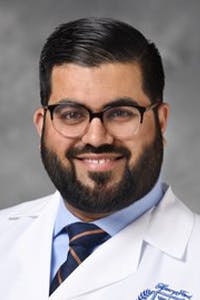
What were the main issues being encountered with cardiogenic shock treatment/survival that necessitated the implementation of the National Cardiogenic Shock Initiative (NCSI)?
In 2015 when we were conceptualizing the NCSI, approximately 50% of patient with acute myocardial infarction complicated by cardiogenic shock (AMI-CS) died during their hospitalization. There was also significant variability in the use of mechanical circulatory support (MCS) devices, and when such devices were used, they were used without a system of care and typically in end-stage shock that was refractory to multiple interventions and when patients were already experiencing multisystem organ failure.
Please briefly describe how the NCSI algorithm works. How does it differ from how most institutions are approaching cardiogenic shock?
The NCSI protocol emphasizes three important principles: (1) rapid identification and activation of the catheterization laboratory in patients with AMI‐CS; (2) early utilization of MCS (ie, before escalating vasoactive agents and before percutaneous coronary intervention); and (3) routine use of invasive hemodynamics (ie, a pulmonary artery catheter) to guide clinical decision‐making, including MCS weaning and escalation.1
I am not aware of any programs that were routinely using a shock protocol at the time the NCSI started. Fast forward 10 years, I think it is a growing trend.2 Similarly, after the results of the DanGer Shock trial, which demonstrated an improved survival for patients treated with early MCS,3 I think the NCSI protocol is the current standard of care in AMI-CS management.4
Beyond the immediate survival benefits, what are the long-term outcomes and quality-of-life considerations for patients treated under the NCSI protocol?
Unfortunately, despite the high early survival (~70%), patients continued to experience morbidity and mortality due to their shock, and at 1 year, 50% of patients were alive in the NCSI. This emphasizes the need for continued close monitoring in the outpatient setting, ideally in a dedicated multidisciplinary cardiogenic shock post-discharge clinic, where patients can be considered for uptitration of guideline-directed medical therapy and selective consideration for complete revascularization, defibrillators, and advanced heart failure therapies as needed.
With a couple of years following initial publication, how would you describe the evolution of care at centers that are part of the NCSI?
When the NCSI started 10 years ago, centers that participated in the study were a “coalition of the willing.” These centers were early adopters who believed that a shock protocol emphasizing the use of early MCS guided by invasive hemodynamics was the best way of caring for shock patients. Many centers involved in the NCSI are now at the “tip of the spear” as Bill O’Neill, MD, likes to say, advancing shock management at the highest levels. For example, Henry Ford Hospital shared outcomes from a cardiology-inclusive extracorporeal membrane oxygenation (ECMO) program so patients can be escalated rapidly if needed.5 Dr. David Wohns from Corewell Health is on the verge of creating a system-wide shock program across the state of Michigan within their health care system. Dr. Iyad Isseh, a heart failure specialist at Inova in Virginia, has been leading a postdischarge shock clinic and monitoring how close monitoring and care can enhance survival in shock survivors. I am very proud of all the people and centers involved in the NCSI, and I thank them immensely for their contributions toward advancing this field.
What primary challenges have you encountered in implementing and standardizing the NCSI protocol across diverse medical centers, particularly in addressing variations in resources and expertise?
There were lots of challenges. Some sites thought the protocol made sense but lacked the institutional authority and buy-in from colleagues to make an impactful change in their hospital.
Other sites had the support but needed to create a more organized system of care using a “cardiogenic shock team” to provide their hospitals with clinicians who were comfortable with large-bore MCS device implantation and management. Dr. Alex Truesdell and colleagues who were involved early in the NCSI come directly to mind. I give him and other leaders a lot of credit because they put in extra work—including taking extra call—to help support colleagues as they learned how to safely use these devices and manage shock.
Most importantly, though, there was rightful skepticism from those who wanted more definitive data from a randomized clinical trial, as the NCSI protocol was largely based on data from observational studies and our clinical experience.
What advice would you share with a center looking to implement a shock protocol?
The biggest advice is to just do it. The playbook is there, and centers around the world have seen the benefits of such an approach.6 Track your outcomes, identify your champions, create buy-in, hire a shock coordinator if you can, and create a monthly shock meeting for continued quality improvement. Learn and grow together with your team, because shock is the ultimate team sport!
Do you think there is a need for more dedicated cardiogenic shock teams, as we’ve seen with pulmonary embolism response teams? What might be the stumbling blocks to more widespread use?
The answer is YES! We need dedicated shock teams because we are so specialized these days that we cannot expect all our partners to understand the nuances of shock care. Just like I am not familiar with the nuances of structural heart interventions, which I don’t perform, we need dedicated multidisciplinary shock teams who can act early and rapidly to reverse their cardiogenic shock by all means available to us.
In the years since the initial pilot study was presented at ACC.17, the group has put out numerous publications detailing insights from the NCSI. Can you walk us through the current scope of the group’s research plans?
I am so proud to be a part of the NCSI. We have made a tremendous impact academically, but also practically in hospitals throughout the world. As we focus on next steps, we are wrapping up the CERAMICS study (NCT05800951). We have recruited more than 100 patients into a “next step” version of the NCSI, which is focused on evaluating the outcome of AMI-CS patients treated at cardiogenic shock centers that can escalate MCS with devices such as Impella 5.5 (Abiomed, Inc.) and ECMO. We are excited to see what the results of cardiogenic shock care can be in expert hands, both in the community and in academic centers.
We are also on the verge of launching the Global Cardiogenic Shock Initiative (GCSI). Just like we have helped hundreds of United States sites with protocol and organization of their shock systems of care, we plan to focus on centers throughout the world, starting with Asia-Pacific and Australia. Our plan in the GCSI is to leverage all the learnings and best practices to optimize cardiogenic shock care into “best practices bundles” and evaluate the impact of these practices on reducing MCS complications and enhancing survival in AMI-CS further.
What are the biggest priorities for research related to cardiogenic shock in the next decade? What will be the next big breakthrough for cardiogenic shock care?
There are so many more avenues to further enhance care. Optimizing shock systems of care, including system-level hub-and-spoke models, to optimize patient transfers will have a major impact in the future. Further study into best practices and their impact to reduce complications and enhance survival will be a key element to future research. Personally, I am most excited about the future of small-bore MCS providing > 5 L of flow. On the heels of the DanGer Shock trial, we will have even more innovation and technological advancement in the MCS space. I think this will be the greatest avenue to improving outcomes so that community-based programs will have rapid and safe access to high-flow MCS devices.
1. Basir MB, Schreiber T, Dixon S, et al. Feasibility of early mechanical circulatory support in acute myocardial infarction complicated by cardiogenic shock: the Detroit cardiogenic shock initiative. Catheter Cardiovasc Interv. 2018;91:454-461. doi: 10.1002/ccd.27427
2. Basir MB, Kapur NK, Patel K, et al. Improved outcomes associated with the use of shock protocols: updates from the National Cardiogenic Shock Initiative. Catheter Cardiovasc Interv. 2019;93:1173-1183. doi: 10.1002/ccd.28307
3. Møller JE, Engstrøm T, Jensen LO, et al. Microaxial Flow pump or standard care in infarct-related cardiogenic shock. N Engl J Med. 2024;390:1382-1393. doi: 10.1056/NEJMoa2312572
4. Basir MB, Lemor A, Gorgis S, et al. Early utilization of mechanical circulatory support in acute myocardial infarction complicated by cardiogenic shock: the National Cardiogenic Shock Initiative. J Am Heart Assoc. 2023;12:e031401. doi: 10.1161/JAHA.123.031401
5. Fadel RA, Almajed MR, Parsons A, et al. Feasibility and outcomes of a cardiovascular medicine inclusive extracorporeal membrane oxygenation (ECMO) Service. J Soc Cardiovasc Angiogr Interv. 2024;3:101359. doi: 10.1016/j.jscai.2024.101359
6. Yau RM, Mitchell R, Afzal A, et al. Blueprint for building and sustaining a cardiogenic shock program: qualitative survey of 12 US programs. J Soc Cardiovasc Angiogr Interv. 2024;3:102288. doi: 10.1016/j.jscai.2024.102288
Advertisement
Advertisement
Latest Digital Exclusives