Advertisement
Advertisement
March/April 2023
Structural Heart Programming: Evolving to Meet the Demand
Standardizing programs, reducing overlicensure, and tracking referral/throughput measures are key to optimizing structural heart care delivery.
With the evolution and expansion of procedural programs within structural heart (SH), the cardiovascular industry has seen a significant increase in the volume of SH procedures to treat complex patients. To accommodate growth, most organizations have developed their procedural offerings and services into a formalized SH program. Because the SH patient population tends to include those with multiple comorbidities, there are many requirements for pre- and postprocedural care. The growth in volume and degree of required care coordination has created an environment where programs are challenged with achieving effective access, efficient patient throughput, appropriate staffing, and the clinical effectiveness they would like to achieve for their program. In addition, most programs are expecting significant growth yet find the current state challenging and are seeking insights, tools, and resources to support their evolution.
SH procedural management requires both program development and care coordination. A team-based approach is key for maintaining appropriate, effective objectives of care for each step in the patient workflow. When programs first start an SH program, the work is often shared by a few key team members. As volume grows, continued success relies on processes that must be shared among a broader team for the program to be scalable and sustainable. During this growth phase, SH programs are often challenged.
To better understand the challenges as well as the status and evolution of SH programs across the United States, MedAxiom conducted a national survey to collect information about procedural type and volumes, staffing type and ratios, referral management, and program economics. The full survey findings are available in MedAxiom’s Structural Heart Program Opportunities: Insights for Staffing, Capacity, Growth and Program Economics report.
The survey focused on both nonprocedural and procedural elements of SH care delivery. Nearly 100 programs completed the 45-question survey and shared their current models. Three key areas of variation emerged from the survey that may be impeding the program access and growth opportunities required to meet community need for SH disease management: (1) program coordinator roles/responsibilities, (2) procedural staffing, and (3) performance management.
STAFFING CONSIDERATIONS
Nonprocedural Staff
SH programs provide care that can be termed “episodic,” meaning there is a start and a stop to the care provided to these patients. The care extends the continuum for cardiovascular care delivery, including both an ambulatory component and an acute care/procedural component. Staffing for these programs also follows that pattern; there is typically a team that is dedicated to ambulatory care and a procedural team that manages procedural care. The MedAxiom survey unveiled several key trends for the ambulatory portion of the SH care team. First, team makeup is broad, with as many as seven different roles represented (Figure 1).
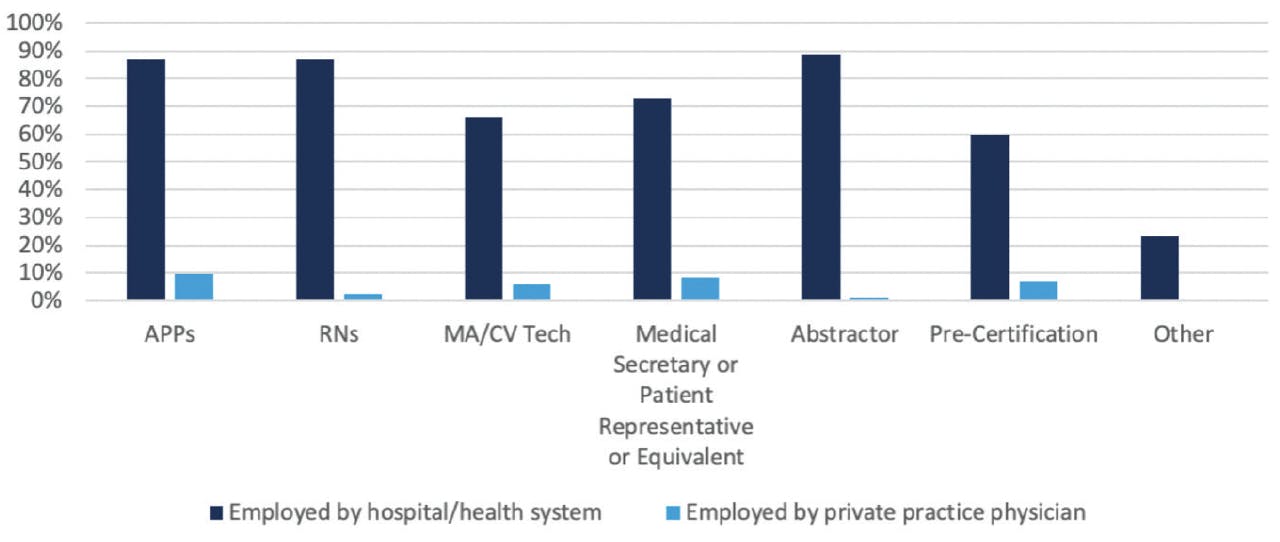
Figure 1. Staff type and employment. CV, cardiovascular; MA, medical assistant.
The survey evaluated data that included the total number of full-time equivalent (FTE) staff (regardless of staff type) and the total number of procedures (regardless of procedure type) over 12 months. The responses varied from as low as six procedures per FTE to as high as 190 procedures per FTE, with an average of 62 procedures per FTE (Figure 2). It is important to understand that new programs often have lower ratios due to lower volumes. However, those in the top quartile have worked hard to become efficient and streamlined in their care delivery, and they provide a line of sight for programs that are ramping up. The mean of 62 procedures per FTE serves as a baseline for programs to measure against, but several additional variables, which are outlined in the next section, must be considered.
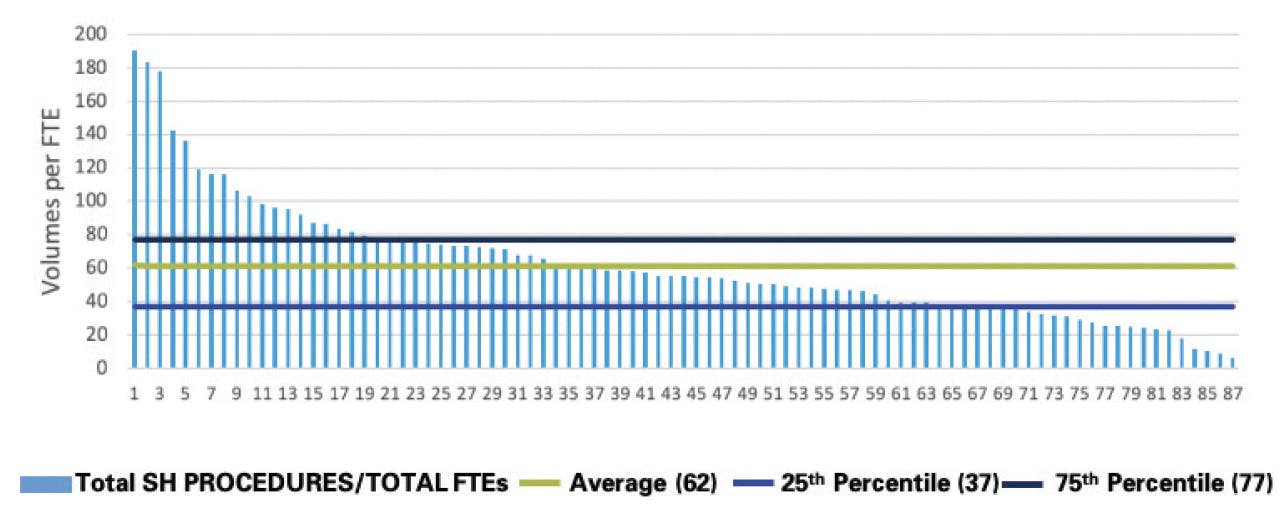
Figure 2. Total SH procedures per FTE.
SH Coordinators
The most common role on an SH team, and probably the most valuable outside of the physician operator, is the SH coordinator. Almost all of responding programs (98%) reported that they have an SH coordinator on their team. However, that is where the commonalities across respondents end. The type of person in this role varies between a registered nurse (RN) and an advanced practice provider (APP). There is a significant cost difference between an RN and an APP, as well as a difference in the scope of practice, which raises the question of whether or not the function differs between the two roles.
The survey shows that SH coordinators hold many responsibilities, but the type of responsibilities varies depending on the program. Figure 3 outlines the roles and the percentage of time a coordinator spends on these functions, aggregated across all organizations represented. Figure 4 outlines the variability across organizations for the number and type of responsibilities managed by the SH coordinator. A key finding is that a number of these functions do not require the license level of an RN or an APP (ie, scheduling, prior authorization, denial management). Figure 4 also shows that there is no significant difference between RN versus APP rules, indicating that the use of an APP in this role may be an “overlicense” situation.
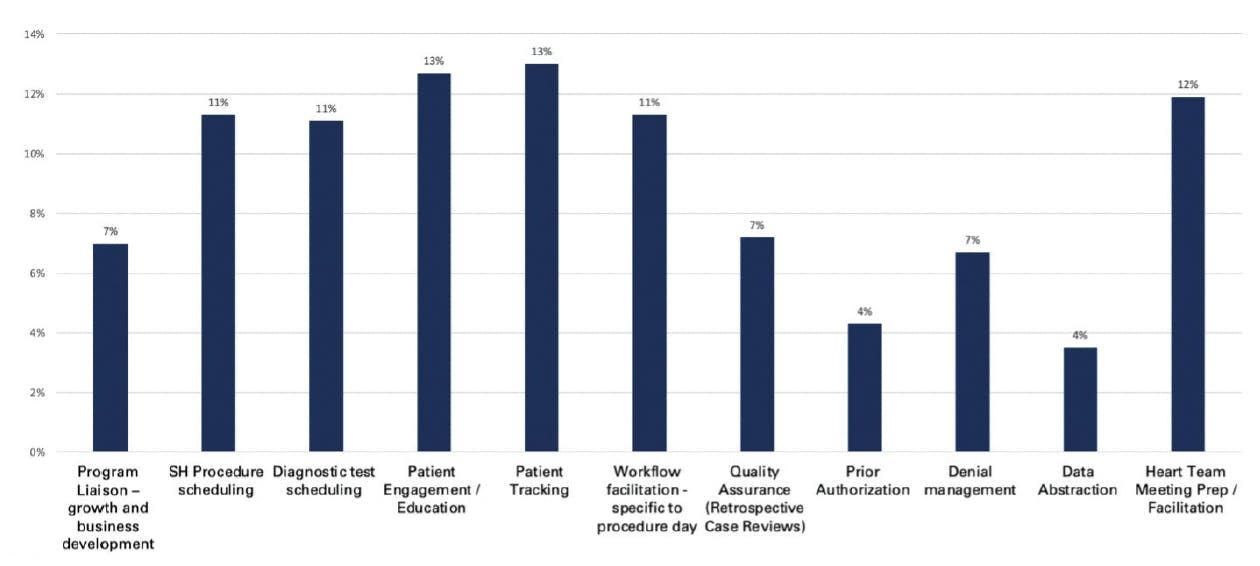
Figure 3. Coordinator responsibilities.
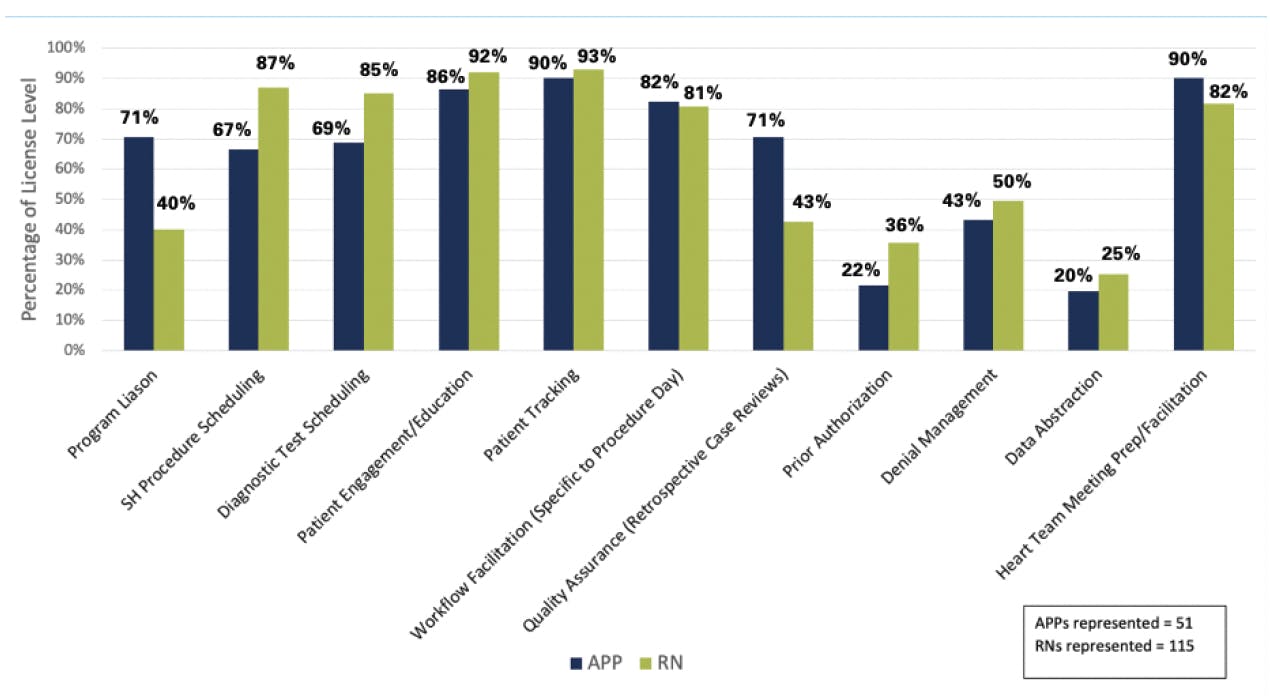
Figure 4. Percentage of coordinators with specific responsibilities.
Procedure Staffing
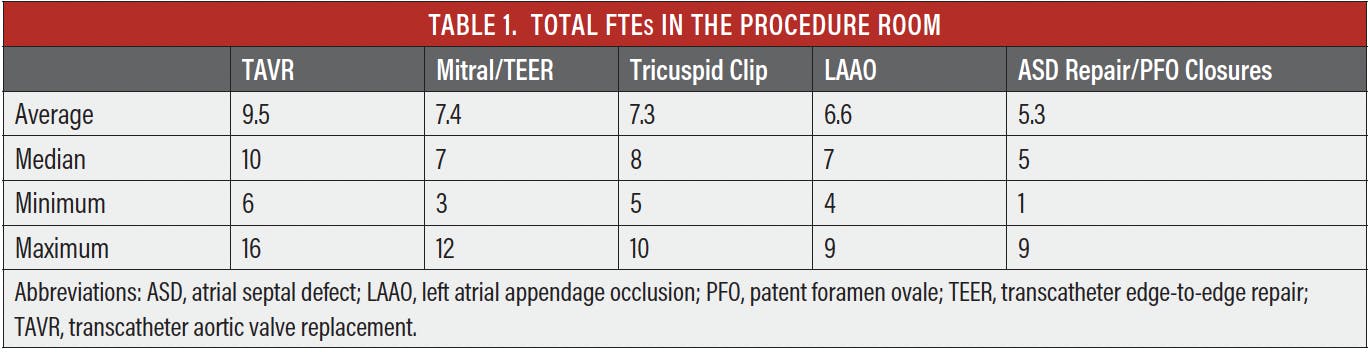
Procedure staff coverage is another important component of SH care and an area that is highly variable in both the number and type of care team members contributing to the procedural care of these patients. As noted in Figure 5 and Table 1, there is variation in both the type and number of individuals involved in different SH procedures. For transcatheter aortic valve replacement (TAVR), the maximum is 16 people and minimum six people, a 2.5-fold difference. Although the other procedures have less of a range, the variation is still significant, which is disturbing given that every survey respondent also noted staffing to be their number one barrier for growth. There is significant opportunity in developing an efficient yet effective staffing model that ensures access to SH procedures.
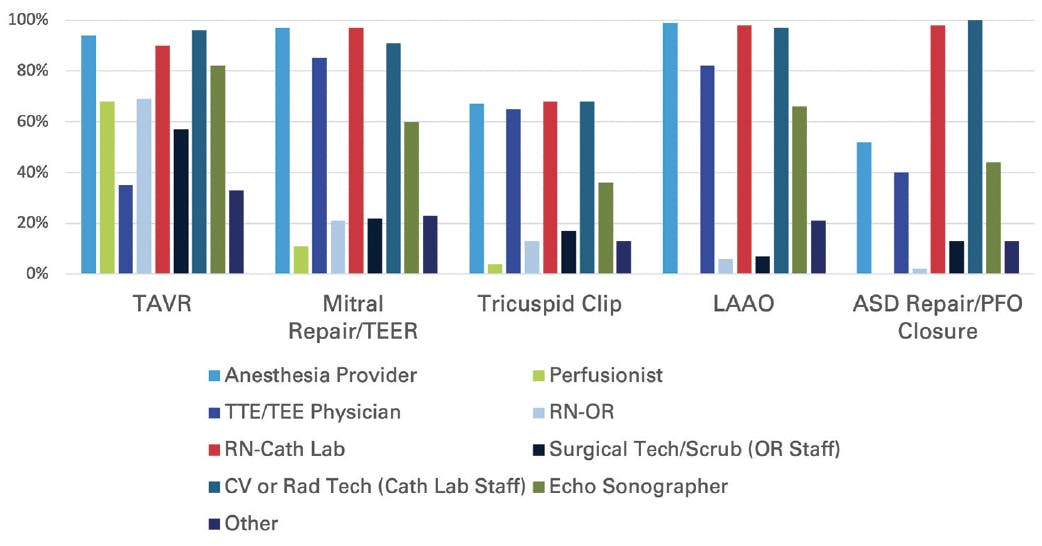
Figure 5. Roles in the procedure room. ASD, atrial septal defect; OR, operating room; PFO, patent foramen ovale; TEE, transesophageal echocardiography; TEER, transcatheter edge-to-edge repair; TTE, transthoracic echocardiography.
SH GROWTH
SH is a growing area of the cardiovascular care continuum, with 90% of survey respondents reporting that they expect growth. Of the different procedure types that fall under the SH program, TAVR and left atrial appendage occlusion (LAAO) are expected to have the greatest growth potential among survey respondents, with participants reporting a > 5% expected year-over-year growth for both procedures (Figure 6).
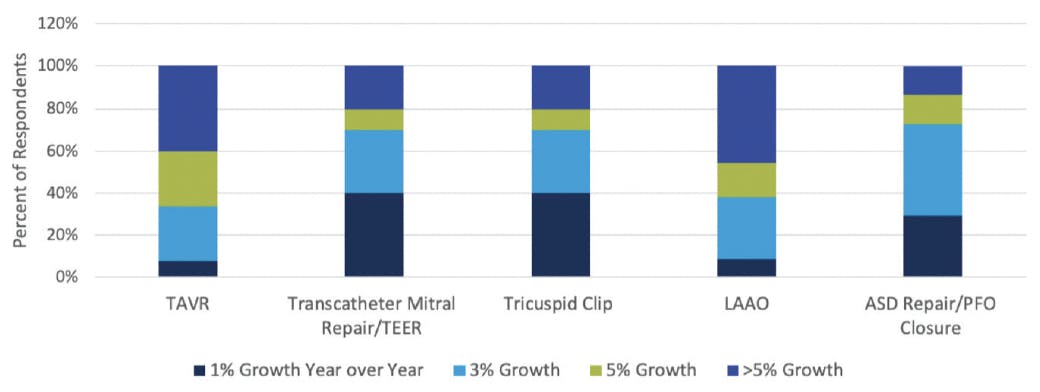
Figure 6. Year-over-year expected growth.
One opportunity for growth that goes beyond physician referrals is mining data to identify potential SH patients. According to the survey, 40% of respondents noted that they mine their clinical data using echocardiographic findings or electronic health record data. To turn that mined data into action, 76% of respondents send a request to the referring physician to place a consult, utilizing a “pull” methodology for increasing their patient panel versus waiting for a referring physician to “push” a consult. Only 15% have developed a standard mechanism to automate the referral process. An automated process supports a true population management strategy.
SH PROGRAM REFERRAL/THROUGHPUT METRICS
There are several key metrics that all SH programs should measure, including average referrals turned into procedures, time from referral request to initial consult, and time from referral to intervention/procedure. However, the use of these performance metrics varies significantly (Figure 7). Only 29% of respondents measure the percentage of referrals that turn into procedures. This measure is key for understanding the number of patients a program needs to see to meet capacity of the procedural care component. Another way to use this number is the capacity for procedural care needed to support the referral volumes a program is receiving. In addition, without being aware of procedure conversion rate, a program may be losing patients to follow-up through ineffective tracking. For programs that do track this metric, Figure 8 shows the breakdown by procedure type, with 70% for TAVR and 68% for LAAO.
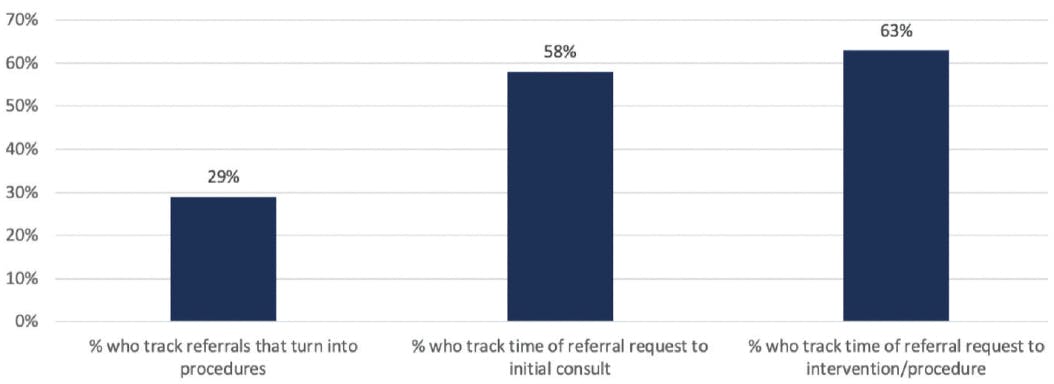
Figure 7. SH tracking metrics.
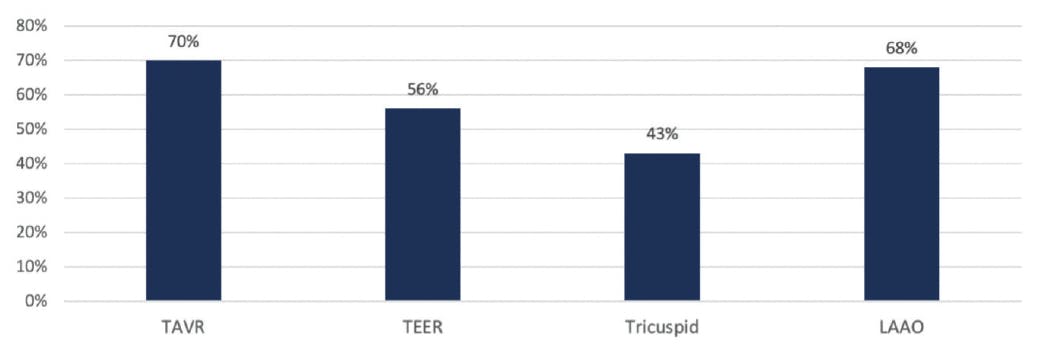
Figure 8. Average number of referrals turned into procedures.
Nearly 60% of survey respondents measure time of referral request to initial consult. A majority of the programs are able to see the patient anywhere from 7 to 28 days after referral for initial consult (Figure 9). Regularly reviewing this metric can aid organizations in identifying delays or inefficiencies that could increase their market share/grow the program if evaluated. Program access is not only key for assuring best patient outcomes but also to be competitive in markets with more than one SH program.
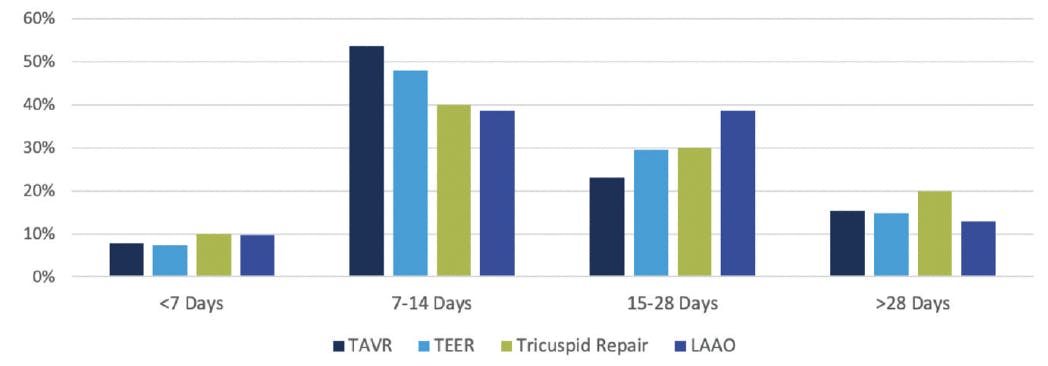
Figure 9. Time from referral request to initial consult.
More than half of programs reported tracking time from initial referral to procedure, with most noting a > 28-day lag (Figure 10). This is another metric that could pinpoint efficiencies and lead to increased market share.
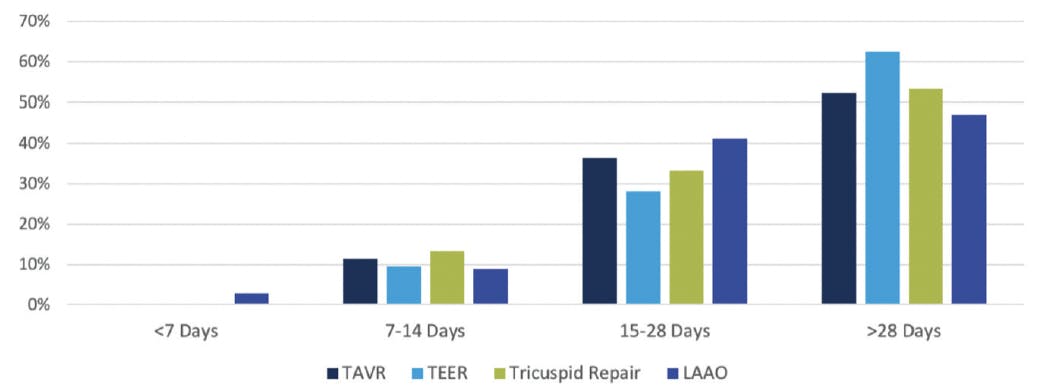
Figure 10. Time from referral to intervention/procedure.
CONCLUSION
SH procedures have been available for more than a decade and > 700 centers across the United States are now providing SH care. The level of variation that continues to exist across programs related to staffing and performance management is significant. As we struggle to meet the demand for these important procedures, it is imperative to learn from each other and create programs that are effective, efficient, and provide the level of service for our patients that we would expect for ourselves. With evidence of overlicensure for many routine SH responsibilities and procedural care teams that are twice the size of others, many opportunities for improvement exist.
Finally, we can’t improve what we don’t measure. Embedding into our programs key performance management metrics that monitor throughput and effective care delivery is as important as monitoring finances. To evolve to better meet the demand, learning from each other through peer-to-peer venues, learning symposiums, leadership events, and community networks is key. These findings provide a place to start.
Download the full Structural Heart Program Opportunities: Insights for Staffing, Capacity, Growth and Program Economics report at medaxiom.com/reports
Advertisement
Advertisement