Advertisement
Advertisement
March/April 2023
Managing Right Ventricular Failure in Pulmonary Embolism
Experience and evidence for the use of mechanical circulatory support for managing high-risk PE associated with shock.
Every year in the United States, roughly 370,000 patients develop a pulmonary embolism (PE), with > 100,000 Americans dying annually from venous thromboembolic disease.1 The clinical significance of the PE depends on the right ventricular (RV) response to the clot and the increase in afterload. Patients with RV strain defined by positive biomarkers and RV enlargement are termed intermediate-high risk because they are at risk of progressing to shock. Those who present with cardiac arrest, hypotension, and evidence of end-organ hypoperfusion are termed high risk.2,3 Patients who progress to shock are associated with mortality rates of > 50%, making PE the third-leading cause of cardiovascular death after myocardial infarction (MI) and stroke.4 Although awareness and treatment options are improving, PE remains a significant public health problem.
During cardiogenic shock, mechanical circulatory support (MCS) serves as a bridge to maintain perfusion to the body long enough to allow for the correction of the underlying problem (Figure 1). MCS use is ideal in scenarios in which there is an acute insult that is treatable, such as PE. Treatment options for PE have evolved beyond just anticoagulation and systemic thrombolytics to include surgical embolectomy and catheter-based percutaneous technologies.
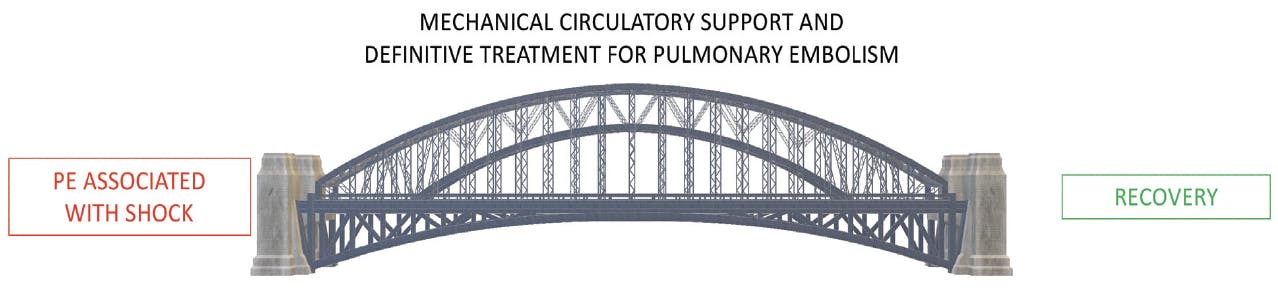
Figure 1. MCS represented as a bridge to definitive treatment for PE.
In fact, our modern-day mechanical support devices are in a large part based on work done in the early 20th century after a patient died of PE. Dr. John Gibbon was a young surgeon in 1930 when he was tasked to care for a patient with a massive PE dying of progressive RV failure. Helplessly watching her pass away, he dedicated his research to developing a machine that would remove venous blood from the body, oxygenate this blood, and then return the blood to the arterial circulation, completely bypassing the cardiopulmonary system. By the late 1930s, he developed an extracorporeal oxygenation machine that gradually prolonged life from minutes to eventually weeks when the pulmonary artery was occluded. This technology allowed for more complex cardiac surgeries and served as the basis for future MCS devices.5
Although anticoagulation and systemic thrombolysis remain the standard for treatment per the guidelines, we are entering an era with rapid advancement of catheter-based technologies and MCS to treat PE. This article focuses on the use of MCS as part of the modern-day treatment armamentarium.
MODERN-DAY THERAPY FOR PE
Anticoagulation remains the cornerstone therapy for treating all severities of PE. Anticoagulation prevents further clot formation while allowing the body’s own fibrinolysis to break down the clot, which can take time. Therefore, patients entering the shock spectrum often need a more rapid mechanism for clot reduction.
Systemic thrombolysis is the primary recommendation for high-risk PE patients based on American and European guidelines.2-6 This is based on historic data derived from older studies with small sample sizes. Meta-analyses have shown a benefit of systemic thrombolysis compared to anticoagulation alone,7-9 but significant limitations do exist and successful improvement in hemodynamics is not guaranteed. Limitations of thrombolysis include major bleeding, intracranial hemorrhage, the inability to use in patients with contraindications, and higher rates of complications if MCS is needed afterward.
Due to the limitation of systemic thrombolysis, the concept of catheter-directed thrombolysis (CDT)—in which a lower-dose thrombolytic agent is delivered directly into the pulmonary arteries—began to form. There are now several catheters designed for drug delivery into the pulmonary artery, leading to improvements in hemodynamics and RV function.10-14 To date, these studies primarily focused on intermediate-risk PE patients, with some successful data in sicker patients who are in shock. CDT can lead to significant hemodynamic improvements over the course of a few hours but prospective studies in high-risk PE are limited.13 The ease of insertion and rapid procedure time are major benefits but the true bleeding risk, the best delivery system, and optimal duration of infusion are still being investigated.
PE is caused by embolization of thrombus to the pulmonary artery and therefore it makes intuitive sense to develop tools to extract these clots as a form of treatment. Surgical thrombectomy achieves this but requires a sternotomy and is limited to surgeons with expertise. Several percutaneous devices now exist that allow for rapid extraction of large thrombus, with several more devices in development. Figure 2 demonstrates a saddle PE in a deceased patient and another patient in whom the saddle PE was successfully removed via mechanical thrombectomy (MT). These devices range from 8 to 24 F in size and can be performed via the jugular or femoral veins. These devices have been primarily studied in the intermediate-risk cohort,15-17 but the FlowTriever system (Inari Medical) was recently used in high-risk patients with success and low rates of complications.18,19 As the technology for thrombectomy improves so do the success rates of quickly removing large amounts of thrombus, leading to rapid hemodynamic improvements immediately during the procedure. High success rates, low complication rates, and an increase in the availability of these devices has made percutaneous thrombectomy more popular in the past several years. There are limited data comparing these devices and use depends on institutional expertise.
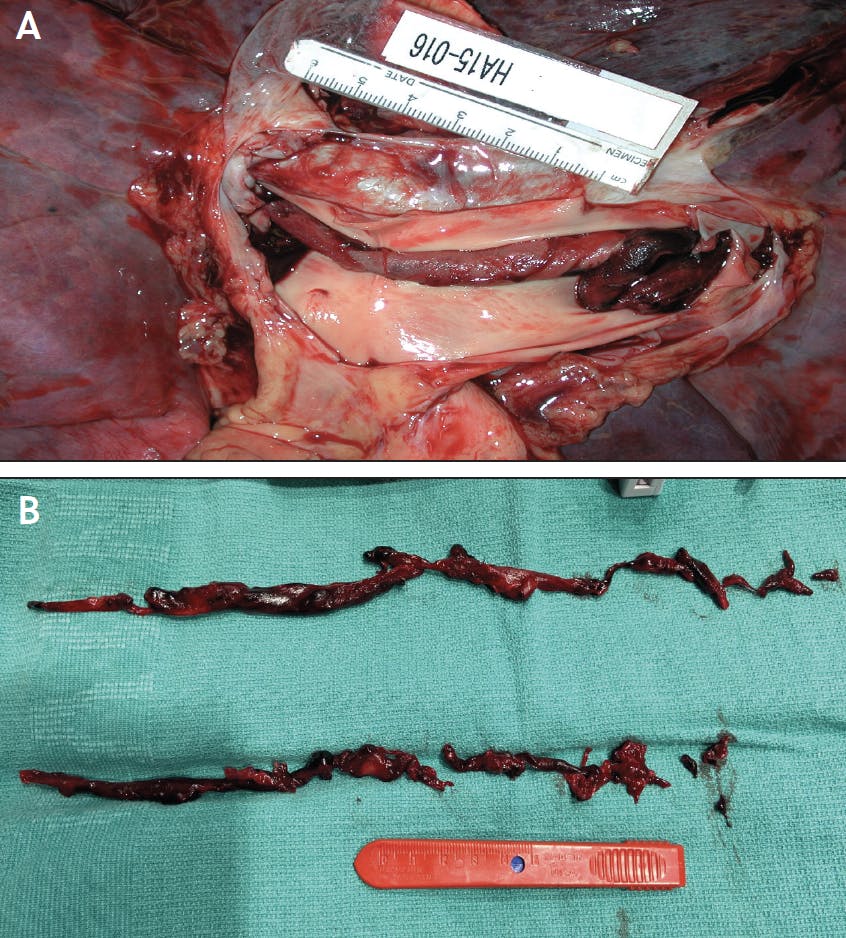
Figure 2. Saddle PE on autopsy in a deceased patient (A). Saddle PE removed with large-bore MT using the Inari FlowTriever system (B).
CRITERIA FOR MCS
We have defined criteria for cardiogenic shock and for high-risk PE but now recognize that shock is a continuum. Patients can present at various points on the shock spectrum, making it clinically quite difficult to determine when a massive PE patient will require MCS. Systemic thrombolysis remains the mainstay therapy for high-risk PE patients despite known limitations and incomplete success rates. We do administer systemic thrombolysis in patients in early shock or on low-dose vasopressors before they progress to worsening shock or cardiac arrest. The use of MCS after systemic thrombolysis is associated with significant bleeding risk. Therefore, for those with more advanced shock, we prefer to avoid systemic thrombolysis and instead move forward with the combination of MCS and a definitive catheter-based treatment strategy.
MCS is associated with considerable cost and risk, so it is prudent to use these devices in appropriate patients. This is one of the reasons why hospitals have adopted PE response teams to provide a multidisciplinary localized approach to care for these complex patients.20 We advocate for MCS before cardiac arrest, and once a patient has been temporarily stabilized on MCS, to proceed with a more definitive PE treatment.
TYPES OF MCS
RV support can be looked at in terms of maximizing RV preload, afterload, and contractility as shown in Figure 3. Although afterload and contractility can be improved somewhat with medical therapy, RV support devices provide more complete cardiac output in sicker patients. The three current devices to assist with RV failure include the Impella RP device (Abiomed, Inc.), the ProtekDuo system (LivaNova), and extracorporeal membrane oxygenation (ECMO). Each device has certain benefits and limitations when used specifically for PE. There are several other pumps that can be configured with a cannula in the right atrium and a cannula in the pulmonary artery to achieve RV support, but most cardiologists use the commercially available ones.
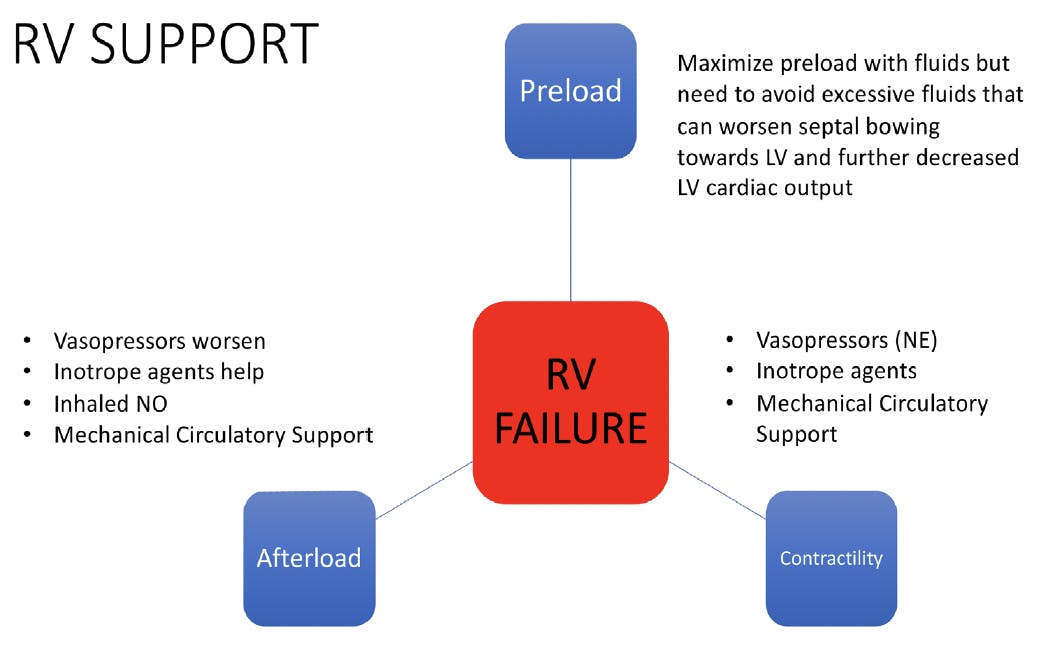
Figure 3. RV support in terms of maximizing preload, afterload, and contractility.
The Impella RP device is a 23-F axial flow pump placed through a percutaneous approach from the femoral vein. This device pushes blood from the inferior vena cava (IVC)/right atrium into the pulmonary arteries. This motor is contained in the body with only the driveline exiting the femoral vein. This device provides up to 4 L/minute of blood flow. Limitations of the device are that it cannot be placed from the jugular vein and an oxygenator cannot be added if hypoxia occurs. Published data for the use of the Impella RP in PE are limited to small case series but have shown hemodynamic improvements when combined with a more definitive PE therapy.21,22 This device seems best suited for patients who have undergone a successful clot reduction treatment but have persistent RV failure without hypoxemia. The benefits of this device in a patient with a large burden of ongoing thrombus is not clear, and it seems likely best to avoid pumping a high flow into obstructed pulmonary arteries. Figure 4 shows the placement of the Impella RP in a patient with persistent RV failure after completing a course of CDT.
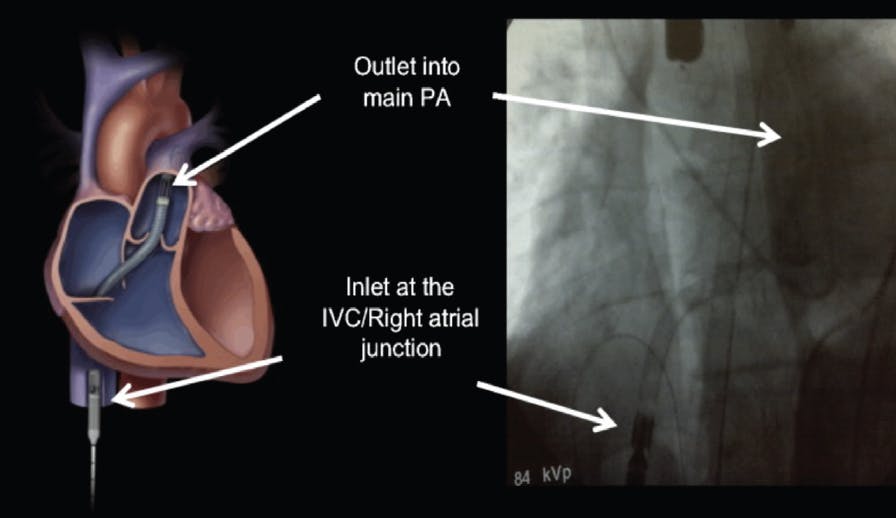
Figure 4. Example of Impella RP device placed via the femoral artery and into the pulmonary artery.
The ProtekDuo is a 29- or 31-F dual-lumen catheter placed via the internal jugular vein into the pulmonary artery. The inflow cannula in the right atrium removes blood from the body, where an external pump then ejects the blood through the outflow lumen to the pulmonary artery. Because the pump is external to the body, an oxygenator can be easily added before blood is returned to the pulmonary artery. Similar to the Impella RP device, use seems to be best in patients with residual RV failure after there has been clot reduction in the pulmonary arteries. Small case series have been published but large-scale studies in PE have not been performed.23 Figure 5 illustrates the ProtekDuo system.
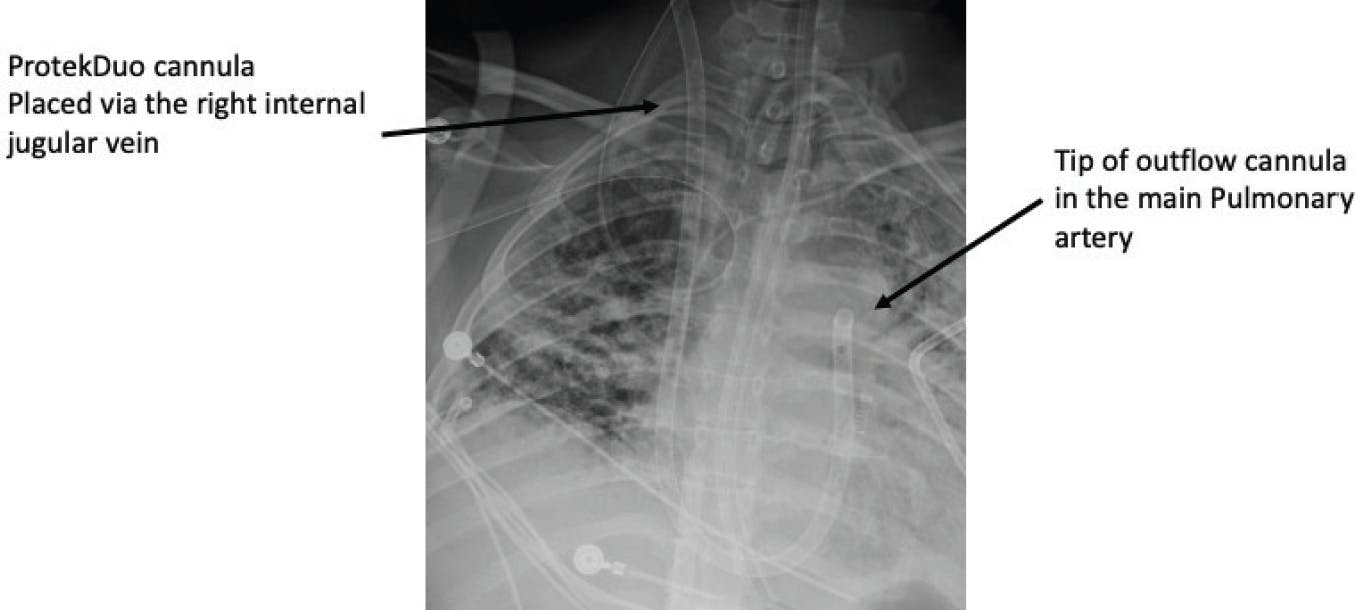
Figure 5. Example of a ProtekDuo device placed via the right internal jugular vein into the pulmonary artery.
Peripheral ECMO remains the most popular MCS system in high-risk PE patients.24,25 Venoarterial ECMO (VA-ECMO) removes blood from the jugular and/or IVC veins, where it is oxygenated in an external circuit before being pumped back into the body via the femoral artery into the aorta. VA-ECMO is designed to completely bypass the heart and lungs, and therefore a definitive clot reduction therapy is not immediately necessary.
The use of VA-ECMO has significantly grown worldwide as availability has increased, but rapid initiation remains a limitation at many centers. This device does provide full cardiopulmonary support but requires large-bore arterial access, which is associated with higher complication rates of bleeding and distal limb ischemia. Initiation and cannulation for VA-ECMO shortly after a patient has undergone systemic thrombolysis is associated with very high rates of bleeding given the large-bore arterial access required. In patients with profound shock or cardiac arrest, we favor VA-ECMO for support before administering systemic thrombolysis. Once patients are supported with VA-ECMO, a more definitive therapy for their PE can be undertaken.
Although most patients with high-risk PE will have hemodynamic impact, there is a group of PE patients in whom severe hypoxemia is the primary problem. In these patients, the use of venovenous ECMO (VV-ECMO) can be considered. VV-ECMO is when blood is removed from the right side of the heart, sent to an oxygenator, and then returned back into the right side. Access is achieved in two large veins without simultaneous arterial access. The oxygenated blood requires intrinsic RV function to move blood through the pulmonary circulation and to the left heart.
There are no true head-to-head studies with these devices in acute PE. The choice of device therefore depends on institutional availability and comfort. The Impella PR and ProtekDuo systems can be placed quickly without the need for a perfusionist. ECMO can be more labor-intensive, requiring a perfusionist, but does offer more complete cardiopulmonary support.
COMBINING MCS AND CATHETER-BASED THERAPIES
Historically, systemic thrombolysis was the treatment recommendation for high-risk PE patients, but we know that thrombolytics are frequently withheld due to contraindications or fear of causing a bleeding event.26 In addition, combining MCS and systemic thrombolysis can also be associated with high bleeding and complication rates.
How best to combine MCS with these newer catheter-based therapies and how they complement each other is still being investigated. Initial studies for CDT and MT started in the intermediate-risk category. As the technology improved and operator comfort increased, these devices began to be applied in sicker high-risk PE patients.11,18,19 We believe we are entering an era in which the optimal treatment for high-risk PE is evolving, similar to what occurred in MI and stroke to include MCS and catheter-based interventions. MCS could serve as a mechanism of support to bridge patients to a catheter-based therapy and recovery (Figure 1). The FLAME study is the latest and largest prospective trial conducted in the modern era for high-risk PE and will serve as the basis for ongoing studies.18
TIPS AND TRICKS FOR USING MCS IN HIGH-RISK PE
Use of the Impella RP and ProtekDuo is limited to small case series, and use at our institution has also been limited to a small cohort of select patients. Both devices can be placed in the cardiac catheterization laboratory or operating room without the need for a perfusionist. Our choice between these two devices is based on access location (jugular vs femoral vein) and the need for additional oxygenation. We have also used this device primarily in patients who have ongoing RV shock after treatment with MT or CDT so that the pulmonary arteries are patent to allow for the transit of blood to the left heart.
Our institutional preference to treat PE shock is VA-ECMO because this provides full cardiopulmonary support. We fortunately have a perfusionist available full time to support these patients, making it a readily available option. Placement of VA-ECMO can occur in the emergency department, catheterization laboratory, operating room, or at the bedside in the intensive care unit by interventional cardiology, cardiac surgery, or anesthesia critical care.
We have placed VA-ECMO several times in patients we suspect are in shock due to a PE but are too unstable for a CT scan. Once the patient has been stabilized on VA-ECMO we will then proceed with a CT scan with PE protocol. It is important to remember to turn down the ECMO flow rate at the time of the CT scan to get an accurate scan. If ECMO flow rates are high, the opacification of the pulmonary artery with the intravenous contrast bolus will be incomplete and the diagnosis of PE can be missed.
There are data from France suggesting that high-risk PE patients can be supported for several days while being anticoagulated with heparin to allow for the body’s intrinsic hemolytic system to break down the clot.27 Our preference is once a patient is stable on VA-ECMO to proceed with a catheter-based intervention to shorten the ECMO duration and promote RV recovery. The choice of CDT or MT in these patients has to do with patient characteristics, if they have any contraindications to catheter-delivered thrombolytics, and the location of the clot. We prefer CDT in those patients with more distal segment and subsegment level clot that can be harder to reach with MT. This oftentimes happens if the patient underwent CPR in which the chest compressions can fragment the clot, leading it to move more distal. CDT involves 5- to 7-F venous access and can be done on full ECMO support without significant risk of air embolization. With the slow infusion of alteplase at 1 mg per hour, we have not noted higher bleeding rates compared to ECMO alone at our institution.
We prefer MT for larger more central clots that are obstructing the main pulmonary arteries. We have successfully performed MT in patients on VA-ECMO, but there are several steps unique to when both are done together. Because this is a large-bore venous access, it is important to turn the VA-ECMO flows down when the large sheath is inserted into the venous system and each time the device is introduced through the large-bore sheath to avoid air entrainment. When performing MT in conjunction with VA-ECMO, we have the perfusionist in the cardiac catheterization lab and will ask them to turn the flow rate down as low as tolerated each time the catheter is inserted. Once the catheter is in place, we will return to full ECMO flow while the thrombectomy is being performed. When we remove the catheter or return the extra aspirated blood back to the patient, we once again lower the ECMO flow rates. This communication is critical to avoid air entrainment and embolization complications.
Another concern early on was the ability for the IVC to accommodate the ECMO venous cannula and the large-bore sheath for MT if using the FlowTriever system. The IVC is compliant and oftentimes quite dilated in these patients with RV failure, making placement of both devices possible via the femoral veins. In smaller patients, we would consider accessing the jugular and femoral veins to allow for VA-ECMO from one site and MT from the other.
CONCLUSION
PE is the third-leading cause of cardiovascular death after acute MI and stroke, so improving outcomes in these patients is a public health priority. The treatment for high-risk PE is evolving beyond anticoagulation and systemic thrombolysis, with mechanical support and catheter-based therapies providing alternative strategies. The current data for MCS and catheter-based therapies are not yet sufficient to make a definitive guideline-level recommendation. Nonetheless, we may be at the early stages of a paradigm shift for high-risk PE, similar to what previously occurred in treatment for MI.
1. Virani SS, Alonso A, Benjamin EJ, et al. Heart disease and stroke statistics -2020 update: a report from the American Heart Association. Circulation. 2020;141:e139-e596. doi: 10.1161/CIR.0000000000000757
2. Konstantinides SV, Meyer G, Becattini C, et al. 2019 ESC Guidelines for the diagnosis and management of acute pulmonary embolism in collaboration with the European Respiratory Society (ERS): The task force for the diagnosis and management of acute pulmonary embolism of the European Society of Cardiology (ESC). Eur Respir J. 2019;54:1901647. doi: 10.1183/13993003.01647-2019
3. Konstantinides SV, Meyer G, Becattini C, et al. ESC guidelines for the diagnosis and management of acute pulmonary embolism developed in collaboration with the European Respiratory Society (ERS). Eur Heart J. 2020;41:543-603. doi: 10.1093/eurheartj/ehz405
4. Kucher N, Rossi E, DeRosa M, Goldhaber SZ. Massive pulmonary embolism. Circulation. 2006;113:577-582. doi: 10.1161/CIRCULATIONAHA.105.592592
5. Cohn L. Fifty years of open heart surgery. Circulation. 2003;107:2168-2170.
6. Jaff MR, McMurtry MS, Archer SL, et al. Management of massive and submassive pulmonary embolism, iliofemoral deep vein thrombosis, and chronic thromboembolic pulmonary hypertension: a scientific statement from the American Heart Association. Circulation. 2011:123:1788-1830. doi: 10.1161/CIR.0b013e318214914f
7. Jerjes-Sanchez C, Ramierz-Rivera A, de Lourdes Garcia M, et al. Streptokinase and heparin versus heparin alone in massive pulmonary embolism: a randomized controlled trial. J Thromb Thrombolysis. 1995:2;227-229. doi: 10.1007/BF01062714
8. Marti C, John G, Konstantinides S, et al. Systemic thrombolytic therapy for acute pulmonary embolism: a systematic review and meta-analysis. Eur Heart J. 2015:36:605-614. doi: 10.1093/eurheartj/ehu218
9. Silver MJ, Giri J, Duffe A, et al. Incidence of mortality and complications in high-risk pulmonary embolism: a systemic review and meta-analysis. J Soc Cardiovasc Angiogr Interv. 2023;2:100548. doi: 10.1016/j.jscai.2022.100548
10. Kucher N, Boekstegers P, Muller OJ, et al. Randomized, controlled trial of ultrasound-assisted catheter-directed thrombolysis for acute intermediate-risk pulmonary embolism. Circulation. 2014;129:479-486. doi: 10.1161/CIRCULATIONAHA.113.005544
11. Piazza G, Hohlfelder B, Jaff MR, et al. A prospective, single-arm, multicenter trial of ultrasound-facilitated, catheter-directed, low-dose fibrinolysis for acute massive and submassive pulmonary embolism: the SEATTLE III study. JACC Cardiovasc Interv. 2015;8:1382-1392. doi: 10.1016/j.jcin.2015.04.020
12. Tapson VF, Sterling K, Jones N, et al. A randomized trial of the optimum duration of acoustic pulse thrombolysis procedure in acute intermediate-risk pulmonary embolism: the OPTALYSE PE trial. JACC Cardiovasc Interv. 2018;11:1401-1410. doi: 10.1016/j.jcin.2018.04.008
13. Bashir R, Foster M, Iskander A, et al. Pharmacomechanical catheter-directed thrombolysis with the Bashir endovascular catheter for acute pulmonary embolism: the RESCUE study. JACC Cardiovasc Interv. 2022;15:2427-2436. doi: 10.1016/j.jcin.2022.09.011
14. Khandhar SJ, Mehta M, Cilia L, et al. Invasive hemodynamic assessment of patients with submassive pulmonary embolism. Catheter Cardiovasc Interv. 2020;95:13-18. doi: 10.1002/ccd.28491
15. Tu T, Toma C, Tapson VF, et al. A prospective single-arm multicenter trial of catheter-directed mechanical thrombectomy for intermediate risk acute pulmonary embolism: the FLARE study. JACC Cardiovasc Interv. 2019;12:859-869. doi: 10.1016/j.jcin.2018.12.022
16. Toma C, Bunte M, Cho K, et al. Percutaneous mechanical thrombectomy in a real-world pulmonary embolism population: interim results of the FLASH registry. Catheter Cardiovasc Interv. 2022;99:1345-1355. doi: 10.1002/ccd.30091
17. Sista AK, Horowitz JM, Tapson VF, et al. Indigo aspiration system for treatment of pulmonary embolism: the results of the EXTRACT-PE trial. JACC Cardiovasc Interv. 2021;14:319-329. doi: 10.1016/j.jcin.2020.09.053
18. Toma C, Khandhar SJ, Zalewski AM, et al. Percutaneous thrombectomy in patients with massive and very high-risk submassive acute pulmonary embolism. Catheter Cardiovasc Interv. 2020;96:1465-1470. doi: 10.1002/ccd.29246
19. Silver MJ, Horowitz JM. Outcomes in high-risk pulmonary embolism patients undergoing FlowTriever mechanical thrombectomy: results from the FLAME study. Presented at: American College of Cardiology Annual Scientific Session (ACC23/WCC); March 4-6, 2023; New Orleans, Louisiana.
20. Schultz J, Giordano N, Zheng H, et al. EXPRESS: a multidisciplinary pulmonary embolism response team (PERT) – experience from a national multicenter consortium. Pulm Circ. 2019;9:1-10. doi: 10.1177/2045894018824563
21. Shokr M, Rashed A, Mostafa A, et al. Impella RP support and catheter-directed thrombolysis to treat right ventricular failure caused by pulmonary embolism in 2 patients. Tex Heart Inst J. 2018;45:182-185. doi: 10.14503/THIJ-17-6316
22. Zuin M, Rigatelli G, Daggubati R, et al. Impella RP in hemodynamically unstable patients with acute pulmonary embolism. J Artif Organs. 2020;23:105-112. doi: 10.1007/s10047-019-01149-9
23. Oliveros E, Collado F, Poulin M, et al. Percutaneous right ventricular assist device using the Tandemheart ProtekDuo: real-world experience. J Invasive Cardiol. 2021;33:E407-E411.
24. Sertic F, Diagne D, Chavez L, et al. Mid-term outcomes with use of extracorporeal membrane oxygenation for cardiopulmonary failure secondary to massive pulmonary embolism. Eur J Cardiothorac Surg. 2020:1;923-931. doi: 10.1093/ejcts/ezaa189
25. Danial P, Olivier ME, Brechot N, et al. Associated between shock etiology and 5-year outcomes after venoarterial extracorporeal membrane oxygenation. J Am Coll Cardiol. 2023;81:897-909. doi: 10.1016/j.jacc.2022.12.018
26. Jaff MR, McMurtry MS, Archer SL, et al. Management of massive and submassive pulmonary embolism, iliofemoral deep vein thrombosis, and chronic thromboembolic pulmonary hypertension: a scientific statement from the American Heart Association. Circulation. 2011;123:1788-1830. doi: 10.1161/CIR.0b013e318214914f
27. Corsi F, Lebreton G, Brechot N, et al. Life-threatening massive pulmonary embolism rescued by venoarterial-extracorporeal membrane oxygenation. Crit Care. 2017;21:1655-1658. doi: 10.1186/s13054-017-1655-8
Advertisement
Advertisement