Advertisement
Advertisement
May/June 2021
Sponsored by Endotronix, Inc.
Remote PA Pressure Monitoring and Proactive Management of a Heart Failure Patient
Use of the Cordella® HF System for PA pressure-guided heart failure management.
By Gillian Grafton, DO, and Jennifer A. Cowger, MD, MS, FACC
CASE HISTORY
A 55-year-old man with nonischemic cardiomyopathy (New York Heart Association class III heart failure [HF]) and a 25-year history of cardiovascular disease presented with decreased exercise tolerance, dyspnea on exertion, and lower extremity edema for 1 year. During this period, the patient experienced intermittent improvement in his HF symptoms punctuated by acute exacerbations, including episodes of weight gain (> 30 lb) and other symptoms requiring hospitalization for acute decompensated HF. Titration toward guideline-directed medical therapy (GDMT) optimization was limited by borderline hypotension. The patient was referred to the multidisciplinary Henry Ford Advanced Heart Failure Program, which recommended the Cordella HF System (Endotronix, Inc.) to noninvasively monitor peripheral vital signs virtually from home.
INITIAL TREATMENT APPROACH
The patient was provided the Cordella System (Figure 1) and taught how to take daily vital signs measurements in < 5 minutes. To help ensure that the system would be used consistently, he was educated that the daily vital signs measurements would help inform the HF team on how to mitigate his symptoms of dizziness, weakness, and shortness of breath.
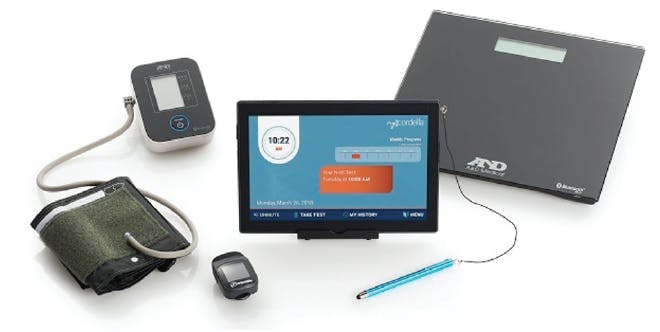
Figure 1. Cordella® HF System (tablet with patient app and Bluetooth®-enabled peripherals, including blood pressure, weight, heart rate, and SpO2).
After initial setup, the HF nursing team started remotely managing the patient on a regular basis. Vital signs trending enabled the team to titrate neurohormonal therapy and diuretics as specified in the GDMT. Additionally, this high-risk patient was able to be managed at home to avoid exposure to COVID-19 in the hospital or clinic.
The patient’s compliance with daily vital sign measurements was very high during the first month of remote management. Improved GDMT led to significant improvement in the overall health of the patient. However, lifestyle factors—such as dietary noncompliance and continued sedentary lifestyle—confounded the impact of GDMT on the hemodynamic effects in the patient. Although critical in improving the patient’s health, the HF team determined that adding pulmonary artery (PA) pressure data with the Cordella PA sensor* implantation would be beneficial. Data from the Cordella PA sensor would supplement vital signs data from the Cordella System to help ensure that the patient received optimal therapy to manage his HF. The patient was enrolled into the PROACTIVE-HF study and subsequently scheduled for implantation of the PA sensor.
PA PRESSURE SENSOR IMPLANTATION
Implantation of the Cordella PA sensor went smoothly, and the patient was discharged on the same day. Daily measurements from the PA sensor, in combination with vital signs data from the Cordella System, facilitated better optimization of GDMT (Figure 2). The HF team was able to directly monitor the physiologic response of GDMT on both the PA pressures and systemic vital signs, enabling frequent adjustment of medication, as necessary, to avoid hospital admission and improve patient symptoms (Figure 3).
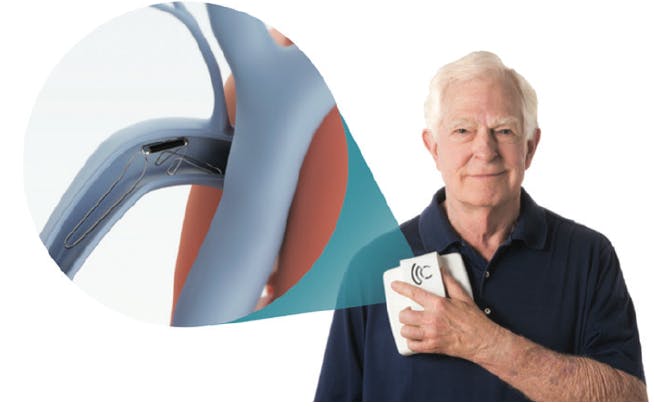
Figure 2. Example of a patient acquiring PA data using the Cordella® PA sensor and handheld reader.
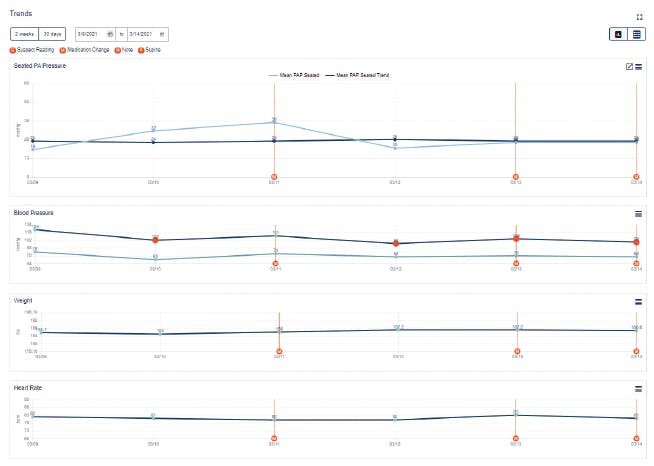
Figure 3. Example of patient vital trending in the Physician Management Portal.
DISCUSSION
Longitudinal monitoring of PA pressure can facilitate early detection of volume changes before the onset of symptoms, allowing proactive medical interventions that lead to fewer hospitalizations. PA pressure has been shown to be a critical measurement in determining early signs of worsening HF.1
Lifestyle factors can confound the effects that different therapies have on a patient’s HF symptoms and vital signs outside clinical use. For this patient, the addition of remote PA pressure guided HF management was essential to understanding how GDMT affected the patient’s physiology and overall health in the real-world setting. Patient monitoring and comprehensive disease management are still ongoing.
Since implantation of the Cordella PA sensor, the patient’s symptoms have stabilized. Frequent medication adjustment, based on both PA sensor and vital signs data, has helped to avoid hospital admission. Additionally, the patient has shifted a full NYHA class from borderline NYHA class IV toward borderline class II.
1. Abraham WT, Adamson PB, Bourge RC, et al. Wireless pulmonary artery haemodynamic monitoring in chronic heart failure: a randomised controlled trial. Lancet. 2011;377:658-666. doi: 10.1016/S0140-6736(11)60101-3
The Cordella® Heart Failure System is commercially available in the US and EU.
*The Cordella® PA Pressure Sensor System is an investigational device and is not currently approved for clinical use in any geography.
CAUTION – Investigational Device. Limited by Federal (or United States) Law to Investigational Use.


Advertisement
Advertisement