Advertisement
Advertisement
May/June 2021
Interatrial Shunts to Treat Heart Failure
What do we know, and where do we stand?
Heart failure (HF) is classified according to left ventricular (LV) function as HF with reduced ejection fraction (HFrEF; EF < 40%), midrange EF (HFmrEF; EF 40-49%), or preserved EF (HFpEF; EF ≥ 50%). Approximately 50% of HF patients have HFpEF, the hallmark of which is exercise intolerance thought to be secondary to blunted increases in stroke volume, heart rate, EF, cardiac output, and reduction in peak VO2 in addition to extracardiac contributors. LV and left atrial filling pressures increase significantly during exercise, with an associated increase in pulmonary pressures leading to pulmonary congestion.1 Diuretics provide some symptomatic relief, and recent data suggest that spironolactone and sacubitril/valsartan (an angiotensin receptor–neprilysin inhibitor) may reduce HF events in certain subsets of patients with HFpEF, although other evidence-based HF therapies currently do not appear to have a mortality benefit.2 As such, attention has turned toward the development of interatrial shunt devices (IASDs) as a means of reducing the detrimental increase in left-sided filling pressures with exercise in an effort to improve symptomatology.
DEVICES AND CLINICAL EVIDENCE
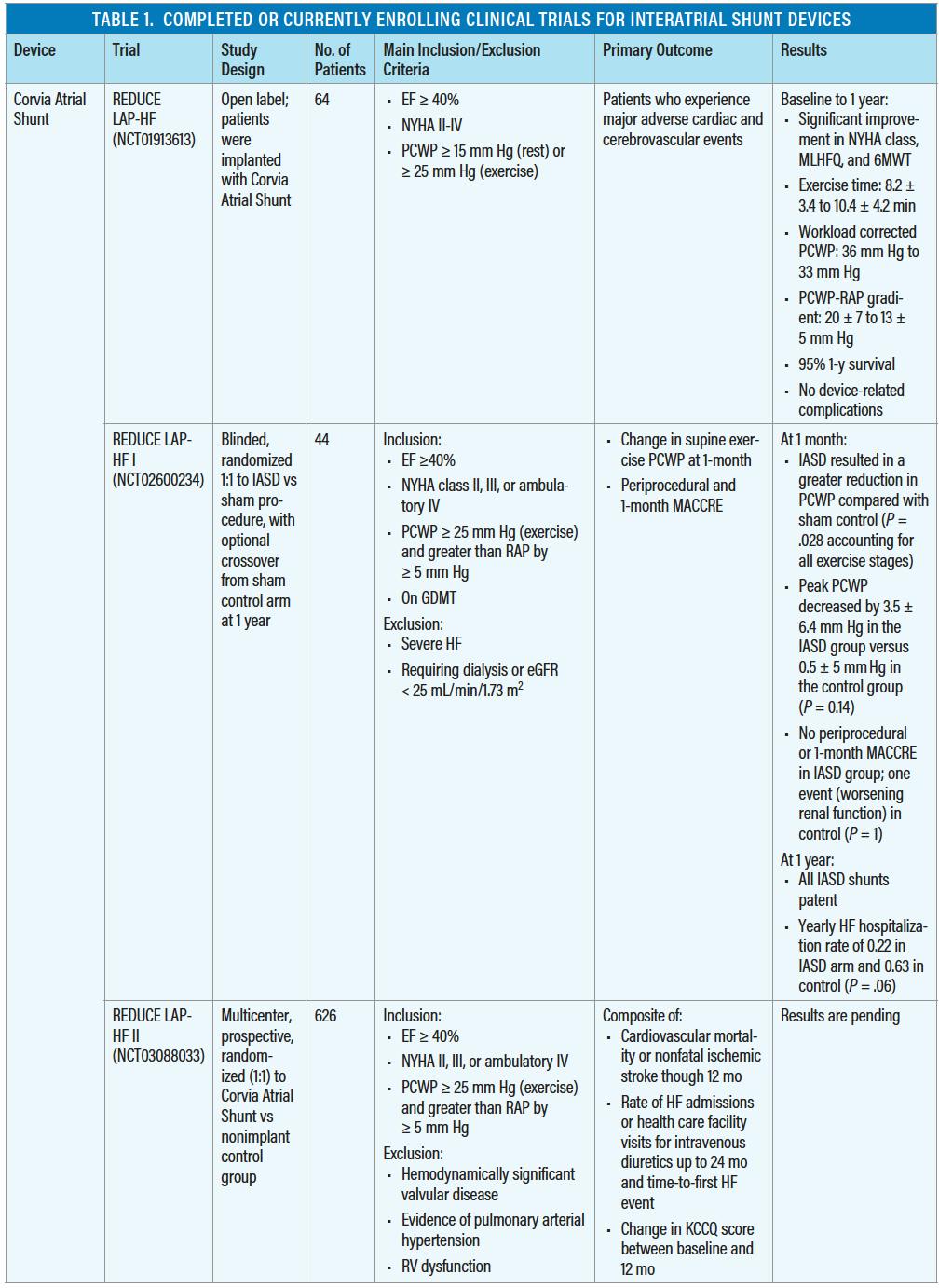
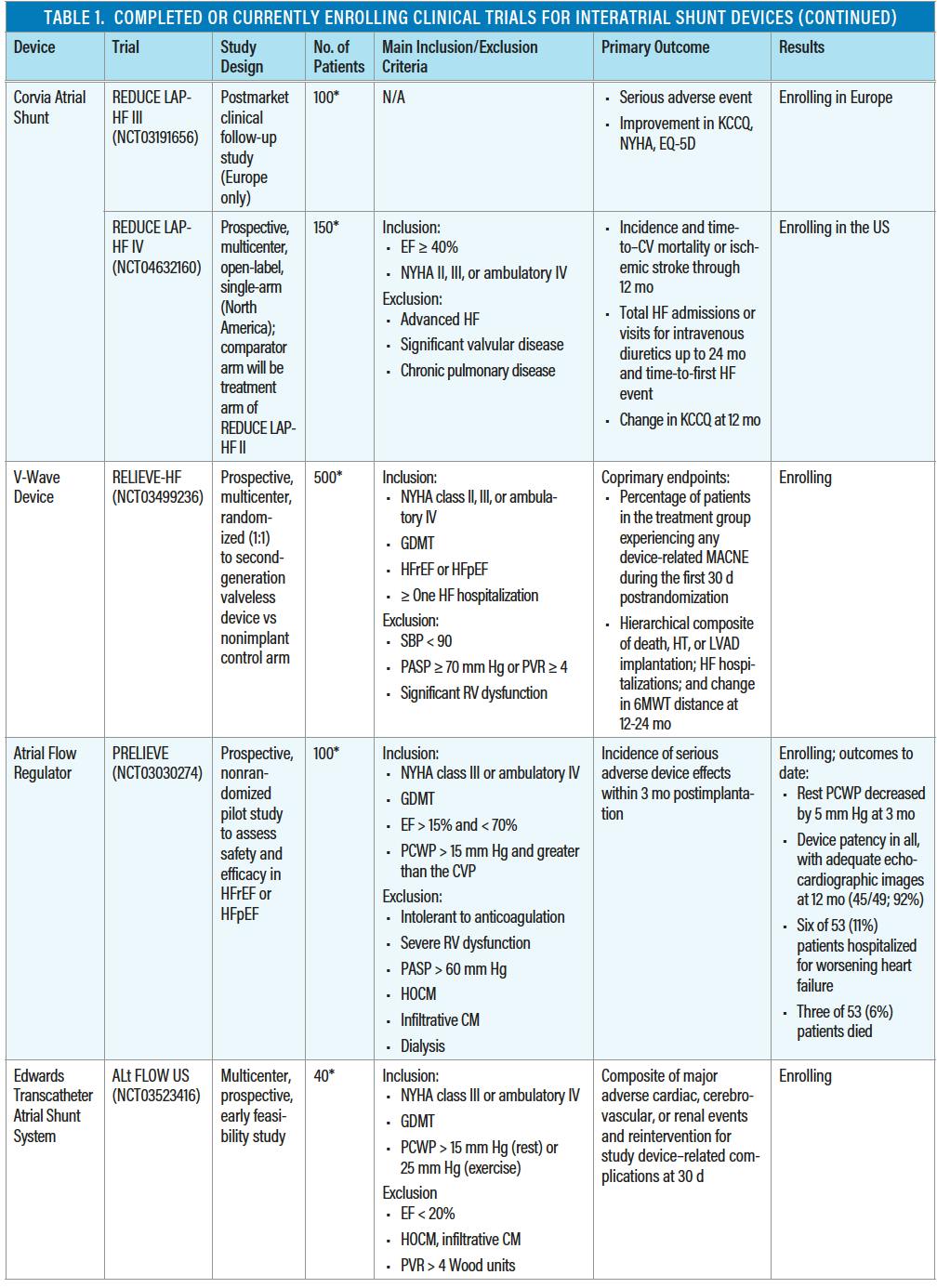
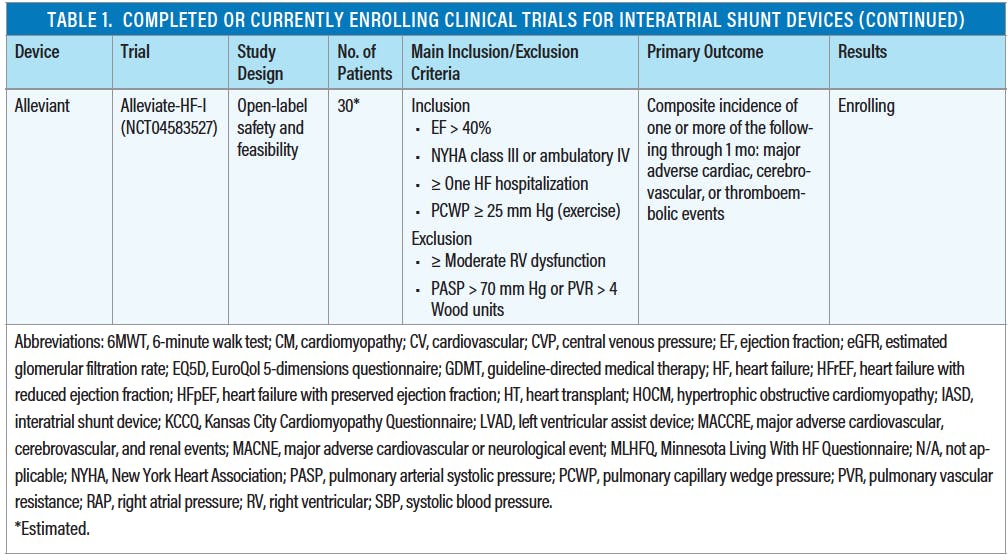
Currently, there are six IASDs being studied, although the majority of available data are from the Corvia Atrial Shunt (Corvia Medical, Inc.) (Table 1A, Table 1B, and Table 1C).
Corvia Atrial Shunt
The Corvia Atrial Shunt is composed of a nitinol frame with an 8-mm opening, which is implanted percutaneously via the femoral vein (Figure 1). It is deployed after transseptal puncture into the left atrium (LA), after which retraction against the septum opens the left atrial side with subsequent deployment of the right atrial side, securing it in place. Corvia Medical has conducted multiple REDUCE LAP-HF studies to evaluate the Corvia Atrial Shunt system for the treatment of elevated left atrial pressure in patients with HF. The open-label REDUCE LAP-HF study implanted 64 patients with an EF ≥ 40%, New York Heart Association (NYHA) class II to IV, and elevated pulmonary capillary wedge pressure (PCWP; ≥ 15 mm Hg at rest or ≥ 25 mm Hg during supine bicycle exercise). One year after implantation, there were sustained improvements in NYHA class, quality of life (Minnesota Living With HF Questionnaire score), and 6-minute walk test (6MWT) distance, with 95% 1-year survival and no evidence of device-related complications.3 Furthermore, there was no significant change in right or left atrial size, and there was a small reduction in LV end-diastolic volume and a small increase in right ventricular (RV) end-diastolic volume, without any detrimental effect on cardiac output. Rest and exercise hemodynamics in a subset of the patient group demonstrated that the exercise pressure gradient between the left (PCWP) and right atrium (central venous pressure [CVP]) reduced from 20 mm Hg to 13 mm Hg, and there was no increase in pulmonary pressures or pulmonary vascular resistance (PVR). There was a 3 mm Hg reduction in PCWP during exercise. Notably, it has been shown that baseline pulmonary artery diastolic pressure (a surrogate for PCWP) is directly associated with mortality. In addition, a decrease in pulmonary artery diastolic pressure of between 3 to 6 mm Hg is associated with a reduction in mortality of between 19% to 35%.4 Bicycle exercise duration and workload-corrected PCWP improved, the latter of which has been shown to be an important prognostic factor. It is important to note that while no overall change in LA size was reported in this study, there was substantial variation within the group, and a greater LA compliance and greater right atrial reservoir strain at baseline were associated with greater reductions in LA volume at 6 months.5 This may have implications for identification of responders to this therapy. Kaye et al reported a 33% lower 2-year mortality of 3.4/100 patient-years in IASD recipients in comparison to a predicted mortality of 10.2/100 patient-years based on the Meta-Analysis Global Group in Chronic HF risk survival score.6
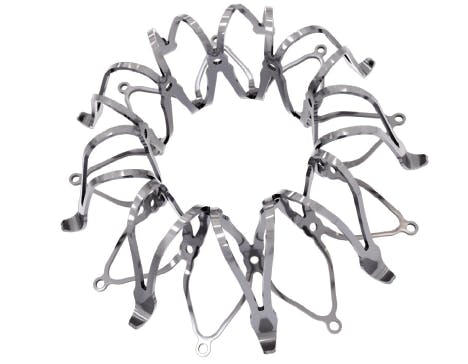
Figure 1. Corvia Atrial Shunt.
(Image courtesy of Corvia Medical, Inc)
REDUCE LAP-HF I (NCT02600234) was a randomized, sham-controlled trial of 44 patients with NYHA II, III, or ambulatory IV HF, an EF ≥ 40%, exercise PCWP ≥ 25 mm HG, and a PCWP-to-RAP gradient of ≥ 5 mm Hg. At 1-month postprocedure, there was a reduction in peak PCWP of 3.5 mm Hg versus 0.5 mm Hg in the IASD (n = 22) versus sham control (n = 22) groups. At 1 year, shunts were patent in all IASD-treated patients, and there was no difference in major adverse cardiac, cerebrovascular, or renal events.
REDUCE LAP-HF II is a prospective, multicenter, randomized, sham-controlled trial evaluating interatrial shunting. The study randomized 626 HF patients with an EF ≥ 40% who remained symptomatic despite standard guideline-directed medical therapy (GDMT) (NCT03088033). Patients were randomized 1:1 to receive the Corvia Atrial Shunt or a sham comparator. The primary endpoints are outlined in Table 1. Enrollment was completed in 2020, and results are pending. REDUCE LAP-HF III is a postmarket trial being conducted in several sites in Germany (NCT03191656). The purpose of this study is to collect additional data on the efficacy, safety, and quality of life outcomes in patients implanted with the IASD II system. REDUCE LAP-HF IV (NCT04632160) is a multicenter, open-label, single-arm trial with a planned enrollment of 150 patients in North America with an EF ≥ 40% and elevated left-sided filling pressures despite standard GDMT. The comparator arm will be the treatment arm of REDUCE LAP-HF II.
V-Wave Device
The V-Wave device (V-Wave Ltd.) is composed of an hourglass-shaped nitinol frame with a polytetrafluoroethylene polymer coating and a 5-mm fenestration. The first-generation device had a three-leaflet bovine pericardial valve to prevent paradoxical emboli and shunt closure; however, early studies demonstrated that almost 50% were found to be narrowed or occluded at 12 months, such that the second-generation device is valveless. A first-in-human study enrolled 38 HF patients, NYHA class III (97%) and IV (3%), who were implanted with the first-generation device. Follow-up data at 12 months demonstrated improvement in NYHA class (60% NYHA I/II), quality of life, and 6MWT distance (increase of 28 ± 83 m).7 In addition, those with widely patent shunts at 12 months had a lower rate of the combination of death, LV assist device implantation or heart transplant, and HF hospitalizations, as well as a greater decrease in PCWP (5 mm Hg). RELIEVE-HF is a multicenter trial with a target enrollment of 500 patients with NYHA class II, III, or ambulatory class IV HF receiving standard GDMT randomized to the second-generation valveless device versus a sham control (NCT03499236).
Atrial Flow Regulator
The Atrial Flow Regulator (Occlutech International AB) consists of two flat discs made of a nitinol wire mesh with a central orifice that ranges in diameter from 6 to 10 mm. In addition, there are three waist sizes: 2, 5, and 10 mm. There is an algorithm to choose the device for an individual patient. PRELIEVE is a multicenter, open-label, nonrandomized pilot study with a target enrollment of 100 patients with an EF between 15% and 70% who will undergo implantation of the Atrial Flow Regulator device (NCT03030274). The primary outcome is serious adverse device effects within 3 months postimplantation. Follow-up data at 1 year on the first 53 patients implanted (24 with EF < 40%, 29 with EF ≥ 40%) demonstrated device patency in all those with adequate echocardiographic images (45 of 49 patients; 92%). There was one device embolization into the LA that required surgical removal, and one patient had postprocedural bleeding. At 3 months, resting PCWP decreased by 5 mm Hg; no patient experienced stroke, worsening of RV function, or significant increase in pulmonary artery pressure. Six (11%) patients were hospitalized for worsening HF, and three (6%) patients died.8
Edwards Lifesciences Shunt Device
A slightly different approach is used via shunting between the coronary sinus and the LA with the Edwards Lifesciences transcatheter atrial shunt system. The right internal jugular vein is used to access the coronary sinus, after which a needle puncture is made into the LA. The shunt device is then deployed, consisting of a nitinol frame with four arms to anchor the shunt (two LA and two coronary sinus) and a 7-mm central lumen. Blood flow then is shunted from the LA to the right atrium via the coronary sinus, thus preserving the interatrial septum. In a first-in-human study, eight of 11 HF patients with NYHA class III or ambulatory IV on GDMT underwent successful implantation.9 At a mean follow-up of approximately 6.8 months, 87.5% (seven patients) had improved functional class to NYHA I/II, there was a reduction in patients who had > one HF hospitalization (87.5% to 0%), and there was a clinically significant improvement in quality of life (Kansas City Cardiomyopathy Questionnaire score) and 6MWT distance. PCWP decreased by an average of 7.8 mm Hg. The ALt FLOW US study is currently enrolling with the aim of evaluating clinical safety, device functionality, and effectiveness (NCT03523416).
NoYa Global
The NoYa Global adjustable shunting system (Venus Medtech) consists of a radioablation catheter that creates a permanent hole in the interatrial septum without the use of an implant. As such, there is no need for long-term anticoagulation. In a pilot study of 10 patients, there were no changes in left atrial pressure (LAP) or right atrial pressure (RAP) at 30 days and improvements in N-terminal probrain natriuretic peptide and 6MWT distance.
Alleviant Medical Inc.
The no-implant shunt therapy by Alleviant Medical Inc. creates a permanent shunt in the interatrial septum by cutting and removing septal tissue. Alleviate-HF-I will enroll an estimated 30 participants with an EF > 40%. The primary outcome will be a composite of the incidence of major adverse cardiac, cerebrovascular, and thromboembolic events at 30 days (NCT04583527).
PATIENT SELECTION CONSIDERATIONS
There are several physiologic parameters that should be considered to ensure optimal patient selection and a positive response to therapy. The underlying premise of these devices is that of an adequate left-to-right atrial pressure gradient to allow decompression of the LA. At rest, HFpEF patients typically have elevated resting PCWP, although this is usually within the normal range. However, during exercise there is a disproportionate increase in PCWP compared with RAP, such that the PWCP-CVP gradient may increase dramatically. Associated with this increase in PCWP is a rise in pulmonary pressures.10 The higher the gradient, the greater the flow across the shunt. As a result, patients with smaller pressure gradients may not derive clinically significant benefit. Both the left and right atria should have relatively preserved function given that a stiff, fibrotic LA may be unable to adequately decompress after IASD implantation and a fibrotic right atrium may be unable to accept the increased volume from the left side without causing a detrimental effect on the right ventricle. Furthermore, RV function should be assessed to avoid the potential for significant pre-existing RV dysfunction, given the increase in flow through the right side. Data from the Corvia device suggest that patients with HFmrEF benefit similarly to those with HFpEF, although the place of atrial shunting in the treatment of HFrEF remains unclear.
Even after taking these considerations into account, it is important to note that patients with cardiac amyloidosis, hypertrophic obstructive cardiomyopathy, restrictive cardiomyopathy, significant RV dysfunction, and severe pulmonary hypertension (PVR > 4) were excluded from the Corvia Atrial Shunt studies. In addition, there are several potential long-term side-effects that need to be considered: (1) stroke (reversal of the direction of shunt flow theoretically can give rise to an increased risk of stroke from a paradoxical embolus); (2) chronic elevation in CVP (although this appears to be minimal, the long-term effects on renal and liver function are not yet known); and (3) RV dysfunction due to chronically increased blood flow through the right heart. However, the Qp:Qs at exercise with the Corvia Atrial Shunt was < 1.5, which is typically considered the threshold for intervention in congenital shunts.
CONCLUSION
There are several IASDs under investigation in clinical trials, each with a slightly different device configuration but all with a similar goal: dynamically reduce left-sided filling pressures during exercise. Although the available evidence is from small studies, these devices appear to reduce LAP without a detrimental effect on the right heart while improving functional status and quality of life in midterm follow-up. Larger studies are ongoing to more conclusively definitively define the impact of this form of therapy on quality of life, exercise tolerance, HF exacerbations, and survival.
1. Abudiab MM, Redfield MM, Melenovsky V, et al. Cardiac output response to exercise in relation to metabolic demand in heart failure with preserved ejection fraction. Eur J Heart Fail. 2013;15:776-785. doi: 10.1093/eurjhf/hft026
2. Solomon SD, McMurray JJV, Anand IS, et al. Angiotensin–neprilysin inhibition in heart failure with preserved ejection fraction. N Engl J Med. 2019;381:1609-1620. doi: 10.1056/NEJMoa1908655
3. Kaye DM, Hasenfuss G, Neuzil P, et al. One-year outcomes after transcatheter insertion of an interatrial shunt device for the management of heart failure with preserved ejection fraction. Circ Heart Fail. 2016;9:e003662. doi: 10.1161/CIRCHEARTFAILURE.116.003662
4. Zile MR, Bennett TD, El Hajj S, et al. Intracardiac pressures measured using an implantable hemodynamic monitor: relationship to mortality in patients with chronic heart failure. Circ Heart Fail. 2017;10:e003594. doi: 10.1161/CIRCHEARTFAILURE.116.003594
5. Hanff TC, Kaye DM, Hayward CS, et al. Assessment of predictors of left atrial volume response to a transcatheter interatrial shunt device (from the REDUCE LAP-HF Trial). Am J Cardiol. 2019;124:1912-1917. doi: 10.1016/j.amjcard.2019.09.019
6. Kaye DM, Petrie MC, McKenzie S, et al. Impact of an interatrial shunt device on survival and heart failure hospitalization in patients with preserved ejection fraction. ESC Heart Fail. 2019;6:62-69. doi: 10.1002/ehf2.12350
7. Rodes-Cabau J, Bernier M, Amat-Santos IJ, et al. Interatrial shunting for heart failure: early and late results from the first-in-human experience with the V-Wave system. JACC Cardiovasc Interv. 2018;11:2300-2310. doi: 10.1016/j.jcin.2018.07.001
8. Paitazoglou C, Bergmann MW, Özdemir R, et al; AFR-PRELIEVE Investigators. One-year results of the first-in-man study investigating the Atrial Flow Regulator for left atrial shunting in symptomatic heart failure patients: the PRELIEVE study. Eur J Heart Fail. Published online February 8, 2021. doi: 10.1002/ejhf.2119
9. Simard T, Labinaz M, Zahr F, et al. TCT-87 levoatrial to coronary sinus shunting as a novel strategy for symptomatic heart failure: first-in-human experience. J Am Coll Cardiol. 2019;74(13 suppl): B87.
10. Borlaug BA, Nishimura RA, Sorajja P, et al. Exercise hemodynamics enhance diagnosis of early heart failure with preserved ejection fraction. Circ Heart Fail. 2010;3:588-595. doi: 10.1161/CIRCHEARTFAILURE.109.930701
Advertisement
Advertisement