Advertisement
Advertisement
July/August 2021
The ATLANTIS Randomized Trial: Apixaban Versus Standard of Care After TAVI
Insight on the role of oral anticoagulation as default antithrombotic strategy after transcatheter aortic valve implantation.
Transcatheter aortic valve implantation (TAVI) is a viable treatment option for a substantial proportion of elderly patients with symptomatic severe aortic stenosis.1-7 However, patients undergoing TAVI are exposed to the theoretical risk of periprocedural and long-term thromboembolic complications, including myocardial infarction (MI), stroke, systemic embolism, and bioprosthetic valve thrombosis.8,9 Contributing factors to such adverse events involve platelet aggregation and/or the coagulation cascade.8,10 Targeting the underlying pathophysiologic mechanisms through antithrombotic medications (ie, antiplatelet and anticoagulant drugs) is of crucial importance to reduce the incidence of TAVI-related thromboembolic complications.11 In about one-third of TAVI patients, this risk is further increased by comorbidities or circumstances that require long-term oral anticoagulation (OAC), such as atrial fibrillation, mechanical valve prosthesis, deep vein thrombosis (DVT), and pulmonary embolism (PE).8 Unfortunately, stacking antithrombotic drugs, for instance by using antiplatelet and anticoagulant agents to target platelet- and fibrin-mediated mechanisms of thrombus formation, is not an option in the elderly population who are currently offered TAVI due to a significant increase in the risk of fatal and life-threatening bleeding events.12,13
BACKGROUND
The optimal antithrombotic regimen after successful TAVI is controversial. Early small randomized clinical trials (RCTs) and their meta-analyses were intended to support the use of dual antiplatelet therapy (DAPT) but consistently displayed no difference between DAPT and single antiplatelet therapy (SAPT) with respect to thrombotic and ischemic outcomes, while SAPT was associated with a reduction in bleeding complications.14-17 In 2017, joint guidelines on the management of valvular heart disease (Figure 1) by the European Society of Cardiology and the European Association for Cardio-Thoracic Surgery recommended a 3- to 6-month course of DAPT followed by lifelong SAPT (class of recommendation [COR] 2a, level of evidence [LOE] C) for patients undergoing TAVI. An upfront SAPT strategy was more weakly recommended for patients at high bleeding risk (COR 2b, LOE C).18 On the other side, lifelong OAC without any antiplatelet therapy was recommended for TAVI patients with an established indication for OAC (COR 1, LOE C).18 Notably, these recommendations relied mostly on observational studies and experts’ opinions, resulting in a low-grade LOE. Consequently, the number of RCTs increased over the last few years to provide more evidence-based knowledge on the topic.
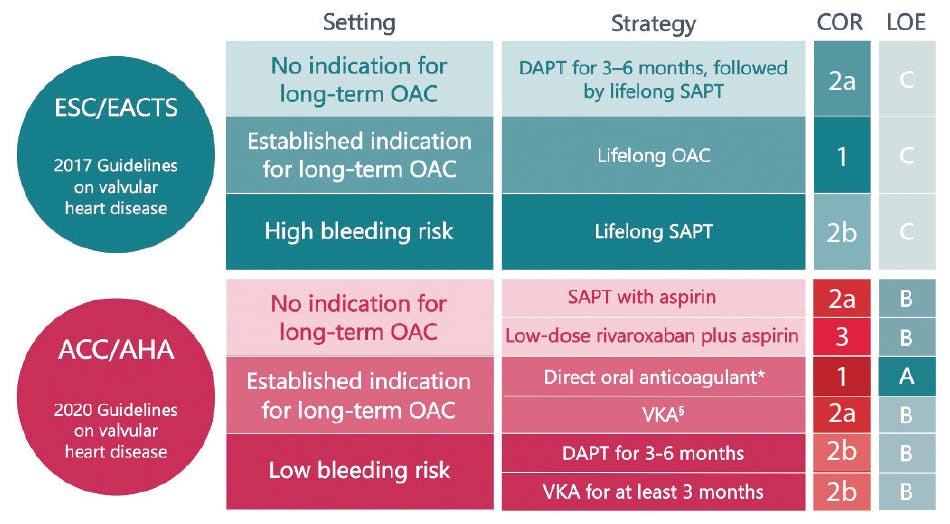
Figure 1. Summary of societal guidelines on antithrombotic therapy management after successful TAVI. *Patients who received a bioprosthetic valve more than 3 months ago; §Patients with new-onset atrial fibrillation within 3 months after TAVI.
The advent of new-generation bioprostheses and the extension of TAVI referral to lower-risk patients have likely modified the ratio between ischemia and bleeding, prompting the design of trials that focus on more conservative (“less is more”) approaches. In this context, the stratified cohort A of the POPular-TAVI trial, which included 665 patients without an indication for long-term OAC, showed a greater reduction in 1-year bleeding (risk ratio [RR], 0.57; 95% CI, 0.42-0.77; P = .001) and net adverse cardiovascular events (RR, 0.74; 95% CI, 0.57-0.95; P = .04) when comparing SAPT versus DAPT with aspirin and clopidogrel for the initial 3 months. In addition, SAPT was noninferior to DAPT with respect to the composite of cardiovascular death, MI, and ischemic stroke (difference, 0.2%; 95% CI for noninferiority, −4.7 to 4.3; P = .004; RR, 0.98; 95% CI for superiority, 0.62-1.55; P = .93).19 Similarly, cohort B of the POPular-TAVI trial randomly assigned 313 TAVI patients with a baseline indication for long-term OAC to receive OAC alone or OAC plus 3 months of clopidogrel.20 At 1 year, OAC alone significantly reduced the incidence of bleeding (RR, 0.63; 95% CI, 0.43-0.90; P = .01) and net adverse cardiovascular events (RR, 0.69; 95% CI, 0.51-0.92) compared to OAC plus clopidogrel.
Meanwhile, concerns of subclinical leaflet thrombosis and clinical bioprosthetic valve thrombosis led to investigations on the preventive role of OAC in patients who did not require OAC due to a pre-existing condition.21 The GALILEO trial randomized 1,644 patients to receive rivaroxaban 10 mg daily plus 3-month aspirin or aspirin plus 3-month clopidogrel.22 The trial was prematurely stopped by the data and safety monitoring board due to higher rates of the composite of death or first thromboembolic event in the rivaroxaban group (hazard ratio [HR], 1.35; 95% CI, 1.01-1.81; P = .04), paralleled by a numerical increase in major, disabling, or life-threatening bleeding (HR, 1.50; 95% CI, 0.95-2.37; P = .08). However, in the GALILEO-4D substudy, a rivaroxaban-based antithrombotic strategy outperformed an antiplatelet-based strategy for the prevention of subclinical valve dysfunction.23 Using a softer endpoint and a lower-risk cohort of patients without a baseline indication to OAC, the small LRT 2.0 trial suggested a significant benefit of the combination of vitamin K antagonist (VKA) and aspirin compared with aspirin alone for the prevention of 30-day valve dysfunction (odds ratio, 4.8; 95% CI, 1.3-18.3; P = .014), without any concomitant increase in bleeding (P = .64).24
Incorporating the new evidence in the field of antithrombotic therapy after TAVI, updated guidelines on the management of valvular heart disease (Figure 1) were jointly issued in 2020 by the American College of Cardiology (ACC) and the American Heart Association.25 SAPT was set as the reference strategy for the majority of TAVI patients without an established indication for OAC (COR 2a, LOE B), whereas low-bleeding-risk patients were the target for more intense strategies, including 3- to 6-month DAPT (COR 2b, LOE B) or 3-month VKA (COR 2b, LOE B). In addition, building on the evidence from the GALILEO trial, low-dose rivaroxaban on top of aspirin was formally contraindicated in patients who do not require OAC (COR 3, LOE B).22 Conversely, in patients with an established indication for OAC, direct OACs (DOACs) were introduced as a valid option (COR 1, LOE A) starting from 3 months after TAVI, while VKA was recommended (COR 2a, LOE B) for the first 3 months.25
THE ATLANTIS TRIAL
ATLANTIS was a multicenter, open-label, randomized, superiority trial designed to compare apixaban to standard of care in patients with or without baseline OAC after successful TAVI (Figure 2). The major exclusion criteria were end-stage renal disease, unsuccessful TAVI requiring reintervention, ongoing major bleeding or vascular complication, and any condition requiring specific antithrombotic therapy (eg, recent coronary stenting, mechanical valve, severe mitral stenosis). Patients randomly allocated to the investigational arm received apixaban 5 mg twice daily (reduced to 2.5 mg twice daily per instructions for use and based on renal function, age, weight, or concomitant antiplatelet therapy). The control group was administered either VKA (in patients with an established indication for OAC; stratum 1) or SAPT/DAPT (in patients without an established indication for OAC; stratum 2). The primary endpoint was the 1-year composite of death, MI, stroke, systemic embolism, intracardiac or bioprosthesis thrombus, DVT or PE, and life-threatening, disabling, or major bleeding.26
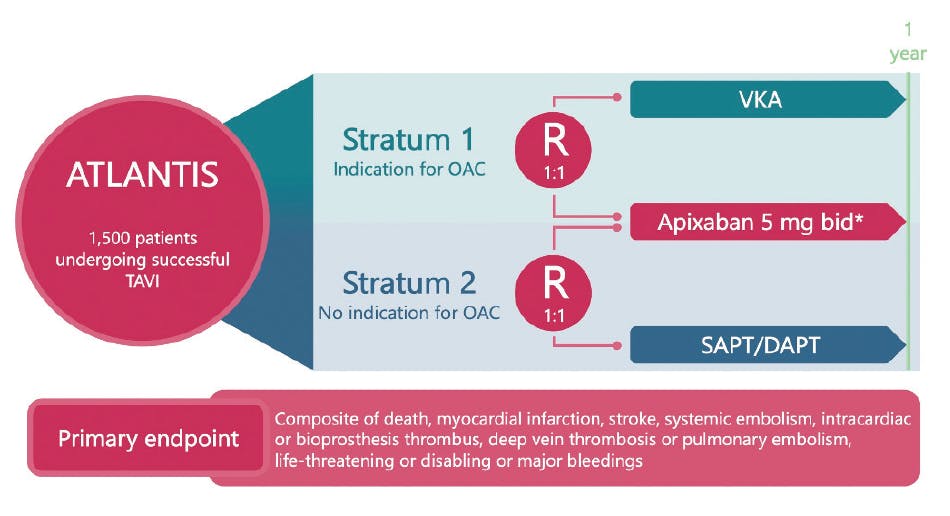
Figure 2. ATLANTIS trial design. *2.5-mg bid if creatinine clearance is 15 to 29 mL/min, concomitant antiplatelet therapy (recent ACS or PCI), or two of the following: age ≥ 80 years, weight ≤ 60 kg, or creatinine ≥ 1.5 mg/dL (133 µMol/L). Bid, twice a day; R, randomized.
The ATLANTIS trial, which was presented as a late-breaking trial scientific session at the 2021 ACC conference, is unpublished at the time of writing this article.27 The trial enrolled 1,500 patients, of which approximately one-third required long-term OAC; 749 patients were assigned to the experimental arm and 751 to the standard of care arm (228 in stratum 1, 523 in stratum 2). Follow-up completion rates were similar between the groups (86.0% in the apixaban group vs 85.1% in the control group). Figure 3 summarizes the main results of the trial as reported by the investigators at ACC. There was no between-groups difference in the incidence of the composite primary endpoint (HR, 0.92; 95% CI, 0.73-1.16), even in a post hoc sensitivity analysis excluding valve thrombosis, which is an outcome particularly sensitive to ascertainment (HR, 1.12; 95% CI, 0.88-1.44). These findings were confirmed in subgroup analyses of patients with an established indication to OAC (HR, 1.02; 95% CI, 0.68-1.51 for the primary endpoint; HR, 1.06; 95% CI, 0.71-1.58 excluding valve thrombosis) or without an established indication to OAC (HR, 0.88; 95% CI, 0.66-1.17 for the primary endpoint; HR, 1.16; 95% CI, 0.85-1.60 excluding valve thrombosis). Notably, there was no significant statistical interaction between the treatment effect of apixaban and the baseline requirement for OAC with respect to the primary endpoint (P = .57). In the analysis of secondary ischemic outcomes, no significant differences were noted between the experimental and the control groups, with the exceptions of reduced valve thrombosis (HR, 0.23; 95% CI, 0.11-0.50) and DVT/PE (HR, 0.09; 95% CI, 0.01-0.72) with apixaban. Safety analyses showed similar rates of the composite of life-threatening, disabling, or major bleeding (HR, 1.02; 95% CI, 0.72-1.44), as well as of its individual components. No differences between the apixaban and VKA groups were noted in the subgroup analyses of patients requiring long-term OAC (green stripes, Figure 3). Conversely, among patients without an established indication for OAC (blue stripes, Figure 3), apixaban was associated with safety concerns, although there was a significant reduction in valve thrombosis (HR, 0.19; 95% CI, 0.08-0.47). These safety concerns included an increased rate of all-cause death (HR, 1.86; 95% CI, 1.04-3.34), which was driven by a higher incidence of noncardiovascular death (HR, 2.99; 95% CI, 1.07-8.35). Notably, these findings should be interpreted with caution as they belong to exploratory analyses of a trial with neutral results for the primary endpoint.
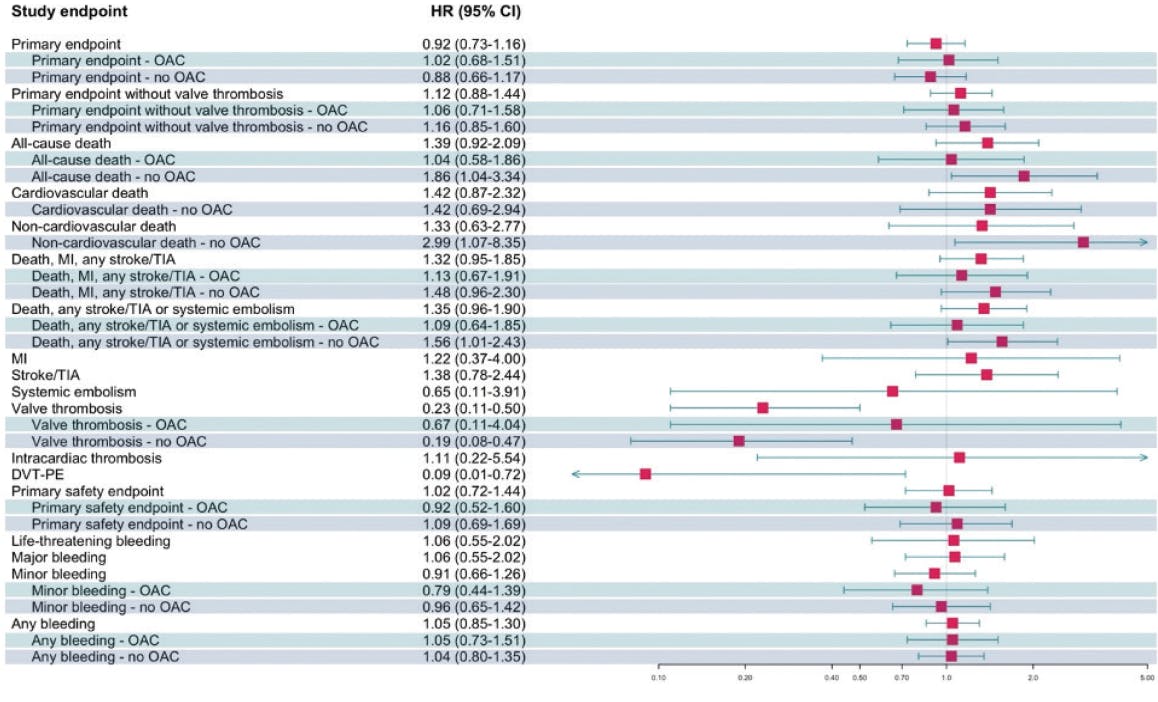
Figure 3. Results of the ATLANTIS trial. Green and blue stripes indicate subgroups with and without an established indication for long-term OAC, respectively. TIA, transient ischemic attack.
ATLANTIS: Nuts and Bolts
Interpreting ATLANTIS should follow a multistep approach that takes into account several methodologic and statistical aspects and distinguishes patients with and without an established indication for long-term OAC. Notwithstanding the presence of an independent blinded clinical events committee, the open-label design exposes the trial to risk of bias, including ascertainment bias. Also, the results of ATLANTIS apply to a population of old and high-risk TAVI patients. For easier interpretation of the treatment effect of apixaban, it can be useful to separately analyze the two strata of the trial.
Although apixaban failed to demonstrate a clear benefit as compared to VKA in stratum 1 (patients who need OAC), there were no safety concerns. This makes both strategies plausible and potential alternative options. Based on previous trials, apixaban is known to have a good safety profile and is easier to use compared with VKA. Therefore, the lack of significant differences between apixaban and VKA in the ATLANTIS trial is not a practice-changing finding. However, it does provide evidence in support of the current use of DOACs in TAVI patients who require OAC for other reasons.28,29 This topic will be the objective of the upcoming ENVISAGE-TAVI AF trial (NCT02943785), where another DOAC (edoxaban) will be tested against VKA in TAVI patients with atrial fibrillation.30 The results of ENVISAGE-TAVI AF are soon awaited within 2021.
Stratum 2 of ATLANTIS can be seen as a second trial of DOAC versus antiplatelet therapy in patients without an established indication for OAC, albeit with no sufficient statistical power for this comparison. In this perspective, it shares with GALILEO the failure of a DOAC-based strategy in reducing the primary outcome—although without evidence of harm with apixaban. The two trials targeted a similar TAVI population, but the intervention was quite different for several reasons. First, beyond testing a different DOAC (apixaban instead of rivaroxaban), ATLANTIS used the recommended dose for the prevention of cardioembolic stroke in patients with nonvalvular atrial fibrillation, whereas GALILEO explored low-dose rivaroxaban (10 mg daily) along with aspirin. Second, the control strategy differed. GALILEO used 3-month DAPT followed by aspirin alone, while the control group in stratum 2 of ATLANTIS consisted of SAPT/DAPT according to local practice. Third, the primary endpoint in GALILEO was a composite of all-cause death or thromboembolic events (including stroke, MI, symptomatic valve thrombosis, systemic embolism, DVT, or PE), whereas the primary endpoint in ATLANTIS also included bleeding. The high rate of DAPT (approximately 80%) in the control group of ATLANTIS stratum 2 probably contributed to the lower ischemic outcomes while also increasing bleeding, thereby impacting the treatment effect of apixaban. Consistent with GALILEO, ATLANTIS demonstrated a higher rate of noncardiovascular death with the experimental strategy. However, such events were mainly due to sepsis or end-stage renal disease, without any corresponding increase in bleeding or ischemic complications.
In conclusion, despite the absence of any benefit from the investigational strategy, the lack of safety concerns with apixaban versus VKA is reassuring, awaiting the ENVISAGE TAVI AF results. Conversely, antiplatelet therapy (and particularly SAPT with aspirin based on previous trials) seems to be the right standard for TAVI patients without an established indication for OAC.
ATLANTIS Four-Dimensional–CT Substudy
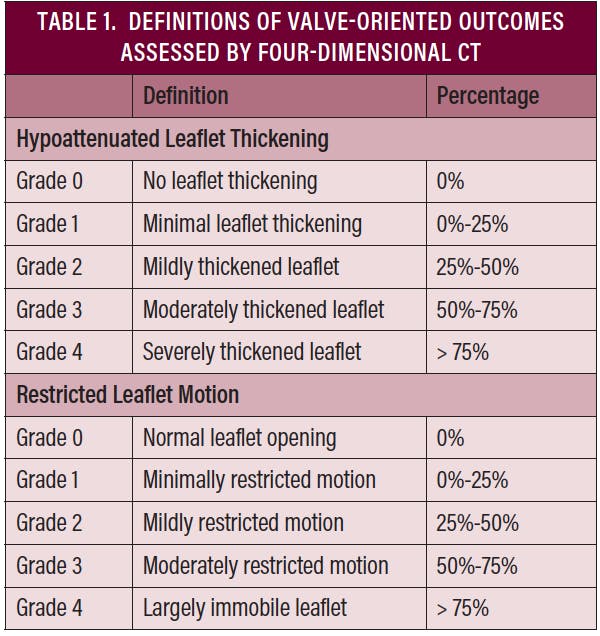
The main objectives of the four-dimensional CT (4D-CT) ATLANTIS substudy were to investigate the incidence of bioprosthetic valve thrombosis at 3 to 6 months and determine the treatment effect of apixaban in preventing this outcome. Secondary aims were to explore the potential for an interaction based on baseline requirement for long-term OAC and assess the relationship between bioprosthetic valve thrombosis and clinical outcomes at 1 year. To pursue these goals, the investigators used information from 4D-CT scans. This investigation was mandatory per protocol to identify subclinical leaflet thrombosis, which was part of the primary endpoint of the trial. However, complete 4D-CT scans were performed in 762 patients (50.8%), of which 370 were randomized to apixaban (95 in stratum 1; 275 in stratum 2) and 392 to standard of care (109 in stratum 1; 283 in stratum 2). The primary endpoint of the 4D-CT substudy was the composite of restricted leaflet motion (RLM) grade 3 to 4 or hypoattenuated leaflet thickening (HALT) grade 3 to 4 (Table 1).31 Secondary endpoints included valve thrombosis; valve area; RLM grade 3 to 4; composite of death, MI, stroke or peripheral embolism; and composite of death, MI, or stroke/transient ischemic attack at 1 year. Apixaban did not reduce the incidence of the substudy primary outcome as compared to standard of care (HR, 0.65; 95% CI, 0.41-1.04), but a significant interaction of the treatment effect of apixaban versus the baseline indication for long-term OAC was observed (P for interaction = .03). Although apixaban failed in the prevention of leaflet dysfunction when compared to VKA in patients with an established indication for OAC (HR, 1.80; 95% CI, 0.62-5.25), there was a 49% reduction of the substudy primary endpoint with apixaban versus antiplatelet therapy in patients who did not require baseline OAC (HR, 0.51; 95% CI, 0.30-0.86). Similar results were found with respect to secondary outcomes (ie, thrombus or HALT grade 3-4). These findings were consistent with those from GALILEO-4D, suggesting that OAC, either by VKA or DOAC, might be an effective treatment option to reduce the risk of subclinical valve thrombosis in patients with no baseline indication.23 However, it is still unknown whether such valve-oriented outcomes are mere imaging findings or if they translate into adverse clinical events or premature structural valve dysfunction and reduced valve durability.32 The latest Valve Academic Research Consortium definitions clearly distinguished two entities: subclinical leaflet thrombosis and clinically significant valve thrombosis. The former often resolves without any specific treatment.21 Importantly, ATLANTIS and GALILEO showed hints of benefit in the prevention of subclinical leaflet thrombosis with a DOAC-based regimen in patients with no baseline indication for OAC; however, the results on hard clinical endpoint were negative, thus preventing a large-scale adoption of such strategies. Interestingly, patients with RLM or HALT ≥ grade 3 at 90 days presented a higher risk of 1-year ischemic outcomes compared to patients without relevant leaflet dysfunction (HR, 1.58; 95% CI, 0.77-3.21), although this figure was not statistically significant. This signal should not be overlooked, and further efforts should be made to identify high-risk patients (eg, small aortic valve annulus, valve-in-valve procedures) to adopt personalized preventive strategies or at least serial CT imaging follow-up.
CONCLUSION
The ATLANTIS trial investigated the role of apixaban as a default antithrombotic strategy after successful TAVI in patients with and without an established indication for long-term OAC. The results of this trial do not support apixaban as the standard of care for all TAVI patients. However, continuing apixaban in those requiring long-term OAC who are already on this drug at the time of TAVI seems to be a reasonable strategy.
1. Smith CR, Leon MB, Mack MJ, et al. Transcatheter versus surgical aortic-valve replacement in high-risk patients. N Engl J Med. 2011;364:2187-2198. doi: 10.1056/NEJMoa1103510
2. Leon MB, Smith CR, Mack M, et al. Transcatheter aortic-valve implantation for aortic stenosis in patients who cannot undergo surgery. N Engl J Med. 2010;363:1597-1607. doi: 10.1056/NEJMoa1008232
3. Leon MB, Smith CR, Mack MJ, et al. transcatheter or surgical aortic-valve replacement in intermediate-risk patients. N Engl J Med. 2016;374:1609-1620. doi: 10.1056/NEJMoa1514616
4. Adams DH, Popma JJ, Reardon MJ, et al. Transcatheter aortic-valve replacement with a self-expanding prosthesis. N Engl J Med. 2014;370:1790-1798. doi: 10.1056/NEJMoa1400590
5. Reardon MJ, Van Mieghem NM, Popma JJ, et al. Surgical or transcatheter aortic-valve replacement in intermediate-risk patients. N Engl J Med. 2017;376:1321-1331. doi: 10.1056/NEJMoa1700456
6. Mack MJ, Leon MB, Thourani VH, et al. Transcatheter aortic-valve replacement with a balloon-expandable valve in low-risk patients. N Engl J Med. 2019;380:1695-1705. doi: 10.1056/NEJMoa1814052
7. Popma JJ, Deeb GM, Yakubov SJ, et al. Transcatheter aortic-valve replacement with a self-expanding valve in low-risk patients. N Engl J Med. 2019;380:1706-1715. doi: 10.1056/NEJMoa1816885
8. Greco A, Capranzano P, Barbanti M, et al. Antithrombotic pharmacotherapy after transcatheter aortic valve implantation: an update. Expert Rev Cardiovasc Ther. 2019;17: 479-496. doi: 10.1080/14779072.2019.1632189
9. Capodanno D, Greco A. Stroke after transcatheter aortic valve replacement: a multifactorial phenomenon. JACC Cardiovasc Interv. 2019;12:1590-1593. doi: 10.1016/j.jcin.2019.07.004
10. Capodanno D, Greco A. Platelet function testing after transcatheter aortic valve implantation. Thromb Haemost. 2018;118:1681-1685. doi: 10.1055/s-0038-1672215
11. Greco A, Capodanno D. Antithrombotic therapy after TAVI: is aspirin enough? Cardiac Interv Today. 2021;15:40-44.
12. Piccolo R, Pilgrim T, Franzone A, et al. Frequency, timing, and impact of access-site and non–access-site bleeding on mortality among patients undergoing transcatheter aortic valve replacement. JACC Cardiovasc Interv. 2017;10:1436-1446. doi: 10.1016/j.jcin.2017.04.034
13. Greco A, Capodanno D. Anticoagulation after transcatheter aortic valve implantation: current status. Interv Rev. 2020;15:e02. doi: 10.15420/icr.2019.24
14. Ussia GP, Scarabelli M, Mulè M, et al. Dual antiplatelet therapy versus aspirin alone in patients undergoing transcatheter aortic valve implantation. Am J Cardiol. 2011;108:1772-1776. doi: 10.1016/j.amjcard.2011.07.049
15. Stabile E, Pucciarelli A, Cota L, et al. SAT-TAVI (single antiplatelet therapy for TAVI) study: a pilot randomized study comparing double to single antiplatelet therapy for transcatheter aortic valve implantation. Int J Cardiol. 2014;174:624-627. doi: 10.1016/j.ijcard.2014.04.170
16. Rodés-Cabau J, Masson J-B, Welsh RC, et al. Aspirin versus aspirin plus clopidogrel as antithrombotic treatment following transcatheter aortic valve replacement with a balloon-expandable valve: the ARTE (aspirin versus aspirin + clopidogrel following transcatheter aortic valve implantation) randomized clinical trial. JACC Cardiovasc Interv. 2017;10:1357-1365. doi: 10.1016/j.jcin.2017.04.014
17. Zuo W, Yang M, He Y, et al. Single or dual antiplatelet therapy after transcatheter aortic valve replacement: an updated systemic review and meta-analysis. J Thorac Dis. 2019;11:959-968. doi: 10.21037/jtd.2019.01.87
18. Baumgartner H, Falk V, Bax JJ, et al. 2017 ESC/EACTS guidelines for the management of valvular heart disease. Eur Heart J. 2017;38:2739-2791. doi: 10.1093/eurheartj/ehx391
19. Brouwer J, Nijenhuis VJ, Delewi R, et al. Aspirin with or without clopidogrel after transcatheter aortic-valve implantation. N Engl J Med. 2020;383:1447-1457. doi: 10.1056/NEJMoa2017815
20. Nijenhuis VJ, Brouwer J, Delewi R, et al. Anticoagulation with or without clopidogrel after transcatheter aortic-valve implantation. N Engl J Med. 2020;382:1696-1707. doi: 10.1056/NEJMoa1915152
21. VARC-3 Writing Committee; Généreux P, Piazza N, Alu MC, et al. Valve Academic Research Consortium 3: updated endpoint definitions for aortic valve clinical research. Eur Heart J. 2021;42:1825-1857. doi: 10.1093/eurheartj/ehaa799
22. Dangas GD, Tijssen JGP, Wöhrle J, et al. Trial of rivaroxaban after transcatheter aortic-valve replacement. N Engl J Med. 2020;382:120-129. doi: 10.1056/NEJMoa1911425
23. De Backer O, Dangas GD, Jilaihawi H, et al. Reduced leaflet motion after transcatheter aortic-valve replacement. N Engl J Med. 2020;382:130-139. doi: 10.1056/NEJMoa1911426
24. Rogers T, Shults C, Torguson R, et al. Randomized trial of aspirin versus warfarin after transcatheter aortic valve replacement in low-risk patients. Circ Cardiovasc Interv. 2021;14:e009983. doi: 10.1161/CIRCINTERVENTIONS.120.009983
25. Writing Committee Members; Otto CM, Nishimura RA, Bonow RO, et al. 2020 ACC/AHA guideline for the management of patients with valvular heart disease. J Am Coll Cardiol. 2021;77:e25-e197. doi: 10.1016/j.jacc.2020.11.018
26. Collet J-P, Berti S, Cequier A, et al. Oral anti-Xa anticoagulation after trans-aortic valve implantation for aortic stenosis: the randomized ATLANTIS trial. Am Heart J. 2018;200:44-50. doi: 10.1016/j.ahj.2018.03.008
27. Collet JP, Van Belle E, Thiele H, et al. Oral anti-xa anticoagulation after trans-aortic valve implantation for aortic stenosis: the randomized Atlantis trial. Presented at: ACC.21; May 15-17, 2021; presented virtually.
28. Granger CB, Alexander JH, McMurray JJV, et al. Apixaban versus warfarin in patients with atrial fibrillation. N Engl J Med. 2011;365:981-992. doi: 10.1056/NEJMoa1107039
29. Lopes RD, Heizer G, Aronson R, et al. Antithrombotic therapy after acute coronary syndrome or PCI in atrial fibrillation. N Engl J Med. 2019;380:1509-1524. doi: 10.1056/NEJMoa1817083
30. Van Mieghem NM, Unverdorben M, Valgimigli M, et al. Edoxaban versus standard of care and their effects on clinical outcomes in patients having undergone transcatheter aortic valve implantation in atrial fibrillation—rationale and design of the ENVISAGE-TAVI AF trial. Am Heart J. 2018;205:63-69. doi: 10.1016/j.ahj.2018.07.006
31. Blanke P, Weir-McCall JR, Achenbach S, et al. Computed tomography imaging in the context of transcatheter aortic valve implantation (TAVI)/transcatheter aortic valve replacement (TAVR). JACC Cardiovasc Imaging. 2019;12:1-24. doi: 10.1016/j.jcmg.2018.12.003
32. Rheude T, Pellegrini C, Stortecky S, et al. Meta-analysis of bioprosthetic valve thrombosis after transcatheter aortic valve implantation. Am J Cardiol. 2021;138:92-99. doi: 10.1016/j.amjcard.2020.10.018
Advertisement
Advertisement