Advertisement
Advertisement
July/August 2021
Perspectives on Transcatheter Mitral Therapy
Comparing devices and methods for the treatment of mitral valve regurgitation.
By Marcel Weber, MD; Johanna Vogelhuber, MD; Can Öztürk, MD; Sebastian Zimmer, MD; and Georg Nickenig, MD
In patients with untreated symptomatic mitral valve regurgitation (MR), regardless of their etiology, an unfavorable prognosis must be expected (a 5-year mortality of approximately 50%).1-4 The recommended therapy for MR, on the other hand, depends on its etiology. In secondary or functional MR, optimal conservative (drug-based) heart failure therapy (including any implantable cardiac defibrillator or cardiac resynchronization therapy treatment) is sought before further surgical- or catheter-based interventional therapy is pursued (both recommendation class 2b).5,6 In primary, degenerative MR and left ventricular ejection fraction > 30%, surgical MR as a first-line therapy is in the foreground, depending on the underlying disease (recommendation class 1a). Which procedure is preferred—whether open heart surgery or catheter-based intervention—depends on the etiology, the individual patient constellation (including age, comorbidities, and additional indications for operative myocardial revascularization), and the decision in the interdisciplinary heart team.5,6
In almost every third patient (almost 30%) with severe symptomatic mitral valve insufficiency, there are contraindications for cardiac surgery due to the high risk of complications with high perioperative mortality (approximately 15% in patients < 75 years of age).7,8 Rapid developments in the field of transcatheter mitral valve therapy have provided effective and gentle therapy alternatives for this collective of patients for whom curative mitral valve therapy has not been available up to now.
This article will review a number of established and effective procedures for interventional transcatheter mitral valve reconstruction that are currently available (Figure 1). In particular, the edge-to-edge reconstruction using MitraClip (Abbott) has the greatest user experience and the broadest data base. In addition, the Pascal system (Edwards Lifesciences), methods of direct annuloplasty using Cardioband (Edwards Lifesciences) and indirect annuloplasty using Carillon (Cardiac Dimensions), and the transapical implantation of artificial tendon sutures using the artificial chordae delivery system (NeoChord) or Harpoon system (Edwards Lifesciences) are used worldwide, with mostly good data on success and safety rates. In addition, some transcatheter mitral valves that are already approved or are currently in approval studies will be presented.
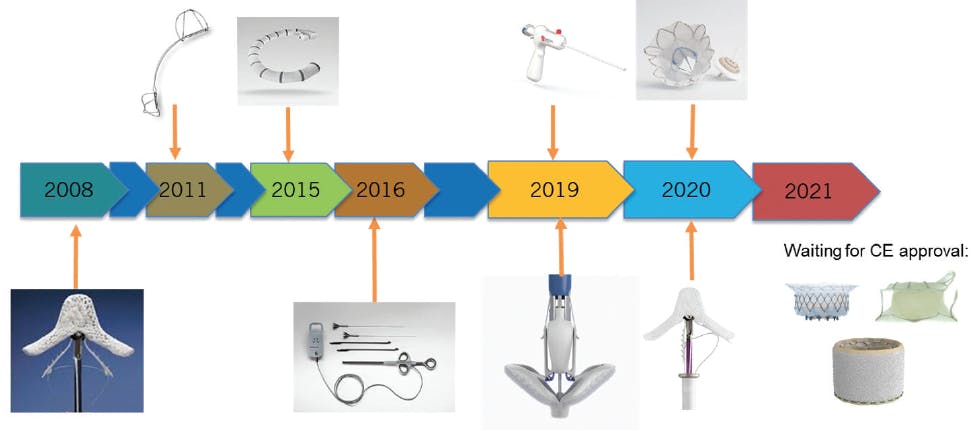
Figure 1. TMVR: CE certified therapeutic options.
PREPROCEDURAL EVALUATION BEFORE Transcatheter mitral valve repair and replacement
A dedicated preprocedural evaluation is essential for the selection of a suitable therapy method with promising results. The focus here is on differentiated imaging using echocardiography (transthoracic [TTE] and transesophageal [TEE]) and electrocardiogram-controlled contrast CT. Three-dimensional CT reconstruction is now of particular importance. This enables the procedure to be simulated as part of the evaluation of the appropriate transcatheter mitral valve prosthesis or the appropriate annuloplasty system. Proper patient selection is crucial for the success of any open cardiac surgery or transcatheter procedure on the mitral valve. As part of the detailed case discussion in the interdisciplinary heart team of cardiologists and cardiac surgeons, the decision on the appropriate procedure is made, taking into account the preprocedural imaging, the patient’s age, the comorbidities, the clinical condition, and the scores for risk stratification (ie, Society of Thoracic Surgeons score, EUROScore II).
TRANSCATHETER MITRAL VALVE REPAIR
Edge-to-Edge Therapy as a Work Horse for Secondary MR
Procedure technique and early results of the MitraClip device, which received CE Mark in 2008, are well known and will not be described in detail. Currently, the most important trial in this field was the COAPT study, which compared optimal drug therapy alone against the combination of optimal drug therapy and edge-to-edge therapy in 614 patients with profound functional MR.9 Treatment with the MitraClip plus drug therapy resulted in a significant reduction in hospitalizations due to heart failure within 2 years compared to drug therapy alone (67.9%/year vs 35.8%/year; P < .001). Treatment with MitraClip also reduced all-cause mortality within 2 years, from 46.1% of patients in the control group to 29.1% in the implant group at the 2-year follow-up (P < .001). These results are consistent with a significant reduction in MR severity (MR ≤ 2°: 94.8% vs 46.9%; P < .001) and the New York Heart Association (NYHA) class in the MitraClip therapy arm after 1 year (NYHA class ≤ II: 72, 2% vs 49.6%; P < .001). On the other hand, the MITRA-FR trial did not demonstrate a benefit of edge-to-edge therapy compared with medical therapy.10 Many explanations for these opposite results have been stated, but most cardiologists tend toward transcatheter mitral valve repair in cases of severe, symptomatic MR under optimized heart failure therapy (COAPT study inclusion criteria), as recommended by the 2020 guidelines of the American College of Cardiology and the American Heart Association.11 With > 100,000 treated patients, the MitraClip is the most frequently used catheter-guided mitral valve repair method worldwide and has the best data available.
The Pascal system is almost similar to the MitraClip system. The Pascal clip received CE Mark in February 2019. At this point, the data available are limited to the CLASP trial. The 1-year results of the CLASP study showed that 100% of the patients had an MR ≤ 2° and 88% were in NYHA class ≤ II. The 1-year mortality in the pivotal study with 109 patients was 8%.12
Annuloplasty and Transapical Chordae Insertion as Part of the Toolbox Principle
The Cardioband mitral valve reconstruction system is another treatment for secondary MR. The transvenous Cardioband procedure reduces the annulus dimensions by screwing anchors into the heart muscle from the atrial side. The Cardioband is fixed on the posterior mitral valve annulus from lateral to medial. After fixation of the anchors, the implant is pulled together under ultrasound guidance to reduce the diameter of the mitral valve ring and thus improve the coaptation area of the leaflets. The Cardioband system has been CE Mark certified since 2016. In the largest multicenter study to date, it was shown that 87% of the 60 included patients survived the first year after Cardioband, 69% showed an MR ≤ 1° and 79% of the patients were in NYHA class ≤ II.13
The Carillon system induces an indirect annuloplasty by using the proximity of the coronary sinus to the mitral valve annulus for annulus reduction. The system, which resembles a brace, is brought forward into the right atrium through a 10-F sheath in the right internal jugular vein. The mitral valve annulus is then gathered by the Carillon device, which is inserted into the coronary sinus and withdrawn under tension.
The experience with the Carillon system, which has been CE Mark certified since 2011, is currently limited to approximately 1,000 implantations worldwide. The implantation success rate is 83% to 95% and is largely limited by influencing the circumflex artery or by the inability to intubate the coronary sinus. The study situation is currently still clearly limited, as is determined by the AMADEUS and TITAN studies, which show limited effectiveness of the method.14,15
Percutaneous chordal implantation with the NeoChord system, which received CE Mark approval in 2016, is used in cases of prolapse or flail of the posterior mitral valve leaflet. The device, which inserts new polytetrafluoroethylene (PTFE) chordae into the posterior mitral valve leaflet and fixes it at the apex, enables causal therapy of degenerative MR. A left-lateral minithoracotomy is used for access.
The NeoChord system has been used in approximately 800 cases so far. Two studies showed a technical success rate of 87% to 100% in 30 and 49 patients, respectively, with an MR grade of ≤ 2 after 30 days in 56% to 87.7% and a hospital mortality of 2% to 3.3%.16,17
The Harpoon device uses the same principle as NeoChord and has been commercially available in Europe since 2019. The delivery system is transapically inserted through an introducer sheath and directed under echocardiographic guidance to the leaflet target. Placement of PTFE knots close to the free edge of the mitral valve leaflet is done from lateral to medial and afterward chordae are fixed at the apex.
Recently published data showed technical success in 95% of 65 patients. One-year mortality was 3% and 98% of treated patients were in NYHA class I or II. MR turned out to be none/trace in 52% (n = 27), mild in 23% (n = 12), moderate in 23% (n = 12), and severe in 2% (n = 1) after 1 year.18
TRANSCATHETER MITRAL VALVE REPLACEMENT
Although transcatheter aortic valve replacement (TAVR) is already an established method for the treatment of symptomatic aortic valve stenosis,19 transcatheter mitral valve replacement (TMVR) is still in the intensive development process.2,6 As a minimally invasive procedure, TMVR is a promising alternative to cardiac surgery, especially for older patients with comorbidities and an expected high perioperative risk. The advantage of TMVR is an almost complete and reproducible reversal of the pre-existing regurgitation.2
Various prosthesis models developed specifically to replace the mitral valve are currently in CE certification studies. A major challenge in the development of suitable TMVR prostheses arises from the complex anatomy of the mitral valve. The large, asymmetric, D- and saddle-shaped mitral valve annulus is usually not very rigid or sclerosed and thus offers little resistance to adequate anchoring of the prosthesis. In addition, there is a complex subvalvular holding apparatus (including papillary muscles and chordae) and the anatomic proximity to the left ventricular outflow tract (LVOT), which must not be obstructed.2
A major advantage of TMVR in contrast to open heart surgical replacement is the minimally invasive, gentle, and overall less complicated access route without the need for cardiopulmonary bypass, and the short procedure and implantation time. Initially, TMVR was preferably performed via a transapical approach through a left-lateral minithoracotomy.6,20 Current efforts focus on modifying the implantation procedure via the transfemoral and transseptal access route, which could be less complicated but more difficult to control and to position the prosthesis due to the unfavorable angle after transseptal puncture and the limited atrial space.2
In the following section, we present and explain the TMVR models currently in CE certification studies that have already been implanted in > 30 patients.
Intrepid TMVR System
The Intrepid TMVR system (Medtronic) consists of a dual-stent system (Figure 2).2 The outer deformable nitinol stent carries an inner nitinol stent with a three-lobed, 27-mm, bovine pericardium valve. The size or the diameter of the outer part of the stent should be selected to match the respective mitral valve annulus.2
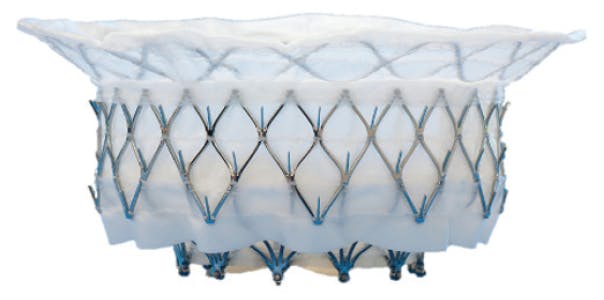
Figure 2. Intrepid prothesis.
Image courtesy of Medtronic.
Although the first-generation Intrepid TMVR system was introduced through a transapical approach, the new-generation Intrepid TMVR system can be implanted through a transseptal approach. The intraprocedural positioning is facilitated under real-time TEE imaging (two-dimensional/three-dimensional).
Initial studies showed good feasibility and high implantation success (98%) in short-term follow-up. The periprocedural mortality was 14% in one study.21 No relevant LVOT obstruction, hemolysis, or prosthetic embolization or thrombosis were observed.2,21-26 The APOLLO trial (NCT03242642) involving approximately 1,600 patients started in 2017. The primary endpoint is a composite of all-cause mortality, stroke, reoperation (or reintervention), and cardiovascular hospitalization at 1 year, with anticipated primary completion in 2021.
Tendyne Mitral Valve System
The Tendyne mitral valve system (Abbott) (Figure 3) consists of a self-expanding, double-frame system made of nitinol with a prosthesis-bearing inner frame with a three-sided valve made of porcine pericardium and an outer frame.2 In addition, the prosthesis is fixed apically to an epicardial plate with a retaining tether. The prosthesis is D-shaped to adapt to the physiological anatomy of the annulus, and the outer frame is selected according to the respective annulus diameter. The inner frame is always the same size. The Tendyne mitral valve system is introduced via a left-lateral thoracotomy and a transapical access with a 34-F catheter. The implantation is carried out under TEE control. Anticoagulation is also carried out for at least 3 months with warfarin.
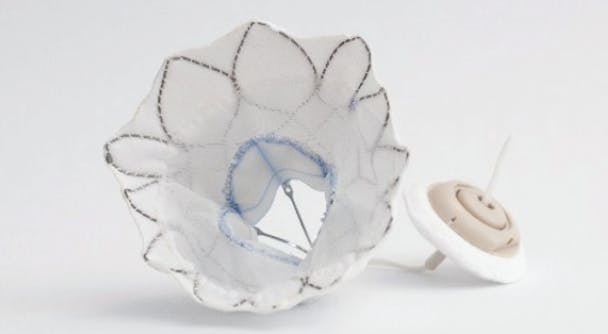
Figure 3. Tendyne prothesis.
Image courtesy of Abbott.
The largest published TMVR study to date is the Tendyne Global Feasibility Trial (NCT02321514), which enrolled 100 patients (mean age, 75.4 ± 8.1 years; secondary MR, n = 89; primary MR, n = 11) between November 2014 and November 2017. Successful device implantation was achieved in 96% of patients, with no intraprocedural deaths, two (2%) disabling strokes, and two (2%) myocardial infarctions during the hospital stay. Mortality was 6% at 30 days and 26% at 1 year, with no MR in 98.4%, a mean mitral gradient of 3 ± 1.1 mm Hg, and no LVOT obstruction. Among survivors, 88.5% were in NYHA class I/II, with bleeding events and need for reintervention in 8% and 4%, respectively.27
Tiara TMVR
The Tiara prosthesis (Neovasc Inc.) (Figure 4) consists of a self-expanding nitinol frame with a three-leaflet valve made of bovine pericardium.2,28 The nitinol frame is saddle- and D-shaped to conform to the physiological anatomy of the native mitral valve annulus. The prosthesis is fixed in the annulus by means of radial expansion. In addition, the axial anchoring takes place with three ventricular anchors. The Tiara prosthesis must be selected in the appropriate size according to the respective anatomy and requires a 32- to 40-F catheter for implantation; access is transapical.
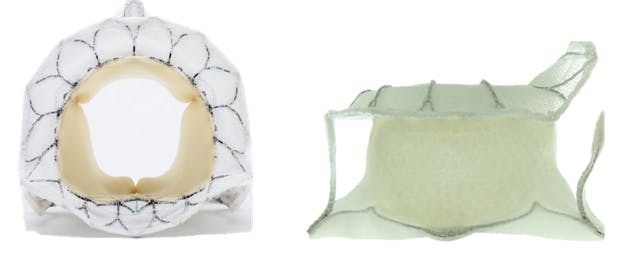
Figure 4. Tiara prothesis (left: top view, right: side view).
Image courtesy of Neovasc Inc.
The TIARA-II study (NCT03039855) is a multicenter, single-arm, prospective study that aims to enroll 115 participants. More than 50 patients have been treated with the Tiara TMVR so far with 95% implantation success, no intraoperative mortality, and 8.5% 30-day mortality.29-31
Sapien M3
The Sapien M3 transseptal TMVR system (Edwards Lifesciences) (Figure 5) is based on the established S3 valve for TAVR. It has a special skirt knitted onto the 29-mm S3 frame for paravalvular sealing. A spiral nitinol dock is initially deployed just below the mitral valve via transseptal access, followed by a Sapien M3 implantation using the Edwards Commander system (Edwards Lifesciences).
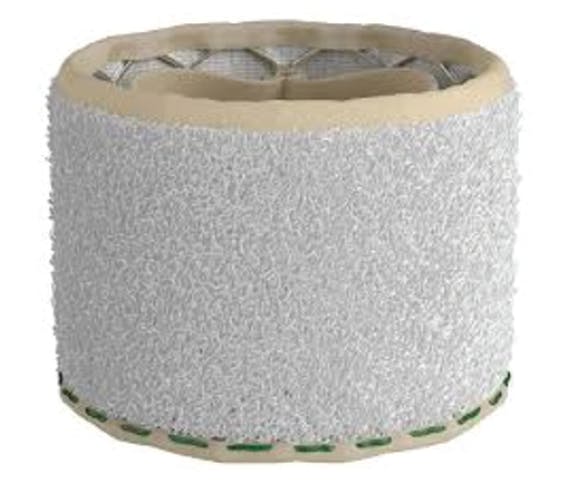
Figure 5. Sapien M3 prothesis.
Image courtesy of Edwards Lifesciences.
The 30-day outcomes of 35 high-surgical-risk patients with severe symptomatic MR treated within the ongoing single-arm United States Early Feasibility Study of the Sapien M3 TMVR system (NCT03230747) showed technical success in 88% of the 35 treated patients.32,33 At 30 days, one patient (2.9%) died and one disabling stroke occurred. MR ≤ 1 was present in 93.8% of patients, with a mean gradient of 5.6 ± 0.4 mm Hg and 63.5% were in NYHA class I/II. The ENCIRCLE trial (NCT04153292) investigating safety and effectiveness of the Sapien M3 device in 400 patients just started enrollment.
CONCLUSION
Untreated symptomatic MR is associated with an unfavorable prognosis regardless of its etiology. However, the recommended therapy for MR depends on its etiology (primary vs secondary). Due to the demographic development and the increasing risk of surgery in the elderly population, catheter-based interventional therapy methods are increasingly coming to the forefront. In particular, the edge-to-edge reconstruction using MitraClip with more than 100,000 treated patients should be mentioned here. Of all the methods described here, the MitraClip method has the best available data. Above all, the randomized COAPT study published in 2018 showed that the edge-to-edge procedure is superior to drug therapy alone. The other certified catheter-guided reconstruction procedures were able to prove their effectiveness and safety but have not yet been tested in a randomized study. The catheter-guided mitral valve replacement promises a comprehensive therapy of the underlying pathology and many prostheses are currently undergoing approval studies. For multimorbid high-risk patients in particular, catheter-guided valve replacement procedures are a promising therapeutic alternative to traditional cardiac surgery (replacement/reconstruction). However, the path between these new valve replacement procedures and clinical routine is still long.
1. Lavall D, Hagendorff A, Schirmer SH, et al. Mitral valve interventions in heart failure. ESC Heart Fail. 2018;5:552-561. doi: 10.1002/ehf2.12287
2. Regueiro A, Granada JF, Dagenais F, et al. Transcatheter mitral valve replacement: insights from early clinical experience and future challenges. J Am Coll Cardiol. 2017;69:2175-2192. doi: 10.1016/j.jacc.2017.02.045
3. Mirabel M, Iung B, Baron G, et al. What are the characteristics of patients with severe, symptomatic, mitral regurgitation who are denied surgery? Eur Heart J. 2007;28:1358-1365. doi: 10.1093/eurheartj/ehm001
4. Goel SS, Bajaj N, Aggarwal B, et al. Prevalence and outcomes of unoperated patients with severe symptomatic mitral regurgitation and heart failure: comprehensive analysis to determine the potential role of MitraClip for this unmet need. J Am Coll Cardiol. 2014;63:185-186. doi: 10.1016/j.jacc.2013.08.723
5. Baumgartner H, Falk V, Bax JJ, et al. 2017 ESC/EACTS Guidelines for the management of valvular heart disease. Eur Heart J. 2017;38:2739-2791. doi: 10.1093/eurheartj/ehx391
6. Baldus S, Kuck KH, Rudolph V, et al. Interventionele Therapie von AV-Klappenerkrankungen - Fokus Mitralklappeninsuffizienz; Positionspapier der Deutschen Gesellschaft für Kardiologie. Kardiologe. 2018;12:128-144. doi: 10.1007/s12181-018-0232-y
7. Rostagno C. Heart valve disease in elderly. World J Cardiol. 2019;11:71-83. doi: 10.4330/wjc.v11.i2.71
8. Badhwar V, Peterson ED, Jacobs JP, et al. Longitudinal outcome of isolated mitral repair in older patients: results from 14,604 procedures performed from 1991 to 2007. Ann Thorac Surg. 2012;94:1870-1879. doi: 10.1016/j.athoracsur.2012.05.105
9. Stone GW, Lindenfeld J, Abraham WT, et al. Transcatheter mitral-valve repair in patients with heart failure. N Engl J Med. 2018;379:2307-2318. doi: 10.1056/NEJMoa1806640
10. Obadia JF, Messika-Zeitoun D, Leurent G, et al. Percutaneous repair or medical treatment for secondary mitral regurgitation. N Engl J Med. 2018;379:2297-2306. doi: 10.1056/NEJMoa1805374
11. Otto CM, Nishimura RA, Bonow RO, et al. 2020 ACC/AHA guideline for the management of patients with valvular heart disease: a report of the American College of Cardiology/American Heart Association joint committee on clinical practice guidelines. Circulation. 2012;143:e72-e227. doi: 10.1161/CIR.0000000000000932
12. Webb JG, Hensey M, Szerlip M, et al. 1-year outcomes for transcatheter repair in patients with mitral regurgitation from the CLASP study. JACC Cardiovasc Interv. 2020;13:2344-2357. doi: 10.1016/j.jcin.2020.06.019
13. Messika-Zeitoun D, Nickenig G, Latib A, et al. Transcatheter mitral valve repair for functional mitral regurgitation using the Cardioband system: 1 year outcomes. Eur Heart J. 2019;40:466-472. doi: 10.1093/eurheartj/ehy424
14. Siminiak T, Wu JC, Haude M, et al. Treatment of functional mitral regurgitation by percutaneous annuloplasty: results of the TITAN trial. Eur J Heart Fail. 2012;14:931-938. doi: 10.1093/eurjhf/hfs076
15. Siminiak T, Hoppe UC, Schofer J, et al. Effectiveness and safety of percutaneous coronary sinus-based mitral valve repair in patients with dilated cardiomyopathy (from the AMADEUS trial). Am J Cardiol. 2009;104:565-570. doi: 10.1016/j.amjcard.2009.04.021
16. Colli A, Manzan E, Zucchetta F, et al. (2016) Transapical off-pump mitral valve repair with Neochord implantation: early clinical results. Int J Cardiol. 2016;204:23-28. doi: 10.1016/j.ijcard.2015.11.131
17. Kiefer P, Seeburger J. The potential of transapical beating-heart mitral valve repair with neo-chordae. Ann Transl Med. 2017;5:9. doi: 10.21037/atm.2017.01.08
18. Gammie JS, Bartus K, Gackowski A, et al. Safety and performance of a novel transventricular beating heart mitral valve repair system: 1-year outcomes. Eur J Cardiothorac Surg. 2021;59:199-206. doi: 10.1093/ejcts/ezaa256
19. Overtchouk P, Prendergast B, Modine T. Why should we extend transcatheter aortic valve implantation to low-risk patients? A comprehensive review. Arch Cardiovasc Dis. 2019;112:354-362. doi: 10.1016/j.acvd.2019.03.004
20. Paradis JM, Del Trigo M, Puri R, et al. Transcatheter valve-in-valve and valve-in-ring for treating aortic and mitral surgical prosthetic dysfunction. J Am Coll Cardiol. 2015;66:2019-2037. doi: 10.1016/j.jacc.2015.09.015
21. Bapat V, Rajagopal V, Meduri C, et al. Early experience with new transcatheter mitral valve replacement. J Am Coll Cardiol. 2018;71:12-21. doi: 10.1016/j.jacc.2017.10.061
22. Bapat V. Intrepid TMVR Device. Presented at: Transcatheter Cardiovascular Therapeutics (TCT); October 31, 2017; Denver, Colorado.
23. Meredith I. Medtronic Intrepid TMVR. Presented at: PCR London Valves; September 18-20, 2016; London, UK.
24. Meredith I, Bapat V, Morriss J, et al. Intrepid transcatheter mitral valve replacement system: technical and product description. EuroIntervention. 2016;12:Y78-80. doi: 10.4244/EIJV12SYA21
25. Bapat V. Intrepid Taped Case. Presented at: Transcatheter Valve Therapeutics (TVT); June 17, 2016; Chicago, Illinois.
26. Bapat. Intrepid design and clinical trial update. Presented at: Transcatheter Cardiovascular Therapeutics (TCT); October 31, 2016; Washington, DC.
27. Sorajja P, Moat N, Badhwar V, et al. Initial feasibility study of a new transcatheter mitral prosthesis: the first 100 patients. J Am Coll Cardiol. 2019;73:1250-1260. doi: 10.1016/j.jacc.2018.12.066
28. De Backer O, Piazza N, Banai S, et al. Percutaneous transcatheter mitral valve replacement: an overview of devices in preclinical and early clinical evaluation. Circ Cardiovasc Interv. 2014;7:400-409. doi: 10.1161/CIRCINTERVENTIONS.114.001607
29. Cheung A. Early experience of TIARA transcatheter mitral valve replacement system. Ann Cardiothorac Surg. 2018;7:787-791.
30. Cheung A. Established TMVR 2: TIARA; device description, strengths and weaknesses, and update summary outcomes. Presented at: Transcatheter Cardiovascular Therapeutics (TCT); October 31, 2017; Denver, Colorado
31. Cheung A, Webb J, Verheye S, et al. Short-term results of transapical transcatheter mitral valve implantation for mitral regurgitation. J Am Coll Cardiol. 2014;64:1814-1819. doi: 10.1016/j.jacc.2014.06.1208
32. Webb JG, Murdoch DJ, Boone RH, et al. Percutaneous transcatheter mitral valve replacement: first-in-human experience with a new transseptal system. J Am Coll Cardiol. 2019;73:1239-1246. doi: 10.1016/j.jacc.2018.12.065
33. Makkar R, O’neill W, Whisenant B, et al. TCT-8 updated 30-day outcomes for the U.S. early feasibility study of the SAPIEN M3 transcatheter mitral valve replacement system. J Am Coll Cardiol. 2019;74:B8-B8. doi: 10.1016/j.jacc.2019.08.030
Advertisement
Advertisement