Advertisement
Advertisement
September/October 2026
What the Latest Cath Lab Data Really Tell Us
Recent survey results show a cath lab environment that is stable on the surface but changing in important ways underneath.
The MedAxiom 2026 Cardiovascular Provider Compensation & Production Survey, reporting data from 2025, offers a useful look at where interventional cardiology is today. The headline is not dramatic contraction or runaway growth but rather something more nuanced. In 2025, catheterization and percutaneous coronary intervention (PCI) volumes held relatively steady, while advanced imaging and structural heart procedures continued to expand. At the same time, physician economics remained closely tied to how interventional cardiologists divide their time across the lab, clinic, call coverage, and program development.
For cath lab leaders, that distinction is key. Planning for the next few years will require more than counting total cases. Stable coronary volumes, rising advanced imaging, continued growth in left atrial appendage occlusion (LAAO) and transcatheter aortic valve replacement (TAVR), and wide variation in operator activity all point to the reality that the cath lab is changing shape, not simply getting bigger or smaller.
THE BIG PICTURE IN 2025
Total cath volumes remained stable, and PCI volumes held steady. Cath volumes remained concentrated among interventional cardiologists, whereas the split with invasive/noninterventional physicians continued to wane. Advanced imaging continued to climb, as did structural heart volumes. Put together, the data describe a cath lab environment that is changing beneath the surface:
- During the past 5 years, total cath volumes remained steady at a median of 67 per 1,000 active patients in 2025, the same as it was in 2022.
- PCI volume was relatively steady, at a median of 24 per 1,000 active patients—only one more than in 2024.
- The ratio of advanced imaging studies to cardiac catheterizations exceeded 50% for the first time, reaching 56% at the median.
- LAAO procedures increased from 1.9 per 1,000 active patients in 2021 to nearly 4 in 2025.
- Median TAVR volume reached the highest reported level, with full-time interventional cardiologists performing 47 TAVRs in 2025, up two from the previous year.
INTERVENTIONAL CARDIOLOGY STILL DRIVES PROGRAM ECONOMICS
One of the clearest findings is that interventional cardiology remains a major driver of both production and compensation. In 2025, integrated interventional cardiologists reported a median work relative value unit (wRVU) production of 12,885 per full-time physician, nearly identical to invasive cardiology at 12,853 (Figure 1). Electrophysiology (EP) led all subspecialties in median production, but interventional cardiology remained firmly among the highest-producing areas of cardiovascular care.
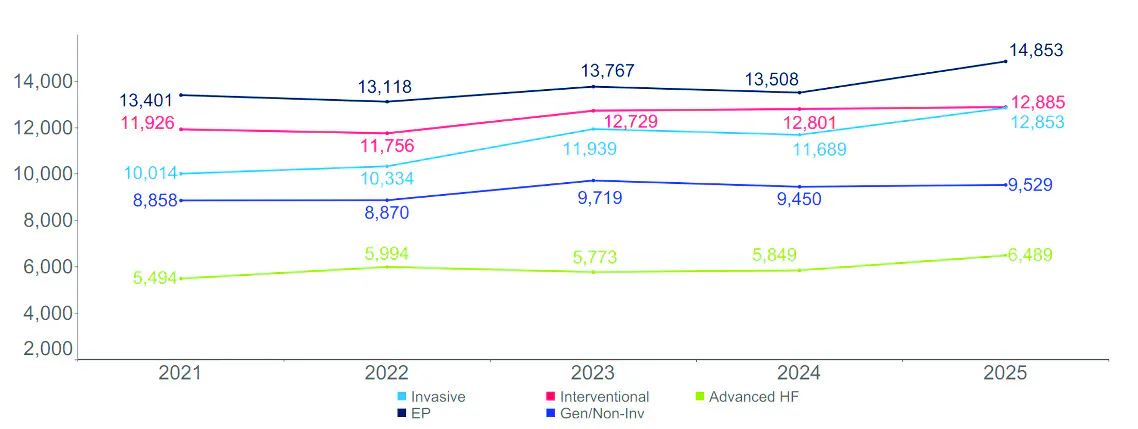
Figure 1. Median wRVUs per full-time cardiologist by subspecialty. HF, heart failure.
Compensation is similar. Integrated EP, invasive cardiology, and interventional cardiology all clustered around $850,000 in median total compensation per full-time physician in 2025 (Figure 2). Total compensation per wRVU for interventional cardiology reached its highest reported median level at $64.33. These numbers reinforce the economic importance of interventional cardiology but also underscore the caveat that performance depends heavily on procedure mix, lab access, referral patterns, and the amount of physician time that is protected for higher-yield procedural work.
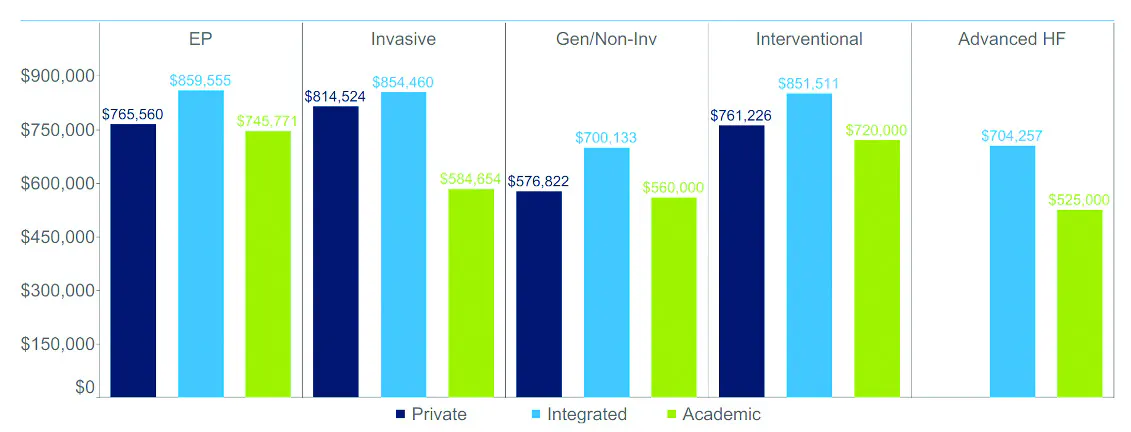
Figure 2. Median 2025 total compensation per full-time cardiologist by subspecialty and ownership. HF, heart failure.
OWNERSHIP MODEL MATTERS
The physician workforce looks very different depending on ownership model. Nearly half of physicians in private cardiology groups are interventional cardiologists, compared with less than 20% in academic programs. Academic programs, by contrast, have a much larger concentration of general and noninvasive cardiologists. That mix matters for benchmark comparisons and also shapes work distribution across clinic, hospital, imaging, and cath lab settings.
Simplistic comparisons can be misleading here. A private group with a large interventional cohort may still rely on those physicians for a meaningful amount of general cardiology work. An academic program with fewer interventionalists may concentrate those physicians more heavily in the lab. Both models can be appropriate, but they create very different realities for access, utilization, staffing, and physician productivity.
ADVANCED IMAGING IS RISING, BUT catheterization VOLUMES ARE HOLDING
Advanced imaging is playing a larger role in deciding which patients are referred to the cath lab. In 2025, the median ratio of advanced imaging studies to cardiac catheterizations reached 56%, exceeding 50% for the first time. The average (78%) was even higher, indicating that some programs are using advanced imaging at very high levels.
We have not seen, at least not yet, a clear decrease in cath lab use. Total catheterization volumes per 1,000 active patients remained steady over the past 5 years, with a 2025 median of 67, the same level reported in 2022 (Figure 3). PCI volume has also been relatively stable, reaching a median of 24 per 1,000 active patients in 2025, just one more than in 2024. The ratio of PCIs to total caths trended slightly downward. Given the ability of advanced imaging to better define blockage and flow, many expected fewer patients to reach the lab without intervention. The aggregate data do not show that shift.
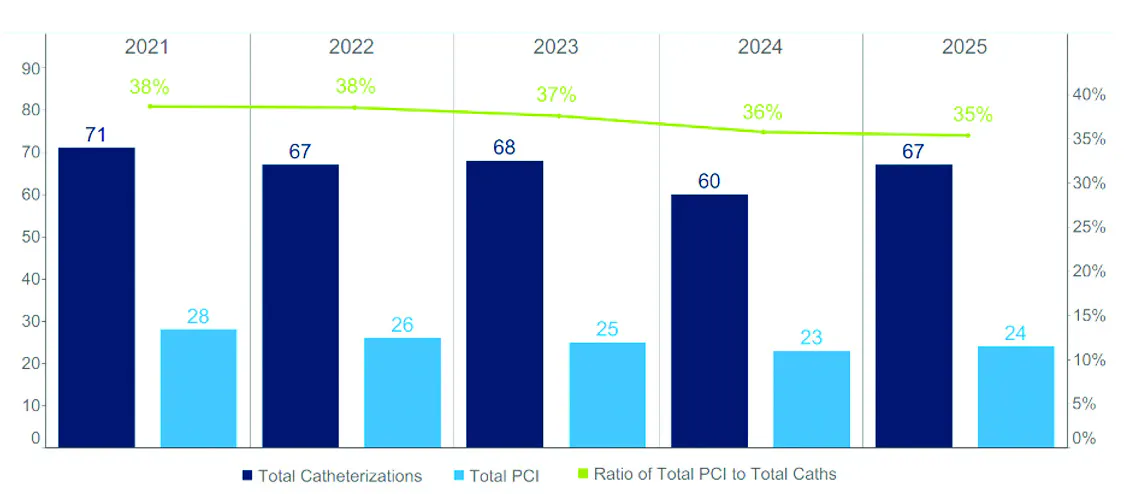
Figure 3. Median procedural volumes per 1,000 active patients.
This leaves programs with important questions. Are imaging results being consistently incorporated into referral decisions? Are cath lab selection criteria aligned across cardiologists, imaging specialists, and interventionalists? Are changes in patient acuity, access, or disease complexity offsetting any expected reduction in diagnostic caths? The aggregate data cannot answer these questions for any one program, but they make clear that imaging growth by itself has not yet translated into fewer noninterventional lab cases.
INTERVENTIONALISTS STILL CARRY THE PROCEDURAL LOAD
Interventional cardiologists remain the primary operators for catheterization and PCI by a wide margin. Compared with invasive noninterventional cardiologists, interventionalists perform four times more procedures in the bottom quartile, nearly three times more at the median, and more than twice as many in the top quartile. At the median, full-time interventional cardiologists performed just over 100 PCIs per year in 2025, while those in the top decile performed > 250 (Figure 4). On the lower end, the bottom quartile performed < 70 PCIs per year, or just over one per week.
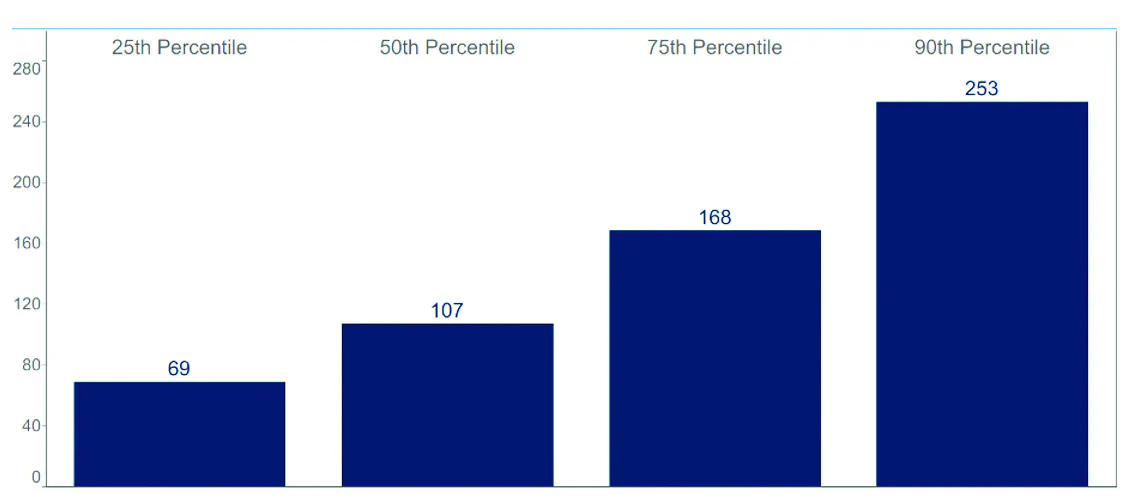
Figure 4. Total PCI volumes per full-time cardiologist.
This distribution has real operational implications. Not every interventional full-time equivalent represents the same procedural capacity. Operator volume, lab block time, referral alignment, call coverage, service mix, and structural heart participation all influence what an interventional cardiologist contributes to a program. For many organizations, the better question is not how many interventionalists are on staff but whether procedural demand, physician availability, and lab infrastructure are truly aligned.
THE CASE MIX IS SHIFTING BENEATH STABLE VOLUMES
Although overall catheterization and PCI volumes appear steady, the mix is changing. ST-segment elevation myocardial infarction (STEMI)–only PCI volumes declined from 4.4 per 1,000 active patients in 2021 to 3.4 in 2025 (Figure 5). LAAO procedures increased steadily, rising from 1.9 per 1,000 active patients in 2021 to nearly 4 per 1,000 in 2025. TAVR volumes also reached their highest reported level, with full-time interventional cardiologists performing a median of 47 TAVRs in 2025, up two from the prior year.
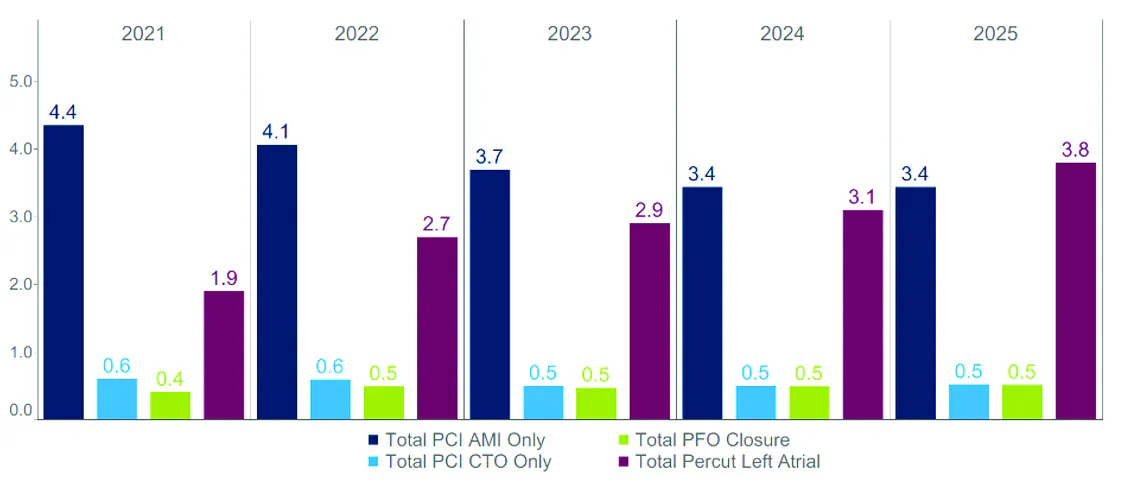
Figure 5. Median advanced interventional services per 1,000 patients. AMI, acute myocardial infarction; CTO, chronic total occlusion, PFO, patent foramen ovale.
The numbers point to an interventional environment in which growth may be shifting from traditional coronary volume expansion and toward structural heart and further program specialization. Only about 26% of interventional cardiologists perform TAVR procedures, suggesting that structural growth is unevenly distributed across the workforce and concentrated in programs with the required clinical, operational, and referral infrastructure.
CALL IS STILL THERE, EVEN WHEN NOT SEPARATELY PAID
Call remains another important part of the interventional equation, but few programs report paying for it separately. Only 38% identify a separate compensation stream for STEMI or interventional call, compared with 19% for general call and 8% for EP call. Most programs appear to embed call expectations into base compensation, production compensation, or both.
That can make call expectations less visible in the compensation model. For interventional cardiology, STEMI coverage can affect workload, lifestyle, recruitment, and retention.
TAKEAWAYS for CATH LAB LEADERS
These findings point to several practical implications. Cath lab planning increasingly requires a close look at procedure mix, not physician head count alone. Advanced imaging growth deserves attention because it has not yet produced a clear reduction in cath lab use. Compensation and productivity benchmarks remain highly dependent on ownership model, subspecialty mix, and clinical time allocation. Structural heart growth requires deliberate investment in operator development, referral networks, staffing, and lab capacity.
In summary, the cath lab is not expanding or contracting uniformly. Traditional coronary volumes remain steady, advanced imaging is becoming more prevalent, structural procedures continue to grow, and the economics of interventional cardiology remain strong but highly dependent on operational alignment. For cardiovascular programs, the next phase of growth will depend less on counting how many cases move through the lab and more on understanding what is changing inside the case mix. The impact of cardiac ambulatory surgery centers has yet to be felt or show up in the data.
Advertisement
Advertisement