Advertisement
Advertisement
Large thrombus burden (LTB) remains a challenge in patients with acute myocardial infarction (MI) undergoing primary percutaneous coronary intervention (PCI). The presence of LTB increases the risk of distal embolization and microvascular obstruction with negative consequences on myocardial functional recovery and ventricular function.1 LTB is associated with higher risks of long-term adverse cardiovascular events.
Early trials, including TAPAS2 and DEAR-MI,3 showed that the use of adjunctive aspiration thrombectomy devices was associated with higher myocardial blush grade and reduced the risk of no reflow in patients with ST-segment elevation MI.4 However, the routine use of manual aspiration did not improve clinical outcomes (with a safety concern for increased risk of stroke) in two large randomized controlled trials (TASTE and TOTAL).5,6 Consequently, routine use of aspiration thrombectomy during PCI was downgraded in the American and European guidelines to class III due to the lack of clinical benefit.7,8
Due to the LTB-related consequences on effective myocardial reperfusion, there has been growing interest in novel mechanical thrombectomy devices for the management of LTB. The recent FDA clearance* and CE Mark certification of enVast™ (Vesalio, Inc.) are expanding the landscape of mechanical retriever technology for the management of LTB in the coronary field.
Comprised of a pliable, self-expanding nitinol basket on a 200-cm pusher wire, enVast is designed to appose the vessel wall, enabling the device to fully encapsulate clot (Figure 1). This mechanism of action ensures full thrombus engagement at the arterial wall for clot removal, which can be particularly challenging in ectatic or aneurysmal coronary arteries. enVast’s self-expanding basket design also creates a channel through the thrombus upon deployment, providing immediate reperfusion (see Figure 2).
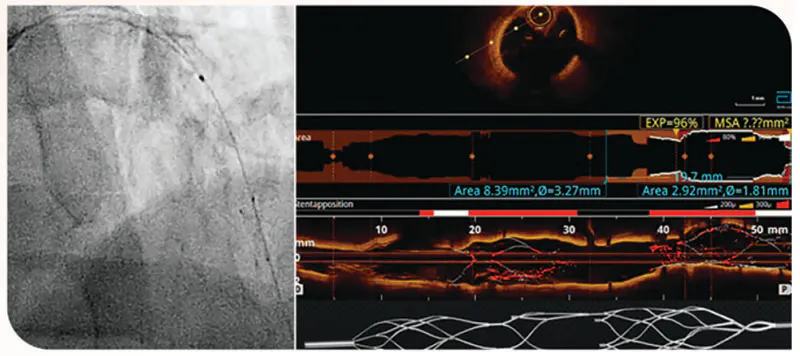
Figure 1. Periprocedural optical coherence tomography showing enVast wall apposition and thrombus integration.
(Courtesy of Dr. Andras Katona.)
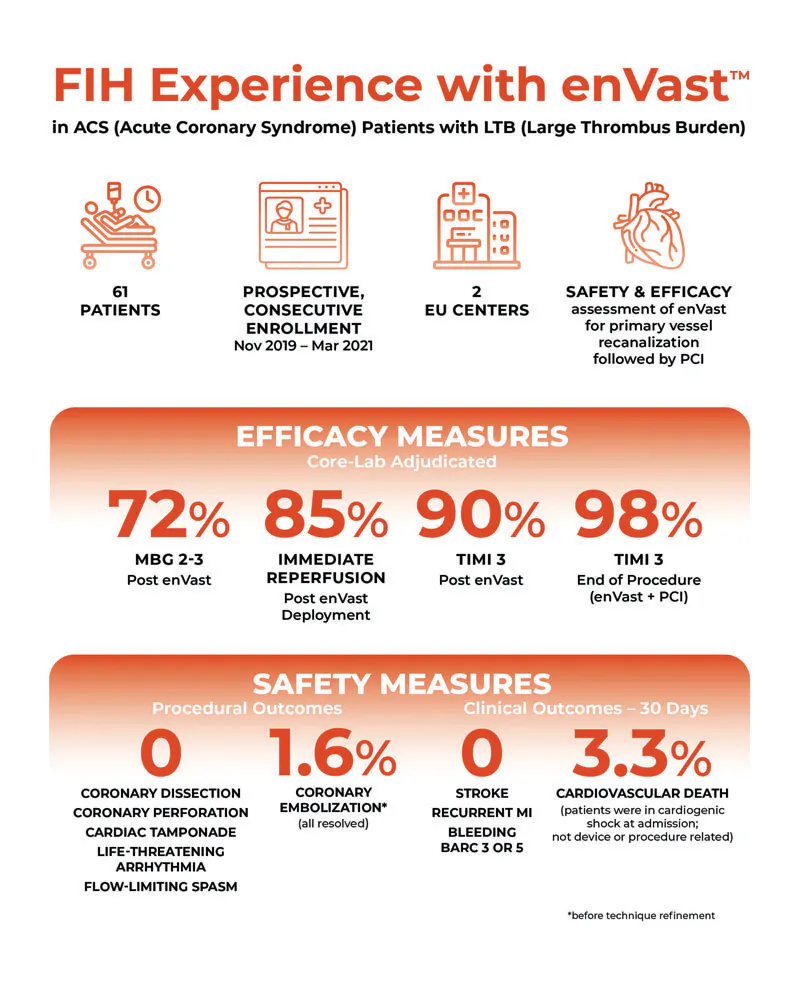
Figure 2. Results from the largest published registry on enVast.9
Click here to view recording.
In addition, enVast is engineered with proprietary Drop Zone™ technology to address both acute and subacute clot. The Drop Zones capture and retain thrombus inside the device’s lumen for secure thrombus removal upon retrieval. A closed distal basket is designed to maintain clot engagement during retrieval (Figure 3).
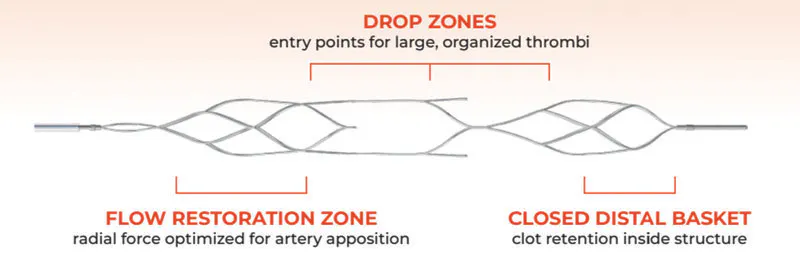
Figure 3. enVast architecture.
FIRST-IN-HUMAN DATA
Early experience reported by Spirito et al from two European centers showed favorable results (Figure 2).9 Core lab–adjudicated data of 61 consecutively enrolled patients from 2019 to 2021 found enVast “proved safe and effective in removing coronary thrombus and allowed immediate prompt restoration of flow in a high proportion of patients with acute coronary syndrome and LTB.”
CASE STUDY
Patient Presentation
A man in his 50s, who was an active smoker with dyslipidemia, was admitted to our catheterization laboratory for subacute MI. At admission, he was hemodynamically stable with ongoing chest pain. After intravenous administration of aspirin and heparin, coronary angiography was performed through radial access. The culprit lesion was the right coronary artery (RCA), which was occluded in the distal tract with LTB (Figure 4, Video 1). Thrombolysis in MI (TIMI) flow was 0 and TIMI thrombus was grade 5.
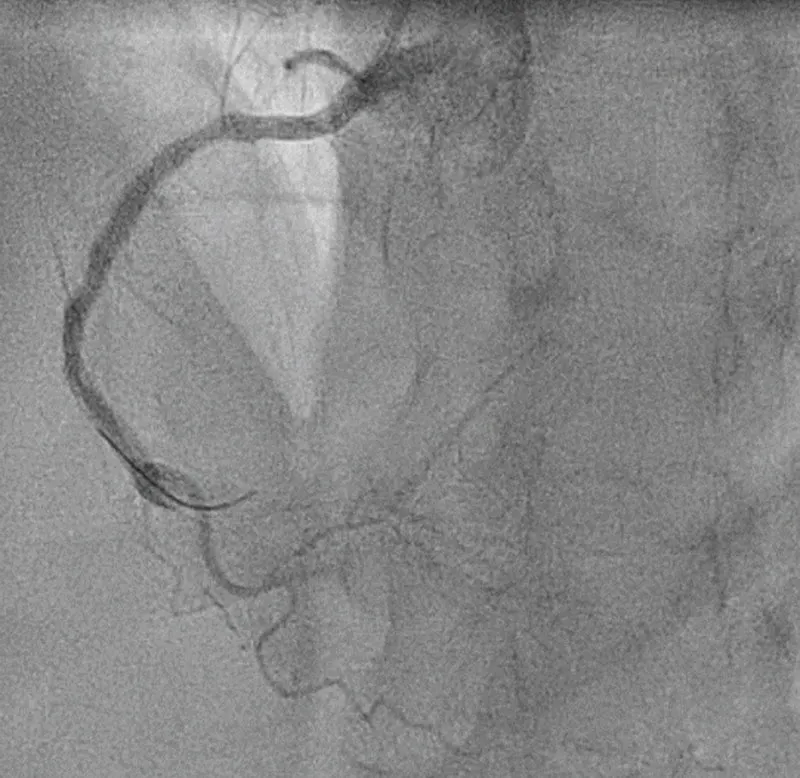
Figure 4. Coronary angiography of the RCA.
Procedural Overview
The decision was made to manage this case using enVast. The occlusion was crossed with a standard 0.014-inch coronary wire, which remained in place for any possible further intervention as needed. A second workhorse wire was backloaded into a microcatheter, which was advanced sufficiently distal beyond the occlusion for correct enVast positioning. We then advanced a 4.5 X 37 mm enVast into the microcatheter until the tip of the device basket aligned with the tip of the microcatheter under fluoroscopic guidance. Figure 5 shows angiography of the RCA immediately after enVast positioning.
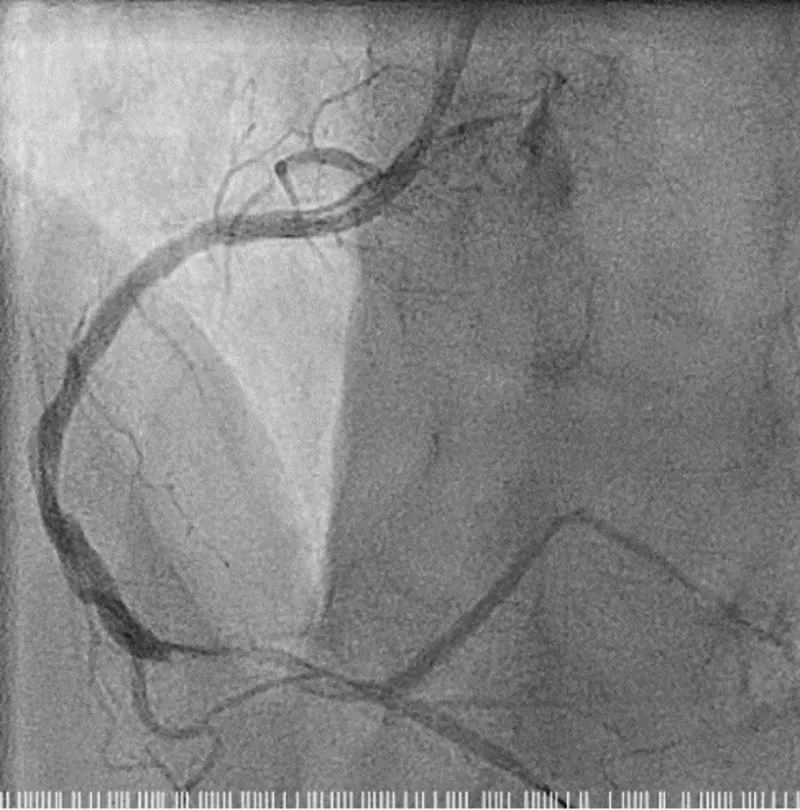
Figure 5. Coronary angiography of the RCA with enVast in place.
We next delivered a guiding catheter extension over both the enVast pusher wire and the first workhorse guidewire up to the proximal marker of enVast. Three VacLok syringes (60 mL) (Merit Medical Systems, Inc.) were connected to perform continuous aspiration while enVast was gently pulled back. Finally, enVast and the guiding catheter extension were simultaneously withdrawn under continuous aspiration from the guiding catheter hub (Video 2). The extracted material was red colored, organized, and 4 mm in size (Figure 6).
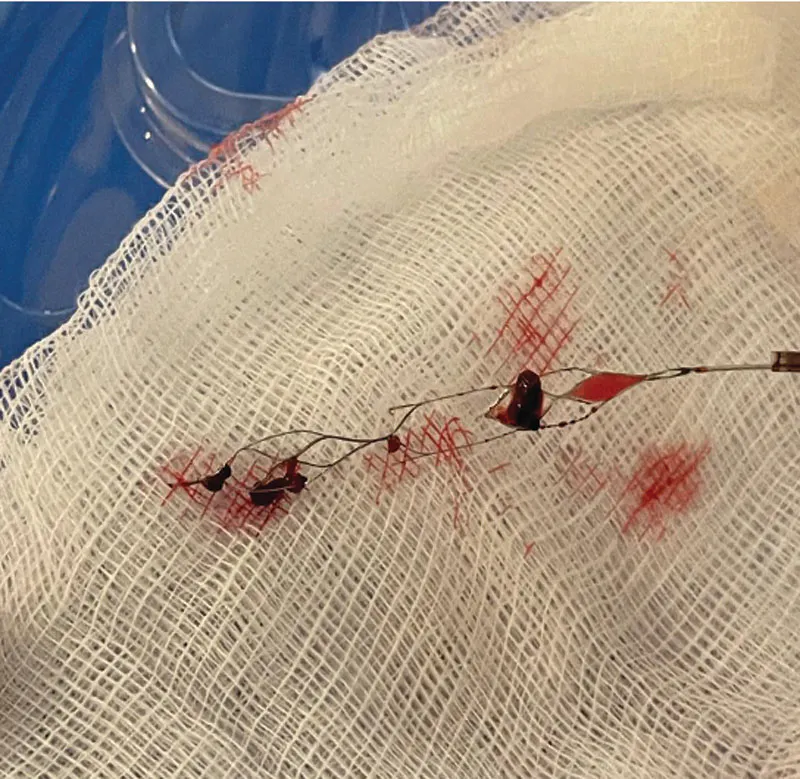
Figure 6. Retrieved material after the first pass with enVast.
Click here to watch the case videos.
After the first pass of the 4.5 X 37 mm enVast, we observed a significant reduction of thrombus burden with residual thrombus in the distal RCA (Figure 7). We decided to perform an additional enVast retrieval according to the steps above. Figure 8 and Figure 9 show angiography of the RCA after the second positioning and retrieval of the 4.5 X 37 mm enVast, respectively. Video 3 shows the second simultaneous retrieval of enVast and the guiding catheter extension under continuous aspiration.
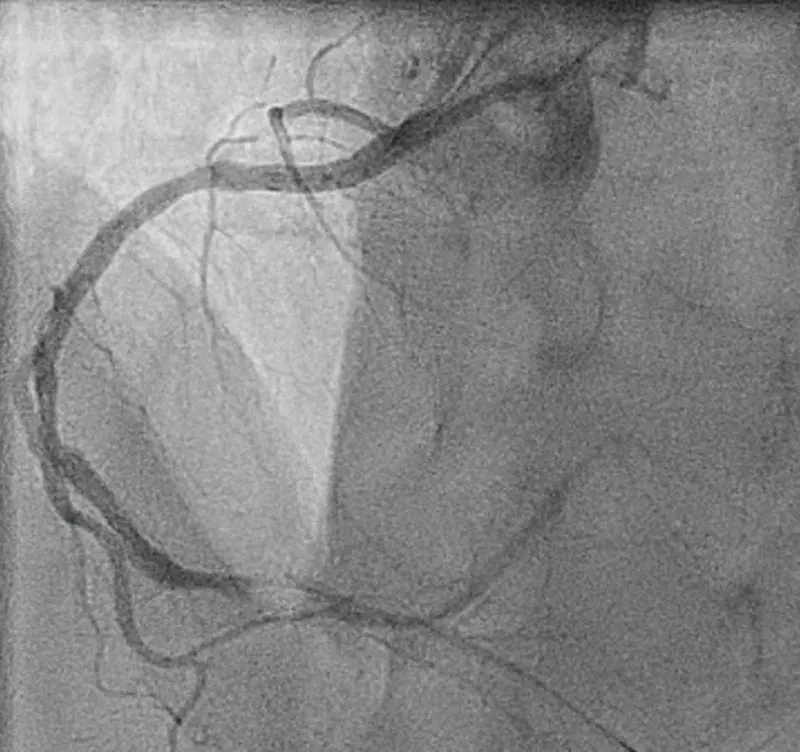
Figure 7. Coronary angiography of RCA after the first pass with enVast.
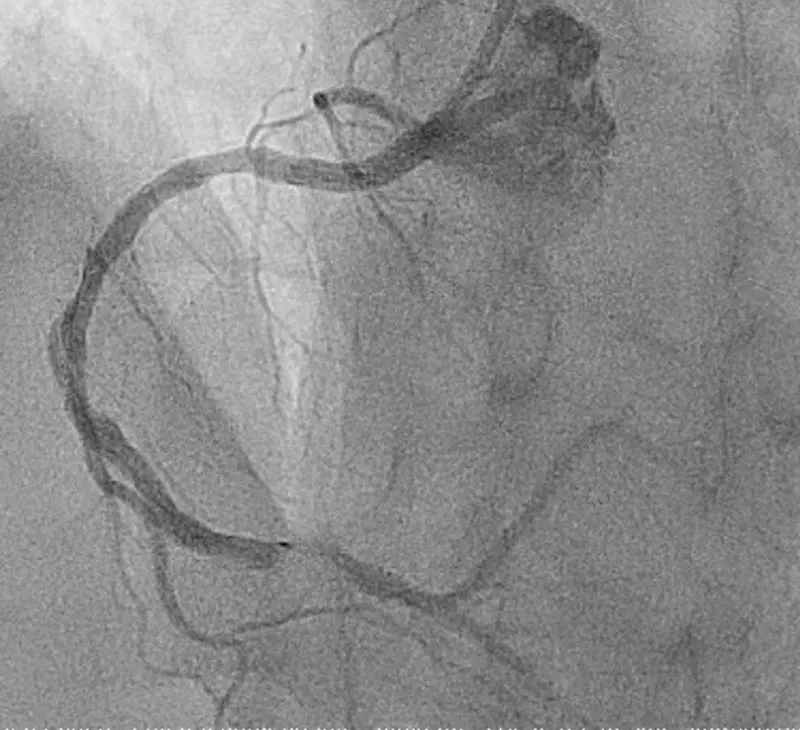
Figure 8. Angiography of RCA immediately after the second positioning of enVast.
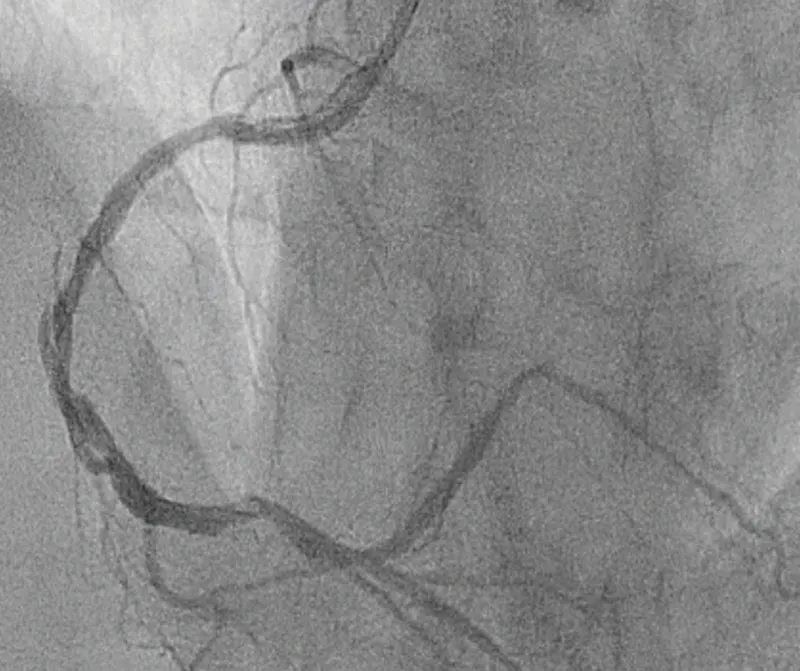
Figure 9. Coronary angiography after the second pass of enVast.
We then proceeded with direct implantation of a 4 X 18 mm drug-eluting stent (postdilated with a 4.5 X 8 mm noncompliant balloon) in the distal RCA. Final angiography revealed a good angiographic result with final TIMI 3 flow (Figure 10).
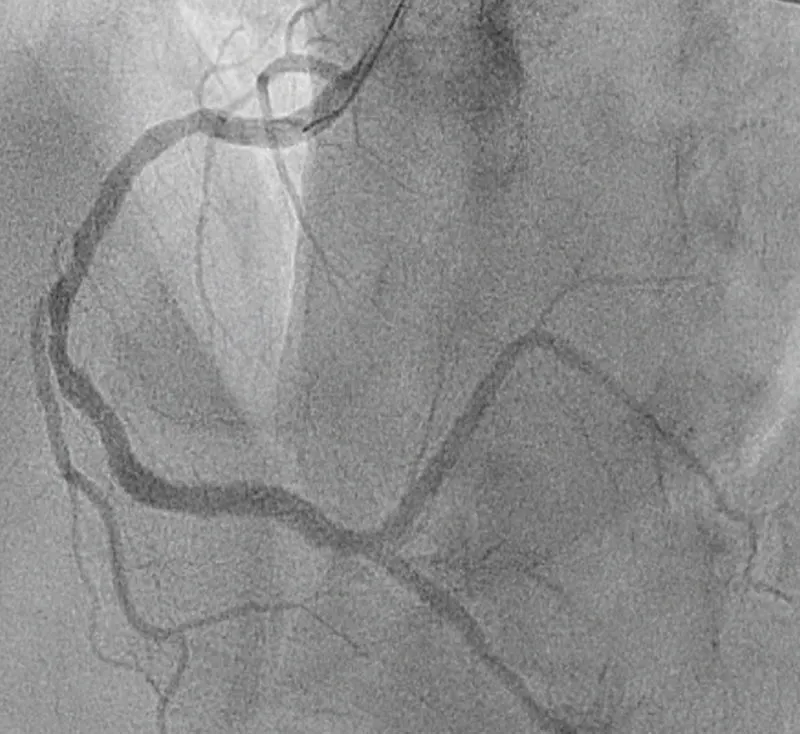
Figure 10. Final angiographic result after drug-eluting stent implantation.
Click here to view the enVast Procedure Video.
CONCLUSION
enVast provides a unique and compelling mechanism of action to retrieve large and organized thrombus during PCI. The self-expanding nitinol basket is designed to appose the vessel wall and enable full circumferential clot engagement for thrombus removal. The introduction of enVast in the United States marks the next step in expanding upon the strong early clinical experience in Europe. Further investigations are needed to evaluate how the use of enVast-assisted mechanical thrombectomy as an adjunctive measure to conventional PCI may drive long-term clinical benefits.
Disclaimer: The results may not be predictive of all patients. Individual results may vary depending on a variety of patient-specific attributes.
1. Ndrepepa G. Acute myocardial infarction with high thrombus burden: improved outcomes with intravascular imaging–guided percutaneous coronary intervention. Am J Cardiol. 2026;259:277-279. doi: 10.1016/j.amjcard.2025.09.036
2. Svilaas T, Vlaar PJ, van der Horst IC, et al. Thrombus aspiration during primary percutaneous coronary intervention. N Engl J Med. 2008;358:557-567. doi: 10.1056/NEJMoa0706416
3. Orrego-Silva P, Colombo P, Bigi R, et al. Thrombus aspiration before primary angioplasty improves myocardial reperfusion in acute myocardial infarction: the DEAR-MI (Dethrombosis to Enhance Acute Reperfusion in Myocardial Infarction) study. J Am Coll Cardiol. 2006;48:1552-1559. doi: 10.1016/j.jacc.2006.03.068
4. Mongeon FP, Bélisle P, Joseph L, et al. Adjunctive thrombectomy for acute myocardial infarction: a Bayesian meta-analysis. Circ Cardiovasc Interv. 2010;3:6-16. doi: 10.1161/CIRCINTERVENTIONS.109.904037
5. Fröbert O, Lagerqvist B, Olivecrona GK, et al. Thrombus aspiration during ST-segment elevation myocardial infarction. N Engl J Med. 2013;369:1587-1597. doi: 10.1056/NEJMoa1308789
6. Jolly SS, Cairns JA, Yusuf S, et al. Randomized trial of primary PCI with or without routine manual thrombectomy. N Engl J Med. 2015;372:1389-1398. doi: 10.1056/NEJMoa1415098
7. Levine GN, Bates ER, Blankenship JC, et al. 2015 ACC/AHA/SCAI focused update on primary percutaneous coronary intervention for patients with ST-elevation myocardial infarction: an update of the 2011 ACCF/AHA/SCAI guideline for percutaneous coronary intervention and the 2013 ACCF/AHA guideline for the management of ST-elevation myocardial infarction. J Am Coll Cardiol. 2016;67:1235-1250. doi: 10.1016/j.jacc.2015.10.005
8. Ibanez B, James S, Agewall S, et al. 2017 ESC guidelines for the management of acute myocardial infarction in patients presenting with ST-segment elevation: The Task Force for the management of acute myocardial infarction in patients presenting with ST-segment elevation of the European Society of Cardiology (ESC). Eur Heart J. 2018;39:119-177. doi: 10.1093/eurheartj/ehx393
9. Spirito A, Quagliana A, Coiro M, et al. A prospective, first-in-human use of the NeVa mechanical thrombectomy device for patients with acute coronary syndromes. EuroIntervention. 2022;18:242-252. doi: 10.4244/EIJ-D-21-00741
*Indication: The enVast Thrombectomy Device is indicated for the non-surgical removal of thrombus burden from coronary blood vessels; use with adjunctive aspiration and with the injection or infusion of contrast media and other fluids.
Precaution: The safety and effectiveness of this device for use in the treatment of ST-Elevation Myocardial Infarction (STEMI) have not been established. Complications from the use of this device in this manner could lead to death, permanent impairment, and/or the need for emergency medical intervention.

Advertisement
Advertisement