Advertisement
Advertisement
September/October 2026
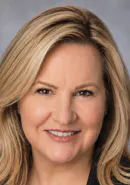
An Interview With Kimberly A. Skelding, MD, FACC, FAHA, FSCAI
Dr. Skelding discusses resiliency and shared decision-making in interventional cardiology, the evolution of radiation safety and biggest opportunities for improvement, the importance of societal leadership, and more.
You have been instrumental to the evolution of interventional cardiology, from being an early pioneer in radial catheterization and transcatheter aortic valve replacement, to contributing key research on radiation safety. As you reflect on your journey, what moments stand out as most defining?
This is a hard one. All of these shifts in practice have focused on change, including change in the approach to a catheterization, change in a paradigm for treating valve disease, and change in a focus from protecting ourselves to having ourselves protected. To be a leader in the field, change is really one of the most challenging parts of our professional careers you need to learn to maneuver. Resiliency is vitally important, and that skill is something you can carry throughout your career.
Each time you create change in a procedure, approach, or institution, you don’t leave that process without many bumps and bruises. I’ve come to learn this defining piece: If you are enacting change that will have a monumental effect on your patients, a meaningful change to the field, or a meaningful change to your institution, it’s worth it in the end.
How has the field advanced most during your career, and where do you see the greatest opportunity to improve?
I’ve seen incredibly important advancements in shared decision-making and patient engagement. We aren’t simply performing procedures based on a test; we are talking to the patient at length, presenting them with options, and making decisions alongside them. This has been at the forefront of our care over the last few years.
Another game changer has been the shift across the board from surgery to more percutaneous procedures. Of course, it’s very important to keep the surgical option open, on the table, and not forgotten. Just because something can be done doesn’t mean it should be done. We must keep the patient’s choice and best interest in mind always, and sometimes surgery is the better option.
As a mentor to many early career interventional cardiologists, what are the most common career challenges and decisions they wrestle with, and how do you help guide them?
Mentoring trainees and early career interventional cardiologists is different now. Interventional cardiology fellows today do not see the volume that we had in the past, whether that’s in a training program or via an individual interventional cardiologist they may work under. I advise them to make the most of each and every procedure they have the chance to be involved in. In addition, they don’t have as many tools in their toolbox when they leave training and venture out into clinical practice. It’s important to have a community of people you can rely on to help you in your early career. An often underappreciated challenge is finding that institution and faculty who will support you and help grow your progress in your early career.
What has motivated your long-standing commitment to professional society leadership, and why is it important for physicians to engage beyond their own institution?
Making a difference for your community of physicians and your patients is always the underlying push to continue in society leadership. This is something that often involves a thankless amount of work, and over time, you may feel like your contributions are forgotten. But making meaningful changes is a very satisfying opportunity, allowing you to mold the future of the field you are in so it can be improved for those in the future.
Over the course of your career, you’ve been closely involved with building and growing cardiovascular programs. What do you think are the early hallmarks of a program that will ultimately be successful?
One of the early hallmarks of growing a successful program is having a motivated group of individuals who are willing to commit extra time and effort into making something fantastic. You also need to look at each one of the individuals under your leadership and help them develop a course of action that will guide professional satisfaction in their career growth over the long term.
One of the most important pieces is administrative support. Building and growing a program often creates friction for the people who are reticent to change, grow, and meet future needs. Having an engaged administrative group that is willing to help you ride these bumps as change occurs is pivotal to success. I have done this for almost 25 years, and some of it never gets easier, but it is worth the work.
You have been a longtime advocate for radiation safety, from coauthoring the 2010 Society for Cardiovascular Angiography and Interventions (SCAI) consensus document on exposure during pregnancy to a 2025 SCAI publication on occupational health hazards.1,2 In what ways has this conversation evolved throughout your career, and where are the biggest opportunities for improvement?
From the first paper I wrote on this topic for the pregnant interventionalist in the lab, I have been interested in protection. This paper, of course, was written to help women realize that they can safely work in the lab without double lead, heavy extra equipment, and undue worry. But the game has changed. People now work in lead-free spaces, and the technology and knowledge are there to help physicians lower their risks for cancer and orthopedic injury. These are concerns that I never considered as a young interventionalist when the field was young. Now as we see the first generation of interventionalists begin to retire, we are realizing the toll this job has taken on all of us. We need to take heed; gone are the days of needlessly walking around in lead. We are much more mindful of how to protect ourselves, taking off the lead when we can and paying more attention to the radiation risk.
It is necessary to partner with governing bodies, institutions, and societies to work toward making the lab a safer place for the next generation of interventionalists.
What’s one thing you wish more women knew about their cardiovascular risk? How do you approach helping your patients understand their individual risk and prevention strategies?
Women have risks that are identified at different times in their lives and that change over their lifetime. Women who have complications in their pregnancies, such as hypertension or hyperglycemia, or have a less than routine birth (eg, early delivery, fetal demise) have a much higher risk for cardiovascular disease later in life. Additionally, after menopause and the protective effect of estrogen has gone, their risk factors change and need to be assessed and treated from scratch all over again. Many times their numbers (blood pressure, lipids) were not a problem early in life but are now a concern.
As far as approaching individual risk for each patient and putting into a place a prevention strategy, we now have so many helpful tools, including the PREVENT score and guideline documents. A more important question may be, what is our role as interventionalists? I believe doing a percutaneous coronary intervention or identifying disease in general is a teachable moment, and we have a golden opportunity to change the trajectory for these patients. Having a discussion about their risk and why we think prevention with lifestyle modifications, pharmacotherapy, or maybe both can help patients live longer and better. My first department chair used to come to our interventional conferences, and when we said “I fixed that or I fixed this,” he would very quickly say, “You treated this or that; atherosclerosis is a chronic disease, and opening up a blockage is not curing that disease.” He is right, and it is humbling.
What has been key to sustaining your professional career while prioritizing your well-being? What advice would you share with early career physicians who are navigating this?
I need help with this one, as many of us do, but I would say: Take the trip, have the baby, don’t miss the game, and be there for the school events. We can never get those moments back. Also, attend the sessions at meetings like SCAI where we actually talk about this and share our struggles and successes and how to be better every day.
1. Best PJ, Skelding KA, Mehran R, et al; Society for Cardiovascular Angiography & Interventions' Women in Innovations (WIN) group. SCAI consensus document on occupational radiation exposure to the pregnant cardiologist and technical personnel. Catheter Cardiovasc Interv. 2011;77:232-41. doi: 10.1002/ccd.22877
2. Abudayyeh I, Dupont AG, Hermiller JB, et al. Occupational health hazards in the cardiac catheterization laboratory: results of the 2023 SCAI survey. J Soc Cardiovasc Angiogr Interv. 2025;4:102493. doi: 10.1016/j.jscai.2024.102493
Advertisement
Advertisement
Interested in reading more interviews?
To read more interviews with thought leaders in the interventional cardiology field, check out our Profiles & Perspectives hub.
Read More