Advertisement
Advertisement
January/February 2026
High-Risk Atherosclerotic Plaque: Defining Features and Assessment on Imaging
Key characteristics of vulnerable plaques and the role of advanced imaging in risk stratification and management of patients with acute coronary syndrome.
By Priyadarshini Dixit, MD; Sierra Fleming, MD; and Olga Toleva, MD, MPH
Atherosclerotic cardiovascular disease is responsible for approximately 17.9 million deaths annually, making it the most common cause of mortality and morbidity worldwide.1 The progression of stable plaque to acute coronary syndrome (ACS) depends on plaque vulnerability (high-risk) rather than stenosis severity alone. Contemporary risk stratification and assessment of atherosclerotic plaque and luminal narrowing do not identify patients at risk for acute events, as most myocardial infarctions (MIs) occur in areas with < 50% stenosis.2,3 High-risk plaque (vulnerable plaque) exhibits certain morphologic and pathophysiologic features, including a lipid-rich necrotic core, a thin fibrous cap, intraplaque hemorrhage, positive arterial remodeling, and angiogenesis.2,4 Advanced imaging modalities can now help identify these high-risk plaque features, which has fundamentally revolutionized risk stratification and management in individuals with atherosclerotic disease who develop ACS (Figure 1).5,6
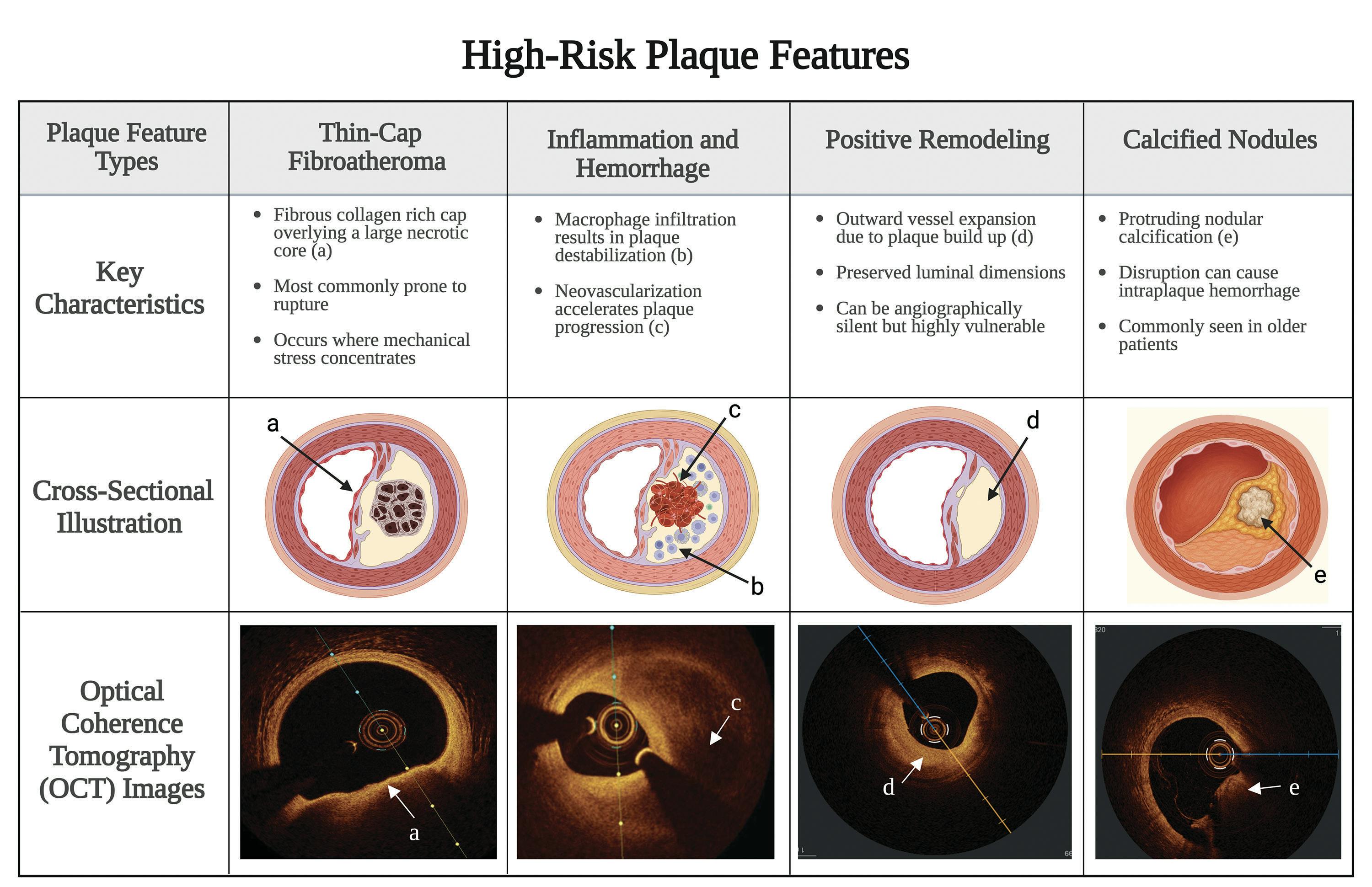
Figure 1. High-risk plaque features. Cross-sectional comparison of vessel structure and OCT imaging: the middle panels illustrate the three-layer organization (intima, media, adventitia) and their associated pathology, while the bottom panels show corresponding OCT images highlighting their relative thickness and echogenic characteristics.
This article focuses on various high-risk coronary plaque features, their identification, and contemporary management in such.
EPIDEMIOLOGY
The PROSPECT trial was a prospective study published in 2011 that enrolled 697 patients presenting with ACS who underwent three-vessel coronary angiography, grayscale, and intravascular ultrasound (IVUS) imaging after percutaneous coronary intervention (PCI).3 The trial identified three independent predictors of nonculprit lesion-related major adverse cardiac events (MACE): a minimal luminal area ≤ 4.0 mm2, a plaque burden ≥ 70%, and the presence of thin-cap fibroatheroma on IVUS. During a median follow-up of 3.4 years, nonculprit lesion MACE occurred in approximately 4.9% of patients, with an increasing event rate when all three high-risk characteristics were present (18.2%).3 Despite this, the positive predictive values and 3-year cumulative risk remained low even for the highest-risk lesions. This underscores the importance of ongoing trials evaluating whether preemptive treatment of high-risk nonculprit lesions reduces MACE compared with medical therapy. We describe these associated high-risk plaque features in further detail in the following section.
HIGH-RISK PLAQUE FEATURES
Thin-Cap Fibroatheroma and Necrotic Core
Thin-cap fibroatheroma is defined by a fibrous cap < 65 µm that overlies a large necrotic core or lipid-rich content. This is the most common high-risk plaque feature prone to rupture.2,4 The necrotic core includes oxidized low-density lipoprotein (LDL), macrophages, and cellular debris from apoptotic cells. This comprises a thrombogenic substrate that can trigger thrombus formation when exposed to circulating blood.1,4 Plaques in which the necrotic core exceeds 10% of total plaque volume have an increased risk of rupture. Thin-cap fibroatheroma consists of collagen, proteoglycans, and smooth muscle cells, and its structural integrity is compromised by metalloproteinases released by inflammatory cells, which degrade the collagen-rich cap while simultaneously decreasing collagen synthesis, thereby weakening the protective barrier.2 Thin-cap rupture usually occurs at the shoulder regions where mechanical and shear stress concentrate and the inflammatory cell density is highest.
Inflammation and Hemorrhage
Active inflammation plays a pivotal role in plaque destabilization. Macrophages, T lymphocytes, and mast cells infiltrate vulnerable plaques, which in turn release inflammatory cytokines and matrix-degrading enzymes.1,7 Biomarkers include high-sensitivity C-reactive protein (hsCRP) and interleukin-6.8,9 These inflammatory biomarkers correlate with plaque vulnerability. Intraplaque hemorrhage from fragile neovessels expands the necrotic core by depositing erythrocytes and free cholesterol, which can accelerate atherosclerotic plaque progression.4,10
Remodeling and Calcification
Positive remodeling can allow plaque to grow while preserving its luminal dimensions, which can make it angiographically silent but highly vulnerable.3
A remodeling index (RI) is a quantitative measure obtained through IVUS imaging that assesses vascular remodeling in response to atherosclerotic plaque development.11,12 The RI is calculated as the ratio of the lesion external elastic membrane (EEM) cross-sectional area divided by the mean reference EEM area (average of proximal and distal reference segments).12,13 A threshold value of 1.05 is widely used to define positive remodeling, where an RI > 1.05 indicates compensatory vessel enlargement, while values between 0.95 to 1.05 represent intermediate remodeling, and < 0.95 indicates negative remodeling (vessel shrinkage).13,14 The significance of the 1.05 threshold lies in its strong association with vulnerable plaque characteristics; it has been demonstrated to correlate with larger lipid cores, increased macrophage infiltration, higher plaque burden, and greater propensity for plaque rupture, making it an important marker for identifying high-risk coronary lesions that may precipitate ACSs.14-16 Positive remodeling (RI > 1.05) usually identifies high-risk lesions.3,6 Spotty microcalcifications < 50 µm that concentrate within the fibrous cap can cause mechanical stress, whereas confluent extensive calcification may stabilize plaques.4,5
Eruptive calcified nodules are characterized by protruding nodular calcifications with a fibrous cap disruption and an overlying thrombus formation. This accounts for 2% to 8% of ACS and is seen more often in older patients.17 Calcium fragments can rupture the surrounding arterioles, leading to intraplaque hemorrhage and the formation of clots rich in fibrin and erythrocytes. Advances in intravascular imaging have demonstrated that eruptive calcified nodules are just one of the calcified plaque morphologies that can be seen in the culprit lesion in individuals with ACS.17 Calcified protrusions without eruptive nodules can be present and cause plaque rupture as well.
IMAGING MODALITIES USED TO ASSESS PLAQUE BURDEN
Intravascular imaging such as IVUS provides high-resolution, cross-sectional assessment of plaque burden, composition, and arterial remodeling patterns.1,2 Virtual histology IVUS utilizes radiofrequency signal analysis to classify tissue components as fibrofatty, fibrous, dense calcium, or necrotic core with good correlation with histology. Optical coherence tomography (OCT) offers superior resolution compared to IVUS, enabling precise measurement of the fibrous cap thickness and visualization of cholesterol crystals, calcium deposits, and the presence of thrombus (red or white).5 Near-infrared spectroscopy combined with IVUS can provide complementary compositional analysis that can specifically identify lipid-rich plaques through spectral signatures that generate lipid core burden index measurements.18 These imaging modalities have fundamentally transformed our understanding of plaque morphology and biology and help guide the development of risk stratification algorithms.
Noninvasive testing such as coronary CTA (CCTA) has emerged as a powerful tool to identify multiple high-risk plaque features that include positive remodeling, low attenuation plaques that indicate lipid-rich cores, napkin ring sign that represents rim enhancement around the necrotic core, and spotty calcification as mentioned previously.6 These features can independently predict MACE beyond traditional risk factors and coronary calcium scoring.
TREATMENT STRATEGIES
Lipid-Lowering Therapy
High-intensity statin therapy targeting LDL cholesterol < 70 mg/dL (or < 55 mg/dL in very high-risk patients) is the cornerstone of plaque stabilization.19,20 Serial imaging studies have demonstrated plaque regression with aggressive statin therapy. PCSK9 inhibitors provide additional LDL reduction in patients who require aggressive lipid management or who cannot tolerate statin therapy.21
Anti-Inflammatory Therapies
Canakinumab. Canakinumab is a monoclonal antibody that selectively inhibits interleukin-1ß (IL-1ß), a proinflammatory cytokine implicated in atherosclerotic plaque development and destabilization.7 It reduces systemic inflammation and dampens the inflammatory cascade in the arterial wall by blocking IL-1ß signaling. This helps stabilize vulnerable plaques that are prone to rupture.9,22 The CANTOS trial demonstrated that patients with prior MI and elevated hsCRP who received canakinumab (150 mg every 3 months) experienced a 15% reduction in recurrent cardiovascular events (hazard ratio [HR], 0.85; 95% CI, 0.74-0.98; P = .021), independent of lipid-lowering effects.7,23 The proposed underlying anti-inflammatory mechanism appears to work by reducing inflammatory cell recruitment, decreasing matrix metalloproteinase activity, and promoting a more stable plaque phenotype with thicker fibrous caps and smaller necrotic cores.22-24 These findings support the inflammatory hypothesis of atherosclerosis and suggest that a targeted anti-inflammatory therapy could be a complementary strategy in lipid management to prevent progression of atherosclerosis.7,25 However, despite these potential benefits, canakinumab has remained cost-prohibitive and is not yet approved for routine use.
Colchicine. Colchicine is a well-established anti-inflammatory agent that has emerged as a promising therapeutic option for secondary prevention in patients with atherosclerotic cardiovascular disease.26 It attenuates the inflammatory cascade that drives plaque progression and destabilization by inhibiting microtubule polymerization and reducing neutrophil activity.27 COLCOT and LoDoCo2 are landmark trials that demonstrated low-dose colchicine (0.5 mg daily) significantly reduces MACE, including MI and stroke, in patients with established coronary artery disease.28,29 In contrast, the CLEAR trial showed no benefit of colchicine in reducing MACE when initiated early after acute MI.30 Current evidence supports consideration of colchicine as an adjunct to standard therapies in patients with recent MI or chronic coronary artery disease, particularly in those with residual inflammatory risk despite optimal lipid-lowering therapy.26,31 However, clinicians must weigh in potential benefits against the risks of gastrointestinal adverse effects and drug-to-drug interactions, particularly in patients with renal/hepatic dysfunction.32
Glucose-lowering agents. Glucose-lowering agents play a critical role in managing atherosclerotic cardiovascular disease in patients with type 2 diabetes mellitus. Glucagon-like peptide-1 receptor (GLP-1) agonists have demonstrated significant cardiovascular benefits, including reduction in MACE through mechanisms involving plaque stabilization and improvement in endothelial function.33 Sodium-glucose cotransporter-2 (SGLT2) inhibitors have similarly been shown to reduce cardiovascular risk independent of their glucose-lowering effects. Examples include empagliflozin and canagliflozin. The mechanisms encompass effects on blood pressure, arterial stiffness, and oxidative stress.34 Metformin, the first-line therapy for type 2 diabetes, with proposed mechanisms including improving insulin sensitivity and reducing hepatic glucose production, has well-known cardiovascular benefits.35 GLP-1 agonists and SGLT2 inhibitors are recommended by current guidelines in patients with established atherosclerotic cardiovascular disease or at high atherosclerotic cardiovascular disease risk, independent of hemoglobin A1c.36 Selection of these agents should be individualized based on atherosclerotic cardiovascular disease risk factors and comorbidities to optimize both glycemic control and cardiovascular outcomes.37
Blood Pressure Control and Metabolic Management
Blood pressure < 130/80 mm Hg has been shown to reduce hemodynamic stress on vulnerable plaques.38 Renin-angiotensin inhibitors provide additional benefits through effects on endothelial function. Antiplatelet therapy with aspirin and P2Y12 inhibitors remains fundamental in patients with ACS after percutaneous intervention.
Revascularization and Lifestyle Interventions
PCI is primarily indicated for hemodynamically significant lesions causing ischemia or culprit lesions in ACS, although prophylactic PCI for nonobstructive vulnerable plaques remains controversial.3,39 Coronary artery bypass grafting remains preferred for left main disease, multivessel disease, or complex anatomy, especially in diabetic patients.39 Lifestyle modifications include smoking cessation, Mediterranean-style diet, moderate intensity exercise, and weight management.1,19
CLINICAL EVIDENCE AND ONGOING TRIALS TARGETING HIGH-RISK PLAQUE
The PROSPECT ABSORB trial was a multicenter, randomized controlled pilot study that investigated the safety and efficacy of PCI for treating non–flow-limiting vulnerable coronary plaque.40 A total of 182 patients with recent MI and successful PCI of culprit lesions were randomized to receive either bioresorbable vascular scaffold (BVS) implantation plus guideline-directed medical therapy (GDMT) or GDMT alone for lesions with IVUS-derived plaque burden ≥ 65%. The primary endpoint was IVUS-derived minimum lumen area at 25-month follow-up, which demonstrated significantly greater luminal enlargement in the BVS group compared to GDMT alone (6.9 mm2 vs 3.0 mm2; P < .0001). The trial suggested that prophylactic PCI of vulnerable plaque may safely enlarge the lumen and potentially reduce the risk of future adverse cardiac events, although it was not powered for clinical outcomes. These findings warrant further investigation in larger randomized trials to determine whether treating non–flow-limiting vulnerable plaque can improve long-term clinical outcomes in high-risk patients.
The PREVENT trial randomized 1,606 patients with functionally nonsignificant vulnerable coronary plaques (fractional flow reserve > 0.80 with imaging-defined high-risk features) to preventive PCI plus optimal medical therapy versus optimal medical therapy alone.41 At 2 years, the composite primary endpoint (cardiac death, target vessel MI, ischemia-driven revascularization, or hospitalization for unstable angina) occurred in 0.4% of the PCI group versus 3.4% of the medical therapy group (HR, 0.11; P = .0003). The benefit was sustained through a median 4.4-year follow-up, with primary endpoint rates of 1.4% versus 4.8% (HR, 0.29; P < .0001). This was the first large-scale randomized trial to demonstrate that prophylactic PCI of nonflow-limiting vulnerable plaques reduces MACE compared with medical therapy alone. These findings challenged the traditional physiology-based paradigms and supported consideration of expanding PCI indications to include anatomically high-risk plaques identified by intravascular imaging, although questions remain regarding optimal patient selection and cost-effectiveness.
There are multiple randomized controlled trials underway evaluating the utility of PCI in patients with high-risk atherosclerotic plaque features, such as PROSPECT II. This study focuses on the use of near-infrared spectroscopy and IVUS to identify high-risk, nonculprit plaques in patients with recent ACS. VULNERABLE is an ongoing trial focusing on patients with ST-segment elevation MI and coronary multivessel disease that is looking at the effect of PCI on nonflow-limiting lesions identified by OCT. IMPACT-PCI is another trial, and its goal is to evaluate CCTA-derived imaging biomarkers of plaque inflammation to predict outcomes after PCI.
CONCLUSION
Advanced intravascular imaging enables the in vivo identification of vulnerable plaque features.5,6,10 CCTA has become a very important diagnostic modality to noninvasively identify high-risk plaques. This can potentially lead to the successful screening of stable patients on an outpatient basis. Intensive medical therapy that targets LDL, blood pressure, and platelet function forms the foundation of plaque stabilization.7,19-21,38 Although interventional revascularization strategies have been proposed, optimal medical therapy remains paramount.
1. Libby P, Buring JE, Badimon L, et al. Atherosclerosis. Nat Rev Dis Primers. 2019;5:56. doi: 10.1038/s41572-0190106-z 2
2. Virmani R, Burke AP, Farb A, Kolodgie FD. Pathology of the vulnerable plaque. J Am Coll Cardiol. 2006;47(8 suppl):C13-18. doi: 10.1016/j.jacc.2005.10.065
3. Stone GW, Maehara A, Lansky AJ, et al; PROSPECT investigators. A prospective natural-history study of coronary atherosclerosis. N Engl J Med. 2011;364:226-235. Published correction in N Engl J Med. 2011;365:2040. doi: 10.1056/NEJMoa1002358
4. Narula J, Nakano M, Virmani R, et al. Histopathologic characteristics of atherosclerotic coronary disease and implications of the findings for the invasive and noninvasive detection of vulnerable plaques. J Am Coll Cardiol. 2013;61:1041-1051. doi: 10.1016/j.jacc.2012.10.054
5. Tearney GJ, Regar E, Akasaka T, et al; International Working Group for Intravascular Optical Coherence Tomography (IWG-IVOCT). Consensus standards for acquisition, measurement, and reporting of intravascular optical coherence tomography studies: a report from the International Working Group for Intravascular Optical Coherence Tomography Standardization and Validation. J Am Coll Cardiol. 2012;59:1058-1072. Published correction appears in J Am Coll Cardiol. 2012;59:1662. doi: 10.1016/j.jacc.2011.09.079.
6. Motoyama S, Ito H, Sarai M, et al. Plaque characterization by coronary computed tomography angiography and the likelihood of acute coronary events in mid-term follow-up. J Am Coll Cardiol. 2015;66:337-346. doi: 10.1016/j. jacc.2015.05.069
7. Ridker PM, Everett BM, Thuren T, et al; CANTOS trial group. Antiinflammatory therapy with canakinumab for atherosclerotic disease. N Engl J Med. 2017;377:1119-1131. doi: 10.1056/NEJMoa1707914
8. Omland T, Røsjø H, Giannitsis E, Agewall S. Troponins in heart failure. Clinica Chimica Acta. 2015;443:78-84. doi: 10.1016/j.cca.2014.08.016
9. Ridker PM, MacFadyen JG, Everett BM, et al; CANTOS Trial Group. Relationship of C-reactive protein reduction to cardiovascular event reduction following treatment with canakinumab: a secondary analysis from the CANTOS randomised controlled trial. Lancet. 2018;391:319-328. doi: 10.1016/S0140-6736(17)32814-3
10. Koskinas KC, Ughi GJ, Windecker S, et al. Intracoronary imaging of coronary atherosclerosis: validation for diagnosis, prognosis and treatment. Eur Heart J. 2016;37:524-35a-c. doi: 10.1093/eurheartj/ehv642
11. Schoenhagen P, Ziada KM, Vince DG, et al. Arterial remodeling and coronary artery disease: the concept of “dilated” versus “obstructive” coronary atherosclerosis. J Am Coll Cardiol. 2001;38:297-306. doi: 10.1016/s0735-1097(01)01374-2
12. Jensen LO, Thayssen P, Mintz GS, et al. Intravascular ultrasound assessment of remodelling and reference segment plaque burden in type-2 diabetic patients. Eur Heart J. 2007;28:1759-1764. doi: 10.1093/eurheartj/ehm175
13 Varnava AM, Mills PG, Davies MJ. Relationship between coronary artery remodeling and plaque vulnerability. Circulation. 2002;105:939-943. doi: 10.1161/hc0802.104327
14. Hong YJ, Jeong MH, Choi YH, et al. Positive remodeling is associated with more plaque vulnerability and higher frequency of plaque prolapse accompanied with post-procedural cardiac enzyme elevation compared with intermediate/negative remodeling in patients with acute myocardial infarction. J Cardiol. 2009;53:,278-287. doi: 10.1016/j.jjcc.2008.12.006
15. Nakamura M, Nishikawa H, Mukai S, et al. Impact of coronary artery remodeling on clinical presentation of coronary artery disease: an intravascular ultrasound study. J Am Coll Cardiol. 2001;37:63-69. doi: 10.1016/s0735-1097(00)01097-4
16. Puchner SB, Liu T, Mayrhofer T, et al. High-risk plaque detected on coronary CT angiography predicts acute coronary syndromes independent of significant stenosis in acute chest pain: results from the ROMICAT-II trial. J Am Coll Cardiol. 2014;64:684-692. doi: 10.1016/j.jacc.2014.05.039
17. Vergallo R, Park SJ, Stone GW, et al. Vulnerable or high-risk plaque: a JACC: Cardiovascular Imaging position statement. JACC Cardiovasc Imaging. 2025;18:709-740. doi: 10.1016/j.jcmg.2024.12.004
18. Inaba S, Mintz GS, Burke AP, et al. Intravascular ultrasound and near-infrared spectroscopic characterization of thin-cap fibroatheroma. Am J Cardiol. 2017;119:372-378. doi: 10.1016/j.amjcard.2016.10.031
19. Grundy SM, Stone NJ, Bailey AL, et al. 2018 AHA/ACC/AACVPR/AAPA/ABC/ACPM/ADA/AGS/APhA/ASPC/NLA/ PCNA guideline on the management of blood cholesterol: executive summary: a report of the American College of Cardiology/American Heart Association Task Force on Clinical Practice Guidelines. J Am Coll Cardiol. 2019;73:e285-e350. Published correction appears in J Am Coll Cardiol. 2019;73:3234-3237. doi: 10.1016/j.jacc.2018.11.003
20. Mach F, Baigent C, Catapano AL, et al; ESC Scientific Document Group. 2019 ESC/EAS guidelines for the management of dyslipidaemias: lipid modification to reduce cardiovascular risk. Eur Heart J. 2020;41:111-188. Published correction appears in Eur Heart J. 2020;41:425. doi: 10.1093/eurheartj/ehz455
21. Nicholls SJ, Puri R, Anderson T, et al. Effect of evolocumab on progression of coronary disease in statin-treated patients: the GLAGOV randomized clinical trial. JAMA. 2016;316:2373-2384. doi: 10.1001/jama.2016.16951
22. Libby P. Interleukin-1 beta as a target for atherosclerosis therapy: biological basis of CANTOS and beyond. J Am Coll Cardiol. 2017;70:2278-2289. doi: 10.1016/j.jacc.2017.09.028
23. Everett BM, MacFadyen JG, Thuren T, et al. Inhibition of interleukin-1β and reduction in atherothrombotic cardiovascular events in the CANTOS trial. J Am Coll Cardiol. 2020;76:1660-1670. doi: 10.1016/j.jacc.2020.08.011
24. Libby P, Ridker PM, Maseri A. Inflammation and atherosclerosis. Circulation. 2002;105:1135-1143. doi: 10.1161/hc0902.104353
25. Ridker PM. From C-reactive protein to interleukin-6 to interleukin-1: moving upstream to identify novel targets for atheroprotection. Circ Res. 2016;118:145-156. doi: 10.1161/CIRCRESAHA.115.306656
26. Nidorf SM, Fiolet ATL, Mosterd A, et al. Colchicine in patients with chronic coronary disease. N Engl J Med. 2020;383:1838-1847. doi: 10.1056/NEJMoa2021372
27. Leung YY, Yao Hui LL, Kraus VB. Colchicine--update on mechanisms of action and therapeutic uses. Semin Arthritis Rheum. 2015;45:341-350. doi: 10.1016/j.semarthrit.2015.06.013
28. Tardif JC, Kouz S, Waters DD, et al. Efficacy and safety of low-dose colchicine after myocardial infarction. N Engl J Med. 2019;381:2497-2505. doi: 10.1056/NEJMoa1912388
29. Opstal TSS, van Broekhoven A, Fiolet ATL, et al. Long-term efficacy of colchicine in patients with chronic coro-nary disease: insights from LoDoCo2. Circulation. 2022;145:626-628. doi: 10.1161/CIRCULATIONAHA.121.058233
30. Jolly SS, d’Entremont M-A, Lee SF, et al. Colchicine in acute myocardial infarction . N Engl J Med. 2025;392:633-642. doi: 10.1056/NEJMoa2405922
31. Bouabdallaoui N, Tardif JC, Waters DD, et al. Time-to-treatment initiation of colchicine and cardiovascular outcomes after myocardial infarction in the Colchicine Cardiovascular Outcomes Trial (COLCOT). Eur Heart J. 2020;41:4092-4099. doi: 10.1093/eurheartj/ehaa659
32. Terkeltaub RA, Furst DE, Bennett K, et al. High versus low dosing of oral colchicine for early acute gout flare: twenty-four-hour outcome of the first multicenter, randomized, double-blind, placebo-controlled, parallel-group, dose-comparison colchicine study. Arthritis Rheum. 2010;62:1060-1068. doi: 10.1002/art.27327
33. Marso SP, Daniels GH, Brown-Frandsen K, et al. Liraglutide and cardiovascular outcomes in type 2 diabetes. N Engl J Med. 2016;375:311-322. doi: 10.1056/NEJMoa1603827
34. Zinman B, Wanner C, Lachin JM, et al. Empagliflozin, cardiovascular outcomes, and mortality in type 2 diabetes. N Engl J Med. 2015;373:2117-2128. doi: 10.1056/NEJMoa1504720
35. UK Prospective Diabetes Study (UKPDS) Group. Effect of intensive blood-glucose control with metformin on complications in overweight patients with type 2 diabetes (UKPDS 34). Lancet. 1998;352:854-865. doi: 10.1016/ S0140-6736(98)07037-8
36. American Diabetes Association Professional Practice Committee. 10. Cardiovascular disease and risk management: standards of care in diabetes-2024. Diabetes Care. 2024;47(suppl 1):S179-S218. doi: 10.2337/dc24-S010
37. Das SR, Everett BM, Birtcher KK, et al. 2020 Expert consensus decision pathway on novel therapies for cardiovascular risk reduction in patients with type 2 diabetes: a report of the American College of Cardiology Solution Set Oversight Committee. J Am Coll Cardiol. 2020;76:1117-1145. doi: 10.1016/j.jacc.2020.05.037
38. Williams B, Mancia G, Spiering W, et al; ESC Scientific Document Group. 2018 ESC/ESH guidelines for the management of arterial hypertension. Eur Heart J. 2018;39:3021-3104. Published correction appears in Eur Heart J. 2019;40:475. doi: 10.1093/eurheartj/ehy339
39. Lawton JS, Tamis-Holland JE, Bangalore S, et al. 2021 ACC/AHA/SCAI guideline for coronary artery revascularization: executive summary: a report of the American College of Cardiology/American Heart Association Joint Committee on Clinical Practice Guidelines. Circulation. 2022;145:e4-e17. Published correction appears in Circulation. 2022;145:e771. doi: 10.1161/CIR.0000000000001039
40. Stone GW, Maehara A, Ali ZA, et al; PROSPECT ABSORB Investigators. Percutaneous coronary intervention for vulnerable coronary atherosclerotic plaque. J Am Coll Cardiol. 2020;76:2289-2301. doi: 10.1016/j.jacc.2020.09.547
41. Park SJ, Ahn JM, Kang DY, et al; PREVENT Investigators. Preventive percutaneous coronary intervention versus optimal medical therapy alone for the treatment of vulnerable atherosclerotic coronary plaques (PREVENT): a multicentre, open-label, randomised controlled trial. Lancet. 2024;403:1753-1765. Published correction appears in Lancet. 2024;404:1928. doi: 10.1016/S0140-6736(24)00413-6.
Advertisement
Advertisement