Advertisement
Advertisement
January/February 2026
PCI in the Context of TAVR
A contemporary review of coronary assessment, revascularization, and timing in TAVR patients.
By Tobias Koch, MD; Michael Joner, MD, PhD; and Tobias Rheude, MD
Coronary artery disease (CAD) is common in patients with valvular heart disease. Therefore, current guidelines recommend routine assessment of CAD to ensure that its presence is appropriately considered in the heart team’s decision-making process for the optimal mode of intervention prior to valvular interventions.1,2 This is particularly relevant in patients with severe aortic stenosis (AS), in whom overlapping pathophysiologic mechanisms and shared risk factors with CAD lead to a high prevalence of CAD coexisting with AS—with concomitant CAD present in up to 50% of patients with severe AS, depending on the population studied.3 For patients with severe AS undergoing transcatheter aortic valve replacement (TAVR), the prognostic impact of CAD and the optimal approach to revascularization in this population remains a matter of debate.2,4,5
CORONARY ASSESSMENT IN PATIENTS UNDERGOING TAVR
Anatomic Coronary Assessment
Coronary CTA. According to current international guidelines, coronary CTA (CCTA) is recommended in patients with moderate or lower pretest likelihood (≤ 50%) of obstructive CAD.1,2 A recent patient-level meta-analysis reported a sensitivity of 97% and a specificity of 68% for CCTA in patients undergoing TAVR.6 Given its high negative predictive value, routine CCTA in pre-TAVR workup may avoid approximately 40% of invasive coronary angiographies (ICAs), depending on CAD prevalence.6 However, CCTA does have limitations. In elderly patients undergoing TAVR, severe coronary calcification and arrhythmias can reduce the reliability of CCTA by inducing blooming artifacts and overestimating coronary lesions.7 Consistent with these challenges, in a recent study by Kondoleon et al of 2,217 patients, CCTA demonstrated a positive predictive value of only 83% when a ≥ 70% stenosis threshold was applied.8 As a result, CCTA seems to be an appropriate screening tool for ruling out significant CAD in the proximal segments in patients scheduled for TAVR using pre-TAVR work-up planning CT—without administering Β-blockers or nitroglycerin, which should be used cautiously in patients with severe AS due to potential adverse effects.9
Possible considerations for pre-TAVR coronary assessment with CCTA versus ICA are summarized in Figure 1.
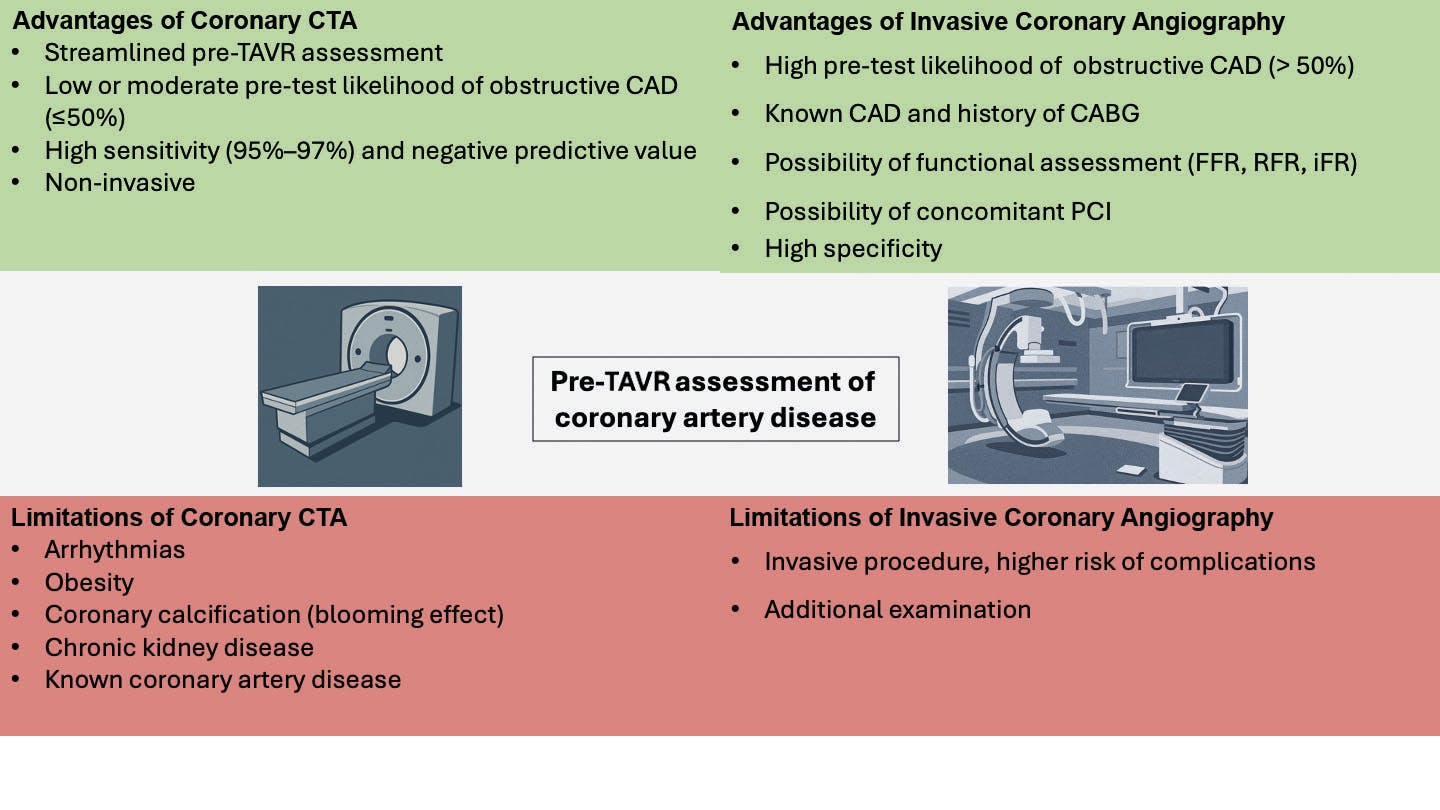
Figure 1. Pre-TAVR assessment of CAD. CABG, coronary artery bypass grafting; iFR, instantaneous wave-free ratio. Image generated with assistance from ChatGPT.
Invasive coronary angiography. ICA is recommended in patients with high or very high pretest likelihood of obstructive CAD (> 50%).1,2 Omission of ICA may be considered in TAVR candidates if procedural planning CTA is of sufficient quality to rule out significant CAD; otherwise, patients should be referred for ICA, potentially within the TAVR procedure.
Functional Coronary Assessment
The value of invasive functional hemodynamic assessment is limited for intermediate coronary stenoses in patients with AS, as AS alters coronary hemodynamics.1,2 A recent study including 146 lesions demonstrated discordance between fractional flow reserve (FFR) and resting full-cycle ratio (RFR) at baseline in 42.3%, primarily due to abnormally low RFR values.10 Six months after aortic valve replacement with either TAVR or surgical aortic valve replacement (SAVR), FFR decreased and RFR increased significantly, resulting in approximately 22% and 40% of lesions crossing traditional diagnostic thresholds for FFR and RFR, respectively. Microvascular dysfunction (MVD) was present in approximately one-third of cases at baseline, and all parameters indicating MVD improved after valve replacement. In this population with severe AS, the cutoff for predicting ischemia before TAVR was an FFR ≤ 0.83 and an RFR ≤ 0.85, each demonstrating comparable diagnostic accuracy (75%-80%).10
The FAITAVI randomized trial recently investigated a functional assessment–guided approach to percutaneous coronary intervention (PCI) in patients scheduled for TAVR.11 A total of 320 patients were assigned to either FFR- or angiography-guided PCI. In the angiography arm, all lesions > 50% in a vessel ≥ 2.5 mm were treated; in the FFR arm, all lesions with an FFR ≤ 0.80 underwent PCI. For FFR values of 0.81 to 0.85, repeat measurements were recommended after TAVR based on the assumption that coronary hemodynamics might change after valve implantation.11 Results at 12 months demonstrated a reduction in the primary endpoint—a composite of all-cause death, myocardial infarction (MI), ischemia-driven target vessel revascularization (TVR), stroke, and major bleeding—with the FFR-guided strategy compared to the angiography group (n = 14, 8.5% vs n = 25, 16%).12 This difference was primarily driven by all-cause mortality (2.4% vs 7.7%). The overall incidence of ischemia-driven TVR was very low (0 vs 3 cases).
The available evidence suggests that hemodynamic assessment should be performed in the presence of intermediate stenosis; however, caution is warranted when interpreting functional indices in patients with severe AS, as established metrics such as FFR and RFR may be altered, and reassessment appears appropriate in borderline cases.13,14
CLINICAL EVIDENCE: MYOCARDIAL REVASCULARIZATION IN PATIENTS UNDERGOING TAVR
The Benefit of PCI
At this time, there is only limited evidence from randomized trials regarding the symptomatic and prognostic benefit of percutaneous coronary revascularization for chronic coronary syndromes in patients scheduled to undergo TAVR.
In the randomized ACTIVATION trial, 235 patients with severe, symptomatic AS and significant CAD (presenting with Canadian Cardiovascular Society class ≤ 2 angina) were randomized to receive either PCI or no PCI prior to TAVR. The primary endpoint was a composite of all-cause death or rehospitalization at 1 year. Adverse event rates were similar between groups; however, the criterion for noninferiority was not met, and PCI was associated with a higher incidence of any bleeding compared to no PCI (41.2% vs 26.7%; P = .021).15 These results should be interpreted in the context of early trial cessation due to slow recruitment (235 patients compared to the intended 310), a prolonged enrollment period during which clinical practice evolved, and the inclusion of patients without significant angina.
The NOTION-3 trial randomized 455 patients with severe symptomatic AS and at least one coronary stenosis (defined by FFR ≤ 0.80 or ≥ 90% diameter stenosis) to undergo PCI or receive conservative management. After a median follow-up of 2 years, the primary composite endpoint (death from any cause, MI, or urgent revascularization) was significantly reduced in the PCI group (26% vs 36%; hazard ratio [HR], 0.71; P = .04), while bleeding events were more frequent in the PCI group (28% vs 20%; HR, 1.51).16 Of note, the difference in primary endpoint was primarily driven by MI and urgent revascularization in patients with ≥ 90% stenoses, but not in those with FFR-positive lesions. Accordingly, the recently updated European Society of Cardiology/European Association for Cardio-Thoracic Surgery guidelines recommend considering PCI in patients undergoing TAVR who have a ≥ 90% coronary stenosis in a vessel with a reference diameter of ≥ 2.5 mm.2 Interestingly, Kaplan-Meier curves separate after 1 year in NOTION-3, indicating that there seems to be sufficient time to reassess symptoms and indication for PCI in the majority of patients undergoing TAVR.16
Given the limited evidence and persistent uncertainty regarding the optimal management of concomitant coronary stenosis in TAVR patients, the results of the COMPLETE TAVR trial are eagerly anticipated. This trial aims to enroll 4,000 symptomatic AS patients with at least one coronary lesion ≥ 2.5 mm in diameter with ≥ 70% angiographic stenosis. Patients will be randomized after successful TAVR with a balloon-expandable transcatheter heart valve to receive either guideline-directed medical therapy alone or staged complete revascularization of all lesions (1-45 days post-TAVR). After a median follow-up of 3.5 years, the primary composite outcome of cardiovascular death, new MI, ischemia-driven revascularization, or hospitalization for unstable angina or heart failure will be assessed.
Until these results are available, decision-making should follow an individualized heart team approach that integrates clinical and anatomic considerations.
Optimal Treatment Strategies
Regarding the optimal treatment modality for patients with both complex CAD and severe AS, the TCW trial randomized patients aged ≥ 70 years deemed suitable for either percutaneous or surgical treatment to FFR-guided PCI plus TAVR or SAVR plus coronary artery bypass grafting. For the combined primary endpoint, the percutaneous strategy was superior to the surgical strategy (HR, 0.17; 95% CI, 0.06-0.51; P < .001 for superiority). This difference was driven mainly by reduction in all-cause mortality (0% vs 10%; P = .0025) and life-threatening bleeding (2% vs 12%; P = .010).3 The trial was terminated after enrollment of 52% of the planned population (172 of 328 patients) due to significantly better outcomes in the PCI/TAVR group. However, additional trials are required to guide practice in alignment with current guideline recommendations (ie, inclusion criteria do not fully reflect contemporary clinical practice, including a substantial proportion of patients aged ≥ 80 years [18%]).
TIMING STRATEGIES OF PCI IN TAVR PATIENTS
The optimal chronology of PCI and TAVR in patients with severe AS scheduled for TAVR is a matter of debate. Figure 2 summarizes the potential risks and benefits of different strategies for PCI timing in TAVR candidates.
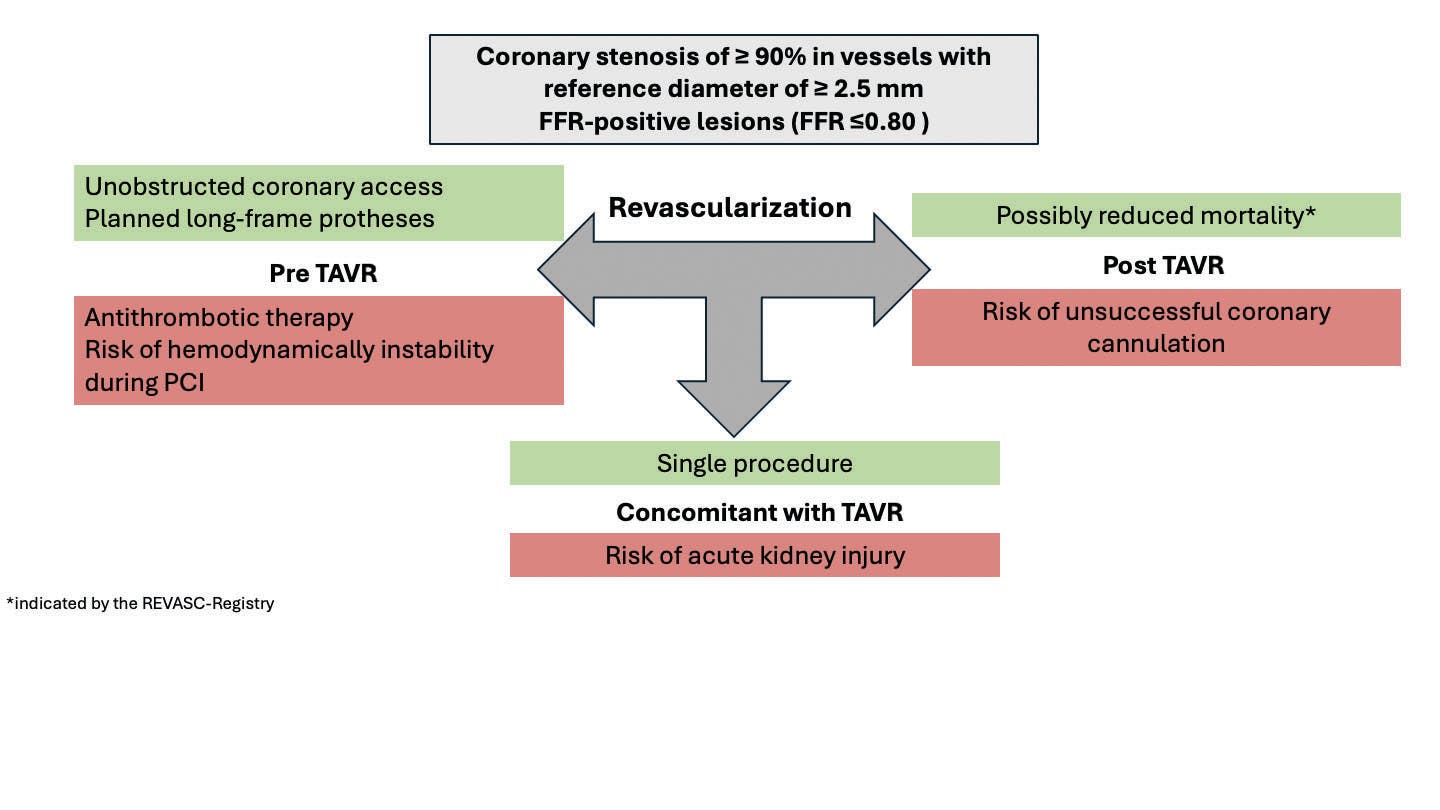
Figure 2. Different timing strategies of PCI in patients scheduled for TAVR. Green shading indicates advantages, red shading indicates disadvantages. Image generated with assistance from ChatGPT.
Historically, the majority of significant coronary lesions have been treated prior to TAVR to minimize the ischemic risk during rapid pacing. The recent international REVASC-TAVI registry included 1,603 patients undergoing TAVR with significant, stable CAD at preprocedural workup. The trial demonstrated that the primary outcome of all-cause death, MI, stroke, or heart failure hospitalization was significantly lower in patients undergoing staged PCI after TAVR as compared to PCI before or concomitantly with TAVR (17.4% vs 30.4% vs 30%; P = .003). Similarly, the incidence of all-cause death was significantly lower in patients undergoing PCI after TAVR as compared to PCI before or concomitantly with TAVR (6.8% vs 20.6% vs 20.1%; P < .001).17
Although these data suggest that PCI should be deferred until after TAVR when clinically appropriate, the findings should be interpreted in light of the trial’s observational and nonrandomized design. In this context, the results of the prospective TAVI PCI trial are eagerly awaited and expected in 2026; this trial randomized 986 patients to complete revascularization either within 45 days post-TAVR or before TAVR using a short-frame, balloon-expandable valve.18
LIFETIME MANAGEMENT
From a lifetime management perspective, it is important to take a potential valve reintervention into consideration during the planning of the first valve intervention. Thus, valve selection is particularly important in patients with concomitant CAD. Depending on individual anatomy (particularly in patients with a small aortic root or low coronary height), implantation of a tall-frame, supra-annular prosthesis may pose challenges for future coronary reaccess after TAV-in-TAV procedures and increase the risk of sinus sequestration.19-21 Advances in device technology, including the open-cell design of latest-generation valves and implantation techniques such as commissural alignment, aim to improve procedural and clinical outcomes and should be considered during procedural planning.
CONCLUSION
In patients undergoing TAVR, the presence of concomitant CAD remains common and clinically relevant, yet optimal strategies for coronary assessment, revascularization, and procedural timing continue to evolve. Current evidence supports an individualized approach that integrates clinical presentation, anatomic complexity, functional assessment, and lifetime management considerations. Ongoing randomized trials will further clarify the role, extent, and timing of PCI in this population to guide clinical practice.
1. Otto CM, Nishimura RA, Bonow RO, et al. 2020 ACC/AHA guideline for the management of patients with valvular heart disease: executive summary: a report of the American College of Cardiology/American Heart Association Joint Committee on Clinical Practice Guidelines. Circulation. 2021;143:e35-e71. doi: 10.1161/cir.0000000000000932
2. Praz F, Borger MA, Lanz J, et al; ESC/EACTS Scientific Document Group. 2025 ESC/EACTS guidelines for the management of valvular heart disease. Eur Heart J. 2025;46:4635-4736. doi: 10.1093/eurheartj/ehaf194
3. Kedhi E, Hermanides RS, Dambrink JE, et al. Transcatheter aortic valve implantation and fractional flow reserve-guided percutaneous coronary intervention versus conventional surgical aortic valve replacement and coronary bypass grafting for treatment of patients with aortic valve stenosis and complex or multivessel coronary disease (TCW): an international, multicentre, prospective, open-label, non-inferiority, randomised controlled trial. Lancet. 2025;404:2593-2602. doi: 10.1016/s0140-6736(24)02100-7
4. Silva G, Espada Guerreiro C, Goncalves Teixeira P, et al. Prognostic impact of coronary artery disease severity and revascularization in TAVI patients. Eur Heart J. 2021;42(suppl 1). doi: 10.1093/eurheartj/ehab724.2108
5. Sayers MB, Rathod K, Akhtar M, et al. Prognostic impact of coronary artery disease in patients undergoing transcatheter aortic valve replacement. Cardiovasc Revasc Med. 2025;79:61-67. doi: 10.1016/j.carrev.2025.05.010
6. Gatti M, Gallone G, Poggi V, et al. Diagnostic accuracy of coronary computed tomography angiography for the evaluation of obstructive coronary artery disease in patients referred for transcatheter aortic valve implantation: a systematic review and meta-analysis. Eur Radiol. 2022;32:5189-5200. doi: 10.1007/s00330-022-08603-y
7. Jensen RV, Jensen JM, Iraqi N, et al. Coronary CT angiography instead of invasive angiography before TAVI: feasibility and outcomes. Int J Cardiol. 2025;419:132694. doi: 10.1016/j.ijcard.2024.132694
8. Kondoleon NP, Layoun H, Spilias N, et al. Effectiveness of pre-TAVR CTA as a screening tool for significant CAD before TAVR. JACC Cardiovasc Interv. 2023;16:1990-2000. doi: 10.1016/j.jcin.2023.05.030
9. Gallo C, Campanile A, Izzo C, et al. Diagnostic accuracy of coronary CT angiography in ruling out significant coronary artery disease in candidates for transcatheter aortic valve replacement. J Cardiovasc Dev Dis. 2025;12:395. doi: 10.3390/jcdd12100395
10. Minten L, McCutcheon K, Vanhaverbeke M, et al. Coronary physiological indexes to evaluate myocardial ischemia in patients with aortic stenosis undergoing valve replacement. JACC Cardiovasc Interv. 2025;18:201-212. doi: 10.1016/j.jcin.2024.10.024
11. Ribichini F, Pesarini G, Fabris T, et al. A randomised multicentre study of angiography- versus physiology-guided percutaneous coronary intervention in patients with coronary artery disease undergoing TAVI: design and rationale of the FAITAVI trial. EuroIntervention. 2024;20:e504-e510. doi: 10.4244/EIJ-D-23-00679
12. Ribichini F. Angiography versus physiology-guided PCI in patients undergoing TAVI: the Functional Assessment In TAVI (FAITAVI) trial. Presented at: EuroPCR 2025; May 20-23, 2025; Paris, France.
13. Ahmad Y, Götberg M, Cook C, et al. Coronary hemodynamics in patients with severe aortic stenosis and coronary artery disease undergoing transcatheter aortic valve replacement: implications for clinical indices of coronary stenosis severity. JACC Cardiovasc Interv. 2018;11:2019-2031. doi: 10.1016/j.jcin.2018.07.019
14. Pesarini G, Scarsini R, Zivelonghi C, et al. Functional assessment of coronary artery disease in patients undergoing transcatheter aortic valve implantation: influence of pressure overload on the evaluation of lesions severity. Circ Cardiovasc Interv. 2016;9:e004088. doi: 10.1161/CIRCINTERVENTIONS.116.004088
15. Patterson T, Clayton T, Dodd M, et al; ACTIVATION trial investigators. ACTIVATION (percutaneous coronary intervention prior to transcatheter aortic valve implantation): a randomized clinical trial. JACC Cardiovasc Interv. 2021;14:1965-1974. doi: 10.1016/j.jcin.2021.06.041
16. Lønborg J, Jabbari R, Sabbah M, et al; NOTION-3 Study Group. PCI in patients undergoing transcatheter aortic-valve implantation. N Engl J Med. 2024;391:2189-2200. doi: 10.1056/NEJMoa2401513
17. Rheude T, Costa G, Ribichini FL, et al. Comparison of different percutaneous revascularisation timing strategies in patients undergoing transcatheter aortic valve implantation. EuroIntervention. 2023;19:589-599. doi: 10.4244/EIJ-D-23-00186
18. Stähli BE, Linke A, Westermann D, et al; TAVI PCI investigators. A randomized comparison of the treatment sequence of percutaneous coronary intervention and transcatheter aortic valve implantation: rationale and design of the TAVI PCI trial. Am Heart J. 2024;277:104-113. doi: 10.1016/j.ahj.2024.07.019
19. Ochiai T, Oakley L, Sekhon N, et al. Risk of coronary obstruction due to sinus sequestration in redo transcatheter aortic valve replacement. JACC Cardiovasc Interv. 2020;13:2617-2627. doi: 10.1016/j.jcin.2020.09.022
20. Akodad M, Sellers S, Gulsin GS, et al. Leaflet and neoskirt height in transcatheter heart valves: implications for repeat procedures and coronary access. JACC Cardiovasc Interv. 2021;14:2298-2300. doi: 10.1016/j.jcin.2021.07.034
21. Kim WK, Pellegrini C, Ludwig S, et al. Feasibility of coronary access in patients with acute coronary syndrome and previous TAVR. JACC Cardiovasc Interv. 2021;14:1578-1590. doi: 10.1016/j.jcin.2021.05.007
Advertisement
Advertisement