Advertisement
Advertisement
September/October 2024
Aortic Regurgitation Frontier: Management Options and Future Directions
Epidemiology and pathophysiology considerations for aortic regurgitation, early results and challenges with off-label and dedicated technology, and innovation needs.
By Mohammed Ahmed, MD; Nishath Quader, MD; Marc Sintek, MD; Tsuyoshi Kaneko, MD; and Alan Zajarias, MD
Aortic regurgitation (AR) is a condition where the aortic valve fails to close properly, leading to backward flow of blood into the left ventricle. It is the third most common cause of valvular heart disease after aortic stenosis (AS) and mitral regurgitation (MR).1
EPIDEMIOLOGY OF AR
The prevalence of clinically significant (moderate or severe) native AR is estimated to be from 0.5% to 3% of the general population and varies by age, sex, ethnicity, and underlying health conditions.2 AR can be caused by abnormalities in the aortic valve, aortic annulus, or ascending aorta that interfere with appropriate coaptation of the leaflets. In younger individuals, congenital factors (eg, bicuspid aortic valve, connective tissue disorders, aortic aneurysm) or a history of rheumatic fever are the most common causes of AR.2,3 AR is also associated with systemic conditions like hypertension and autoimmune diseases.2-4 Other causes of acute AR include aortic valve endocarditis and aortic dissection. In older adults, degenerative changes interfering with leaflet mobility and coaptation are the primary contributors. Sex differences are relatively minor, although some studies suggest a slightly higher prevalence in men, potentially linked to a greater incidence of congenital heart disease in this population.2
PATHOPHYSIOLOGY OF CHRONIC AR
Chronic AR leads to slow and progressive changes in cardiac structure and function. In the initial compensatory phase, increased left ventricular (LV) end-diastolic volume and wall stress lead to adaptive eccentric hypertrophy.5 Systolic function is maintained during this phase of the disease. Eventually, this adaptation fails, heralding systolic dysfunction and heart failure.5-7 Elevated filling pressures in the left ventricle also reflect back into the left atrium, contributing to atrial enlargement and increased risk of arrhythmia.
Unlike AS and MR, which involve consistent disease progression regardless of initial severity, AR tends to follow a much less rampant course. Severe asymptomatic AR has a slower progression to LV dysfunction (< 1.5% yearly) and symptomatic disease (< 5% yearly).6 The condition entails a prolonged initial compensated phase (with or without LV dilation) and a late decompensated phase heralded by systolic dysfunction and development of symptoms. In a study of 1,077 patients with stage B AR, Yang et al reported 10-year progression to stage C or D AR, with mild AR in 12% of patients, mild-moderate AR in 30%, and moderate AR in 53%.7 At median follow-up, 21% were labeled progressors (ie, exhibiting more rapid deterioration) and 22% had died. The incidence of progression was significantly associated with baseline AR severity, sinotubular junction, and aortic annulus dimensions. Mortality was significantly associated with LV ejection fraction but not end-systolic dimension. Based on this analysis and others, progression to stage C or D AR is estimated to be approximately 2% to 5% yearly, with a more precipitous course in patients with larger aortic sizes and bicuspid valves.6,7 Whereas stage C AS or MR carry annual mortality rates nearing 10%, the mortality rate of asymptomatic severe AR is approximately one-quarter this figure.6 Consequently, management strategies for stage C AR have historically emphasized noninvasive treatment with medical therapy. However, advances in echocardiography and cardiac MRI now enable better identification of the transition from compensated to decompensated (stage D) AR and persuade earlier surgical intervention, conferring survival benefit.8
CURRENT MANAGEMENT AND TREATMENT OPTIONS
The treatment strategy for AR is determined by condition severity, presence of symptoms, and LV function.3 Management options include both medical and surgical/interventional approaches.
Medical Management
The goal of medical management is to control symptoms and slow disease progression. This typically involves guideline-directed medical therapy to address LV systolic dysfunction, vasodilators in hypertensive patients, and diuretics to reduce the volume load.3 Prospective studies on vasodilators (calcium channel blockers, angiotensin-converting enzyme inhibitors, hydralazine) have shown hemodynamic and LV remodeling benefits; however, whether this translates into delaying aortic valve replacement is uncertain.9,10 Similarly, although Β-blockers have been shown to be beneficial in animal models and retrospective human studies, a prospective trial failed to show benefit in reducing LV end-diastolic volume and even suggested a potential risk for harm.10,11 Taken together, these measures can provide symptomatic relief and possibly delay disease progression, but they are not a cure. Conservative management of severe symptomatic AR is associated with a > 20% 1-year mortality.12
Surgical Management
Intervention should be considered early in the disease course and definitively sought when symptoms or LV dysfunction develop because it confers a significant survival benefit.3,12 The primary surgical options are aortic valve replacement and, less commonly, valve repair. Aortic valve replacement can be performed using either surgical or, more recently, transcatheter approaches. The most recent 2020 American College of Cardiology/American Heart Association valve guidelines reserve class I indications for surgical aortic valve replacement (SAVR) in symptomatic, severe AR (stage D); severe asymptomatic AR with LV dysfunction (stage C2); and those undergoing cardiac surgery with stage C or higher disease.3 Valve repair is generally reserved for specific cases, such as certain congenital defects (eg, bicuspid aortic valve). In a recent analysis of the Society of Thoracic Surgeons database for patients who underwent isolated SAVR for moderate or worse AR, a 1.1% overall operative mortality was reported. Mortality was lowest in stage B disease at 0.4% and highest in stage D disease at 1.6%.13
Despite the clear benefits of surgical intervention, approximately 20% of patients with severe symptomatic AR and depressed LV function (ejection fraction between 30%-50%) are referred for SAVR.12 This number decreases significantly to approximately 3% when the ejection fraction falls below 30%. This gap highlights the need for alternative treatment options for high-risk patients. To address this unmet need, transcatheter aortic valve replacement (TAVR) has been used to treat patients with native AR and a prohibitive risk for surgical intervention.
TRANSCATHETER AORTIC VALVE REPLACEMENT IN AR
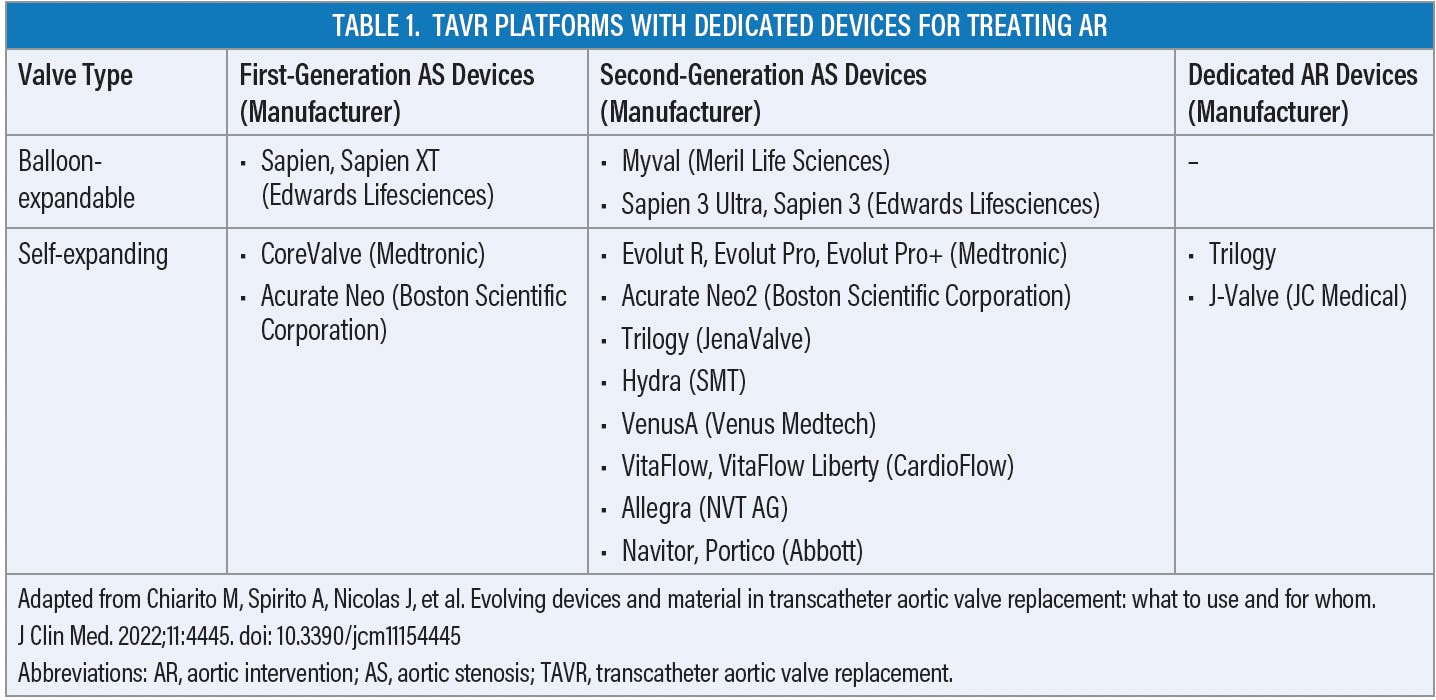
TAVR was initially developed for AS and has progressively been adapted for patients with native AR.1 Early attempts involved using off-label devices that were approved in AS (Table 1), including self-expanding and balloon-expandable valves. However, the application of TAVR for AR presents several challenges that are not encountered in AS.1,2 TAVR prostheses are oversized to the annular dimensions and use the valvular calcification or fibrotic tissue to anchor. Native AR often involves dilation of the aortic root or ascending aorta, a more horizontal aorta, minimal or no valve leaflet calcification, and a highly elastic aortic annulus.1,2 The absence of valve calcification and the elastic properties of the aorta complicate TAVR prosthetic sizing and anchoring, leading to oversizing the prosthetic up to 50%.
Early Results and Challenges
Early use of first-generation TAVR devices for native AR was associated with significant complications, including high rates of device embolization, residual valvular and paravalvular regurgitation, need for second valve, and permanent pacemaker placement.1,2 Recent meta-analyses comparing TAVR with SAVR have highlighted these concerns. Mentias et al found comparable short-term survival at 30 days, but longer follow-up (median, 31 months) revealed increased all-cause mortality, heart failure, and need for repeat TAVR in the transcatheter group.14 Elkasaby et al similarly reported no difference in short-term in-hospital mortality but noted a higher rate of pacemaker implantation after TAVR compared to SAVR.15 These studies had limitations due to their reliance on smaller, single-center, retrospective analyses based on outdated first-generation TAVR platforms.
Results With Contemporary TAVR Devices
To address limitations of previous data, the PANTHEON study was designed to retrospectively evaluate newer-generation TAVR devices approved for AS in patients with severe symptomatic native AR.2 The study included 201 patients who underwent TAVR between 2018 and 2022. The results of the study still revealed notable risks. At 30 days, approximately 12% of patients experienced valve embolization, 10% had residual moderate or greater AR, 22% required pacemaker implantation, and 10% required a second valve. At 1 year, 17% experienced the primary composite endpoint of heart failure or all-cause death. These findings were unexpected because despite advancements in technology and outcomes for AS, the study showed that these improvements had not translated into better outcomes for AR. The results highlighted the continued need for specialized valve platforms to effectively tackle the distinct challenges associated with native AR.
DEDICATED PLATFORMS FOR AR
Currently, the Trilogy valve (JenaValve) and J-Valve (JC Medical) are the only transcatheter platforms specifically designed to address the unique challenges of native AR.1 In AS, calcification of the annulus and leaflets provides an anchor, allowing the frame to stabilize against the aortic wall and avoid embolization. In AR, the paucity of calcium at the aortoventricular junction means there is no reliable anchoring surface. The key feature of dedicated AR platforms is a specialized anchoring mechanism comprising a nitinol stent frame designed to grasp the three aortic valve leaflets.16-19
Trilogy Valve
The Trilogy valve has a self-expanding nitinol stent frame, three anchoring clips with localization markers, and porcine pericardial tissue as the valve material (Figure 1).17,18 Currently, the valve comes in three sizes: small (21-24 mm), medium (23-25 mm), and large (24-27 mm), and the transfemoral delivery system requires an 18-F arterial sheath.18 Valve use was validated through a European CE Mark trial published in 2012, which showed high procedural success of 90% and a 7.6% mortality rate at 30 days with transapical delivery.17 The system received CE Mark approval in 2021.
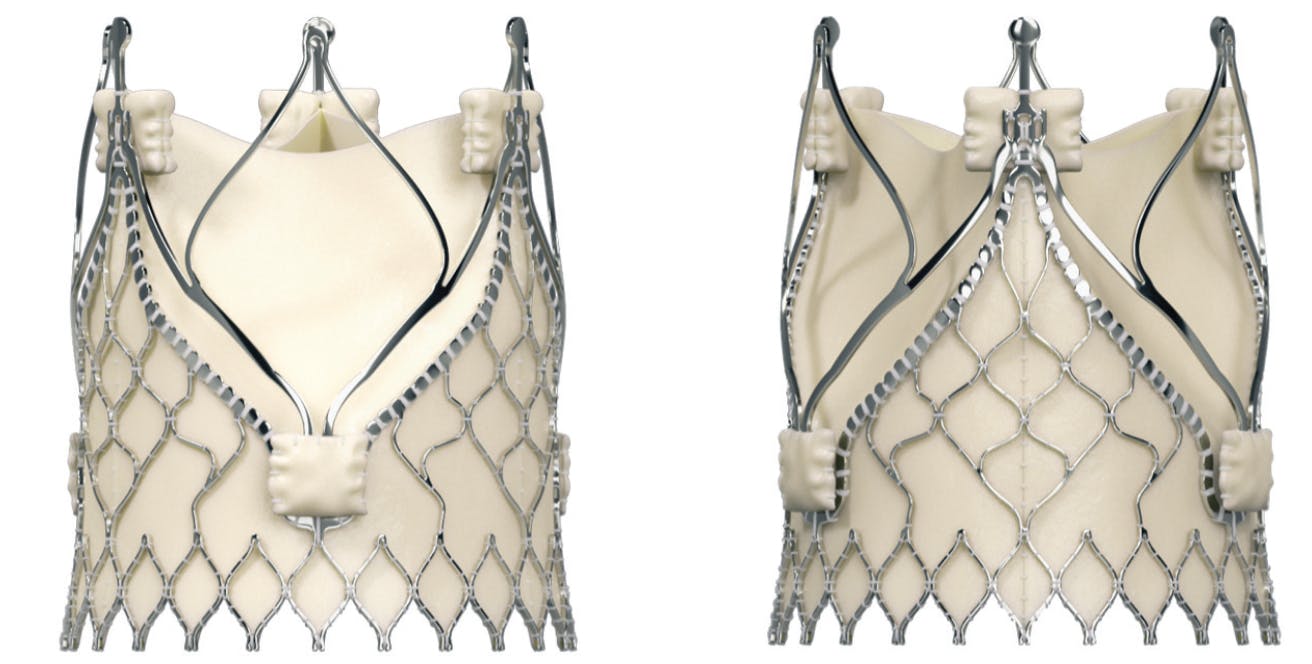
Figure 1. Transfemoral Trilogy/JenaValve. Coutesy of JenaValve.
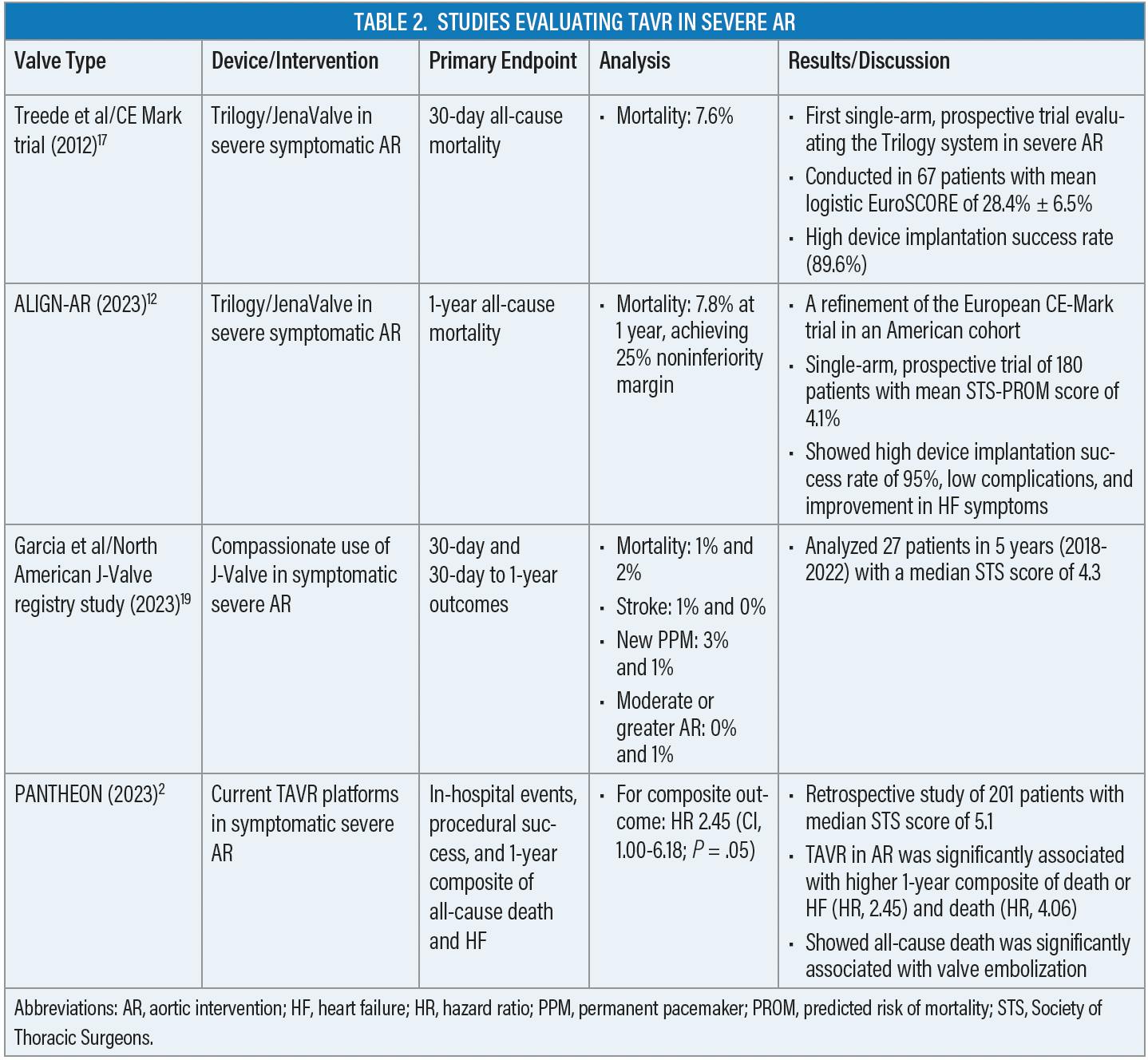
The more contemporary ALIGN-AR study was a prospective, multicenter, single-arm trial conducted in the United States from 2018 to 2022. In 180 patients with severe symptomatic AR at prohibitive surgical risk, Trilogy showed a high procedural success rate of 95% and low 30-day mortality (2%), stroke (2%), moderate or greater residual AR (< 1%), and device embolization (2%).12 Mortality at 1 year was 8%, meeting the primary efficacy endpoint for noninferiority, a margin set by previous clinical valve studies. Although pacemaker rates were initially high at 24%, they went down over the course of the trial with optimization of implantation technique and operator experience. Clinically, patients experienced improvement in heart failure symptoms and positive LV remodeling. The Trilogy valve has not been studied proficiently in patients with bicuspid AR. Due to its sizing matrix, patients with a large aortic annulus cannot be treated with this prosthetic. A continued access registry of high-risk patients is ongoing and will continue until FDA approval of the prosthetic, and an intermediate-risk trial is planned in the future.
J-Valve
Also a self-expanding valve, J-Valve employs an anchoring mechanism comparable to JenaValve and has three rings to stabilize the bioprosthesis.19 Features of contrast include a shorter profile and bovine pericardial tissue as the valve material. Five sizes are currently available: 22, 25, 28, 31, and 34 mm. Similar to JenaValve, an 18-F sheath is used for transfemoral delivery.
A 2023 multicenter registry analysis by Garcia et al evaluated compassionate use of J-Valve in patients with severe symptomatic AR who were considered high surgical risk.19 Among 27 patients, 30-day outcomes were favorable, with 1% mortality, 1% stroke, 3% requiring a permanent pacemaker, and no cases of significant residual AR. Cumulative 1-year outcomes revealed 3% mortality, no additional strokes, 4% pacemaker implantation, and 1% moderate or greater AR. The overall procedural success rate was 81%, with a 100% success rate in the latter half of valve recipients, reflecting technical refinement with time. An ongoing early feasibility clinical trial (NCT06034028) is assessing this valve platform for severe symptomatic AR, with results anticipated by 2029.20
Sahar Samimi, MD, presented an unpublished meta-analysis at New York Valves 2024 that compared off-label TAVR to the dedicated AR platforms (Trilogy valve and J-Valve).21 The analysis found that dedicated devices were associated with lower 30-day all-cause mortality (3% vs 11%), lower residual moderate-severe AR (1% vs 8%), fewer reinterventions (2.5% vs 8%), and reduced device embolization (2% vs 11%).
FUTURE DIRECTIONS
Transcatheter treatment for native AR is promising, with ongoing advancements focused on refining device technology. Innovative valve designs, such as enhanced anchoring mechanisms and tailoring to the unique challenges of AR, are being developed to address issues like aortic root dilation and minimal leaflet calcification. Ongoing clinical trials and research aim to refine these devices, improving outcomes and reducing complications like residual regurgitation and valve embolization (Table 2).2,12,17,19 Broadening the eligible population to include patients with bicuspid aortic valve, large aortic annulus, or intermediate risk will likely be the focus of future clinical trials.
Advancements in imaging and procedural techniques will further enhance the precision of valve placement and sizing. Additionally, personalized approaches, including use of patient-specific anatomic data, are expected to optimize treatment efficacy. As these technologies evolve, they promise to offer safer, more effective options for patients with severe symptomatic AR, potentially improving long-term outcomes and expanding the benefits of TAVR to a broader patient population.
1. Barbanti M, Laterra G, Maisano F. Transcatheter treatment of pure aortic regurgitation. Nat Rev Cardiol. 2024;21:597-598. doi: 10.1038/s41569-024-01059-1
2. Poletti E, De Backer O, Scotti A, et al. Transcatheter aortic valve replacement for pure native aortic valve regurgitation: the PANTHEON International project. JACC Cardiovasc Interv. 2023;16:1974-1985.
3. Otto CM, Nishimura RA, Bonow RO, et al. 2020 ACC/AHA guideline for the management of patients with valvular heart disease: executive summary: a report of the American College of Cardiology/American Heart Association joint committee on clinical practice guidelines. Circulation. 2021;143:e35-e71. Published correction appears in Circulation. 2;143:e228 and Circulation. 2021;143:e784. doi: 10.1161/CIR.0000000000000966.
4. Roland RB, Yeong-Hoon C, Enriquez-Sarano M. Chronic aortic regurgitation: diagnosis and therapy in the modern era. E-J Cardiol Pract. 2020;18:22-27.
5. Goldbarg SH, Halperin JL. Aortic regurgitation: disease progression and management. Nat Clin Pract Cardiovasc Med. 2008;5:269-279. doi: 10.1038/ncpcardio1179
6. Vanoverschelde JL, Vancraeynest D. Progression of aortic regurgitation: the missing link between disease severity and clinical complications. J Am Coll Cardiol. 2019;74:2493-2495. doi: 10.1016/j.jacc.2019.08.1059
7. Yang LT, Enriquez-Sarano M, Michelena HI, et al. Predictors of progression in patients with stage b aortic regurgitation. J Am Coll Cardiol. 2019;74:2480-2492. doi: 10.1016/j.jacc.2019.08.1058
8. Popović ZB, Desai MY, Griffin BP. Decision making with imaging in asymptomatic aortic regurgitation. JACC Cardiovasc Imaging. 2018;11:1499-1513. doi: 10.1016/j.jcmg.2018.05.027
9. Mahajerin A, Gurm HS, Tsai TT, et al. Vasodilator therapy in patients with aortic insufficiency: a systematic review. Am Heart J. 2007;153:454-461. doi: 10.1016/j.ahj.2007.01.006
10. Broch K, Urheim S, Lønnebakken MT, et al. Controlled release metoprolol for aortic regurgitation: a randomised clinical trial. Heart. 2016;102:191-197. doi: 10.1136/heartjnl-2015-308416
11. Elkayam U. Beta-blockers in the treatment of aortic regurgitation. A new opportunity? J Am Coll Cardiol. 2009;54:458-459. doi: 10.1016/j.jacc.2009.04.035
12. Vahl TP, Thourani VH, Makkar RR, et al. Transcatheter aortic valve implantation in patients with high-risk symptomatic native aortic regurgitation (ALIGN-AR): a prospective, multicentre, single-arm study. Lancet. 2024;403:1451-1459. doi: 10.1016/S0140-6736(23)02806-4
13. Ryan CT, Almousa A, Zea-Vera R, et al. Outcomes of aortic valve replacement for chronic aortic insufficiency: analysis of the Society of Thoracic Surgeons database. Ann Thorac Surg. 2022;113:763-772. doi: 10.1016/j.athoracsur.2021.04.027
14. Mentias A, Saad M, Menon V, et al. Transcatheter vs surgical aortic valve replacement in pure native aortic regurgitation. Ann Thorac Surg. 2023;115:870-876. doi: 10.1016/j.athoracsur.2022.09.016.
15. Elkasaby MH, Khalefa BB, Yassin MNA, et al. Transcatheter aortic valve implantation versus surgical aortic valve replacement for pure aortic regurgitation: a systematic review and meta-analysis of 33,484 patients. BMC Cardiovasc Disord. 2024;24:65. doi: 10.1186/s12872-023-03667-0
16. Chiarito M, Spirito A, Nicolas J, et al. Evolving devices and material in transcatheter aortic valve replacement: what to use and for whom. J Clin Med. 2022;11:4445. doi: 10.3390/jcm11154445
17. Treede H, Mohr FW, Baldus S, et al. Transapical transcatheter aortic valve implantation using the JenaValve™ system: acute and 30-day results of the multicentre CE-mark study. Eur J Cardiothoracic Surg. 2012;41:e131-138. doi: 10.1093/ejcts/ezs129
18. Baumbach A, Patel KP, Kennon S, et al. A heart valve dedicated for aortic regurgitation: review of technology and early clinical experience with the transfemoral Trilogy system. Catheter Cardiovasc Interv. 2023;102:766-771. doi: 10.1002/ccd.30795
19. Garcia S, Ye J, Webb J, et al. Transcatheter treatment of native aortic valve regurgitation: the North American experience with a novel device. JACC Cardiovasc Interv. 2023;16:1953-1960. doi: 10.1016/j.jcin.2023.05.018
20. J-Valve TF early feasibility study (JVTF EFS). Clinicaltrials.gov website. Accessed August 16, 2024. https://clinicaltrials.gov/study/NCT06034028
21. Neale T. Dedicated devices for aortic regurgitation supported by meta-analysis. TCTMD.com. June 13, 2024. Accessed August 16, 2024. https://www.tctmd.com/news/dedicated-devices-aortic-regurgitation-supported-meta-analysis
Advertisement
Advertisement