Advertisement
Advertisement
May/June 2024
Transcatheter Tricuspid Valve Replacement With the Evoque Valve
A step-by-step guide to procedural technique, data, and future challenges.
By Aakriti Gupta, MD, MS; Moody Makar, MD; and Raj Makkar, MD
Severe tricuspid regurgitation (TR) is a prevalent valvular heart disease, particularly among older populations and those with heart failure, resulting in high mortality with a 5-year survival rate below 30% and increased hospitalizations related to heart failure and atrial fibrillation.1 Although the majority of TR cases are functional, caused by structural changes in the heart such as annular dilatation and leaflet tethering, surgical interventions remain underutilized due to high procedural mortality.2 Transcatheter tricuspid valve interventions have emerged as promising alternatives, especially with the development of transcatheter edge-to-edge repair3 and transcatheter tricuspid valve replacement (TTVR),4 both of which received regulatory approval in the United States by the FDA in 2024. These methods have shown good safety profiles and efficacy in reducing TR, offering hope for patients who are poor surgical candidates. Unfortunately, many patients who would benefit from repair do not have suitable valve anatomy, usually due to large coaptation gaps, short and/or extremely tethered septal leaflets, inadequate imaging, or just the overall complexity of the right-sided atrioventricular valve that may have four or more leaflets in up to 40% of cases.5 TTVR has the potential to fulfill this unmet clinical need, providing a feasible percutaneous option for severe TR, with promising short-term outcomes and potential for durable symptomatic relief. In this article, we describe the procedural technique for TTVR with the Evoque valve replacement system (Edwards Lifesciences), clinical data, and some future directions.
EVOQUE VALVE
The Evoque valve system is designed for transfemoral transcatheter implantation and features a self-expanding nitinol frame, bovine pericardial leaflets, and a fabric skirt to help reduce paravalvular leak (see Equipment sidebar). It utilizes a unique anchoring system that secures to the annulus, leaflets, and chords using nine ventricular anchors for stable placement. The delivery system, with a 28-F outer diameter, supports three planes of motion. It employs primary flexion to position the valve perpendicular to the tricuspid annulus in the anterior-posterior (A/P) plane, followed by secondary flexion to align it coaxially with the tricuspid valve in the septal-lateral (S/L) plane. Additionally, an independent depth control feature allows for precise and controlled deployment of the ventricular anchors while ensuring the valve remains coaxially aligned. The valve is offered in three sizes commercially: 44, 48, and 52 mm. A larger 56-mm valve is currently under investigation.
PATIENT SELECTION AND PREPROCEDURAL SCREENING
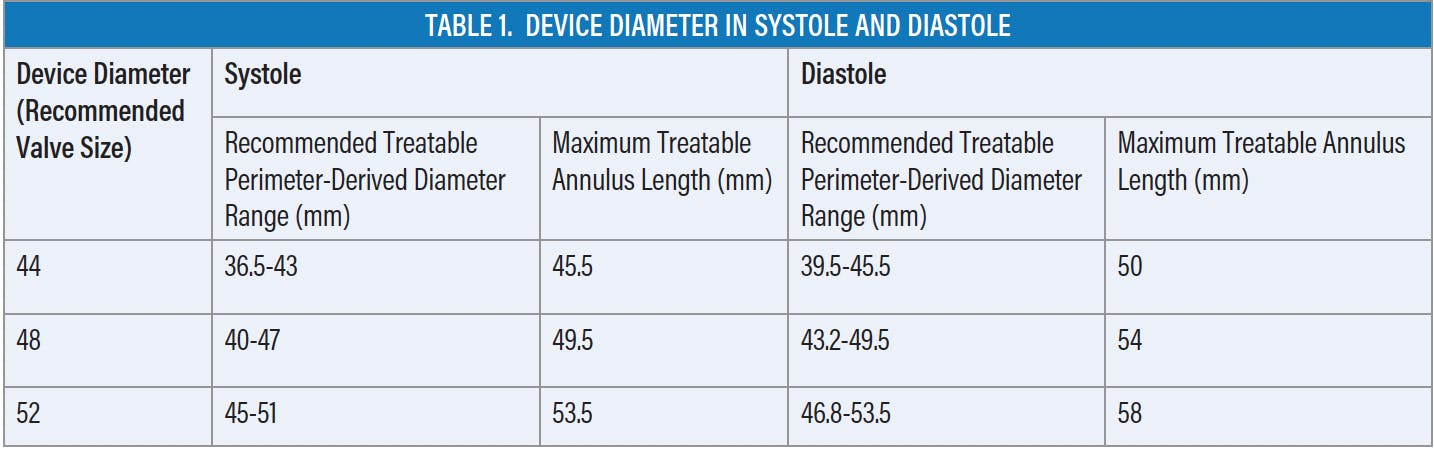
The successful implementation of TTVR relies on meticulous preprocedural planning, precise patient selection, and detailed anatomic assessment using state-of-the-art imaging techniques, including CT scan and three-dimensional transesophageal echocardiography (TEE). Patient selection criteria are central to the process and include determination of severity of TR, surgical risk, presence of conduction system disturbances, and transtricuspid valve leads. From the anatomic perspective, more than half of patients fail screening due to large annulus. Other common reasons for screening failures include small annulus, significant leaflet tethering, and presence of more than one transtricuspid valve lead or an implantable cardioverter-defibrillator indicated for secondary prevention. In general, patients with a perimeter-derived diameter ranging from 36.5 to 50 mm are considered suitable and those between 50 to 53.5 mm are considered borderline for commercially available devices (Figure 1). While performing prescreening TEE, a tricuspid annular perimeter by multiplanar reconstruction (MPR) at end diastole of > 160 mm or a two-dimensional (2D) diastolic annular diameter of > 60 mm signals a high probability of screen failure (Table 1). Moreover, if more than half of the septal leaflet is plastered during systole with < 4-mm distance between leaflet tip to septal wall or there is significant leaflet flail with no secondary chords intact, patients are less likely to have successful valve deployment and are generally screened out.
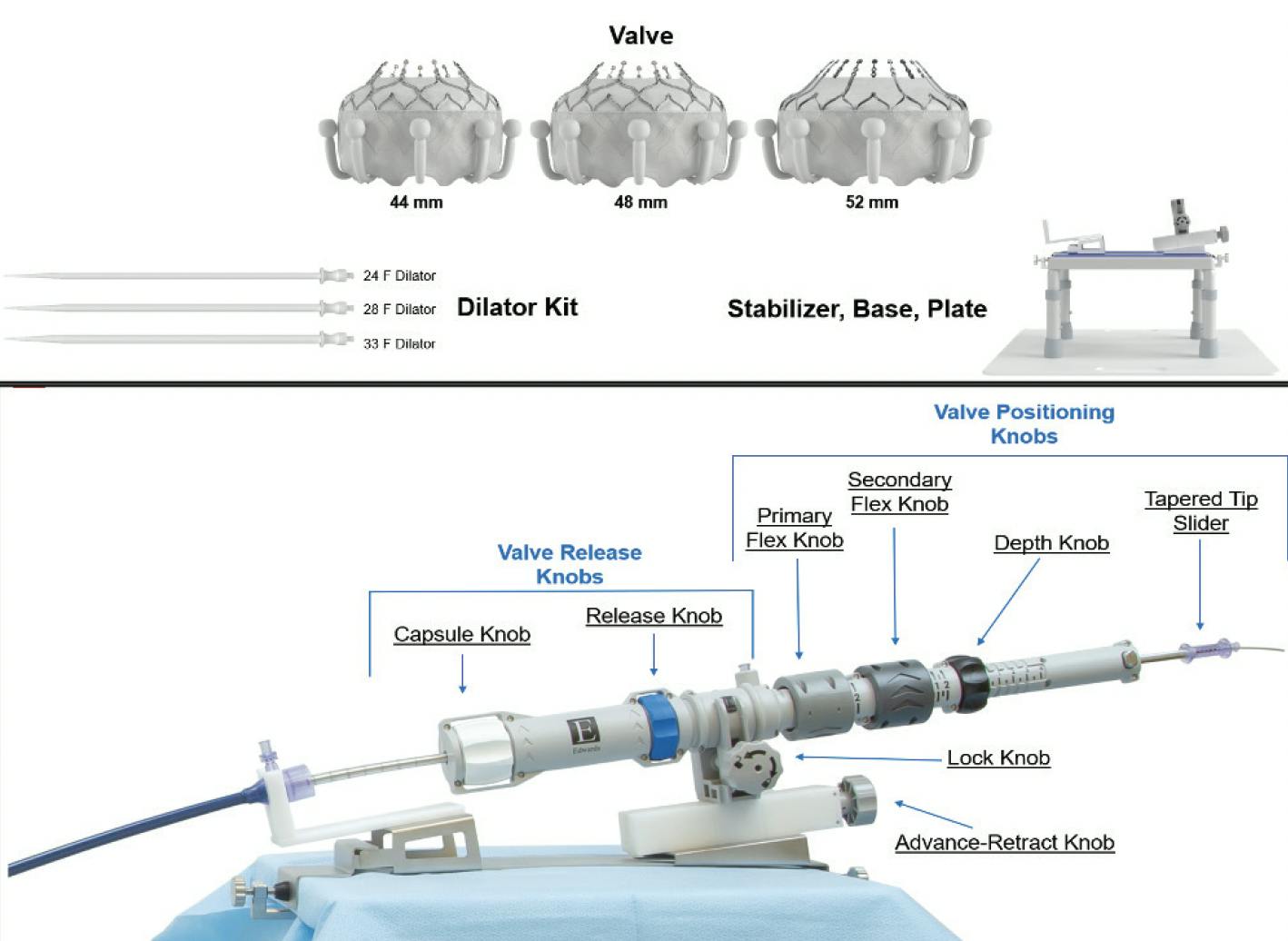
Figure 1. Evoque valve delivery system and accessories.
(Courtesy of Edwards Lifesciences.)
EQUIPMENT
Supplied by Manufacturers
The valve and valve delivery system are provided by the manufacturers. The delivery system has an outer diameter of 28 F and is intended to deliver the valve in the crimped position via the transfemoral venous approach. The delivery system handle contains a primary flex knob, secondary flex knob, and depth knob to facilitate valve alignment and positioning in the native valve, as well as a capsule knob and release knob to control the expansion and release of the valve.
The 24-, 28-, and 33-F diameter hydrophilic-coated dilators are intended to dilate the access site, facilitating delivery system insertion. All dilators accommodate a 0.035-inch (0.89-mm) guidewire and are tapered to minimize access site trauma.
The loading system, which consists of multiple components, is intended to facilitate loading and attachment of the valve onto the delivery system. The loading system assists in crimping the valve to the appropriate diameter, which allows the outer capsule to advance over the valve.
The stabilizer, base, and plate are intended to secure the delivery system at an angle appropriate for the transfemoral venous approach and to enable fine adjustments of the position of the delivery system during the implantation procedure. The base is height-adjustable to accommodate patient lower extremities and is intended to provide a stable platform for the stabilizer. The plate is intended to provide a stable, flat surface for the base on the operating table.
Additional Equipment
- Standard cardiac catheterization lab equipment
- Femoral vessel introducer sheath (18-F sheath)
- Two ProGlides (Abbott)
- Fluoroscopy
- TEE capabilities
- Steerable introducer sheath: Oscor (Medtronic), Direx (Boston Scientific Corporation), or Agilis (Abbott)
- Exchange-length 0.035-inch (0.89-mm) guidewire
- Extra-small–curve Safari 0.035-inch (0.89-mm) guidewire (Boston Scientific Corporation)
- Sterile table for Evoque valve and device preparation
- 6-F multipurpose catheter
- Arterial and venous bypass cannula (~18 F) and cardiopulmonary bypass machine on standby
- Temporary pacing equipment—alligator clips with grounding
Another imaging consideration during CT planning includes the anatomic “working room” for the delivery system that is measured in three different aspects across diastole and systole to determine adequate procedural space: (1) inferior vena cava (IVC)–to–tricuspid valve annulus (TVA) offset, (2) right atrial height, and (3) right ventricular (RV) length. These aspects allow determination of need of flexion of the delivery system to obtain coaxiality with the TVA, as well as room available for the wire curl in the right ventricle and height and depth for delivery system.
In the presence of pacing leads across the TVA, some other considerations include date of implantation and need for backup pacing, adhesion of leads, slack and mobility of lead, its location, and anticipated interaction during valve deployment. Based on these, a patient may either be screened out or there might be a need to extract the lead prior to deployment or move the lead to a more suitable location during deployment.
DELIVERY SYSTEM MANEUVERS FOR POSITION, TRAJECTORY, AND DEPTH
It is important to understand the basic maneuvers that are required to optimize the position, trajectory, and depth of the delivery system once across the tricuspid valve annulus. As noted in Figure 1, the delivery system consists of several knobs that assist in valve positioning and release. The knobs at the back end of the valve delivery system assist with management of position, trajectory, and depth, while the knobs at the front end are utilized for the release of anchors (white knob), valve expansion, and, finally, valve release (blue knob). The goal is to have the position (location of the system where it crosses the annular plane) of the valve delivery system central in both the A/P and S/L planes. Moreover, it is important to have the trajectory (direction the system is pointing) of the delivery system coaxial with the tricuspid annulus.
A/P Control
- The A/P position is optimized using the advance/retract knob. Rotating the knob clockwise positions the system anterior and rotating it counterclockwise positions it posterior.
- The A/P trajectory is optimized using the light grey primary flex knob at the back end of the console. Rotating it clockwise makes the valve delivery system point posteriorly and counterclockwise makes it point anteriorly.
S/L Control
- The S/L position is optimized using the dark grey secondary flex knob at the back end of the console. Rotating in clockwise positions the system lateral and counterclockwise positions it septal.
- The S/L trajectory is optimized using rotation of the delivery system handle. Rotating it clockwise makes it point septal and counterclockwise in the lateral direction.
Depth Control
- The black depth knob at the rear end of the console is utilized to precisely control the depth of the valve delivery system by rotating it clockwise or counterclockwise, which translates into ventricular or atrial movement, respectively.
- Wire management is also critical for depth optimization. Retracting the wire helps gain depth and advancing the wire helps lose depth. The tapered tip slider is often retracted when trying to gain depth.
PROCEDURAL STEPS
Step 1: Vascular Access and Anticoagulation
Common femoral venous access is achieved using an ultrasound-guided micropuncture technique, and two ProGlides are utilized for preclosure. The right femoral vein is the preferred approach, but occasionally the left femoral vein is utilized for access when the need for more height is anticipated based on CT planning. An 18-F introducer sheath is inserted in the IVC. Therapeutic-dose heparin is then administered intravenously for periprocedural anticoagulation, targeting an activated clotting time of > 300 seconds.
Step 2: Wire Placement in the Right Ventricle
Next, a 12-F steerable sheath (Oscor, Agilis, or Direx) is advanced over a 0.035-inch guidewire (except Agilis, which has its dedicated guidewire), and the dilator is removed. Next, an extra-small–curve Safari wire is advanced into the sheath and used to cross the tricuspid valve into the right ventricle under TEE guidance to prevent entangling in chords or papillary muscles and ensure optimal positioning at the apex. Although a pigtail catheter can be utilized for optimizing position, it is generally avoided as it may get entangled with chords, as opposed to directly using the curved Safari wire. Once the guidewire path is established, it is preferred to ensure that it is free of the subvalvular apparatus by confirming its movement on fluoroscopy and TEE in the A/P and S/L directions using the steerable sheath.
Step 3: Insertion of the Delivery System
Next, the steerable sheath is removed carefully while maintaining the guidewire position at the RV apex. The 24-, 28-, and 33-F diameter hydrophilic-coated dilators are sequentially introduced after activating with normal saline to dilate the access site, followed by activation and introduction of the valve delivery system, ensuring that the flush port is oriented at approximately the 2 o’clock position at insertion. The delivery system is advanced until the distal end of the tapered tip is positioned at the junction between the IVC at the right atrium.
Step 4: Crossing the Tricuspid Valve
The inline sheath is then retracted, and the valve delivery system is flexed and oriented toward the tricuspid valve. It is very important for the second operator to manage wire during this process to maintain wire curl in the RV apex and ensure that the device is not interacting with the surrounding anatomy. The delivery system is advanced to cross the tricuspid valve, and fluoroscopy and TEE are used to ensure that the delivery system is in the right ventricle (Figure 2). The primary maneuvers in this step include delivery system flex and rotation and guidewire tension adjustment to optimize valve crossing.
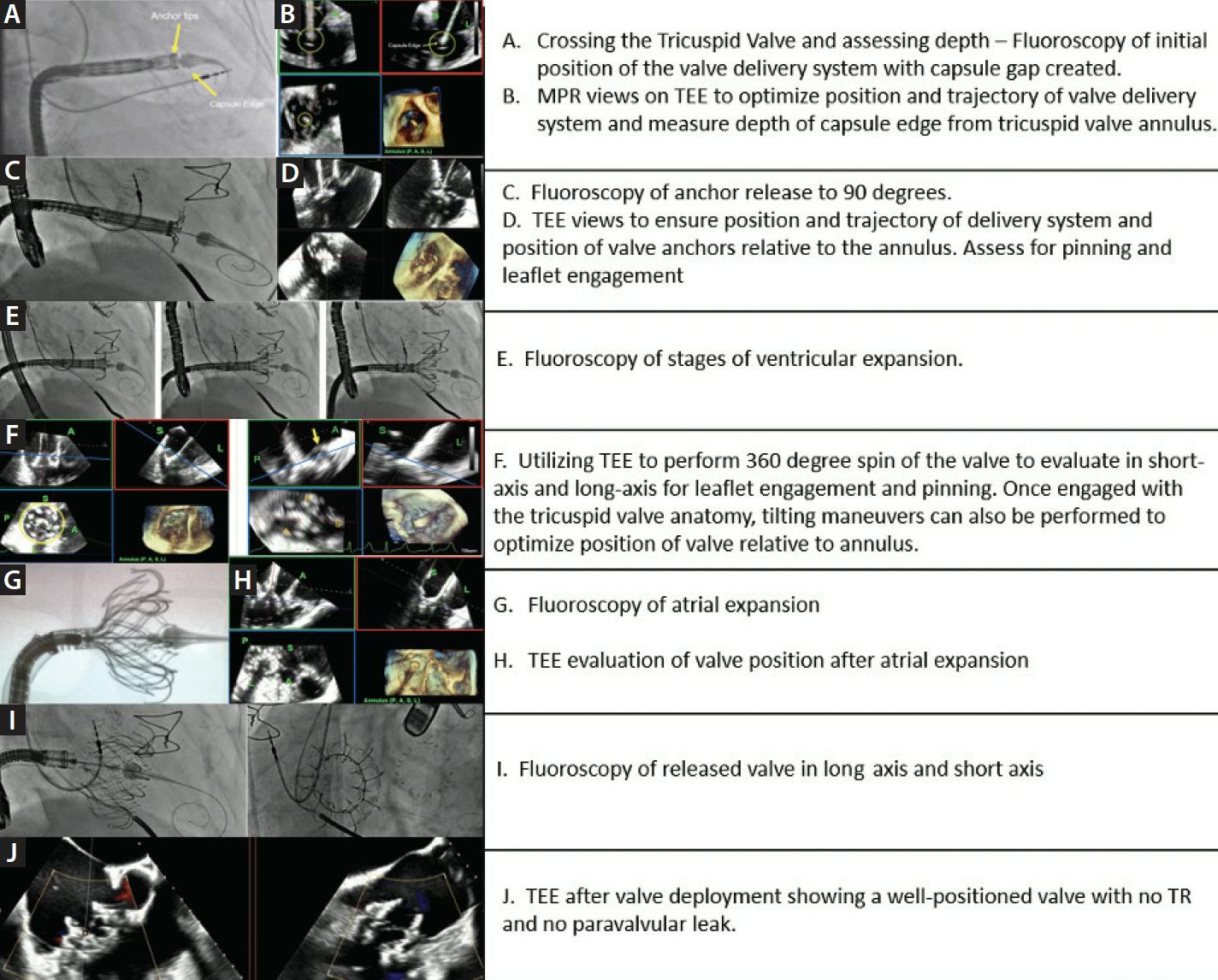
Figure 2. Step-by-step deployment of an Evoque transcatheter tricuspid valve using a case example.
Step 5: Position in Stabilizer
Once satisfied with the position of the valve delivery system, the stabilizer is docked onto the base adapter and the delivery system is secured onto the stabilizer provided by the manufacturers. At this time, MPR should be set up on TEE, if not already done. The fluoroscopy C-arm is positioned at the optimal viewing angle, usually in the right anterior oblique position, using preoperative CT data.
Step 6: Assess Depth
Ensure positioning of the delivery system is coaxial to the tricuspid annulus and central, while minimizing contact with the native anatomy. The radiopaque marker on the capsule or a capsule gap is used to identify position of the capsule edge within the tricuspid valve anatomy. A capsule gap is created by slowly rotating the white capsule knob clockwise, ensuring that the capsule edge does not pass anchor tips.
Step 7: Anchor Release
The depth of the capsule edge at the leaflet coaptation zone, position of valve delivery system central to leaflet coaptation in the A/P and S/L planes, and trajectory coaxial to the annular plane are confirmed with MPR on TEE prior to anchor release. It should be noted that once the capsule is retracted to expose the valve anchors, the valve is unable to be retrieved or recaptured into the delivery system. A time-out is performed prior to anchor release to confirm these specifics in case the procedure needs to be aborted if unable to get coaxial to annular plane or to reach acceptable capsule edge depth. Once satisfied, the white capsule knob is rotated clockwise slowly until anchors are parallel to the annular plane at 90°. The depth, trajectory, and position can be adjusted as needed with the delivery system knobs and guidewire as detailed above. Once optimized, continue to rotate the capsule knob until anchor tips are pointing atrial.
Step 8: Assess Leaflet Engagement
Next, a 360° “spin” of the entire valve is performed to assess for leaflet engagement and pinning via MPR views with TEE. In the short-axis 2D TEE images, the leaflet should be moving freely to the center of the valve. In the long-axis images, leaflet motion over each anchor in one quadrant is evaluated to make sure leaflets are moving freely and not getting pinned by the valve.
Step 9: Ventricular Expansion
The capsule knob is slowly rotated for staged ventricular expansion until the markerband is behind the locking ring. Once leaflet engagement is confirmed, the valve is atrialized to the annular plane by losing depth with the black depth knob, wire management, or both (Figure 1). TEE is important to ensure anchor tips are in contact and parallel to the annular plane. When the valve is engaged with the tricuspid valve anatomy, tilting maneuvers can be utilized to optimize the device. It can be raised anteriorly by retracting the advance/retract knob or removing primary flex using the primary knob and raised posteriorly using the opposite maneuvers. Furthermore, it can be raised septally by rotating the handle clockwise or adding secondary flex using the secondary knob and raised laterally using the opposite maneuvers. The trajectory, position, and height can all be adjusted at this time using the valve delivery system knobs.
Step 10: Atrial Expansion
After confirming that all nine anchors are positioned beneath the leaflet segments as well as final depth and trajectory adjustment, the atrial inflow portion of the valve with its sealing skirt is subsequently expanded at the annular level using the blue release knob that is slowly rotated clockwise (Figure 1). Using MPR views on TEE, it is again confirmed that anchor tips are contacting the annular plane throughout the cardiac cycle and that the valve is coaxial within the annulus.
Step 11: Final Release
Prior to final release, the tapered tip is retracted until it is positioned within the valve. The release knob is rotated slowly to a hard stop until the valve is released and fully disengaged from the delivery system.
Step 12: Delivery System Removal and Access Closure
The operator should ensure that the tapered tip is fully retracted and all the depth is removed. The delivery system is unflexed and retracted as needed until the tapered tip is above the locking tabs of the valve in the right atrium. The guidewire is adjusted as needed during this time to maintain central position relative to the valve. The blue release knob is then rotated counterclockwise until the inner capsule is in contact with the tapered tip, and the white capsule knob is then rotated counterclockwise until the outer capsule is in contact with the inner capsule. The delivery system is fully unflexed and slowly removed from the access site, keeping wire position. The 18-F introducer sheath is then advanced over the Safari wire into the IVC. Finally, a multipurpose or pigtail catheter is advanced over the wire in the right ventricle to safely remove the Safari wire. The introducer sheath is removed and the access site is closed by cinching the ProGlide sutures to the vessel wall. If additional hemostasis is needed, a figure-of-eight suture can be deployed on the skin. Anticoagulation can be reversed using protamine. After the procedure, all patients receive oral anticoagulation with or without aspirin for a minimum of 6 months.
CONSIDERATIONS FOR PATIENTS WITH CARDIAC IMPLANTABLE ELECTRONIC DEVICES
Managing patients with cardiac implantable electronic devices (CIED) who develop TR can be complex.6,7 Multimodality imaging is essential to determine if the TR is directly caused by the CIED (CIED-related TR) or if the device’s lead is not directly impacting the regurgitation (CIED-associated TR). In specific cases of CIED-related TR, a lead management approach may be considered, involving lead replacement, relocation, or removal and the potential implantation of a valve-sparing pacemaker system, such as a leadless pacemaker or coronary sinus lead.8 However, lead extraction, especially when leads are entangled in the subvalvular apparatus, may exacerbate TR by creating additional lesions—even with leadless pacemakers. Although some patients have been treated successfully by jailing the lead during TTVR without immediate adverse effects, there have been instances of lead damage and other complex issues, such as the need for extraction of infected leads after valve replacement.8,9 While performing TTVR for all patients, the operators should be ready to perform temporary venous pacing over the Safari wire as patients may develop conduction system disturbances during valve deployment.
CLINICAL OUTCOMES AND FUTURE PERSPECTIVES
The TRISCEND study, a prospective, multicenter trial evaluating the Evoque TTVR system in 176 patients with at least moderate symptomatic TR, reported significant clinical improvements at 1-year follow-up.4 Primarily older (mean age, 78.7 years) and female (71%) participants showed a reduction of TR to mild or less in 97.6% of cases, alongside increases in stroke volume and cardiac output, significant enhancements in New York Heart Association (NYHA) class (93.3% achieving class I or II), and quality of life as measured by the Kansas City Cardiomyopathy Questionnaire and 6-minute walk distance. Despite these benefits, the study noted a 1-year all-cause mortality rate of 9.1% and heart failure hospitalization rate of 10.2%, need for new pacemaker implantation in 13%, and severe bleeding in 25.5% of patients, underscoring the need for ongoing evaluation of long-term outcomes in this high-risk patient group.
In another analysis of 2-year follow-up of 38 patients enrolled in a compassionate use setting between 2019 and 2021 across eight centers in Europe and the United States, the authors reported a significant reduction in TR, with 97% of patients achieving TR ≤ 1+ by the end of the procedure.10 This effect was maintained with high durability, showing a 94% success rate at a median follow-up of 520 days. Notably, the study reported significant RV reverse remodeling, and improvement in left ventricular forward stroke volume increased by 37%. The incidence of major bleeding events was comparatively low, with 11% at 2 years versus the previously reported 25% at 1 year in the TRISCEND study. Leaflet thickening and hypoattenuated leaflet thickening were noted in about 32% of patients undergoing follow-up CT scans, with only two cases classified as clinically significant symptomatic valve thromboses. From a clinical standpoint, patients experienced substantial relief from heart failure symptoms, with a majority improving to NYHA functional class ≤ 2. The study observed a 2-year mortality rate of 50%, with a 74.9% relative reduction in heart failure hospitalizations post-TTVR, underscoring the therapy’s potential in enhancing quality of life in high-risk surgical patients. The results of the TRISCEND II pivotal trial comparing TTVR with the Evoque valve to medical therapy are pending.
CONCLUSION
Transcatheter tricuspid valve interventions, including repair and replacement, pose numerous unresolved questions that are crucial for refining treatment strategies. Key issues include determining the long-term durability of these interventions and understanding their relative effectiveness and impact on RV function. There is also a need to explore the management of complications related to existing cardiac devices, such as pacemaker leads, during valve procedures. Furthermore, comparative analyses of clinical outcomes, quality of life, cost-effectiveness, and the development of technical innovations are necessary to enhance procedural safety and efficacy. Optimal patient selection criteria, effective postprocedural care including anticoagulation management, and strategies for handling severe and complex cases of TR are also critical areas needing further exploration to fully integrate these technologies into clinical practice and improve patient outcomes.
1. Hahn RT. Tricuspid regurgitation. N Engl J Med. 2023;388:1876-1891. doi: 10.1056/NEJMra2216709
2. Dreyfus J, Flagiello M, Bazire B, et al. Isolated tricuspid valve surgery: impact of aetiology and clinical presentation on outcomes. Eur Heart J. 2020;41:4304-4317. doi: 10.1093/eurheartj/ehaa643
3. Sorajja P, Whisenant B, Hamid N, et al. Transcatheter repair for patients with tricuspid regurgitation. N Eng J Med. 2023;388:1833-1842. doi: 10.1056/NEJMoa2300525
4. Kodali S, Hahn RT, Makkar R, et al. Transfemoral tricuspid valve replacement and one-year outcomes: the TRISCEND study. Eur Heart J. 2023;44:4862-4873. doi: 10.1093/eurheartj/ehad667
5. Maisano F, Hahn R, Sorajja P, et al. Transcatheter treatment of the tricuspid valve: current status and perspectives. Eur Heart J. 2024;45:876-894. doi: 10.1093/eurheartj/ehae082
6. Vij A, Kavinsky CJ. The clinical impact of device lead–associated tricuspid regurgitation: need for a multidisciplinary approach. Circulation. 2022;145:239-241. doi: 10.1161/CIRCULATIONAHA.121.055019
7. Hahn R, Wilkoff B, Kodali S, et al. Managing implanted cardiac electronic devices in patients with severe tricuspid regurgitation: JACC state-of-the-art review. J Am Coll Cardiol. 2024;83:2002-2014. doi: 10.1016/j.jacc.2024.02.045
8. Addetia K, Harb SC, Hahn RT, et al. Cardiac implantable electronic device lead-induced tricuspid regurgitation. JACC Cardiovasc Imaging. 2019;12:622-636. doi: 10.1016/j.jcmg.2018.09.028
9. Anderson JH, McElhinney DB, Aboulhosn J, et al. Management and outcomes of transvenous pacing leads in patients undergoing transcatheter tricuspid valve replacement. JACC Cardiovasc Interv. 2020;13:2012-2020. doi: 10.1016/j.jcin.2020.04.054
10. Stolz L, Weckbach LT, Hahn RT, et al. 2-Year outcomes following transcatheter tricuspid valve replacement using the EVOQUE system. J Am Coll Cardiol. 2023;81:2374-2376. doi: 10.1016/j.jacc.2023.04.014
Advertisement
Advertisement