Advertisement
Advertisement
May/June 2024
Tips and Tricks in Radial PCI
A synthesized collection of strategies and insights for improving the safety and effectiveness of transradial percutaneous coronary intervention.
Transradial access (TRA) has been favored over femoral access in recent decades due to its contributions to patient outcomes, health care efficiency, and physician practice. Evidence from meta-analyses support the role of TRA in reducing mortality after coronary interventions,1 earning it the highest recommendation in myocardial revascularization guidelines internationally.2,3
Its proven efficacy in interventional cardiology has also led to broader applications in interventional radiology and neurointervention (Figure 1). However, the increased use of TRA raises concerns about its sustainability; success rates are declining with each additional access attempt, primarily due to radial artery occlusion (RAO), which may represent a significant limitation to the clinical utility of TRA. Therefore, maintaining radial artery patency is critical given the proven efficacy of TRA in reducing major procedural complications.
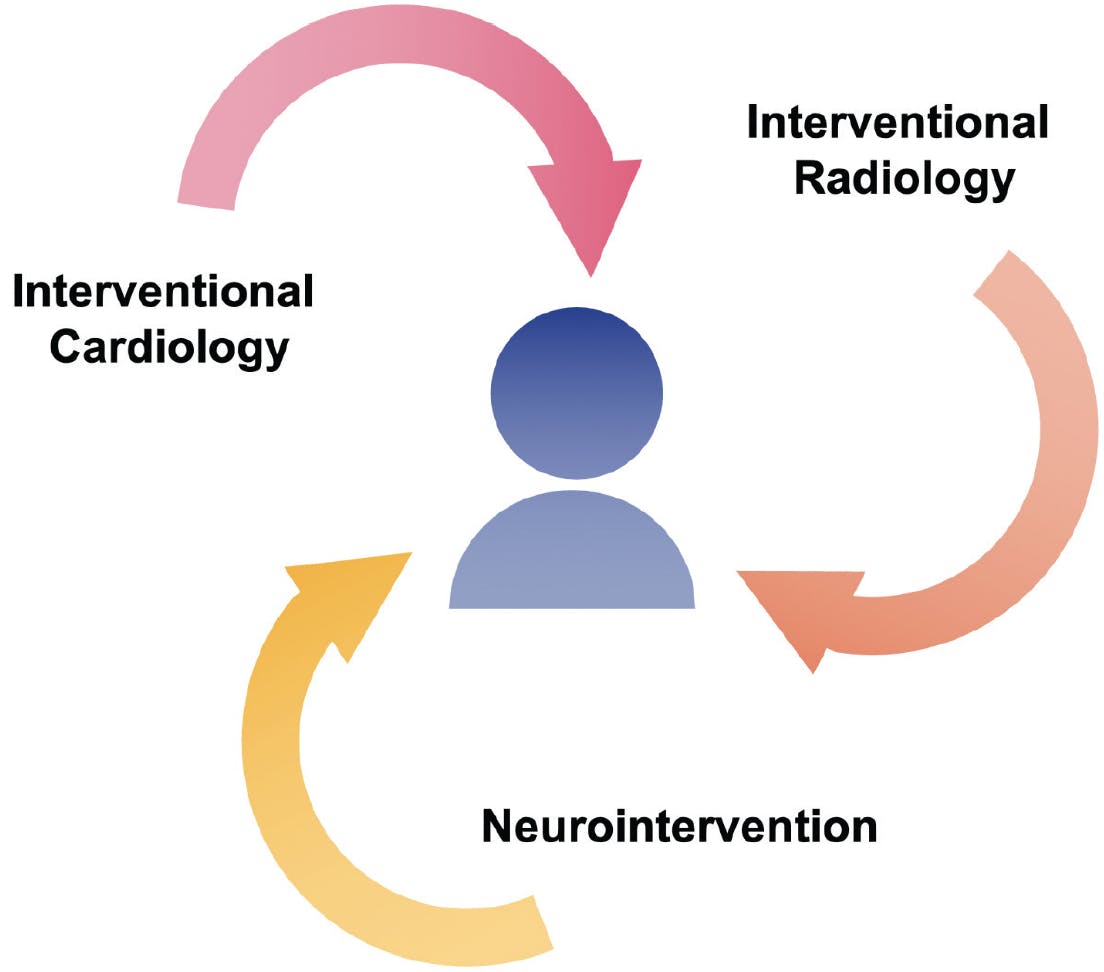
Figure 1. As radial access for percutaneous procedures becomes more widely adopted by interventional cardiology, interventional radiology, and neurointervention, more patients are likely to undergo multiple transradial procedures as part of their treatment pathway.
Accordingly, in a modern interventional practice, radial access encompasses both gaining and preserving radial access. This is an operator choice that improves patient outcomes and deserves commitment throughout the procedure. Despite its advantages, radial access presents specific challenges that must be recognized, and knowledge of techniques to overcome these limitations is critical to modern patient care. Figure 2 is a flowchart that provides most of the strategic advice, validated recommendations, and pragmatic suggestions for improving the safety and efficiency of TRA, ultimately benefiting both the patient and the operator.
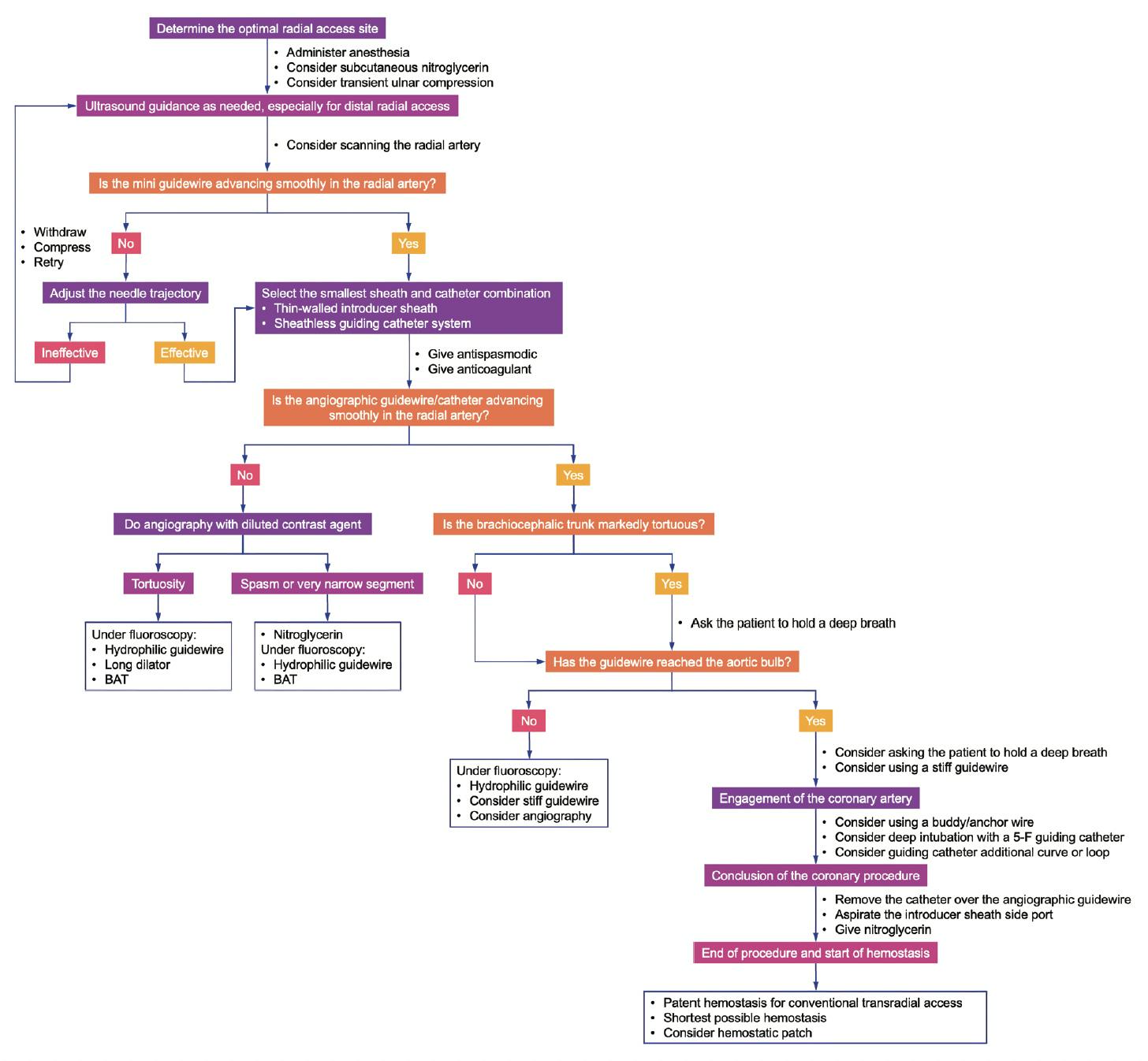
Figure 2. Flowchart overviewing tips and tricks for radial coronary procedures. BAT, balloon-assisted tracking.
ACCESSING THE RADIAL ARTERY
The radial artery can be accessed at three sites: the wrist, the anatomic snuffbox, and distal to the extensor pollicis longus tendon (Figure 3). This array provides flexibility, and proficiency in all three access points offers significant clinical value.
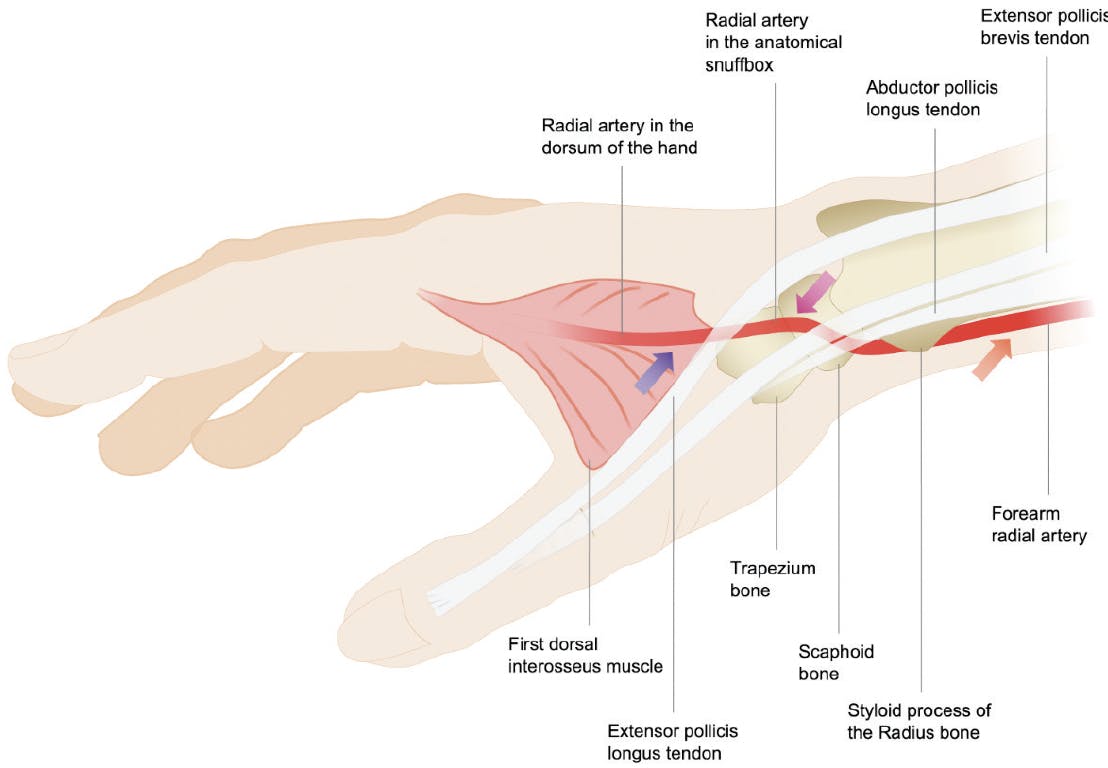
Figure 3. Anatomic landmarks of radial access. Orange arrow points to the conventional TRA puncture site at wrist level; fuchsia and purple arrows point to the DRA punctures sites in the anatomic snuffbox and distal to the extensor pollicis longus tendon in the dorsum of the hand. Adapted from Aminian A, Sgueglia GA, Wiemer M. Distal versus conventional radial access for coronary angiography and intervention: design and rationale of DISCO RADIAL study. Am Heart J. 2022:244:19-30. doi: 10.1016/j.ahj.2021.10.180
Distal radial access (DRA) is advantageous because the puncture sites are located beyond the superficial palmar arch, allowing for persistent flow in the forearm radial artery and reducing the incidence of RAO compared to conventional TRA.4,5
Although puncturing the radial artery at wrist level is easier because the skin and vessel lie in parallel planes, DRA requires a comprehensive understanding of the anatomy of the distal radial artery and surrounding structures. Accordingly, the puncture angle and direction vary for each site.6
The radial artery’s small diameter and tendency to spasm add to the complexity. Proper skin anesthesia is necessary to prevent adrenergic activation. Subcutaneous nitroglycerin can be used to both prevent and treat radial artery spasm (RAS). In addition, it can cause vasodilation, which can also be achieved by transient ulnar compression to increase radial artery flow.
Choosing between the open needle with anterior wall technique and the cannula-over-needle with through-and-through technique is largely subjective. Experienced operators may prefer using a micropuncture needle for anterior wall puncture because it is less traumatic to the radial artery, especially in its distal part.
Ultrasound guidance improves puncture success in transradial procedures.7 It is particularly useful for accessing the distal radial artery,8 which has a less predictable course, and it reduces its learning curve.9 Ultrasound guidance minimizes puncture-related complications, such as RAS and bleeding, and refines interventional practice. Ultrasound can also be used to scan the radial artery and select the optimal puncture site.
Upon successful puncture, the mini guidewire must be advanced gently to avoid dissection. If there is any resistance, it is necessary to adjust the needle trajectory to possibly change the entry angle of the mini guidewire into the artery instead of forcefully inserting the guidewire. If these maneuvers are unsuccessful, the needle should be removed, compression applied, and another attempt made, possibly using ultrasound guidance. Hydrophilic guidewires, while better at navigating tortuous segments, pose a greater risk of dissection; hence, nitinol guidewires are preferred for their reduced risk of compromising vascular access.
REACHING THE CORONARY ARTERIES
Optimal planning and understanding of the available device features can significantly improve the safety and effectiveness of TRA procedures. To minimize radial artery trauma, operators should select the smallest sheath and catheter combination that is reasonable, as even minor reductions in sheath size can reduce RAO.10 Many percutaneous coronary interventions (PCIs) can be safely and effectively performed using 5-F guiding catheters.11,12 For diagnostic angiographies, catheters smaller than 6 F should be used regardless of sheath size.13
Thin-walled sheaths, such as GlideSheath Slender (Terumo Interventional Systems), Rain (Cordis), Prelude Ideal (Merit Medical), or Braidin (APT Medical), can reduce the sheath-to-artery ratio by approximately half a French size (Figure 4).
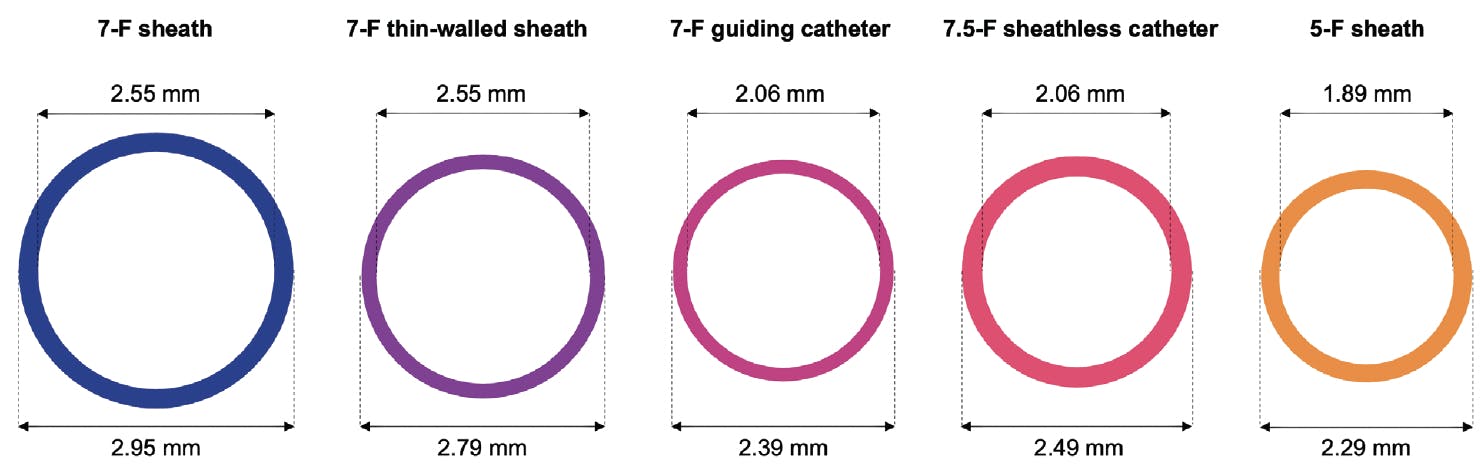
Figure 4. Cross-sectional comparison of the outer and inner diameters of selected introducer sheaths and guiding catheters.
Additionally, sheathless techniques can reduce the diameter by up to 2 F (Figure 4), which is particularly useful for guiding catheter sizes where the corresponding introducer sheath would cause excessive stress to the vessel wall. Options for sheathless radial access include dedicated systems from Asahi Intecc USA, Inc. and the Railway device (Cordis), which converts any guiding catheter into a sheathless system. Both use a long dilator to ensure a smooth guidewire-to-catheter transition, facilitating passage through the skin and subcutaneous tissue and in tortuous arterial segments.
After securing access and administering antispasmodic and anticoagulant agents (typically heparin), a high-quality, 0.035-inch angiographic guidewire (eg, Emerald, Cordis) is recommended for navigation of the upper extremity arteries.
Routine baseline angiography of the upper extremity is informative but not mandatory. However, operators should have a low threshold for performing angiography using a diluted contrast agent if any resistance is encountered during guidewire advancement.
To navigate tortuosity, a hydrophilic guidewire such as Glidewire (Terumo Interventional Systems), particularly the 1.5-mm J-tip radius Baby-J variant, is carefully advanced under fluoroscopic guidance, taking care to avoid small side branches and minimize the potential risk of perforation and other complications. Another angiographic guidewire available with a 1.5-mm radius J-shaped tip is Silverway (Asahi Intecc USA, Inc.), which features a hybrid and advanced design for routine use by experienced radial operators.
Also, crossing tortuosity with a high-lubricity catheter such as DxTerity (Medtronic) may be less painful for the patient. However, when a catheter is traversing a tortuous vessel segment, there is a risk of “razor effect” where the distal end of the catheter may scratch the vessel wall. Operators should not hesitate to prevent this hazard by optimizing the guidewire-to-catheter transition with a long dilator such as the Railway or by using balloon-assisted tracking, where an inflated coronary balloon at the end of the catheter protects the artery during tracking over a coronary guidewire. This technique is also very valuable for crossing refractory RAS or very narrow, diseased, or hypoplastic segments and is preferable to techniques such as pigtail-assisted tracking or the child-and-mother technique, which use a longer and smaller catheter for a stepped but not progressive guidewire-to-catheter transition.
Once mastered, these techniques can be implemented quickly and do not delay the procedure. Yet, a thorough knowledge of upper extremity vascular anatomy and its major variants is essential for safe guidewire and catheter navigation.
Sometimes, procedural setups need to be adjusted, such as when an introducer sheath needs to be upgraded. In such cases, the use of a femoral dilator within a radial sheath allows an existing 0.035-inch guidewire to remain in place. If a setup change requires a smaller diameter, an inflatable compression device can be used to prevent bleeding.
Tortuosity of the brachiocephalic artery is more common than that of the upper extremity, especially in elderly patients. Simple maneuvers, such as holding a deep breath, can elongate the vessel and facilitate navigation. Alternatively, a hydrophilic guidewire can be carefully advanced to the aortic bulb under fluoroscopy. Given the large diameter of the artery and lack of small branches, routine angiography is not usually required.
To avoid tortuosity from the subclavian artery to the aortic bulb, some operators advocate the use of left side access, which enables good ergonomics when performing DRA.14 Because the elderly are more prone to this situation, they can be pragmatically selected for left side access.
PERFORMING THE CORONARY PROCEDURE
In brachiocephalic tortuosity, deep breathing can often facilitate coronary cannulation. In extreme tortuosity, a stiffer guidewire may be required. A “universal” radial catheter can reduce RAS and potentially speed interventions in acute coronary syndrome or ST-segment elevation myocardial infarction.
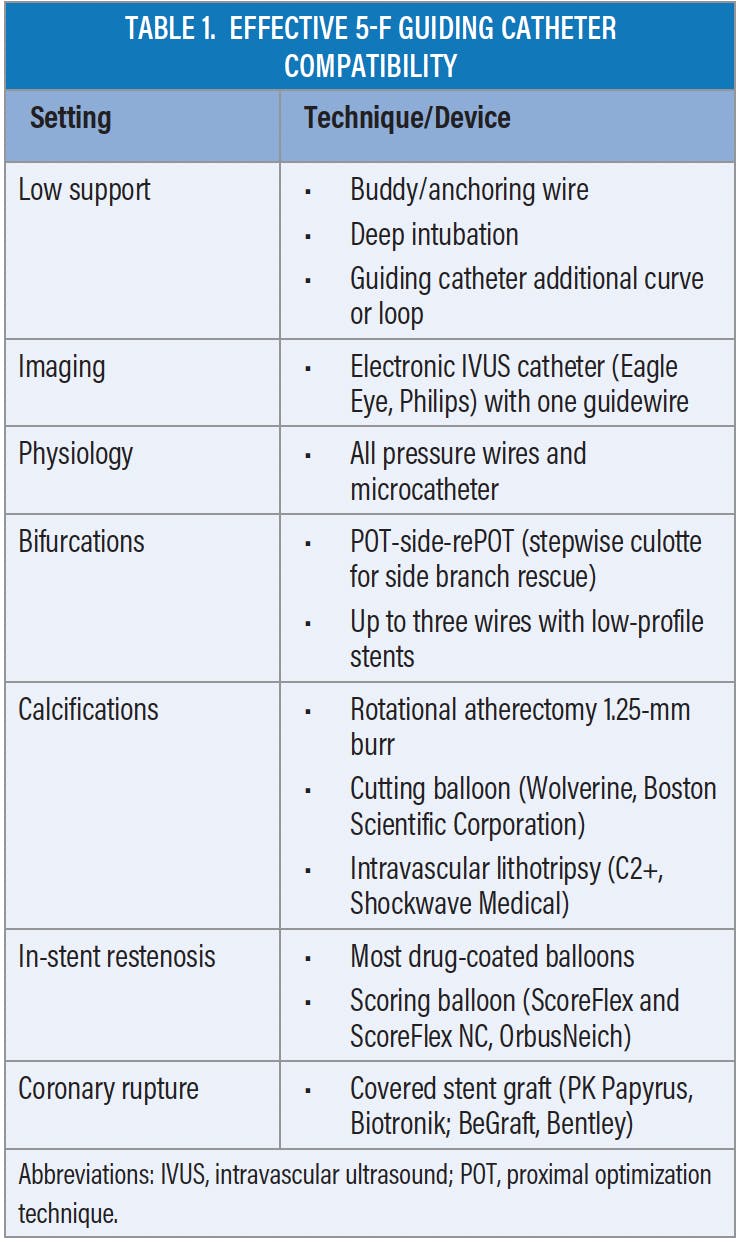
During radial PCI, if catheter support is low, the threshold for using a buddy or anchoring wire should be minimal. Good predilation to facilitate delivery of bulky devices also appears to be beneficial. With a 5-F guiding catheter, applying an additional curve or loop may provide better support. Deep intubation with a 5-F guiding catheter is safe and similar to using a 6-F guiding catheter plus a 6-F extension. Given the role of 5-F guiding catheters in minimizing radial artery trauma, it is important to recognize that most of the tools and techniques required for a safe and effective procedure can be used with this size, even in the event of technical complications (Table 1).
END OF THE PROCEDURE AND HEMOSTASIS
The use of an angiographic guidewire is recommended to reduce arterial wall damage during catheter removal. If an introducer sheath is present, its side port should be aspirated to remove potential clots. In addition, the administration of nitroglycerin at the end of the procedure can significantly reduce the incidence of RAO. In TRA, various strategies are used to minimize the risk of RAO. These different strategies are seen to be synergistic, with patent hemostasis being pivotal.15 This involves adjusting a compression device to maintain radial artery flow without excessive pressure, monitored by pulse oximetry on the thumb or index finger, while manually occluding the ulnar artery. Although effective, patent hemostasis may not be achievable in all patients and can be challenging for nursing staff.
The duration of hemostasis also appears to be a critical determinant of RAO, and the use of a hemostatic patch as an adjunct to the conventional protocol can significantly reduce the duration of hemostasis.16
Conversely, DRA inherently reduces RAO concerns due to its anatomic and physiologic features and demonstrates the lowest RAO rates reported regardless of the hemostasis method used.4-6,17
CONCLUSION
Radial access is recognized as the safest vascular access, but it has inherent characteristics that require a modern and coherent integration of knowledge and technique to fully realize its potential, as briefly summarized in this narrative overview.
1. Ferrante G, Rao SV, Jüni P, et al. Radial versus femoral access for coronary interventions across the entire spectrum of patients with coronary artery disease: a meta-analysis of randomized trials. JACC Cardiovasc Interv. 2016;9:1419-1434. doi: 10.1016/j.jcin.2016.04.014
2. Neumann FJ, Sousa-Uva M, Ahlsson A, et al. 2018 ESC/EACTS guidelines on myocardial revascularization. Eur Heart J. 2019;40:87-165. doi: 10.1093/eurheartj/ehy394
3. Lawton JS, Tamis-Holland JE, Bangalore S, et al. 2021 ACC/AHA/SCAI guideline for coronary artery revascularization: a report of the American College of Cardiology/American Heart Association Joint Committee on Clinical Practice Guidelines. J Am Coll Cardiol. 2022;79:e21-e129. doi: 10.1016/j.jacc.2021.09.006
4. Sgueglia GA, Santoliquido A, Gaspardone A, et al. First results of the distal radial access Doppler study. JACC Cardiovasc Imaging. 2021;14:1281-1283. doi: 10.1016/j.jcmg.2020.11.023
5. Ferrante G, Condello F, Rao SV, et al. Distal vs conventional radial access for coronary angiography and/or intervention: a meta-analysis of randomized trials. JACC Cardiovasc Interv. 2022;15:2297-2311. doi: 10.1016/j.jcin.2022.09.006
6. Sgueglia GA, Lee BK, Cho BR, et al. Distal radial access: consensus report of the first Korea-Europe Transradial Intervention Meeting. JACC Cardiovasc Interv. 2021;14:892-906. doi: 10.1016/j.jcin.2021.02.033
7. Seto AH, Roberts JS, Abu-Fadel MS, et al. Real-time ultrasound guidance facilitates transradial access: RAUST (Radial Artery access with Ultrasound Trial). JACC Cardiovasc Interv. 2015;8:283-291. doi: 10.1016/j.jcin.2014.05.036
8. Mori S, Hirano K, Yamawaki M, et al. A comparative analysis between ultrasound-guided and conventional distal transradial access for coronary angiography and intervention. J Interv Cardiol. 2020;2020:7342732. doi: 10.1155/2020/7342732
9. Hoffman H, Bunch KM, Mikhailova T, et al. Transition from proximal to distal radial access for diagnostic cerebral angiography: learning curve analysis. World Neurosurg. 2021;152:e484-e491. doi: 10.1016/j.wneu.2021.05.125
10. Aminian A, Saito S, Takahashi A, et al. Comparison of a new slender 6 Fr sheath with a standard 5 Fr sheath for transradial coronary angiography and intervention: RAP and BEAT (Radial Artery Patency and Bleeding, Efficacy, Adverse evenT), a randomised multicentre trial. EuroIntervention. 2017;13:e549-e556. doi: 10.4244/EIJ-D-16-00816
11. Sgueglia GA, Gioffrè G, De Santis A, et al. Concept and practice of transradial 5 French percutaneous treatment of coronary bifurcation lesions. Catheter Cardiovasc Interv. 2019;93:390-397. doi: 10.1002/ccd.27844
12. Sgueglia GA, Gioffrè G, Piccioni F, et al. Slender distal radial five French coronary shockwave lithotripsy. Catheter Cardiovasc Interv. 2019;94:395-398. doi: 10.1002/ccd.28296
13. Sgueglia GA, Todaro D, De Santis A, et al. Identifying a better strategy for ad hoc percutaneous coronary intervention in patients with anticipated unfavorable radial access: the Little Women study. Cardiovasc Revasc Med. 2018;19:413-417. doi: 10.1016/j.carrev.2017.10.006
14. Kiemeneij F. Left distal transradial access in the anatomical snuffbox for coronary angiography (ldTRA) and interventions (ldTRI). EuroIntervention. 2017;13:851-857. doi: 10.4244/EIJ-D-17-00079
15. Bernat I, Aminian A, Pancholy S, et al. Best practices for the prevention of radial artery occlusion after transradial diagnostic angiography and intervention: an International Consensus Paper. JACC Cardiovasc Interv. 2019;12:2235-2246. doi: 10.1016/j.jcin.2019.07.043
16. Safirstein JG, Tehrani DM, Schussler JM, et al. Radial hemostasis is facilitated with a potassium ferrate hemostatic patch: the STAT2 Trial. JACC Cardiovasc Interv. 2022;15:810-819. doi: 10.1016/j.jcin.2021.12.030
17. Sgueglia GA, Di Giorgio A, Gaspardone A, et al. Anatomic basis and physiological rationale of distal radial artery access for percutaneous coronary and endovascular procedures. JACC Cardiovasc Interv. 2018;11:2113-2119. doi: 10.1016/j.jcin.2018.04.045
Advertisement
Advertisement