Advertisement
Advertisement
The OPN NC balloon (SIS Medical AG) is a super-high–pressure, NC, rapid-exchange balloon specifically designed to treat highly calcified and/or nondilatable lesions.
OPN NC has 0.016- and 0.028-inch tip entry and crossing profiles, respectively, that can be inflated up to very high pressures (Figure 1). The reported pressure burst of the OPN NC is 35 atm, but the balloon maintains a linear compliance curve to > 40 atm.1
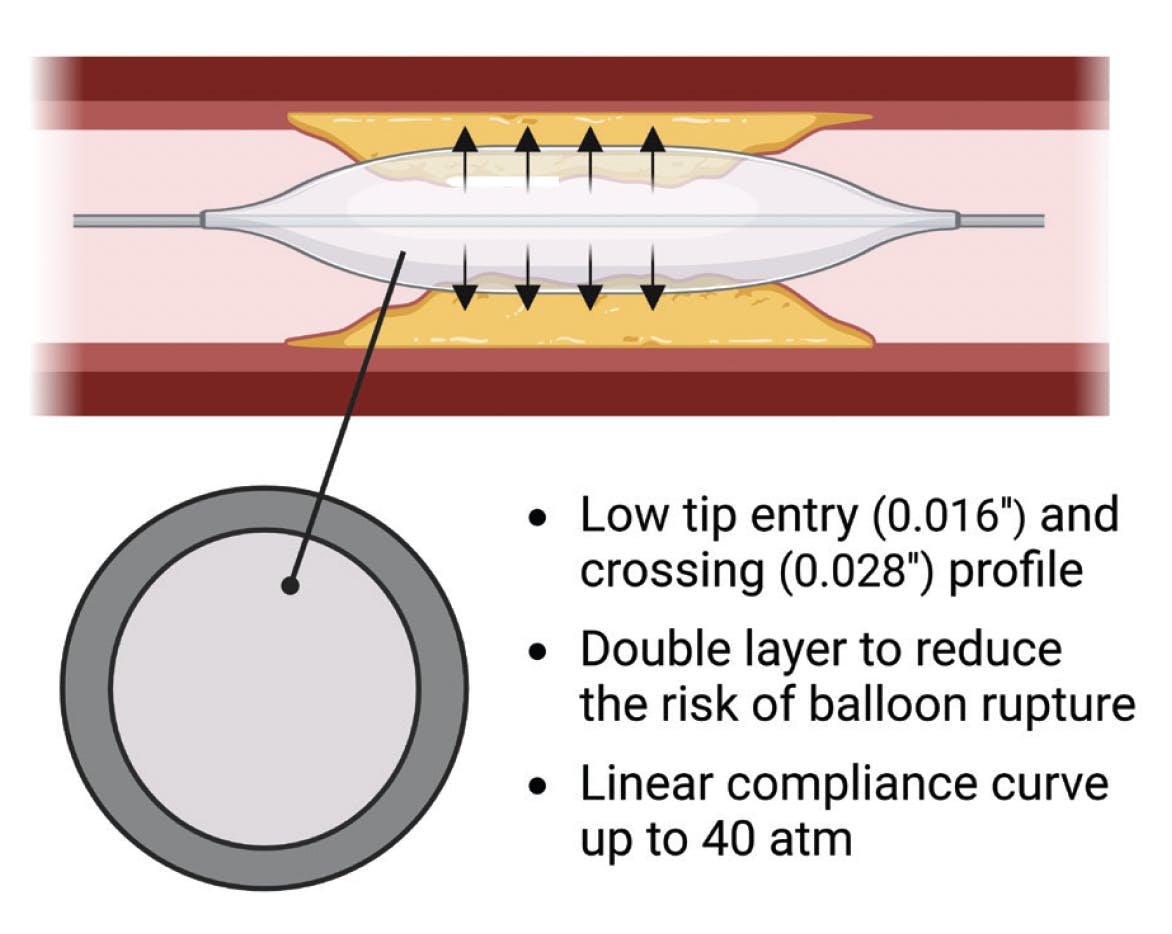
Figure 1. Technical characteristics of OPN NC balloons.
This device can withstand high inflation pressures due to its dual-layer construction. Its design not only permits the application of very high pressures but also distributes forces between the layers, minimizing the risk of hydraulic vessel perforation in the event of intracoronary balloon rupture.
OPN NC balloons are compatible with all 0.014-inch coronary guidewires. They are produced in a wide range of diameters (from 1.5 to 4.5 mm) and three lengths (10, 15, and 20 mm).
RATIONALE
In addition to lesion preparation for de novo calcific and nondilatable lesions, OPN NC balloons are useful for treating ISR. The high-pressure strong predilatation compresses the neointima before new DES implantation or DCB PCI. In selected cases of restenosis, OPN NC balloons may replace cutting and scoring balloons as they are associated with low rates of dissections and perforations.1,2
Due to their NC profile and high outer radial force, OPN NC balloons are used for stent postdilatation and/or to correct malapposition and underexpansion. Finally, their technical characteristics render them particularly suitable in cases requiring pre- or postdilatation over two overlapped layers of DES.
TIPS AND TRICKS
Due to the twin-layer design, OPN NC balloons are bulkier compared to standard semicompliant or NC balloons, resulting in lower deliverability. Thus, it is recommended to advance them on extra support wires, such as Grand Slam (Asahi Intecc USA, Inc.).3
When performing predilatation (especially in cases of ISR), it is recommended to downsize the OPN NC balloon diameter by 0.5 mm compared to the reference vessel diameter. On the other hand, postdilatation should be performed by selecting an OPN NC balloon with a diameter matching the reference vessel diameter at a 1:1 ratio.
It is recommended to slowly inflate the OPN NC balloon (5 atm for every 10-15 sec) for adequate balloon expansion and luminal gain. A sudden pressure drop can be observed when the lesion is cracked. OPN NC balloons should be used with the dedicated SIS Medical inflators, which have a working limit of 55 atm.
It is important to take into consideration that very high pressures (> 25-30 atm) may cause the hypotube of the OPN NC balloon to collapse over the guidewire, especially in the case of multiple inflations. As a consequence, the guidewire may come out “en bloc” when withdrawing the balloon, with possible negative consequences in case of vessel dissection (or other complications) or complex wiring. Wires with long hydrophilic coating (eg, Sion Blue, Asahi Intecc USA, Inc.) stick more easily on OPN NC balloons. The Sion Blue ES is better in this regard due to its shorter spring coil, but is not optimal. The ideal guidewire has a short spring coil segment with a hydrophobic coating, such as the Grand Slam or the Miracle family of guidewires (Asahi Intecc USA, Inc.).3 Alternatively, one may consider securing the target vessel with a buddy wire.
CONCLUSION
The OPN NC balloon represents a significant advancement in interventional cardiology, offering a versatile solution for highly calcified and nondilatable lesions. With its dual-layer construction and remarkable resistance to high pressures, it shows promise as a valuable tool in select cases, with low rates of dissections and perforations. Continued device refinements and wider adoption will be crucial to enhancing its efficacy and expanding its applicability in managing complex coronary lesions.
1. Secco GG, Ghione M, Mattesini A, et al. Very high-pressure dilatation for undilatable coronary lesions: indications and results with a new dedicated balloon. EuroIntervention. 2016;12:359-65. doi: 10.4244/EIJY15M06_04
2. Seiler T, Attinger-Toller A, Cioffi GM, et al. Treatment of in-stent restenosis using a dedicated super high-pressure balloon. Cardiovasc Revasc Med. 2023;46:29-35. doi: 10.1016/j.carrev.2022.08.018
3. Kovacic M. CTO Toolbox. 2nd ed. Mihajlo Kovacic; 2022.
Advertisement
Advertisement