Advertisement
Advertisement
March/April 2024
Strain on Structural Heart: Staffing Reduction and Allocation Improves Access, Capacity
Insights from MedAxiom’s new CV business white paper highlight how the SH care delivery model can be optimized to better provide appropriate patient care and increase capacity.
The strain of expanding patient volumes in cardiovascular care is no more evident than in structural heart (SH), described as a “super subspecialty” in cardiovascular (CV) care in MedAxiom’s 2023 Cardiovascular Provider Compensation & Production Survey. As SH programs have grown and matured, their volumes of complex patients with special care coordination needs have increased and are expected to continue to increase in years to come. With the pressure resulting from these volumes, programs are looking for insights, tools, and resources to support expanding caseloads.
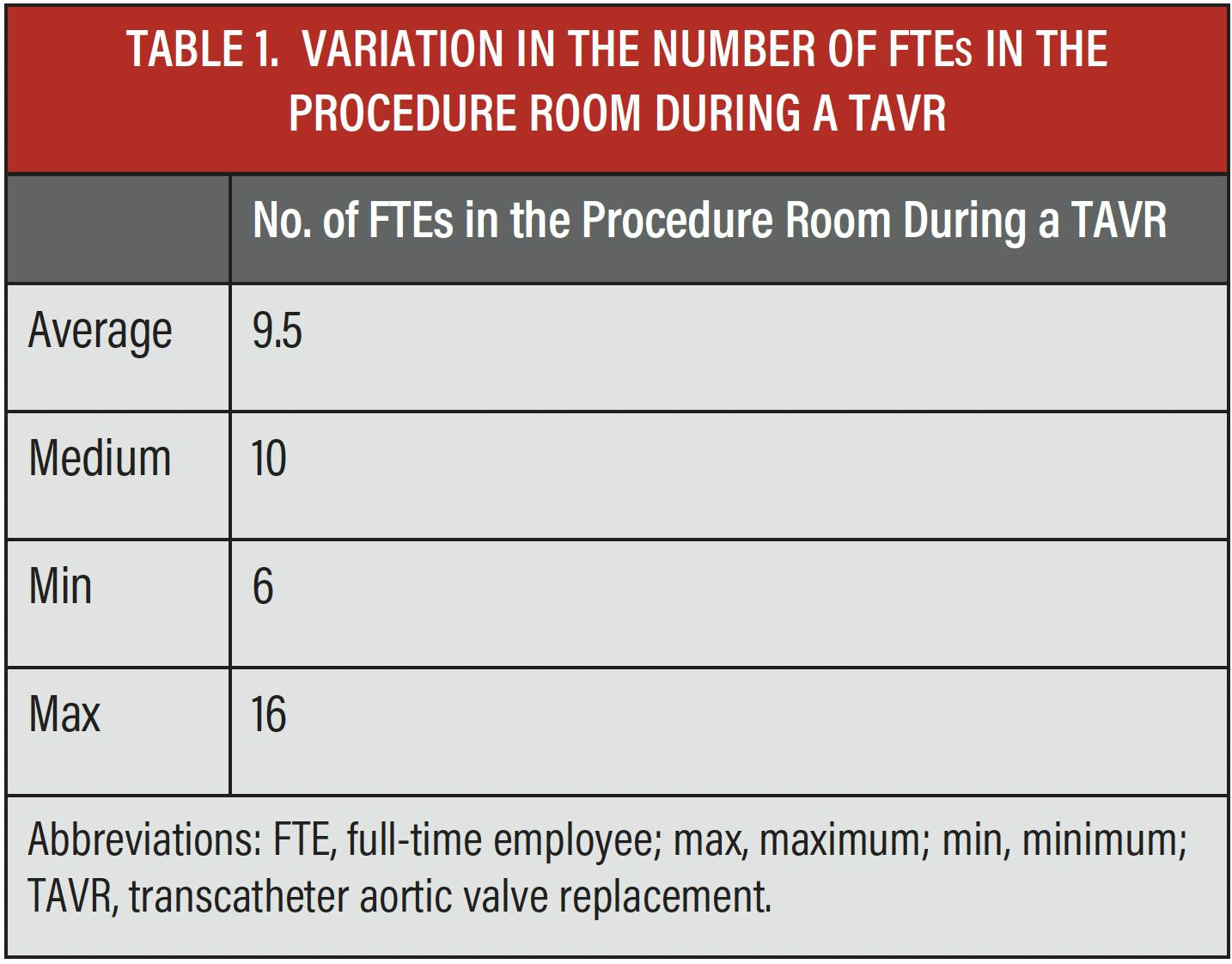
A MedAxiom SH program survey from 2023 found significant variation in procedural staffing (Figure 1). The survey collected data from 95 cardiovascular programs, including regional health care systems as well as academic, tertiary, and community hospitals with variable procedures and volumes. From these programs, 500 SH staff (not including physician operators) performed almost 24,000 SH procedures. For transcatheter aortic valve replacement (TAVR), the maximum reported staff was 16, with a minimum of six—a 2.5 times difference (Table 1).
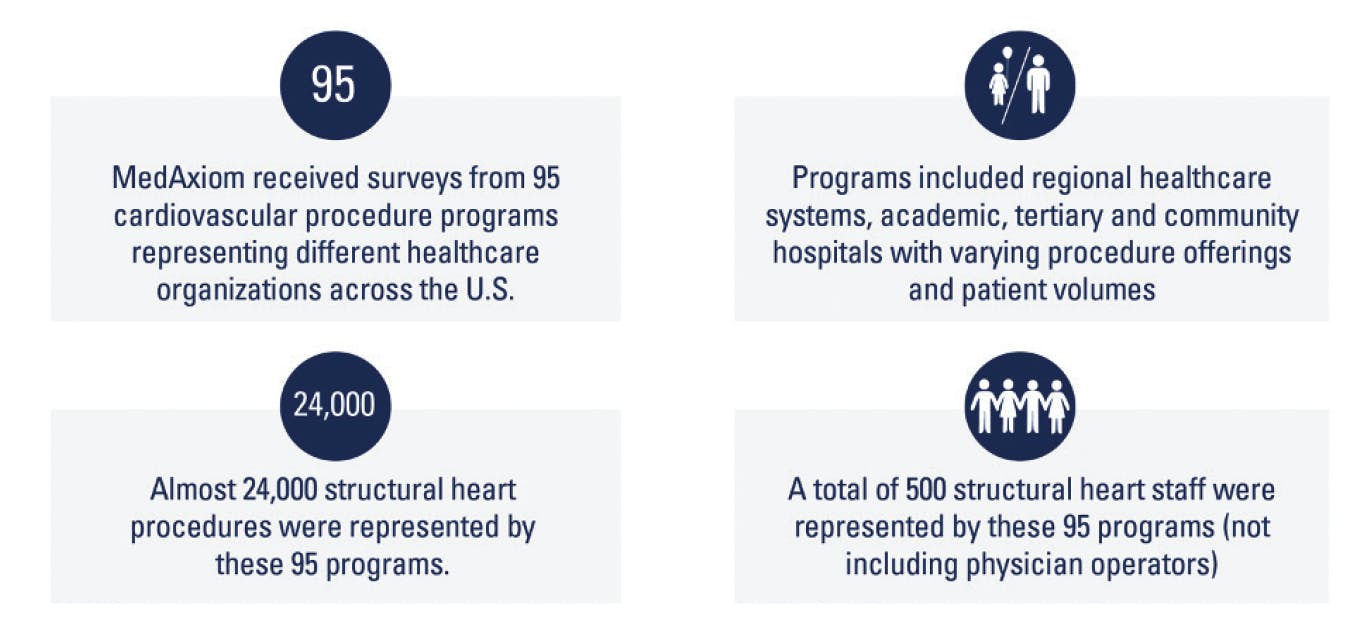
Figure 1. 2023 MedAxiom SH program survey: variation in procedural staffing.
With many SH programs facing difficulties related to hospital and procedural staffing, MedAxiom with support from Edwards Lifesciences highlighted specific tactics and data from two programs that have successfully redesigned their procedural staffing model in a new CV Business White Paper. Titled “Structural Heart: Reducing Staffing and Reallocating Could Lead to Higher Satisfaction, Reduced Burnout, Recruitment and Retention,” the new paper provides viable options for SH programs struggling with limited capacity and access delays. By optimizing the use of their staff teams, SH programs can better position themselves to provide appropriate care to patients with aortic valve disease and increase capacity.
MINIMIZING COSTS, MAXIMIZING MARGINS
Care teams in the SH programs at Alexian Brothers in Chicago, Illinois, and Saint Thomas in Nashville, Tennessee, have spent the last few years designing and implementing high-quality, cost-effective care delivery for patients undergoing TAVR. The resulting CV business white paper outlines key findings from each program, gathered from interviews of physician and administrative leaders.
With support from executive leadership, both programs focused on minimizing cost per case and maximizing case margin to allow for program growth and reinvestment in the program. One key tactic was making staff teams leaner, which improved cost per case and allowed specialized teams or team members to focus on essential functions. For instance, the imaging team (physician and technologist) could be redeployed to more studies, and the operating room (OR) team could be redeployed to other OR cases. Redeployment of these key roles, which are typically understaffed or hard to recruit in the current environment, boosts productivity.
Both organizations recognized that change necessitates both vision and support. By understanding and taking ownership of the financial performance of their TAVR programs, the physician and administrative leaders in the organization recognized that it would empower members of the care team, granting them a greater sense of agency.
THE IMPORTANCE OF CHANGE LEADERSHIP AND THE IMPACT OF CHANGE
The CV business white paper describes the programs’ transformation of their procedural care models as deliberate, well-informed, iterative processes. Initially, the physician and administrative program leaders (cardiologist, cardiothoracic surgeon, program administrator, OR manager, cath lab manager, etc.) collaborated to understand program economics, cost, and revenue.
The programs’ implementation of changes was deliberately slow. They prioritized their face-to-face case conference time to include program operations review and decisions, promoting effective communication, stakeholder engagement, and healthy discussion that led to high-quality decisions. Changes were made transparently with the support of the full-time employees, who reached a consensus and were aware of the need for the changes and the desired outcomes.
In both organizations, these changes bolstered team morale and expanded program capacity, resulting in enhanced access, financial gains, and investment in new facilities and additional staff members.
HARNESSING DEVICE TECHNOLOGY TO IMPROVE PROCEDURAL CARE
Both programs described how the evolution of the Sapien valve (Edwards Lifesciences) in the past 10 years allowed them to adjust procedure team staffing, change procedure location, and increase patient throughput. TAVR was once an advanced technology but has become a commonly performed procedure with a reduced risk of complications that would require surgery, leading to safe and efficient reallocation of cases from the OR to the cath lab.
PERFORMANCE MANAGEMENT
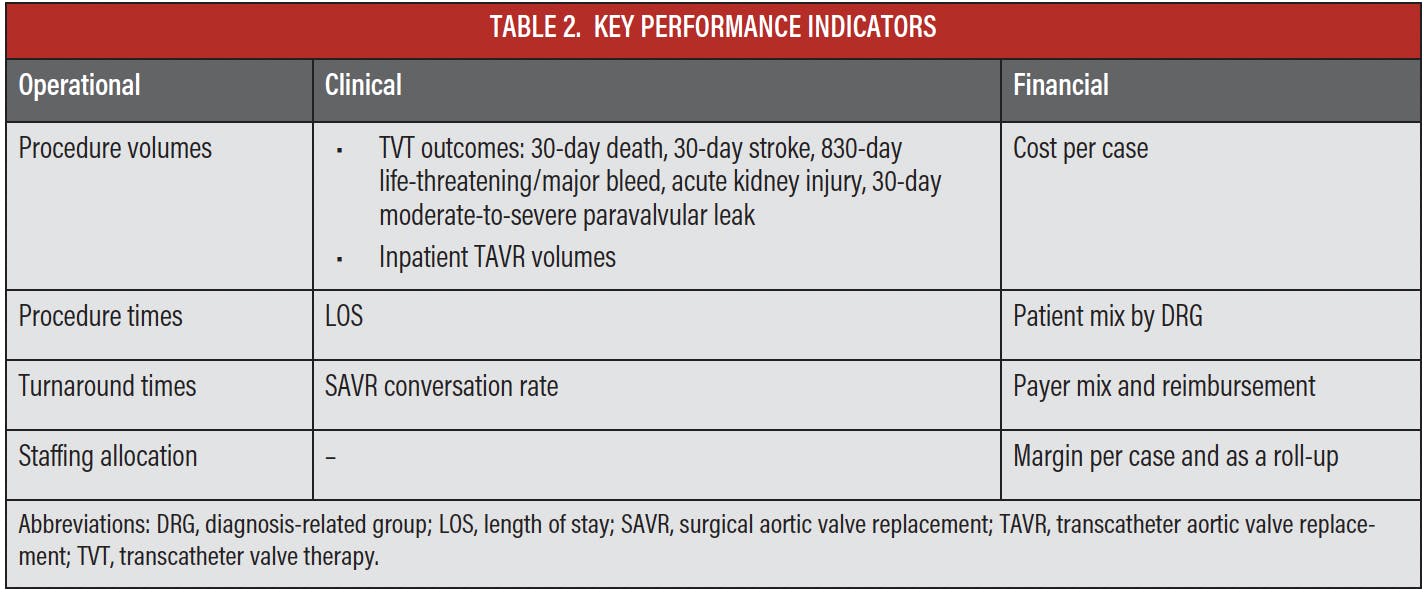
The final pivotal catalyst for change revolves around the accessibility and utilization of data. Financial, operational, and clinical data played indispensable roles. Both programs ensured the essential components of data transparency through comprehensive reviews by the TAVR team and data leveraging to instigate change and inspire key stakeholders (Table 2).
CONCLUSION
Improving the SH care delivery model yields numerous benefits for health care institutions. The specific tactics that these two programs used to restructure their SH programs and the resulting outcomes are detailed in the full CV business white paper and can be implemented in other programs, depending on care team and patient needs.
Setting clear standards is an essential foundation for SH programs to build. Programs must develop policies and procedures that uphold standardized workflows and ensure team competency, irrespective of the operator conducting TAVR procedures.
Ongoing education about best practices from external sources such as conferences, publications, and community networking facilitates continuous improvement. Programs should also consider alternative approaches and apply relevant insights to enhance program effectiveness.
Fostering trust at the leadership level between interventional cardiologists, cardiothoracic surgeons, and hospital administrators is critical for success. Regular meetings to discuss shared goals promote collaboration and synergy, driving the program toward success.
Finally, ongoing data review and performance management is key to determining whether changes have yielded successful results. Implementing a standard scorecard or dashboard facilitates performance monitoring, ensuring transparency and accountability among all stakeholders. Regular, action-driven reviews enable proactive adjustments to optimize program performance and patient outcomes.
Download the full CV business white paper.
Advertisement
Advertisement