Advertisement
Advertisement
January/February 2024
Management of No Reflow and Thrombus
A panel of experts share clinical scenarios, treatment approaches, challenges, and more.
With Jasleen Tiwana, MD; Blake Charlton, MD, FACC, FSCAI; Jesse A. Kane, MD; and Kalaivani Mahadevan, MD




No Reflow
No reflow is defined as no distal flow following treatment of an occlusion. The etiology is multifactorial and includes functional and structural changes in the microvascular. This begins with the initial insult caused by coronary occlusion leading to tissue edema, endothelial damage, and platelet/fibrin activation. With treatment, atheroembolism contributes to microvascular plugging. With reperfusion, microvascular damage is again facilitated by oxygen free radicals and leukocytes. A patient’s susceptibility to no reflow is impacted by individual risk factors such as age, comorbidities, and smoking history, as well as procedural risk factors such as the use of debulking devices or high thrombotic burden.
Can you describe a clinical scenario in which you encountered no reflow? Are there preemptive mitigating actions that an operator can undertake in a similar setting?
Dr. Charlton: When I first started practicing in Alaska, I encountered significantly more no and slow reflow than I had in my urban fellowship. In particular, patients diagnosed with acute coronary syndrome (ACS) in remote locations with long transfer times seemed to be at the highest risk. This was at the height of COVID-19 disruptions in a very large state with many logistical barriers to care and transport. Add to this the natural discomfort around thrombolytics, anticoagulants, and antiplatelets felt by providers who don’t often treat ACS, and the result was a rash of very sick transfer patients. It is anecdotal, of course, but when my colleagues and I focused on making sure these patients had appropriate up-front care by working closely with providers in remote communities and medical evacuation contractors (eg, asking them to fly thrombolytic and/or antiplatelet medications out to patients), I noticed a decline in no/slow reflow and large thrombotic burden cases. The post-COVID normalization of systems of care has also helped. To me, that underscored the importance of interventional cardiology involvement in the systems that treat these patients before they reach the cath lab. I believe this is important in all settings and particularly for those of us who care for patients in rural and remote settings.
Other preventative strategies I have found helpful include use of embolic protection devices (EPDs) in saphenous vein grafts (SVGs) and administration of vasodilators (particularly nicardipine) prior to rotational atherectomy or SVG intervention.
If the clinical situation allows it, I try always to hemodynamically optimize the patient because low cardiac output states can make low/no reflow more perilous.
Dr. Kane: Classically, when I think of no reflow I think of ST-segment elevation myocardial infarction (STEMI) cases (especially with high thrombus burden), vein graft interventions, and cases involving rotational atherectomy. In STEMI cases, one could consider multiple strategies to mitigate risk of no reflow. Often, we think of aspiration thrombectomy (AT) and treatment with vasodilators, but it is also important to remember the value of intravascular imaging. Initially, I try advancing an intravascular ultrasound (IVUS) catheter across the lesion or predilating with a small balloon to create a channel that facilitates intravascular imaging.
I am looking for two key features: (1) vessel sizing, particularly the step up in sizing between the proximal and distal segments of the stent landing zone, and (2) plaque classification and degree of calcification.
Based on imaging findings, if the plaque is not calcified and there is not a large step up in vessel caliber, I will opt for direct stenting without postdilation. The idea here is to minimize risk of no reflow from multiple balloon inflations both before and after stent placement. I perform postdeployment IVUS as well to ensure an adequate percutaneous coronary intervention (PCI) result.
The classic teaching for vein graft interventions is utilization of EPDs and vasodilators. Although there is evidence that supports the use of EPDs such as the Spider device (Medtronic), there is still debate about their efficacy in clinical practice and they can be bulky and challenging to use effectively.1,2 Prophylactic use of vasodilators such as nitroprusside or verapamil, among others, may also be beneficial and should be considered.3,4
Given poor vein graft patency rates, I think it is always important to consider treatment of the native vessel instead of the vein graft, especially if the patient is clinically stable.5 Treatment of the native vessel avoids the challenges and risks of vein graft intervention and provides a more durable result. There is a current ongoing study looking at this very topic (the PROCTOR trial), and I am excited to see the results.6
When it comes to no reflow with rotational atherectomy, I think the fundamentals are key: (1) pick the correct burr size (0.5 to 0.6 of the reference vessel size) or, in larger vessels, consider combined techniques like atherectomy with a 1.5-mm burr and intravascular lithotripsy; (2) practice proper technique with a forward pecking motion while avoiding large deceleration events with the burr; (3) make sure the antiplatelet therapy is on board well before the case is started to avoid platelet aggregation; and (4) find opportunities to practice your technique in more straightforward lesions before taking on more challenging cases.
Dr. Mahadevan: Late presenting and large anterior infarcts commonly exhibit the no-reflow phenomenon after initial intervention to restore flow. Etiology is often multifactorial, including a combination of embolization, microvascular obstruction (MVO), elevated end-diastolic pressure, and poor coronary perfusion. Not infrequently, these patients are also shocked.
The following strategies are helpful in mitigation and treatment of no reflow in such cases:
- Keeping the activated clotting time (ACT) above 250 seconds
- Up-front AT and glycoprotein (GP) IIb/IIIa if there is angiographic evidence of thrombus
- IVUS to optimize stent size selection and landing zones for a direct stenting strategy
- Direct stenting in uncomplex lesions with avoidance of high-pressure balloon inflations and minimization of stent length
- Distal drug delivery for no reflow, via microcatheter or AT catheter (which allows maintenance of wire position)
- Pretreatment with adenosine, particularly in SVG interventions for ACS (where a filter can also be considered)
- Intra-aortic balloon pump (IABP) where flow remains poor despite the above measures
- 48- to 72-hour return to lab if there is high thrombus burden and deferral of stenting or for stent optimization if a stent is placed but not postdilated
Dr. Tiwana: A common scenario in which I have encountered no reflow is with rotational atherectomy of a heavily calcified vessel. Mitigating actions that an interventionalist can take include: (1) loading antiplatelet agents well in advance; if loading a patient on the table, consider the use of a P2Y12 inhibitor with greater potency and faster action, such as prasugrel or ticagrelor; (2) meticulous rotational atherectomy technique to avoid any deceleration > 5,000 rpm; and (3) shorter burr runs (< 20 seconds).
Is there a differential diagnosis that you explore if you encounter no reflow, and how do you narrow down etiology?
Dr. Kane: The key differentials for no reflow are dissection with hematoma, as well as coronary vasospasm. In STEMI, I generally empirically treat for no reflow with vasodilators and consider the above differentials. If there is no improvement in flow, I then consider other etiologies.
In other scenarios, particularly in rotational atherectomy cases, I try to evaluate for dissection prior to injecting any additional contrast or pharmacotherapy down the guide. It is important to remember in this setting that further injection could propagate dissection. If no reflow occurs in these cases, IVUS is a great tool to evaluate the artery for dissection and spasm prior to choosing a therapy. If there is evidence of spasm, I know I can give nitroglycerin. If there is dissection, I can consider cutting balloons and stents. If I see no evidence of these, the next step is to provide vasodilators, such as epinephrine and/or nitroprusside, among other options.
Dr. Tiwana: Generally, no reflow encompasses functional and structural changes in the microvasculature. However, the differential for thrombolysis in myocardial infarction (TIMI) 0 distal flow includes coronary dissection or thrombosis. To narrow down and appropriately treat the etiology, intracoronary (IC) imaging with IVUS should be undertaken.
Dr. Mahadevan: The core differentials in this setting would include thrombus with embolization, vasospasm, and dissection—with or without the development of intramural hematoma and vessel compression.7 IVUS will differentiate these and allow identification and quantification of thrombus. In addition, it allows determination of lesion length and adequate landing zones. These can be manually coregistered with fluoro-acquire when contrast enhancement on angiography is poor or nonexistent (often the case in no reflow) with selection of optimal stent size.
The etiology then guides the first-line management:
- GP IIb/IIIa and AT for heavy thrombus and possible deferral of stenting
- Vasodilators for spasm
- Fenestration with a cutting balloon (if dissection with intramural hematoma and true lumen compression are present) and stenting to ensure full coverage of entry and exit points in the event of dissection
Data from > 400 patients from the IVUS substudy of the HORIZONS-AMI trial demonstrated statistically significant prediction of no reflow based on three core variables: (1) visible plaque rupture; (2) plaque burden; and (3) ultrasound-based plaque attenuation (in the absence of significant calcium) with an attenuation arc > 180 degrees and length > 5 mm.8-10 The currently recruiting DANAMI4-iSTEMI randomized controlled trial (RCT) of IVUS versus standard care in STEMI is also evaluating distal embolization, infarct size, and MVO and will hopefully shed more light on the utility of IVUS in STEMI and in no reflow.11
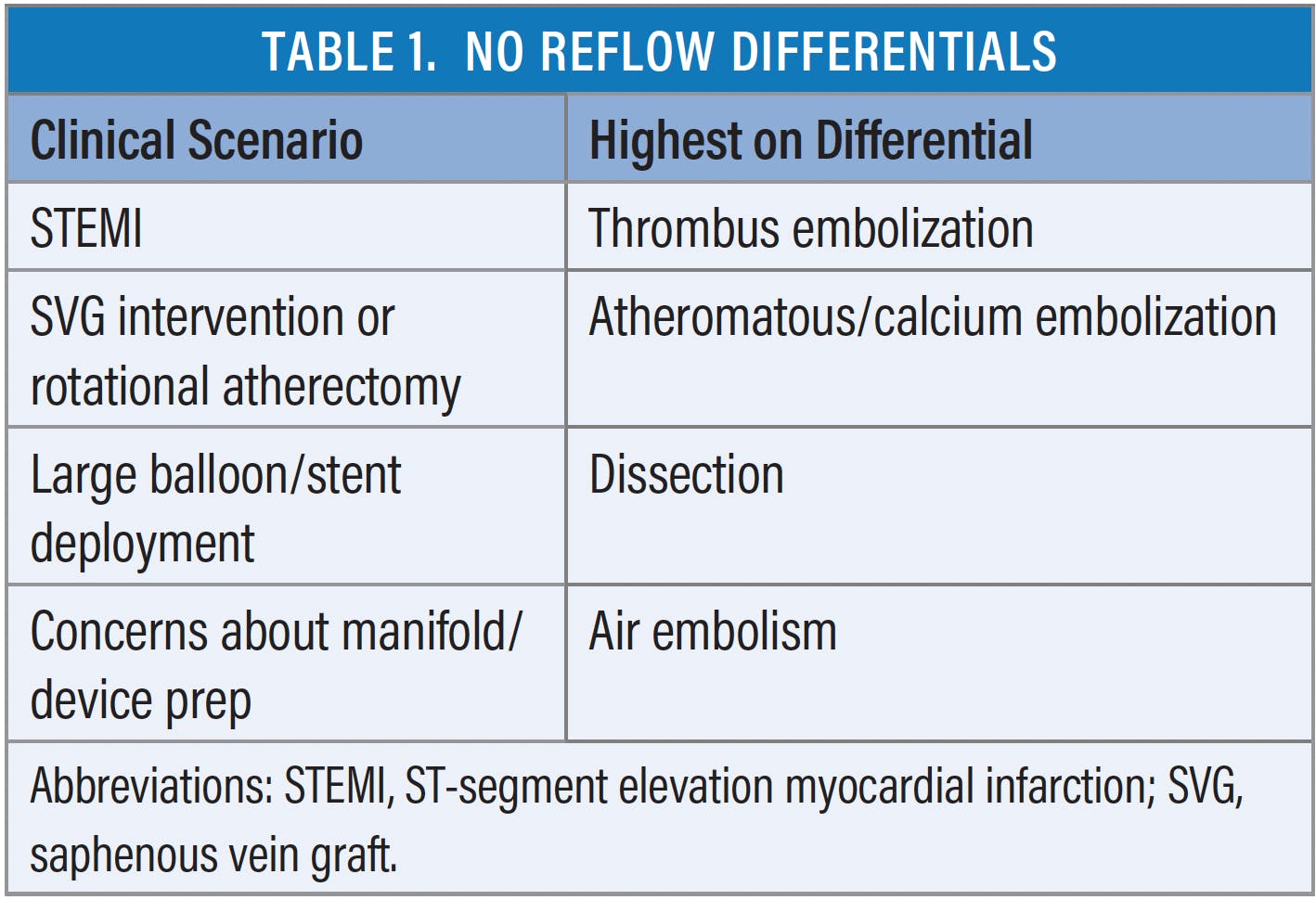
Dr. Charlton: My mind quickly goes to (1) embolization of thrombus or atheromatous disease, (2) dissection, (3) air embolism, and (4) inadequate anticoagulation. My secondary list includes severe spasm, severe pseudolesions, and heparin-induced thrombocytopenia.
The situations that strongly affect my differential are listed in Table 1. To resolve the differential, my usual process is to immediately administer vasodilators and review the angiogram for any clear sign of an air bubble or dissection. If I don’t have improvement, I move next to recheck ACT and insert a high-definition rotational IVUS. I’ve never found optical coherence tomography (OCT) to provide useful imaging in low flow states.
How do you approach treatment of no reflow? What tips and tricks do you recommend?
Dr. Tiwana: No reflow is treated predominantly through vasodilators. I generally recommend IC administration via a microcatheter to ensure distal delivery into the microvasculature. Alternatively, a dual-lumen catheter can also be used, with the benefit of maintaining distal wire position. The following medications and doses are recommended12:
- Nitroprusside, 50-200 µgm
- Verapamil, 100-250 µgm
- Adenosine, 50-200 µgm
- Diltiazem, 400 µgm
- Nicardipine, 50-200 µgm
- Epinephrine, 50-200 µgm
Most vasodilators will result in hypotension, which can be a limitation to their use. The one exception is IC epinephrine, which will bolster blood pressure. Epinephrine doses > 100 µgm can result in significant tachycardia and hypertension. Alternating doses of epinephrine with other vasodilators can help regulate a patient’s blood pressure.
Lastly, the use of GP IIb/IIIa inhibitors can be kept in mind, especially if the patient was not loaded with a P2Y12 inhibitor prior to PCI.
Dr. Charlton: Building on the previous response, I immediately administer vasodilators (nicardipine if normotensive and epinephrine if hypotensive) and then IVUS. I react to the IVUS findings as follows: stent a dissection, use a thrombectomy catheter for high thrombus burden or air bubble, or, if no other cause is appreciated, administer more vasodilators via a microcatheter. If the poor reflow is in a native vessel, and particularly if I have radial access, I use a IIb/IIIa agent.
If the poor reflow is due to a large thrombus burden, particularly in a large-caliber vessel, I adopted a strategy passed on to me by one of my neurosurgical colleagues in treating stroke—namely, to place a motorized thrombectomy catheter in the thrombus and let the mechanical aspiration run for 5 minutes or more. If there is no blood return into the engine, I retract the catheter only a short distance before letting it run longer. The idea being, if the catheter has engaged a large clot, let it well and truly “cork” itself into the catheter so it does not dislodge when removing the device. This was described to me, in typical Alaskan fashion, as the “fish on” technique, alluding to sport fishing when you hook a big salmon and let it fight and tire itself out before reeling it in. “Fish on” is what you call to the others on the bank or in the boat with you when you’re letting it fight for a while.
Dr. Mahadevan: Combination treatment with delivery of a low-dose vasopressor such as epinephrine, vasodilators (adenosine, verapamil, nitroprusside, or nitrates, depending on the availability in one’s cath lab), and a GP IIb/IIIa agent (tirofiban). In addition, physiologic stabilization where required, with IV inotropes for hemodynamic support, diuretics to improve coronary blood flow via reduction of high left ventricular end-diastolic blood pressure, and consideration of an IABP to improve coronary perfusion. Drug delivery should be directly to the distal coronary bed via microcatheter or AT catheter. Once administered, distal flow restoration (or lack thereof) can be confirmed by cautious administration of 1 to 2 mL of contrast via the microcatheter prior to removal.
Although not historically perceived as a first-line treatment, the emergence of data over the last few years supports both the safety and superiority of epinephrine in no reflow.13 The COAR study demonstrated epinephrine alone was significantly better than adenosine alone in achieving final TIMI grade 3 flow (90% vs 78%) and was associated with improved overall 30-day ejection fraction over 40% (41% vs 23%).14 Reassuringly, there has been no reported significant increase in the frequency of ventricular arrhythmias with its use.15
Finally, although not indicated in cardiogenic shock, there is still potentially a role for IABP in the management of no reflow. In a prospective observational study of > 7,000 patients, a mortality reduction at 30 days was observed after PCI with the use of IABP when final TIMI flow grade was 0 to 1.16 This was echoed in the SEMPER FI pilot RCT of IABP versus standard care in patients with STEMI with persistent ST-segment elevation post-PCI; the study observed a trend toward mortality reduction and reduction in heart failure hospitalization at 6 months with IABP.17
Dr. Kane: There are multiple pharmacotherapies utilized in the treatment of no reflow, and I am sure every operator will have their own “cocktail” of agents used. What I think is more important is how these medications are given. It is essential to deliver the medication in the distal vessel to ensure the effects are targeted at the capillary bed as opposed to the systemic circulation. There are a few effective options to deliver the vasodilators in the distal vessel: (1) injection via a microcatheter, (2) injection via a dual-lumen microcatheter (the benefit of not having to trap in and out of the microcatheter), and (3) injection via a catheter used for AT, such as CAT RX (Penumbra, Inc.).
In addition, it is important to give repeated doses of therapy over several minutes as the patient tolerates. Many of us give one or two doses before checking for flow with repeat angiography, and I think we may not see results that quickly. In some cases, I wait to see the ST elevations resolve with the pharmacotherapy prior to repeat angiography. It is also important to consider alternating two agents, such as nitroprusside (50 to 300 μg) and epinephrine (50 to 400 μg diluted 1 mL/10 μg). Two drugs may be better than one.
How do you manage patients in whom you are unable to restore flow?
Dr. Mahadevan: This depends on the primary reason for inability to restore TIMI grade 3 flow. If it is due to visible thrombus or embolization of thrombus into distal branches, then I would choose administration of a GP IIb/IIIa antagonist for up to 24 to 48 hours or as tolerated. This is in addition to potent dual antiplatelet therapy with staged return to the cath lab to reassess and definitively treat/optimize. If flow is poor due to a combination of factors, such as MVO, elevated end-diastolic pressure, and poor coronary flow, then I would manage each of those factors as already described with supportive therapies, including use of IABP. I have no experience with Impella (Abiomed, Inc.) for STEMI or no reflow, as it is not routinely available in the United Kingdom National Health Service.
Dr. Tiwana: Patients who have severe no reflow that does not improve are essentially treated as though they are having a total occlusion myocardial infarction. If a patient is unstable, a support device will be helpful to reduce the left ventricular end-diastolic pressure in an attempt to improve coronary perfusion pressure and provide hemodynamic support. Stenting is avoided unless there is a clear dissection flap or intraluminal disease that would benefit from getting scaffolded up with a stent. In stable patients, intravenous (IV) GP IIb/IIIa inhibitor can be used. These patients can be brought back to the cardiac catheterization lab 24 to 48 hours later to reevaluate the coronaries and stent.
Dr. Kane: The first question is, do I need to do anything at all? If the patient is stable and asymptomatic and the no reflow has occurred in an area supplying a small territory of myocardium, I generally treat with supportive therapy only. If the territory supplied by no reflow is larger but the patient is stable and has no or minimal symptoms, I consider therapy with a GP IIB/IIIa inhibitor, such as eptifibatide. If the patient is having severe symptoms and/or is hemodynamically unstable, I will consider left ventricular unloading with an IABP, a GP IIB/IIIa inhibitor, and a vasodilator drip such as nitroprusside, as the patient’s blood pressure can tolerate. I am always concerned about bleeding in these situations.
Dr. Charlton: In addition to optimizing the pharmacologic treatment, I consider mechanical support to try to minimize ischemia and optimize what coronary flow there is as well as delivery of the drugs.
Large Thrombotic Burden
Thrombus often accompanies STEMI. Severe thrombotic burden has been observed in up to 14% of STEMIs.18 Large thrombotic burden has been associated with adverse in-hospital outcomes, larger infarct size, and more transmural necrosis.19,20
What is your approach to treatment of severe thrombus in ACSs? What tips and tricks do you recommend?
Dr. Kane: Early recognition is key. If you are dealing with a case of high thrombus burden up front, AT may save you the headache of no reflow later. I prefer mechanical AT over manual aspiration because of the feedback based on flow you get during the aspiration itself.
It is important to remember that the techniques for AT vary depending on what equipment is available in your institution. Mechanical aspiration maintains its vacuum as long as the device maintains power; however, manual aspiration can lose vacuum suction as the vacuum syringe fills with blood. Therefore, with mechanical aspiration, the catheter should be advanced down the artery millimeter by millimeter, pausing in areas where the flow through the catheter slows (this signifies an area of the vessel with a large thrombus content). Manual aspiration should be performed with quicker runs, focusing on areas suspected of having the highest thrombus burden and removing the catheter before the vacuum syringe fills. In both cases, consider multiple runs of AT and be vigilant in aspirating the guide catheter as well.
As noted in the answer to a previous question, in cases of high thrombus burden, always consider IVUS and direct stenting while avoiding multiple balloon inflations.
Dr. Charlton: In a STEMI, I still select a balloon for my first therapy since that often restores some amount of flow. I often initiate GP IIb/IIIa. If this fails, I often quickly move to machine-assisted thrombectomy and the “fish on” technique I described previously. Outside of STEMI, I increasingly select thrombectomy for my first device.
Dr. Mahadevan: The following strategies can be considered where thrombus burden is severe. In my unit we do not have mechanical AT or laser atherectomy, so I have no direct clinical experience with these modalities:
- ACT every 20 minutes, aiming for > 250 seconds throughout the case.
- GP IIb/IIIa. Data have historically been conflicted regarding the IV versus IC route.21-22 I usually give it intravenously but have utilized the IC route more recently in a few severe cases, observing a rapid and positive effect (Figure 1). A recent meta-analysis including 22 RCTs and > 7,000 patients found statistically significant differences in TIMI flow, myocardial blush grade, ST-segment resolution, major adverse cardiovascular events, and 1-month heart failure rehospitalization favoring IC administration, with equipoise in short-term bleeding and mortality rates.23
- IC thrombolytic therapy can be utilized on a case-by-case basis, but robust randomized data seem sparse. Although the T-TIME study showed no benefit of low-dose IC alteplase in reduction of MVO in STEMI all-comers, two other trials—STRIVE and RESTORE-MI—both seek to further explore the potential effects of IC tissue plasminogen activator or tenecteplase.24-26
- Manual AT. TOTAL and TASTE led to a downgrading in the guidelines to a class III indication due to a lack of mortality benefit and an increased risk of cerebrovascular accident (CVA).27,28 However, these were data from all-comer STEMI populations. In the high–thrombus burden cohort of TOTAL, AT was beneficial, and in retrospective data from the SCAAR registry, AT led to a reduction in stent thrombosis without the trade-off of an increased CVA risk.29
- Mechanical AT (Penumbra CAT RX) carries the benefit of continued high-power suction and therefore reduced CVA risk. Recent data from the ROPUST (retrospective) and CHEETAH (prospective) studies observed > 90% TIMI grade 3 flow and a < 1% CVA rate at 30 days in high-risk ACS patients.30,31
- Laser atherectomy. Excimer laser coronary angioplasty is both feasible and successful in thrombus volume reduction after manual AT.32
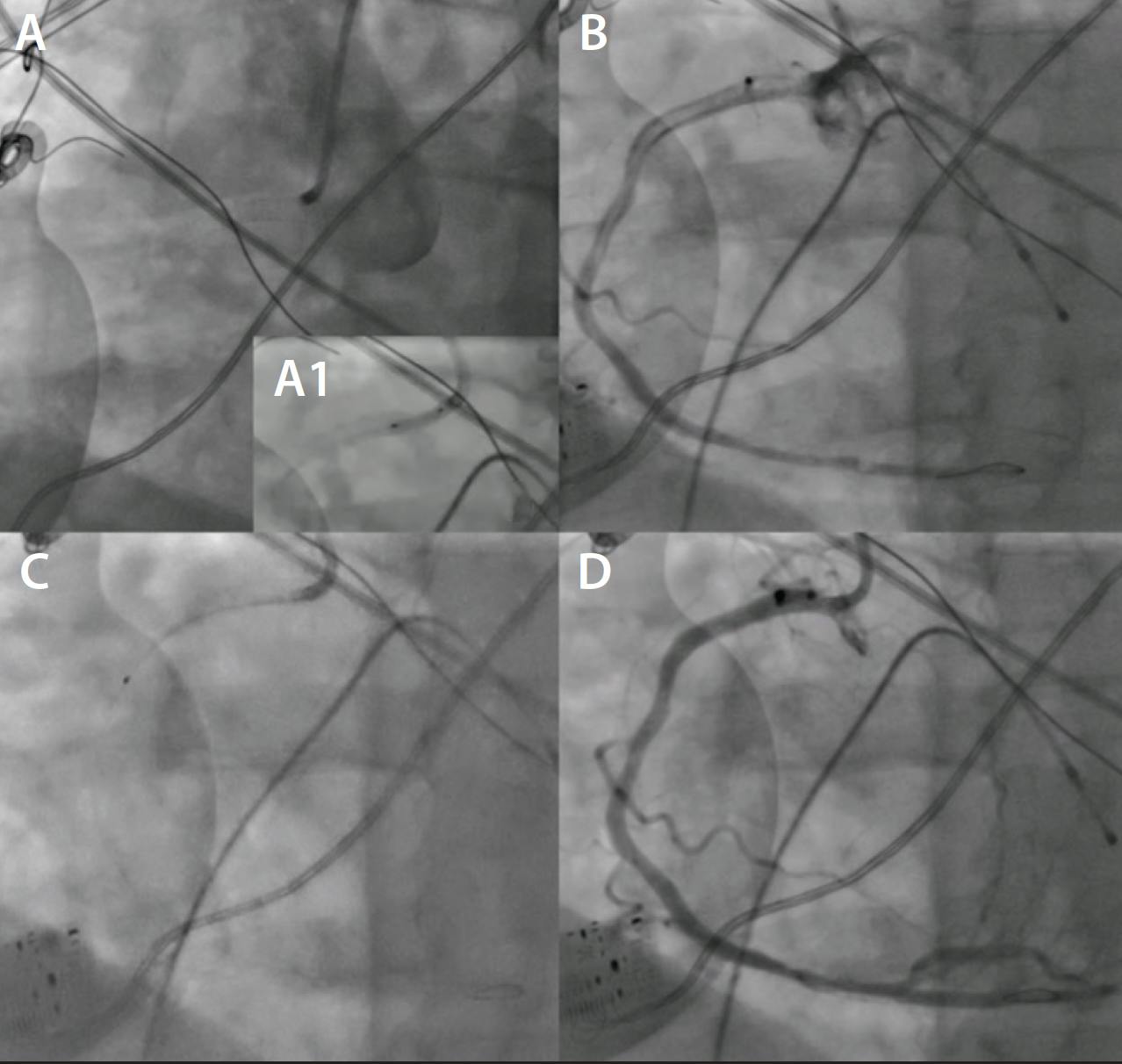
Figure 1. Aorto-ostial stent thrombosis in the right coronary artery (A) and predilatation with a 2.5-mm semicompliant balloon (A1). High thrombus burden throughout proximal and mid right coronary artery (B), treated with multiple manual AT runs and IC tirofiban (C). Final result showing thrombus resolution and TIMI grade 3 flow (D).
Dr. Tiwana: In the setting of severe thrombus in ACSs, there are numerous techniques that can be used to try to remove and minimize thrombus. The following tips and tricks can be considered:
- Determining whether your distal wire is in a major segment of the vessel distally can be challenging if thrombus obscures visualization. In patients who have already formed collaterals, consider getting additional secondary access to confirm your distal wire position. This can help ensure that the debulking strategies listed below are more effective.
- AT can be useful for thrombus debulking. Mechanical AT maintains suction better than manual aspiration. Notably, negative pressure must be exerted during withdrawal of the aspiration device followed by copious flushing of the guide catheter to minimize risk of stroke.
- Laser atherectomy can be considered for continued bulky thrombus. If used, the fluence and rate should be low (eg, 40 mJ/mm2 and 40 Hz, respectively).
- IC thrombolytic administration can also be considered for congealed and bulky thrombus. It can be helpful to use a blocking balloon in the distal vessel to deliver a column of the thrombolytic in the body of the clot. The blocking balloon can be left up for 10 minutes to ensure an adequate column of thrombolytic within the clotted segment. After thrombolytic administration, AT can again be undertaken.
Do you employ delayed stenting in the setting of severe thrombus burden? If so, how do you treat patients in the interim, and when do you bring them back to stent?
Dr. Mahadevan: Yes, where there remains a high thrombus burden despite utilization of strategies previously discussed, I would usually defer stenting for a period of 48 to 72 hours, during which GP IIb/IIIa (for 24-48 hours) and potent dual antiplatelet therapy would be delivered. The presence of ongoing severe thrombus and poor flow has a number of procedural challenges, including identification of appropriate stent landing zones, stent under-sizing leading to malapposition, poor stent outflow and runoff, and thrombus protrusion through struts. Stent deployment itself can exacerbate recurrent no reflow. All of these factors serve as a nidus for acute stent thrombosis and downstream stent failure. Therefore, in such cases, it is favorable to reduce thrombus load and improve the prestent baseline TIMI flow grade.
Dr. Charlton: Using the “fish on” technique, I’ve not yet encountered a situation in which I can’t debulk enough clot to make stenting reasonable. Although I’m sure it’s only a matter of time until I do. Rarely, after initial AT, I have encountered clinical scenarios where I have an excellent angiographic result with no visible residual lesion. In that situation, I use high-definition IVUS to confirm no significant lesion at the site of thrombus and investigate elsewhere for atheroma. If no significant atheroma is seen, I most strongly suspect thromboembolism and so defer stenting and treat with a P2Y12 inhibitor/novel antagonist oral anticoagulant for 3 months while investigating atrial fibrillation, patent foramen ovale, etc.
Dr. Tiwana: In situations in which I have continued TIMI 0 flow despite thrombus debulking, I employ a delayed stenting strategy. I generally treat patients with GP IIb/IIIa inhibitor for 24 hours before reevaluation in the cath lab. I consider the use of support devices in hemodynamically unstable patients.
Dr. Kane: In general, I do not delay stenting in cases of high thrombus burden, especially if I have achieved an adequate result with AT. In rare instances in which I am unable to restore flow in all major vessels after AT and the patient is stable, I do defer stenting after 48 hours of heparin therapy. If the patient is unstable with active symptoms, IC thrombolytics can be considered as well at the time of PCI.33
However, one caveat to consider is delayed PCI in the setting of suspected thromboembolic events. In young and otherwise healthy patients with normal coronary angiography except in the culprit vessel, a thromboembolic event should be considered. In these cases, if the patient is stable and flow is restored, I opt for deferred stenting and repeat imaging with OCT to assess the vessel for atherosclerotic disease and evidence of ruptured plaque. In these cases, after discussion with the patient, I consider 1 month of therapy with an anticoagulant, a workup for thromboembolic phenomena, and repeat angiography with OCT after at least 48 hours of anticoagulation.
Disclosures:
Dr. Charlton: None.
Dr. Kane: None.
Dr. Mahadevan: Receives honoraria and consulting fees from Abbott, Boston Scientific Corporation, and Shockwave Medical.
Dr. Tiwana: None.
1. Paul TK, Bhatheja S, Panchal HB, et al. Outcomes of saphenous vein graft intervention with and without embolic protection device. Circ Cardiovasc Interv. 2017;10. doi: 10.1161/CIRCINTERVENTIONS.117.005538
2. Brennan JM, Al-Hejily W, Dai D, et al. Three-year outcomes associated with embolic protection in saphenous vein graft intervention. Circ Cardiovasc Interv. 2015;8. doi: 10.1161/CIRCINTERVENTIONS.114.001403
3. Zoghbi GJ, Goyal M, Hage F, et al. Pretreatment with nitroprusside for microcirculatory protection in saphenous vein graft interventions. J Invasive Cardiol. 2009;21:34-39.
4. Michaels AD, Appleby M, Otten MH, et al. Pretreatment with intragraft verapamil prior to percutaneous coronary intervention of saphenous vein graft lesions: results of the randomized, controlled vasodilator prevention on no-reflow (VAPOR) trial. J Invasive Cardiol. 2002;14:299-302.
5. Brilakis ES, Edson R, Bhatt DL, et al. Drug-eluting stents versus bare-metal stents in saphenous vein grafts: a double-blind, randomised trial. The Lancet. 2018;391:1997-2007. doi: 10.1016/S0140-6736(18)30801-8
6. de Winter RW, Walsh SJ, Hanratty CG, et al. Percutaneous coronary intervention of native coronary artery versus saphenous vein graft in patients with prior coronary artery bypass graft surgery: rationale and design of the multicenter, randomized PROCTOR trial. Am Heart J. 2023;257:20-29. doi: 10.1016/j.ahj.2022.11.014
7. Lim MJ. Complications of percutaneous coronary interventions. In: Kern MJ, Sorajja P, Lim MJ, eds. The Interventional Cardiac Catheterization Handbook (Fourth Edition). Elsevier; 2018:261-285.
8. Endo M, Hibi K, Shimizu T, et al. Impact of ultrasound attenuation and plaque rupture as detected by intravascular ultrasound on the incidence of no-reflow phenomenon after percutaneous coronary intervention in ST-segment elevation myocardial infarction. JACC Cardiovasc Interv. 2010;3:540-549. doi: 10.1016/j.jcin.2010.01.015
9. Wu X, Mintz GS, Xu K, et al. The relationship between attenuated plaque identified by intravascular ultrasound and no-reflow after stenting in acute myocardial infarction: the HORIZONS-AMI (Harmonizing Outcomes With Revascularization and Stents in Acute Myocardial Infarction) trial. J Am Coll Cardiol Cardiovasc Interv. 2011;4:495-502. doi: 10.1016/j.jcin.2010.12.012
10. Patel VG, Brayton KM, Mintz GS, et al. Intracoronary and noninvasive imaging for prediction of distal embolization and periprocedural myocardial infarction during native coronary artery percutaneous intervention. Circ Cardiovasc Imaging. 2013;6:1102-1114. doi: 10.1161/CIRCIMAGING.113.000448
11. STEMI treatment optimization by ischemic postconditioning and IVUS Guidance (DANAMI4). Clinicaltrials.gov website. Accessed December 29, 2023. https://clinicaltrials.gov/study/NCT04775914
12. Khalil M, Atkinson T, Latif F. How to prevent and treat no reflow using evidence-based measures. SCAI. November 22, 2021. Accessed January 18, 2024. https://scai.org/how-prevent-and-treat-no-reflow-using-evidence-based-measures
13. Aksu T, Guler TE, Colak A, et al. Intracoronary epinephrine in the treatment of refractory no-reflow after primary percutaneous coronary intervention: a retrospective study. BMC Cardiovasc Disord. 2015;15:10. doi: 10.1186/s12872-015-0004-6
14. Khan KA, Qamar N, Saghir T, et al. Comparison of intracoronary epinephrine and adenosine for no-reflow in normotensive patients with acute coronary syndrome (COAR Trial). Circ Cardiovasc Interv. 2022;15:e011408. doi: 10.1161/CIRCINTERVENTIONS.121.011408
15. Afshar EJ, Samimisedeh P, Tayebi A, et al. Efficacy and safety of intracoronary epinephrine for the management of the no-reflow phenomenon following percutaneous coronary interventions: a systematic-review study. Ther Adv Cardiovasc Dis. Published online February 28, 2023. doi: 10.1177/17539447231154654
16. Hawranek M, Gierlotka M, Pres D, et al. Nonroutine use of intra-aortic balloon pump in cardiogenic shock complicating myocardial infarction with successfuland unsuccessful primary percutaneous coronary intervention. JACC Cardiovasc Interv. 2018;11:1885-1893. doi: 10.1016/j.jcin.2018.07.030
17. Van Nunen LX, van’t Veer M, Zimmermann FM, et al. Intra-aortic balloon pump counterpulsation in extensive myocardial infarction with persistent ischemia: the SEMPER FI pilot study. Catheter Cardiovasc Interv. 2020;95:128-135. doi: 10.1002/ccd.28289
18. Miranda-Guardiola F, Rossi A, Serra A, et al. Angiographic quantification of thrombus in ST-elevation acute myocardial infarction presenting with an occluded infarct-related artery and its relationship with results of percutaneous intervention. J Interv Cardiol. 2009;22:207-215. doi: 10.1111/j.1540-8183.2009.00464.x19. Napodano M, Dariol G, Al Mamary AH, et al. Thrombus burden and myocardial damage during primary percutaneous coronary intervention. Am J Cardiol. 2014;113:1449-1456. doi: 10.1016/j.amjcard.2014.01.423
20. Singh M, Berger PB, Ting HH, et al. Influence of coronary thrombus on outcome of percutaneous coronary angioplasty in the current era (the Mayo Clinic experience). Am J Cardiol. 2001;88:1091-1096. doi: 10.1016/s0002-9149(01)02040-9
21. Thiele H, Wöhrle J, Hambrecht R, et al. Intracoronary versus intravenous bolus abciximab during primary percutaneous coronary intervention in patients with acute ST-elevation myocardial infarction: a randomised trial. Lancet. 2012;379:923-931. doi: 10.1016/S0140-6736(11)61872-2
22. Stone GW, Maehara A, Witzenbichler B, et al. Intracoronary abciximab and aspiration thrombectomy in patients with large anterior myocardial infarction: the INFUSE-AMI randomized trial. JAMA. 2012;307:1817-1826. doi: 10.1001/jama.2012.421
23. Hahn JS, Jeon J, Geum MJ, et al. Intracoronary versus intravenous glycoprotein IIb/IIIa inhibitors during primary percutaneous coronary intervention in patients with STEMI: a systematic review and meta-analysis. Thromb J. 2023;21:76. doi: 10.1186/s12959-023-00519-x
24. McCartney PJ, Eteiba H, Maznyczka AM, et al. Effect of low-dose intracoronary alteplase during primary percutaneous coronary intervention on microvascular obstruction in patients with acute myocardial infarction: a randomized clinical trial. JAMA. 2019;321:56-68. doi: 10.1001/jama.2018.19802
25. A phase 3 study of low-dose intracoronary thrombolytic therapy in STEMI (heart attack) patients (RESTORE-MI). Australian New Zealand Clinical Trials Registry. Accessed January 4th, 2024. https://www.anzctr.org.au/Trial/Registration/TrialReview.aspx?id=372400#:~:text=Restoring%20Microcirculatory%20Perfusion%20in%20ST,percutaneous%20coronary%20intervention%20(PCI)
26. Adjunctive low-dose intracoronary recombinant tissue plasminogen activator vs placebo for primary PCI in patients with ST-segment elevation MI. Population Health Research Institute. Accessed January 4, 2024. https://www.phri.ca/research/strive/
27. Frobert O, Lagerqvist B, Olivecrona GK, et al. Thrombus aspiration during ST-segment elevation myocardial infarction. N Engl J Med. 2013;369:1587-1597. doi: 10.1056/NEJMoa1308789
28. Jolly SS, Cairns JA, Yusuf S, et al. Randomized trial of primary PCI with or without routine manual thrombectomy. N Engl J Med. 2015;372:1389-1398. doi: 10.1056/NEJMoa1415098
29. Angeras O, Haraldsson I, Redfors B, et al. Impact of thrombus aspiration on mortality, stent thrombosis, and stroke in patients with ST‐segment–elevation myocardial infarction: a report from the Swedish coronary angiography and angioplasty registry. J Am Heart Assoc. 2018;7:e007680. doi: 10.1161/JAHA.117.007680
30. Tashtish N, Chami T, Dong T, et al. Routine use of the “Penumbra” thrombectomy device in myocardial infarction: a real-world experience-ROPUST study. J Interv Cardiol. Published online March 26, 2022. doi: 10.1155/2022/5692964
31. Matthews SJ, Parikh SA, Wu W, et al. Sustained mechanical aspiration thrombectomy for high thrombus burden coronary vessel occlusion: the multicenter CHEETAH study. Circ Cardiovasc Interv. 2023;16:e012433. doi: 10.1161/CIRCINTERVENTIONS.122.012433
32. Yamanake Y, Shimada Y, Tonomura D, et al. Laser vaporization of intracoronary thrombus and identifying plaque morphology in ST-segment elevation myocardial infarction as assessed by optical coherence tomography. J Interv Cardiol. 2021;2021:5590109. doi: 10.1155/2021/5590109
33. Alyamani M, Campbell S, Navarese E, et al. Safety and efficacy of intracoronary thrombolysis as adjunctive therapy to primary PCI in STEMI: a systematic review and meta-analysis. Can J Cardiol. 2021;37:339-346. doi: 10.1016/j.cjca.2020.03.034
Advertisement
Advertisement