Advertisement
Advertisement
September/October 2023
Rapamycin-Eluting Coronary Stent for PCI: The TARGET IV Trial
A review of the TARGET IV trial evaluating the Firehawk rapamycin-eluting cobalt chromium coronary stent system. Can this new stent increase healing time, reduce adverse events, and eliminate the need for prolonged dual antiplatelet therapy?
By Christiana O. Oshotse, BA, and Robert W. Yeh, MD, MSc, MBA
The options for mechanical interventions used in percutaneous coronary intervention (PCI) have evolved from balloon angioplasty in the 1970s to 1980s to the bare-metal stents (BMS) introduced in 1986 that provided permanent scaffolding to the opened vessel, thus addressing the issue of vessel recoil after angioplasty.1 In 2000, drug-eluting stents (DES) were developed, which employed antiproliferative drugs to coat stents and inhibit cell growth after stent implantation.2-4 DES greatly reduced the risk of neointimal hyperplasia and associated restenosis, representing a critical breakthrough in offering sustained benefits for patients.5,6
The first generation of DES addressed the high rates of restenosis with BMS by applying a polymer onto thick stainless-steel metal stents that distributed paclitaxel or sirolimus to reduce the neointimal proliferative response observed with BMS.1,2,7 First-generation DES combined drug coatings with durable polymer—eg, SIBS (poly[styrene-block-isobutylene-block-styrene]), PEVA (poly[ethylene-co-vinyl acetate]), and PBMA (poly[n-butyl methacrylate])—that stabilized the drugs eluted from the stents.8
Taxus (Boston Scientific Corporation), comprising paclitaxel and SIBS, and Cypher (Cordis), comprising sirolimus, PEVA, and PBMA, were two first-generation stents with strut thickness > 130 mm and durable polymer coating > 10 mm. They significantly reduced restenosis rates and improved outcomes compared to BMS. However, the risks of late stent thrombosis clouded the success of DES, and efforts to design newer stents that allowed for more rapid endothelialization were undertaken to reduce the risk as well as shorten the associated mandatory duration of dual antiplatelet therapy (DAPT) to prevent stent thrombosis. During this time, studies exploring the efficacy of DAPT use after stent implantation had positive results and explored strategies to prolong DAPT use to limit stent thrombosis, all of which led to national guidelines for PCI to encourage DAPT use.9-12
Subsequent iterations of DES, comprising second-generation DES, improved on efforts to reduce rates of restenosis, neointimal hyperplasia, and inflammation in patients with thinner metallic platforms (eg, stainless steel, cobalt-chromium, platinum-chromium alloy). These were accompanied by more varied stent coatings (eg, biodegradable polymer, polymer-free coating, bioabsorbable coating, nanocoating) and served as a drug carrier for antiproliferative and immunosuppressant drugs (eg, everolimus, zotarolimus, biolimus, hybrid drugs) released at varying drug combinations and kinetics to the stented site.4,6,7,13-15 Lower rates of thrombosis are achieved with these second-generation DES, even as a shift toward more truncated DAPT durations occurred, in part due to the recognition that bleeding on DAPT is common and harmful.16-20 Trial data over the years continue to confirm that thinner struts with improved and varied stent coatings that provide reduced contact with artery wall and targeted drug delivery can reduce inflammation, neointimal hyperplasia, thrombosis, and resultant mortality in patients with stents.
THE NOVEL FIREHAWK STENT SYSTEM
Despite major improvements in stent mechanics, there remains a need to accelerate endothelization after stent implantation to prevent the continually observed late stent thrombosis and requirement for DAPT that contribute to existing unfavorable patient outcomes. Contemporary strategies for antiplatelet thearpy rely on individualizing treatment based on bleeding and ischemic risk, but they nevertheless continue to be associated with significant bleeding risks, drug interactions, and increased cost to patients. It remains necessary to improve on the factors of stent design that persist in the predominantly used second-generation durable polymer DES and contribute to persistent stent-related failure over the long term. Strut design that decreases turbulent flow, stent coating that diminishes immune response provocation and late “catch-up” stenosis, and proper stent deployment are key areas to address.
The novel Firehawk stent is designed by MicroPort and currently used in China, the European Union, Korea, India, Brazil, Colombia, Belarus, Egypt, and Saudi Arabia. The stent design is intended to improve healing and reendothelialization to prevent stent thrombosis. It is being studied in the TARGET trials, with the most recent TARGET IV trial evaluating its use in North American and European patient populations.
Firehawk is a third-generation, cobalt-chromium, balloon-expandable stent with a biodegradable polymer housed in abluminal grooves and mounted on a rapid exchange delivery catheter system. The biodegradable polymer delivers rapamycin to reduce the proliferative response and eventually degrades to leave only the implanted metallic stent. The stent is designed to minimize polymer volume and antiproliferative drug concentration to reduce inflammation and hypersensitivity reactions. The Firehawk’s design aims to prevent coating damage and drug loss during moments of rupture or high-pressure postdilatation during delivery.
PREVIOUS AND ONGOING STUDY EVALUATIONS OF FIREHAWK
The Firehawk stent has been evaluated in > 35,600 patients worldwide.21-34 Thus far, initial studies of the stent system have been completed in 1,007 patients across three completed trials in China—one first-in-human feasibility study (N = 21), the TARGET I randomized trial (N = 510), and the TARGET II clinical trial (N = 716). Each study analyzed clinical and angiographic data and conducted individual follow-up for ≥ 12 months.
TARGET I trial evaluated the Firehawk with two approaches. The first was a prospective, multicenter, randomized controlled trial (RCT) (N = 458) evaluating the stent’s safety and efficacy against the Xience V stent (Abbott). Patients were randomized 1:1, with a primary endpoint of in-state late lumen loss (LLL) at 9 months. The second approach employed a single-arm registry (N = 50) to evaluate the long Firehawk stents (33 and 38 mm). In the RCT, the Firehawk was found to meet the noninferiority criteria for in-stent LLL at 9 months, with acceptable clinical success, restenosis rates, stent thrombosis, and target lesion failure (TLF) during clinical follow-up at 9 months, 1 year, and annually up to 5 years.34
The TARGET II registry (N = 730) employed a prospective, multicenter, open-label design to primarily evaluate TLF at 12 months in patients who received the Firehawk. Clinical follow-up at 1 and 6 months and annually up to and including 5 years showed that TLF occurred in 4.4% (32 of 730) of patients, which is lower than the objective performance criteria. Metrics for clinical success specifically defined for the study were also achieved at 96.8% (707 of 730).32
TARGET All Comers (N = 1,653) was a prospective, multicenter, randomized controlled, open-label, noninferiority trial in an “all-comers” patient population at 21 investigational sites in Europe. Patients were randomized 1:1 to Firehawk or the Xience family of everolimus-eluting stents. The trial was designed to assess the safety and effectiveness of Firehawk for treatment of patients with atherosclerotic lesion(s) in coronary arteries ≥ 2.25 and ≤ 4 mm in diameter with minimal exclusion criteria in a real-world consecutive population. The trial enrolled 1,653 patients and demonstrated comparable rates of TLF between the Firehawk and Xience out to 5 years.28
Subsequent and ongoing studies have focused on evaluating the complexities of coronary artery disease and the potential of Firehawk to provide efficacious long-term care in patients through the TARGET DAPT study, TARGET SAFE trial, and TARGET FIRST, among other country-specific trials.35-37
TARGET IV NORTH AMERICAN DESIGN
These promising earlier studies and the subsequent update of Firehawk across multiple countries engendered a desire to understand the stent’s impact in encouraging quicker reendothelialization and reducing stent thrombosis in a North American population.
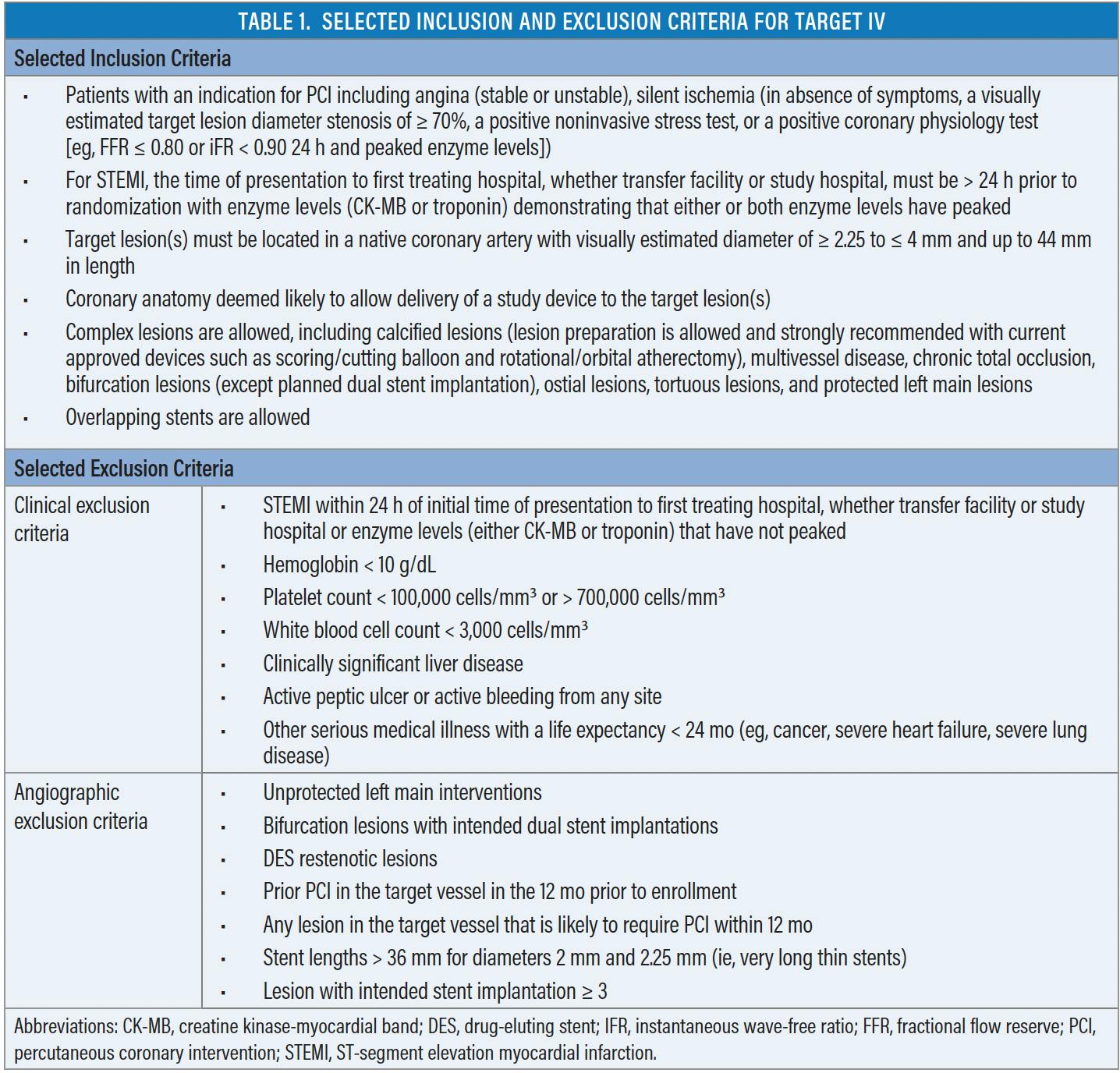
The TARGET IV North American trial is a prospective, multicenter, single-blind, 1:1 randomized, noninferiority trial comparing Firehawk (treatment) with commercially approved second-generation DES (control) (Figure 1). The trial was designed to enroll up to approximately 1,720 patients with clinical indications for PCI. The estimated primary completion date is 2024, and the study completion date is 2027. Key enrollment criteria are detailed in Table 1. Patients were enrolled from January 2019 to November 2021. Treatment allocation was stratified by centers and presence of diabetes mellitus and acute coronary syndrome versus non–acute coronary syndrome indication. The trial completed enrollment and is now in the follow-up phase. The trial was designed to support a United States premarket application.
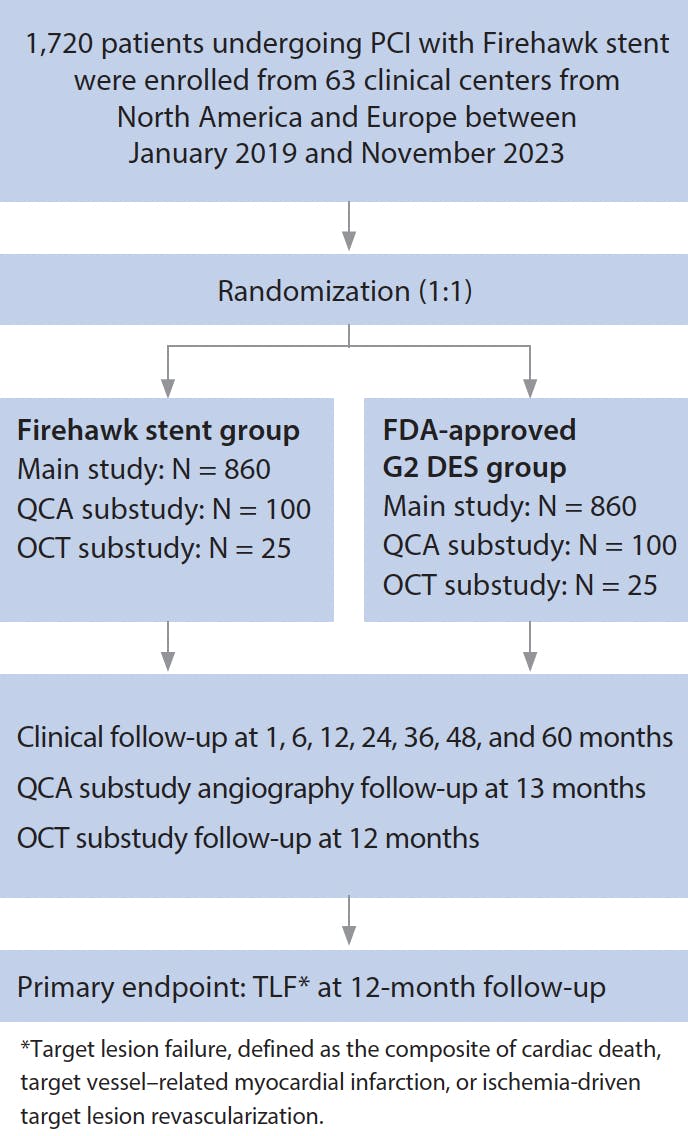
Figure 1. Enrollment, randomization, and clinical follow-up parameters for the TARGET IV trial. OCT, optical coherence tomography; QCA, quantitative coronary angiography.
Two substudies will be employed, with the first consecutive 200 patients (approximately) enrolled in the angiographic quantitative coronary angiography study and the first consecutive 50 patients (approximately) enrolled in the optical coherence tomography study.
The primary endpoint of the main study will gauge TLF at 12 months, with secondary endpoints measured at 30 days, 6 months, and annually up to and including 5 years to evaluate TLF, target vessel failure, and major adverse cardiac events, among other metrics. Performance measures will further investigate the device, lesion, and procedure success as well.
POTENTIAL IMPACT FOR PATIENTS AND ON PRACTICE
The first three TARGET trials of the Firehawk stent have shown promising results in patient populations in China, which has led to an increased use of the Firehawk stent as well as positive outcomes for these patients in > 40 countries across the European Union, Korea, India, Latin America, Saudi Arabia, and more.
Results from the TARGET IV North American trial is intended to be used to support FDA approval for the use of Firehawk in the United States. No Chinese-manufactured stents are currently available in the North America. Current rates of subsequent early stent thrombosis occur at an expected rate of approximately 1%, and late stent thrombosis occurs at 0.4% to 0.6% annually up to 4 years. Despite these low rates, stent thrombosis is associated with a mortality ranging from 5% to 45% after stent implantation, and it remains a clinical concern.5,13,38 Although the TARGET IV trial is not powered to demonstrate superiority over existing alternatives, any stent that can potentially promote more rapid healing and demonstrate reduced rates of stent thrombosis or require shorter durations of DAPT would be a welcome addition to the current clinical landscape.
1. Nicolas J, Pivato CA, Chiarito M, et al. Evolution of drug-eluting coronary stents: a back-and-forth journey from the bench to bedside. Cardiovasc Res. 2023;119:631-646. doi: 10.1093/cvr/cvac105
2. Partida RA, Yeh RW. Contemporary drug-eluting stent platforms: design, safety, and clinical efficacy. Cardiol Clin. 2017;35:281-296. doi: 10.1016/j.ccl.2016.12.010
3. Lee DH, Torre Hernandez JMDL. The newest generation of drug-eluting stents and beyond. Eur Cardiol Rev. 2018;13:54. doi: 10.15420/ecr.2018:8:2
4. Koźlik M, Harpula J, Chuchra PJ, et al. Drug-eluting stents: technical and clinical progress. Biomim Basel Switz. 2023;8:72. doi: 10.3390/biomimetics8010072
5. Lotfi A, Reejhsinghani R. Prevention of stent thrombosis: challenges and solutions. Vasc Health Risk Manag. 2015;11:93-106. doi: 10.2147/VHRM.S43357
6. Condello F, Spaccarotella C, Sorrentino S, et al. Stent thrombosis and restenosis with contemporary drug-eluting stents: predictors and current evidence. J Clin Med. 2023;12:1238. doi: 10.3390/jcm12031238
7. Hassan S, Ali MN, Ghafoor B. Evolutionary perspective of drug eluting stents: from thick polymer to polymer free approach. J Cardiothorac Surg. 2022;17:65. doi: 10.1186/s13019-022-01812-y
8. Pinchuk L, Wilson GJ, Barry JJ, et al. Medical applications of poly(styrene-block-isobutylene-block-styrene) (“SIBS”). Biomaterials. 2008;29:448-460. doi: 10.1016/j.biomaterials.2007.09.041
9. McFadden EP, Stabile E, Regar E, et al. Late thrombosis in drug-eluting coronary stents after discontinuation of antiplatelet therapy. Lancet Lond Engl. 2004;364:1519-1521. doi: 10.1016/S0140-6736(04)17275-9
10. Grines CL, Bonow RO, Casey DE, et al. Prevention of premature discontinuation of dual antiplatelet therapy in patients with coronary artery stents: a science advisory from the American Heart Association, American College of Cardiology, Society for Cardiovascular Angiography and Interventions, American College of Surgeons, and American Dental Association, with representation from the American College of Physicians. J Am Coll Cardiol. 2007;49:734-739. doi: 10.1016/j.jacc.2007.01.003
11. Eisenstein EL, Anstrom KJ, Kong DF, et al. Clopidogrel use and long-term clinical outcomes after drug-eluting stent implantation. JAMA. 2007;297:159-168. doi: 10.1001/jama.297.2.joc60179
12. Levine GN, Bates ER, Blankenship JC, et al. 2011 ACCF/AHA/SCAI guideline for percutaneous coronary intervention: a report of the American College of Cardiology Foundation/American Heart Association Task Force on Practice Guidelines and the Society for Cardiovascular Angiography and Interventions. Catheter Cardiovasc Interv. 2013;82:E266-355. doi: 10.1002/ccd.23390
13. Philip F, Agarwal S, Bunte MC, et al. Stent thrombosis with second-generation drug-eluting stents compared with bare-metal stents: network meta-analysis of primary percutaneous coronary intervention trials in ST-segment–elevation myocardial infarction. Circ Cardiovasc Interv. 2014;7:49-61. doi: 10.1161/CIRCINTERVENTIONS.113.000412
14. Changal K, Meenakshisundaram C, Zafarullah FNU, et al. Meta-analysis and critical review of observational studies comparing drug-eluting and bare metal stents for revascularization of large coronary arteries. Cardiovasc Revasc Med Mol Interv. 2021;31:91-92. doi: 10.1016/j.carrev.2020.11.003
15. Katz G, Harchandani B, Shah B. Drug-eluting stents: the past, present, and future. Curr Atheroscler Rep. 2015;17:485. doi: 10.1007/s11883-014-0485-2
16. Mauri L, Kirtane AJ, Windecker S, et al. Rationale and design of the EVOLVE Short DAPT study to assess 3-month dual antiplatelet therapy in subjects at high risk for bleeding undergoing percutaneous coronary intervention. Am Heart J. 2018;205:110-117. doi: 10.1016/j.ahj.2018.08.004
17. Kirtane AJ, Stoler R, Feldman R, et al. Primary results of the EVOLVE Short DAPT study: evaluation of 3-month dual antiplatelet therapy in high bleeding risk patients treated with a bioabsorbable polymer-coated everolimus-eluting stent. Circ Cardiovasc Interv. 2021;14:e010144. doi: 10.1161/CIRCINTERVENTIONS.120.010144
18. Valgimigli M, Cao D, Angiolillo DJ, et al. Duration of dual antiplatelet therapy for patients at high bleeding risk undergoing PCI. J Am Coll Cardiol. 2021;78:2060-2072. doi: 10.1016/j.jacc.2021.08.074
19. Price MJ. Abbreviated dual antiplatelet therapy after percutaneous coronary intervention in high bleeding risk patients: LEADERS-FREE and ONYX ONE. Interv Cardiol Clin. 2020;9:441-449. doi: 10.1016/j.iccl.2020.06.002
20. Urban P, Mehran R, Colleran R, et al. Defining high bleeding risk in patients undergoing percutaneous coronary intervention. Circulation. 2019;140:240-261. doi: 10.1161/CIRCULATIONAHA.119.040167
21. Qian J, Xu B, Lansky AJ, et al. First report of a novel abluminal groove filled biodegradable polymer rapamycin-eluting stent in de novo coronary artery disease: results of the first in man FIREHAWK trial. Chin Med J (Engl). 2012;125:970-976.
22. He Y, Wang R, Liu J, et al. A randomized comparison of the healing response between the Firehawk stent and the Xience stent in patients with ST-segment elevation myocardial infarction at 6 months of follow-up (TARGET STEMI OCT China trial): an optical coherence tomography study. Front Cardiovasc Med. 2022;9. doi: 10.3389/fcvm.2022.895167
23. Seo KW, Yang HM, Lim HS, Yoon MH. Stent dislodgement force of drug-eluting coronary stents: a bench test. Cardiovasc Diagn Ther. 2022;12:370-377. doi: 10.21037/cdt-22-49
24. Xu B, Saito Y, Baumbach A, et al. 2-year clinical outcomes of an abluminal groove-filled biodegradable-polymer sirolimus-eluting stent compared with a durable-polymer everolimus-eluting stent. JACC Cardiovasc Interv. 2019;12:1679-1687. doi: 10.1016/j.jcin.2019.05.001
25. Saito Y, Baumbach A, Wijns W, et al. Clinical outcomes of complex lesions treated with an abluminal groove-filled biodegradable polymer sirolimus-eluting stent and durable polymer everolimus-eluting stent. Catheter Cardiovasc Interv. 2020;96:1023-1028. doi: 10.1002/ccd.28609
26. Baumbach A, Lansky AJ, Onuma Y, et al. Optical coherence tomography substudy of a prospective multicentre randomised post-market trial to assess the safety and effectiveness of the Firehawk cobalt-chromium coronary stent (rapamycin target-eluting) system for the treatment of atherosclerotic lesions: TARGET All Comers. EuroIntervention. 2018;14:1121-1128. doi: 10.4244/EIJ-D-18-00226
27. Xu B, Gao RL, Zhang RY, et al. Efficacy and safety of FIREHAWK® abluminal groove filled biodegradable polymer sirolimus-eluting stents for the treatment of long coronary lesions: nine-month angiographic and one-year clinical results from TARGET I trial long cohort. Chin Med J (Engl). 2013;126:1026-1032.
28. Lansky A, Wijns W, Xu B, et al. Targeted therapy with a localised abluminal groove, low-dose sirolimus-eluting, biodegradable polymer coronary stent (TARGET All Comers): a multicentre, open-label, randomised non-inferiority trial. Lancet. 2018;392:1117-1126. doi: 10.1016/S0140-6736(18)31649-0
29. Saito Y, Wijns W, Baumbach A, et al. Differential impact of abluminal groove-filled biodegradable-polymer sirolimus-eluting stent versus durable-polymer everolimus-eluting stent on and off dual antiplatelet therapy. Catheter Cardiovasc Interv. 2022;99:357-365. doi: 10.1002/ccd.29468
30. Xu B, Zhao Y, Yang Y, et al. Safety and efficacy of a novel abluminal groove-filled biodegradable polymer sirolimus-eluting stent for the treatment of de novo coronary lesions: 12-month results from the TARGET II trial. Chin Med J (Engl). 2014;127:1027-1032.
31. Gao Z, Zhang R, Xu B, et al. Safety and efficacy of a novel abluminal groove-filled biodegradable polymer sirolimus-eluting stent for the treatment of de novo coronary lesions: two-year results from a prospective patient-level pooled analysis of TARGET trials. Catheter Cardiovasc Interv. 2015;85(suppl 1):734-743. doi: 10.1002/ccd.25861
32. Li C, Guan C, Zhang R, et al. Safety and efficacy of a novel abluminal groove-filled biodegradable polymer sirolimus-eluting stent for the treatment of de novo coronary lesions: Final five-year results of the patient-level pooled analysis from the TARGET I and TARGET II trials. Catheter Cardiovasc Interv. 2019;93(S1):818-824. doi: 10.1002/ccd.28051
33. Yang H, Zhang F, Yang J, et al. Prospective multicentre open-label randomised controlled trial of 3-month versus 12-month dual antiplatelet therapy after implantation of the new generation biodegradable polymer sirolimus TARGET-eluting coronary stent: protocol of the TARGET DAPT trial. BMJ Open. 2019;9. doi: 10.1136/bmjopen-2019-033774
34. Gao RL, Xu B, Lansky AJ, et al. A randomised comparison of a novel abluminal groove-filled biodegradable polymer sirolimus-eluting stent with a durable polymer everolimus-eluting stent: clinical and angiographic follow-up of the TARGET I trial. EuroIntervention. 2013;9:75-83. doi: 10.4244/EIJV9I1A12
35. Baumbach A, Lansky AJ, Onuma Y, et al. Optical coherence tomography substudy of a prospective multicentre randomised post-market trial to assess the safety and effectiveness of the Firehawk cobalt-chromium coronary stent (rapamycin target-eluting) system for the treatment of atherosclerotic lesions: TARGET all comers. EuroIntervention. 2018;14:1121-1128. doi: 10.4244/EIJ-D-18-00226
36. Saito Y, Kelbæk H, Xu B, et al. Abluminal groove-filled biodegradable polymer sirolimus-eluting stent versus durable polymer everolimus-eluting stent: three-year results of the TARGET All Comers trial. EuroIntervention. 2021;17:e332-e334. doi: 10.4244/EIJ-D-20-00344
37. Saito Y, Wijns W, Baumbach A, et al. Differential impact of abluminal groove‐filled biodegradable‐polymer sirolimus‐eluting stent versus durable‐polymer everolimus‐eluting stent on and off dual antiplatelet therapy. Catheter Cardiovasc Interv. 2022;99:357-365. doi: 10.1002/ccd.29468
38. Ullrich H, Münzel T, Gori T. Coronary stent thrombosis- predictors and prevention. Dtsch Arzteblatt Int. 2020;117:320-326. doi: 10.3238/arztebl.2020.0320
Advertisement
Advertisement