Advertisement
Advertisement
May/June 2023
Systems of Care Approach to the Management of Cardiogenic Shock
Recent studies have demonstrated the merits of protocoled team-based care with regionalized shock networks in improving outcomes in cardiogenic shock.
By Raghav Gattani, MD; Carolyn M. Rosner, NP, MBA; and Behnam N. Tehrani, MD
Cardiogenic shock (CS) is a multiorgan system syndrome that encompasses a broad spectrum of hemodynamic and metabolic derangements.1,2 Notwithstanding advances in early revascularization strategies and the development of rapidly deployable transcatheter hemodynamic assist devices, outcomes associated with CS remain poor, with short-term mortality rates in excess of 40%.3 The incidence of CS is also on the rise. A contemporary analysis of 1,254,358 CS admissions from the United States National Inpatient Sample from 2004 to 2018 observed a greater than threefold increase in the number of hospitalizations associated with this time-sensitive condition.4 It is also recognized that CS is multifactorial, with data from dedicated shock and critical care registries demonstrating that acutely decompensated heart failure (HF), an umbrella diagnosis consisting of myriad conditions affecting myocardial contractility, is now the predominant CS etiology.1,5,6 Traditionally an understudied population, patients with HF-CS represent a distinct phenotype, as they are not only more likely to present with deranged index congestive profiles and biventricular dysfunction but also have vastly different clinical trajectories compared to patients with acute myocardial infarction (AMI). They also have enhanced risk for in-hospital mortality and associated comorbid events, including cardiac arrest and escalation to mechanical circulatory support (MCS).7 Given the challenges inherent to enrolling these patients in clinical trials, only approximately 2,000 patients to date have been randomized into CS trials.8 Therefore, in the absence of adequately powered randomized controlled trials and clinical guidelines to inform management, there remain significant practice pattern variations and disparities in clinical care.9 Given the knowledge gaps that endure regarding optimal treatment strategies for CS, there is increasing interest in the implementation of a systems of care approach to CS, with integrated and regionalized shock networks composed of collaborating medical centers using team-based protocols to facilitate early disease recognition, hemodynamically tailored therapeutic interventions, and, ultimately, disposition to high-volume level 1 CS institutions with dedicated multidisciplinary cardiac intensive care units (CICUs).10-12
SHOCK PATHOPHYSIOLOGY
The “downward spiral,” a term first coined by Hollenberg in 1999, defines the complex series of physiologic changes in CS that quickly ensue as a result of diminished cardiac output after AMI.13 Although we know that the initial myocardial insult may stem from a variety of etiologies in addition to acute coronary thrombosis, the central premise is uniform: self-perpetuating and maladaptive cycles of ischemia, inflammation, vasoconstriction, and volume overload, culminating in increased ventricular diastolic pressures, systemic hypoperfusion, refractory arrhythmias, metabolic acidosis, and death.2 Progression to CS in the AMI patient cohort is predicated by load, a powerful and independent predictor of reperfusion arrhythmias, left ventricular (LV) infarct size, and mortality.14,15 With > 4 decades of preclinical research efforts aimed at identifying treatment strategies to unload the LV, recent multicenter registries such as the National Cardiogenic Shock Initiative (NCSI) have identified empiric LV unloading using percutaneous transvalvular microaxial flow pumps prior to revascularization as a potential strategy to reduce the incidence of postinfarction HF and mortality in select patients with acute coronary syndrome complicated by CS.16,17 NCSI investigators demonstrated the efficacy of this approach when applied using team-based protocols, with longitudinal improvements in lactate clearance, cardiac power, shock severity, and, ultimately, survival to discharge.17,18 This concept is currently under investigation in the DanGer CS Trial (NCT01633502), the first adequately powered, multicenter, randomized controlled trial to assess this strategy.19 The results are due later this year, and it is expected that the findings will inform treatment strategies around the merits of upstream percutaneous MCS in patients with AMI-CS.
DEFINITIONS AND PHENOTYPING OF CS
The definition of CS has evolved since the original Killip classification in 1967, which relied primarily on physical examination findings to assess congestion.20 The landmark SHOCK trial published 3 decades later further expounded on these findings by highlighting the utility of pulmonary capillary wedge pressures to assess congestion and the role of biomarkers to adjudicate severity of end-organ hypoperfusion.21 While binary and prognostically significant, these models did not account for the varying severities of the shock state and its associated morbidities. They also did not provide guidance around management strategies tailored to the individual hemodynamic phenoprofile. To address these limitations, in 2019, a multidisciplinary working group of thought leaders at the Society for Cardiovascular Angiography and Interventions proposed a 5-stage classification system (A-E) spanning the full spectrum of CS, from patients “at risk” to those in frank circulatory collapse and requiring full mechanical hemodynamic support.22 This A to E staging system has undergone retrospective and prospective validation across all clinical subgroups.23,24 It underwent further iterative refinements in 2022, with greater precision around high-risk patient subsets, such as those with CS who may initially present with transient cardiac arrest and are quickly resuscitated versus those who sustained a prolonged cardiopulmonary insult and are at risk for neurologic compromise.25 It also provided further granularity around clinical tools to better understand the clinical trajectory of CS—an important concept when contemplating potential escalation strategies in patients refractory to therapy.25 The development of this lingua franca has been a milestone achievement in CS care, and it is hoped that by improving patient identification and treatment across the entire severity spectrum of the disease, current and future multicenter registries and pragmatic clinical trials may be better suited to evaluate novel medical and device-based therapies in this disease space.11,26
TEAM-BASED CARE FOR CS: A NEW WAY FORWARD
Team-based interventions for high-acuity and critical illnesses have been shown to improve outcomes across multiple medical and surgical disciplines.27,28 The development of integrated trauma teams, for example, was one of the initial paradigms for the application of multidisciplinary decision-making for patients with life-threatening injuries.29 With the development of designated trauma centers equipped with expertise spanning from emergency medicine to the operating room, it has been demonstrated that in-hospital mortality in patients with traumatic illness can be reduced by up to 10%.30 Similar findings have been noted in institutions implementing rapid-response teams to streamline the care of patients afflicted with time-sensitive conditions, such as cardiopulmonary failure, stroke, and sepsis.31-33 The team-based approach to care is not a novel one to the discipline of cardiology; many centers employ multidisciplinary heart teams in the management of patients undergoing evaluation for complex therapies, such as structural heart intervention and high-risk coronary revascularization.34,35 Similar models have been applied to the care of cardiac arrest, with contemporary registry data demonstrating an up to threefold increase in survival to discharge in these patients when triaged at institutions capable of providing full resuscitation and postarrest care.36 These findings have translated into the most recent American Heart Association (AHA) class IIa guideline recommendation to centralize the management of patients with out-of-hospital cardiac arrest at regionalized centers with multidisciplinary teams.37
Given the paucity of randomized clinical trial data to guide the management of patients with CS, there has been a growing interest in the development of multidisciplinary shock teams to address the current gaps in clinical care. The initial experience with a team-based approach to CS care was first reported at Mayo Clinic in Arizona and subsequently in Paris.38,39 These studies demonstrated the feasibility of deploying mobile teams consisting of a cardiothoracic surgeon, perfusionists, and critical care nurses from tertiary care medical centers to community hospitals to stabilize patients with refractory circulatory collapse through cannulation with venoarterial extracorporeal membrane oxygenation followed by transfer back to the regional destination center.38,39 The authors reported survival-to-discharge rates among patients stable for transport of up to 56%.39 Given these findings and recognizing an increasingly aging and complex patient population, a call to action was subsequently made in 2015 to standardize the care of patients with CS.40 The authors advocated for a multidisciplinary approach to CS to not only facilitate more timely disease recognition but also enhance survival through the dissemination of algorithms and early/selective use of medical and device-based therapies and an expanding armamentarium of catheter-based therapies.40
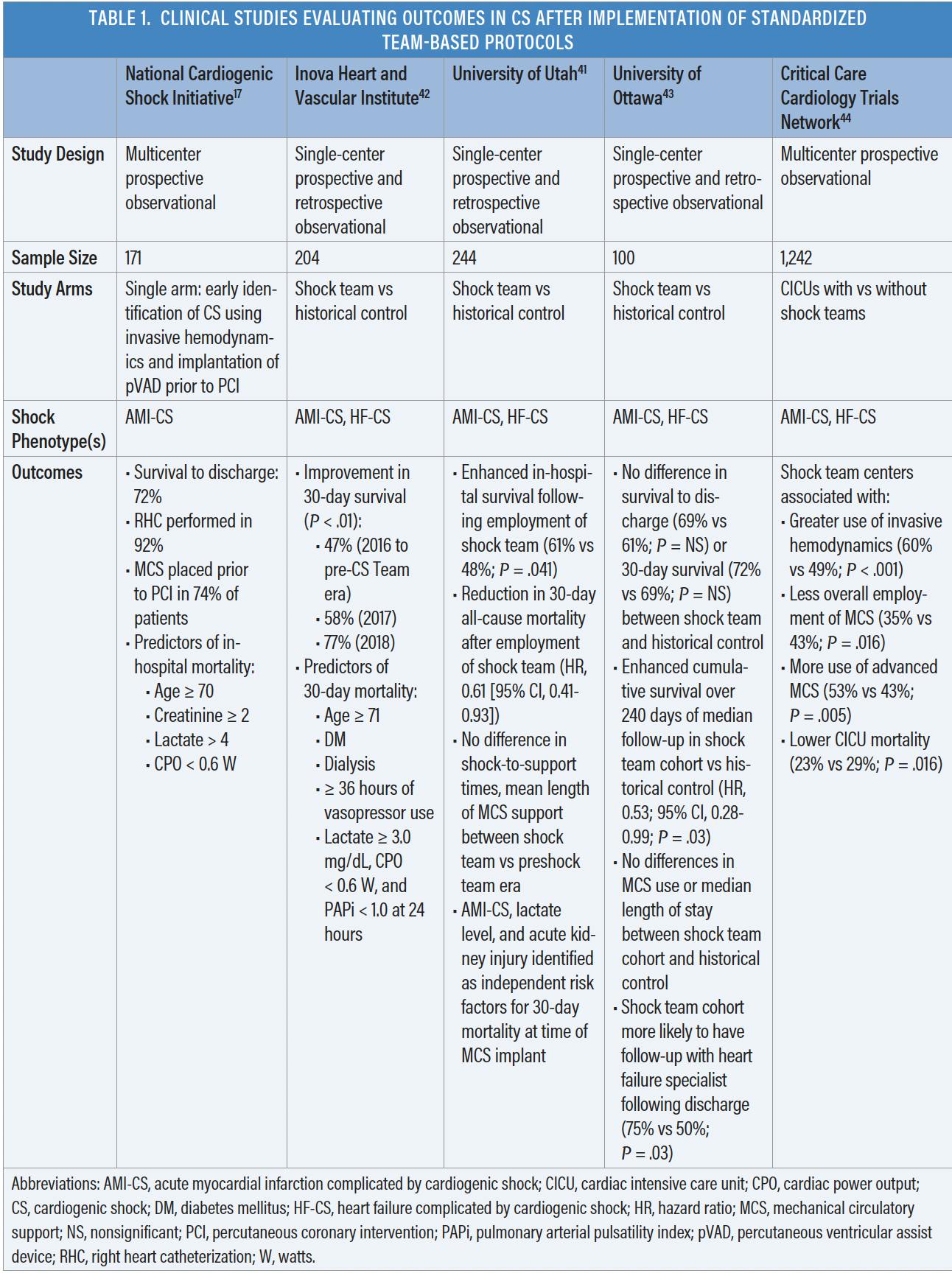
Several dedicated CS studies have since been published that support an algorithmic and team-based approach to disease management, with improved short-term outcomes across the severity spectrum and myriad phenotypes of shock compared to historical controls (Table 1).17,41-44 The shock teams at these sites have generally comprised physicians and advanced practice providers in the specialties most clinically involved in the longitudinal care of these patients: interventional cardiology, advanced HF, cardiovascular critical care, and cardiothoracic surgery. Researchers at the Inova Heart and Vascular Institute implemented a one-call shock line to gather the physicians of their local shock team when a patient is suspected to be in CS.42 Using hemodynamically driven protocols and established best practices around vascular access and critical care management, the Inova team demonstrated a significant improvement in 30-day survival (77% in 2018 vs 47% in 2016; P < .001) compared to the historical cohort 2 years prior.42,45 Using logistic regression analysis, they also developed a validated and longitudinal score to stratify risk based on demographic, hemodynamic, and metabolic variables.42 Similar findings were noted from the Utah Cardiac Recovery Shock Team and subsequently the University of Ottawa, with investigators in the latter study using a smartphone-based application for their Code Shock activation, with follow-on conferencing using a virtual platform.41,43 A contemporary analysis of 1,242 CS admissions from the Critical Care Cardiology Trials Network (an investigator-initiated multicenter research collaborative of AHA level 1 CICUs) correspondingly showed improved outcomes in sites employing dedicated shock teams, with reductions in CICU mortality (23% vs 29%; adjusted odds ratio, 0.72; 95% CI, 0.55-0.94; P = .016) and greater use of pulmonary arterial catheters (PACs) and more advanced MCS devices.44 With emerging data highlighting the merits of comprehensive invasive hemodynamic assessment in shock management, there are increasing calls to incorporate PAC monitoring into the routine care of patients with CS, especially those with MCS devices.46-48 PACCS (NCT05485376), the first randomized clinical trial to assess the utility of early PAC use in the management of patients with HF-CS, is currently enrolling patients and will hopefully shed light on the merits of PAC use in this critically ill population. Based on the recent experiences outlined in North American CS registries, the 2022 AHA/American College of Cardiology/Heart Failure Society of America HF guidelines provide a class IIa recommendation for the employment of multidisciplinary shock teams in the evaluation and management of patients with CS.49
EXPANDING FROM SHOCK TEAMS TO SHOCK NETWORKS: THE HUB AND SPOKE MODEL
To date, there remain significant regional disparities in the management of CS within and across hospital systems nationwide.11 There is also a volumes-to-outcome relationship with this disease, in which centers with dedicated expertise that are equipped with contemporary resources are more likely to have lower mortality rates.50 A 2017 AHA scientific statement endorsed a systems of care approach to CS through interhospital collaboration, integration of standardized protocols, and centralized care at high-volume regional destination centers.51 Rab et al proposed a tiered nomenclature system to categorize the level of CS care based on the level of interventional, surgical, MCS, and critical care capabilities at each center.52 In this system, level 1 or “hub” institutions are tertiary or quaternary care centers with 24/7 primary percutaneous coronary intervention (PCI), surgical, and advanced MCS capability.52 These centers also have “high-intensity” CICUs, oftentimes comanaged by cardiologists and intensivists, and they provide advanced cardiac replacement therapies, such as durable ventricular assist devices and orthotopic heart transplantation.11,52 Termed “spoke” institutions, level 2 and 3 CS centers have more limited resources. Level 2 sites are often able to provide primary PCI and intra-aortic balloon pump therapy but not advanced MCS, whereas level 3 centers may typically have emergency departments, medical intensive care units, and advanced cardiovascular life support expertise.52
Building on established and successful regionalized systems of care models for other high-acuity and time-sensitive conditions, patients with refractory CS initially triaged at level 2 or 3 shock centers should ideally undergo early stabilization using local resources and, through early disease recognition and collaboration with emergency medical services and the shock team at the regional hub, should be transferred expeditiously to the level 1 CICU for ongoing longitudinal and multiorgan system care (Figure 1).30,53
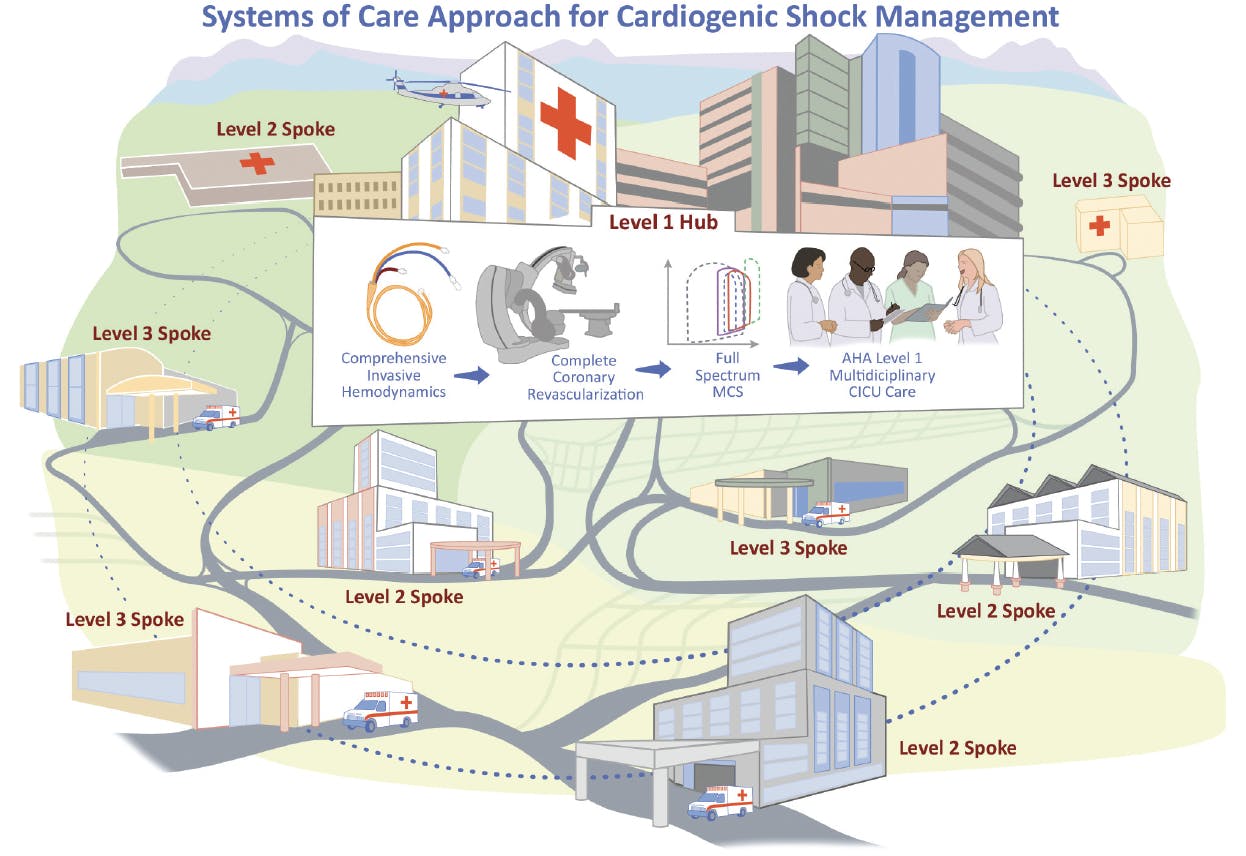
Figure 1. Systems of care approach for CS management. A contemporary “hub and spoke” model for CS care predicated on: (1) timely diagnosis and comprehensive invasive hemodynamic assessment; (2) complete coronary revascularization; (3) early, selective, and tailored MCS; and (4) expedited transfer to the level 1 CS center for team-based and comprehensive multiorgan system care.
Clinicians at the Inova Heart and Vascular Institute were among the first in the nation to implement an integrated, regionalized CS network through collaboration with 34 partnering spoke centers spanning a geographic area of 5,960 miles. Using their one-call shock line with standardized treatment algorithms, multidisciplinary collaboration, and expedited transfer protocols, they demonstrated that patients treated for CS in a comprehensive shock network had similar short-term outcomes, irrespective of whether they initially presented to a hub or spoke site.11 The 2022 AHA HF guidelines also provide a class II recommendation for the early triage of patients with CS who are refractory to initial stabilizing measures to level 1 centers with advanced MCS and critical care expertise.49
CONCLUSION
CS continues to pose a major challenge to clinicians and health care systems globally. Notwithstanding enduring gaps in our mechanistic and clinical knowledge of CS, there are preliminary data emanating from high-quality observational CS registries that highlight the merits of a protocoled and multidisciplinary approach to shock management. Coupled with the integration of regionalized shock networks, this emerging care model holds promise in informing the design and execution of future multicenter registries and clinical trials studying treatment strategies for a syndrome that has been plagued with > 2 decades of poor outcomes.
1. Sinha SS, Rosner CM, Tehrani BN, et al. Cardiogenic shock from heart failure versus acute myocardial infarction: clinical characteristics, hospital course, and 1-year outcomes. Circ Heart Fail. 2022;15:e009279. doi: 10.1161/CIRCHEARTFAILURE.121.009279
2. Tehrani BN, Truesdell AG, Psotka MA, et al. A standardized and comprehensive approach to the management of cardiogenic shock. JACC Heart Fail. 2020;8:879-891. doi: 10.1016/j.jchf.2020.09.005
3. Thiele H, de Waha-Thiele S, Freund A, et al. Management of cardiogenic shock. EuroIntervention. 2021;17:451-465. doi: 10.4244/EIJ-D-20-01296
4. Osman M, Syed M, Patibandla S, et al. Fifteen-year trends in incidence of cardiogenic shock hospitalization and in-hospital mortality in the United States. J Am Heart Assoc. 2021;10:e021061. doi: 10.1161/JAHA.121.021061
5. Abraham J, Blumer V, Burkhoff D, et al. Heart failure-related cardiogenic shock: pathophysiology, evaluation and management considerations: review of heart failure-related cardiogenic shock. J Card Fail. 2021;27:1126-1140. doi: 10.1016/j.cardfail.2021.08.010
6. Berg DD, Bohula EA, van Diepen S, et al. Epidemiology of shock in contemporary cardiac intensive care units. Circ Cardiovasc Qual Outcomes. 2019;12:e005618. doi: 10.1161/CIRCOUTCOMES.119.005618
7. Hernandez-Montfort J, Kanwar M, Sinha SS, et al. Clinical presentation and in-hospital trajectory of heart failure and cardiogenic shock. JACC Heart Fail. 2023;11:176-187. doi: 10.1016/j.jchf.2022.10.002
8. Thiele H, Ohman EM, de Waha-Thiele S, et al. Management of cardiogenic shock complicating myocardial infarction: an update 2019. Eur Heart J. 2019;40:2671-2683. doi: 10.1093/eurheartj/ehz363
9. Lu DY, Adelsheimer A, Chan K, et al. Impact of hospital transfer to hubs on outcomes of cardiogenic shock in the real world. Eur J Heart Fail. 2021;23:1927-1937. doi: 10.1002/ejhf.2263
10. Chioncel O, Metra M. Cardiogenic shock centres for optimal care coordination and improving outcomes in cardiogenic shock. Eur J Heart Fail. 2021;23:1938-1941. doi: 10.1002/ejhf.2320
11. Tehrani BN, Sherwood MW, Rosner C, et al. A standardized and regionalized network of care for cardiogenic shock. JACC Heart Fail. 2022;10:768-781. doi: 10.1016/j.jchf.2022.04.004
12. van Diepen S, Katz JN, Albert NM, et al. Contemporary management of cardiogenic shock: a scientific statement from the American Heart Association. Circulation. 2017;136:e232-e268. doi: 10.1161/CIR.0000000000000525
13. Hollenberg SM, Kavinsky CJ, Parrillo JE. Cardiogenic shock. Ann Intern Med 1999;131:47-59. doi: 10.7326/0003-4819-131-1-199907060-00010
14. Leistner DM, Dietrich S, Erbay, A et al. Association of left ventricular end-diastolic pressure with mortality in patients undergoing percutaneous coronary intervention for acute coronary syndromes. Catheter Cardiovasc Interv. 2020;96:E439-e446. doi: 10.1002/ccd.28839
15. Kapur NK, O’Neill WW. Left ventricular end-diastolic pressure in acute myocardial infarction: a loaded target in need of unloading. Catheter Cardiovasc Interv. 2019;93:910-911. doi: 10.1002/ccd.28204
16. Tehrani BN, Basir MB, Kapur NK. Acute myocardial infarction and cardiogenic shock: should we unload the ventricle before percutaneous coronary intervention? Prog Cardiovasc Dis. 2020;63:607-622. doi: 10.1016/j.pcad.2020.09.001
17. Basir MB, Kapur NK, Patel K, et al. Improved outcomes associated with the use of shock protocols: updates from the National Cardiogenic Shock Initiative. Catheter Cardiovasc Interv. 2019;93:1173-1183. doi: 10.1002/ccd.28307
18. Hanson ID, Tagami T, Mando R, et al. SCAI shock classification in acute myocardial infarction: insights from the National Cardiogenic Shock Initiative. Catheter Cardiovasc Interv 2020;96:1137-1142. doi: 10.1002/ccd.29139
19. Udesen NJ, Møller JE, Lindholm MG, et al. Rationale and design of DanGer shock: Danish-German cardiogenic shock trial. Am Heart J. 2019;214:60-68. doi: 10.1016/j.ahj.2019.04.019
20. Killip T 3rd, Kimball JT. Treatment of myocardial infarction in a coronary care unit. A two year experience with 250 patients. Am J Cardiol. 1967;20:457-64. doi: 10.1016/0002-9149(67)90023-9
21. Hochman JS, Sleeper LA, Webb JG, et al. Early revascularization in acute myocardial infarction complicated by cardiogenic shock. N Engl J Med. 1999;341:625-634. doi: 10.1056/NEJM199908263410901
22. Baran DA, Grines CL, Bailey S, et al. SCAI clinical expert consensus statement on the classification of cardiogenic shock: This document was endorsed by the American College of Cardiology (ACC), the American Heart Association (AHA), the Society of Critical Care Medicine (SCCM), and the Society of Thoracic Surgeons (STS) in April 2019. Catheter Cardiovasc Interv. 2019;94:29-37. doi: 10.1002/ccd.28329
23. Jentzer JC, van Diepen S, Barsness GW, et al. Cardiogenic shock classification to predict mortality in the cardiac intensive care unit. J Am Coll Cardiol. 2019;74:2117-2128. doi: 10.1016/j.jacc.2019.07.077
24. Baran DA, Long A, Badiye AP, Stelling K. Prospective validation of the SCAI shock classification: single center analysis. Catheter Cardiovasc Interv. 2020;96:1339-1347. doi: 10.1002/ccd.29319
25. Naidu SS, Baran DA, Jentzer JC, et al. SCAI SHOCK Stage Classification Expert Consensus Update: a review and incorporation of validation studies. J Am Coll Cardiol. 2022;79:933-946. doi: 10.1016/j.jacc.2022.01.018
26. Kapur NK, Kanwar M, Sinha SS, et al. Criteria for defining stages of cardiogenic shock severity. J Am Coll Cardiol. 2022;80:185-198. doi: 10.1016/j.jacc.2022.04.049
27. Ganesh A, Lindsay P, Fang J, et al. Integrated systems of stroke care and reduction in 30-day mortality: a retrospective analysis. Neurology. 2016;86:898-904. doi: 10.1212/WNL.0000000000002443
28. Wright C, Goldenberg I, Schleede S, et al. Effect of a multidisciplinary pulmonary embolism response team on patient mortality. Am J Cardiol. 2021;161:102-107. doi: 10.1016/j.amjcard.2021.08.066
29. Celso B, Tepas J, Langland-Orban B, et al. A systematic review and meta-analysis comparing outcome of severely injured patients treated in trauma centers following the establishment of trauma systems. J Trauma. 2006;60:371-8; discussion 378. doi: 10.1097/01.ta.0000197916.99629.eb
30. Gerardo CJ, Glickman SW, Vaslef SN, et al. The rapid impact on mortality rates of a dedicated care team including trauma and emergency physicians at an academic medical center. J Emerg Med. 2011;40:586-591. doi: 10.1016/j.jemermed.2009.08.056
31. Maharaj R, Raffaele I, Wendon J. Rapid response systems: a systematic review and meta-analysis. Critical Care. 2015;19:254. doi: 10.1186/s13054-015-0973-y
32. Morey JR, Oxley TJ, Wei D, et al. Mobile interventional stroke team model improves early outcomes in large vessel occlusion stroke. Stroke. 2020;51:3495-3503. doi: 10.1161/STROKEAHA.120.030248
33. Ju T, Al-Mashat M, Rivas L, Sarani B. Sepsis rapid response teams. Crit Care Clin. 2018;34:253-258. doi: 10.1016/j.ccc.2017.12.004
34. Sanchez CE, Badhwar V, Dota A, et al. Practical implementation of the coronary revascularization heart team. Circ Cardiovasc Qual Outcomes. 2013;6:598-603. doi: 10.1161/CIRCOUTCOMES.113.000269
35. Batchelor WB, Anwaruddin S, Wang DD, et al. The multidisciplinary heart team in cardiovascular medicine: current role and future challenges. JACC: Advances. 2023;2. doi: 10.1016/j.jacadv.2022.100160
36. Kragholm K, Hansen CM, Dupre ME, et al. Direct transport to a percutaneous cardiac intervention center and outcomes in patients with out-of-hospital cardiac arrest. Circ Cardiovasc Qual Outcomes. 2017;10:e003414. doi: 10.1161/CIRCOUTCOMES.117.004381
37. Panchal AR, Berg KM, Cabañas JG, et al. 2019 American Heart Association focused update on systems of care: dispatcher-assisted cardiopulmonary resuscitation and cardiac arrest centers: an update to the American Heart Association guidelines for cardiopulmonary resuscitation and emergency cardiovascular care. Circulation 2019;140:e895-e903. doi: 10.1161/CIR.0000000000000733
38. Beurtheret S, Mordant P, Paoletti X, et al. Emergency circulatory support in refractory cardiogenic shock patients in remote institutions: a pilot study (the cardiac-RESCUE program). Eur Heart J. 2013;34:112-120. doi: 10.1093/eurheartj/ehs081
39. Jaroszewski DE, Kleisli T, Staley L, et al. A traveling team concept to expedite the transfer and management of unstable patients in cardiopulmonary shock. J Heart Lung Transplant. 2011;30:618-623. doi: 10.1016/j.healun.2010.11.018
40. Doll JA, Ohman EM, Patel MR, et al. A team-based approach to patients in cardiogenic shock. Catheter Cardiovasc Interv. 2016;88:424-433. doi: 10.1002/ccd.26297
41. Taleb I, Koliopoulou AG, Tandar A, et al. Shock team approach in refractory cardiogenic shock requiring short-term mechanical circulatory support. Circulation. 2019;140:98-100. doi: 10.1161/CIRCULATIONAHA.119.040654
42. Tehrani BN, Truesdell AG, Sherwood MW, et al. Standardized team-based care for cardiogenic shock. J Am Coll Cardiol. 2019;73:1659-1669. doi: 10.1016/j.jacc.2018.12.084
43. Lee F, Hutson JH, Boodhwani M. et al. Multidisciplinary code shock team in cardiogenic shock: a Canadian centre experience. CJC Open. 2020;2:249-257. doi: 10.1016/j.cjco.2020.03.009
44. Papolos AI, Kenigsberg BB, Berg DD, et al. Management and outcomes of cardiogenic shock in cardiac ICUs with versus without shock teams. J Am Coll Cardiol. 2021;78:1309-1317. doi: 10.1016/j.jacc.2021.07.044
45. Sandoval Y, Burke MN, Lobo AS, et al. Contemporary arterial access in the cardiac catheterization laboratory. JACC Cardiovasc Interv. 2017;10:2233-2241. doi: 10.1016/j.jcin.2017.08.058
46. Saxena A, Garan AR, Kapur NK, et al. Value of hemodynamic monitoring in patients with cardiogenic shock undergoing mechanical circulatory support. Circulation. 2020;141:1184-1197. doi: 10.1161/CIRCULATIONAHA.119.043080
47. Thayer KL, Zweck E, Ayouty M, et al. Invasive hemodynamic assessment and classification of in-hospital mortality risk among patients with cardiogenic shock. Circ Heart Fail. 2020;13:e007099. doi: 10.1161/CIRCHEARTFAILURE.120.007099
48. Osman M, Syed M, Patel B, et al. Invasive hemodynamic monitoring in cardiogenic shock is associated with lower in‐hospital mortality. J Am Heart Assoc. 2021;10:e021808. doi: 10.1161/JAHA.121.021808
49. Heidenreich PA, Bozkurt B, Aguilar D, et al. 2022 AHA/ACC/HFSA Guideline for the management of heart failure: a report of the American College of Cardiology/American Heart Association Joint Committee on Clinical Practice Guidelines. Circulation. 2022;145:e895-e1032. doi: 10.1161/CIR.0000000000001063
50. Shaefi S, O’Gara B, Kociol RD, et al. Effect of cardiogenic shock hospital volume on mortality in patients with cardiogenic shock. J Am Heart Assoc. 2015;4:e001462. doi: 10.1161/JAHA.114.001462
51. Diepen Sv, Katz JN, Albert NM, et al. Contemporary management of cardiogenic shock: a scientific statement from the American Heart Association. Circulation. 2017;136:e232-e268. doi: 10.1161/CIR.0000000000000525
52. Rab T, Ratanapo S, Kern KB, et al. Cardiac shock care centers: JACC review topic of the week. J Am Coll Cardiol. 2018;72:1972-1980. doi: 10.1016/j.jacc.2018.07.074
53. Jollis JG, Al-Khalidi HR, Roettig ML, et al. Impact of regionalization of ST-segment–elevation myocardial infarction care on treatment times and outcomes for emergency medical services–transported patients presenting to hospitals with percutaneous coronary intervention. Circulation. 2018;137:376-387. doi: 10.1161/CIRCULATIONAHA.117.032446
Advertisement
Advertisement