Advertisement
Advertisement
May/June 2023
Sponsored by Edwards Lifesciences
Optimized Patient Care Pathway
A discussion with Andrei Pop, MD, at TCT 2022 on refining a minimalistic TAVR program.
lnterventional Cardiologists
Andrei Pop, MD, FACC, FSCAI, RPVI
Firas Barrow, MD
Keenan Adib, MD, FACC
Elsayed Mohamed, MD
Valve Clinic Coordinator, Acute Care Nurse Practitioner
Lynn Hickman, MSA, AGACNP-BC
Regional Director of CV Services Lab
Bozena (Bonnie) Kwak, RN
Thoracic Surgeons
William Polito, MD
Keith Bowersox, MD
William Stansfield, MD
Robert Kummerer, MD
Anesthesiologists
Mihail Nikolov, MD
Luke Northern, MD
The transcatheter aortic valve replacement (TAVR) landscape is changing, with expanded indications and a projected increase in volume. TAVR is now positioned to become the standard for aortic stenosis patients older than 65 years, and TAVR programs will need to scale capacity to accommodate more screening and procedures.1 With these opportunities and challenges come a need for optimized procedure planning to expedite the time to treatment for patients who have already been referred to existing TAVR centers.
TAVR treatment delays have been associated with mortality rates of 3.8% and 23.3% at 1 and 6 months respectively (Figure 1),2 and the 2019 United States national average was approximately 7 weeks from intake to treatment.
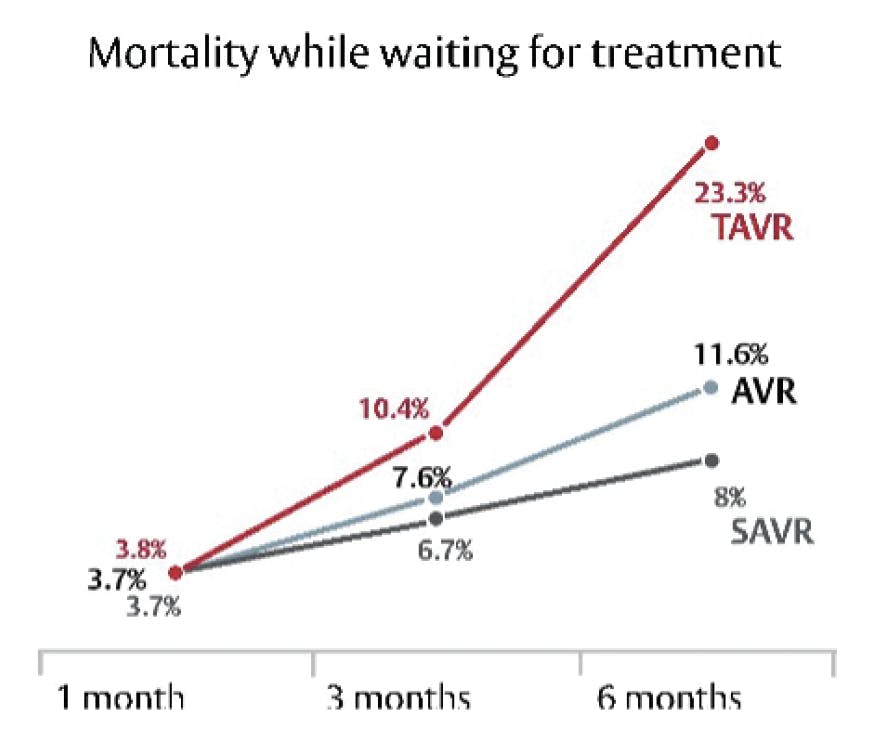
Figure 1. Mortality while waiting for treatment.2
PURPOSE
This article is a discussion recap from TCT 2022 highlighting improvements and refinements to TAVR centers of excellence. It highlights incremental and ongoing improvements, along the entire patient care pathway, implemented by the Ascension Alexian Brothers Medical Center TAVR program since its inception by a TAVR team that collectively reports its focus on what is best for the patient above all else.
The practices described by this TAVR team have facilitated the program’s ability to treat approximately 200-250 TAVR patients per year and achieve the results outlined in this article.
Ascension Alexian Brothers Medical Center TAVR program milestones and “best practices” are detailed through the sections of this paper and included in a checklist at its conclusion.
FOCUS ON CONTINUOUS IMPROVEMENT SINCE PROGRAM INCEPTION
According to the Ascension Alexian Brothers Medical Center heart valve team, its program’s trend from the start has always been to find and utilize practices centered on patient care. Many of these practices are the result of small, incremental changes that ultimately lead to an optimized patient care pathway and enhanced patient outcomes.
These incremental changes are typically discovered through the program’s focus on education and collaboration, as well as its data-driven decisions.
PROFILE
TAVR program information: TAVR procedures are performed at Ascension Alexian Brothers Medical Center in Elk Grove Village, Illinois. It is a 401-bed acute care hospital and has received a five-star rating from the Centers for Medicare & Medicaid Services.
Participating physicians and their affiliations: Ascension Alexian Brothers Medical Center employs two TAVR interventional cardiologists. One additional independent structural interventionalist is based at Ascension Alexian Brothers Medical Center. Additional referring interventional cardiologists from private groups often scrub in on TAVR procedures. Additional physicians from private groups include four heart surgeons and a team of anesthesiologists.
Valve center services: The Cardiovascular Institute at Ascension Alexian Brothers Medical Center provides a wide range of diagnostics and therapeutics for patients with valvular heart disease including comprehensive cardiac echo, MRI and CT programs, mechanical circulatory support, and left ventricular assist device.
The Comprehensive Valve Center at Ascension Alexian Brothers Medical Center offers a full range of surgical valve treatment options in addition to TAVR: TMVR, TEER, LAAO, perivalvular leak closure, etc.
Volume: 200-250 TAVR procedures performed annually.
TAVR program coordinators: One valve clinic coordinator.
Cath lab staff in each procedure:
- One cath lab nurse
- One cath lab scrub tech
- One circulator/monitor
- Anesthesiologist or certified registered nurse anesthetist
Post-op staff:
- 7 full-time equivalents (FTEs) during days
- 3 FTEs during nights
Procedure schedule: One consistent TAVR day per week in the cath lab with up to seven cases per day completed by mid afternoon.
Clinical protocols aligned with a minimalist approach: This center follows the Edwards Benchmark program guidelines for a minimalist approach matched to patient needs, such as MAC/conscious sedation, no Foley catheters, and minimal lines.
Education Focus
Continuous education, both within and across internal functions, as well as external sources, have been beneficial in identifying and implementing new practices. Examples of this education include:
- Surgeons participate fully and actively in the procedure as interchangeable with interventional cardiologists
- Anesthesiologists trained the program’s valve clinic coordinator (VCC) on screening factors, which reduces the need for anesthesiologists to be involved in assessing every patient, thus increasing flexibility for scheduling patient screening visits
- lnterventional cardiologists, along with the VCC, trained referring physicians to help improve patient screening and postrecovery practices
- Postoperative staff cross-trained in the intensive care unit (ICU) to obtain critical care knowledge, and ICU nurses crossed trained with the cath lab on groin management
- Echo technicians from the area and referring institutions are invited to an annual echo symposium, which results in more streamlined screening time with less need for duplicate patient assessments
When describing partnerships with referring physicians, Dr. Andrei Pop, the program’s chief interventional cardiologist, mentioned a phone call he recently received from a physician who had referred a 95-year-old TAVR patient, in which the referring physician mentioned that in the past he would not have considered someone of this age for AVR. The referring physician gave a colorful story about this patient who reportedly recovered well and is now enjoying his life. As this example illustrates, the entire team focuses on educating and instilling awareness of all patient types and aortic stenosis varieties that can be treated with TAVR.
This program’s team also proactively gleans information from other TAVR programs, educational materials, and research studies. They use these resources to identify new approaches, some of which they implemented and have “made their own,” such as a method to monitor and preplan for patients who are at higher risk for a permanent pacemaker implant.
Data-Driven Decisions
The Ascension Alexian Brothers Medical Center TAVR program uses a data-driven approach to drive both clinical and operational decisions. The program maintains an independent database of procedures in addition to participating in the TVT database.
The Ascension Alexian Brothers Medical Center cath lab has maintained a dedicated pre/post unit for coronary and peripheral procedures and was an early adopter of same-day discharge for these procedures. As the COVID-imposed shutdown of elective procedures was easing in the summer of 2020, the Post Interventional Recovery Unit was upgraded to a true step-down unit. With the advent of COVID and coinciding with the development of a Mechanical Circulatory Support and Left Ventricular Assist Device program, the new unit was designed to accommodate more complex patients, including patients with temporary pacemakers, pulmonary artery catheters, and pericardial drains; patients on pressors; patients after transcarotid artery revascularization and endovascular aneurysm repair; stable post–myocardial infarction patients, etc. Implementing this decision has resulted in many advantages, including:
- Quicker transportation of patients to and from the procedure room, which shortens time between patients
- Control over available beds to facilitate and improve scheduling, allowing for increased patient throughput
- Eliminated dependency on availability of ICU beds for TAVR patients
- Patient comfort and convenience; patients are in the same location pre- and postprocedure, where they can leave belongings, families can wait, and they are not exposed to the rest of the hospitaI
- Dedicated TAVR nurses who care for the patient during both pre- and postprocedure and focus on the unique needs of TAVR patients, such as ambulation and discharge as soon as safely possible
As another operational example, when team members discover data and benefits related to new equipment or procedures, they request that equipment through a solid business case. They urge other TAVR programs to stay appraised of publications and data regarding this evolving science.
Clinical examples include a host of protocols aligned with a minimalist Edwards Benchmark program approach. In 2020, the program became an Edwards Benchmark program, which the team collectively chose as a flexible yet more formalized way to continue improving its clinical practices. The Edwards Benchmark program was jointly developed by Edwards Lifesciences and the University of British Columbia to align the multidisciplinary heart team on the minimalist TAVR approach and improve the patient care pathway.
The addition of the Edwards Benchmark program provided further resources and concrete goals for this program to strive for and measure. Through implementing the Edwards Benchmark program, this TAVR team refined its protocols such as conscious sedation and minimal lines, while continuously looking for what is best for the patient care pathway. Team members reported valuable lessons they have learned as part of the Edwards Benchmark program process, including less anesthesia, which has decreased patients’ postprocedure confusion and shortened recovery time.
Additional procedural and postprocedural modifications have been lower permanent pacemaker implementation rates and expedited patient mobilization, leading to earlier discharge and less patient discomfort.
Team members cited the 2020 pandemic as a factor bolstering their ability to cross-train nurses in the PIRU (out of necessity) and to open the dedicated step-down unit to keep TAVR patients out of the ICU for postprocedure recovery. Dr. Andrei Pop noted that they proactively used the COVID-19 lockdown time to “improve processes and hit the ground running” once TAVR procedures resumed.
TEAMWORK FOCUSED ON WHAT IS BEST FOR THE PATIENT, ABOVE ALL ELSE
All TAVR team members reported a laser focus on patients’ best interests through a balanced approach across functions.Many of them have been performing TAVRs since the program’s inception 9 years before this paper was written. This team alignment has been accomplished through teamwork with a focus on positive relationships and what is best for the patient.
A Balance Across all TAVR Functions
This program’s team approach recognizes that no one functional group—surgeons, cardiologists, anesthesiologists, nurses, cath lab staff—can or should carry more weight than others; it is a balanced approach that is 100% patient focused, with:
- No competition between functions; they are a true team
- No one is an observer; everyone is actively involved
- Collaboration where everyone understands the others’ strengths and is willing to “give and take” for a patient’s best interest
- Collective decision-making where all heart team members get a voice, and no decision moves forward without everyone’s buy-in
- Positive relationships resulting in frequent contact between team members and with referring physicians
- Staff who proactively ask to work on the TAVR team because of positive reactions from their colleagues
Positive Team Relationships
Team members strive to be open-minded and listen to and respect one another as they consider unique facts about each patient. This teamwork focuses on patients’ best interests and extends across the center’s functions, beyond TAVR. For example, post-TAVR echos are performed the day of the TAVR procedure, which helps everyone including:
- The patient, who is discharged sooner
- Other medical center functions that can expect consistent access to echo technicians for other purposes
This team’s focus on the patient goes hand-in-hand with operational optimization, leading to shorter wait times between screening and procedure, reduced procedure times that allow the center to see more patients and do more procedures, and shorter patient stays.
FOCUS ON TREATING PATIENTS IN A CONSISTENT AND TIMELY MANNER
This program’s focus on incremental changes, teamwork, and the patient’s care above all else extends across all parts of the care pathway—preprocedure, TAVR procedure, and postprocedure—as described next.
Preprocedure
This program’s preprocedure practices result in:
- A short waiting list of typically fewer than 10 patients at any one time
- As few screening visits as possible, with a goal of one visit and no more than two. We encourage referring programs to perform all the workup they are capable of and provide training for them to develop specialized skills (TAVR CTA, advanced echo protocols, etc)
- A 2- to 3-week time to treatment for patients who have been referred, when the national average is approximately 7 weeks
- Preprocedure screening of patients with RBBB + additional conduction issues by use of event monitors/Ziopatch
These results come to fruition through the following practices.
- Education and team focus, which contribute to:
- Fewer roles necessary in the screening process; for example (as mentioned previously) anesthesiologists helped the VCC understand what to look for in patient screening, thus anesthesiologists are only required to participate in screening more complex cases
- Referring centers that are able to screen patients locally, putting less burden on the valve clinic and resulting in more comfort and familiarity for patients who can complete most of their screening with their local health care providers
- Focus on what’s best for the patient, including:
- Consistent weekly in-person multidisciplinary valve conferences that result in collective decisions in the patient’s best interest; images for each case are considered one-by-one by the entire heart team
- A team intent on knowing each patient individually, from screening through postprocedure
- Starting procedure and postprocedure planning before TAVR day; for example, determining device size, identifying if there might be a need to cut down, assess pacemaker and stroke risk, etc.
- Tailoring TAVR for the individual, which results in careful planning decisions that extend throughout the patient care pathway
- A process for scheduling the TAVR procedure during the screening visit to set clear patient expectations
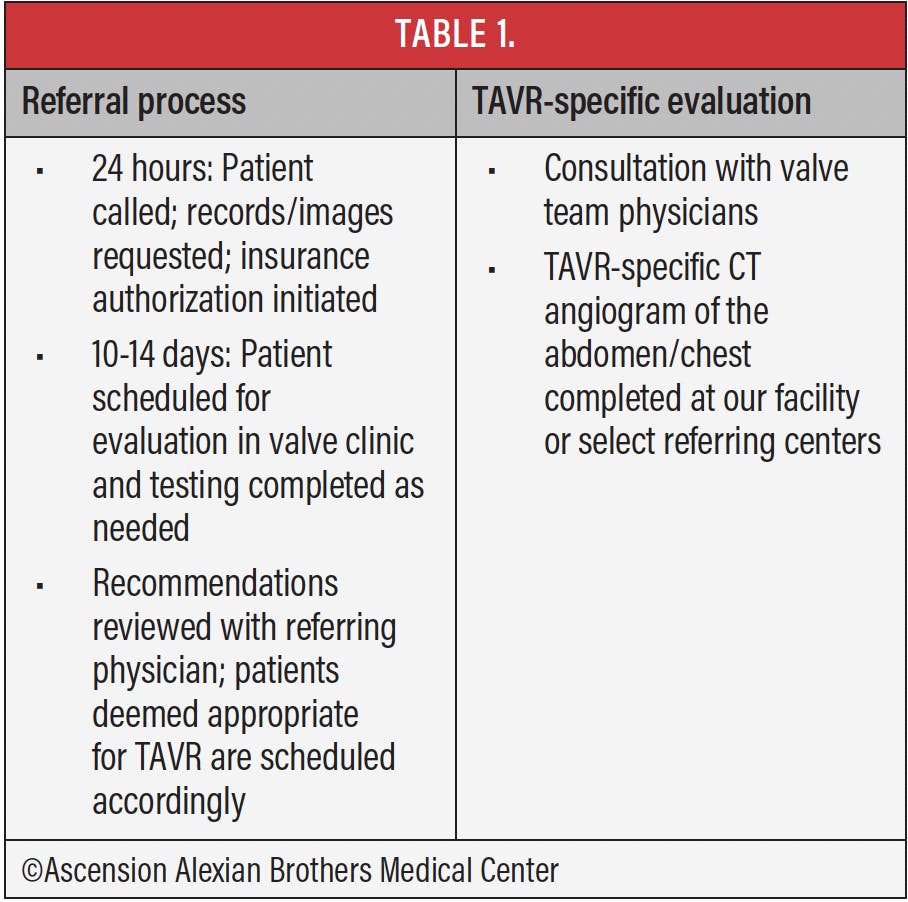
- Consistent and detailed referral and screening documentation that:
- Outlines diagnostic studies requested from referring centers, such as transthoracic echo, cardiac catheterization, carotid artery ultrasound, and pulmonary function testing, along with records/images to expedite patient scheduling
- Records patient “problem” areas including cardiac, vascular, constitutional, pulmonary, vision/hearing, gastrointestinal, genitourinary, neurological, psychiatric, hematologic, musculoskeletal, lifestyle, and dental
- Provides the referral and screening process to establish clear expectations for the referring center as well as the patient, shown in Table 1
Procedure day
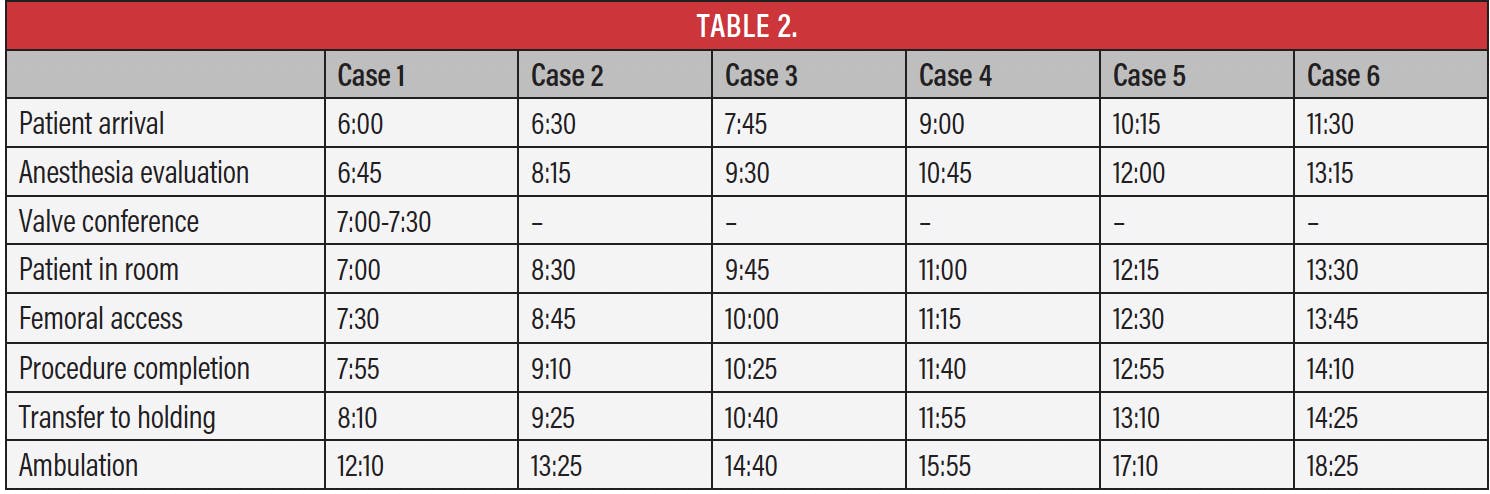
This program’s tightly aligned team members, many of whom who have worked together since the program’s inception, report following standardized processes regardless of who is in the room. This, along with minimalist procedures and the dedicated step-down unit, are factors that work together to optimize patient throughput allowing the team to typically perform five or more procedures by 4:00 p.m. on a TAVR day as shown in Table 2.
In addition to the minimalist Edwards Benchmark program procedures, such as monitored anesthesia care (MAC)/conscious sedation, minimal lines, and avoidance of Foley catheters, the program has also implemented:
- Pacing through the LV wire for all patients who do not have RBBB at baseline, which eliminates the need for venous access
- 4/5-F left radial access for aortography, which eliminates an additional femoral arterial access
- RA pacing on patients in whom a RV pacer was used to help determine in which patients the pacing wire can be removed early
- Use of a cath lab–adjacent step-down unit for recovery
Coupled with the 3M minimalistic TAVR approach, these changes have shortened the time in the lab for each procedure to an average of < 45 minutes and facilitate room turnaround times of approximately 15 minutes when the national average is 59 minutes.
As mentioned previously, the dedicated step-down unit is expeditious for the team and preferred by patients as they remain with consistent nursing staff and in the same room pre- and postprocedure. This also allows the anesthesiologist to quickly transition from the recovering patient to the next TAVR patient who is also in that location. Further, by having procedural staff performing preprocedure care, there is little to no waiting time. These recent changes have helped with the overall flow of TAVR day because they are treating patients in the same space at the same time.
Postprocedure
The minimalist procedures and the dedicated step-down unit mentioned above have helped to expedite patient ambulation and discharge, allowing more beds available to schedule additional TAVR patients. These factors also contribute to the program’s economic viability and positive patient outcomes.
Team members stated that before implementing the Edwards Benchmark program, approximately 70% of their patients were discharged the next day. This increased to 93% of elective cases discharged the same or next day between April 2020 and June 2021, which is possible through:
- The minimalist Edwards Benchmark program procedure itself, which leads to reduced procedure time and shorter patient stays3
- Postprocedure care starting intraoperatively, with:
- A chest x-ray on the table for every TAVR patient to eliminate the need for a predischarge chest x-ray
- Every TAVR patient receiving protamine with pressure held for 15-20 minutes to prevent nuisance bleeds, which can cause delays in mobilization and ambulation
- Specific times used for postprocedure orders, instead of time durations, for example, “ambulate patient at 13:00” instead of “ambulate patient in four hours” to avoid delays in postprocedure care caused by misinterpreted orders
- Same-day postprocedure echo and EKG at specific times to avoid discharge delays
- A limited neurologic examination on the table, which is possible through MAC/conscious sedation with patients who are awake by the time the access has been closed
- Postprocedure transfer to the eight-bed step-down unit instead of ICU, as mentioned previously, results in:
- Less dependence on ICU bed availability for scheduling
- Continuity of the same specially trained nurse for pre- and postprocedure care, who is more familiar with groin management, resulting in fewer unnecessary groin calls
- Expectation and effort by all TAVR staff that patients will go home as soon as it is safe
- Recovery in close proximity to the cath lab, which facilitates smooth discharge
- Selective use of inpatient physical therapy evaluations with an emphasis on postdischarge enrollment in cardiac rehab
- Continued involvement with referring physicians, which helps with patient recovery
CONCLUSION
The Ascension Alexian Brothers Medical Center TAVR team described “best practice” approaches that contribute to their optimized time to treatment for patients referred to their center, minimalist clinical procedures that facilitate patient throughput, and a new step-down unit that assists with more rapid patient ambulation and discharge.
To summarize, this program’s practices include the following:
Focus on Continuous Improvement Since Program Inception
✓Education focus:
1. Internally, within and across TAVR team functions
2. Externally, from other programs, educational materials, and now Edwards Benchmark program resources
✓Data-driven decisions both operationally and clinically
A Team Focused on What Is Best for the Patient, Above All Else
✓Balance across all functions and recognition that no one group can or should carry more weight than others
✓Positive team relationships with open-minded members who listen to and respect one another as they consider unique facts about each patient
Focus on Treating Patients in a Consistent and Timely Manner
✓Preprocedure
1. Education and team focus, which results in shorter screening time with fewer visits necessary
2. Focus on what is best for the patient during weekly in-person multidisciplinary valve conferences
3. Detailed, consistent documentation
✓Procedure day
1. Standardized processes regardless of who is in the room
2. Minimalist Edwards Benchmark program procedures aligned with operational throughput:
- Minimal sedation
- Limited lines/no Foley catheter
- Radial access for pigtail
- LV wire pacing in majority of cases
3. Dedicated step-down unit, which is expeditious for the team and preferred by patients
✓Postprocedure
1. The minimalist Edwards Benchmark program procedure itself leads to faster patient discharge
2. Recovery starts in the procedure room
3. Specific times for postcare orders, instead of time durations
4. Same day postprocedure echo
5. Neurologic assessment on the table, when possible
6. Recovery in the dedicated step-down unit by specially trained nurses who focus on patients going home as soon as safely possible
7. Selective use of inpatient physical therapy with aggressive use of outpatient cardiac rehab
8. Teamwork and feedback loops with referring centers
1. Advisory Board. 4 ways FDA’s approval of low-riskTAVR will affect your CV program. http://www.advisory.com/research/cardiovascular- roundtable/cardiovascular-rounds/2019/09/low-risk-tavr-cv-program. Accessed December 13, 2019.
2. Malaisrie SC, McDonald E, Kruse J, et al. Mortality while waiting for aortic valve replacement. Ann Thorac Surg. 2014;98:1564-1571.
3. Lauck SB, Wood DA, Baumbusch J, et al. Vancouver transcatheter aortic valve replacement clinical pathway: minimalist approach, standardized care, and discharge criteria to reduce length of stay. Circ Cardiovasc Qual Outcomes. 2016;9.
Disclaimers
Please Note: The information provided is the experience of this speaker/facility, and Edwards Lifesciences has not independently evaluated these data. Outcomes are dependent upon a number of facility and surgeon factors which are outside Edwards’ control. These data should not be considered promises or guarantees by Edwards that the outcomes presented here will be achieved by any individual facility.
Important- Please Note: This information is provided as a general resource and is not intended to constitute medical advice or in any way replace the independent medical judgment of a trained and licensed physician with respect to any individual patient needs or circumstances. Coverage, reimbursement and health economics information provided by Edwards is gathered from third-party sources and presented for illustrative purposes only. This information does not constitute reimbursement or legal advice, and Edwards makes no representation or warranty regarding this information or its completeness, accuracy, or timeliness. Laws, regulations, and payer policies concerning reimbursement are complex and change frequently; service providers are responsible for all decisions relating to coding and reimbursement submissions.
Important Safety Information
Edwards SAPIEN 3, Edwards SAPIEN 3 Ultra, and Edwards SAPIEN 3 Ultra RESILIA Transcatheter Heart Valve System
Indications: The Edwards SAPIEN 3, SAPIEN 3 Ultra, and SAPIEN 3 Ultra RESILIA Transcatheter Heart Valve system is indicated to reduce the risks associated with progression from asymptomatic to symptomatic severe native calcific aortic stenosis in patients who are judged by a heart team to be appropriate for transcatheter heart valve replacement therapy.
The Edwards SAPIEN 3, SAPIEN 3 Ultra, and SAPIEN 3 Ultra RESILIA Transcatheter Heart Valve system is indicated for relief of aortic stenosis in patients with symptomatic heart disease due to severe native calcific aortic stenosis who are judged by a Heart Team, including a cardiac surgeon, to be appropriate for the transcatheter heart valve replacement therapy.
The Edwards SAPIEN 3, SAPIEN 3 Ultra, and SAPIEN 3 Ultra RESILIA Transcatheter Heart Valve system is indicated for patients with symptomatic heart disease due to a failing (stenosed, insufficient, or combined) surgical or transcatheter bioprosthetic aortic valve, or a native mitral valve with an annuloplasty ring who are judged by a heart team, including a cardiac surgeon, to be at high or greater risk for open surgical therapy (i.e., predicted risk of surgical mortality ≥ 8% at 30 days, based on the Society of Thoracic Surgeons (STS) risk score and other clinical co-morbidities unmeasured by the STS risk calculator).
The Edwards SAPIEN 3, SAPIEN 3 Ultra, and SAPIEN 3 Ultra RESILIA Transcatheter Heart Valve system is indicated for patients with symptomatic heart disease due to a failing (stenosed, insufficient, or combined) surgical bioprosthetic mitral valve who are judged by a heart team, including a cardiac surgeon, to be at intermediate or greater risk for open surgical therapy (i.e., predicted risk of surgical mortality ≥ 4% at 30 days, based on the Society of Thoracic Surgeons (STS) risk score and other clinical co-morbidities unmeasured by the STS risk calculator).
Contraindications: The valves and delivery systems are contraindicated in patients who cannot tolerate an anticoagulation/antiplatelet regimen or who have active bacterial endocarditis or other active infections, or who have significant annuloplasty ring dehiscence.
Warnings: Observation of the pacing lead throughout the procedure is essential to avoid the potential risk of pacing lead perforation. There may be an increased risk of stroke in transcatheter aortic valve replacement procedures, as compared to balloon aortic valvuloplasty or other standard treatments in high or greater risk patients. The devices are designed, intended, and distributed for single use only. Do not resterilize or reuse the devices. There are no data to support the sterility, nonpyrogenicity, and functionality of the devices after reprocessing. Incorrect sizing of the valve may lead to paravalvular leak, migration, embolization, residual gradient (patient-prosthesis mismatch), and/or annular rupture.
Accelerated deterioration of the valve due to calcific degeneration may occur in children, adolescents, or young adults and in patients with an altered calcium metabolism. Prior to delivery, the valve must remain hydrated at all times and cannot be exposed to solutions other than its shipping storage solution and sterile physiologic rinsing solution. Valve leaflets mishandled or damaged during any part of the procedure will require replacement of the valve. Caution should be exercised in implanting a valve in patients with clinically significant coronary artery disease. Patients with pre-existing prostheses should be carefully assessed prior to implantation of the valve to ensure proper valve positioning and deployment. Do not use the valve if the tamper-evident seal is broken or the storage solution does not completely cover the valve (SAPIEN 3 and SAPIEN 3 Ultra only), the temperature indicator has been activated, the valve is damaged, or the expiration date has elapsed. Do not mishandle the delivery system or use it if the packaging or any components are not sterile, have been opened or are damaged (e.g., kinked or stretched), or if the expiration date has elapsed. Use of excessive contrast media may lead to renal failure. Measure the patient’s creatinine level prior to the procedure. Contrast media usage should be monitored. Patient injury could occur if the delivery system is not un-flexed prior to removal. Care should be exercised in patients with hypersensitivities to cobalt, nickel, chromium, molybdenum, titanium, manganese, silicon, and/ or polymeric materials. The procedure should be conducted under fluoroscopic guidance. Some fluoroscopically guided procedures are associated with a risk of radiation injury to the skin. These injuries may be painful, disfiguring, and long-lasting. Valve recipients should be maintained on anticoagulant/antiplatelet therapy, except when contraindicated, as determined by their physician. This device has not been tested for use without anticoagulation. Do not add or apply antibiotics to the storage solution (SAPIEN 3 and SAPIEN 3 Ultra only), rinse solution, or to the valve. Balloon valvuloplasty should be avoided in the treatment of failing bioprostheses as this may result in embolization of bioprosthesis material and mechanical disruption of the valve leaflets. Do not perform stand-alone balloon aortic valvuloplasty procedures in the INSPIRIS RESILIA aortic valve for the sizes 19-25 mm. This may expand the valve causing aortic incompetence, coronary embolism or annular rupture. Transcatheter valve replacement in mitral annuloplasty rings is not recommended in cases of partial annuloplasty ring dehiscence due to high risk of PVL.
Transcatheter valve replacement in mitral annuloplasty rings is not recommended in cases of partial (incomplete) annuloplasty rings in the absence of annular calcium due to increased risk of valve embolization. Transcatheter valve replacement in mitral annuloplasty rings is not recommended in cases of rigid annuloplasty rings due to increased risk of PVL or THV deformation.
Precautions: Long-term durability has not been established for the valve. Regular medical follow-up is advised to evaluate valve performance. Limited clinical data are available for transcatheter aortic valve replacement in patients with a congenital bicuspid aortic valve who are deemed to be at low surgical risk. Anatomical characteristics should be considered when using the valve in this population. In addition, patient age should be considered as long-term durability of the valve has not been established. Data on TAVR in patients with asymptomatic severe aortic stenosis are based on study of predominantly low surgical risk patients. Limited clinical data to inform benefit-risk considerations are available for TAVR in patients with asymptomatic severe aortic stenosis who are deemed to be at intermediate or greater surgical risk. Glutaraldehyde may cause irritation of the skin, eyes, nose, and throat.
Avoid prolonged or repeated exposure to, or breathing of, the solution. Use only with adequate ventilation. If skin contact occurs, immediately flush the affected area with water; in the event of contact with eyes, seek immediate medical attention. For more information about glutaraldehyde exposure, refer to the Safety Data Sheet available from Edwards Lifesciences. If a significant increase in resistance occurs when advancing the catheter through the vasculature, stop advancement and investigate the cause of resistance before proceeding. Do not force passage, as this could increase the risk of vascular complications.
As compared to SAPIEN 3, system advancement force may be higher with the use of SAPIEN 3 Ultra/SAPIEN 3 Ultra RESILIA THV in tortuous/challenging vessel anatomies. To maintain proper valve leaflet coaptation, do not overinflate the deployment balloon. Appropriate antibiotic prophylaxis is recommended post-procedure in patients at risk for prosthetic valve infection and endocarditis. Additional precautions for transseptal replacement of a failed mitral valve bioprosthesis include, the presence of devices or thrombus or other abnormalities in the caval vein precluding safe transvenous femoral access for transseptal approach; and the presence of an Atrial Septal Occluder Device or calcium preventing safe transseptal access.
Special care must be exercised in mitral valve replacement to avoid entrapment of the subvalvular apparatus. Safety and effectiveness have not been established for patients with the following characteristics/comorbidities: non- calcified aortic annulus; severe ventricular dysfunction with ejection fraction < 20%; congenital unicuspid aortic valve; pre-existing prosthetic ring in the tricuspid position; severe mitral annular calcification (MAC); severe (> 3+) mitral insufficiency, or Gorlin syndrome; blood dyscrasias defined as leukopenia (WBC < 3000 cells/mL), acute anemia (Hb < 9 g/dL), thrombocytopenia (platelet count < 50,000 cells/mL), or history of bleeding diathesis or coagulopathy; hypertrophic cardiomyopathy with or without obstruction (HOCM); echocardiographic evidence of intracardiac mass, thrombus, or vegetation; a known hypersensitivity or contraindication to aspirin, heparin, ticlopidine (Ticlid), or clopidogrel (Plavix), or sensitivity to contrast media, which cannot be adequately premedicated; significant aortic disease, including abdominal aortic or thoracic aneurysm defined as maximal luminal diameter 5 cm or greater, marked tortuosity (hyperacute bend), aortic arch atheroma (especially if thick [> 5 mm], protruding, or ulcerated) or narrowing (especially with calcification and surface irregularities) of the abdominal or thoracic aorta, severe “unfolding” and tortuosity of the thoracic aorta; access characteristics that would preclude safe placement of the Edwards sheath, such as severe obstructive calcification or severe tortuosity; bulky calcified aortic valve leaflets in close proximity to coronary ostia; a concomitant paravalvular leak where the failing prosthesis is not securely fixed in the native annulus or is not structurally intact (e.g., wireform frame fracture, annuloplasty ring dehiscence); or a partially detached leaflet of the failing bioprosthesis that in the aortic position may obstruct a coronary ostium. For Left axillary approach, a left subclavian takeoff angle ~ ≥ 90° from the aortic arch causes sharp angles, which may be responsible for potential sheath kinking, subclavian/axillary dissection and aortic arch damage. For left/right axillary approach, ensure there is flow in Left Internal Mammary Artery (LIMA)/ Right Internal Mammary Artery (RIMA) during procedure and monitor pressure in homolateral radial artery. Residual mean gradient may be higher in a “THV-in-failing prosthesis” configuration than that observed following implantation of the valve inside a native aortic annulus using the same size device. Patients with elevated mean gradient post procedure should be carefully followed. It is important that the manufacturer, model and size of the preexisting prosthesis be determined, so that the appropriate valve can be implanted and a prosthesis-patient mismatch be avoided. Additionally, preprocedure imaging modalities must be employed to make as accurate a determination of the inner diameter as possible.
Potential Adverse Events: Potential risks associated with the overall procedure, including potential access complications associated with standard cardiac catheterization, balloon valvuloplasty, the potential risks of conscious sedation and/or general anesthesia, and the use of angiography: death; stroke/transient ischemic attack, clusters, or neurological deficit; paralysis; permanent disability; respiratory insufficiency or respiratory failure; hemorrhage requiring transfusion or intervention; cardiovascular injury including perforation or dissection of vessels, ventricle, atrium, septum, myocardium, or valvular structures that may require intervention; pericardial effusion or cardiac tamponade; thoracic bleeding; embolization including air, calcific valve material, or thrombus; infection including septicemia and endocarditis; heart failure; myocardial infarction; renal insufficiency or renal failure; conduction system defect which may require a permanent pacemaker; arrhythmia; retroperitoneal bleed; arteriovenous (AV) fistula or pseudoaneurysm; reoperation; ischemia or nerve injury or brachial plexus injury; restenosis; pulmonary edema; pleural effusion; bleeding; anemia; abnormal lab values (including electrolyte imbalance); hypertension or hypotension; allergic reaction to anesthesia, contrast media, or device materials; hematoma; syncope; pain or changes (e.g., wound infection, hematoma, and other wound care complications) at the access site; exercise intolerance or weakness; inflammation; angina; heart murmur; and fever. Additional potential risks associated with the use of the valve, delivery system, and/or accessories include: cardiac arrest; cardiogenic shock; emergency cardiac surgery; cardiac failure or low cardiac output; coronary flow obstruction/transvalvular flow disturbance; device thrombosis requiring intervention; valve thrombosis; device embolization; device migration or malposition requiring intervention; left ventricular outflow tract obstruction; valve deployment in unintended location; valve stenosis; structural valve deterioration (wear, fracture, calcification, leaflet tear/tearing from the stent posts,leaflet retraction, suture line disruption of components of a prosthetic valve, thickening, stenosis); device degeneration; paravalvular or transvalvular leak; valve regurgitation; hemolysis; device explants; nonstructural dysfunction; mechanical failure of delivery system and/or accessories; and non-emergent reoperation
Edwards Crimper
Indications: The Edwards crimper is indicated for use in preparing the Edwards SAPIEN 3 transcatheter heart valve, Edwards SAPIEN 3 Ultra transcatheter heart valve, and the Edwards SAPIEN 3 Ultra RESILIA transcatheter heart valve for implantation.
Contraindications: There are no known contraindications.
Warnings: The device is designed, intended, and distributed for single use only. Do not resterilize or reuse the device. There are no data to support the sterility, nonpyrogenicity, and functionality of the device after reprocessing. Do not mishandle the device. Do not use the device if the packaging or any components are not sterile, have been opened or are damaged, or the expiration date has elapsed.
Precautions: For special considerations associated with the use of the Edwards crimper prior to THV implantation, refer to the THV Instructions for Use.
Potential Adverse Events: There are no known potential adverse events associated with the Edwards crimper.
CAUTION: Federal (United States) law restricts these devices to sale by or on the order of a physician.
Edwards, Edwards Lifesciences, the stylized E logo, Edwards SAPIEN, Edwards SAPIEN 3, Edwards SAPIEN 3 Ultra, INSPIRIS, INSPIRIS RESILIA, RESILIA, SAPIEN, SAPIEN 3, and SAPIEN 3 Ultra are trademarks of Edwards Lifesciences Corporation or its affiliates. All other trademarks are the property of their respective owners.
© 2025 Edwards Lifesciences Corporation. All rights reserved. PP--US-4028 v12.0
Edwards Lifesciences • edwards.com One Edwards Way, Irvine CA 92614 USA
Advertisement
Advertisement