Advertisement
Advertisement
May/June 2023
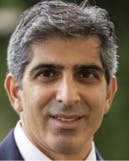
An Interview With Gorav Ailawadi, MD, MBA
The University of Michigan cardiac surgeon shares why he was drawn to transcatheter interventions, insights from his work at the forefront of device innovation, the role of the surgeon-scientist, and his philosophy for treating patients deemed “too high risk.”
What sparked your interest in transcatheter/minimally invasive interventions as a cardiac surgeon?
All surgical disciplines have demonstrated benefits when procedures can be done in less invasive manners. Patients benefit with quicker recovery, less insult to their bodies, and a quicker return to work/family life. These benefits are particularly true in cardiac surgery where there can be a great impact on patients as they recover. I was drawn to minimally invasive approaches even as a general surgery resident working under mentors pushing complex laparoscopic approaches. One mentor even pushed me to think of ways to use a laparoscope/thoracoscope in cardiac surgery as she saw my interest spark.
From various “firsts,” including being the first United States surgeon to perform a MitraClip procedure, to numerous transcatheter and surgical device trials, you have a long history as an innovator and have been at the forefront of many new technologies. What do you enjoy most about this aspect of work? How do you know when you’ve encountered a device that is truly an innovation?
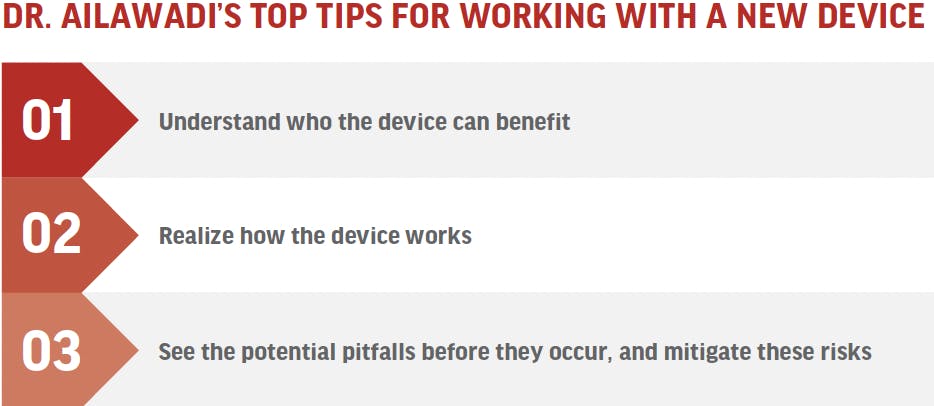
I have wanted to make sure I and our specialty stay relevant and push the needle in the treatment of cardiac disease management. What I enjoy is learning how a novel device works, how it impacts the heart, and most importantly how it affects a patient. I am a fan of simplicity. The more complex an innovation is, the more likely it can fail. Conversely, a device is truly innovative when it is simple and safe and, most importantly, the patient shares with you how great they feel even the next day!
How does your biomedical engineering background inform your study of transcatheter/minimally invasive devices?
I have been fortunate to be around brilliant engineers my whole career. Although I did not seek out engineers directly, as we evaluated new technologies and developed our own novel devices, I realized how the future of cardiac surgery is at an intersection between surgeons, biomedical engineering, fluid dynamics, and even electrical engineering each contributing unique expertise. I realized how surgeons and engineers think similarly in many ways about how to solve problems. Identifying the clinical problem, understanding the language, and getting input from engineering experts has allowed our specialty to evolve since its inception (heart-lung machine, artificial hearts, valve replacements).
A prominent trial for you has been SUMMIT, for which you are National Principal Investigator. What has the trial revealed about the needs of patients with symptomatic mitral regurgitation?
This is an exciting trial to be a part of. The Tendyne valve system (Abbott) is the first transcatheter mitral valve (TMVR) to be approved in the world and is being used throughout Europe. The SUMMIT trial is ongoing in the United States. We have learned so much more about the complexities of the anatomy as it relates to TMVR as a result of this study. There are intricacies of anatomy that also relate to the mechanism of mitral regurgitation. We also realize just how many patients are too sick for surgery and never even get referred for an evaluation by a surgeon. TMVR provides hope for these ill patients to enjoy a better quality of life and, ultimately, survival.
What do you consider the biggest issue to be tackled, or the next milestone to be reached, regarding tricuspid valve disease?
Thankfully, the tricuspid valve is not forgotten any longer. In fact, in many major valve centers, tricuspid valve referrals equal or surpass mitral referrals. Patients with tricuspid valve disease are challenging in that many are asymptomatic until it is too late, when their right ventricles, kidneys, or liver have failed. Another issue is the large nature of the tricuspid valve—sometimes 50% bigger than the mitral valve—as well as the impact of our interventions or operations on the right ventricle.
What have been your proudest achievements from working with the Cardiothoracic Surgical Trials Network (CTSN)?
I was brought into the CTSN through my mentors as a young faculty. It was fascinating to be a part of clinical trials that in just a couple years helped us develop better treatment plans for patients in and after surgery. It also opened the door to realizing just how much we don’t know and how much of what we were doing was based on dogma, not through generation of unbiased data. What this has done is created a culture of inquisition and inclusion in our specialty to try to answer burning clinical questions.
Along with your work in the cardiac realm, you are also interested in mechanisms and treatments for aortic aneurysms. Can you give us an overview of your research priorities in this area?
Aortic aneurysms are a challenge in that they often are asymptomatic until they rupture, and the risk of rupture correlates with aortic diameter. In many cases, the time between diagnosis and decision to intervene through open surgical or endovascular means is on the order of 5-plus years. As a result, there is a window of opportunity if we had drugs or agents that can arrest or even regress aortic dilation. Aneurysms are one of the rare cardiovascular conditions where there is NO medical treatment. This has spurred my lab’s quest to understand mechanisms of aneurysm formation and investigate agents that can arrest aneurysm progression or even reverse aortic diameter.
You’ve recently been promoting the role of the surgeon-scientist in the academic research landscape. What does this entail, and how does the “scientist” aspect of this position add to a physician’s career/practice?
There are multiple studies that have shown that surgeons who receive National Institutes of Health (NIH) funding are underrepresented. Based on our own publications, this is particularly true in cardiac surgery. One could argue that NIH support in cardiac surgery has been some of the most impactful, leading to artificial hearts/pumps, valve replacement technology, etc. Much of our understanding of how to perform livesaving heart surgery stems from studies supported by the NIH, the American Heart Association, and other organizations. Most importantly, developing new knowledge, techniques, or data can help patients in need who we will never directly see or treat. This is the awesome power of research.
You recently traveled to Zambia to work with the National Heart Hospital team. What was the inspiration for this visit, and what were your main takeaways from that experience?
I have done mission work in the past in India, China, and the Dominican Republic. This recent trip was a unique opportunity because cardiac surgery is in its infancy in Zambia, having just started an open-heart program 2 years ago. In fact, the entire country only has two surgeons and three cardiologists for adult and pediatric heart care. I can honestly say this was one of the most impactful life experiences for me and my team. To have the weight of an entire country’s heart surgery needs resting on the shoulders of the team we were teaching is incredible. While we taught them many things, we learned so much. We look forward to continuing to support their progression as they grow their program with additional surgeons, anesthesiologists, and cardiologists in training.
You often treat patients that are deemed “too high risk”—how and why did this become part of your patient care philosophy?
Risk is in the eye of the beholder—not just the treating team but also the patient. When you tell a patient they have a 20%, 30%, or even 50% risk of mortality, which is very high, some patients respond with a sense of hope. For me, much of the conversation is about setting the right expectations and goals. Often, when a patient is that high risk, we may believe we can get them through surgery, but the question often becomes: How long with they survive long term? Will they thrive?
Nevertheless, we reviewed our own experience of patients called “too high risk” for surgery. We actually have a 4% surgical mortality in these patients. This goes to show that in high-volume centers with experienced surgeons and teams, we can provide hope to many patients.
What are your go-to practices for staying grounded amid the heavy demands of your professional life?
Exercise, family time, and spiritual enrichment. All of these help me realize how insignificant we are in the world and how we can try to make a small impact by serving others.
Advertisement
Advertisement
Interested in reading more interviews?
To read more interviews with thought leaders in the interventional cardiology field, check out our Profiles & Perspectives hub.
Read More