Advertisement
Advertisement
May/June 2023
Re-Engineering Cardiology Care Delivery to Meet Growing Demands
The increased need for cardiovascular services should be met with an advancement of the care team and an embrace of virtual and digital care.
By Xiaoyan Huang, MD, FACC; Meredith Rosenthal, PhD; and Joel Sauer, MBA
For more than a decade, MedAxiom has been signaling concern about the annual net reduction in cardiologists who are part of the United States physician workforce. The causes of this deficit are numerous, but it is mainly driven by two key factors: the aging of the existing cardiology population and fewer cardiologists entering the workforce through fellowships. Based on 2020 MedAxiom data, approximately one-quarter of practicing cardiologists is aged ≥ 61 years.1 Although there is no hard and fast age at which a cardiologist retires, many in the oldest quartile of cardiologists are nearing retirement.
The data further show that cardiologists in their 60s produce fewer work relative value units (wRVUs) than their younger peers. In 2020, that difference was just > 2,000 wRVUs per full-time equivalent (FTE). Thus, a group of 20 FTE cardiologists that has five cardiologists in their 60s would statistically be “down” an FTE in terms of production compared to a group of all cardiologists in younger cohorts (five physicians X 2,000 wRVUs fewer per physician = 10,000 wRVUs, which is about the median of a full-time cardiologist’s productivity).
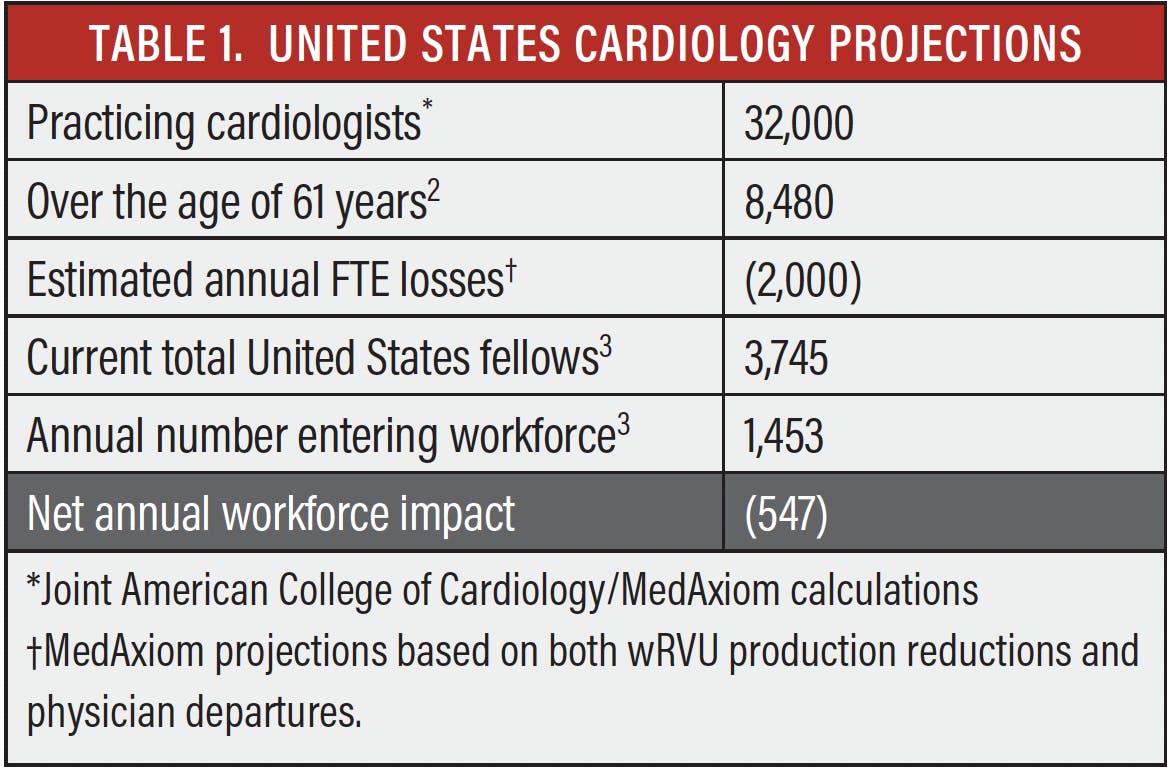
Considering both the decline in wRVU production of the existing workforce and using statistical projections for physician slowdown (ie, cutting back to less than full time) and departures (retirement, assuming administrative roles, death, and disability), an approximate estimate of cardiologists lost from the workforce can be calculated. The number entering the market can be forecast more precisely based on the total number of fellowship positions in the United States, which includes foreign medical graduates who must go through a fellowship program to practice in the United States. Table 1 shows the net impact of these factors—an estimated annual deficit of > 500 cardiologists.2,3
This same aging phenomenon that is impacting the cardiology workforce is also happening in the general population of the United States. People born between 1946 and 1964 during the swell in population after the end of World War II (the “baby boom”) have now entered their 60s and 70s and are generally consuming more health care, particularly cardiology, than in their younger years. Collectively, this occurrence has been called the Age Wave and is now crashing into cardiovascular practices.
Further, the demand curve for cardiovascular services is being pushed up by the aging population and an increase in cardiac risk factors such as obesity, hyperlipidemia, diabetes, and hypertension. A study based on recent census data and disease prevalence in the United States published in Journal of the American College of Cardiology projects a substantial increase in cardiovascular disease burden over the next 40 years.4 Specifically, the study predicts a 33% increase in advanced heart failure, a 31% increase in ischemic heart disease, and a 30% increase in myocardial infarction in the coming decades.
The combined impact from these changes to both the cardiovascular care supply and demand curves portends a challenging future for programs across the country that are already stressed to meet the needs of current patient populations. A 2022 Merrit Hawkins survey found that on average, a nonemergent (as defined by the provider, not the patient) new cardiology patient waits 26.6 days for an appointment (up 26% in only 5 years).5 With new patient wait times this long, it is presumed that programs are even more challenged to work in follow-up visits and preventive services, severely compromising chronic disease management.
It is helpful to zero in on these supply and demand data to appreciate the overall effect. According to 2021 MedAxiom data, the median active patient panel for a cardiologist in the United States was 1,753 patients (defined as unique patients seen in a face-to-face evaluation and management encounter within the previous 18-month period).2 Based on these data and assuming a net loss of 500 cardiologists per year (including the loss of productivity due to aging) with a 2% annual increase in patient demand and all other factors remaining equal, the median active patient panel per cardiologist will increase by nearly 700 to 2,438 by 2031 (Figure 1). Although this is a projection under uncertainty, the general math suggests a strong need to re-engineer the way cardiovascular care is delivered.
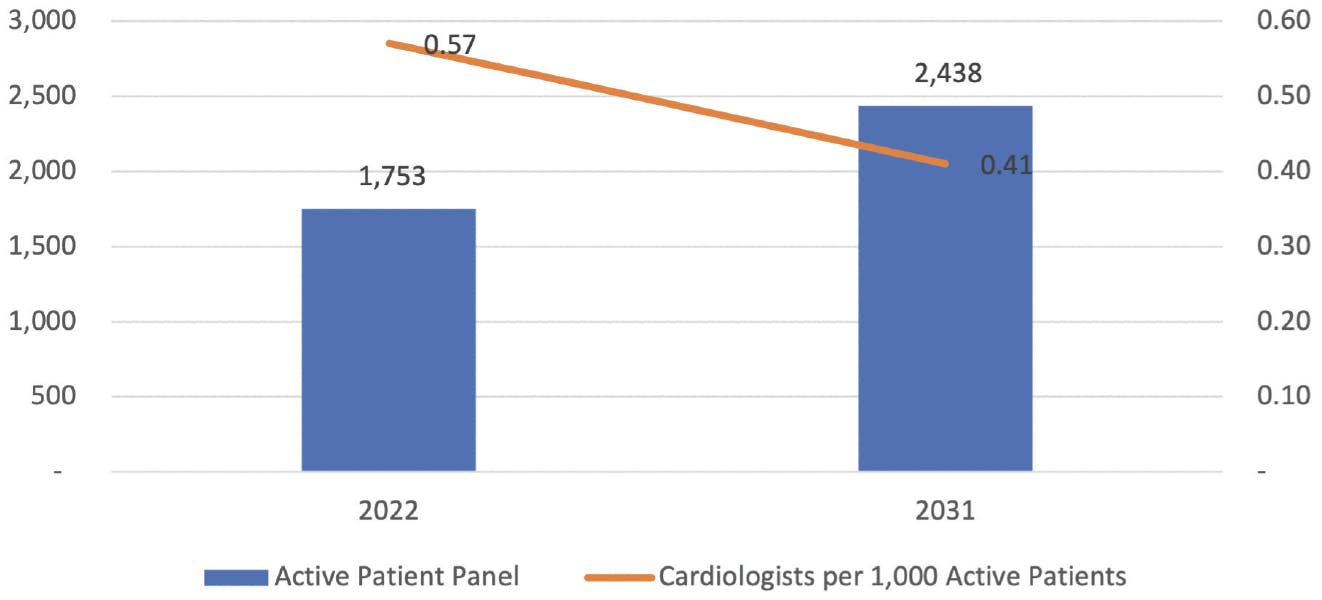
Figure 1. Ten-year supply and demand projections.
Another trend that is increasing demand for cardiology services is the change in how a significant portion of primary care is delivered. Responding to acute national physician shortages, mega-corporations like Amazon, CVS, and Walmart are adding primary care services within their retail stores or building dedicated new offerings. The vast majority of care in these settings is rendered by nonphysician professionals such as nurse practitioners and physician assistants—collectively referred to as advanced practice providers (APPs). These providers tend to have a lower threshold to refer a patient to a specialist. This is particularly true with symptoms associated with a potential cardiac problem and other severe issues.
CARE TEAM EVOLUTION
One way cardiology practices have adapted to meet the increasing patient panel demands is by increasing the deployment of APPs. According to MedAxiom data, the ratio of APPs to cardiologists from 2012 to 2021 increased by nearly 70%, from 0.36 APP FTEs per cardiologist to 0.60 FTEs.2 Based on these data, this trend will need to continue for the next 10 years to maintain a similar cardiovascular provider (physicians plus APPs) ratio per 1,000 active patients.
However, simply expanding the APP workforce will likely be insufficient to meet future cardiovascular service demands. The care team itself may need to be extended to better utilize nurses, medical assistants, pharmacists, and administrative personnel in a coordinated and standardized fashion. Additionally, the orientation of these invaluable team members will need to change from serving the physician to serving the patient population (panel).
While this sounds like a simple solution, successfully evolving care team roles often require myriad structural changes within the cardiology practice. Additionally, programs must shift away from using nonphysician members below their training and licensure to “tee up” work for the physicians, resulting in duplication of efforts, burnout, and expensive turnover. Additionally, compensation models that emphasize—or often rely exclusively—on individual production metrics (cash receipts, wRVUs) will stand in direct opposition to moving care to APPs and other team members. As the regulatory requirements for APP practice and billing have become more stringent around shared billing, the relationship between APPs and physicians has evolved subtly to being more in parallel than hierarchical. If not considered thoughtfully, the unintended consequence of these regulatory changes might result in a straining of the relationship between physicians and APPs at the price of optimal patient care quality. For example, in certain instances such as in-basket management, there might be inappropriate “turfing” of responsibilities, while in other instances such as billable patient visits, competition is created.
VIRTUAL AND DIGITAL CARE OF THE FUTURE
Virtual care remains a promising and underused opportunity in the struggle to match cardiology supply with demand. However, sustainable strategies must be implemented to ensure it’s here to stay. After the United States government’s declaration of a public health emergency in January 2020 as a result of COVID-19, the Centers for Medicare & Medicaid Services issued a special waiver to expand telemedicine service by paying it at similar rates as a face-to-face visit. Responding with unprecedented speed, the provider community shifted almost entirely to virtual visits within a matter of weeks. Cardiology virtual office visits, which hovered near zero for years, became the dominant evaluation and management provider tool in April 2020. Nearly as quickly as they emerged, virtual visits dropped back to nearly prepandemic levels by late summer of 2020 (Figure 2).
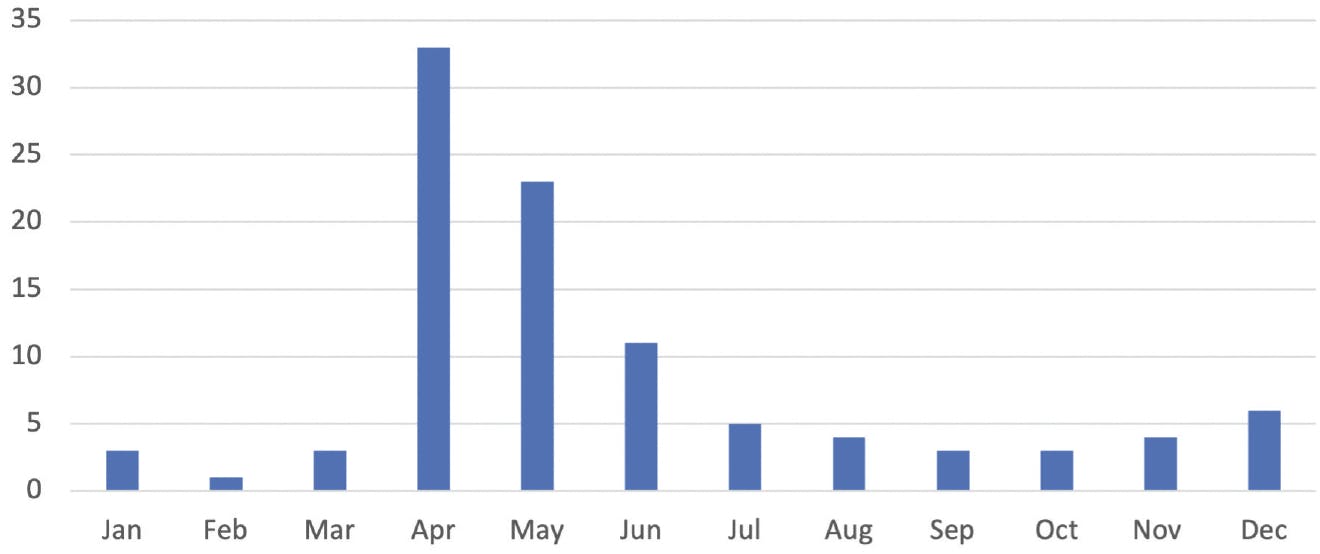
Figure 2. Median virtual return office visits per cardiologist (2020).
Due to the nature of the situation, it is not surprising that traditional health systems were simply substituting in-person visits with virtual care. There were no substantive changes to the infrastructure or workflows around these delivery changes. Fixed costs such as rent and utilities remained unchanged, staffing ratios and costs were static, and provider deployment and costs stayed the same. Without more comprehensive changes to integrate virtual care into the health system, it will not be a sustainable part of the solution to improving access to care.
Digital care has also emerged. Newer generations of patients are increasingly using digital wearables and monitoring devices: Fitbits, Apple Watches, Kardia heart rhythm monitors, blood pressure cuffs, and, during the COVID-19 pandemic, oxygen saturation monitors. More and more people are using patient portals to review their charts and test results. Data are pouring in through this informatic firehose. Yet everything is still handled manually; each test result, patient message, phone call, appointment reminder, and office visit or hospital procedure is laboriously attended to.
Intuitively, virtual and digital health care should be far-reaching and ideal for management of certain chronic conditions and for rural communities, obviating the need for and costs associated with patient and provider transportation. But early data from a Health Affairs study showed counterintuitive variation in the use of telemedicine across geography and patient populations, with poor and rural communities lacking access.6 Moreover, digital health care did not fill the need for essential care during the pandemic. Chronic disease management for hypertension and diabetes suffered a 20% to 30% reduction in total visit volume, with lower percentage of virtual visits at the height of telemedicine use in January through June of 2020.
On the other hand, retail clinics, payment up-front urgent care, telemedicine, and digital health care companies are thriving outside of traditional health systems. Venture capital funding into the digital market peaked at $44.8 billion in 2021.7 These investments suggest that there is a growing demand for these digital services and that new technology tools are on the horizon. What is needed is a re-engineering of the entire care process around virtual services, which clearly can come from the provider community. Certainly, federal policy needs to keep up, such as formalizing Medicare and Medicaid payment for virtual services.
Like other service industries, health care operations need to be much more efficient in handling administrative tasks digitally and at a patient’s demand. For example, patient messages should be able to be automatically triaged via chatbot into scheduling, refill, directions, pre- and postprocedural instructions, bill payment, and other rote tasks that are reasonably algorithmic. Even simple clinical questions may soon be handled with tools such as natural language processing which would free up staff and physicians to handle more complex clinical issues.
RE-ENGINEERING CARDIOVASCULAR CARE STARTS NOW
Data strongly suggest that, over time, the demand for cardiovascular services will increase faster than the growth in the provider community to manage it. This underscores the need to re-engineer the way cardiology care is delivered. Two areas that are ripe for continued innovation are the advancement of the cardiovascular care team and the use of virtual care—not simply replacing an in-person visit with a video chat but creating a truly comprehensive digital care platform.
Given these mathematical realities, the cardiovascular community can’t afford to wait for legislative or payor-sponsored fixes to supply and demand challenges. The cardiovascular specialty, which has always been at the forefront of care evolution and innovation, must lead the way by shaping future care delivery models.
1. MedAxiom. 2021 Cardiovascular provider compensation and production survey report. Accessed May 4, 2023. https://www.medaxiom.com/resource-center/cvsl-strategy-and-business-development/2021-cardiovascular-provider-compensation-and-production-survey-report/.
2. MedAxiom. 2022 Cardiovascular provider compensation and production survey report. Accessed May 4, 2023. https://www.medaxiom.com/resource-center/cvsl-strategy-and-business-development/2022-cardiovascular-provider-compensation-and-production-survey-report/
3. Accreditation Council for Graduate Medical Education. Data resource book: academic year 2018-2019. Accessed May 4, 2023. https://www.acgme.org/globalassets/PFAssets/PublicationsBooks/2018-2019_ACGME_DATABOOK_DOCUMENT.pdf
4. Vaduganathan M, Mensah GA, Turco JV, et al. The global burden of cardiovascular diseases and risk. J Am Coll Cardiol. 2022;80:2361-2371. doi: 10.1016/j.jacc.2022.11.005
5. Merritt Hawkins. 2022 Survey of physician appointment wait times. Published August 29, 2022. Accessed May 4, 2023. https://www.merritthawkins.com/trends-and-insights/article/surveys/2022-physician-wait-times-survey/
6. Patel SY, Mehrotra A, Huskamp HA, et al. Variation in telemedicine use and outpatient care during the COVID-19 pandemic in the United States. Health Aff (Millwood). 2021;40:349-358. doi: 10.1377/hlthaff.2020.01786
7. Hawkins LE. What investors need to know about the growing digital health space. Nasdaq. Published April 3, 2023. Accessed May 24, 2023. https://www.nasdaq.com/articles/what-investors-need-to-know-about-the-growing-digital-health-space
Advertisement
Advertisement