Advertisement
Advertisement
March/April 2023
Transcatheter Aortic Valve Durability
Considering the contemporary clinical evidence on long-term TAV durability, a potential driver of TAVR adoption in younger populations.
By Nicholas J. Montarello, MD; Lars Søndergaard, MD, DMSc; and Ole De Backer, MD, PhD
Transcatheter aortic valve replacement (TAVR) has become the therapeutic standard of care for patients with severe symptomatic aortic stenosis (AS) across all surgical risk categories,1-5 and the use of TAVR has been expanding to younger patients following the updated guidelines for the management of valvular heart disease.6-8 The European guidelines recommend that patients aged ≥ 75 years should receive TAVR rather than surgical aortic valve replacement (SAVR), whereas the United States guidelines are more liberal and recommend that TAVR should be offered to patients aged ≥ 65 years. Whether TAVR use in younger and less comorbid patients with a longer life expectancy is justified based on the current TAVR pivotal trials is uncertain. This article reviews the available clinical data relating to long-term transcatheter aortic valve (TAV) durability, which should be a main driver for the adoption of TAVR in a younger patient population.
SURGICAL AORTIC VALVE DURABILITY: GOLD STANDARD?
The adoption of new technologies and treatments is often dependent on comparative performance and outcome when measured against current accepted best practice. Transcatheter valve durability is typically compared to surgical bioprosthesis durability, readily accepted as the “gold standard.” But should it be? Current data assessing the long-term durability of surgical bioprosthesis indicate that structural valve deterioration (SVD) occurs in 21% of patients at 15 years and 51% at 20 years.7 Better results were reported in a large cohort of > 12,000 patients treated with Carpentier- Edwards (Edwards Lifesciences) surgical aortic bioprosthesis, where the reoperation rate was 1.9% and 15% at 10 and 20 years, respectively.8 However, a systematic review of 167 studies and 12 FDA reports concluded that reporting bioprosthetic surgical valve durability in the literature is characterized by such variable definitions and inadequate long-term follow-up that it makes the comparison between different valves difficult.9 Notwithstanding, the FDA has recently issued a specific warning regarding the durability of the Trifecta valve (Abbott).10 Fundamentally, the incidence of SVD in the surgical literature is very difficult to determine because freedom from valve reintervention is a commonly used clinical endpoint for diagnosing SVD.11 This underestimates its true incidence as reoperation may not be offered to poor surgical candidates, echocardiographic surveillance is often lacking in surgical patients, and many patients may have died before there is echocardiographic detection of SVD. Hence, surgical valve durability, as currently determined and reported, may not be the best benchmark comparator for TAV durability. This also highlights the necessity of having a standardized definition of valve durability, including echocardiographic findings.
DEFINITION OF BIOPROSTHETIC VALVE DURABILITY
Historical Definition
Bioprosthetic valve dysfunction (BVD) has historically been divided into SVD and non-SVD. SVD has been defined as intrinsic degeneration or dysfunction of the prosthetic valve, with the principal mediators including leaflet calcification, leaflet tear, stent fracture, or stent creep (manifested as inward bending of a stent post). Non-SVD has been referred to as a secondary process that involves the valve, such as prosthesis-patient mismatch, paravalvular regurgitation, pannus in-growth, leaflet thrombosis, or endocarditis.
New Standardized Definition
The first standardized definition of bioprosthetic valve durability was provided in 2017 based on the consensus statement from the European Association of Percutaneous Cardiovascular Interventions (EAPCI), European Society of Cardiology (ESC), and European Association for Cardio-Thoracic Surgery (EACTS).12 Here, valve durability was divided into BVD and bioprosthetic valve failure (BVF). In 2021, Valve Academic Research Consortium (VARC)–3 published an alternative definition of bioprosthetic valve durability that required permanent morphologic change of the bioprosthesis to be identified in addition to hemodynamic changes before SVD could be diagnosed (Table 1).13,14
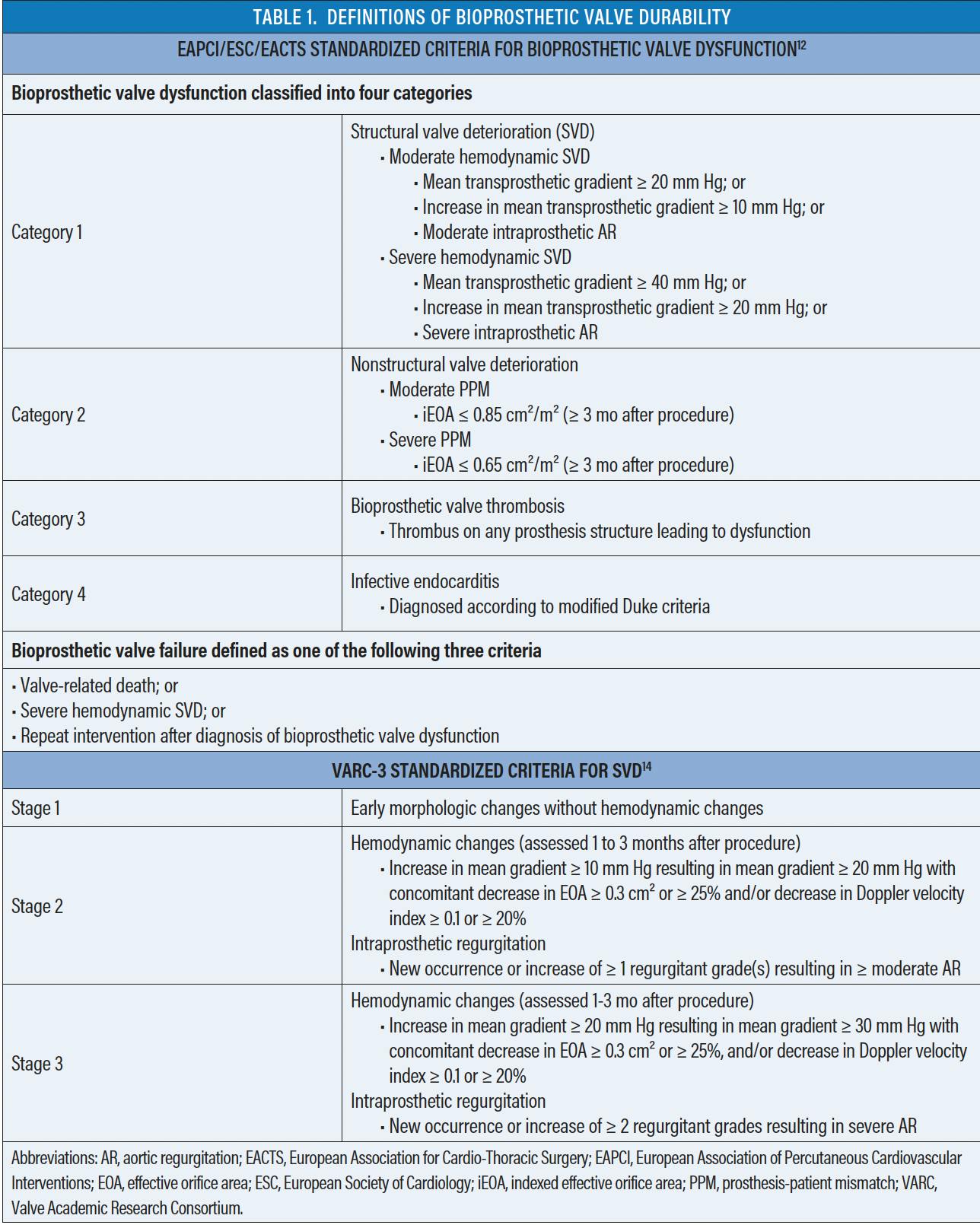
Not surprisingly, given the relatively recent standardized definition of valve durability, long-term data regarding BVD are still discordant and are nearly only available for first-generation devices due to the shorter follow-up available for latest-generation devices.
TAV DURABILITY: 5-YEAR FREEDOM FROM SVD
In the past few years, the results of several TAVR pivotal trials and registries evaluating medium-term TAV durability have been published. Randomized trials include PARTNER, CoreValve US Pivotal, SURTAVI, and NOTION.
The PARTNER I trial showed no evidence of significant SVD at 5-year follow-up.15,16 The PARTNER IA substudy reported similar echocardiographic valve performance for transcatheter and surgical aortic valves, with a mean transvalvular gradient of 10.7 mm Hg and 10.6 mm Hg and an aortic valve area of 1.6 cm2 and 1.5 cm2, respectively.15,17 This attested to the satisfactory hemodynamic profile of TAVs at up to 5 years of follow-up; however, more-than-mild paravalvular regurgitation, which is not included in the SVD definition, was more common in the TAVR group.
More recently, pooled data from the CoreValve US High Risk Pivotal18 and SURTAVI4 randomized trials showed a significantly lower rate of BVD with TAVR using a self-expanding TAV (CoreValve and Evolut R, Medtronic) compared with SAVR through 5 years (7.8% vs 14.2%; hazard ratio [HR], 0.50; P < .001).19 This was driven by a reduced 5-year incidence of SVD of 2.2% in the TAVR cohort versus 4.4% in the SAVR cohort (HR, 0.46; P < .004) and a reduced incidence of severe prosthesis-patient mismatch of 3.7% in TAVR patients compared to 11.8% in SAVR patients (HR, 0.29; P < .001). Of clinical importance, the diagnosis of BVD across the different treatment modalities imparted a 1.5-fold higher risk for all-cause mortality, cardiovascular mortality, and hospitalization due to valvular disease or worsening heart failure at 5 years.
In the NOTION trial, three North European centers randomized 280 patients to TAVR with CoreValve or SAVR.20 The mean age was 79 years, and the mean Society of Thoracic Surgeons predicted risk of mortality score was 3%, indicative of a low-risk patient cohort. At 5 years, the TAVR cohort had a larger prosthetic valve effective orifice area (EOA; 1.7 cm2 vs 1.2 cm2; P < .01) with a corresponding lower mean transprosthetic gradient (8.2 mm Hg vs 13.7 mm Hg; P < .01) compared to the SAVR cohort. On the other hand, TAVR patients were reported to have higher rates of more-than-mild paravalvular regurgitation (8.2% vs 0%; P < .01).
The largest registry reporting on 5-year TAV durability is FRANCE-2.21 This registry included 4,201 patients undergoing TAVR with balloon-expandable (68%) or self-expanding (32%) devices and showed an incidence of severe and moderate-to-severe SVD of 2.5% and 13.3%, respectively, in surviving patients at 5 years from the procedure. Of note, the 5-year rate of moderate and severe SVD was 13.8% and 4.1% for balloon-expandable TAVs and 8.9% and 0% for self-expanding TAVs, respectively. The presence of severe SVD was not associated with excess mortality, most likely because the majority of severe SVD cases were defined by an increased or high transprosthetic gradient rather than by severe aortic regurgitation.
TAV DURABILITY: DATA BEYOND 5 YEARS
There are limited data pertaining to the long-term durability of TAVs, predominantly due to their initial use in older and multimorbid patients, many of whom did not survive beyond 8 years after TAVR.22 The NOTION trial is therefore particularly interesting as the study enrolled patients aged ≥ 70 years with a low-surgical-risk profile and in the early years of TAVR (2010-2014). Consequently, the NOTION trial is currently the only randomized trial providing robust TAV versus SAV durability data beyond 5 years in a low-risk patient cohort. Jørgensen et al recently reported the 8-year outcomes for patients enrolled in this trial, demonstrating a significantly lower rate of SVD in the TAVR group as compared to the SAVR group (13.9% vs 28.3%; P < .01), whereas the risk of BVF was similar in both groups (8.7% vs 10.5%). The risk of severe SVD was 2.2% in the TAVR cohort versus 6.8% in the SAVR cohort. No patient developed clinical valve thrombosis, whereas the cumulative incidence of endocarditis was 7.2% and 7.4% for patients treated with TAVR and SAVR, respectively. Importantly, patients in this trial who were treated with TAVR (100% CoreValve) had a larger EOA and lower transprosthetic gradient at every yearly follow-up up to 8 years compared to patients treated with SAVR.23
After the introduction of the EAPCI/ESC/EACTS standardized criteria of SVD, an increasing number of TAVR registries have reported outcomes after TAVR with either the Sapien (Edwards Lifesciences) or CoreValve TAV for up to 8 years (Figure 1). Deutsch et al reported late outcomes and SVD in 300 patients treated with TAVR (71% self-expanding, 29% balloon-expandable).24 After a median follow-up of 7.1 years, the actual rate of SVD was significantly lower in the self-expanding cohort compared to the balloon-expandable cohort (11.8% vs 22.6%; P = .01). Barbanti et al reported on a total of 288 patients treated with CoreValve (82.3%) or Sapien XT valve (16.7%) and found an 8-year cumulative incidence of moderate SVD and severe SVD of 5.9% and 2.4%, respectively.25 Eltchaninoff et al collected data on a total of 378 patients treated with balloon-expandable TAVs, reporting an incidence of SVD and BVF at 8-year follow-up of 3.2% and 0.6%, respectively.26 Holy et al analyzed the long-term outcomes of 152 consecutive patients who had undergone TAVR with CoreValve between 2007 and 2011.27 Echocardiographic follow-up was achieved at 6.3 ± 1 years in 88% of patients surviving beyond 5 years. No case of SVD was reported, and five patients (3.3%) had undergone redo TAVR or cardiac surgery due to significant paravalvular leak. Testa et al reported on 990 patients undergoing TAVR with CoreValve/Evolut and described an 8-year cumulative incidence of moderate and severe SVD of 3% and 1.6%, respectively.28 Sathananthan et al reported on 234 consecutive patients treated with Sapien (77.4%), Cribier-Edwards (Edwards Lifesciences) (20.9%), or CoreValve (1.7%) and reported a 10-year cumulative incidence of SVD and BVF of 6.5% and 2.5%, respectively.29 In addition, the UK TAVI registry evaluated the incidence of SVD in 241 patients (66% self-expanding, 34% balloon-expandable) with clinical follow-up of 5 to 10 years (median follow-up, 5.8 years); the reported incidences of moderate and severe SVD were 8.7% and 0.4%, respectively.30 There was no difference in the rate of moderate SVD between balloon-expandable and self-expanding TAVs. Only one reported case of severe SVD was noted in the self-expanding TAV group.
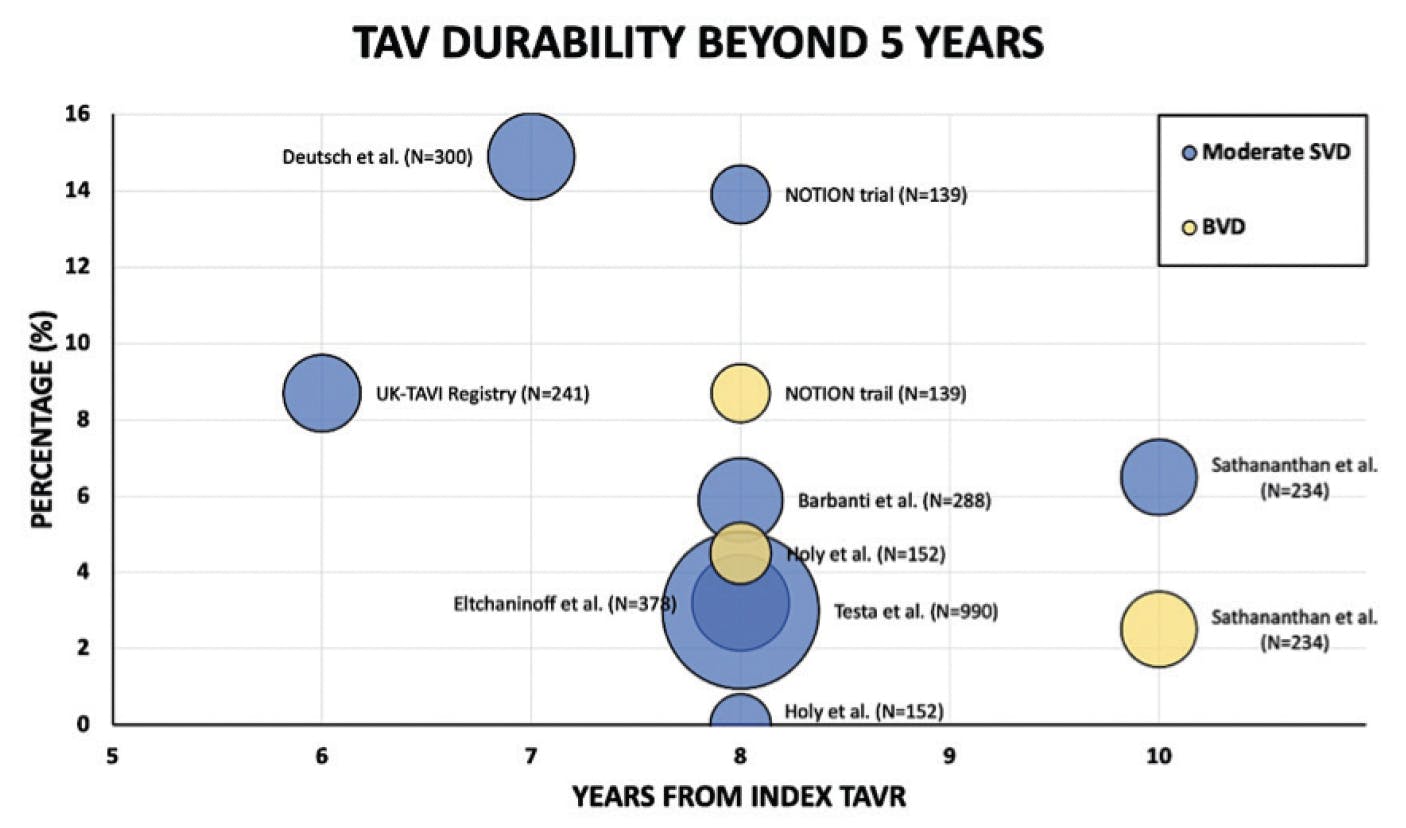
Figure 1. TAVs and reported rates of SVD and BVF data beyond 5 years. The size of the circles represents the study sample size.
DISCUSSION
The use of TAVR has increased dramatically over the past decade. While medium-term follow-up studies demonstrate favorable outcomes, only limited long-term TAV durability data exist. Despite this, the most recent United States guidelines for the management of patients with valvular heart disease document state, “For symptomatic patients with severe AS who are 65 to 80 years of age and have no anatomic contraindication to transfemoral TAVR, either SAVR or transfemoral TAVR is recommended after shared decision-making about the balance between expected patient longevity and valve durability (class I, level of evidence A).”31 Unfortunately, the availability and interpretation of long-term TAV durability literature are problematic for a number of reasons.
First, there is a lack of available long-term TAV durability data beyond 10 years. Second, TAVR has been frequently used in elderly, comorbid patients who may have died of noncardiac causes, and therefore, SVD may have gone undetected in many trials. Third, the incongruous definitions of SVD in trials and registries has led to uncertainty about the true incidence of SVD after TAVR. Fourth, there have been iterative improvements in preprocedural planning, stent technology, TAV deployment technique, and operator experience, which is expected to improve long-term TAV durability for more recently implanted, newer-generation TAVs. As an example, using the VARC-3 definition of SVD, a recent study reported that the older-generation Sapien XT had a higher risk of SVD compared with the third-generation Sapien 3 TAV.13,14
Despite these inherent difficulties, there are reliable early data—using standardized definitions—that show that the risk of SVD is potentially lower after TAVR than SAVR at 5 to 10 years. Furthermore, the risk of prosthesis-patient mismatch is systematically higher in SAVR cohorts compared to TAVR cohorts. This, together with well-documented improved EOA and lower transprosthetic gradients after TAVR compared to SAVR through 8 years, is encouraging and lends support for the expansion of TAVR to patients with a longer life expectancy. However, with the progressive expansion of TAVR toward younger patients, physicians and heart teams are increasingly encountering patients with severe bicuspid AS. It remains important to realize that these patients were excluded from the pivotal TAVR trials and that there are virtually no medium-to-longer-term follow-up data available on the use of TAVR in bicuspid AS.
A future research focus on the potential mechanism of TAV degeneration is needed so that long-term TAV durability can be improved (Figure 2). While it is recognized that TAVs can degenerate in a manner similar to surgical bioprostheses, durability of TAVs may be uniquely impacted because of the potential trauma that can occur due to initial valve preparation and balloon dilatation or as a result of suboptimal leaflet coaptation, leaflet pin-wheeling, or leaflet–stent frame contact resulting from asymmetric expansion. Additionally, prosthetic valve factors including supra-annular versus intra-annular leaflet position, length of leaflet coaptation, and the ability to achieve commissural alignment may be important. This all needs to be further studied, as does the role of antithrombotic pharmacotherapy in preventing TAV leaflet thickening and its potential impact on future SVD.
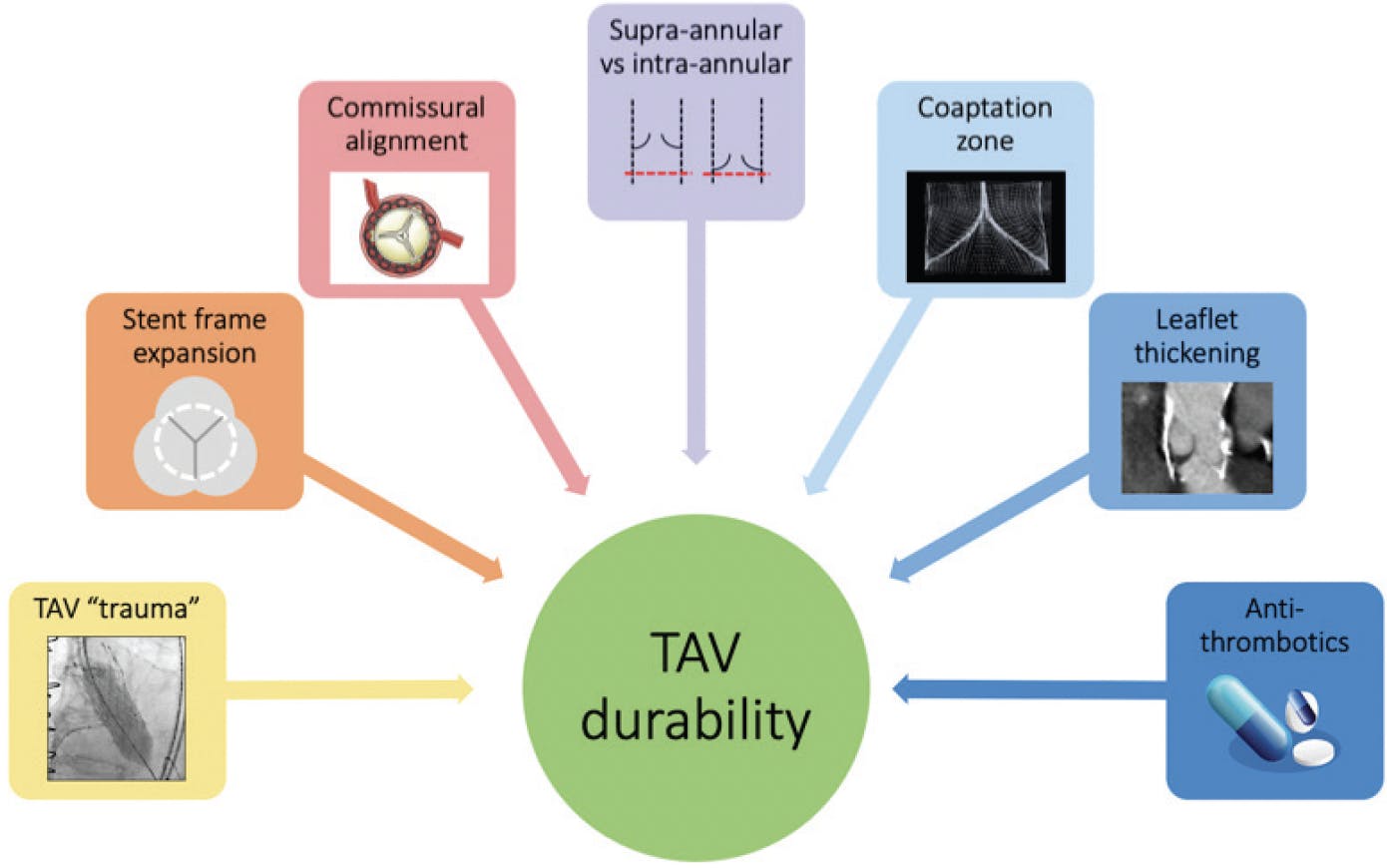
Figure 2. Possible factors impacting TAV durability.
1. Leon MB, Smith CR, Mack M, et al. Transcatheter aortic-valve implantation for aortic stenosis in patients who cannot undergo surgery. N Engl J Med. 2010;363:1597-1607. doi: 10.1056/NEJMoa1008232
2. Smith CR, Leon MB, Mack MJ, et al. Transcatheter versus surgical aortic-valve replacement in high-risk patients. N Engl J Med. 2011;364:2187-2198. doi: 10.1056/NEJMoa1103510
3. Leon MB, Smith CR, Mack MJ, et al. Transcatheter or surgical aortic-valve replacement in intermediate-risk patients. N Engl J Med. 2016;374:1609-1620. doi: 10.1056/NEJMoa1514616
4. Reardon MJ, Van Mieghem NM, Popma JJ, et al. Surgical or transcatheter aortic-valve replacement in intermediate-risk patients. N Engl J Med. 2017;376:1321-1331. doi: 10.1056/NEJMoa1700456
5. Mack MJ, Leon MB, Thourani VH, et al. Transcatheter aortic-valve replacement with a balloon-expandable valve in low-risk patients. N Engl J Med. 2019;380:1695-1705. doi: 10.1056/NEJMoa1814052
6. Popma JJ, Deeb GM, Yakubov SJ, et al. Transcatheter aortic-valve replacement with a self-expanding valve in low-risk patients. N Engl J Med. 2019;380:1706-1715. doi: 10.1056/NEJMoa1816885
7. Bourguignon T, Bouquiaux-Stablo AL, Candolfi P, et al. Very long-term outcomes of the Carpentier-Edwards Perimount valve in aortic position. Ann Thorac Surg. 2015;99:831-837. doi: 10.1016/j.athoracsur.2014.09.030
8. Johnston DR, Soltesz EG, Vakil N, et al. Long-term durability of bioprosthetic aortic valves: implications from 12,569 implants. Ann Thorac Surg. 2015;99:1239-1247. doi: 10.1016/j.athoracsur.2014.10.070
9. Fatima B, Mohananey D, Khan FW, et al. Durability data for bioprosthetic surgical aortic valve: a systematic review. JAMA Cardiol. 2019;4:71-80.
10. Abbott Trifecta Valves: Potential Risk of Early Structural Valve Deterioration- Letter to Health Care Providers. February 23, 2023. URL: https://www.fda.gov/medical-devices/letters-health-care-providers/abbott-trifecta-valves-potential-risk-early-structural-valve-deterioration-letter-health-care.
11. Anselmi A, Flecher E, Ruggieri VG, et al. Long-term results of the Medtronic Mosaic porcine bioprosthesis in the aortic position. J Thorac Cardiovasc Surg. 2014;147:1884-1891. doi: 10.1016/j.jtcvs.2013.07.005
12. Capodanno D, Petronio AS, Prendergast B, et al. Standardized definitions of structural deterioration and valve failure in assessing long-term durability of transcatheter and surgical aortic bioprosthetic valves: a consensus statement from the European Association of Percutaneous Cardiovascular Interventions (EAPCI) endorsed by the European Society of Cardiology (ESC) and the European Association for Cardio-Thoracic Surgery (EACTS). Eur J Cardiothorac Surg. 2017;52:408-417. doi: 10.1093/ejcts/ezx244
13. Pibarot P, Ternacle J, Jaber WA, et al. Structural deterioration of transcatheter versus surgical aortic valve bioprostheses in the PARTNER-2 trial. J Am Coll Cardiol. 2020;76:1830-1843. doi: 10.1016/j.jacc.2020.08.049
14. VARC-3 Writing C; Genereux P, Piazza N, Alu MC, et al. Valve Academic Research Consortium 3: updated endpoint definitions for aortic valve clinical research. J Am Coll Cardiol. 2021;77:2717-2746. doi: 10.1016/j.jacc.2021.02.038
15. Mack MJ, Leon MB, Smith CR, et al. 5-year outcomes of transcatheter aortic valve replacement or surgical aortic valve replacement for high surgical risk patients with aortic stenosis (PARTNER 1): a randomised controlled trial. Lancet. 2015;385:2477-2484. doi: 10.1016/S0140-6736(15)60308-7
16. Kapadia SR, Leon MB, Makkar RR, et al. 5-year outcomes of transcatheter aortic valve replacement compared with standard treatment for patients with inoperable aortic stenosis (PARTNER 1): a randomised controlled trial. Lancet. 2015;385:2485-2491. doi: 10.1016/S0140-6736(15)60290-2
17. Daubert MA, Weissman NJ, Hahn RT, et al. Long-term valve performance of TAVR and SAVR: a report from the PARTNER I trial. JACC Cardiovasc Imaging. 2016. doi: 10.1016/j.jcmg.2016.11.004
18. Gleason TG, Reardon MJ, Popma JJ, et al. 5-year outcomes of self-expanding transcatheter versus surgical aortic valve replacement in high-risk patients. J Am Coll Cardiol. 2018;72:2687-2696. doi: 10.1016/j.jacc.2018.08.2146
19. Yaubov SJ. 5-year incidence of bioprosthetic valve dysfunction in patients randomized to surgery or TAVR: insights from the CoreValve US Pivotal and SURTAVI trials. Presented at: CRT 2023; February 27, 2023; Washington, DC.
20. Thyregod HGH, Ihlemann N, Jorgensen TH, et al. Five-year clinical and echocardiographic outcomes from the Nordic Aortic Valve Intervention (NOTION) randomized clinical trial in lower surgical risk patients. Circulation. 2019. doi: 10.1161/CIRCULATIONAHA.118.036606
21. Didier R, Eltchaninoff H, Donzeau-Gouge P, et al. Five-year clinical outcome and valve durability after transcatheter aortic valve replacement in high-risk patients. Circulation. 2018;138:2597-2607. doi: 10.1161/CIRCULATIONAHA.118.036866
22. Vanhaverbeke M, Sondergaard L, De Backer O. Life expectancy of patients with a transcatheter aortic valve and the implications for long-term valve durability data collection. EuroIntervention. 2023;18:996-998. doi: 10.4244/EIJ-D-22-00493
23. Jorgensen TH, Thyregod HGH, Ihlemann N, et al. Eight-year outcomes for patients with aortic valve stenosis at low surgical risk randomized to transcatheter vs. surgical aortic valve replacement. Eur Heart J. 2021;42:2912-2919. doi: 10.1093/eurheartj/ehab375
24. Deutsch MA, Erlebach M, Burri M, et al. Beyond the five-year horizon: long-term outcome of high-risk and inoperable patients undergoing TAVR with first-generation devices. EuroIntervention. 2018;14:41-49. doi: 10.4244/EIJ-D-17-00603
25. Barbanti M, Costa G, Zappulla P, et al. Incidence of long-term structural valve dysfunction and bioprosthetic valve failure after transcatheter aortic valve replacement. J Am Heart Assoc. 2018;7:e008440. doi: 10.1161/JAHA.117.008440
26. Eltchaninoff H, Durand E, Avinee G, et al. Assessment of structural valve deterioration of transcatheter aortic bioprosthetic balloon-expandable valves using the new European consensus definition. EuroIntervention. 2018;14:e264-e271. doi: 10.4244/EIJ-D-18-00015
27. Holy EW, Kebernik J, Abdelghani M, et al. Long-term durability and haemodynamic performance of a self-expanding transcatheter heart valve beyond five years after implantation: a prospective observational study applying the standardised definitions of structural deterioration and valve failure. EuroIntervention. 2018;14:e390-e396. doi: 10.4244/EIJ-D-18-00041
28. Testa L, Latib A, Brambilla N, et al. Long-term clinical outcome and performance of transcatheter aortic valve replacement with a self-expandable bioprosthesis. Eur Heart J. 2020;41:1876-1886. doi: 10.1093/eurheartj/ehz925
29. Sathananthan J, Lauck S, Polderman J, et al. Ten year follow-up of high-risk patients treated during the early experience with transcatheter aortic valve replacement. Catheter Cardiovasc Interv. 2021;97:E431-E437. doi: 10.1002/ccd.29124
30. Ludman PF. UK TAVI registry. Heart. 2019;105(suppl 2):s2-s5. doi: 10.1136/heartjnl-2018-313510
31. Otto CM, Nishimura RA, Bonow RO, et al. 2020 ACC/AHA guideline for the management of patients with valvular heart disease: executive summary: a report of the American College of Cardiology/American Heart Association Joint Committee on Clinical Practice Guidelines. Circulation. 2021;143:e35-e71. doi: 10.1161/CIR.0000000000000932
Advertisement
Advertisement