Advertisement
Advertisement
March/April 2023
Redo TAVR: Technical Considerations
Key concepts and risk management for procedural planning of redo TAVR.
By David Meier, MD; Stephane Fournier, MD, PhD; and Janarthanan Sathananthan, MBChB, MPH
Transcatheter aortic valve replacement (TAVR) is now a well-established treatment option for patients with severe aortic stenosis, irrespective of surgical risk, and the 2020 American College of Cardiology/American Heart Association guidelines for management of patients with valvular heart disease suggest that TAVR is an acceptable treatment option for patients aged > 65 years.1 Additionally, recent data from the United States showed that in 2021, 47% of patients undergoing aortic valve replacement before age 65 were treated with TAVR.2 It has also recently been shown that more than one-third of patients undergoing TAVR before the age of 75 will be alive 10 years later.3 These data suggest that a growing number of patients will be presenting with degenerated transcatheter heart valves (THVs) and require another intervention.
OUTCOMES AFTER REDO TAVR
Currently, a patient with a failed TAVR can undergo either redo TAVR or surgical TAVR explantation. Although TAVR explantation might be favored in some situations, such as endocarditis, paravalvular leak (PVL), or for unfavorable anatomy, redo TAVR can carry a risk of up to 12% in-hospital mortality.4 Clinical experience with redo TAVR is limited and long-term data are lacking, despite early reports demonstrating excellent early outcomes and survival up to 1 year.5 Data have shown that many redo TAVR combinations could be at risk of coronary obstruction or sinus sequestration.6,7 Because the number of redo TAVR procedures is likely to drastically increase in the coming years, structural operators must have a good understanding of some key concepts that will allow risk mitigation when performing redo TAVR.
KEY CONCEPTS FOR PROCEDURAL PLANNING OF REDO TAVR
Extensive bench testing and early clinical experience offer some understanding into the technical consideration that may be encountered during redo TAVR. This article explains some of these key concepts (Figure 1) and considers how they can be integrated in procedural planning to determine adequate THV selection to avoid coronary obstruction, maximize chances of preserving coronary access, and optimize prosthesis function.
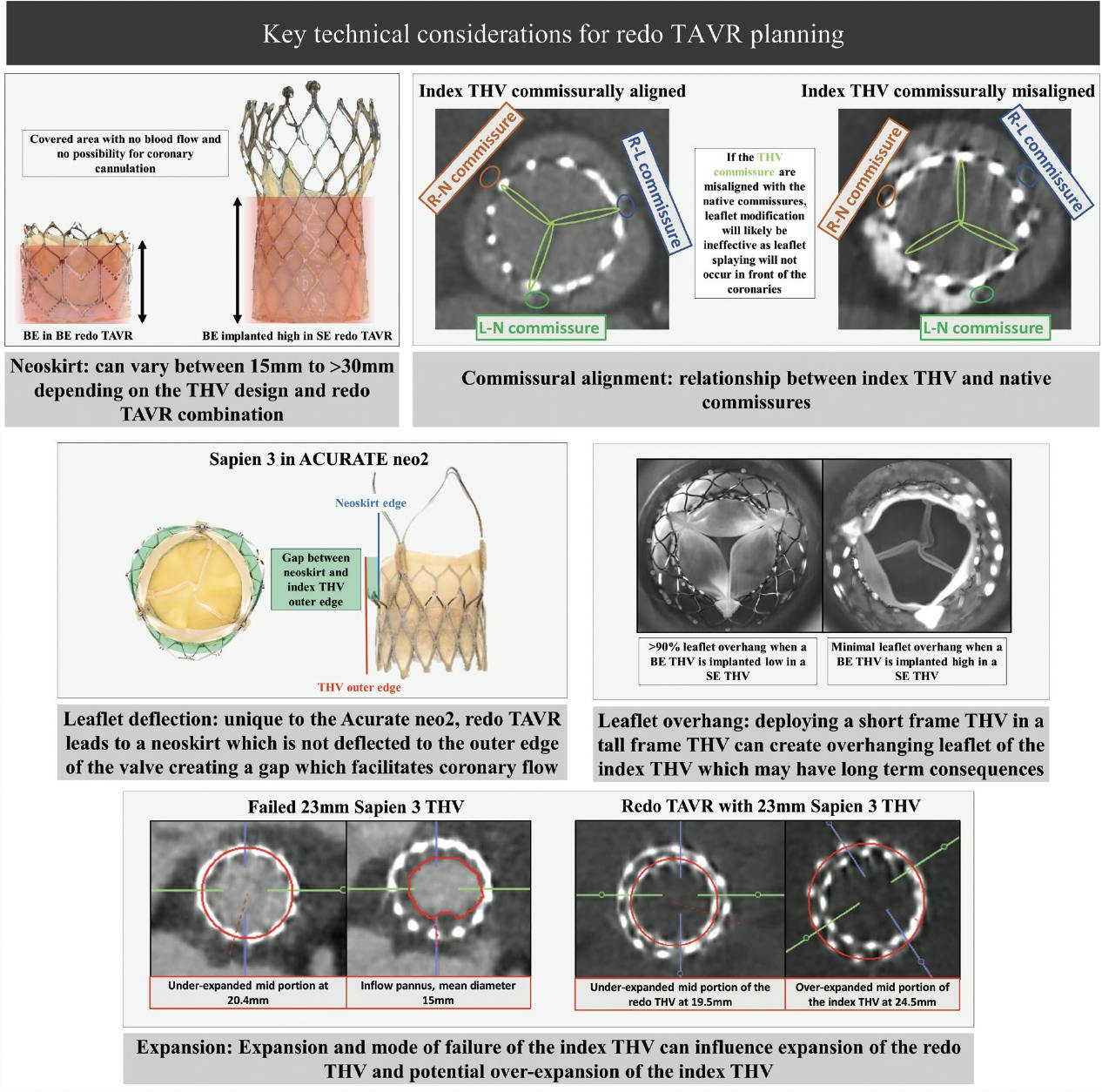
Figure 1. Key technical considerations for redo TAVR planning. BE, balloon-expandable; SE, self-expanding.
Expansion
THVs are often underexpanded when systematically assessed on CT,8 and both the degree of expansion and the relative dimension compared to the native annulus influence planning for redo TAVR.
The presence of significant annular or subannular calcification can increase the risk of annular injury during redo TAVR, especially if a balloon-expandable THV is selected, with a potential need for aggressive pre- and postdilatation. Additionally, the native annulus dimensions provide information about sizing of the new redo THV and whether there is room to further expand the index THV to optimize hemodynamics.
For example, if planning redo TAVR with a balloon-expandable THV inside a significantly underexpanded balloon-expandable THV, an operator may select a redo THV that is smaller than the first one to avoid additional underexpansion. Alternatively, in the presence of an undersized, underexpanded THV with PVL as the mode of failure, oversizing might be considered. Additionally, the presence of an underexpanded THV can inform operators about the need for pre- and/or postdilatation.
Sizing of the second THV also depends on the type of the first THV because implantation of a second THV can impact the index THV differently on expansion. It has indeed been shown that implantation of a balloon-expandable valve inside a failed Evolut valve (Medtronic) can result in up to a 5-mm increase in the Evolut valve diameter, particularly if the balloon-expandable valve is implanted high in the self-expandable valve.9 This can, of course, increase the risk of coronary obstruction or sinus sequestration and should be taken into consideration.
On the contrary, some self-expandable THVs might have a protective effect. When a balloon-expandable THV is deployed inside an Acurate Neo2 (Boston Scientific Corporation), there is little to no increase in expansion of the index valve, resulting in a protective effect on the risk of coronary obstruction. However, this leads to some underexpansion of the balloon-expandable valve, which might in turn alter long-term function of the THV.10
Neoskirt
Similar to valve-in-valve TAVR in surgical valves, one important step of redo TAVR planning is to understand the relationship between the index THV, the coronary ostia, and what will happen when a second THV is deployed. “Neoskirt” refers to the height of the covered tube that will be formed when the leaflets of the failed THV are pinned up by the redo THV.
Once the neoskirt height has been estimated and coronary height is known, it is easy to determine whether the neoskirt will extend above the coronaries. If the neoskirt is expected to stop below the coronaries, coronary obstruction risk is minimal and selective coronary cannulation should be possible.
When the neoskirt extends above the coronaries, it is important to know if the sinuses are large enough to allow for sufficient blood flow around the THV and thus result in proper coronary perfusion. The metric used to quantify the risk of coronary obstruction in this context is the virtual THV–to-coronary (VTC) distance, which is obtained by simulating the THV on CT before redo TAVR. A VTC < 4 mm has been shown to be an independent, strong predictor of coronary obstruction in patients undergoing valve-in-valve TAVR.11 A small VTC is generally a contraindication for redo TAVR, unless a leaflet-modification technique such as BASILICA (bioprosthetic or native aortic scallop intentional laceration to prevent iatrogenic coronary artery obstruction during TAVR) is considered, with the caveat described below.
A VTC > 4 mm does not necessarily mean that redo TAVR will be safe, and in cases where the neoskirt extends above the sinotubular junction (STJ), there is a risk of sinus sequestration and difficult coronary access. In this context, the distance between the valve and the STJ is measured, and a value < 2 mm indicates a risk of impaired coronary access and sinus sequestration.
Neoskirt height is highly variable and depends on the index THV and redo THV design, as well as the implant height.12,13 The shortest neoskirt (as short as 15.2 mm) can be achieved by implanting a balloon-expandable THV in a balloon-expandable THV; implanting a balloon-expandable or self-expanding THV high in a self-expanding THV will maximize the neoskirt height (up to almost 32 mm).12 “Functional neoskirt” refers to the portion of the neoskirt that is situated above the annular plan and is influenced by the depth of implantation of the index THV. For a given THV combination, the neoskirt will be the same but the functional neoskirt lower if the index valve has been implanted deeper.
Leaflet Overhang
Leaflet overhang is a concept recently described in the context of redo TAVR within a self-expanding THV9,10 and represents the percentage of orifice blockage due to inward flexing of the unpinned portion of the leaflets. The lower the redo THV is implanted, the more leaflet overhang there will be. For example, when a Sapien 3 valve (Edwards Lifesciences) is implanted at node four in an Evolut valve, there can be as much as 90% leaflet overhang; this value is reduced to < 10% if the redo THV is implanted at node six.9 The advantage of leaflet overhang is to reduce neoskirt height, potentially preserving coronary perfusion and access.
On the bench, leaflet overhang was not associated with worse hydrodynamic performance of the redo THV, even if the impact of leaflet overhang remains unknown in highly degenerated and calcified THVs.
Leaflet Deflection
Leaflet deflection is another concept that might play a role in some THV combinations. When performing redo TAVR with a balloon-expandable THV inside an Acurate Neo2, the leaflets of the index THV may not be deflected up to the outer border of the THV frame. Again, it has been shown on the bench that this would create a space as large as 3.9 mm between the neoskirt and the aortic wall, potentially allowing for coronary perfusion.10
Commissural Alignment
Alignment of the index THV with native commissures offers several theoretic advantages, including improved hemodynamics, optimal coronary flow, and ease of coronary cannulation.14 Surgical valves are almost systematically aligned with native commissures, but this has been shown to be much more random with THVs,15 even though achieving commissural alignment is now possible with most of the latest-generation THVs.14 In redo TAVR and when using leaflet-modification techniques such as BASILICA, the absence of severe commissural misalignment of the index THV is required for BASILICA to be effective. A detailed review of leaflet-modification techniques is beyond the scope of this article, but a word of caution is warranted because BASILICA has been described mostly for valve-in-valve TAVR inside surgical valves and might be less effective in redo TAVR, even if some modifications of the technique might make it more effective.16,17
Redo THV Selection and Sizing
A redo THV needs to incorporate the elements mentioned previously, as well as considerations of patient anatomy, need for future coronary access, and type of index THV. In general, redo TAVR with a self-expanding THV is performed with a balloon-expandable THV because a self-expanding/self-expanding combination can result in very high neoskirt and limited space between THV frames for coronary access.12 Redo TAVR within a balloon-expandable THV can be performed either with a balloon-expandable THV when there is a need to minimize neoskirt height and maximize chances of future coronary access or a self-expanding THV in patients with a small index THV and a concern of high-residual gradient, although the clinical implications of this are still debated.18
CONCLUSION
The near future will see an increase in redo TAVR procedures, and operators must be familiar with key technical considerations that take into account patient anatomy and THV combination characteristics to optimize lifetime management of aortic stenosis.
1. Otto CM, Nishimura RA, Bonow RO, et al. 2020 ACC/AHA Guideline for the management of patients with valvular heart disease: executive summary: a report of the American College of Cardiology/American Heart Association Joint Committee on Clinical Practice Guidelines. Circulation. 2021;143:e35-e71. doi: 10.1161/CIR.0000000000000932
2. Sharma T, Krishnan AM, Lahoud R, et al. National trends in TAVR and SAVR for patients with severe isolated aortic stenosis. J Am Coll Cardiol. 2022;80:2054-2056. doi: 10.1016/j.jacc.2022.08.787
3. Vanhaverbeke M, Nuyens P, Bække PS, et al. Temporal trends in survival rates after transcatheter aortic valve replacement. JACC Cardiovasc Interv. 2022;15:1391-1393. doi: 10.1016/j.jcin.2022.04.038
4. Bapat VN, Zaid S, Fukuhara S et al. Surgical explantation after TAVR failure: mid-term outcomes from the EXPLANT-TAVR international registry. JACC Cardiovasc Interv. 2021;14:1978-1991. doi: 10.1016/j.jcin.2021.07.015
5. Landes U, Webb JG, De Backer O, et al. Repeat transcatheter aortic valve replacement for transcatheter prosthesis dysfunction. J Am Coll Cardiol. 2020;75:1882-1893. doi: 10.1016/j.jacc.2020.02.051
6. Medranda GA, Soria Jimenez CE, Torguson R, et al. Lifetime management of patients with symptomatic severe aortic stenosis: a computed tomography simulation study. EuroIntervention. 2022;18:e407-e416. doi: 10.4244/EIJ-D-21-01091
7. Ochiai T, Oakley L, Sekhon N, et al. Risk of coronary obstruction due to sinus sequestration in redo transcatheter aortic valve replacement. JACC Cardiovasc Interv. 2020;13:2617-2627. doi: 10.1016/j.jcin.2020.09.022
8. Fukui M, Bapat VN, Garcia S, et al. Deformation of transcatheter aortic valve prostheses: implications for hypoattenuating leaflet thickening and clinical outcomes. Circulation. 2022;146:480-493. doi: 10.1161/CIRCULATIONAHA.121.058339
9. Akodad M, Sellers S, Landes U, et al. Balloon-expandable valve for treatment of Evolut valve failure: implications on neoskirt height and leaflet overhang. JACC Cardiovasc Interv. 2022;15:368-377. doi: 10.1016/j.jcin.2021.12.021
10. Akodad M, Meier D, Sellers S, et al. A bench study of balloon-expandable valves for the treatment of self-expanding valve failure. EuroIntervention. Published online January 9, 2023. doi: 10.4244/EIJ-D-22-00769
11. Ribeiro HB, Rodés-Cabau J, Blanke P, et al. Incidence, predictors, and clinical outcomes of coronary obstruction following transcatheter aortic valve replacement for degenerative bioprosthetic surgical valves: insights from the VIVID registry. Eur Heart J. 2018;39:687-695. doi: 10.1093/eurheartj/ehx455
12. Meier D, Akodad M, Landes U, et al. Coronary access following redo TAVR: impact of THV design, implant technique, and cell misalignment. JACC Cardiovasc Interv. 2022;15:1519-1531. doi: 10.1016/j.jcin.2022.05.005
13. Akodad M, Sellers S, Gulsin GS, et al. Leaflet and neoskirt height in transcatheter heart valves: implications for repeat procedures and coronary access. JACC Cardiovasc Interv. 2021;14:2298-2300. doi: 10.1016/j.jcin.2021.07.034
14. Tang GHL, Amat-Santos IJ, De Backer O et al. Rationale, definitions, techniques, and outcomes of commissural alignment in TAVR: from the ALIGN-TAVR Consortium. JACC Cardiovasc Interv. 2022;15:1497-1518. doi: 10.1016/j.jcin.2022.06.001
15. Fuchs A, Kofoed KF, Yoon SH, et al. Commissural alignment of bioprosthetic aortic valve and native aortic valve following surgical and transcatheter aortic valve replacement and its impact on valvular function and coronary filling. JACC Cardiovasc Interv. 2018;11:1733-1743. doi: 10.1016/j.jcin.2018.05.043
16. Greenbaum AB, Kamioka N, Vavalle JP, et al. Balloon-assisted BASILICA to facilitate redo TAVR. JACC Cardiovasc Interv. 2021;14:578-580. doi: 10.1016/j.jcin.2020.10.056
17. Khan JM, Bruce CG, Babaliaros VC, et al. TAVR roulette: caution regarding BASILICA laceration for TAVR-in-TAVR. JACC Cardiovasc Interv. 2020;13:787-789. doi: 10.1016/j.jcin.2019.10.010
18. Landes U, Richter I, Danenberg H, et al. Outcomes of redo transcatheter aortic valve replacement according to the initial and subsequent valve type. JACC Cardiovasc Interv. 2022;15:1543-1554. doi: 10.1016/j.jcin.2022.05.016
Advertisement
Advertisement