Advertisement
Advertisement
July/August 2023
Transcarotid Access for TAVR
Advancements, feasibility, and clinical outcomes.
By Guillaume Bonnet, MD, PhD; Lionel Leroux, MD, PhD; Julien Peltan, MD; Prof. Louis Labrousse, MD, PhD; Julien Ternacle, MD, PhD; Prof. Stéphane Lafitte, MD, PhD; and Thomas Modine, MD, PhD
Transcatheter aortic valve replacement (TAVR) has revolutionized the management of severe aortic stenosis. As TAVR techniques continue to evolve, optimizing the access route plays a crucial role in procedural success and patient outcomes. Traditionally, transfemoral (TF) access has been the primary access route for TAVR. However, alternative access routes, such as transcarotid access, have garnered attention in specific patient populations, offering several benefits, such as reduced vascular complications, improved procedural efficiency, and enhanced patient outcomes.1
RATIONALE FOR TRANSCAROTID ACCESS/INDICATIONS
Transcarotid access presents unique anatomic advantages, making it an attractive option for TAVR.2 Patients with severely calcified or tortuous iliofemoral arteries may encounter challenges with TF access, making the transcarotid route a more reliable and direct pathway to the aortic valve. Moreover, individuals with peripheral artery disease or a history of vascular interventions may be at higher risk of vascular complications with TF access. In contrast, the carotid artery typically exhibits less tortuosity and a lower calcification burden, making it a suitable alternative route for TAVR delivery systems.3
Candidates for transcarotid TAVR include patients with small-caliber (≤ 6 mm), heavily calcified, severely tortuous, or stenotic iliofemoral anatomy or those with significant descending aortic pathology. Patients with evidence of significant (≥ 65%) common or internal carotid artery stenosis or with congenital variants of the aortic arch (eg, Bovine arch) have to be discussed for transcarotid TAVR. Previous ipsilateral carotid artery intervention, contralateral carotid artery severe stenosis or occlusion, or stenosis/occlusion of the vertebral arteries are contraindications to transcarotid TAVR.
PROCEDURAL TECHNIQUE
The transcarotid TAVR procedure involves a series of carefully orchestrated steps to ensure safe and effective valve deployment.4 The proximal common carotid artery was exposed via a small incision, 2 cm above the left clavicle (Figure 1). Careful dissection of the carotid artery was performed to avoid injury to the vagus nerve, which was retracted from the immediate surgical field. Vascular clamps were used to achieve proximal and distal control of the carotid artery, and percutaneous access was then achieved by insertion of a 5-F vascular access sheath. The stenotic aortic valve was then crossed in the usual fashion. A vascular sheath was inserted on the stiff guidewire and carefully advanced into the ascending aorta (Figure 2). Fluoroscopic guidance was employed to advance the TAVR delivery system retrograde into the ascending aorta. The standard TAVR implantation techniques precisely described since the first case report in 2010 were followed.5 After valve deployment, the sheath was carefully retracted, and vascular clamps were used to minimize blood loss while surgically repairing the arterial access site using 6/0 Prolene sutures (Ethicon, a Johnson & Johnson company) (Figure 3). A control angiogram was obtained to assess artery patency, and patients were then transferred to the intensive care unit.
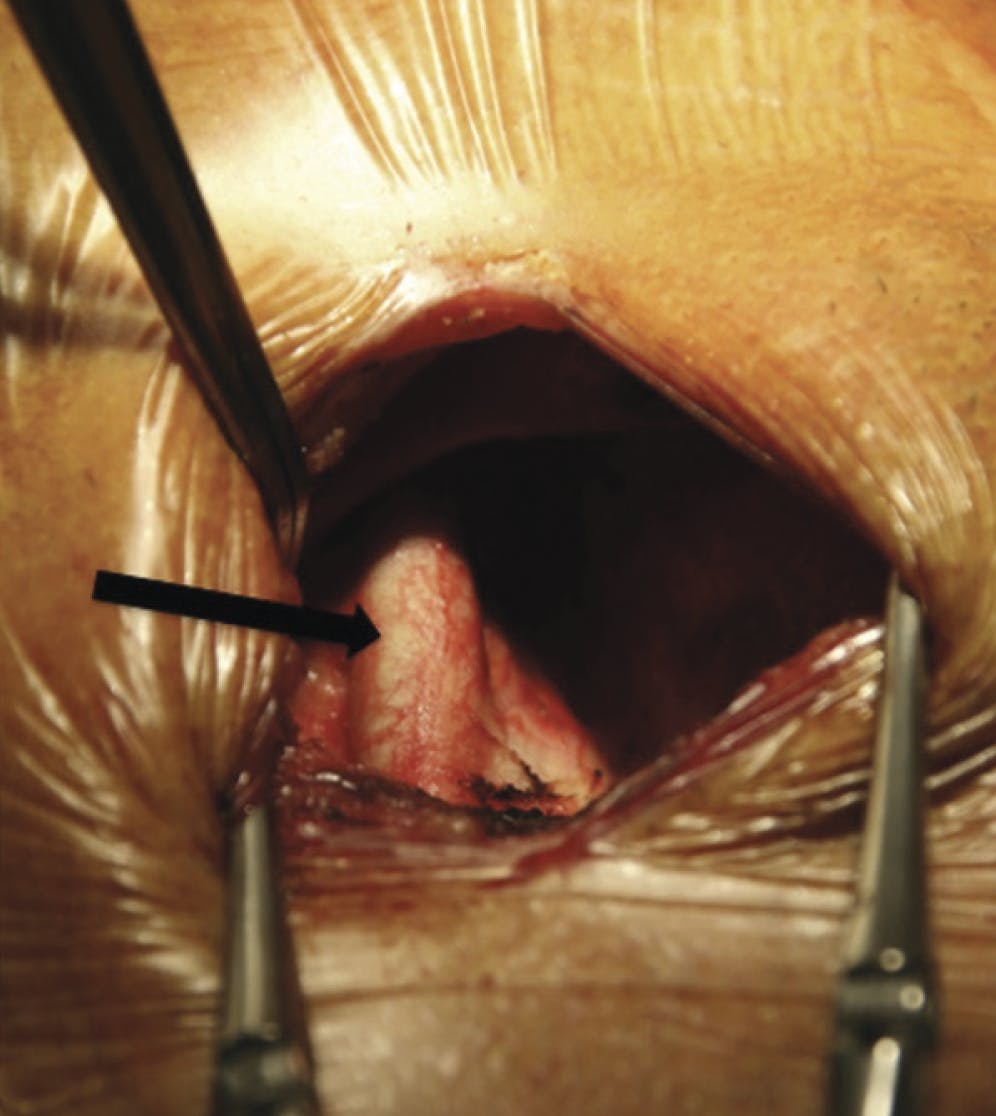
Figure 1. Exposure of the common carotid artery (black arrow) for TAVR. Reprinted with permission from Mylotte D, et al. Transcarotid transcatheter aortic valve replacement: feasibility and safety. JACC Cardiovasc Interv. 2016;9:472-480.
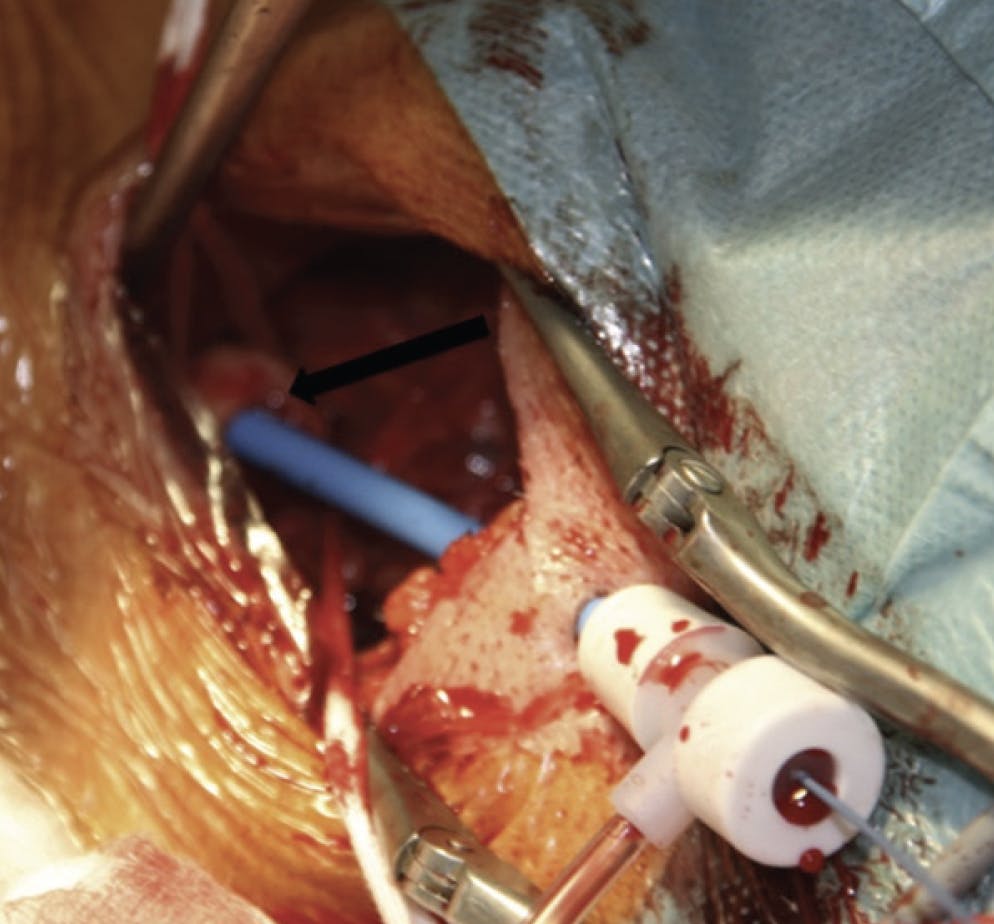
Figure 2. Insertion of the vascular access sheath. The 14-F vascular access sheath in situ in the left common carotid artery (black arrow). Note the vascular access sheath is stabilized through a 1-cm incision cranial to the carotid dissection field. Reprinted with permission from Mylotte D, et al. Transcarotid transcatheter aortic valve replacement: feasibility and safety. JACC Cardiovasc Interv. 2016;9:472-480.
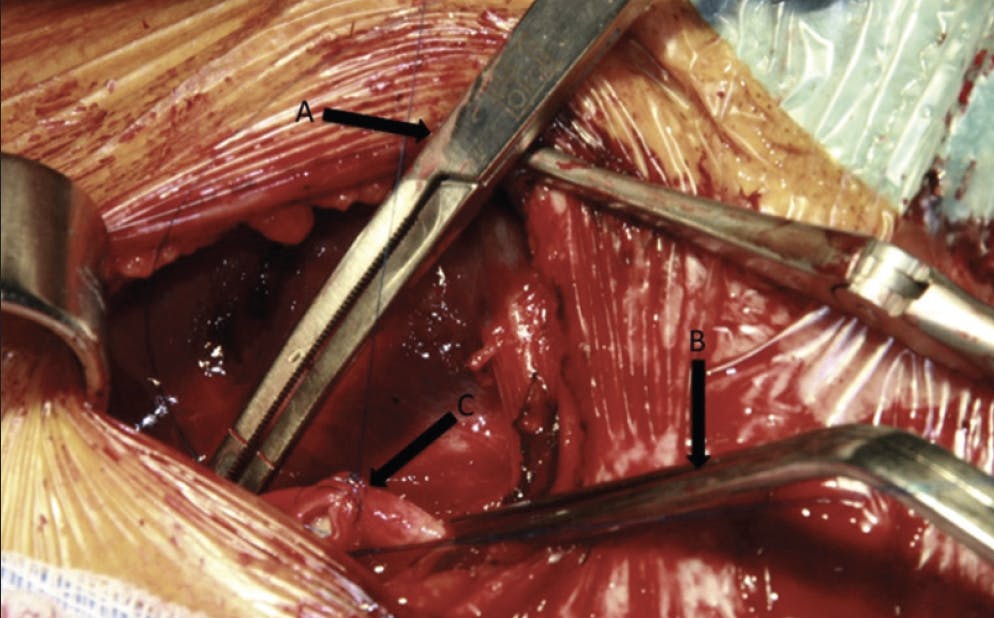
Figure 3. Vascular closure. Proximal (A) and distal (B) vascular clamps are used to control access site bleeding during surgical closure of the left common carotid arteriotomy (C). Reprinted with permission from Mylotte D, et al. Transcarotid transcatheter aortic valve replacement: feasibility and safety. JACC Cardiovasc Interv. 2016;9:472-480.
From an anesthesia perspective, the transcarotid approach presents distinct considerations, including the use of general anesthesia, dedicated patient positioning, continuous intraoperative monitoring of cerebral perfusion using cerebral oximetry with near-infrared spectrometry, and intravenous heparin to maintain an activated clotting time ≥ 250 seconds. The target blood pressure is set higher than for a TF approach to ensure optimized cerebral perfusion, akin to the anesthesia protocol employed in carotid endarterectomy procedures.
Tips and Tricks for Transcarotid Access in TAVR
1. Right carotid access is generally more direct and straightforward than left carotid access.
2. Always ensure that the contralateral side is not stenosed before proceeding with the procedure.
3. Preprocedural CT scanning should extend up to the mandible to facilitate accurate analysis of access.
4. Consider the possibility of performing a carotid endarterectomy at the carotid bifurcation if necessary, toward the end of the TAVR procedure.
5. When using right carotid access, prefer secondary left radial access to avoid conflicts in the brachiocephalic trunk.
6. The Edwards Lifesciences apical system (Certitude delivery system, 21 F) is preferred for the TAVR procedure, although the Medtronic TF system (Delivery Catheter System with InLine Sheath, 14 F) is also a viable option.
7. In rare cases in which a second radial access is not possible, a contrast agent can be injected through the carotid sheath to proceed with the procedure using a single access point.
8. Pay close attention to centering the valve on the deployment balloon as it may subtly retract during its passage through the carotid sheath.
9. Stimulation through the guidewire is as effective as TF access.
10. For the surgeon, avoid using pouches to prevent stenosis, and close the skin with separate sutures to prevent compressive hematoma. The use of a drain is not routinely recommended.
11. The procedure can be performed under aspirin/clopidogrel therapy, but discontinuing anticoagulants is advisable.
12. Routine use of MRI or Willis polygon study is not necessary in daily practice.
13. Avoid performing the procedure under local anesthesia with a conscious patient, as it is not recommended even if technically feasible.
FEASIBILITY AND EARLY CLINICAL OUTCOMES
The feasibility and safety of transcarotid access for TAVR have been investigated in several studies. In 2012, Modine et al conducted a study to assess the feasibility and early clinical outcomes of transcutaneous aortic valve implantation using left carotid access.6 The authors reported promising results, indicating successful valve implantation through the carotid route in a selected group of patients. Subsequently, numerous studies have demonstrated significant improvements in safety, comparable outcomes to the traditional TF approach, and noteworthy reductions in vascular complications and bleeding events.4 There may still be a presumed higher risk of stroke in a review that combines data from both transcarotid and subclavian access approaches.7 However, recent data report a low and comparable level of risk for neurological events between the carotid and TF approaches in this selected population with complex anatomies.1,8
SPECIFIC POPULATION: OBESE PATIENTS
Managing TF access and achieving hemostasis can be more challenging in obese patients due to their anatomic characteristics. In fact, obesity has been identified as an independent predictor for vascular access complications in patients undergoing TF coronary interventions. A recent study conducted by Alperi et al demonstrated the superiority of the carotid approach over the TF approach in obese patients with a body mass index > 35 kg/m2 undergoing TAVR.9 The study revealed a lower incidence of vascular complications in the carotid approach group, with no significant differences compared to TF TAVR regarding in-hospital mortality, major bleeding events, and stroke. These findings highlight the potential advantages of the carotid access in improving outcomes for obese patients undergoing TAVR procedures.
CONCLUSION
Transcarotid access is a widely used technique in Europe and has proven to be a valuable alternative to traditional femoral access, especially in high-risk populations. Its advantages include a reduction in vascular complications and improved procedural efficiency. As technology continues to advance and research efforts persist, transcarotid access is expected to play a significant role in expanding the possibilities of TAVR, ultimately leading to improved patient outcomes and broadening the scope of this life-saving procedure.
This approach appears to be an essential component in the therapeutic arsenal in the context of a medical-surgical unit increasingly offering “hybrid” procedures with collaborative efforts between interventional cardiologists and surgeons. Notably, in France, it has become the second most common access route for TAVR procedures and accounts for > 10% of procedures performed.
1. Overtchouk P, Folliguet T, Pinaud F, et al. Transcarotid approach for transcatheter aortic valve replacement with the Sapien 3 prosthesis: a multicenter French registry. JACC Cardiovasc Interv. 2019;12:413-419. doi: 10.1016/j.jcin.2018.11.014
2. Folliguet T, Laurent N, Bertram M, et al. Transcarotid transcatheter aortic valve implantation: multicentre experience in France. Eur J Cardiothorac Surg. 2018;53:157-161. doi: 10.1093/ejcts/ezx264
3. Damluji AA, Murman M, Byun S, et al. Alternative access for transcatheter aortic valve replacement in older adults: a collaborative study from France and United States. Catheter Cardiovasc Interv. 2018;92:1182-1193. doi: 10.1002/ccd.27690
4. Mylotte D, Sudre A, Teiger E, et al. Transcarotid transcatheter aortic valve replacement feasibility and safety. JACC Cardiovasc Interv. 2016;9:472-480. doi: 10.1016/j.jcin.2015.11.045
5. Modine T, Lemesle G, Azzaoui R, Sudre A. Aortic valve implantation with the CoreValve revalving system via left carotid artery access: first case report. J Thorac Cardiovasc Surg. 2010;140:928-929. doi: 10.1016/j.jtcvs.2010.03.001
6. Modine T, Sudre A, Delhaye C, et al. Transcutaneous aortic valve implantation using the left carotid access: feasibility and early clinical outcomes. Ann Thorac Surg. 2012;93:1489-94. doi: 10.1016/j.athoracsur.2012.01.030
7. Faroux L, Junquera L, Mohammadi S, et al. Femoral versus nonfemoral subclavian/carotid arterial access route for transcatheter aortic valve replacement: a systematic review and meta-analysis. J Am Heart Assoc. 2020;9:e017460. doi: 10.1161/JAHA.120.017460
8. Marie B, David CH, Guimbretière G, et al. Carotid versus femoral access for transcatheter aortic valve replacement: comparable results in the current era. Eur J Cardiothorac Surg. 2021;60:874-879. doi: 10.1093/ejcts/ezab109
9. Alperi A, McInerney A, Modine T, et al. Transcatheter aortic valve replacement in obese patients: procedural vascular complications with the trans-femoral and trans-carotid access routes. Interact Cardiovasc Thorac Surg. 2022;34:982-989. doi: 10.1093/icvts/ivab354
Advertisement
Advertisement