Advertisement
Advertisement
July/August 2023
Technical Tips for Inserting and Positioning the Impella Device
A practical guide to Impella insertion, repositioning, and management of related complications.
By Luca Baldetti, MD; Alessandro Beneduce, MD; Alaide Chieffo, MD; and Anna Mara Scandroglio, MD
The advent of percutaneous mechanical circulatory support (pMCS) devices has revolutionized the field of high-risk percutaneous coronary intervention (HR-PCI) and cardiogenic shock (CS) treatment. The Impella microaxial flow pump (Abiomed) has been increasingly used for these indications.
To maximize the benefit from pMCS, device-related complications should be prevented. Most of these arise from predictable pump-patient interactions; therefore, meticulous attention to device insertion, positioning, and cardiac intensive care unit (ICU) monitoring of related complications is warranted. Although several concepts also apply to transaxillary devices, we will selectively discuss the Impella CP device in the transfemoral configuration, as it represents the primary option for left ventricular MCS for the interventional and intensive care cardiologist.
DEVICE INSERTION AND POSITIONING
Device Insertion Technique
A step-by-step approach to device insertion is provided in Figure 1. Obtaining a safe vascular access is the fundamental first step of device insertion, as vascular access site bleeding still represents a relevant proportion of device-related complications.1,2 The Impella CP device features different diameters from its distal to proximal section (6-F pigtail tip, 14-F pump, and 9-F catheter shaft), requiring a large-bore vascular access (≥ 9 F) for insertion. The peel-away introducer sheath (13 and 25 cm lengths) has an internal diameter of 14 F to accommodate the pump, entailing a minimum femoral diameter of 5 mm. Accordingly, a dedicated preprocedural diagnostic workup using ultrasound or CT to identify the ideal vascular access site is advisable. However, the CS scenario might significantly impact the possibility of preprocedural planning. In this case, angiographic assessment of the iliofemoral vessels represents a valuable alternative.
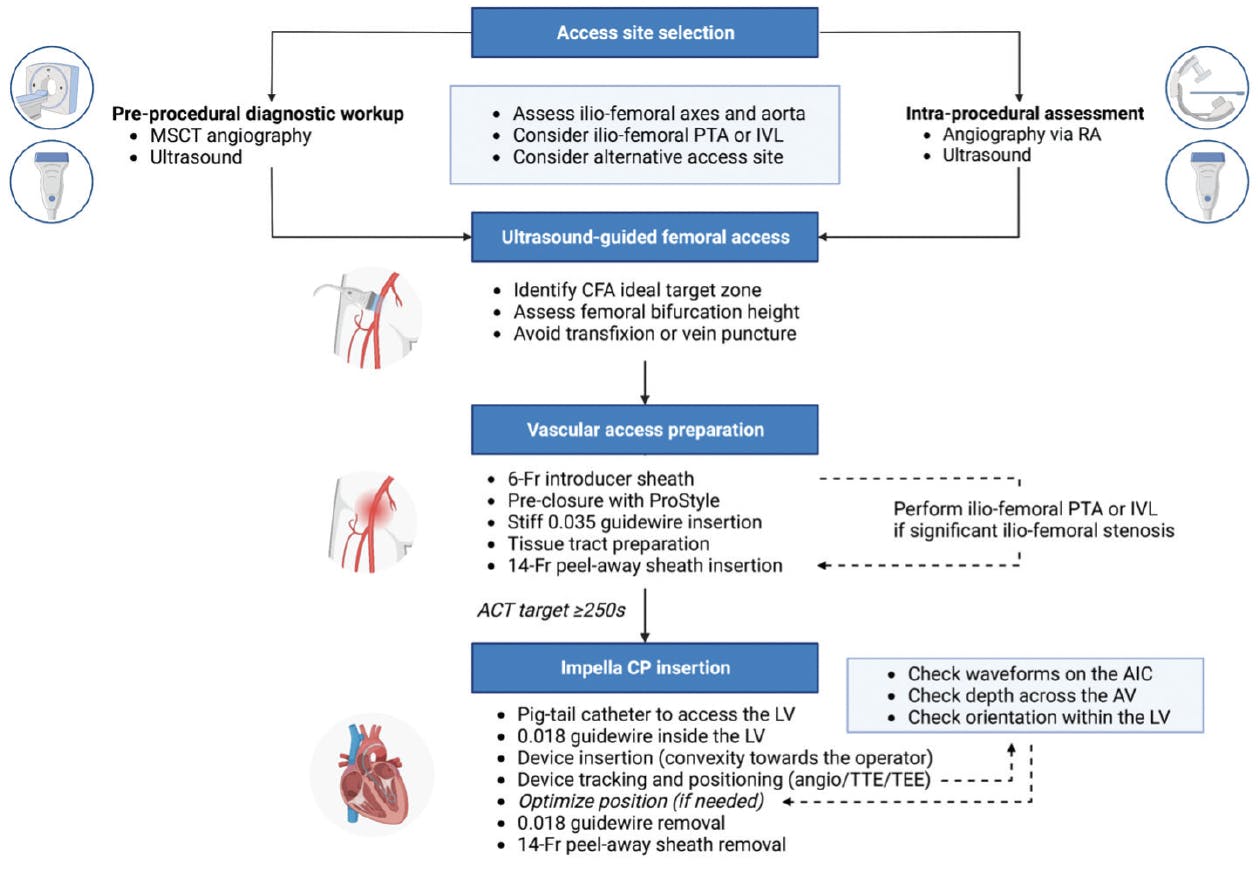
Figure 1. A step-by-step guide to Impella insertion. Created with BioRender.com. Abbreviations: ACT, activated clotting time; AIC, Automated Impella Controller; AV, aortic valve; CFA, common femoral artery; LV, left ventricle; MSCT, multislice CT; PTA, percutaneous transluminal angioplasty; IVL, intravascular lithotripsy; RA, radial artery; TEE, transesophageal echocardiography; TTE, transthoracic echocardiogram.
In any case, an ultrasound-guided technique should be the preferred approach for vascular access.3 Ultrasound guidance might allow to identify an ideal target zone for a safe puncture of the common femoral artery, avoiding atherosclerotic or calcified plaques in the anterior vessel wall and reducing the risk of arterial transfixion or inadvertent puncture of the femoral vein.
To implant the device, a 6-F sheath is introduced in the femoral artery. Preclosure of the femoral access using the Perclose ProStyle device (Abbott Vascular) is preferable before 14-F peel-away sheath insertion to facilitate hemostasis during support and after device removal. Ultrasound might be used to ensure correct deployment of suture-based vascular access closure devices, especially in case of common femoral artery atherosclerotic disease.4 Missing the preclosure step leaves operators with little or no option for percutaneous access site closure once the 14-F peel-away sheath has been removed, exposing the patient to increased bleeding risk.5,6 The 14-F peel-away introducer sheath is inserted over a stiff J-tip 0.035-inch guidewire after preparation of the tissue tract. Anticoagulation is recommended to achieve an activated clotting time (ACT) ≥ 250 seconds.
A diagnostic pigtail catheter is advanced over a standard J-tip 0.035-inch guidewire across the aortic valve into the left ventricle (LV) and used to position an 0.018-inch guidewire inside the LV. The device features a monorail guidewire lumen with a removable loading lumen (EasyGuide) to ease the 0.018-inch guidewire introduction. We recommend to ideally introduce the Impella CP device in the 14-F peel-away sheath with the convexity on the operator’s side to facilitate correct device orientation inside the LV anatomy.
In patients with significant atherosclerotic iliofemoral disease, percutaneous transluminal angioplasty (PTA) or intravascular lithotripsy (IVL) prior to device insertion might be considered to facilitate correct advancement. Once the device is inserted, in case of difficult progression through the iliofemoral vessels, bailout PTA or IVL could still be performed either through the peel-away sheath or via a contralateral access, bearing in mind the necessity of maintaining the 0.018-inch guidewire in place across the monorail lumen.
In uncomplicated cases the device is advanced into the LV under fluoroscopic or echocardiographic guidance so that the inlet area of the pump is positioned approximately 3.5 cm below the aortic valve and the pigtail tip is directed toward the apex. Assessment of device positioning is performed at this stage (see next section); if satisfactory, the 0.018-inch guidewire must be removed before starting the pump. Once the 14-F peel-away catheter has been removed, the 9-F repositioning sheath is advanced while pinning the Impella catheter shaft. The Tuohy-Borst valve can then be tightened to secure correct device positioning. Length markers on the catheter shaft can be used as a reference for initial positioning. Preclosure sutures can be gently tightened over the catheter in case of residual blood oozing.
Assessment of Device Positioning
Optimal device positioning results from a multiparametric assessment, encompassing: (1) device depth across the aortic valve, and (2) device rotation within the LV.
Device depth assessment. Optimal device depth across the aortic valve is pivotal to ensure proper device functioning. It can be verified by a position aortic waveform and a pulsatile motor current waveform on the Automated Impella Controller (AIC), and it can be confirmed using different imaging modalities. In the catheterization laboratory, a standard 30° right anterior oblique (RAO) fluoroscopic view is generally used to monitor device insertion inside the LV and to initially evaluate device depth, optionally with the addition of a pigtail diagnostic catheter or a guidewire to mark the aortic valve plane. Echocardiography provides more immediate and accurate assessment of device depth. In a three-chamber view (Figure 2A), the distance from the mid-inlet to the aortic valve should be approximately 3.5 cm, while the distance from the teardrop artifact to the aortic valve should be approximately 4 cm. The outflow area waterfall artifact should appear well above the aortic valve.
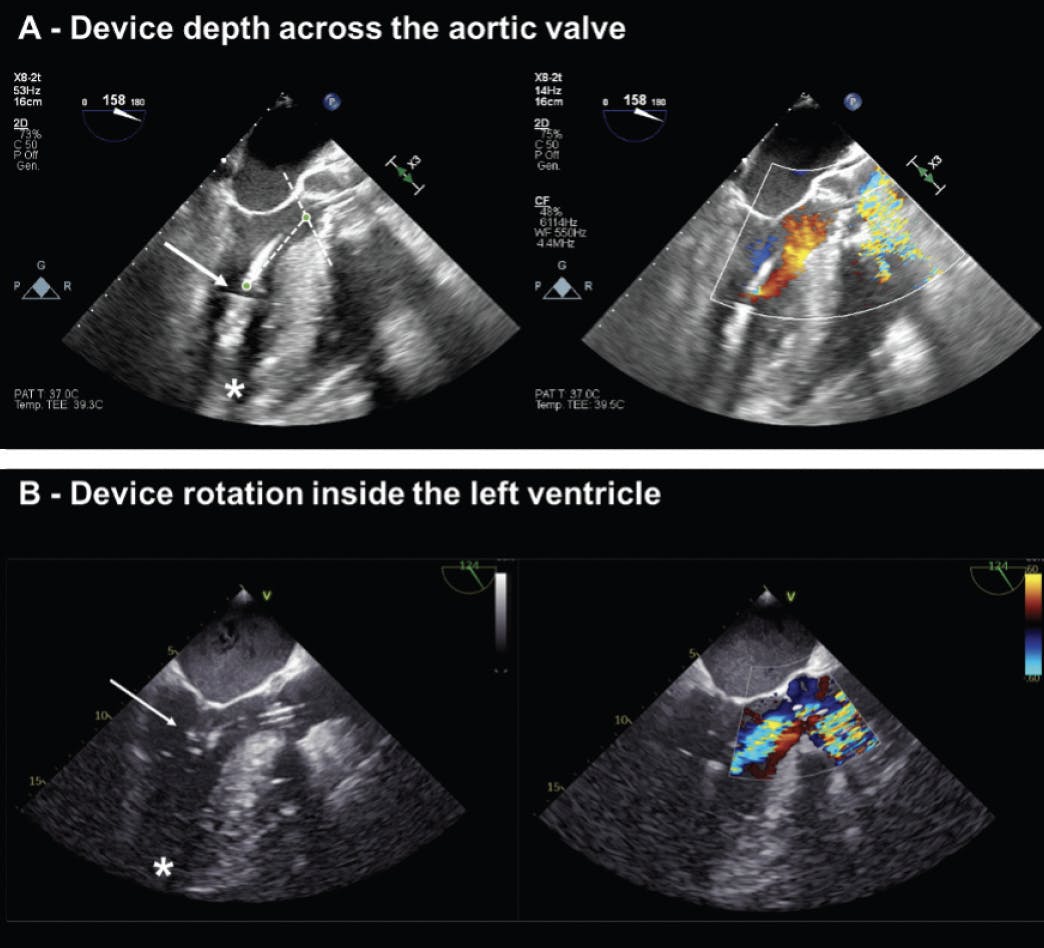
Figure 2. Assessment of device position at mid-esophageal three chamber views. Example of an optimally positioned device (A). The inlet area (arrow) is toward the LV apex (asterisk), the distance of the inlet from the aortic valve plane is approximately 3.5 cm, and the outlet area is well above the aortic plane. An example of malrotated device (B). The inlet area is away from the LV apex (asterisk) and just below the mitral valve (arrow), while the pigtail is toward the posterior papillary muscle there is also significant associated aortic regurgitation.
Device rotation assessment. Optimal device rotation within the LV is defined by the position of the catheter inflow tip toward the LV apex. Recently, we proposed the term “malrotation” to label those cases in which, despite a proper depth of the device across the aortic valve, the catheter inflow was oriented away from the LV apex, and toward the mitral valve apparatus and the LV inferolateral wall (Figure 2B).7,8 This issue appears common, generally overlooked, and associated with adverse clinical outcomes.7,8 Assessment of correct device orientation relies on imaging, because malrotation does not generally trigger position alarms on the AIC, although it may also occasionally manifest with suction alarms or hemolysis. The use of a standard 30° RAO fluoroscopic view during device implantation might be misleading (Figure 3) and a dedicated fluoroscopic protocol encompassing multiple views is currently under development. Echocardiography can easily identify device orientation inside the LV combining standard bidimensional three-chamber (Figure 2), and four-chamber views or with the use of tridimensional reconstructions.
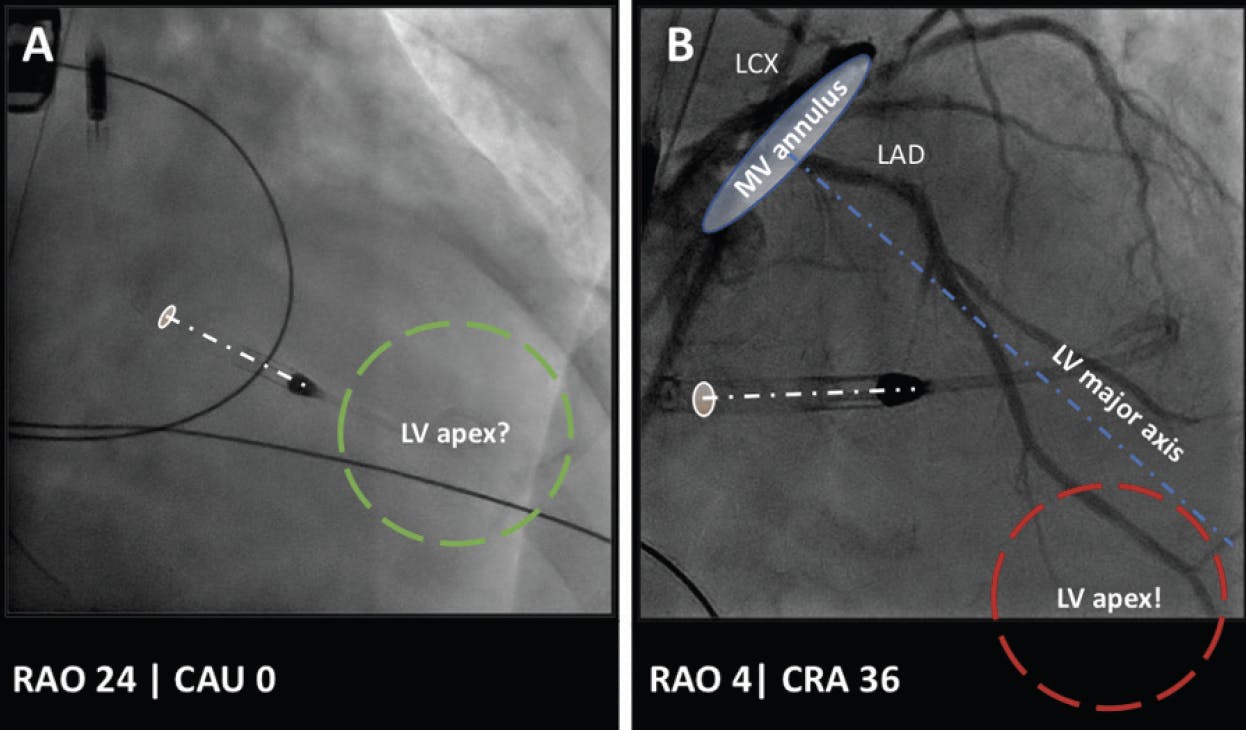
Figure 3. The lack of obvious anatomical landmarks for the LV apex makes the standard RAO 30°/CAU 0° view unreliable to assess the Impella rotation within the LV. The device may look properly positioned in panel A; however, changing the view and adding anatomical landmarks (eg, mitral valve annulus, left anterior descending artery) reveals that, in fact, the device is malrotated, oriented away from the LV apex (B).
DEVICE REPOSITIONING
A visual summary of the following guide to device repositioning can be found in Figure 4.
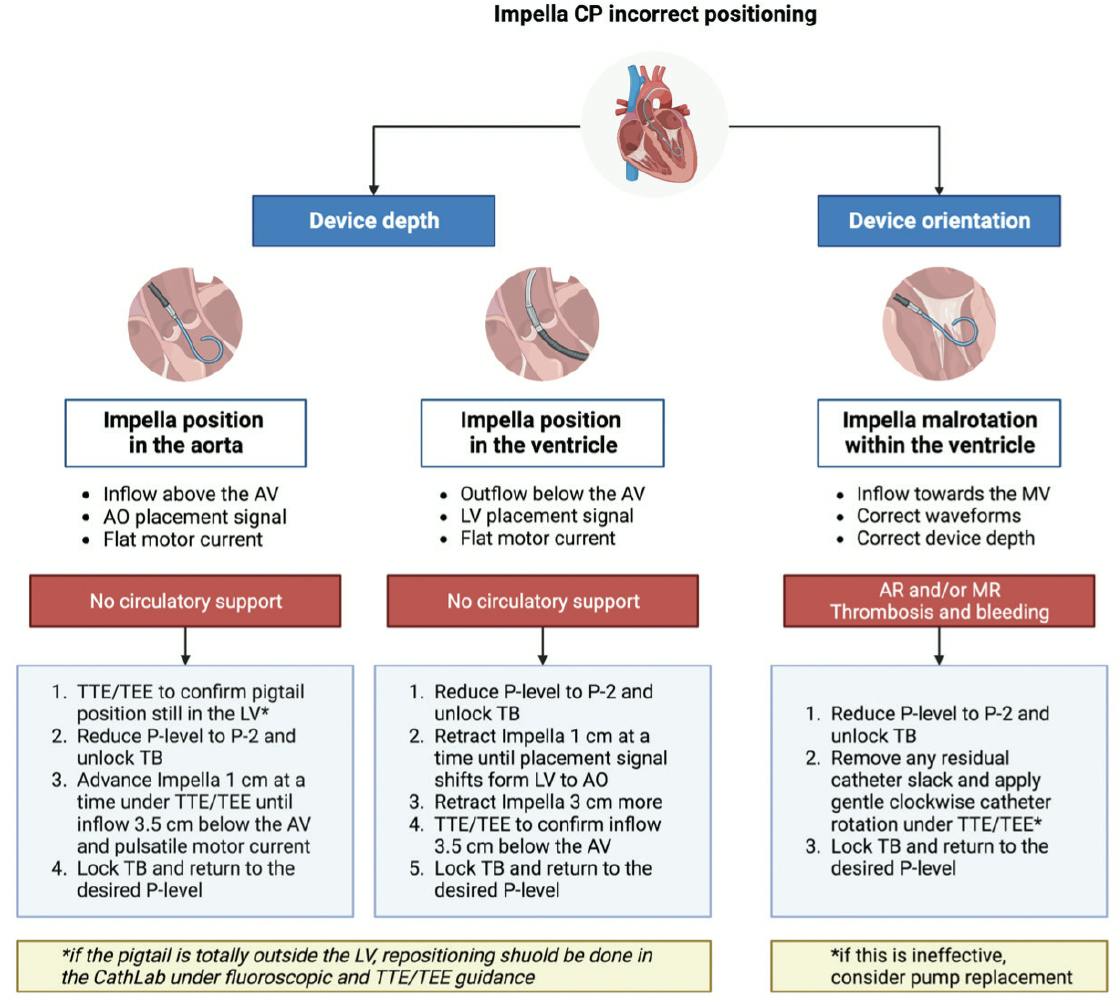
Figure 4. Guide to Impella repositioning in case of wrong device depth or malrotation. Created with BioRender.com. Abbreviations: AO, aorta; AR, aortic regurgitation; AV, aortic valve; LV, left ventricle; MR, mitral regurgitation; MV, mitral valve; TB, Tuohy-Borst valve; TTE, transthoracic echocardiogram; TEE, transesophageal echocardiography.
Repositioning for Incorrect Device Depth
The Impella pump can be displaced either toward the LV or toward the aorta, leading to ineffective hemodynamic support. Incorrect device positioning across the aortic valve can be identified by the analysis of pressure and motor current waveforms as the AIC displays specific position alarms. If the Smart Assist feature is present, a step-by-step repositioning guide will be available on the AIC for both scenarios.
If the Impella is displaced in the ventricle, the “Impella position in ventricle” alarm will be triggered, and the AIC will show ventricular pulsatile placement waveform and a flat motor current waveform. To fix this, the standard technique requires reducing P-level to P-2 before manipulating the Impella catheter, ideally under echocardiographic guidance. After Tuohy-Borst valve release, the catheter should be retracted by 1 cm increments until the restoration of an aortic pulsatile placement signal and pulsatile motor current waveform, then pulled back 3 cm more using the length markings on the shaft. Once the device is in good position, the P-level is increased again to the desired level. Sometimes, the outflow floats across the aortic valve and the AIC may show some beats with flat position signal. Identification of outflow obstruction should be promptly corrected as this has been linked to hemolysis.9 In most cases, it is sufficient to gently pull the catheter to remove the slack (if present) and then retract the device a few centimeters above the aortic valve, under echocardiographic guidance.
If the Impella is displaced in the aorta, the “Impella position in aorta” alarm will be triggered, and the AIC will show aortic pulsatile placement waveform and a flat motor current waveform. An echocardiographic image of the Impella position should be obtained to rule out complete device displacement. The P-level should be reduced to P-2 before manipulating the Impella catheter, ideally under echocardiographic guidance. After Tuohy-Borst valve release, the catheter should be advanced under echocardiographic guidance by 1 cm increments until the inflow is approximately 3.5 cm below the aortic annulus and pulsatile motor current waveform is restored. Once the device is in good position, the P-level is increased again to the desired level.
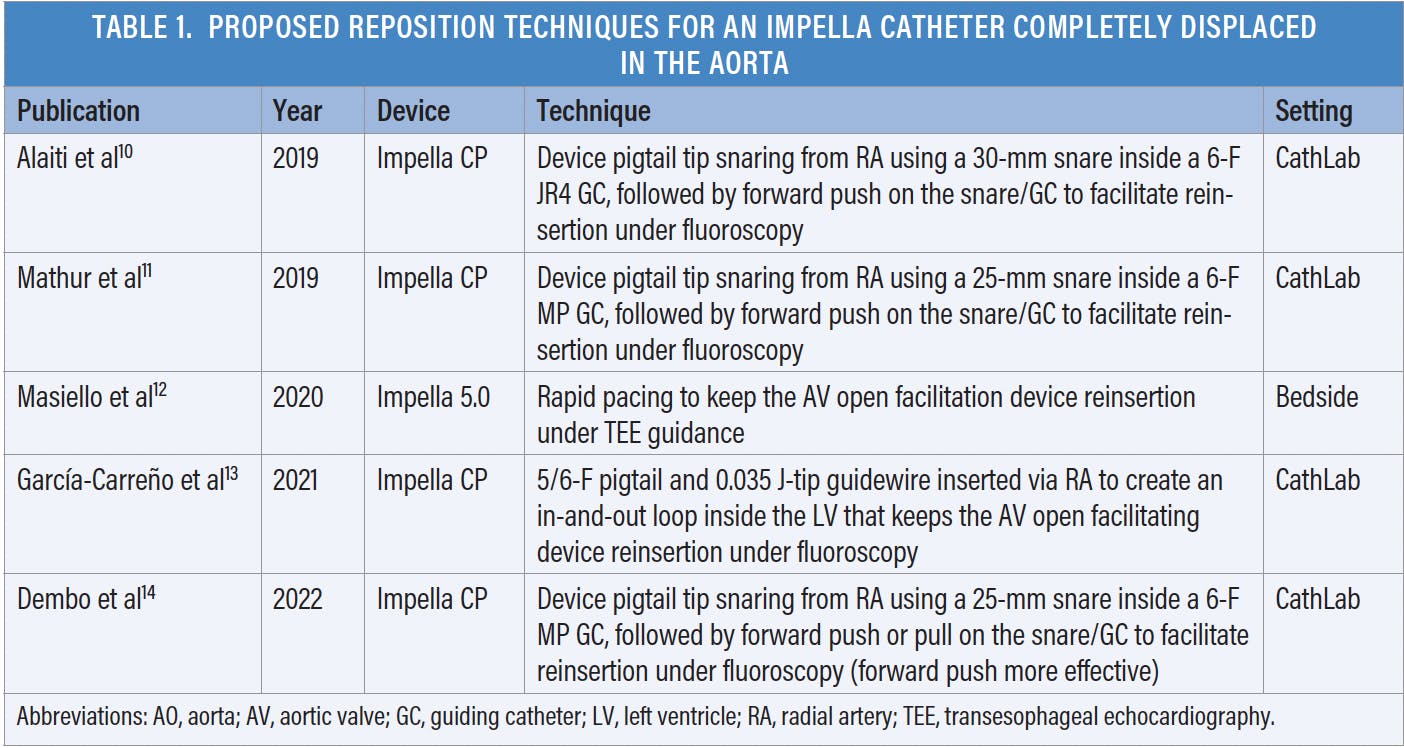
In case of complete displacement in the aorta, the device should be removed. However, several bailout techniques have been recently described to overcome this issue (Table 1).10-14
Repositioning for Malrotation
Correction of malrotation is challenging as the catheter lacks the torque necessary to rotate the device within the LV. Therefore, careful positioning during the insertion procedure is essential. Specific tips to avoid malrotation include insertion of the device in the sheath with the convexity facing the operator, as this would increase the chances of crossing the aortic valve with the correct rotation, and removal of any residual slack on the catheter that may undermine device stability across the aortic valve before leaving the catheterization laboratory. If malrotation occurs or is diagnosed only later after device insertion, gentle clockwise rotation may be applied to the catheter under direct echocardiographic surveillance to try to correct it. However, in case this proves unhelpful and if the patient is experiencing serious adverse events correlated with the malrotation, removal and insertion of a new pump remains the only solution.
ICU MANAGEMENT OF POSITIONING-RELATED COMPLICATIONS
The Impella device is unique among pMCS as it may interact with several vascular and cardiac structures, including iliofemoral vessels, aortic arch, aortic valve, mitral (sub)valvular apparatus, and LV. Moreover, the ICU setting is usually reserved for patients with anticipated longer duration of pMCS support, who are more prone to any time-dependent complications resulting from suboptimal Impella positioning.
Malrotation-Related Complications
The peculiar malrotation configuration leads the inlet below the mitral valve and the pigtail in proximity of the mitral chordae and the posterior papillary muscle, thus leading to possible unfavorable interaction of the device with the anterior mitral leaflet and the (sub)valvular apparatus (Figure 2B). Additionally, the deformation imposed on the aortic cusps by device shaft entering the LV with anomalous angulation may cause aortic regurgitation. Indeed, malrotation has been shown to correlate with adverse hospital outcomes, including worsening aortic and mitral regurgitation, stroke, and major bleeding.7 Although diagnosis is easy to obtain with echocardiography, correction once the device is inserted is challenging.
Device Thrombosis
Thrombosis of the Impella is a dreaded complication as it implies abrupt stoppage of the circulatory support, unpredictable retrograde blood flow, and may cause systemic thromboembolic events and hemolysis. The majority of clots forms around the pigtail or the inlet area where the flow is more stagnant as compared to the outlet. Thrombosis might be facilitated by suboptimal positioning including device malrotation and device contact with surrounding cardiac structures. Thrombosis may trigger suction alarms (due to obstruction of the inlet), high purge pressure alarms, and finally Impella motor failure and stoppage. When a thrombus is not apparent but only indirect signs appear (eg, high purge pressure), increase in anticoagulation can be attempted, and some reports have described the use of an alteplase-enriched purge solution (0.04-0.08 mg tPA/mL).15 However, when a large, mobile thrombus at high risk of embolization is identified, the pump should be removed or exchanged. In this case, consideration to cerebral embolic protection devices should be given.
Hemolysis
Partial or complete obstruction of either the inlet or the outlet areas of the Impella may cause significant hemolysis. As such, thrombus, intermittent or constant device contact with cardiac structures (ie, aortic cusps for outlet area; mitral (sub)valvular apparatus/inferolateral LV wall for inlet area) may all precipitate hemolysis. Notably, outflow obstruction seems particularly associated with hemolysis.9 Hypovolemia, LV underfilling due to concomitant RV failure, acute mitroaortic angle < 126.5°, and excessive device swinging may all aggravate the contact of Impella with surrounding structures.16-18
Major hemolysis may be clinically apparent with emission of dark urine (urine dipstick may help to distinguish between hematuria and hemoglobinuria). In addition, echocardiography may demonstrate microbubbles around the device pump.19 Routine, repeated assessment of plasma free hemoglobin, LDH, haptoglobin, and fractionated bilirubin can help to achieve an early diagnosis. Additionally, suction alarms may suggest inlet area obstruction.
Hemolysis should ideally be prevented and promptly be corrected to avoid unwarranted complications (eg, acute kidney injury, neurologic injury, and systemic inflammation).20 Causative factors should be addressed, and echocardiography should always be obtained to rule out device malpositioning or malrotation, device thrombosis, or LV underfilling. Supportive measures include hydration, full anticoagulation, and continuous renal replacement therapy.15 If major hemolysis persists despite acceptable position and anticoagulation, device explant or replacement with a larger-profile one should be considered.20,21
CONCLUSION
Proper insertion and positioning of pMCS devices, such as the Impella CP, is necessary to ensure proper circulatory support and to avoid device-related complications and prolonged ICU stays. The steps described here offer a guide to completing correct placement and ways to identify and correct abnormal Impella CP positioning and related issues.
1. Dhruva SS, Ross JS, Mortazavi BJ, et al. Association of use of an intravascular microaxial left ventricular assist device vs intra-aortic balloon pump with in-hospital mortality and major bleeding among patients with acute myocardial infarction complicated by cardiogenic shock. JAMA 2020;323:734-745. doi: 10.1001/jama.2020.0254
2. Iannaccone M, Albani S, Giannini F, et al. Short term outcomes of Impella in cardiogenic shock: a review and meta-analysis of observational studies. Int J Cardiol 2021;324:44-51. doi: 10.1016/j.ijcard.2020.09.044
3. van Wiechen MP, Van Mieghem NM. A tutorial on ultrasound-guided access. Cardiac Interv Today. 2019;13:72-75.
4. Leone PP, Scotti A, Ludwig S, et al. Predictable deployment of suture-based vascular closure device before transfemoral transcatheter aortic valve replacement. JACC Cardiovasc Interv. 2023;16:485-486. doi: 10.1016/j.jcin.2022.11.021
5. Cook BS, Wilson C, Kaiser B, Baljepally R. A method for maintaining vascular access when Impella exchange is required. Catheter Cardiovasc Interv. 2017;90:945-947. doi: 10.1002/ccd.27099
6. Miserlis D, Tecos ME, Garg N, et al. The “two-cut monorail” technique, for the over-the-wire removal of the Impella CP device. J Vasc Surg Cases Innov Tech. 2020;6:622-625. doi: 10.1016/j.jvscit.2020.09.006
7. Baldetti L, Beneduce A, Romagnolo D, et al. Impella malrotation within the left ventricle is associated with adverse in-hospital outcomes in cardiogenic shock. JACC Cardiovasc Interv. 2023;16:739-741. doi: 10.1016/j.jcin.2023.01.020
8. PCROnline. Beneduce A, Baldetti L, Scandroglio AM, et al. Impella percutaneous ventricular assist device malrotation in social media: a call to action. Accessed August 9, 2023. https://www.pcronline.com/News/Whats-new-on-PCRonline/2023/Impella-percutaneous-ventricular-assist-device-malrotation-social-media
9. Roberts N, Chandrasekaran U, Das S, et al. Hemolysis associated with Impella heart pump positioning: in vitro hemolysis testing and computational fluid dynamics modeling. Int J Artif Organs. 2020;43:710-718. doi: 10.1177/0391398820909843
10. Alaiti MA, Elby MA, Lang K, Bezerra HG. Percutaneous repositioning of Impella mechanical circulatory support device: snare-direct-push technique. Cardiovasc Revasc Med. 2020;21:103-104. doi: 10.1016/j.carrev.2019.09.002
11. Mathur M, Mohmand-Borkowski A, Harper M, Kritzer G. Percutaneous salvage of an Impella pretzel. JACC Case Rep. 2019;1:254–255. doi: 10.1016/j.jaccas.2019.06.017
12. Masiello P, Frunzo F, Padula M, et al. Impella 5.0 repositioning across the aortic valve without a guidewire using rapid ventricular pacing: a case report. J Card Surg. 2020;35:3157-3159. doi: 10.1111/jocs.14713
13. García-Carreño J, Bastante T, Gutiérrez-Ibañes E, et al. New technique for the emergent repositioning of the displaced Impella device. REC Interv Cardiol. 2021;3:219-223. doi: 10.24875/RECIC.M20000153
14. Dembo B, Zack CJ, Kozak M, et al. Push is better than shove: radial snare-guided repositioning of an extracardiac Impella device. Cardiovasc Revasc Med. 2022;40:302-304. doi: 10.1016/j.carrev.2021.12.011
15. Succar L, Donahue KR, Varnado S, Kim JH. Use of tissue plasminogen activator alteplase for suspected impella thrombosis. Pharmacotherapy. 2020;40:169-173. doi: 10.1002/phar.2356
16. Nakamura M, Imamura T, Hida Y, Kinugawa K. Pulmonary artery pulsatility index and hemolysis during Impella-incorporated mechanical circulatory support. J Clin Med 2022;11:1206. doi: 10.3390/jcm11051206
17. Nakamura M, Imamura T, Fukui T, et al. Impact of the angle between aortic and mitral annulus on the occurrence of hemolysis during Impella support. J Artif Organs. 2020;23:207-213. doi: 10.1007/s10047-020-01172-1
18. Nakao Y, Aono J, Tasaka T, et al. Impella 5.0 mechanical assist device catheter-induced severe hemolysis due to giant swinging motion–new concern in Impella usage. Circ J. 2019;83:2080. doi: 10.1253/circj.CJ-18-1039
19. Quevedo HC, Abi Rafeh N. Impella-induced left ventricular microbubbles, a potential sign for hemolysis. J Invasive Cardiol. 2020;32:E101.
20. Van Edom CJ, Gramegna M, Baldetti L, et al. Management of bleeding and hemolysis during percutaneous microaxial flow pump support. JACC Cardiovasc Interv. 2023;16:1707-1720. doi: 10.1016/j.jcin.2023.05.043
21. Shewmake A, Cooke R, Exaire J, et al. Prevalence and predictors of hemolysis in patients requiring circulatory support with Impella CP percutaneous left ventricular assist device. J Am Coll Cardiol 2019;73:1219. doi: 10.1016/S0735-1097(19)31826-1
Advertisement
Advertisement