Advertisement
Advertisement
July/August 2023
Sponsored by Edwards Lifesciences
Nurse-Led Sedation: Working at the Top of Our License
Benefits of utilizing nurses within scope to provide sedation during TAVR.
By Patricia Keegan, DNP, NP-C, FACC, and Morgan H. Binyard, RN, BSN
Nurse-led sedation (NLS) is not a new concept. Transcatheter aortic valve replacement (TAVR) is a viable treatment choice for those with severe, symptomatic aortic stenosis (AS). The first TAVR performed in France in 2002 was a landmark event. What many do not realize is that the procedure was performed using NLS.1
TAVR has revolutionized the treatment of severe, symptomatic AS. It is a well-established treatment for AS that has been widely adopted; implantation rates topped that of surgical aortic valve replacement in 2019.2 TAVR volumes are at historic levels and are projected to increase in the coming years. The procedure has evolved into a minimalistic, relatively low-risk procedure for most patients.
As with any procedure, growth necessitates evaluation of optimization. Discussions need to address the increasing volume of patients with limited resources of anesthesia, room time for cardiac catheterization/hybrid operating rooms, and staffing barriers.
OPTIMIZATION
Minimalist TAVR protocols have been developed to improve TAVR efficiency and patient throughput with similar, if not superior, outcomes to TAVR using general anesthesia. While minimalist protocols typically rely on conscious sedation for TAVR, they do not specify the anesthesia provider. The TVT registry does not distinguish between NLS or anesthesia-led sedation (ALS).3 Conscious sedation/analgesia is defined as “a drug-induced depression of consciousness during which patients respond purposefully to verbal commands, either alone or accompanied by light tactile stimulation.” We continue to struggle for a clear definition related to a sedation provider for minimalist or conscious sedation, which further complicates the comprehensive movement toward a sedation strategy. Many cases in the United States are performed with anesthesiologist involvement using monitored anesthesia care (MAC), which is defined as cardiovascular and respiratory monitoring of the patient by a qualified anesthesiologist.4 MAC is a specific anesthesia service for diagnostic or therapeutic procedures performed under local anesthesia along with sedation and analgesia, titrated to a level that preserves spontaneous breathing and airway reflexes.
Although there are reported cases of NLS, there is a paucity of data regarding trials around the use of NLS for TAVR. However, data continue to evolve. Addressing concerns related to patient safety is paramount for the entire heart team. One concern is the potential for harm should there be a delay in obtaining general anesthesia to facilitate emergency surgery.5 Currently, conversion rates in the United States are approximately 1%.6 Other concerns include patient comfort, conversion to general anesthesia for hemodynamic instability, and qualified personnel to manage the patient during the procedure.
EMORY EXPERIENCE
In 2007, the Emory Structural Heart and Valve Center performed its first TAVR. Historically, all patients undergoing TAVR did so with general anesthesia and transesophageal echocardiography. This was our default practice until 2012 with commercialization of the Edwards Lifesciences Sapien valve. As we continued to assess and identify patients with severe AS, there was a struggle to schedule and perform cases. One reason was delays in patient care given limited anesthesia availability.
To better serve patients, the multidisciplinary heart team (anesthesiology, interventional cardiology, cardiac surgery, cardiac imagers, and nursing) developed a pathway for cardiac catheterization laboratory nurses, who were not trained in anesthesia, to provide conscious sedation with fentanyl and midazolam. Our catheterization laboratory nurses were experienced in administering sedation as part of their role, and administration of sedation per protocol is within the scope of practice.
The team at Emory evaluated the patient experience of those treated with NLS versus ALS. Data were evaluated retrospectively, with one group receiving NLS and a second group receiving ALS. The results were evaluated and highlighted that NLS was performed safely and effectively, with outcomes similar to those with ALS. There were no significant differences in hemodynamics, valve area, or readmission.7
WORLD EXPERIENCE
There are data from around the world regarding the benefits of performing TAVR with conscious sedation. As we see with the United States data, the sedation provider is not always noted as part of these studies. Some sites in Europe have started to evaluate the potential benefits of NLS. Konigstein et al reviewed patients with a NLS versus ALS strategy,4 and 30-day mortality rate and procedural complications were similar in TAVR procedures performed with or without an anesthesiologist. Kočka et al demonstrated that clinical results and complication rates were similar with and without the presence of an anesthesiologist in the room in a selected patient population.8 Both studies were smaller-number, single-center experiences. However, they confirm what is seen in the United States.
STREAMLINING PROCESSES WITH PATIENT SAFETY AT THE FOREFRONT
The concept is simple: By empowering every team member to work at the highest level of their license, patient care can be safe, cost-efficient, and streamlined. Patient safety is still the highest priority of the NLS protocol. Prior to TAVR, each patient is screened using the American Society of Anesthesiologists and Mallampati scores.
The medication orders are part of a sedation protocol used for our moderate sedation cases, including angioplasty, cardiac catheterization, and heart biopsy, among others. A goal for this program was to continue using existing pathways and not create added work for various procedures. Some attributes of NLS candidates are:
- Anatomically reasonable (transfemoral, acceptable coronary height)
- No barriers to emergent intubation
- Able to follow directions
- No history of difficulty with previous heart catheterizations
- Weight < 100 kg
- Patient preference for NLS
The process of moving to an anesthetic strategy inclusive of NLS is one of thought and preparation. Review of local laws related to local nurse practice is mandatory to ensure all local laws are followed. Staff training, transparency of process, and patient education are imperative steps to a successful NLS pathway. Patients who meet all criteria are eligible to undergo NLS, whereas patients who don’t meet all criteria are referred to anesthesia for further evaluation. With this pathway, the patient does not automatically default to general anesthesia. Having the anesthesiologist in the room to deliver sedation may be the better option for patients who fall outside the NLS protocol, as these patients would still reap the benefits of a moderate sedation protocol.
PROTOCOL-BASED TREATMENT
Importantly, one dedicated nurse provides sedation to the patient and is not assigned any other responsibilities during the case. Our order sets include a benzodiazepine, opioid, and reversal agents (Table 1).
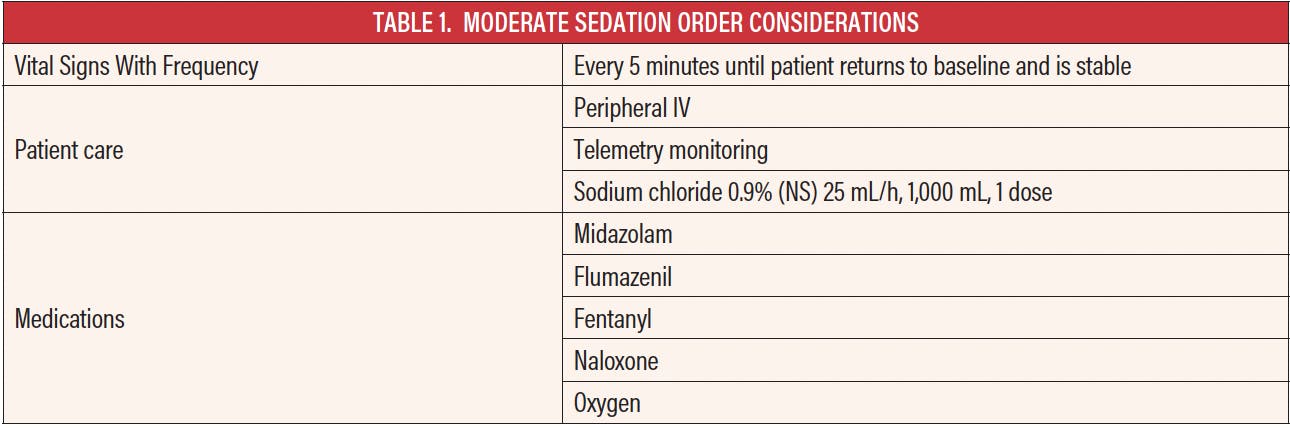
The need for increased sedation or pain medications is assessed at routine intervals, and medications are administered per the predetermined protocol. Joint commission requirements are always followed.
The nursing role for this procedure is defined by the local state board of nursing regulations. The nurse is in communication with the physician team members regarding patient level of consciousness. Hemodynamic parameters are monitored. The nurse can provide additional medication per the protocol if the patient is uncomfortable. As the nurse monitors the patient, they can communicate with the patient to assess level of consciousness and pain level, as well as provide education during the procedure.
SAFETY PROTOCOLS
Maintaining patient safety is paramount. The anesthesia team is available for intubation in < 5 minutes. At Emory, we use “code anesthesia” for emergent intubations throughout the hospital system. Additionally, the procedural area is equipped for patient resuscitation and advanced mechanical circulatory support. Multiple safety mechanisms are in place during each TAVR case, with any form of sedation. The procedures at Emory are staffed with an interventional cardiologist, cardiac surgeon, echo sonographer, and four cardiac catheterization laboratory personnel. These include two circulators (one of which is a registered nurse), monitor, and scrub.
Staff education is essential for the program’s success. At Emory Healthcare, nurses who provide nurse-led anesthesia undergo approximately 20 hours of continuing education yearly. This is completed through education modules, skill-training days, and the employment of a clinical nurse specialist.
To date, minimalist TAVR has been performed > 4,000 times at Emory, with > 2,000 patients undergoing TAVR using NLS. Clinical and echocardiographic outcomes were collected on all minimalist TAVR patients, and propensity-matched outcomes were reported.7
CHANGE MANAGEMENT
The movement to NLS did not occur overnight at Emory. There was a planned process with a change management program. First, we met with the anesthesiology team at our organization. Discussing our shared patients, strategies, and patient safety led to the development of our decision tree. Next, we met with the key stakeholders of the organization affected by this change. Nurses, administrators, catheterization laboratory personnel, and the multidisciplinary team were gathered to discuss the planned changes and develop a standardized pathway. We selected a go-live date and included the anesthesia team in the case. Our first few cases were performed with the nurse delivering sedation in the presence of anesthesiologists. Our order sets were already in place because we used our standard moderate sedation protocol. We reviewed outcomes as a team and immediately debriefed after each case to determine the best course of action. Figure 1 shows the change management pathway that was used.
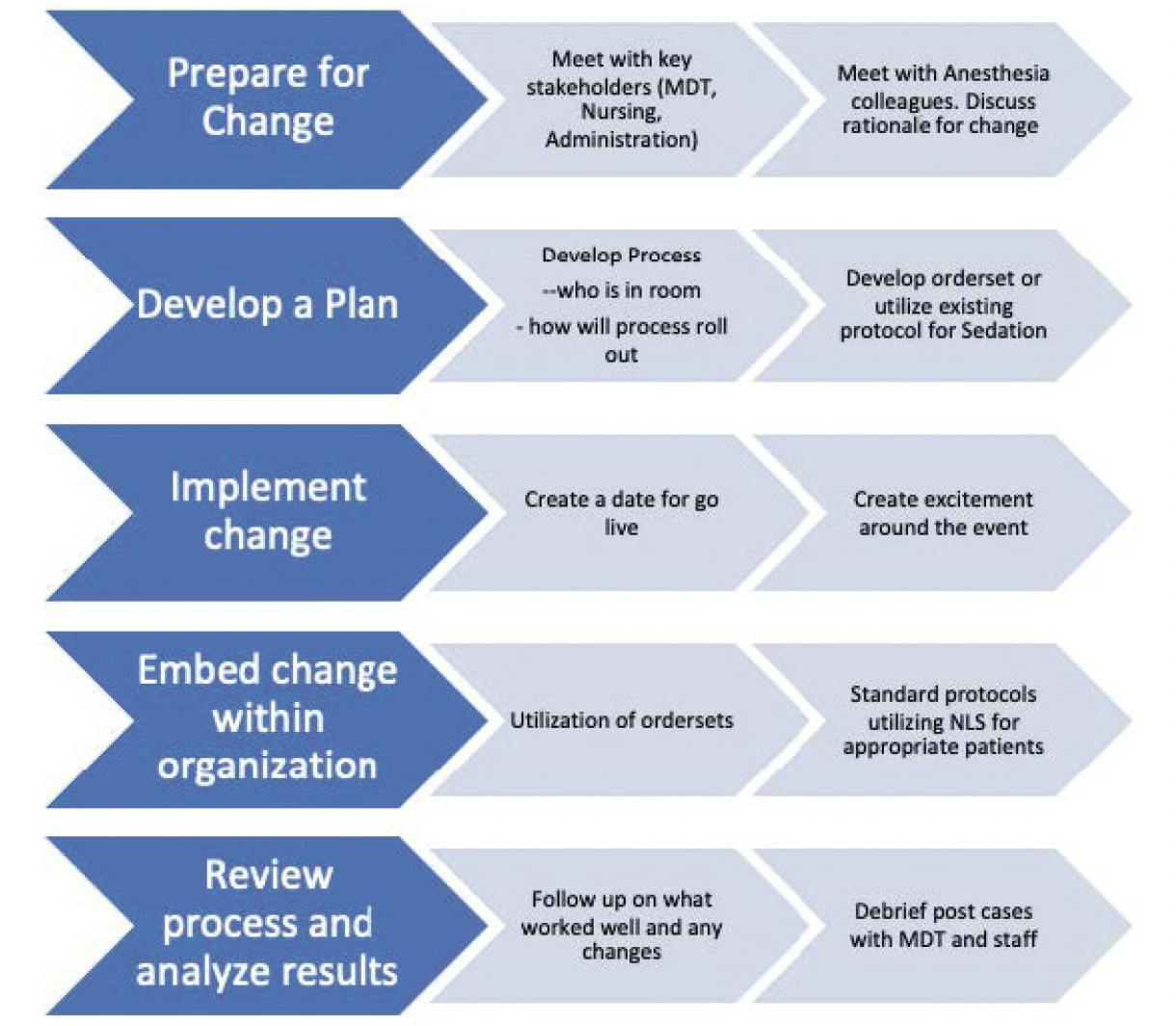
Figure 1. Change management pathway for Emory movement to NLS. MDT, multidisciplinary team.
CONCLUSION
NLS during minimalist TAVR (or TAVI) has many benefits. It may allow centers to increase TAVR efficiency and decrease resource utilization while prioritizing patient care and safety. This strategy may be more cost-effective than TAVR with a dedicated anesthesia team. It is important to note that NLS is not meant to be the default strategy for all TAVR procedures. However, in a population of selected patients, this strategy has been shown to improve patient throughput.
Article is sponsored by Edwards Lifesciences and Patricia Keegan DNP, NP-C, FACC is a paid consultant.
The nurse-led sedation protocol presented herein is the technique used by the respective medical professionals. Edwards Lifesciences does not endorse any particular nurse-led sedation protocol.
1. Cribier A. 20 years of TAVR: an interview With Alain Cribier, MD, FACC, FESC. Cardiac Interv Today. 2022;16:66,60-65.
2. Carroll JD, Mack MJ, Vemulapalli S, et al. STS-ACC TVT registry of transcatheter aortic valve replacement. Ann Thorac Surg. 2021;111:701-722. doi: 10.1016/j.athoracsur.2020.09.002
3. Butala NM, Chung M, Secemsky EA, et al. Conscious sedation versus general anesthesia for transcatheter aortic valve replacement: variation in practice and outcomes. JACC: Cardiovasc Interv. 2020;13:1277-1287. doi: 10.1016/j.jcin.2020.03.008
4. Konigstein M, Ben-Shoshan J, Zahler D, et al. Outcome of patients undergoing TAVR with and without the attendance of an anesthesiologist. Int J Cardiol. 2017;241:124-127. doi: 10.1016/j.ijcard.2017.01.154
5. Mayr NP, Michel J, Bleiziffer S, et al. Sedation or general anesthesia for transcatheter aortic valve implantation (TAVI). J Thorac Dis. 2015;7:1518-1526. doi: 10.3978/j.issn.2072-1439.2015.08.21
6. Robbins AJ, Grande SW, Always F, et al Physicians’ perspectives and attitudes toward surgical bailout in transcatheter aortic valve replacement. JTCVS Open. 2022;9:74-81. doi: 10.1016/j.xjon.2022.01.015
7. Keegan PA, Lisko JC, Kamioka N, et al. Nurse led sedation: the clinical and echocardiographic outcomes of the 5-year Emory experience. Structural Heart. 2020;4:302-309.
8. Kočka V, Nováčková M, Kratochvílová L, et al. Nurse-led sedation for transfemoral transcatheter aortic valve implantation seems safe for a selected patient population. Eur Heart J Suppl. 2022;24(suppl B):B23-B27. doi: 10.1093/eurheartjsupp/suac004
Disclaimers
Please Note: The information provided is the experience of this speaker/facility, and Edwards Lifesciences has not independently evaluated these data. Outcomes are dependent upon a number of facility and surgeon factors which are outside Edwards’ control. These data should not be considered promises or guarantees by Edwards that the outcomes presented here will be achieved by any individual facility.
Important- Please Note: This information is provided as a general resource and is not intended to constitute medical advice or in any way replace the independent medical judgment of a trained and licensed physician with respect to any individual patient needs or circumstances. Coverage, reimbursement and health economics information provided by Edwards is gathered from third-party sources and presented for illustrative purposes only. This information does not constitute reimbursement or legal advice, and Edwards makes no representation or warranty regarding this information or its completeness, accuracy, or timeliness. Laws, regulations, and payer policies concerning reimbursement are complex and change frequently; service providers are responsible for all decisions relating to coding and reimbursement submissions.
Edwards and Edwards Lifesciences are trademarks of Edwards Lifesciences Corporation or its affiliates. PP--US-8303 v1.0
Advertisement
Advertisement