Advertisement
Advertisement
2023 Digital Exclusive No. 1
Radiation Safety in the Contemporary Cardiac Catheterization Laboratory
A survey of the radiation safety landscape in the cath lab, an overview of current practices, and a look at future safety advances.
As the field of interventional cardiology continues to expand, highlighted by the meteoric rise of transcatheter structural interventions, radiation exposure and its associated risk is expected to increase. Ultimately, the goal must be to acquire the clinical information necessary while keeping radiation doses as low as reasonably achievable (ALARA). As a result, there is renewed interest in establishing a culture of radiation safety in many cardiac catheterization laboratories across the country.1 Developing evidence-based strategies aimed at lowering radiation exposure to patients, cardiac cath lab staff, and physicians, fueled by advances in the field of radiation safety, is of paramount importance to promote longevity and accomplish this endeavor. Herein, we present an overview of the current radiation safety landscape, best practices and algorithms used in our labs, and a glance at the advances in radiation safety on the horizon.
CURRENT RADIATION SAFETY LANDSCAPE
Radiation Risk
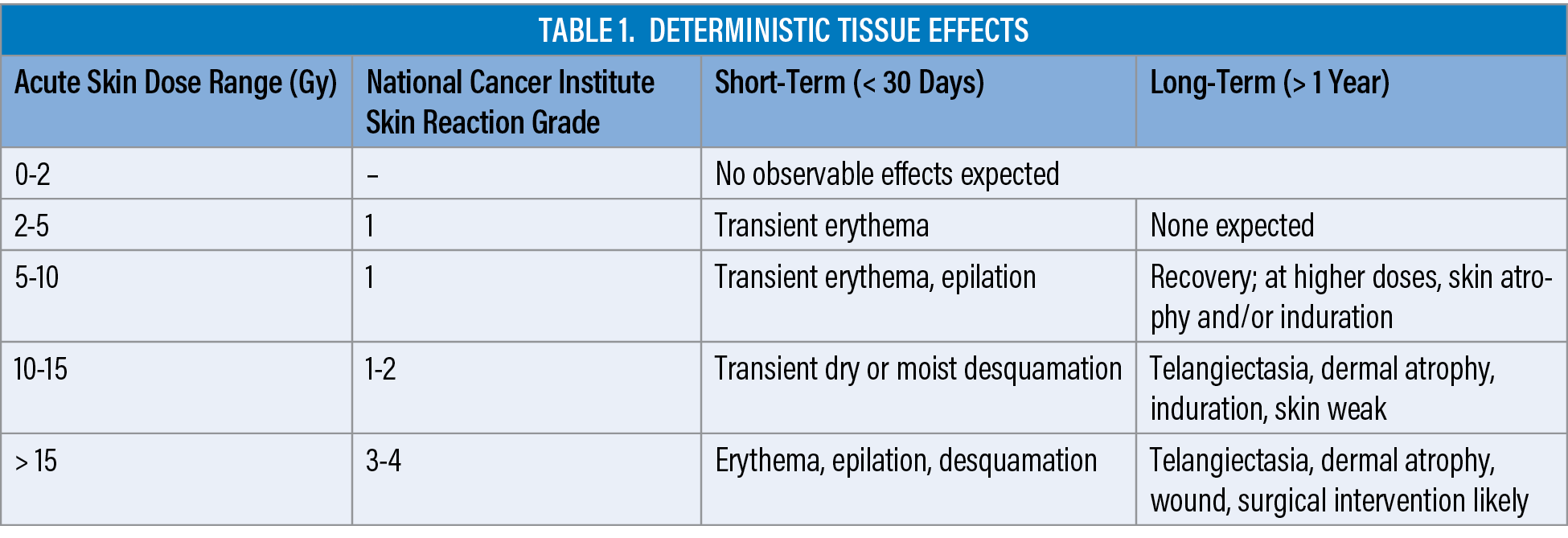
The risk of ionizing radiation is undeniable. There are two categories of hazardous effects ionizing radiation can produce: (1) deterministic effects and (2) stochastic effects. Deterministic effects are generally tissue reactions such as hair loss, cataracts, and skin injury. The threshold dose for deterministic effects is defined as the appearance of symptoms in at least 1% of the population exposed to this dose. Below this threshold dose, effects do not appear; however, above this threshold dose, there is a sharp increase in the incidence rate (Figure 1). Most cardiac cath labs require patients be informed if they have received > 5 Gy during a single procedure, the point at which patients are more likely to develop skin reactions (eg, erythema, epilation, desquamation). A summary of expected tissue deterministic reactions can be found in Table 1.
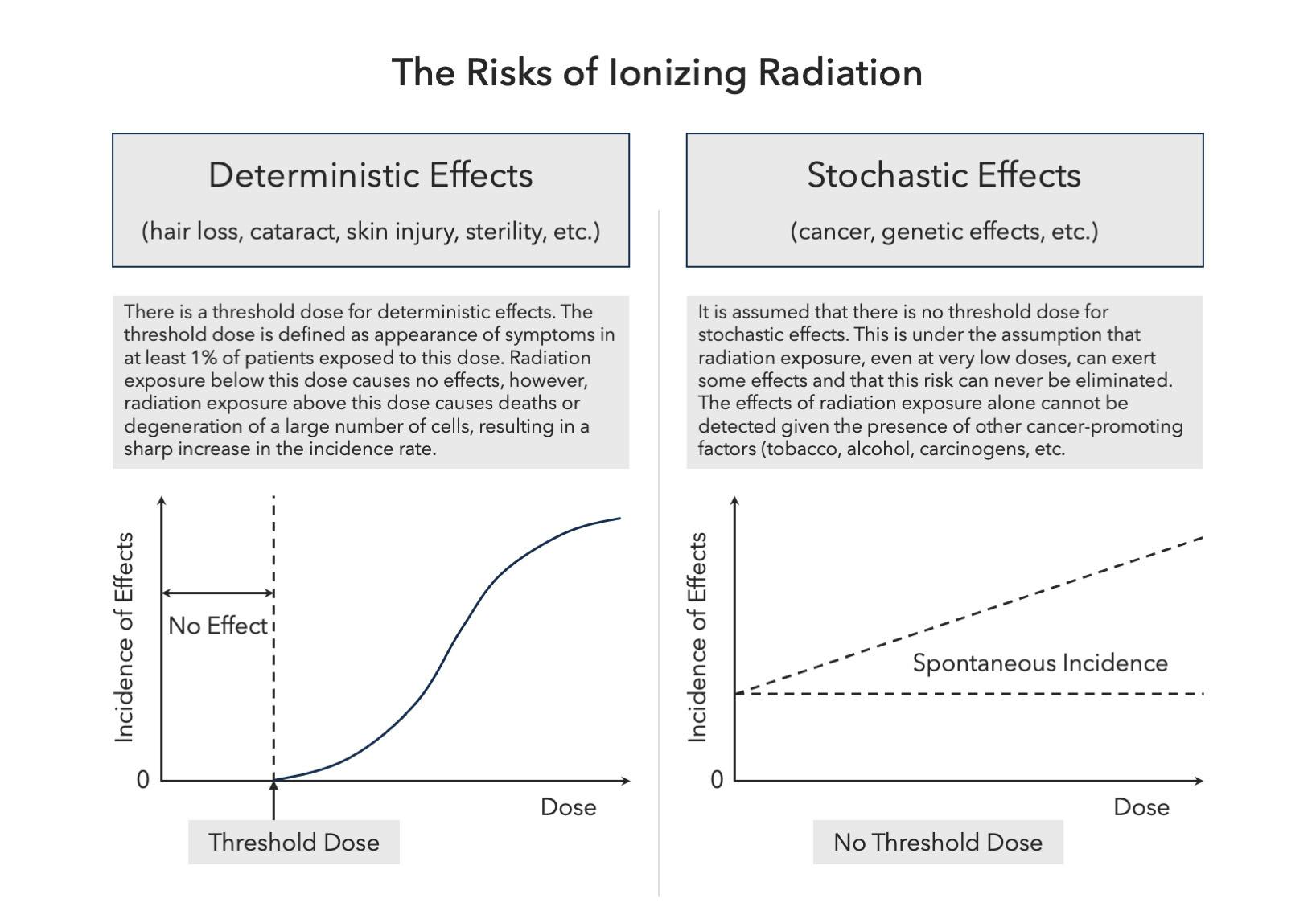
Figure 1. The deterministic and stochastic risks of ionizing radiation.
Stochastic effects assume that there is no specific threshold dose, because even at very low doses, there can be some effects that can never be eliminated due to the presence of other cancer-promoting factors (eg, tobacco use, alcohol use, carcinogens) (Figure 1). Previous studies have documented the observed risk to operators between occupational radiation exposure (including the associated orthopedic risks due to use of protective aprons) and several conditions such as cataracts, orthopedic illness, and certain cancers (eg, left-sided brain cancer, hematologic malignancies).2-7 The growing body of evidence is both alarming and worrisome and is becoming harder to ignore, especially for younger operators in the field of interventional cardiology and the growing proportion of women of childbearing age entering the field.
Radiation Monitoring
Radiation safety measures can only achieve a meaningful reduction in the presence of constant vigilance. Periodic monitoring of radiation exposure is mandated and most commonly achieved using single collar badges placed over personal protective aprons. Estimates of actual doses delivered to organs cannot be directly measured and thus are calculated from models derived from instrumented phantoms. Using readings from this badge, several measurements are extrapolated to estimate exposure throughout the body. Lens dose equivalent is the estimated external dose to the lens of the eye, not accounting for the reduction in dose with protective eyewear. More accurate doses can be estimated by combining measurements from concurrent use with an additional badge. Table 2 summarizes recommended radiation dose limits.1

A unique population at risk to radiation exposure is pregnant people. Ionizing radiation can have deleterious effects on fetal development, including organ malformation and decreased intrauterine growth, with the greatest risk occurring during organogenesis early in the fetal period.8 This poses potential stochastic injury and the induction of deterministic effects at high fetal doses.9,10 Finding the true risk of radiation exposure from performing cardiac catheterization procedures can be challenging, and guidelines for pregnancy exposure have been inadequate given the lack of prospective randomized data. Declaration of pregnancy is voluntary, and mandatory exclusion from radiation work is illegal. Training and monitoring provided by radiation safety officers aim to reduce fetal risk. This often includes use of a radiation badge underneath the apron, at the level of the pelvis, which is designed to measure radiation levels that penetrate the protective apron reaching the pregnant person.9,10
Exposure to radiation dose < 50 mGy has not been associated with an increase in fetal anomalies or loss of pregnancy.11 The recommended fetal radiation dose limits in the United States are < 0.5 mSv (50 mrem) per month or < 5 mSv (500 mrem) during the entire pregnancy.10 Despite these limits, previous studies suggest that the demonstratable risk of malformations and childhood cancers occur at a threshold of > 100 mSv.12 Nevertheless, it remains evident that despite increasing female representation across many subspecialties in medicine, radiation safety concerns continue to disproportionately deter women from pursuing interventional cardiology. Despite the lack of available data, all evidence suggests that there is no additional risk of fetal injury due to radiation exposure when appropriate, and if standard safety precautions are implemented. More research is needed in this field to better understand and serve this population.
Radiation Reduction
Radiation reduction measures can be categorized as either acquisition factors or operator factors.13 Acquisition factors include modes, frame rate, use of collimation, and angulation. The mode of acquisition is a major factor in determining the radiation dose, with fluoroscopy time using the least amount of radiation, followed by cine fluoroscopy using a 10-fold amount, and digital subtraction angiography using 100-fold the radiation (Figure 2).14,15 When feasible, fluoroscopy should be used in place of cine, such as when documenting balloon inflations or stent deployments. Coinciding with acquisition mode is frame rate. The operator should employ the lowest frame rate possible depending on the type of procedure being imaged. Right heart catheterizations often require less precision and can be performed using a frame rate of three frames per second while reserving higher frame rates for coronary interventions.14,15 The use of collimation can also substantially reduce the amount of radiation exposure. By using collimators, the x-ray field at the entrance point to the patient can be minimized, reducing the amount of absorbed and scattered radiation, as the dose is directly related to the area of the x-ray field.16 Angulation during image acquisition also plays a significant role in the amount of radiation required. Extreme angulations, particularly in patients with larger body mass indices, are associated with an increase in scatter radiation.17 For most diagnostic procedures, extreme oblique angulations can be avoided while still providing an adequate amount of information.
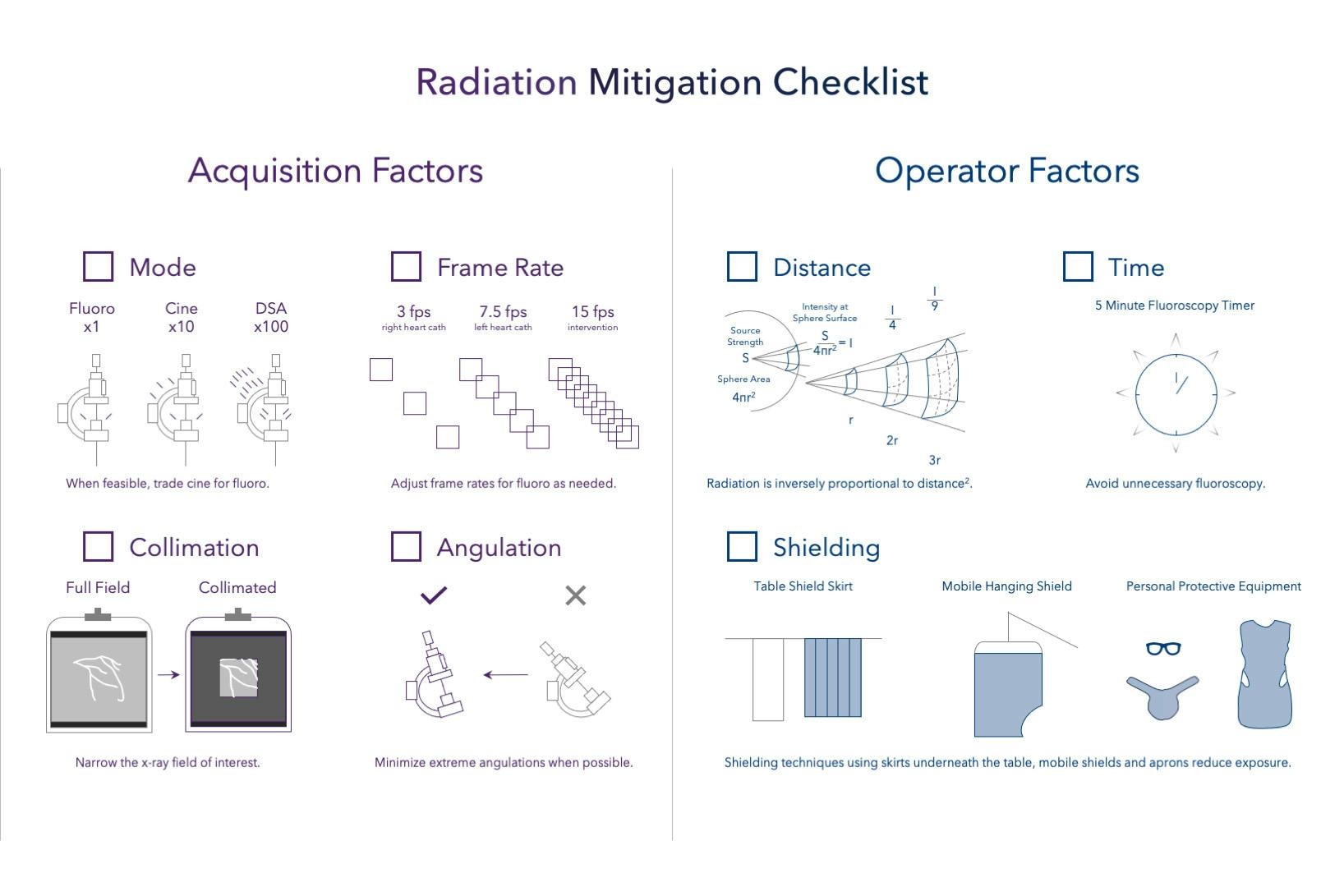
Figure 2. Proposed cardiac cath lab radiation mitigation checklist.
Operator factors include distance from the source, image acquisition time, and use of shielding equipment (Figure 2). The inverse square law dictates that the intensity of the radiation (x-rays) decreases by the square of the distance from the source (x-ray tube). This occurs because as energy is emitted from a source, it travels equally in all directions and the intensity equals the inverse of the square of the distance (the formula for the area of a sphere) from the source.18 Thus, by remaining mindful of your position with respect to the source, you can significantly decrease your own exposure during a procedure, which is particularly important during cine and digital subtraction angiography modes. Acquisition time, usually in the form of fluoroscopy time, is also a substantial determinant of exposure. Fluoroscopy can often be avoided when exchanging catheters or coronary interventional equipment (eg, balloons, stents) when position of the wire or catheter is confirmed using 90/100-cm markers, reserving fluoroscopy once most of the exchange is complete. Finally, use of dedicated shielding equipment is a preeminent method to reduce operator and ancillary staff radiation exposure. This includes the use of a shielded skirt beneath the table, mobile hanging or grounded shields, disposable radiation shields, and personal protective equipment such as radiation safety caps, glasses, thyroid collars, and aprons (standard or suspended).19-22 Among the personal protective shielding equipment described above, it appears that the greatest reduction in radiation exposure (> 95%) is obtained by using thyroid collars and aprons.23
RADIATION SAFETY PRACTICES IN OUR CARDIAC CATH LABS
A comprehensive cath lab radiation safety program should include an education component to foster staff understanding of the risks of ionizing radiation, a local radiation safety “champion,” a method of tracking radiation exposure to patients and staff, a concerted effort to minimize use of radiation, and a habitual program of enhanced barrier protection via protective wear and shields. In contrast to barrier protection, decreasing the amount of radiation use (the ALARA principle) not only reduces exposure to lab personnel who experience the occupational risk of downstream neoplastic sequelae but also to the patients who may have more acute effects of high ionizing radiation exposure, such as depilation and skin burns.
In 2012, as part of its quality improvement program, the cath lab at the University of Vermont Medical Center (UVMMC) started an enhanced radiation safety program, integrating all the elements noted earlier. Initially, a baseline data set covering 1 year of radiation use per case (air kerma), as measured by all lab fluoroscopic equipment, was analyzed. Particular attention was paid to individual operator use to discern practice differences. The intervention consisted of a series of short didactics regarding radiation safety at three consecutive monthly quality assurance (QA) conferences, enhanced by regular emails to all staff rehashing the discussed materials. Operators were informed that their individual radiation use data would be shared to all during QA meetings thereafter. The radiation safety “champion” also met with individual operators to reinforce methods to decrease radiation use. Part of the intervention also included a reexamination of leaded barrier protection practices and led to several modifications, including the use of disposable scatter-protection barriers and additional under-table and wheeled heavy protection inside the labs.
The radiation use data set continues to be collected, analyzed, and shared all the way to the present day, and several conclusions can be drawn. The first and main conclusion is that the program has had astounding results (Figure 3). The average air kerma per case dropped by > 50% in the first 4 years of the program, with an additional 20% reduction persisting to the present day. Moreover, in comparison to peer hospitals in the National Cardiovascular Data Registry CathPCI data registry, UVMMC uses 60% less radiation per percutaneous coronary intervention procedure.
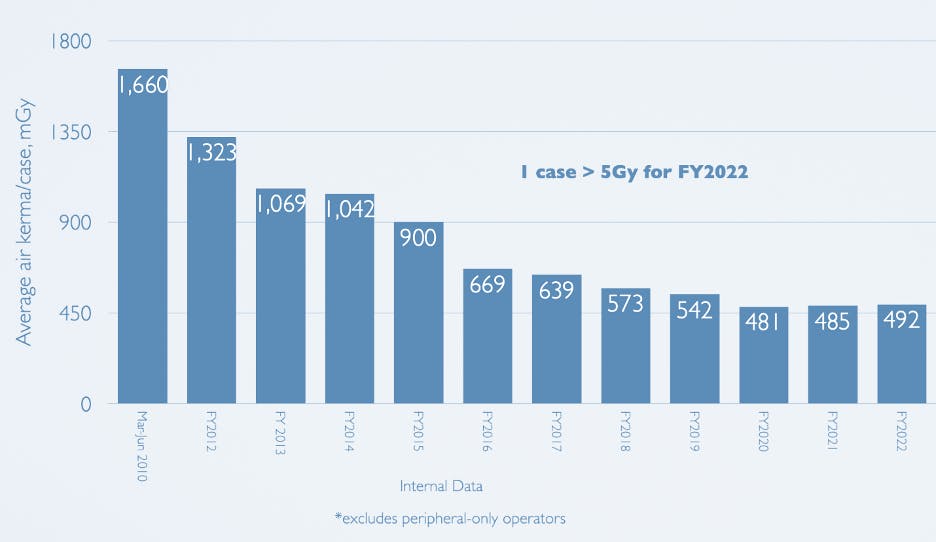
Figure 3. Temporal improvement in radiation usage/exposure in the cardiac cath lab at UVMMC.
The drop in radiation use can be attributed to two major factors based on an analysis of these data. The first are operator-derived factors, many of which were alluded to earlier and focus on the manner by which physicians in the UVMMC lab operate fluoroscopy equipment, including image acquisition time, C-arm angulation, fluoroscopic and cineangiographic frame rate, image size, and use of collimators. These were heavily emphasized during the first few years of the program and resulted in the initial drop in radiation use between 2012 and 2014 of about 40%. The second are technological factors regarding newer and newer generations of fluoroscopic equipment. Between 2014 and the end of 2015, we upgraded all our cath labs with new technology that integrate radiation reduction enhancements, such as improved image coprocessing. This led to a further 40% reduction in the use of radiation per case. Since 2015, the continued feedback of radiation use to each physician has led to a further sustained small drop in average air kerma per case (Figure 4). Widespread sharing of individual operator radiation use also seemed to reduce variability, and this can be seen in the increased clustering of use curves throughout the period. Most remarkably, the significant reduction in our radiation per case occurred over a 10-year period where case volumes remained largely unchanged but case complexity and case variety (including addition of new structural heart procedures) increased by various measures.
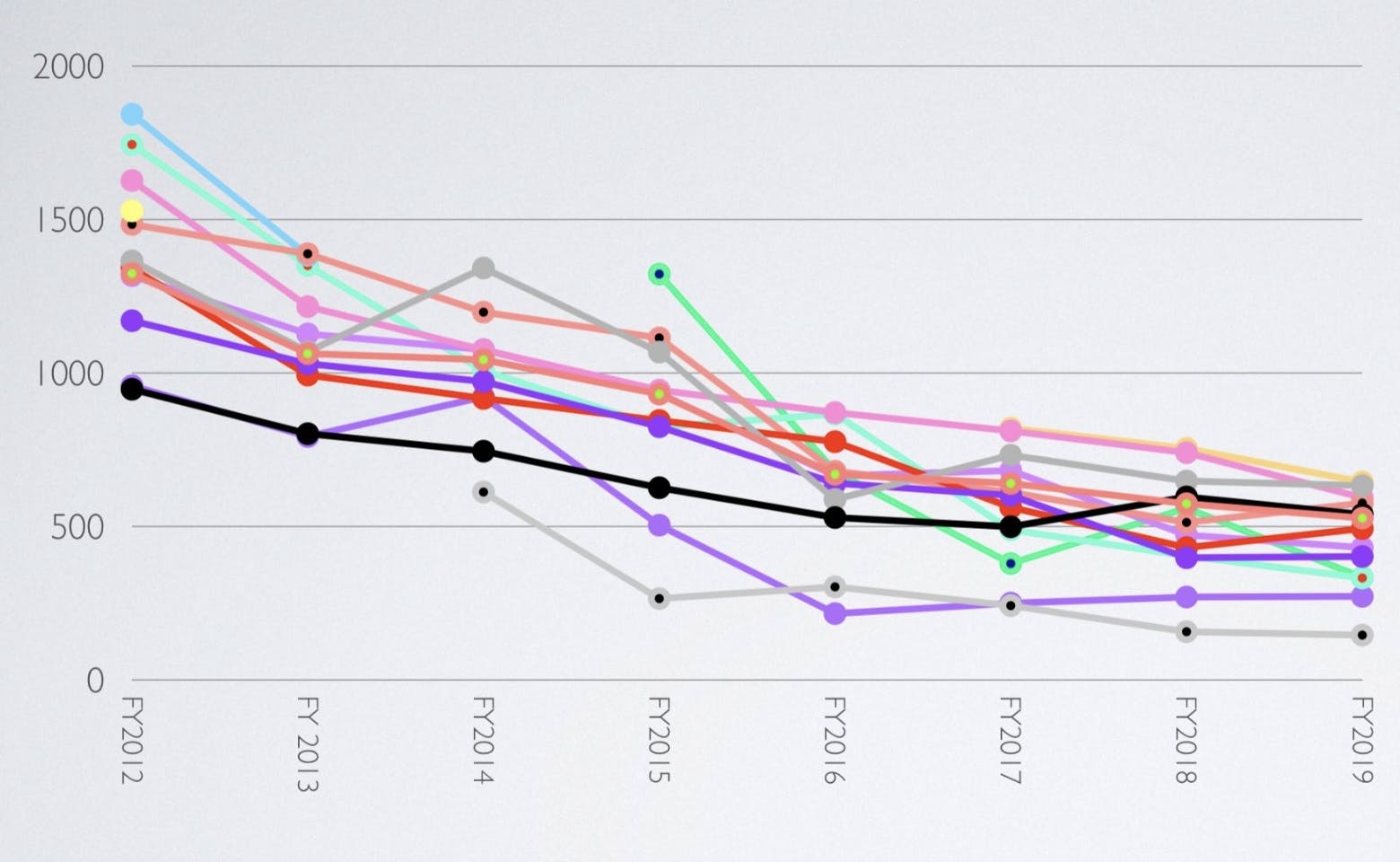
Figure 4. Average air kerma use per individual operator at UWMMC since implementing new radiation protection strategies.
Similarly, at NYU Langone Hospital–Long Island, a radiation safety program is being developed that incorporates many of the practices mentioned earlier with frequent education of cath lab staff, highlighted by the recent adoption of the RadPad protective scatter-radiation absorbing shield (Worldwide Innovations & Technologies, Inc). In the ATTENUATE trial, patients are prospectively randomized to RadPad in addition to standard practices versus standard practices alone during coronary and structural cases. In the first 100 randomized patients (diagnostic [n = 65], coronary [n = 24], or structural interventions [n = 11]), RadPad use was associated with a 29.8% reduction in relative operator exposure compared with no use of RadPad (18.337 vs 12.875 exposure per dose area product; P < .0001) (Figure 5).24 Data collection and enrollment are ongoing in hopes of better understanding the impact this protective scatter-radiation–absorbing shield can have in a contemporary clinical coronary and structural practice, further contributing to data in this space.
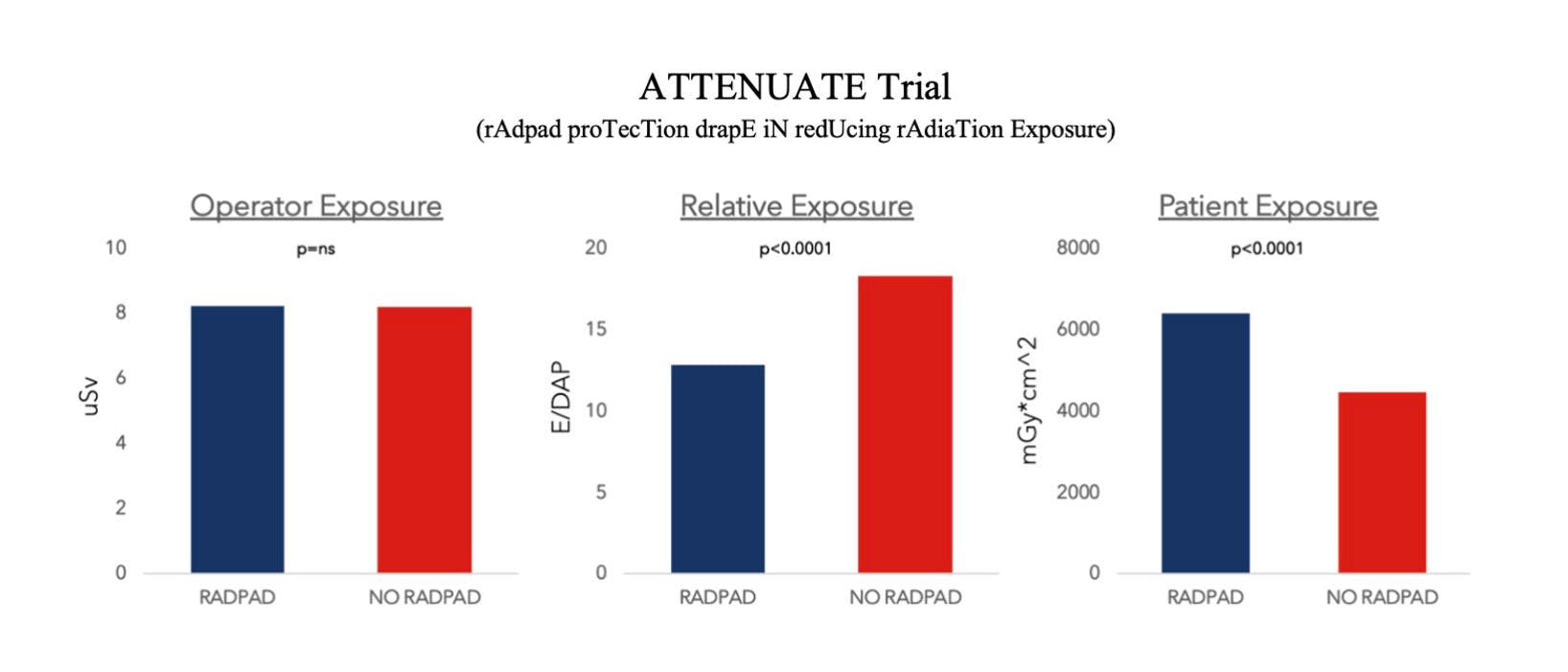
Figure 5. Early insights from the ATTENUATE trial demonstrated a reduction in radiation to the primary operator with use of the RADPAD protective scatter-radiation–absorbing shield at NYU Langone Hospital–Long Island. Reprinted from Medranda GA, Gambino AT, Schwartz RK. E-29 | the impact of the RADPAD protection drape in reducing radiation exposure in a contemporary cardiac catheterization laboratory: insights from the ATTENUATE trial. JSCAI. 2023;2(suppl):100939.
ADVANCES IN RADIATION SAFETY
Barrier Protection
Wearable items for radiation protection such as aprons, headwear, and eyewear substantially reduce target-organ radiation exposure by up to 95% to 97% but at a cost: The heavy metals and other required materials make protective outerwear very heavy, leading to risk of occupational musculoskeletal injury. Thus, the focus of many recent innovations is to remove this risk by either bolstering the tableside barriers to negate the need for protective outerwear (Radiaction System, Radiaction Medical; Rampart, Rampart ic LLC; Protego, Image Diagnostics) or removing the weight of protective outerwear via a system of overhead gantries and cables (Vector lead apron suspension system, Tollos; Zero-Gravity, Biotronik). Despite their cost, recent years have seen many labs adopting these new barrier systems in an effort to reduce injury risk and enhance the sustainability of a lifelong career in the cath lab environment.
Fluoroscopic Systems
Fluoroscopic original equipment manufacturers continue to introduce technology into their equipment that reduces the use of x-ray without compromising image quality, including hardware changes of improved sensitivity of flat-panel digital image detectors, pulse-exposure technology, and substantially more powerful image-coprocessing subsystems. And, of course, alongside hardware changes comes the ability to introduce more complex software for image acquisition and analysis, such as live three-dimensional rendering, which may reduce the need for multiple cineangiographic runs.
Robotic Systems
The Corindus CorPath (Siemens Healthineers Endovascular Robotics) system reduces exposure to radiation by allowing operators to manipulate catheters and wires from a shielded workstation remote from the tableside. Its cost and limitations have led to a limited adoption at present, although the technology is very likely to evolve in the near term.
Artificial Intelligence
The integration of artificial intelligence (AI) into the cath lab also has the most potential to reduce radiation exposure to patients and operators. Investigation into the use of AI for this application is still in its earliest stages, but one group has demonstrated the potential to use an AI-enhanced collimation algorithm to substantially reduce radiation in endoscopic procedures.25
CONCLUSION
Ionizing radiation poses a legitimate and life-altering risk but can be mitigated significantly if respected. By taking advantage of personal protective equipment, varying acquisition modes, and specialized equipment, it is possible to significantly reduce radiation exposure to your patients, your staff, and yourself. Radiation safety must be the standard of practice as the field of interventional cardiology continues to advance.
Acknowledgements
We would be remiss if we did not acknowledge the support and mentorship of Hayder D. Hashim, MD, and Stephen J. Green, MD, for establishing a culture of radiation safety for all in the cath lab.
1. Writing Committee M, Hirshfeld JW Jr, Ferrari VA, et al. 2018 ACC/HRS/NASCI/SCAI/SCCT expert consensus document on optimal use of ionizing radiation in cardiovascular imaging-best practices for safety and effectiveness, part 1: radiation physics and radiation biology: a report of the American College of Cardiology Task Force on Expert Consensus Decision Pathways developed in collaboration with Mended Hearts. Catheter Cardiovasc Interv. 2018;92:203-221. doi: 10.1002/ccd.27660
2. Andreassi MG, Piccaluga E, Guagliumi G, et al. Occupational health risks in cardiac catheterization laboratory workers. Circ Cardiovasc Interv. 2016;9:e003273. doi: 10.1161/CIRCINTERVENTIONS.115.003273
3. Sun Z, AbAziz A, Yusof AK. Radiation-induced noncancer risks in interventional cardiology: optimisation of procedures and staff and patient dose reduction. Biomed Res Int. 2013;2013:976962. doi: 10.1155/2013/976962
4. Ciraj-Bjelac O, Rehani M, Minamoto A, et al. Radiation-induced eye lens changes and risk for cataract in interventional cardiology. Cardiology. 2012;123:168-171. doi: 10.1159/000342458
5. Reeves RR, Ang L, Bahadorani J, et al. Invasive cardiologists are exposed to greater left sided cranial radiation: the BRAIN study (brain radiation exposure and attenuation during invasive cardiology procedures). JACC Cardiovasc Interv. 2015;8:1197-1206. doi: 10.1016/j.jcin.2015.03.027
6. Roguin A, Goldstein J, Bar O, Goldstein JA. Brain and neck tumors among physicians performing interventional procedures. Am J Cardiol. 2013;111:1368-1372. doi: 10.1016/j.amjcard.2012.12.060
7. Klein LW, Miller DL, Balter S, et al. Occupational health hazards in the interventional laboratory: time for a safer environment. J Vasc Interv Radiol. 2009;20(7 suppl):S278-83. doi: 10.1016/j.jvir.2008.10.015
8. Chambers CE, Fetterly KA, Holzer R, et al. Radiation safety program for the cardiac catheterization laboratory. Catheter Cardiovasc Interv. 2011;77:546-56. doi: 10.1002/ccd.22867
9. Manzo-Silberman S, Velazquez M, Burgess S, et al. Radiation protection for healthcare professionals working in catheterisation laboratories during pregnancy: a statement of the European Association of Percutaneous Cardiovascular Interventions (EAPCI) in collaboration with the European Heart Rhythm Association (EHRA), the European Association of Cardiovascular Imaging (EACVI), the ESC Regulatory Affairs Committee and Women as One. EuroIntervention. 2023;19:53-62. doi: 10.4244/EIJ-D-22-00407
10. Cheney AE, Vincent LL, McCabe JM, Kearney KE. Pregnancy in the cardiac catheterization laboratory: a safe and feasible endeavor. Circ Cardiovasc Interv. 2021;14:e009636. doi: 10.1161/CIRCINTERVENTIONS.120.009636
11. Committee opinion no. 723: guidelines for diagnostic imaging during pregnancy and lactation. Obstet Gynecol. 2017;130:e210-e6. doi: 10.1097/AOG.0000000000002355
12. Ratnapalan S, Bentur Y, Koren G. “Doctor, will that x-ray harm my unborn child?” CMAJ. 2008;179:1293-1296. doi: 10.1503/cmaj.080247
13. Duran A, Hian SK, Miller DL, et al. Recommendations for occupational radiation protection in interventional cardiology. Catheter Cardiovasc Interv. 2013;82:29-42. doi: 10.1002/ccd.24694
14. Abdelaal E, Plourde G, MacHaalany J, et al. Effectiveness of low rate fluoroscopy at reducing operator and patient radiation dose during transradial coronary angiography and interventions. JACC Cardiovasc Interv. 2014;7:567-574. doi: 10.1016/j.jcin.2014.02.005
15. Fetterly KA, Mathew V, Lennon R, et al. Radiation dose reduction in the invasive cardiovascular laboratory: implementing a culture and philosophy of radiation safety. JACC Cardiovasc Interv. 2012;5:866-873. doi: 10.1016/j.jcin.2012.05.003
16. Christopoulos G, Makke L, Christakopoulos G, et al. Optimizing radiation safety in the cardiac catheterization laboratory: a practical approach. Catheter Cardiovasc Interv. 2016;87:291-301. doi: 10.1002/ccd.25959
17. Agarwal S, Parashar A, Bajaj NS, et al. Relationship of beam angulation and radiation exposure in the cardiac catheterization laboratory. JACC Cardiovasc Interv. 2014;7:558-566. doi: 10.1016/j.jcin.2013.12.203
18. Marcie S, Gerard JP, Dejean C, et al. The inverse square law: a basic principle in brachytherapy. Cancer Radiother. 2022;26:1075-1077. doi: 10.1016/j.canrad.2022.04.002
19. van Rooijen BD, de Haan MW, Das M, et al. Efficacy of radiation safety glasses in interventional radiology. Cardiovasc Intervent Radiol. 2014;37:1149-1155. doi: 10.1007/s00270-013-0766-0
20. Karadag B, Ikitimur B, Durmaz E, et al. Effectiveness of a lead cap in radiation protection of the head in the cardiac catheterisation laboratory. EuroIntervention. 2013;9:754-756. doi: 10.4244/EIJV9I6A120
21. Politi L, Biondi-Zoccai G, Nocetti L, et al. Reduction of scatter radiation during transradial percutaneous coronary angiography: a randomized trial using a lead-free radiation shield. Catheter Cardiovasc Interv. 2012;79:97-102. doi: 10.1002/ccd.22947
22. Salcido-Rios J, McNamara DA, VanOosterhout S, et al. Suspended lead suit and physician radiation doses during coronary angiography. Catheter Cardiovasc Interv. 2022;99:981-988. doi: 10.1002/ccd.30047
23. Kim KP, Miller DL. Minimising radiation exposure to physicians performing fluoroscopically guided cardiac catheterisation procedures: a review. Radiat Prot Dosimetry. 2009;133:227-233. doi: 10.1093/rpd/ncp052
24. Medranda GA, Gambino AT, Schwartz RK. E-29 | the impact of the RADPAD protection drape in reducing radiation exposure in a contemporary cardiac catheterization laboratory: insights from the ATTENUATE trial. JSCAI. 2023;2(suppl):100939. doi: 10.1016/j.jscai.2023.100939
25. Bang JY, Hough M, Hawes RH, Varadarajulu S. Use of artificial intelligence to reduce radiation exposure at fluoroscopy-guided endoscopic procedures. Am J Gastroenterol. 2020;115:555-561. doi: 10.14309/ajg.0000000000000565
Advertisement
Advertisement
Latest Digital Exclusives