Advertisement
Advertisement
September/October 2022
Emerging Technologies for Mitral Valve Repair
A review of transseptal chordal and posterior leaflet augmentation devices in various stages of clinical development for mitral valve repair.
By Sebastian Ludwig, MD; Andrea Scotti, MD; and Azeem Latib, MD
Mitral regurgitation (MR) is the most common valve disease, affecting millions of people worldwide. If left untreated, MR may lead to chronic heart failure (HF) with increased mortality and recurrent HF hospitalizations. In the last few decades, several transcatheter devices have been investigated and adopted for the treatment of MR. The most common transcatheter technique is represented by transcatheter edge-to-edge repair (TEER). Although its use is associated with significant MR reduction, optimal results cannot be achieved in all patients and limited data are available regarding long-term durability. Moreover, treatment of TEER failure requires surgical valve replacement, thus limiting the applicability of TEER in younger patients. Transcatheter mitral valve replacement (TMVR) has evolved as an alternative therapy for patients with suboptimal anatomy for edge-to-edge repair. Yet, screening failure rates for TMVR (eg, due to the risk of left ventricular outflow tract [LVOT] obstruction) remain markedly elevated and currently limit its use to a highly selective subset of patients with MR. As such, several devices are currently under investigation to address this unmet clinical need and provide a more tailored approach according to the underlying mitral valve pathology.
TRANSSEPTAL CHORDAL DEVICES
Surgical mitral valve repair is considered the preferred treatment for severe primary MR caused by prolapse or flail. It is performed with expanded polytetrafluoroethylene (ePTFE) sutures used as artificial neochordae to resuspend the prolapsing or flail leaflet. Despite excellent short- and long-term results, this procedure requires a cardioplegic arrested heart and cardiopulmonary bypass. Thus, transcatheter technologies have emerged to offer a less invasive solution to conventional direct access approaches for the treatment of patients with degenerative MR due to leaflet flail or prolapse (Figure 1).
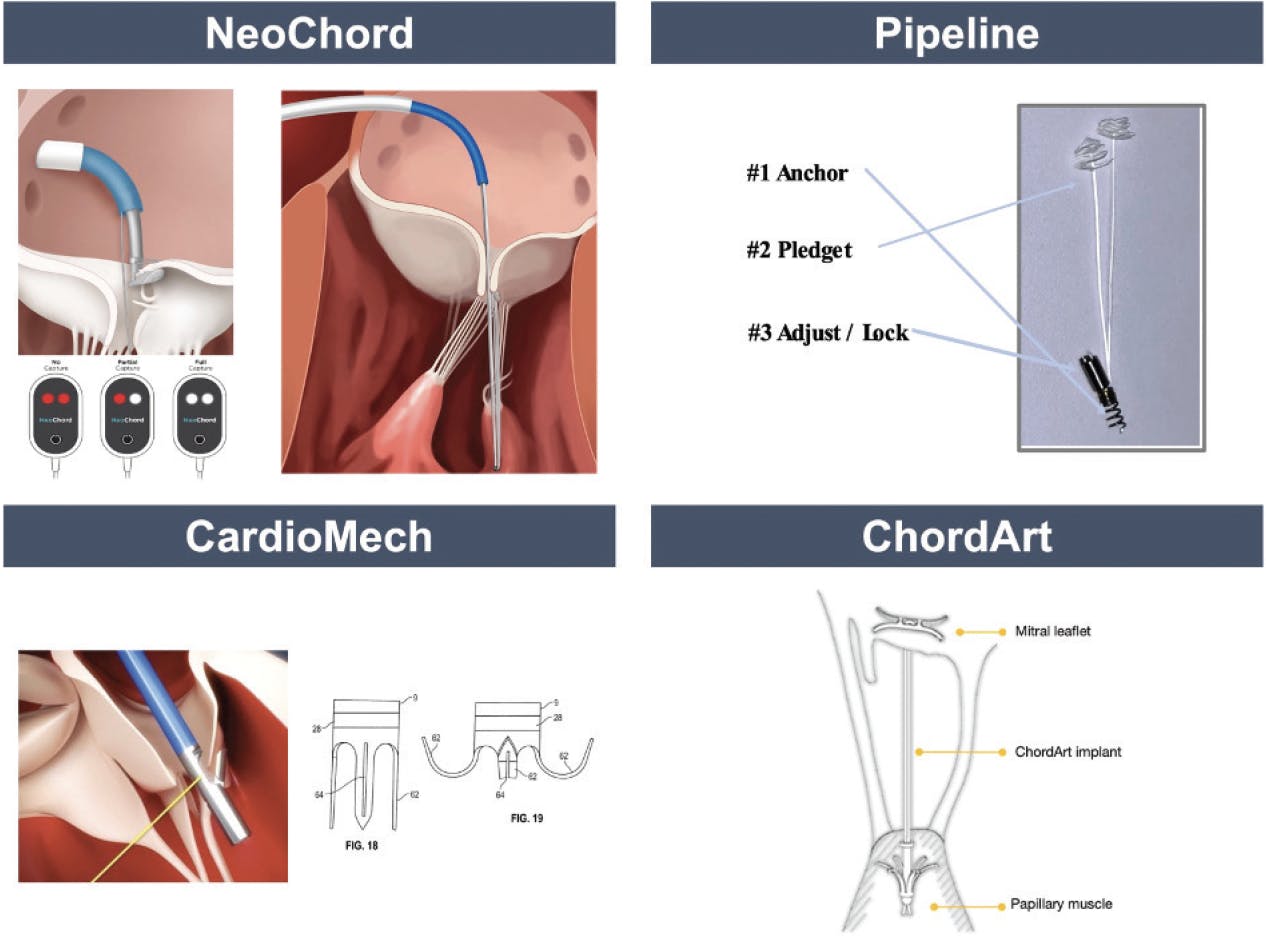
Figure 1. Transseptal chordal devices. (Images courtesy of their respective companies.)
NeoChord System
The NeoChord DS1000 (NeoChord Inc.) is the first transapical chordal implantation device available for clinical use in Europe, receiving CE Mark in December 2012. More than 1,700 patients in > 24 countries have been treated with this transapical device, making it the system with the largest clinical experience on transcatheter neochord implantation. The procedure is performed on a beating heart under direct transesophageal echocardiography (TEE) guidance.
Driven by the solid experience on their transapical device, NeoChord Inc. has designed the novel NeoChord NeXuS system (NeoChord Inc.) to perform neochord implantation with a transfemoral-transseptal access. The first-in-human (FIH) procedure was successfully performed in October 2021 by Dr. Latib and colleagues with several other cases following the initial procedure. The device is inserted through transfemoral access with a 28-F delivery catheter and reaches the left atrium after transseptal puncture.1 The leaflet is grasped under echocardiographic guidance, and tissue capture is confirmed with the proprietary fiberoptic light monitor. Sutures are delivered with girth hitch knots on the leaflet margin, and a helical anchor is implanted on the target papillary muscle. The neochord between anchor and leaflet knot is further tensioned under echocardiographic guidance to restore mitral valve coaptation. Both anterior and posterior leaflets can be treated with a total of two chords per anchor. This technology is similar to the surgical counterpart and can restore physiologic mitral leaflet function in a less invasive way. Compared to the transapical device, the anchors are implanted on papillary muscles rather than the LV wall. No bulky leaflet devices are deployed, thus leaving the door open for additional surgical and transcatheter procedures if necessary. The surgical-like result obtained with a transseptal transcatheter treatment makes the NeoChord NeXuS system a viable alternative to surgery to address isolated leaflet disease with a favorable risk/benefit ratio. This device is currently available in Europe for investigational use. The company has declared its plan to conduct an early feasibility study in the United States to advance down the regulatory pathway toward eventual FDA approval.
Pipeline System
The Pipeline system (Gore & Associates) is another transfemoral-transseptal device to perform chordal implantation. The system consists of a deflectable guide catheter, a delivery catheter, and four components used for chordal implantation: a ventricular anchor, leaflet pledgets with Gore-Tex sutures (Gore & Associates), a suture lock, and suture cutter. Contrary to the other chordal implantation systems, the first step of this procedure is placement of the ventricular anchor followed by leaflet capture. The FIH procedure with the Pipeline device was performed in a man with symptomatic P2 prolapse and severe MR in 2019.2 Although the procedure was technically successful, there was anchor displacement prior to discharge and the patient subsequently required surgical mitral valve correction. This led the company to pause the clinical implantations and redesign the anchor to a ventricular anchor placed in the pericardium.
CardioMech
The CardioMech (CardioMech AS) is another device under investigation for treating patients with degenerative MR with chordal implantation. The catheter device holds a characteristic self-expandable folded papillary anchor made by shape memory metal. The key aspects of this technology consist of a one-chord solution, repositionable and retrievable anchors, beating heart and live tensioning with ability to evaluate the final performance of the device before release, articulated hinge for coaxial anchor placement, and a 24-F steerable sheath for transfemoral transseptal delivery. An FDA investigational device exemption (IDE) early feasibility study has commenced (NCT04820764). The FIH procedure was conducted in early September 2021 and three patients were treated as part of the early feasibility study. However, the leaflet attachment detached in all three patients, and the company has paused the study while it redesigns.
ChordArt System
The ChordArt system (CoreMedic) is intended for chordal replacement in patients with MR due to leaflet prolapse or flail delivered through a catheter-based technology for mitral chordal replacement via a small incision in the thorax. It consists of a proximal nickel-titanium anchor for leaflet securement, a distal papillary muscle anchor, and an ePTFE chord. The 2-year results of the CHAGALL trial (NCT03581656) showed the procedure to be safe, effective, and durable. A transfemoral-transseptal system is currently under development.
POSTERIOR LEAFLET AUGMENTATION
Posterior leaflet augmentation is another emerging transcatheter therapy designed to overcome current challenges in transcatheter mitral valve repair and replacement. This approach was first described by Carpentier and colleagues as a potential surgical technique to improve leaflet coaptation with pericardial patches in a long-term report on reconstructive surgery outcomes in rheumatic mitral valve regurgitation.3 Recently, several companies have been able to mimic this technique with transfemorally delivered transcatheter devices that enhance the posterior leaflet in different ways. Most of these devices are currently in stages of FIH or early feasibility studies. In contrast to many other transcatheter strategies for the treatment of MR, posterior leaflet augmentation aims to restore valve coaptation by maintaining the physiologic function of the anterior mitral valve leaflet. Further important advantages of this novel technique are its broad applicability to a variety of anatomies and lesion types, especially patients with marked posterior leaflet tethering or small mitral valve areas, the absent risk of LVOT obstruction, and the fact that options for future transcatheter reinterventions (eg, TMVR) are preserved.
Four transseptal transcatheter devices targeting the posterior leaflet (by either enhancing or replacing the leaflet) are currently under early clinical investigation (Figure 2). The PLAR system (Polares Medical SA) aims to restore coaptation by partial replacement of the posterior leaflet with an implant made from nitinol and ePTFE, which is secured in position using posterior and several secondary anchors. Compassionate use cases have been performed in Germany and Switzerland, and an early feasibility study (EXPLORE MR, NCT04098328) is currently enrolling patients. The Sutra TMVR system (Dura Biotech), which is still being investigated preclinically, also uses annular anchors but consists of a trileaflet bioprosthetic valve in a crescent-shaped stent frame. The Mitral Butterfly (AVVie GmbH) is based on the concept of an artificial papillary muscle and is designed mainly for patients with primary MR (ie, posterior leaflet prolapse). It is comprised of a nitinol stent and a polymer mesh swing arm, which serves as the artificial papillary muscle and contains the prolapsing segment. To date, only preclinical data exist with this device, and an early feasibility study is planned in the near future.
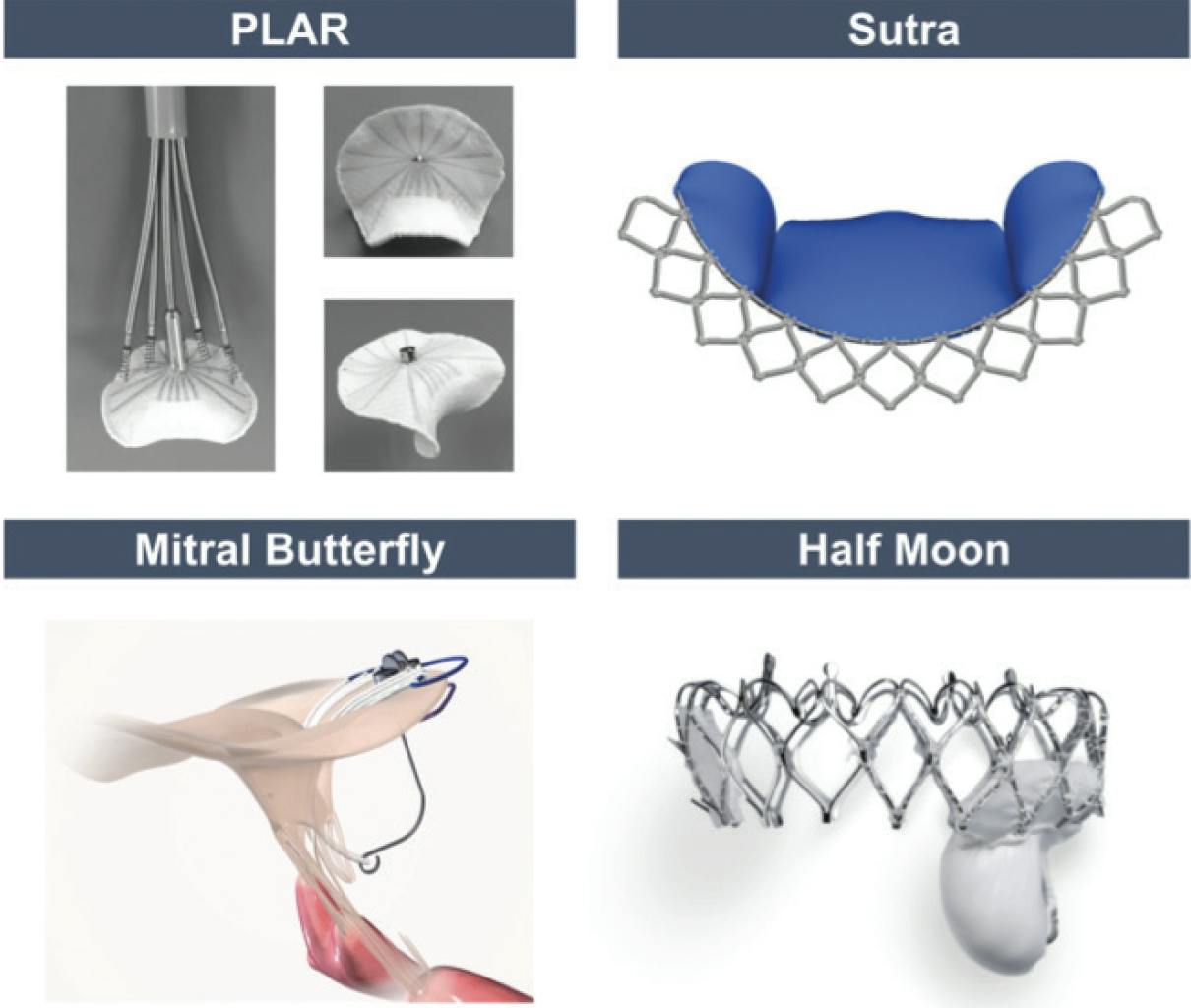
Figure 2. Transseptal posterior leaflet enhancement devices. (Images courtesy of their respective companies.)
One of the more advanced systems among leaflet augmentation devices is the Half Moon system (Half Moon Medical, Inc.), which consists of a circular stent frame holding a contoured ePTFE baffle that fills the regurgitant orifice from the posterior side, attempting to provide a new coaptation surface for the native leaflets. Moreover, a clip capturing the posterior leaflet helps with device orientation and provides subannular fixation, while a flexible atrial brim offers additional fixation and stabilizes the device on the supra-annular side. The Half Moon system can be safely implanted under TEE guidance using a 29-F delivery system, which enables both repositionability and recovery of the device.4 Currently, a prospective, multicenter, nonrandomized early feasibility study (The Half Moon TMVr pilot study, NCT04343313) is recruiting patients to evaluate safety and performance of the Half Moon device.
SUMMARY
There is still a large unmet therapeutic need for patients with severe MR, which is currently not met by established treatment options such as TEER, TMVR, or open heart surgery. Transseptal chordal devices and transcatheter posterior leaflet augmentation systems represent emerging novel therapies that have the potential to substantially expand the toolbox of treatments for a broad spectrum of potentially amenable patients with MR. Given the advantages of a completely endovascular procedure and the preserved possibility for future interventions, these therapies might eventually pave the way for the adoption of transcatheter therapies in younger, low-surgical-risk patients with severe MR.
1. Latib A, Ho EC, Scotti A, et al. First-in-human transseptal transcatheter mitral chordal repair. JACC Cardiovasc Interv. 2022;15:1768-1769. doi: 10.1016/J.JCIN.2022.05.020
2. Rogers JH, Ebner AA, Boyd WD, et al. First-in-human transfemoral transseptal mitral valve chordal repair. JACC Cardiovasc Interv. 2020;13:1383-1385. doi: 10.1016/j.jcin.2019.12.019
3. Chauvaud S, Fuzellier JF, Berrebi, A et al. Long-term (29 years) results of reconstructive surgery in rheumatic mitral valve insufficiency. Circulation. 2001;104(12 suppl 1):I12-I15. doi: 10.1161/hc37t1.094707
4. Zahr F. Mitral valve repair with more natural physiologic functionality of the mitral valve (half-moon). Presented at: TVT 2021; July 20, 2021; Miami Beach, Florida. https://www.tctmd.com/slide/mitral-valve-repair-more-natural-physiologic-functionality-mitral-valve-half-moon
Advertisement
Advertisement