Advertisement
Advertisement
September/October 2022
Contemporary Treatment of Tricuspid Regurgitation
Determining the appropriate candidates for surgical and transcatheter therapies and which devices to use.
By Marta Sitges, MD, PhD; Laura Sanchis, MD, PhD; Daniel Pereda, MD, PhD; and Xavier Freixa, MD, PhD
With the recent increased attention toward tricuspid regurgitation (TR) in cardiology, the tricuspid valve (TV) is no longer the forgotten valve. TR has been classically considered a painless, slowly evolving disease with few therapeutic options (mainly, open cardiac surgery). However, improved knowledge of heart valve disease epidemiology, the aging of the current population and the resultant increased prevalence of TR, and, finally, the development and availability of novel transcatheter approaches to treat heart valve disease have all contributed to the new management approach to TR that we are currently witnessing.
The availability of different percutaneous approaches, in addition to both open and minimally invasive surgical therapies, opens a wide range of possibilities and questions that need to be addressed. This is a continuously evolving field where we constantly have new data and learnings.
RISKS OF SURGICAL INTERVENTION
Recent reports show that although surgery is an excellent solution for many patients, surgical intervention for TR carries a high risk, with a reported global mortality of 11% for isolated TR1 and up to 3% to 14% of patients with degenerative disease requiring a definite pacemaker for preventive annuloplasty at the time of mitral valve repair.2 These surgical outcomes have been consistently reported in the last decade, despite higher surgical volumes and rates of surgical repair compared to replacement. The reasons for these results include the late referral of these patients, which has been at least partially promoted in the cardiology guidelines contrary to guidelines for left heart valves, the lack of early symptoms, and, particularly, the lack of evidence for cutoff markers of early right ventricular dysfunction. Consequently, late referral has been frequent (further perpetuating the high-risk profile for surgery in these patients) and the surgical results suboptimal, contributing to close the vicious cycle.
EXAMINING AVAILABLE DATA for new DEVICES
The TriValve registry was the first international multicenter study reporting the observed outcomes of early experience using percutaneous approaches to treat TR, mainly transcatheter edge-to-edge repair (TEER) with the MitraClip system (Abbott).3 The main conclusions of the collected data were that these procedures were feasible and effective in reducing TR, with a very high safety profile and low rate of complications, particularly for TEER. Additionally, in another analysis comparing a cohort of 268 patients from the TriValve registry with a contemporary cohort of patients medically treated in the same centers, survival outcomes at 1-year follow-up were significantly better for patients undergoing percutaneous intervention (mainly, TEER with the MitraClip) (likelihood ratio, 12.8 for survival without heart failure; P = .0003).4
The TRILUMINATE pilot study was the first feasibility study to demonstrate that use of a device specifically designed for the TV (the TriClip system, Abbott) was feasible, significantly reduced TR, and improved functional status and quality of life, with significant reverse remodeling of the right heart at 1-year follow-up.5,6 The TRILUMINATE randomized pivotal trial recently completed enrollment and will show the outcomes of patients with severe TR treated with the TriClip compared with medically treated patients.
Also used for TEER of the TV is the Pascal device (Edwards Lifesciences), which has shown similar results, with a smaller number of treated patients, to both MitraClip in the tricuspid position and the TriClip device.7 Currently, the randomized CLASP II TR study aims to compare outcomes of patients with severe TR treated with the Pascal device with those medically treated. Different annuloplasty devices have also been developed—the largest experience of which is with direct annuloplasty with the Cardioband device (Edwards Lifesciences). Cardioband percutaneous annuloplasty uses a sophisticated delivery catheter and implant system to emulate the direct suture annuloplasty performed in surgery.8,9 This has demonstrated feasibility and similar outcomes to TEER in terms of functional and clinical efficacy and safety profile, despite no head-to-head comparisons having been performed. Other annuloplasty devices such as the Trialign (Mitralign, Inc.) and K-clip (Huihe Healthcare) have shown similar short-term results, but longer-term follow-up has not been reported.10
Percutaneous valves have also been developed for the TV, both at heterotopic and orthotopic implant positions. Heterotopic transcatheter TVs with bioprosthesis, including TricValve (P&F Products Features), Tricento (NVT GmbH), implanted in the superior and inferior vena cava have also shown a high safety profile.11,12 Finally, orthotopic transcatheter TVs, including Evoque (Edwards Lifesciences), Intrepid (Medtronic), Cardiovalve (Venus Medtech), Topaz (Tricares), and Gate (Navigate Cardiac Structures Inc.), are currently under evaluation with promising results.13,14
WITH MULTIPLE AVAILABLE OPTIONS, HOW DOES ONE SELECT THE APPROPRIATE THERAPY?
According to the experience gained in the last decade, three main factors influence the potential suitability of patients with TR to be treated with transcatheter therapies. The first factor (similar to surgical intervention) is clinical factors that are mainly related to the disease stage. These include right ventricular dysfunction, pulmonary hypertension, and clinical status.15,16 The second (which is specific to transcatheter therapies) is imaging quality, as most of these procedures strongly rely on echocardiographic guidance, particularly those based on repair (ie, annuloplasty, TEER); therefore, adequate intraprocedural imaging quality is essential. Third is the functional anatomy of the valve and the mechanisms underlying TR, which are determined by the valve lesions induced by each etiology causing TR.
The most frequent etiology of TR is functional, both from ventricular and atrial abnormalities, resulting from the interplay among distorted geometry of the TV apparatus and the dysfunction of the right ventricle (RV) and right atrium (RA).17 There are few organic causes of TR, which are mainly degenerative or rheumatic. Lead-related TR includes several lesions and requires different approaches depending on the underlying mechanisms. Treatment will differ depending on whether the lead interferes with normal TV function or is simply not a contributing factor in the development of TR (innocent bystander).18 Consequently, the etiology of TR and the resulting dysfunction have implications on prognosis but also on management.
UNDERSTANDING TR: THE KEY ROLE OF IMAGING
Following the old principles of surgical repair, the more abnormal the valve geometry and anatomy, the less feasible is repair typically. Therefore, it is essential to perform a detailed, systematic analysis of TV function to understand which strategy is the best for each TR case. For this reason, cardiac imaging becomes most important in decision-making for patients with severe TR.
The main imaging modality that helps us understand functional anatomy of the TV is echocardiography, due to its high temporal resolution and capability of visualizing the leaflets. However, complementary information provided by cardiac CT (CCT) and cardiac MR (CMR) are also essential to deeply understanding TR, particularly when assessing the size and function of the RV and RA and the relation of the valve with its surrounding structures, such as the right coronary artery.19 With imaging, we can assess the mechanism leading to TR; the size of the annulus; and the coaptation, length, and motion of the leaflets, which are all key parameters for evaluating the feasibility and appropriateness of implanting any given transcatheter device. When performing TEER, adequate leaflet length, flexibility, and mobility are needed. Additionally, planning the strategy of the TEER device should be based on the location of the maximum coaptation gap (corresponding to the origin of the regurgitant jet) and the specific anatomy of the patient’s TV (ie, number of leaflets, presence of indentations or commissures, leaflet quality). For annuloplasty devices, the proximity of the right coronary artery must be evaluated with contrast CCT. Also, the sizing of the prosthesis, both heterotopic and orthotopic, is estimated using CCT. CMR provides the most accurate evaluation of right atrial and ventricular volumes and function. Therefore, all of these imaging modalities are key in selecting the best therapy for each valve.
Imaging is also important to decide the timing of intervention; however, our knowledge of the ideal cutoff for ventricular volumes and function must improve. We need to look for early markers of right ventricular dysfunction, particularly when considering surgery, because symptoms usually appear very late in the stage of the disease. On the other hand, risk stratification for surgery is cumbersome. Most patients with TR are elderly, which increases surgical risk, and frailty is still difficult to quantify. Recently, a specific score for TR surgical patients, known as the TRI-SCORE, has been developed to improve risk stratification and predict in-hospital mortality after isolated TV surgery. The TRI-SCORE comprises nine items, including clinical data, blood analysis, and echocardiographic assessment, and ranges from 0 to 12. The study by Dreyfus et al anticipated an in-hospital mortality rate from 1% (score of 0) up to 65% (score > 8) for isolated TV surgery.20
SELECTING THE BEST STRATEGY FOR EACH PATIENT
Putting all these considerations together, and according to current guidelines, surgery is recommended in symptomatic patients with severe TR and without severe right ventricular dysfunction. Surgery should also be considered in asymptomatic patients with right ventricular dilatation who are surgical candidates.15,21 In patients with higher surgical risk (which is not uncommon in TR patients) or who are considered inoperable, percutaneous transcatheter therapies are considered in the European guidelines (class IIb indication).21 Selecting the best technique for surgery and percutaneous intervention will depend on the valve anatomy, with repair options preferred. To ensure repair is possible and avoid bioprosthesis-related problems, these interventions should not be delayed.
Etiology determines the lesions and the resulting anatomy of the valve. Therefore, rheumatic disease typically leads to more tethered and restricted leaflets that frequently require replacement, while degenerative disease is usually amenable to be repaired. For functional TR, the stage of disease will also determine the repairability and the technique/device of choice. Early stage functional TR typically shows mild annular dilatation, with atrial dilatation or mild right ventricular dilatation and small coaptation gaps of leaflets that can be easily repaired. On the other hand, advanced stages of functional TR show large gaps of coaptation, with advanced right atrial and ventricular remodeling and tethered leaflets that require replacement or combined repair techniques (Table 1 and Figure 1).22,23
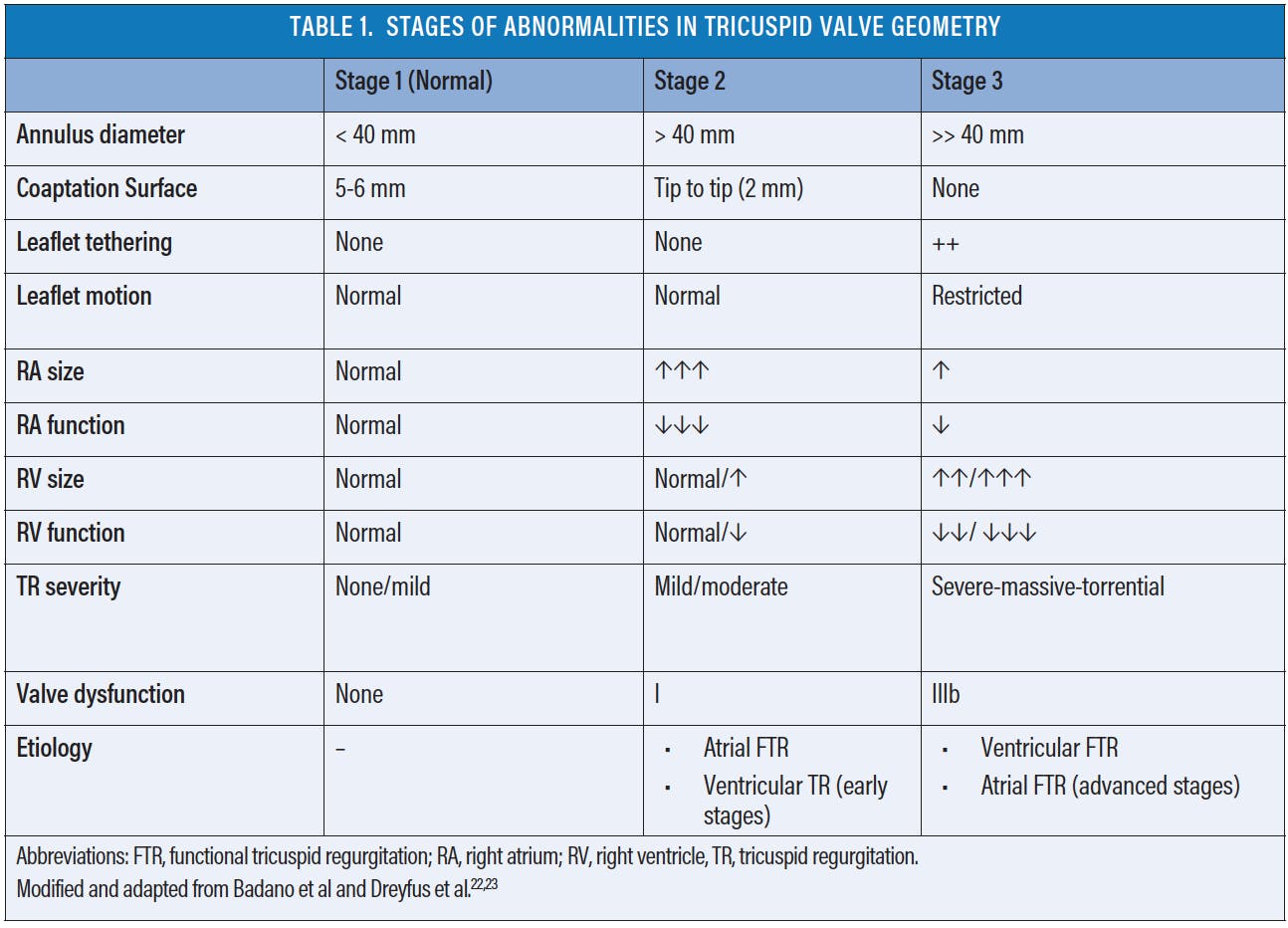
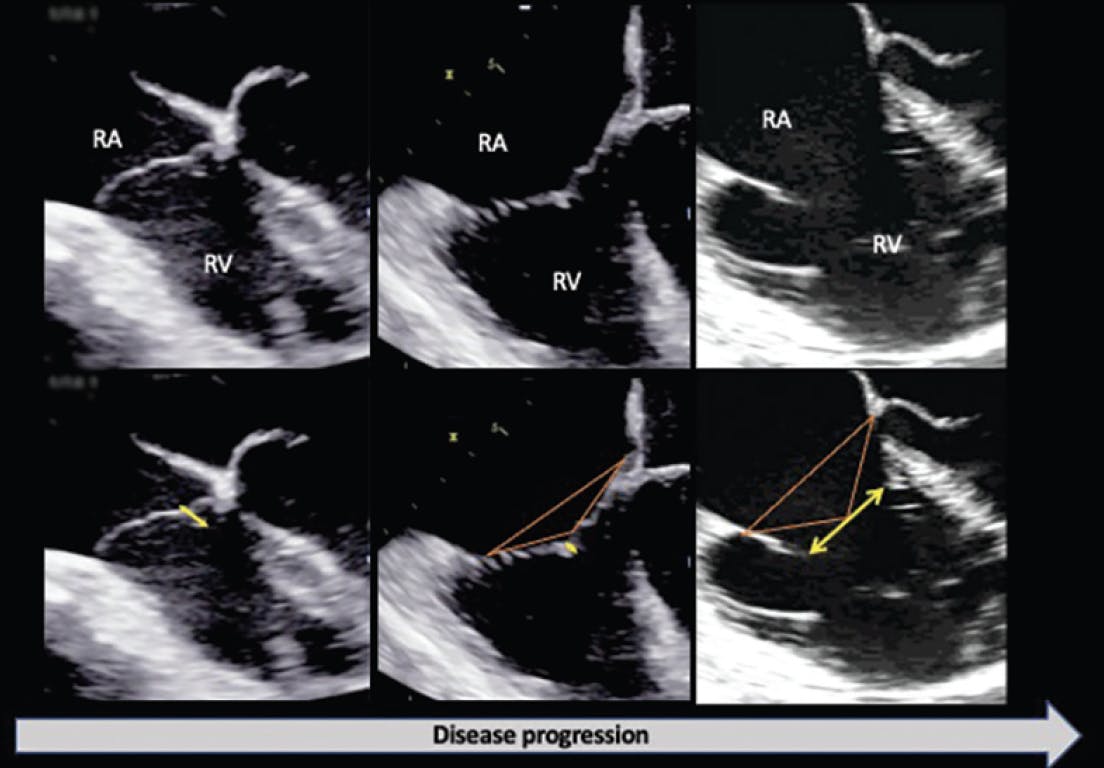
Figure 1. Progression from normal to abnormal TV geometry in functional TR. Yellow line/arrow indicates leaflet coaptation line or gap. Red lines encircle the tenting area between the annular plane and the point of coaptation of the tip of the leaflets, indicative of local remodeling and leaflet tethering.
Surgical TV repair (mainly annuloplasty if there is adequate TV anatomy) is preferred over replacement in symptomatic patients with severe TR and acceptable surgical risk. For those with very tethered or diseased leaflets, surgical TV replacement is currently indicated. Also, concomitant TV annuloplasty during left-sided heart surgery should be performed in patients with a TV annulus > 40 mm according to current guidelines; however, the availability of percutaneous transcatheter therapies might open the possibility of changing this strategy in the future. Specifically, the potential concomitant presence of TR should be thoroughly evaluated in patients undergoing mitral or aortic valve surgery, looking more at the TV geometry rather than only the color Doppler.
In patients with high surgical risk and favorable anatomy for repair, selecting the best percutaneous strategy will depend on the valve anatomy. Options include TEER devices (for smaller gaps and TV with 3-4 leaflets with adequate length and mobility) and annuloplasty devices (for those in whom the distance from the annulus to the right coronary artery is > 6 mm). Regarding the latter, direct annuloplasty (with still limited but larger experience available for the Cardioband device) has longer follow-up evidence of benefit, and ongoing registries will provide more evidence. Other systems for incomplete annuloplasty (ie, Trialign, K-clip) lack long-term follow-up data but may also facilitate combination therapy with TEER devices to treat TR. Transcatheter heterotopic TV replacement should be limited to end-stage TV disease and is currently performed mainly with caval vein implants. However, a comprehensive evaluation of the patient to avoid futility is particularly important at this stage of the disease. Initial experience with transcatheter orthotopic valves and current ongoing studies show very promising results that, if confirmed, might change the current scenario on how we treat TR. Figure 2 and Figure 3 summarize a proposed algorithm to select the appropriate strategy in primary and secondary TR, respectively. Finally, lead-related TR includes a range of underlying mechanisms inducing TR, which will determine the selection of the strategy. The role of lead extraction is still controversial and will also be determined by the potential interaction with the leaflets and its reversibility (Figure 4).
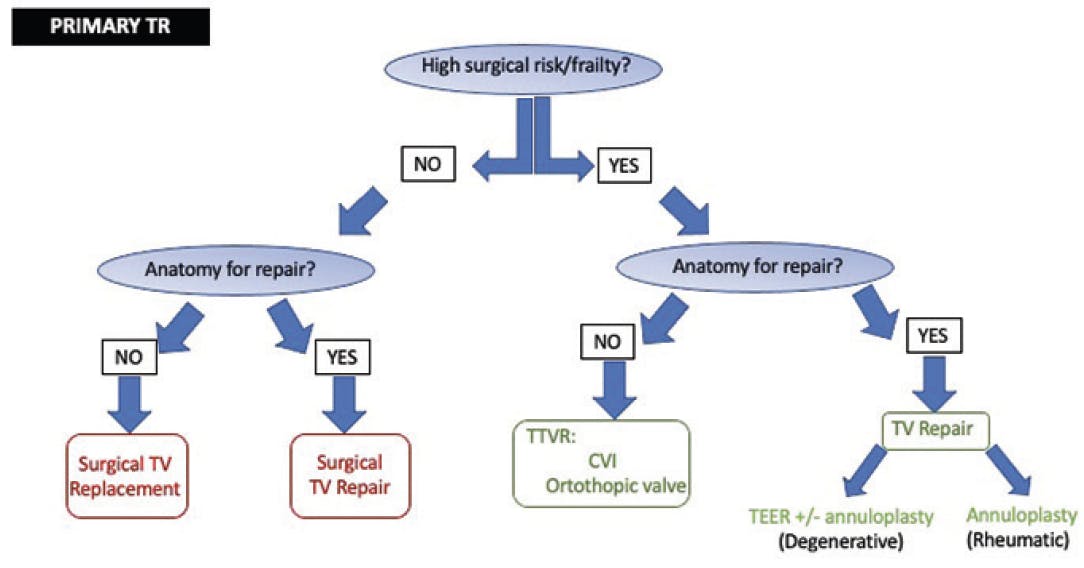
Figure 2. Proposed algorithm to select the appropriate strategy in primary TR. CVI, caval vein implant; TTVR, transcatheter tricuspid valve replacement.
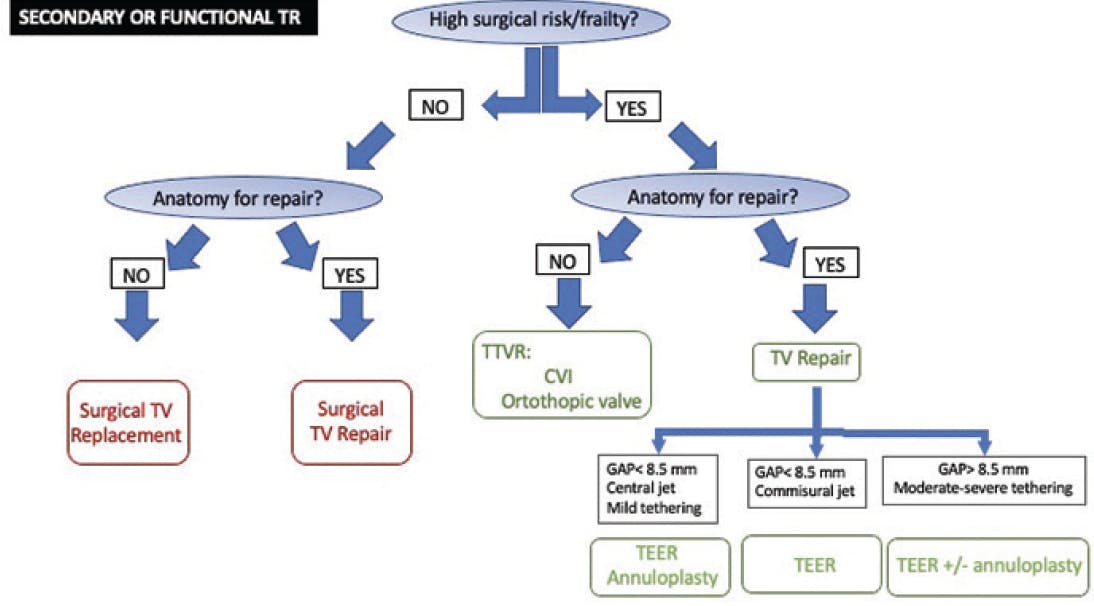
Figure 3. Proposed algorithm to select the appropriate strategy in functional TR.
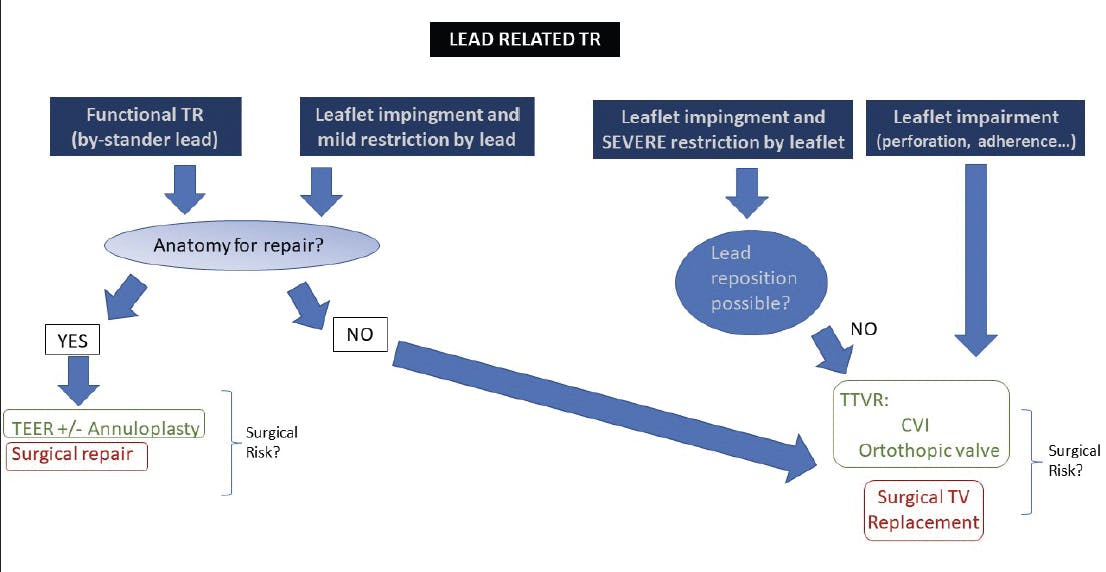
Figure 4. Proposed algorithm to select the appropriate strategy in lead-related TR.
CONCLUSION
Because most of the selection will depend on surgical risk evaluation and the TV anatomy, the role of the heart team to analyze, evaluate, and discuss all options becomes essential. The availability of different options—both surgical and percutaneous—should be the way to move forward in heart valve centers that are focused on treating TR rather than device center groups. Patients with TR deserve the best attention and all possible opportunities for treatment and improved quality of life.
1. Zack CJ, Fender EA, Chandrashekar P, et al. National trends and outcomes in isolated tricuspid valve surgery. J Am Coll Cardiol. 2017;70:2953-2960. doi: 10.1016/j.jacc.2017.10.039
2. Gammie JS, Chu MWA, Falk V, et al. Concomitant tricuspid repair in patients with degenerative mitral regurgitation. New Engl J Med. 2022;386:327-339. doi: 10.1056/nejmoa2115961
3. Taramasso M, Hahn RT, Alessandrini H, et al. The international multicenter TriValve registry: which patients are undergoing transcatheter tricuspid repair? JACC Cardiovasc Interv. 2017;10:1982. doi: 10.1016/j.jcin.2017.08.011
4. Taramasso M, Benfari G, van der Bijl P, et al. Transcatheter versus medical treatment of patients with symptomatic severe tricuspid regurgitation. J Am Coll Cardiol. 2019;74:2998-3008. doi: 10.1016/j.jacc.2019.09.028
5. Nickenig G, Weber M, Lurz P, et al. Transcatheter edge-to-edge repair for reduction of tricuspid regurgitation: 6-month outcomes of the TRILUMINATE single-arm study. Lancet. 2019;394:2002-2011. doi: 10.1016/S0140-6736(19)32600-5
6. Lurz P, Stephan von Bardeleben R, Weber M, et al. Transcatheter edge-to-edge repair for treatment of tricuspid regurgitation. J Am Coll Cardiol. 2021;77:229-239. doi: 10.1016/j.jacc.2020.11.038
7. Kodali S, Hahn RT, Eleid MF, et al. Feasibility study of the transcatheter valve repair system for severe tricuspid regurgitation. J Am Coll Cardiol. 2021;77:345-356. doi: 10.1016/j.jacc.2020.11.047
8. Davidson CJ, Lim DS, Smith RL, et al. Early feasibility study of Cardioband tricuspid system for functional tricuspid regurgitation: 30-day outcomes. JACC Cardiovasc Interv. 2021;14:41-50. doi: 10.1016/j.jcin.2020.10.017
9. Nickenig G, Friedrichs K, Baldus S, et al. Thirty-day outcomes of the Cardioband tricuspid system for patients with symptomatic functional tricuspid regurgitation: the TriBAND study. EuroIntervention. 2021;17:809-817. doi: 10.4244/EIJ-D-21-00300
10. Hahn RT, Meduri CU, Davidson CJ, et al. Early feasibility study of a transcatheter tricuspid valve annuloplasty: SCOUT trial 30-day results. J Am Coll Cardiol. 2017;69:1795-1806. doi: 10.1016/j.jacc.2017.01.054
11. Figulla HR, Kiss K, Lauten A. Transcatheter interventions for tricuspid regurgitation - heterotopic technology: TricValve. EuroIntervention. 2016;12:Y116-Y118. doi: 10.4244/EIJV12SYA32
12. Wild MG, Lubos E, Cruz-Gonzalez I, et al. Early clinical experience with the TRICENTO bicaval valved stent for treatment of symptomatic severe tricuspid regurgitation: a multicenter registry. Circ Cardiovasc Interv. 2022;15:e011302. doi: 10.1161/CIRCINTERVENTIONS.121.011302
13. Kodali S, Hahn RT, George I, et al. Transfemoral tricuspid valve replacement in patients with tricuspid regurgitation: TRISCEND study 30-day results. JACC Cardiovasc Interv. 2022;15:471-480. doi: 10.1016/j.jcin.2022.01.016
14. Hahn RT, Kodali S, Fam N, et al. Early multinational experience of transcatheter tricuspid valve replacement for treating severe tricuspid regurgitation. JACC Cardiovasc Interv. 2020;13: 2482-2493. doi: 10.1016/j.jcin.2020.07.008
15. Otto CM, Nishimura RA, Bonow RO, et al. 2020 ACC/AHA guideline for the management of patients with valvular heart disease: executive summary: a report of the American College of Cardiology/American Heart Association Joint Committee on Clinical Practice Guidelines. J Am Coll Cardiol. 2021;77:e35-e71. doi: 10.1016/j.jacc.2020.11.035
16. Topilsky Y, Khanna AD, Oh JK, et al. Preoperative factors associated with adverse outcome after tricuspid valve replacement. Circulation. 2011;123:1929-1939. doi: 10.1161/CIRCULATIONAHA.110.991018
17. Topilsky Y, Maltais S, Medina Inojosa J, et al. Burden of tricuspid regurgitation in patients diagnosed in the community setting. JACC Cardiovasc Imaging. 2019;12:433-442. doi: 10.1016/j.jcmg.2018.06.014
18. Hahn RT, Badano LP, Bartko PE, et al. Tricuspid regurgitation: recent advances in understanding pathophysiology, severity grading and outcome. Eur Heart J Cardiovasc Imaging. 2022;23:913-929. doi: 10.1093/ehjci/jeac009
19. Khalique OK, Cavalcante JL, Shah D, et al. Multimodality imaging of the tricuspid valve and right heart anatomy. JACC Cardiovasc Imaging. 2019;12:516-531. doi: 10.1016/j.jcmg.2019.01.006
20. Dreyfus J, Audureau E, Bohbot Y, et al. TRI-SCORE: a new risk score for in-hospital mortality prediction after isolated tricuspid valve surgery. Eur Heart J. 2022;43:654-662. doi: 10.1093/eurheartj/ehab679
21. Vahanian A, Beyersdorf F, Praz F, et al. 2021 ESC/EACTS guidelines for the management of valvular heart disease. Eur Heart J. 2022;43:561-632. doi: 10.1093/eurheartj/ehab395
22. Badano LP, Hahn R, Zanella H, et al. Morphological assessment of the tricuspid apparatus and grading regurgitation severity in patients with functional tricuspid regurgitation: thinking outside the box. JACC Cardiovasc Imaging. 2019;12:652-664. doi: 10.1016/j.jcmg.2018.09.029
23. Dreyfus GD, Martin RP, Chan KMJ, et al. Functional tricuspid regurgitation: a need to revise our understanding. J Am Coll Cardiol. 2015;65:2331-2336. doi: 10.1016/j.jacc.2015.04.011
Advertisement
Advertisement