Advertisement
Advertisement
September/October 2022
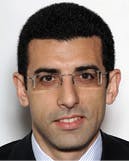
An Interview With Salvatore Brugaletta, MD, PhD
Dr. Brugaletta shares about his work in acute coronary syndrome and microvascular angina, the recent CV-COVID-19 study, his strategy for characterizing lesion morphology, why fellows should travel abroad, and more.
What do you consider the best part of being an interventional cardiologist (IC)?
There are many things, but if I have to choose one, I would say performing primary percutaneous coronary intervention (PCI) in acute ST-segment elevation myocardial infarction (STEMI). Acute STEMI is an emergency situation and poses a threat to a patient’s life. These patients usually present feeling unwell with severe chest pain. I like to perform this kind of procedure because you feel very quickly that you are doing something good for the patient; immediately after the procedure, the patient feels better and has reduced chest pain. In PCI for chronic conditions, you don’t see the patient benefit for several months. These procedures are very rewarding for an IC.
Among many projects, you are a researcher with the August Pi i Sunyer Biomedical Research Institute. Can you give us an overview of what you are working on?
Since I was a cardiology resident, my main interest has been acute coronary syndromes (ACSs). Throughout the years, I have studied the physiopathology behind plaque rupture, as well as which type of stent is better. Currently, I am working on two specific topics. The first is continued study of ACS treatment, and I’m working on how we can reduce myocardial necrosis after STEMI via use of drugs or various postconditioning devices. For the second, I started studying patients with microvascular/vasospastic angina to understand whether there are molecular fingerprints that can help us identify these patients in early phases and guide us in treatment choice.
You and colleagues recently published a comprehensive review of coronary microvascular angina.1 What tips would you share with fellow ICs to ensure these patients receive the best care?
Most importantly, we must hear our patients and be sure that no one leaves our cath lab without a specific diagnosis. These patients are called “frequent flyers” because they come back many times and undergo multiple coronary angiographies because we, as doctors, are unable to reach a definitive diagnosis. For this reason, it is important to believe these patients and their chest pain and make a final diagnosis with the appropriate tests for evaluating microcirculation and vasospasm. Only with a precise diagnosis can the correct treatment be started and lead to substantial improvement in quality of life for these patients.
As Study Director of the CV-COVID-19 study, you and colleagues sought to understand the effects of SARS-CoV-2 infection on cardiovascular outcomes, with mid-term effects published in January 2022.2 Do these results provide any insight into how COVID-19 patients should be treated going forward? What will further study of this population look like?
The rationale behind this study was to understand whether SARS-CoV-2 infection has cardiovascular consequences beyond the acute phase. We analyzed the data of patients who underwent polymerase chain reaction testing and divided them into two groups according to the test results. We found that the cardiovascular outcome was worse in the infected patients versus the control, but this was mainly driven by in-hospital events rather than any mid-term consequences. We have now expanded this population by adding data from other centers and are currently working on 1-year outcomes. We will see then if this trend is confirmed in a larger population with longer follow-up, which could help us understand if COVID-19 has long-term cardiovascular consequences that can be prevented from the beginning.
For one of your two PhDs, you studied bioresorbable scaffolds. Do you have any further work on this topic in progress? And, what do you hope the role of this technology will be in the coming years?
Although the story of bioresorbable scaffolds is short and many of them have disappeared from the clinical arena, the unmet need behind this technology is still there. We still want to offer patients a stent that can do the job and then disappear to avoid late, stent-related events. The magnesium-based platform is the only bioresorbable scaffold still on the market, and we are currently studying very long-term follow-up of patients included in the MAGSTEMI trial to determine how these scaffolds work at 5 years in terms of vascular recovery. I know that a new generation of magnesium-based bioresorbable scaffolds is coming, and we hope to have the opportunity to study it in clinical practice. This should be the starting point for a new generation of these devices, whose need in clinical practice did not disappear.
Imaging and physiology are topics you’ve increasingly discussed lately. Can you share your strategy for characterizing lesion morphology to guide PCI? What factors are you weighing when considering whether to use intravascular ultrasound (IVUS) versus optical coherence tomography (OCT)?
Imaging is a great topic and a great tool for improving PCI outcomes. I think that because stent technology is currently at the top of its performance with little space for improvement, we are only able to improve how a stent is implanted, either by physiology (to determine whether a stent is needed) or imaging. Imaging improves our lesion characterization and impacts our PCI strategy because it is used in decision-making, from lesion preparation to stent optimization.
My strategy is very simple. First, the choice between IVUS versus OCT depends on two factors: (1) how large the vessel is and (2) whether the patient has renal impairment. If I am dealing with a large diameter, such as the left main coronary artery or a patient with renal impairment, I prefer IVUS. Compared to OCT, IVUS allows for better visualization of large-vessel diameters and does not require contrast injection. Otherwise, my choice is OCT. I always do at least two pullbacks. The first is at the beginning, and this is where I decide my entire strategy: how to dilate my lesion, which device to use, balloon and stent sizing, and postdilatation. Once I have done everything by my initial strategy, I perform my second pullback to see if everything went according to plan, and this is when I decide if I need any further treatment.
You were part of a group that implemented an edge-to-edge transcatheter tricuspid valve repair program at the University of Barcelona.3 What does that program look like today, and do you have any words of wisdom for other groups implementing similar programs?
The program is very well organized today, and we are a center of excellence for transcatheter tricuspid valve treatment. To build a successful program, I think it is important to build up a multidisciplinary team that includes not only an IC but also an echocardiographer, a heart failure specialist, and a cardiac surgeon. The most important part of a transcatheter tricuspid valve repair is not the procedure per se but rather patient selection and teamwork in decision-making.
In 2020, you and colleagues provided us with an excellent overview of cardiogenic shock in STEMI,4 and you referenced a need for randomized trials and further research. Has the community made any progress on cardiogenic shock management?
At that time, there were two trials running. One was EUROSHOCK, a randomized comparison between best of care versus extracorporeal membrane oxygenation plus the conventional best treatment. Unfortunately, this trial was stopped due to slow recruitment. The other trial was the ECLS-SHOCK, which has almost the same objective and a similar methodology. This trial is finishing recruitment, and results will be presented next year hopefully. These results will be important to understanding the value of circulatory supportive devices in the early treatment of cardiogenic shock. A positive result could open the door to have specialized, primary PCI–capable cardiogenic shock centers, where a cardiogenic shock STEMI patient could be sent rather than a primary PCI hospital without advanced therapy for cardiogenic shock.
Much of your career has been dedicated to academic writing/editing and providing educational resources for physicians, as demonstrated by your current position as Editor-in-Chief of PCRonline and your work as a reviewer for other journals. What are your goals for PCRonline, and what tips would you share with a trainee who desires a career in academic research?
PCRonline is a platform that aims to provide 24/7 educational resources for physicians. As ICs, it is important to be updated not only in terms of the latest technology but also on how to perform procedures in a standardized way, while aiming to obtain the best outcome for each patient.
Trainees who desire a career in academic research should be curious in their clinical practice, particularly in situations where a specific group of patients does not fit in a general population. We should ask ourselves, “Why?” This is the start of our academic research, and it should be linked to our clinical practice. Along with this, I have three important tips to consider: have a good mentor, work hard, and be friendly with colleagues, building research collaborations.
You are the Social Media Editor for EuroIntervention and can also be seen on Twitter facilitating discussions via thought-provoking polls to the interventional cardiology community. What role do you think social media should play in a physician’s career?
The role of social media in interventional cardiology has increased incredibly in the last 5 years. It allows us to connect with different parts of the world, become aware of new publications, ask authors about their published research, and ask colleagues for advice. Nevertheless, when using social media, we must be aware of the risks, such as avoiding giving medical advice to patients.
From your home country of Italy to time in the Netherlands and now Spain, you’ve had experience with different countries and cultures. Where else would you like to travel, for work or otherwise?
I feel lucky to have had the opportunity to live in different countries, and I’ve learned many things about work and life from different cultures. This is an important aspect that new generations of ICs should consider to enrich themselves. We live in a global world, and I would encourage early career fellows to move abroad for study and see how one problem can have different and equally right solutions.
The Italian author Cesare Pavese said “Traveling is a brutality. It forces you to trust strangers and to lose sight of all that familiar comfort of home and friends. You are constantly off balance. Nothing is yours except the essential things: air, sleep, dreams, sea, the sky—all things tending towards the eternal or what we imagine of it.” Traveling is indeed such brutality, but it helps you grow personally and professionally. It does not matter where, as long as it is a place where you think you can learn something new.
1. Spione F, Arevalos V, Gabani R, et al. Coronary microvascular angina: a state-of-the-art review. Front Cardiovasc Med. 2022;9:800918. doi: 10.3389/fcvm.2022.800918
2. Arévalos V, Ortega-Paz L, Brugaletta S. Mid-term effects of SARS-CoV-2 infection on cardiovascular outcomes. Med Clin (Engl Ed). 2022;158:41-42. doi: 10.1016/j.medcle.2021.05.008
3. Cepas-Guillen PL, de la Fuente Mancera JC, Guzman Bofarull J, et al. Initial results after the implementation of an edge-to-edge transcatheter tricuspid valve repair program. J Clin Med. 2021;10:4252. doi: 10.3390/jcm10184252
4. Sabaté M, López-Sobrino T, Brugaletta S. Cardiogenic shock in STEMI. Cardiac Interv Today. 2020;14:34-37.
Advertisement
Advertisement
Interested in reading more interviews?
To read more interviews with thought leaders in the interventional cardiology field, check out our Profiles & Perspectives hub.
Read More