Advertisement
Advertisement
May/June 2022
Update on Near-Infrared Spectroscopy/Intravascular Ultrasound
The fundamental aspects and current clinical roles.
By Selcuk Kucukseymen, MD; Francesca Ciatti, MD; Niccolò Ciardetti, MD; Alessio Mattesini, MD; and Carlo Di Mario, MD, PhD
Intravascular imaging techniques such as intravascular ultrasound (IVUS) and optical coherence tomography (OCT) are able to provide valuable insights on vessel size and structure, including plaque composition.1,2 Unfortunately, both techniques miss the possibility of quantifying the amount of cholesterol content in the vessel wall, an essential piece of information to assess plaque vulnerability. The presence of a large lipid core covered by a thin fibrous cap with prominent inflammation within the shoulder region of the cap identifies plaques most likely to rupture.1,3 Retrospective analysis of serial angiographies has suggested that in nearly two-thirds of patients presenting with acute coronary syndrome (ACS), a coronary angiogram obtained weeks or months before the acute episode revealed that the culprit lesion site had a noncritical (< 70%, mostly < 50%) diameter narrowing,4,5 highlighting the importance of the different plaque features. A consequence of the excellent performance of second-generation drug-eluting stents is the prevalence of adverse events after ACS caused by lesions different from the stented culprit lesion. Techniques that empower clinicians to identify suspected vulnerable plaques offer clinically relevant information that can be used to escalate the aggressiveness of the new costly therapeutic agents targeted at reducing plaque vulnerability (PCSK9 inhibitors, SGLT2 inhibitors, etc.).6,7
BASIC PRINCIPLES OF NIRS SYSTEM
Near-infrared spectroscopy (NIRS) employs electromagnetic radiation with frequencies slightly lower than the visible spectrum (wavelength in the 800-2,500 nm range) to characterize the chemical structure of the surrounding tissues.8 Because of its ability to distinguish between chemically different substances, it is widely used in biomedical sciences.9 NIRS measurements are made by specific wavelengths of light onto a sample and measuring the ratio of reflected incident light.10 Photons can be absorbed or dispersed by tissue, affecting the amount of light detected by the spectrometer. The chemical composition of organic bonds is responsible for most of the absorption of NIR light. The absorption pattern provides a unique chemical fingerprint that can be analyzed to yield qualitative and quantitative information about material composition. The chemical composition of the target zone can be determined using the unique spectral signals produced during this process.9,10
IN VITRO VALIDATION AND PATHOLOGIC CORRELATION
Cassis and Lodder used NIRS technology for the first time in animal research in 1993 to characterize low-density lipoprotein cholesterol (LDL-C) accumulation in the aortas of hypercholesterolemic rabbits.11 Following that, researchers used diffuse reflectance NIRS to examine the lipid composition of human carotid plaques exposed during surgery.12 Gardner et al used a novel catheter-based NIRS system to identify lipid burden in human coronary plaques and correlated them with histology findings at autopsy. In this double-blinded study, the lipid core burden index (LCBI) detected the presence or absence of fibroatheromas with an area under the curve of 0.86 (95% CI, 0.81-0.91).13 In vivo studies were carried out to validate its accuracy for detecting lipid-core plaques (LCPs) in human vessels.14-17 The initial clinical applications of the NIRS system indicated that the spectra acquired in the epicardial vessels of living patients were similar to those obtained from previously verified spectra from postmortem specimens.14,15
The current NIRS/IVUS imaging catheter (Dualpro IVUS+NIRS catheter, Infraredx Inc.) consists of a 3.2-F rapid-exchange catheter compatible with 6-F guiding catheters, a pull-back and rotation device, and a console that houses the scanning laser, the computer that processes the spectral signals, and two monitors (Figure 1A).2 The catheter tip produces and gathers light, which is then sent back to the system to be processed. The catheter imaging core is able to collect data rapidly by rotating at 960 rpm as it is pulled back at an automated speed of 0.5 mm/sec. IVUS images are acquired concurrently and are coregistered with NIRS data, and they are available in a variety of combined and individual displays (Figure 1B).2,9 The software produces a color-coded graphical representation of the chemical composition of the interrogated tissue called a chemogram, which represents the probability of the presence of LCP over the scanned segment of the vessel. The chemogram is simply a map of the imaged vessel, with the X-axis representing axial position and the Y-axis showing circumferential position. The algorithm for LCP detection in humans was constructed, defining LCP as a fibroatheroma containing a lipid core ≥ 200 μm thick and > 60° angular extent on histologic analysis. In addition to the chemogram, there is a block chemogram comprising 2-mm blocks spanning the axial length of the imaged vessel, which provides an easy-to-read visualization of the probability of LCP within corresponding sections of artery by attributing a color code of red (lowest probability), orange, tan, and yellow (highest probability, > 0.98) (Figure 1C).18 The NIRS analysis generates a total LCBI measurement based on the amount of lipid in the investigated artery and detects the 4-mm segment with maximum LCBI (maxLCBI4mm).19 All NIRS parameter measurements are fully automated, quantitative, and generated in real-time during catheter pull-back, enabling immediate integration into the catheterization laboratory workflow and clinical decision-making.
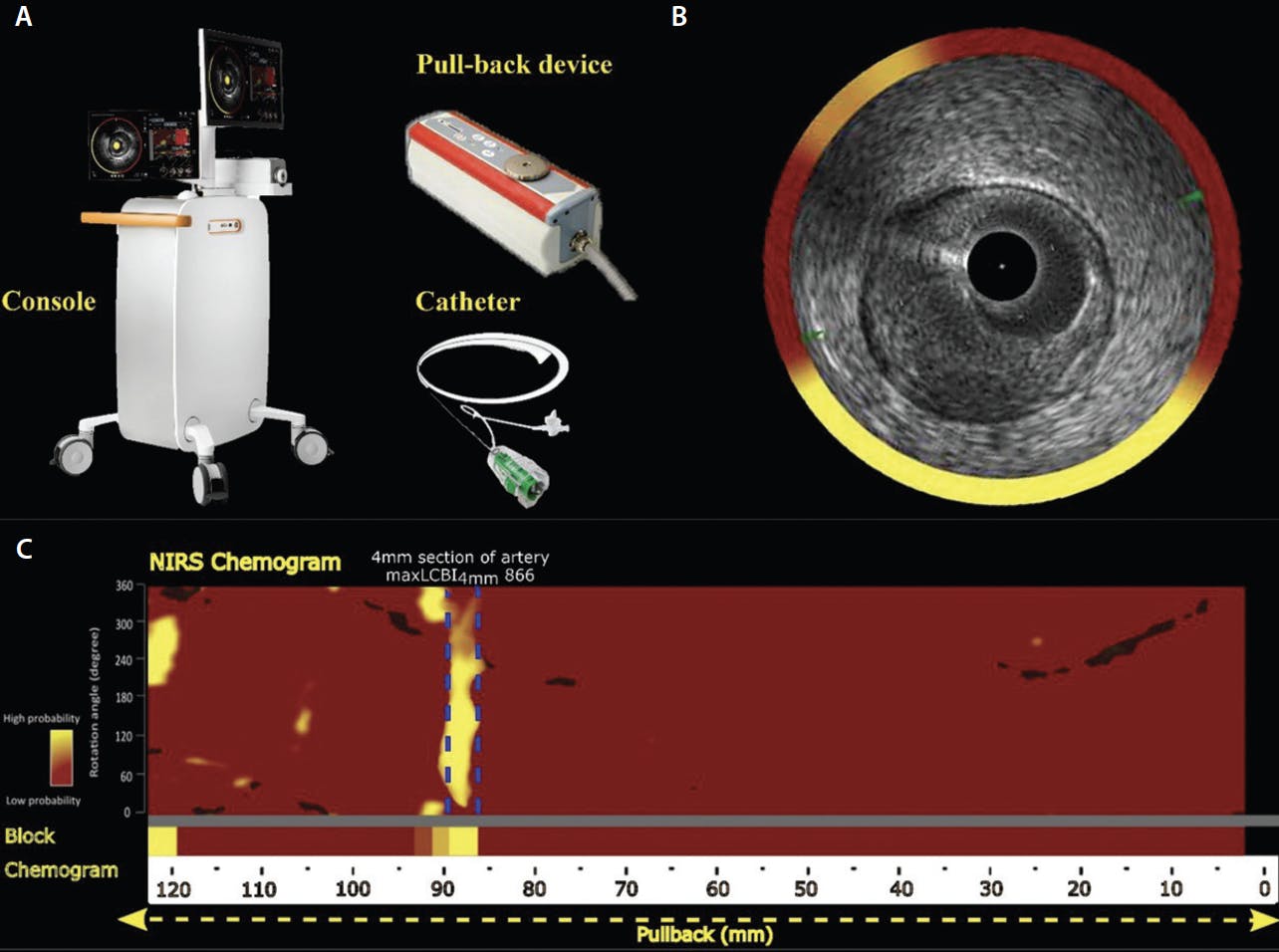
Figure 1. NIRS/IVUS imaging system (monitors, pull-back device, catheter) (A). NIRS/IVUS display during procedure (B). Interpretation of the NIRS chemogram and block chemogram (C). The X-axis indicates the pull-back position (mm) and the Y-axis represents the circumferential position of the measurement (degrees). Red regions of the chemogram correspond to locations having a low probability of lipid plaque. Yellow regions of the chemogram correspond to locations having a higher probability of lipid plaque. In this representative figure, NIRS has detected a large-size LRP in the mid-segment and a moderate in the proximal segment of the vessel. The LCBI, which is calculated as the number of yellow pixels divided by all valid pixels in the region of interest (red + yellow area) multiplied by 1,000, was 866. Upon selecting the region of interest, the application automatically identifies the maxLCBI4mm, defined as the 4-mm segment within the region of interest having the greatest LCBI (blue dash lines).
Identifying CULPRIT LESIONS AND CLINICAL OUTCOME
Several studies have retrospectively correlated an increased LCBI at the site of culprit lesions with acute coronary events (Table 1, Table 1 cont.).15,16,20-37 Madder et al used NIRS to identify the culprit vessels in ST-segment elevation myocardial infarction (STEMI) patients. The maxLCBI4mm in STEMI culprit segments was 5.8-fold greater than in nonculprit (NC) segments of the culprit vessel. From the same laboratory, a larger lipid core burden has been shown to accurately differentiate between culprit and NC lesion in STEMI patients.23 Similar, albeit less pronounced, evidence of lipid in culprit lesions determined by NIRS findings was observed in patients with non–ST-segment elevation myocardial infarction (NSTEMI).21,38 In another study, NSTEMI culprit segments had a 3.4-fold greater maxLCBI4mm than NC segments, and unstable angina culprit segments had a 2.6-fold higher maxLCBI4mm than NC segments.39 In aggregate, these studies report a stepwise increase in maxLCBI4mm from NC segments (< 130), to unstable angina (∼380), to NSTEMI (∼450), and finally to STEMI and cardiac arrest (∼550). Because of these robust NIRS findings at the culprit locations, it was proposed that maxLCBI4mm > 400 is a marker of plaques causing STEMI.22 These NIRS imaging findings are consistent with pathologic evidence showing that fibrotic lesions are more common in stable angina, whereas lipid-rich plaques (LRP) are more commonly observed as causes of NSTEMI, STEMI, and sudden death.40 The close association of LCP with culprit lesions described previously can be helpful in cases of ACS or cardiac arrest in which it is difficult to identify a culprit lesion.
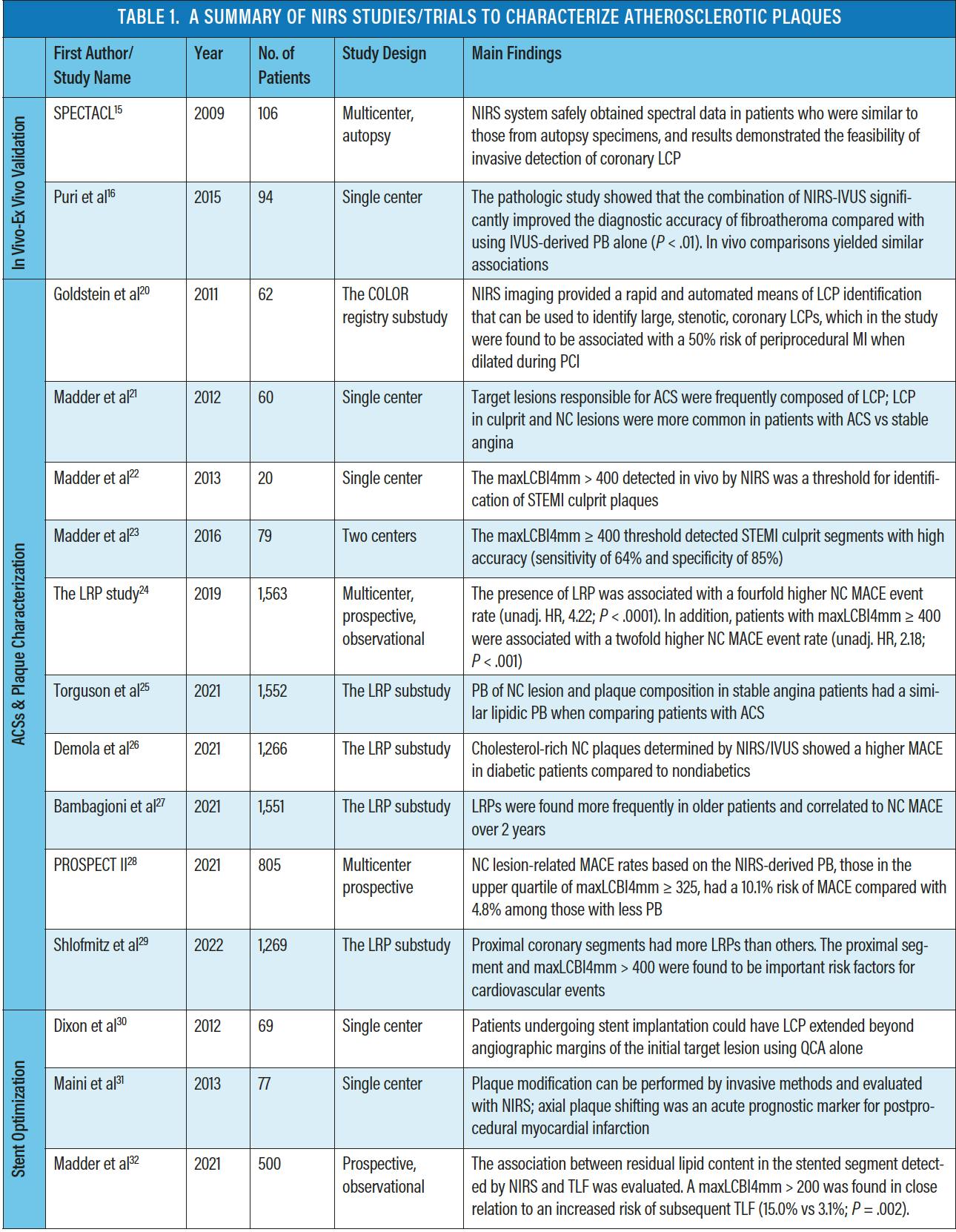
The presence of an LCP with a high plaque burden on NIRS/IVUS shows that the lesion is a culprit. Another analysis in NC segments (those having a large LRP with a maxLCBI4mm ≥ 400 at an NC site) had a 10-fold increased risk of future patient-level major adverse cardiovascular events (MACE).41
Another NIRS study from Sweden included 144 patients with coronary artery disease (CAD) and showed that a maxLCBI4mm ≥ 400 and an LCBI ≥ the median assessed by NIRS in NC segments of a culprit artery were significantly associated with MACE at the end of 1-year follow-up.42 The more recent PROSPECT II study identified 3,629 NC lesions in 898 patients by NIRS/IVUS. MACE within 4 years occurred in 112 of 898 patients, with 66 arising from 78 untreated NC lesions.28 Lesions with both large plaque burden determined by IVUS and LRP determined by NIRS had a 4-year MACE rate of 7%.28 The potential of NIRS/IVUS to predict future coronary events based on LCBI values in NC segments provides a unique diagnostic utility, as well as a risk-stratification tool.9
Anecdotal reports of LRP progressing to acute occlusion have been repeatedly published. Multiple recent prospective studies confirmed that a high LCBI is a predictor of plaque destabilization.24-27,29 The largest of them, the multicenter, prospective, cohort LRP study collected NIRS/IVUS images of multiple arteries in 1,562 patients undergoing coronary angiography and/or angioplasty with stable or unstable coronary syndromes. The study demonstrated that non–flow-limiting plaques, which did not undergo percutaneous coronary intervention (PCI) but were shown to be lipid rich by NIRS, were associated with increased NC segment-related MACE.24 Multiple substudies from this large observational trial have been recently published and provide additional knowledge on the value of NIRS/IVUS in specific lesion subsets. In a post hoc subanalysis of the LRP study, Torguson et al examined the plaque burden and plaque composition of NC lesions by comparing patients with stable angina or silent ischemia versus ACS. They found a similar lipidic plaque burden in both groups.25 Another recent substudy analyzed LRP patients to determine proximal versus nonproximal LRP distribution and the impact on NC MACE and found that the proximal segments have more LRPs than other segments. Additionally, having a maxLCBI4mm > 400 in a proximal segment was found to be an important predictor for future cardiovascular events.29 Demola et al focused on diabetic patients and showed that cholesterol-rich NC plaques determined by NIRS/IVUS showed a higher MACE in diabetic patients when compared to nondiabetic patients.26 Moreover, LRPs were more frequently found in older patients and were related to NC MACE at > 2 years in another substudy.27
STENT OPTIMIZATION
The subanalysis from the COLOR registry found a link between NIRS-evaluated plaque morphology and the degree of coronary artery stenosis in a prospective study of 62 patients. It demonstrated that an increasing degree of stenosis seen by angiography was associated with more vulnerable plaque morphology as assessed by NIRS/IVUS.20
Furthermore, NIRS imaging of target lesions before and after stenting has shown a decrease in lipid burden after PCI. The phenomenon underlying this lipid reduction is multifactorial but, at least in some cases, is attributable to lipid particle liberation and downstream embolization.31,43 Aside from the potential risk of no-reflow and periprocedural myocardial infarction, outcomes linked with changes in target lesion lipid burden or the quantity of retained lipid underlying the implanted stent have yet to be defined.43,44 The use of NIRS/IVUS may improve stent placement by accurately identifying the margins of the lipid-laden segment and thereby avoiding any geographic miss of high lipid burden.45
Neoatherosclerosis is an essential contributor of in-stent restenosis46 and may possibly lead to late stent thrombosis. Histologically, it is characterized by the accumulation of lipid-laden macrophages within the neointima with or without the necrotic core formation and/or calcification and can occur months to years after stent placement.6,47,48 In the study by Ali et al, the prevalence of LCP within neointimal hyperplasia segments was 89% using NIRS versus 62% using OCT. Additionally, they found an association between significantly reduced minimal cap thickness and plaque rupture occurring in segments with neoatherosclerosis.49 Several studies had found that when struts penetrated LCP rather than a fibrous plaque, there was a higher risk of stent thrombosis after drug-eluting stent implantation (Figure 2).
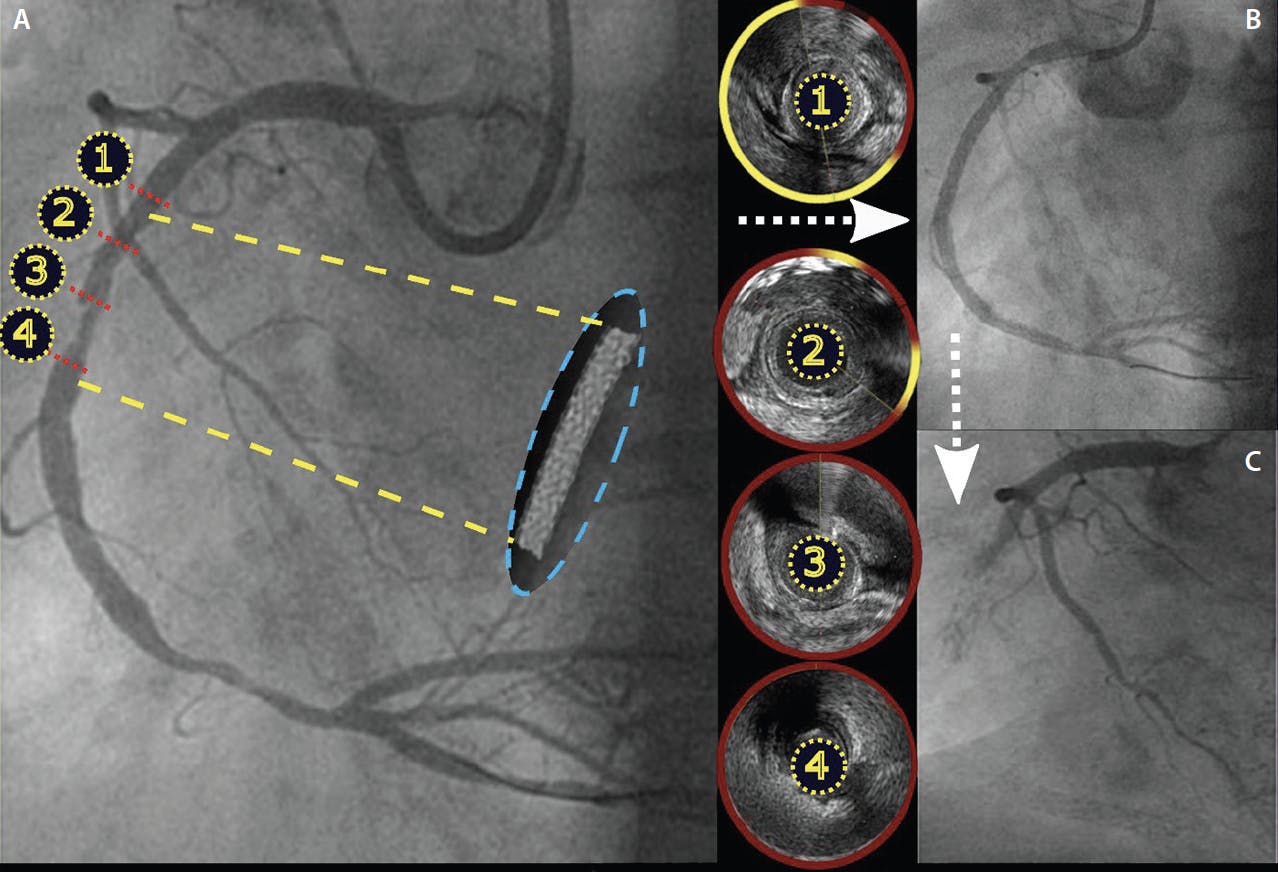
Figure 2. A patient with unstable angina. Initial coronary angiography showed a long and severe lesion in the middistal portions of the right coronary artery (A). Four cross-sections (1-4) demonstrating a cross-sectional chemogram superimposed on IVUS image from the distal to proximal portion of the midright coronary artery that show LCP in the proximal site. Coronary angiography after successful revascularization (B). Necrotic-core lipid plaque rupture and thrombus formation months after stent implantation, either in-stent or at the edge of a stent placed over an incompletely covered LCP (yellow dashed line shows the proximal and distal edge of stent when it has been placed; white dashed arrows show the timeline) (C).
Supporting this observation, previous postmortem observations have linked the implantation of stent struts into a lipid core with the occurrence of stent thrombosis.50-52 Dixon et al used NIRS imaging to examine coronary lesions and found that in 16% of cases, LCP expanded beyond the angiographic borders of the initial target lesion.30 Madder et al evaluated the association between residual lipid content in the stented segment detected by NIRS and target lesion failure (TLF). They found a maxLCBI4mm > 200 as a threshold with an increased risk of subsequent TLF.32,53
EVIDENCE OF LIPID PLAQUE REGRESSION AFTER PHARMACOLOGIC THERAPY
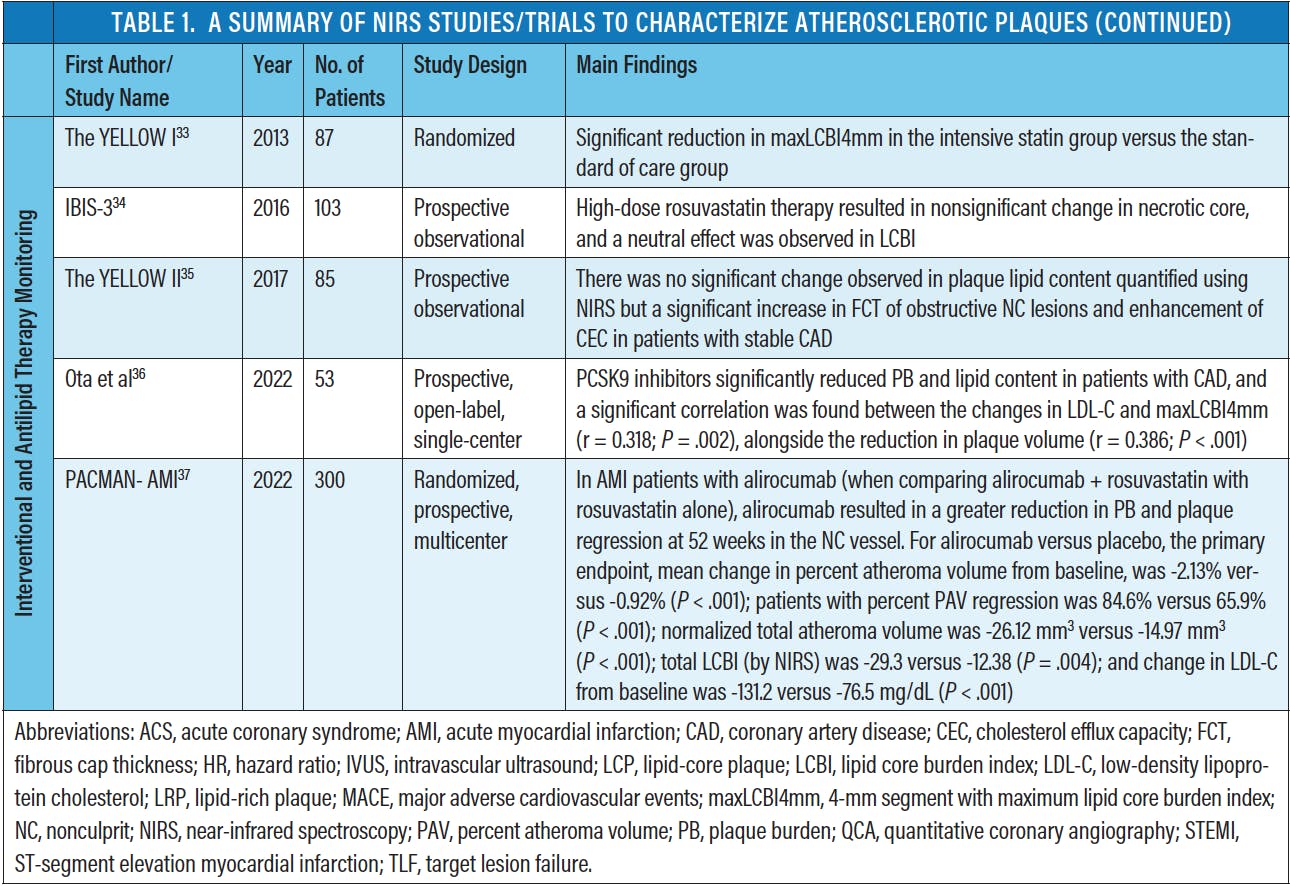
NIRS/IVUS has the potential to monitor the effect of treatment. The YELLOW study was a randomized clinical trial that enrolled patients with multivessel CAD who were undergoing PCI.33 The nontarget lesions in both groups were examined at baseline and after 7 weeks of therapy using fractional flow reserve and NIRS/IVUS. A comparison of baseline and follow-up results for nontarget lesions revealed a reduction in maxLCBI4mm significantly higher in the group with intensive statin treatment group as compared to the standard statin treatment group.33
Studies using NIRS/IVUS imaging have shown that lipid-lowering therapy can reduce volume and vulnerability of coronary plaques.40,54
The subsequent YELLOW II trial explored the effects of high-dose statin therapy on alterations in plaque morphology (by OCT) and plaque lipid characteristics (by NIRS) in obstructive NC lesions.35 The mean baseline NIRS-derived maxLCBI4mm was > 400, and the study found no significant change in plaque lipid content by NIRS, but there was a substantial change in fibrous cap thickness after about 12 weeks of statin medication.35 In parallel, the IBIS-3 trial demonstrated that high-dose rosuvastatin therapy had a neutral effect on LCP in nonstenotic NC lesions after 6- and 12-month follow-up intervals, despite a lower mean baseline maxLCBI4mm.34 In another lipid-lowering therapy study, Ota et al reported that PCSK9 inhibitors significantly reduced plaque volume and lipid content in patients with CAD, and a significant correlation was found between the changes in LDL-C and maxLCBI4mm, alongside the reduction in plaque volume.36
The most recent PACMAN-AMI randomized clinical trial evaluated the effect of early administration of 150 mg alirocumab twice a month in addition to a high dose of rosuvastatin therapy in acute myocardial infarction patients with successful PCI of a culprit vessel with NC lesions between 20% to 50% diameter stenosis. Three hundred patients were randomly assigned 1:1 to receive alirocumab and rosuvastatin or rosuvastatin alone. NC lesions were examined by NIRS/IVUS and OCT at baseline and at 52-week follow-up. Regarding primary and secondary endpoints, a more significant reduction in plaque burden and regression in NC lesions were found in the alirocumab group compared to placebo.37 PACMAN-AMI also found a significantly greater increase in minimal fibrous cap thickness with alirocumab compared to placebo, which is consistent with the findings of the HUYGENS OCT trial that also randomized NSTEMI patients to evolocumab and placebo, demonstrating at 52 weeks a mean increase in minimal fibrous cap thickness, and showed again significant decrease in lipid arc after antilipid therapy when evolocumab therapy was compared to placebo in 135 patients (Figure 3).55
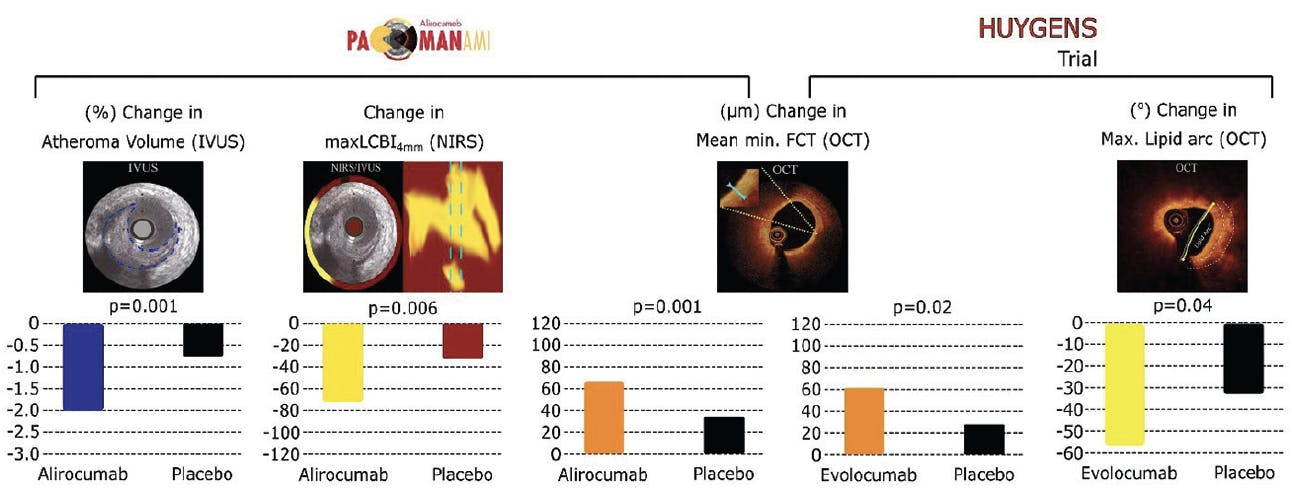
Figure 3. Main results, including primary and secondary endpoints, of the PACMAN-AMI and HUYGENS trials comparing alirocumab to the placebo and evolocumab to the placebo, respectively. FCT, fibrous cap thickness.
LIMITATIONS
The main limitation of NIRS/IVUS is its invasiveness, preventing application in the primary prevention of asymptomatic patients with preclinical illness. Other limitations of NIRS are the lack of information regarding the vascular lumen, plaque anatomy, and status of the fibrous cap or its features.
CONCLUSION
NIRS/IVUS system is a novel intracoronary imaging modality that proved to be a diagnostically useful tool for the detection of vulnerable plaques. Early identification and stabilization of these types of plaques are crucial and can identify patients at risk of future coronary events. A new randomized trial has shown that aggressive lipid-lowering treatment can lead to a reduction in cholesterol content and an increase in fibrous cap thickness. It remains uncertain whether prophylactic revascularization of non–flow-limiting vulnerable plaques might improve patient prognosis.
1. Vancraeynest D, Pasquet A, Roelants V, et al. Imaging the vulnerable plaque. J Am Coll Cardiol. 2011;57:1961-1979. doi: 10.1016/j.jacc.2011.02.018
2. Kilic ID, Caiazzo G, Fabris E, et al. Near-infrared spectroscopy-intravascular ultrasound: scientific basis and clinical applications. Eur Heart J Cardiovasc Imaging. 2015;16:1299-1306. doi: 10.1093/ehjci/jev208
3. Hansson G, Libby P, Tabas I. Inflammation and plaque vulnerability. J Intern Med. 2015;278:483-493. doi: 10.1111/joim.12406
4. Hackett D, Davies G, Maseri A. Pre-existing coronary stenoses in patients with first myocardial infarction are not necessarily severe. Eur Heart J. 1988;9:1317-1323. doi: 10.1093/oxfordjournals.eurheartj.a062449
5. Little WC, Constantinescu M, Applegate RJ, et al. Can coronary angiography predict the site of a subsequent myocardial infarction in patients with mild-to-moderate coronary artery disease? Circulation. 1988;78:1157-1166. doi: 10.1161/01.CIR.78.5.1157
6. Liang M, Puri A, Devlin G. The vulnerable plaque: the real villain in acute coronary syndromes. Open Cardiovasc Med J. 2011;5:123-129. doi: 10.2174/1874192401105010123
7. Bom MJ, Van Der Heijden DJ, Kedhi E, et al. Early detection and treatment of the vulnerable coronary plaque: can we prevent acute coronary syndromes? Circ Cardiovasc Imaging. 2017;10:1-20. doi: 10.1161/CIRCIMAGING.116.005973
8. Wilkinson SE, Madder RD. Intracoronary near-infrared spectroscopy—role and clinical applications. Cardiovasc Diagn Ther. 2020;10:1508-1516. doi: 10.21037/cdt.2020.02.02
9. Kuku KO, Singh M, Ozaki Y, et al. Near-infrared spectroscopy intravascular ultrasound imaging: state of the art. Front Cardiovasc Med. 2020;7:107. doi: 10.3389/fcvm.2020.00107
10. Danek BA, Karatasakis A, Madder RD, et al. Experience with the multimodality near-infrared spectroscopy/intravascular ultrasound coronary imaging system: principles, clinical experience, and ongoing studies. Curr Cardiovasc Imaging Rep. 2016;9:1-13. doi: 10.1007/s12410-015- 9369-2
11. Cassis LA, Lodder RA. Near-IR imaging of atheromas in living arterial tissue. Anal Chem. 1993;65:1247-1256. doi: 10.1021/ac00057a023
12. Mille T, Tachimiri ME, Klersy C, et al. Near infrared spectroscopy monitoring during carotid endarterectomy: which threshold value is critical? Eur J Vasc Endovasc Surg. 2004;27:646-650. doi: 10.1016/j.ejvs.2004.02.012
13. Gardner CM, Tan H, Hull EL, et al. Detection of lipid core coronary plaques in autopsy specimens with a novel catheter-based near-infrared spectroscopy system. JACC Cardiovasc Imaging. 2008;1:638-648. doi: 10.1016/j.jcmg.2008.06.001
14. Caplan JD, Waxman S, Nesto RW, Muller JE. Near-infrared spectroscopy for the detection of vulnerable coronary artery plaques. J Am Coll Cardiol. 2006;47(8 suppl):C92-6. doi: 10.1016/j.jacc.2005.12.045
15. Waxman S, Dixon SR, L’Allier P, et al. In vivo validation of a catheter-based near-infrared spectroscopy system for detection of lipid core coronary plaques: initial results of the SPECTACL study. JACC Cardiovasc Imaging. 2009;2:858-868. doi: 10.1016/j.jcmg.2009.05.001
16. Puri R, Madder RD, Madden SP, et al. Near-infrared spectroscopy enhances intravascular ultrasound assessment of vulnerable coronary plaque: a combined pathological and in vivo study. Arterioscler Thromb Vasc Biol. 2015;35:2423-2431. doi: 10.1161/ATVBAHA.115.306118
17. Waksman R, Di Mario C, Torguson R, et al. Identification of patients and plaques vulnerable to future coronary events with near-infrared spectroscopy intravascular ultrasound imaging: a prospective, cohort study. Lancet. 2019;394:1629-1637. doi: 10.1016/S0140-6736(19)31794-5
18. O’Brien A, LaCombe A, Stickland A, Madder RD. Intracoronary near-infrared spectroscopy: an overview of the technology, histologic validation, and clinical applications. Glob Cardiol Sci Pract. 2016;2016:e201618-e201618. doi: 10.21542/gcsp.2016.18
19. Roleder T, Kovacic JC, Ali ZA, et al. Combined NIRS and IVUS imaging detects vulnerable plaque using a single catheter system: a head-to-head comparison with OCT. EuroIntervention. 2014;10:303-311. doi: 10.4244/EIJV10I3A53
20. Goldstein JA, Maini B, Dixon SR, et al. Detection of lipid-core plaques by intracoronary near- infrared spectroscopy identifies high risk of periprocedural myocardial infarction. Circ Cardiovasc Interv. 2011;4:429-437. doi: 10.1161/CIRCINTERVENTIONS.111.963264
21. Madder RD, Smith JL, Dixon SR, Goldstein JA. Composition of target lesions by near-infrared spectroscopy in patients with acute coronary syndrome versus stable angina. Circ Cardiovasc Interv. 2012;5:55-61. doi: 10.1161/CIRCINTERVENTIONS.111.963934
22. Madder RD, Goldstein JA, Madden SP, et al. Detection by near-infrared spectroscopy of large lipid core plaques at culprit sites in patients with acute ST-segment elevation myocardial infarction. JACC Cardiovasc Interv. 2013;6:838-846. doi: 10.1016/j.jcin.2013.04.012
23. Madder RD, Puri R, Muller JE, et al. Confirmation of the intracoronary near-infrared spectroscopy threshold of lipid-rich plaques that underlie ST-segment-elevation myocardial infarction. Arterioscler Thromb Vasc Biol. 2016;36:1010-1015. doi: 10.1161/ATVBAHA.115.306849
24. Waksman R, Torguson R, Spad M-A, et al. The Lipid-Rich Plaque study of vulnerable plaques and vulnerable patients: study design and rationale. Am Heart J. 2017;192:98-104. doi: 10.1016/j.ahj.2017.02.010
25. Torguson R, Shlofmitz E, Mintz GS, et al. Frequency of lipid-rich coronary plaques in stable angina pectoris versus acute coronary syndrome (from the Lipid Rich Plaque study). Am J Cardiol. 2021;158:1-5. doi: 10.1016/j.amjcard.2021.07.033
26. Demola P, Di Mario C, Torguson R, et al. Greater plaque burden and cholesterol content may explain an increased incidence of non-culprit events in diabetic patients: a Lipid-Rich Plaque substudy. Eur Heart J Cardiovasc Imaging. Published online September 26, 2021. doi: 10.1093/ehjci/jeab161
27. Bambagioni G, Di Mario C, Torguson R, et al. Lipid-rich plaques detected by near-infrared spectroscopy predict coronary events irrespective of age: a Lipid Rich Plaque sub-study. Atherosclerosis. 2021;334:17-22. doi: 10.1016/j.atherosclerosis.2021.08.022
28. Erlinge D, Maehara A, Ben-Yehuda O, et al. Identification of vulnerable plaques and patients by intracoronary near-infrared spectroscopy and ultrasound (PROSPECT II): a prospective natural history study. Lancet. 2021;397:985-995. doi: 10.1016/S0140-6736(21)00249-X
29. Shlofmitz E, Mintz GS, Torguson R, et al. Longitudinal distribution of lipid-rich plaque in nonculprit lesions: a Lipid Rich Plaque study subanalysis. Cardiovasc Imaging. 2022;15:168-170
30. Dixon SR, Grines CL, Munir A, et al. Analysis of target lesion length before coronary artery stenting using angiography and near-infrared spectroscopy versus angiography alone. Am J Cardiol. 2012;109:60-66. doi: 10.1016/j.amjcard.2011.07.068
31. Maini A, Buyantseva L, Maini B. In vivo lipid core plaque modification with percutaneous coronary revascularization: a near-infrared spectroscopy study. J Invasive Cardiol. 2013;25:293-296.
32. Madder RD, Kubo T, Ino Y, et al. Target lesion lipid content detected by near-infrared spectroscopy after stenting and the risk of subsequent target lesion failure. Arterioscler Thromb Vasc Biol. 2021;41:2181-2189. doi: 10.1161/ATVBAHA.120.315617
33. Kini AS, Baber U, Kovacic JC, et al. Changes in plaque lipid content after short-term intensive versus standard statin therapy: the YELLOW trial (reduction in yellow plaque by aggressive lipid- lowering therapy). J Am Coll Cardiol. 2013;62:21-29. doi: 10.1016/j.jacc.2013.03.058
34. Oemrawsingh RM, Garcia-Garcia HM, van Geuns RJM, et al. Integrated Biomarker and Imaging Study 3 (IBIS-3) to assess the ability of rosuvastatin to decrease necrotic core in coronary arteries. EuroIntervention J Eur Collab with Work Gr Interv Cardiol Eur Soc Cardiol. 2016;12:734-739. doi: 10.4244/EIJV12I6A118
35. Kini AS, Vengrenyuk Y, Shameer K, et al. Intracoronary imaging, cholesterol efflux, and transcriptomes after intensive statin treatment: the YELLOW II study. J Am Coll Cardiol. 2017;69:628-640. doi: 10.1016/j.jacc.2016.10.029
36. Ota H, Omori H, Kawasaki M, et al. Clinical impact of PCSK9 inhibitor on stabilization and regression of lipid-rich coronary plaques: a near-infrared spectroscopy study. Eur Heart J Cardiovasc Imag. 2022;23:217-228. doi: 10.1093/ehjci/jeab034
37. Räber L, Ueki Y, Otsuka T, et al. Effect of alirocumab added to high-intensity statin therapy on coronary atherosclerosis in patients with acute myocardial infarction: the PACMAN-AMI randomized clinical trial. JAMA. 2022;327:1771-1781. doi: 10.1001/jama.2022.5218
38. Madder RD, VanOosterhout S, Klungle D, et al. Multimodality intracoronary imaging with near-infrared spectroscopy and intravascular ultrasound in asymptomatic individuals with high calcium scores. Circ Cardiovasc Imaging. 2017;10. doi: 10.1161/CIRCIMAGING.117.006282
39. Madder RD, Wohns DH, Muller JE. Detection by intracoronary near-infrared spectroscopy of lipid core plaque at culprit sites in survivors of cardiac arrest. J Invasive Cardiol. 2014;26:78-79.
40. Erlinge D. Near-infrared spectroscopy for intracoronary detection of lipid-rich plaques to understand atherosclerotic plaque biology in man and guide clinical therapy. J Intern Med. 2015;278:110-125. doi: 10.1111/joim.12381
41. Madder RD, Husaini M, Davis AT, et al. Large lipid-rich coronary plaques detected by near- infrared spectroscopy at non-stented sites in the target artery identify patients likely to experience future major adverse cardiovascular events. Eur Heart J Cardiovasc Imag. 2016;17:393-399. doi: 10.1093/ehjci/jev340
42. Karlsson S, Anesäter E, Fransson K, et al. Intracoronary near-infrared spectroscopy and the risk of future cardiovascular events. Open Hear. 2019;6:1-8. doi: 10.1136/openhrt-2018-000917
43. Lu H, Tijssen RY, Grundeken MJ, et al. Decrease in lipid rich plaque during percutaneous coronary intervention: reality or artefact? An observational study using near-infrared spectroscopy. Interv Cardiol. 2017;09:281-287. doi: 10.4172/interventional-cardiology.1000593
44. Nakano M, Yahagi K, Otsuka F, et al. Causes of early stent thrombosis in patients presenting with acute coronary syndrome: an ex vivo human autopsy study. J Am Coll Cardiol. 2014;63:2510- 2520.
45. Räber L, Mintz GS, Koskinas KC, et al. Clinical use of intracoronary imaging. Part 1: guidance and optimization of coronary interventions. An expert consensus document of the European Association of Percutaneous Cardiovascular Interventions. Eur Heart J. 2018;39:3281-3300. doi: 10.1093/eurheartj/ehy285
46. Otsuka F, Byrne RA, Yahagi K, et al. Neoatherosclerosis: overview of histopathologic findings and implications for intravascular imaging assessment. Eur Heart J. 2015;36:2147-2159. doi: 10.1093/eurheartj/ehv205
47. Waxman S, Ishibashi F, Muller JE. Detection and treatment of vulnerable plaques and vulnerable patients: novel approaches to prevention of coronary events. Circulation. 2006;114:2390-2411. doi: 10.1161/CIRCULATIONAHA.105.540013
48. Amabile N, Souteyrand G, Ghostine S, et al. Very late stent thrombosis related to incomplete neointimal coverage or neoatherosclerotic plaque rupture identified by optical coherence tomography imaging. Eur Heart J Cardiovasc Imag. 2014;15:24-31. doi: 10.1093/ehjci/jet052
49. Ali ZA, Roleder T, Narula J, et al. Increased thin-cap neoatheroma and periprocedural myocardial infarction in drug-eluting stent restenosis multimodality intravascular imaging of drug-eluting and bare-metal stents. Circ Cardiovasc Interv. 2013;6:507-517. doi: 10.1161/CIRCINTERVENTIONS.112.000248
50. Farb A, Burke AP, Kolodgie FD, Virmani R. Pathological mechanisms of fatal late coronary stent thrombosis in humans. Circulation. 2003;108:1701-1706. doi: 10.1161/01.CIR.0000091115.05480.B0
51. Porchetta N, Russo D, Benedetto D, Sangiorgi GM. Plaque prolapse after stent implantation in ectasiant coronary artery atherosclerotic disease and large plaque burden. J Cardiovasc Echogr. 2021;31:181-183. doi: 10.4103/jcecho.jcecho_35_21
52. Motovska Z, Knot J, Widimsky P. Stent thrombosis: risk assessment and prevention. Cardiovasc Ther. 2010;28:92-100. doi: 10.1111/j.1755-5922.2010.00186.x
53. Madder RD, Khan M, Husaini M, et al. Combined near-infrared spectroscopy and intravascular ultrasound imaging of pre-existing coronary artery stents: can near-infrared spectroscopy reliably detect neoatherosclerosis? Circ Cardiovasc Imaging. 2016;9:1-8. doi: 10.1161/CIRCIMAGING.115.003576
54. Roleder T, Karimi Galougahi K, Chin CY, et al. Utility of near-infrared spectroscopy for detection of thin-cap neoatherosclerosis. Eur Heart J Cardiovasc Imaging. 2017;18:663-669. doi: 10.1093/ehjci/jew198
55. Nicholls S, Kataoka Y, Nissen S, et al. Effect of evolocumab on changes in coronary plaque phenotype and burden in statin-treated patients following myocardial infarction. JACC Cardiovasc Imaging. Published online March 16, 2022. doi: 10.1016/j.jcmg.2022.03.002
Advertisement
Advertisement