Advertisement
Advertisement
March/April 2022
Programmatic Strategies to Reduce Complications and Improve Length of Stay in TAVR
How to create clinical pathways that inform and transform care for patients undergoing transcatheter aortic valve replacement.
Transcatheter aortic valve replacement (TAVR) has become a well-established minimally invasive treatment approach for patients with severe symptomatic aortic stenosis (AS). As baby boomers age, the United States population of individuals ≥ 75 years is expected to exceed 32 million people by 2030.1 Coupled with a known prevalence of severe AS in 3.4% of the elderly,2 the number of potential TAVR candidates will continue to climb (Figure 1). After the approval of TAVR in patients at low risk for surgical aortic valve replacement (SAVR) in 2019, the growth of TAVR has continued to climb, with > 92,000 patients receiving a TAVR at a total of 763 sites in 2021. This represented a nearly 12% increase in procedural volume from 2020.3
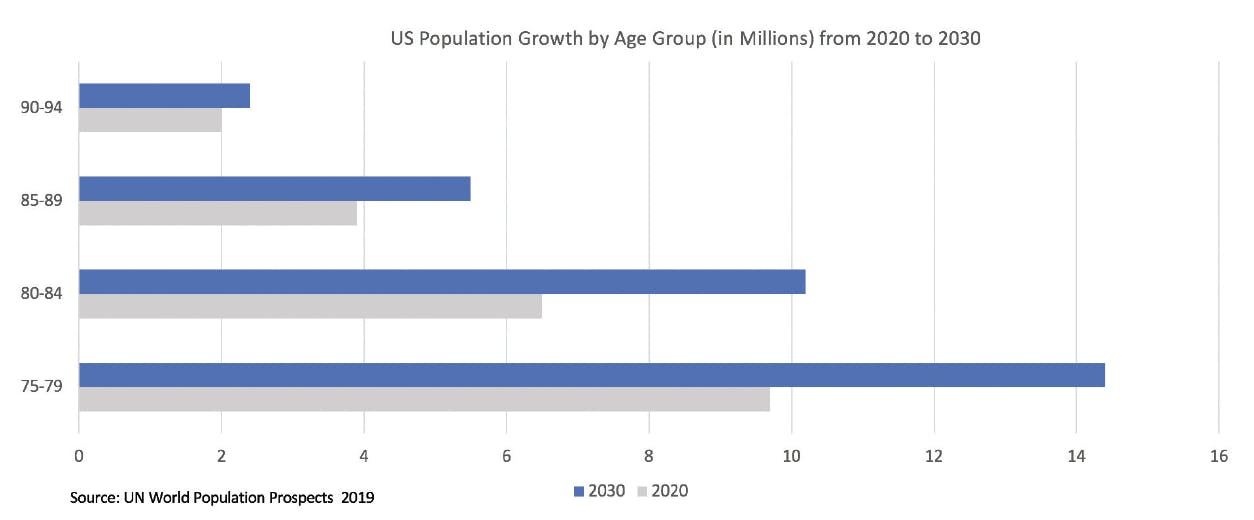
Figure 1. United States population growth projections for those aged 75-94 years.1
With this continued procedural growth, physicians and clinical teams have gained expertise in guiding patients with severe AS through all phases of the TAVR evaluation, procedure, and follow-up care. Increased clinical experience has provided knowledge to develop best practice recommendations. Technical and clinical advances, such as next-generation heart valves and deployment techniques, have helped overcome some of the initial procedural drawbacks and reduce short- and longer-term complications.
TRANSFORMING TAVR CARE
The strain placed on health care systems by the COVID-19 pandemic and its accompanying impact on hospital capacity and staffing has created a variety of challenges for urgent and elective procedures. It has also brought further scrutiny of resource utilization, hospital length of stay (LOS), and patient throughput for a variety of cardiovascular procedures. With an already thin revenue margin, managing elements of TAVR care that add value can maintain programmatic viability as well as set it apart.
One element is to optimize the patient’s time in the hospital by minimizing complications and shortening LOS. Despite the decline in overall LOS for TAVR, from a median of 7 days in 2013 to a median of 1 day in 2020, 30% of all programs had a median LOS ≥ 2 days in 2020.3 The safety and effectiveness of the procedure remain paramount. With that as a guide, applying acquired knowledge and skill to create clinical pathways that both inform and transform the care of TAVR patients is key to the future of delivering value-based care.
STRATEGIES TO REDUCE COMPLICATIONS
Clinical pathways that minimize complications and optimize resource use for patients undergoing TAVR begin during the preprocedure evaluation. Frailty has been shown to adversely correlate with patient outcomes after TAVR and is an important baseline element to consider when anticipating a patient’s recovery timeline. There are multiple established methods to assess frailty, but the Essential Frailty Toolset is a four-item scale that has been shown to be predictive of 1-year mortality post-TAVR.4 This brief, easily acquired assessment includes chair rise, cognition, hemoglobin, and serum albumin and establishes a score that correlates with mortality risk in both TAVR and SAVR. Information gleaned from assessments such as this can inform shared decision-making regarding treatment choices, including procedural sedation for TAVR.
Procedural Sedation
Historically, general anesthesia has been performed primarily to support the use of more invasive access techniques and transesophageal echocardiography guidance for the procedure. With the increased use of percutaneous transfemoral access and the introduction of intracardiac echocardiography, conscious sedation has become the cornerstone of a more “minimalist” approach. Especially in elderly and fragile populations, performing TAVR without general anesthesia reduces the likelihood of delirium, which in turn is associated with greater in-hospital mortality, increased LOS, and incidence of ischemic stroke.5
Despite this knowledge, nearly 38% of patients3 still receive general anesthesia, and wide variation remains among hospitals.6 Although not every procedure can be performed using conscious sedation, anticipating its use as the preferred approach can help clinicians set expectations with patients for the procedure and immediate recovery period. Furthermore, as part of a multidisciplinary team approach, including anesthesiology in care planning to determine the level of procedural monitoring and establish a plan for immediate intubation if needed supports an environment focused on patient safety.
A minimalist approach has largely been associated with the level of procedural sedation and transfemoral vascular access. However, all aspects of patient care should be reviewed through the lens of necessity and value—a “minimalist” approach—as long as they do not impact patient outcomes. For instance, even patients requiring general anesthesia may still be extubated in the procedure room. Additionally, most patients do not require a urinary catheter, pulmonary artery catheter, or narcotic analgesia during or after the procedure, all of which may expose patients to increased risk or discharge delays.
Bleeding and vascular access complications remain the most common adverse events experienced by TAVR patients. Given that these patients often carry many of the characteristics for high bleeding risk, additional care and attention must be paid to limiting their impact.
Ultrasound-Guided Access
One strategy increasingly preferred for the reduction of vascular access complications is the use of two-dimensional ultrasound (2D-US) for access guidance—knowledge transferred from percutaneous coronary and electrophysiology procedures. A recent large study comparing fluoroscopy and contralateral angiography (FCA) with 2D-US found that although 2D-US may improve outcomes for patients at high risk of access-related vascular complications (eg, those with peripheral vascular disease or higher sheath-to-vessel ratio), it was not superior to FCA in the TAVR population as a whole.7 The results suggest that experience and repetition of technique are key. Neither technique may be superior for a highly experienced operator, but those with less experience may benefit from learning 2D-US and visualization of vessel entry to reduce vascular complications and bleeding.
Transfemoral Sites
Adding to the risk of vascular complications in TAVR has been the routine use of a secondary transfemoral access site to allow angiographic guidance during the procedure. Either ultrasound or visualization of the femoral head and common femoral artery can reduce the risk of femoral artery complications, but the safest technique is to minimize the number of transfemoral sites used. The use of either proximal or distal radial artery sites for secondary access is one such approach. Doing so limits the potentially life-threatening bleeding complications associated with femoral access. A multicenter study of nearly 5,000 patients demonstrated that when compared with secondary femoral access, radial artery access significantly reduced the risk of vascular complications and bleeding, and was associated with significant reductions in 30-day stroke, acute kidney injury, and mortality.8
Protamine Sulfate
Bleeding complications may also be reduced by using protamine sulfate for heparin reversal after vascular closure with a closure device. An investigation evaluating TAVR-related bleeding complications and patient outcomes after protamine reversal found that the administration of protamine resulted in significantly lower rates of life-threatening and major bleeding, along with a significantly shorter hospital stay and without an increase in myocardial infarction and stroke.9
Cerebral Embolic Protection Devices
Cerebral embolic protection devices (CPDs) have been introduced as a proposed strategy for stroke reduction in patients undergoing TAVR. These protection devices are intended to filter cardiac emboli triggered by the procedure. Variable findings have been reported during its early use. Using the National Inpatient Database, a recent analysis of patients undergoing TAVR found that both hemorrhagic and ischemic stroke were significantly lower in TAVR performed using CPDs.10 Results from the PROTECTED TAVR study of 3,000 patients are expected this year and should provide further insight into the benefit of CPDs.
Implantation Technique
The need for permanent pacemaker implantation (PPI) during the index post-TAVR hospitalization has decreased from a peak of 13.2% in 2015 to 7.2% in 2020, although this decrease occurred in the context of a shorter hospital stay. PPI has consistently remained about 2% higher at 30 days than at the time of hospital discharge.3,11 Even though the clinical impact of new PPI after TAVR has been somewhat controversial, there appears to be an increased risk of all-cause mortality at 1 year in patients who receive one.12 Use of the cusp overlap technique, where the device position depth stays well above the conduction tissue, is especially helpful in patients at higher risk for PPI (ie, those with pre-existing right bundle branch block) and has helped lower the overall incidence of new conduction abnormalities.
Outpatient Telemetry Monitoring
The use of outpatient telemetry monitoring has helped clarify the need for PPI by assisting clinicians with better understanding of the natural history of post-TAVR conduction disturbances.13 It has also provided greater confidence in earlier discharge, especially for patients who may be at risk for heart blocks and other arrhythmias, such as atrial fibrillation, but have not shown such signs periprocedurally through hospital discharge.
ENHANCING VALUE AND ACHIEVING THE QUADRUPLE AIM
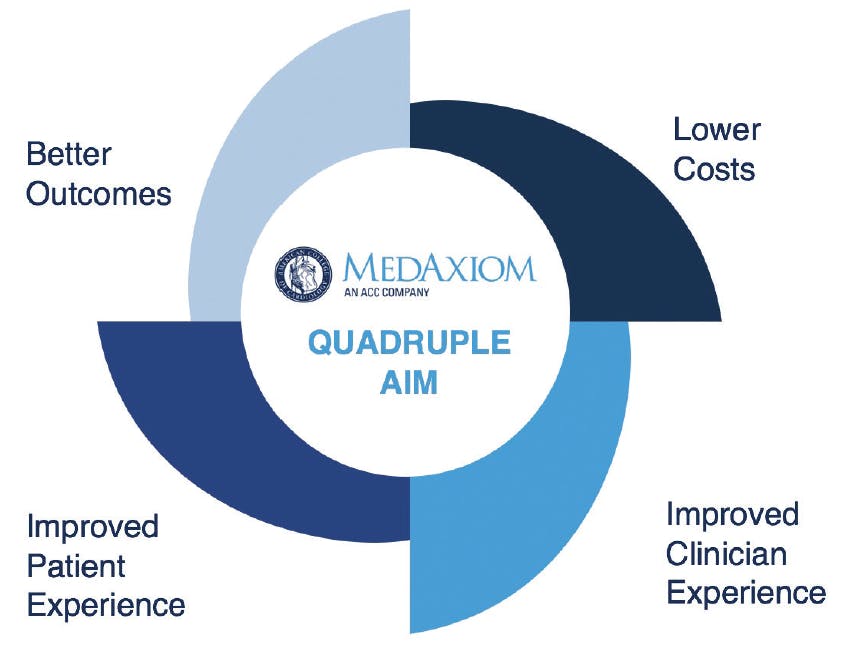
TAVR programs that can successfully navigate the risks and array of possible complications associated with a procedure to treat severe AS provide greater value for patients, providers, and health care systems. This is what defines the Quadruple Aim.
Applying optimal strategies to evaluate and manage these patients allows for shortened hospital stays. The 3M TAVR study tested the Vancouver 3M (multidisciplinary, multimodality, but minimalist) pathway to determine the safety and efficacy of next-day discharge.14 The study found the pathway could be safely implemented irrespective of site experience and volume and without compromising clinical and hemodynamic outcomes. More recently, the publication of two studies confirmed the feasibility and safety of same-day discharge for TAVR patients.15,16 Importantly, there was no significant difference in 30-day outcomes between patients discharged the next day versus those discharged the same day as the procedure. In both instances, it demonstrates that careful patient selection criteria using objective criteria can be applied to determine safe early discharge for TAVR patients.
The economic impact of a shift in LOS for TAVR patients is clear. TAVR is designated as an inpatient-only procedure by the Centers for Medicare and Medicaid Services; thus, it is reimbursed as a hospital-based diagnosis-related group reimbursement payment with a weighted average of $41,504.17 With the high cost of the device alone, programmatic margins have little room for additional cost. Aside from the device, the primary contributor to cost is LOS. A recent economic analysis performed using the 3M TAVR study18 found that index hospitalization costs for patients in the 3M cohort who were discharged the next day were $10,843 lower per patient, driven by reductions in procedure duration, anesthesia costs, and LOS. There were no catch-up costs in the postdischarge period. Discharge on the same day of the procedure would most certainly provide even greater value, as long as documentation clearly supports an inpatient level of care during the stay.
Patient experience has also shown to be enhanced by shorter hospital stays. Patients discharged on the same day after complex percutaneous coronary procedures have reported high levels of satisfaction.19 Preparing patients to anticipate a shorter hospital stay, assessing for appropriate social support postdischarge, and following up with next-day patient phone calls are key steps in fostering patient satisfaction.
CONCLUSION
The past decade has provided significant gains in the care of patients with structural heart disease. TAVR clinical pathways will continue to evolve, informed by clinical guidelines, research, and efficient approaches to care delivery. Clinicians who embrace these approaches will find continued success in their structural heart programs.
1. United Nations. 2019 revision of world population prospects. Accessed March 29, 2022. https://population.un.org/wpp/
2. Osnabrugge RLJ, Mylotte D, Head SJ, et.al. Aortic stenosis in the elderly: disease prevalence and number of candidates for transcatheter aortic valve replacement: a meta-analysis and modeling study. J Am Coll Cardiol. 2013;62:1002-1012. doi: 10.1016/j.jacc.2013.05.015
3. STS/ACC TVT Registry™. Patients with TAVR procedures. R4Q ending Q4 2020. Accessed March 22, 2022. [AU: PLEASE PROVIDE A LINK]
4. Afilalo J, Lauck S, Kim DH, et al. Frailty in older adults undergoing aortic valve replacement: the FRAILTY-AVR Study. J Am Coll Cardiol. 2017;6:689-700. doi: 10.1016/j.jacc.2017.06.024
5. Hiendlmayr B, Mather J, Curtis L, et al. TCT-123 impact of delirium on TAVR outcomes. J Am Coll Cardiol. 2018;72:(13 suppl):B53-B54.
6. Butala NM, Chung M, Secemsky EA, et al. Conscious sedation versus general anesthesia for transcatheter aortic valve replacement: variation in practice and outcomes. JACC Cardiovasc Interv. 2020;13:1277-1287. doi: 10.1016/j.jcin.2020.03.008
7. Witberg G, Tzalamouras V, Adams H, et al. Routine ultrasound or fluoroscopy use and risk of vascular/bleeding complications after transfemoral TAVR. JACC Cardiovasc Interv. 2020;13:1460-1468. doi: 10.1016/j.jcin.2020.03.047
8. Junquera L, Urena M, Latib A, et al. Comparison of transfemoral versus transradial secondary access in transcatheter aortic valve replacement. Circ Cardiovasc Interv. 2020;13:e008609. doi: 10.1161/CIRCINTERVENTIONS.119.008609
9. Al-Kassou B, Kandt J, Lohde L, et al. Safety and efficacy of protamine administration for prevention of bleeding complications in patients undergoing TAVR. JACC Cardiovasc Interv. 2020;13:1471-1480. doi: 10.1016/j.jcin.2020.03.041
10. Khan MZ, Zahid S, Khan MU, et al. Use and outcomes of cerebral embolic protection for transcatheter aortic valve replacement: a US nationwide study. Catheter Cardiovasc Interv. 2021;98:959-968. doi: 10.1002/ccd.29842
11. Caroll JD, Mack MJ, Vemulapalli S, et al. STS-ACC TVT registry of transcatheter aortic valve replacement. J Am Coll Cardiol. 2020;76:2492-2516. doi: 10.1016/j.jacc.2020.09.595
12. Faroux L, Chen S, Muntané-Carol G, et al. Clinical impact of conduction disturbances in transcatheter aortic valve replacement recipients: a systematic review and meta-analysis. Eur Heart J. 2020;41:2771-2781. doi: 10.1093/eurheartj/ehz924
13. Ream K, Sandhu A, Valle J, et al. Ambulatory rhythm monitoring to detect late high-grade atrioventricular block following transcatheter aortic valve replacement. J Am Coll Cardiol. 2019;73:2538-2547. doi: 10.1016/j.jacc.2019.02.068
14. Wood DA, Lauck SB, Cairns JA, et al. The Vancouver 3M (multidisciplinary, multimodality, but minimalist) clinical pathway facilitates safe next day discharge home at low-, medium-, and high-volume transfemoral transcatheter aortic valve replacement centers: the 3M TAVR study. JACC Cardiovasc Interv. 2019;12:459-469. doi: 10.1016/j.jcin.2018.12.020
15. Krishnaswamy A, Isogai T, Agrawal A, et al. Feasibility and safety of same-day discharge following transfemoral transcatheter aortic valve replacement. JACC Cardiovasc Interv. 2022;15:575-589. doi: 10.1016/j.jcin.2022.01.013
16. Barker M, Sathananthan J, Perdoncin E. Same-day discharge post-transcatheter aortic valve replacement during the COVID-19 pandemic: the multicenter PROTECT TAVR study. JACC Cardiovasc Interv. 2022;15:590-598. doi: 10.1016/j.jcin.2021.12.046
17. Centers for Medicare & Medicaid Services. CMS-1751-F. Accessed March 29, 2022. https://www.cms.gov/medicaremedicare-fee-service-paymentphysicianfeeschedpfs-federal-regulation-notices/cms-1751-f
18. Butala N. Economics of minimalist TAVR: the 3M TAVR economic study. Presented at: TVT 2021; July 22, 2021; Miami, Florida.
19. Artero PM, Winter L, Hohlt J, et.al. A patient-centered approach to same day discharge after complex percutaneous coronary intervention. J Am Coll Cardiol. 2016;67(13 suppl):192.
Advertisement
Advertisement