Advertisement
Advertisement
September/October 2026
When and How to Escalate MCS in Cardiogenic Shock
Hemodynamic guidance, timely escalation, and a multidisciplinary shock team are key to navigating mechanical circulatory support in patients with CS.
Cardiogenic shock (CS) is delineated by a clinical continuum categorized by the Society for Cardiovascular Angiography and Interventions (SCAI) SHOCK classification system into five stages of severity: stage A (at risk), stage B (beginning hypotension/tachycardia without hypoperfusion), stage C (classic; hypoperfusion without deterioration), stage D (deteriorating), and stage E (extremis, refractory shock). Despite significant advances in interventional cardiology, the mortality of patients in CS persists at 40% to 50% at 30 days. A retrospective study based on analysis of data from the Mayo Clinic demonstrated a stepwise mortality gradient across each SCAI subgroup and showed that in-hospital mortality spans from 3% in patients in SCAI SHOCK stage A to 67% in SCAI SHOCK stage E.1 There are several challenges in managing these patients, including the time-sensitive nature of the disease process, heterogeneity of the disease process, and a lack of consensus in terms of management.
THE ROLE OF MCS DEVICES
Mechanical circulatory support (MCS) devices such as intra-aortic balloon pump (IABP), Impella (J&J MedTech Heart Recovery), and extracorporeal membrane oxygenation (ECMO) differ fundamentally from each other in terms of their mechanism of action and how they alter the physiology of the patient.2 IABP modestly increases cardiac output (~0.5 L/min) but helps with coronary perfusion due to the mechanism of counterpulsation. Impella increases cardiac output (3.5 L/min with Impella CP and 5.5 L/min with Impella 5.5), improves coronary perfusion, and unloads the left ventricle. ECMO augments circulatory support by 5 to 7 L/min, providing biventricular support and oxygenating blood. IABP and ECMO have both failed to demonstrate a survival benefit in patients with acute myocardial infarction (AMI) presenting with CS. Impella, on the other hand, was shown to reduce mortality by 12.7%, with a number needed to treat of 8 among a homogeneous group of patients presenting with AMI CS (with shock onset > 24 hours, comatose patients with out-of-hospital cardiac arrest, and concomitant severe right ventricular [RV] failure being excluded).3
IMPORTANT CONSIDERATIONS OF ESCALATION
There are some important considerations regarding the use of MCS devices and escalation of support.
Early Diagnosis
Early diagnosis of CS based on history, clinical examination, and laboratory parameters is imperative to initiate prompt treatment. Serum lactate, which is a marker of tissue hypoperfusion, should be utilized to diagnose CS (stage C or higher) but should also be trended to evaluate response to therapy.
Algorithmic and Shock Team Approach
An algorithmic and shock team–based approach to CS has shown promising results in observational studies.4 The National Cardiogenic Shock Initiative (NCSI) algorithm provides a step-by-step guide to managing patients in AMI CS (Figure 1). It emphasizes the importance of early unloading with Impella (door-to-unload goal of < 90 minutes) and utilization of right heart catheterization to guide decisions regarding escalation of support.
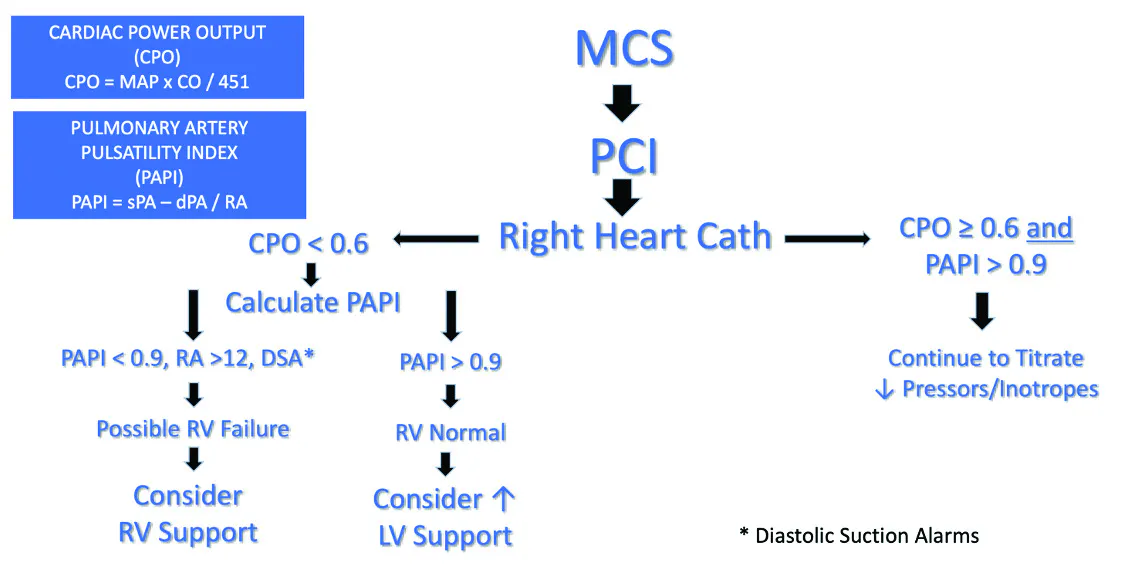
Figure 1. The NCSI algorithm depicting the role of invasive hemodynamics in making decisions about escalation of MCS. CO, cardiac output; dPA, diastolic pulmonary artery pressure; MAP, mean arterial pressure; PCI, percutaneous coronary intervention; sPA, systolic pulmonary artery pressure. Courtesy of Mir Babar Basir, DO.
- A cardiac power output (CPO) (CPO = cardiac output X mean arterial pressure/451) of < 0.6 W is a marker of worse outcomes and an indicator to escalate MCS support.
- In the setting of reduced CPO, if the pulmonary artery pulsatility index (PAPi) (PAPi = PA systolic–PA diastolic pressure/mean right atrial [RA] pressure) is < 1 along with an elevated RA pressure, initiation of RV support should be strongly considered. Options for RV support include Impella RP, Protek Duo (LivaNova), or escalation to venoarterial ECMO (VA-ECMO).
- If the CPO is < 0.6 W and PAPi is > 1, further escalation of left ventricular (LV) support should be considered. Options for escalation of LV support include Impella 5.5 (surgically implanted via the axillary artery) or VA-ECMO.
As a follow-up to NCSI, the more recently presented CERAMICS study evaluated the role and impact of early MCS, guided by invasive hemodynamics, on outcomes in patients with AMI CS in centers with MCS escalation capabilities. The study demonstrated that 22% of patients (overall N = 124) were escalated, with VA-ECMO and Impella 5.5 being the most common escalation strategies.5
Effective Monitoring
CS is a dynamic disease process and patients may deteriorate or improve after initiation of the first-line MCS device. It is imperative for the shock team to closely follow these patients in the intensive care unit with continuous PA catheter monitoring, serum lactate trending, urine output monitoring, and/or escalating doses of vasopressors.
Decisions regarding escalation of MCS support should be made proactively before patients deteriorate down the cardiometabolic spiral.
It is advised that decisions regarding escalation and de-escalation of support are made by a multidisciplinary team (Figure 2), including advanced heart failure, interventional cardiology, cardiothoracic surgery, and an intensivist. Heart failure physicians form a critical part of the care team because options for advanced heart failure, including durable ventricular assist device and transplant, should be considered as part of the MCS escalation pathway. It is worth noting that there is considerable variation in escalation thresholds and policies among institutions. For example, while some institutions escalate patients to VA-ECMO as a bridge to recovery or bridge to decision, most institutions will not do so unless there is a clear-cut exit strategy in the form of durable ventricular assist device or heart transplant.
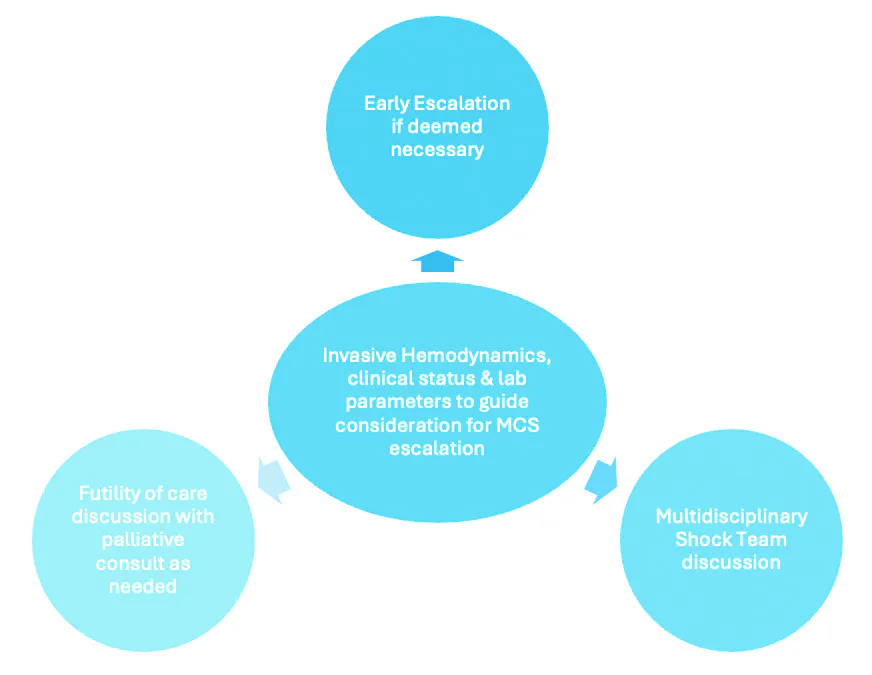
Figure 2. Considerations for MCS escalation.
Patient baseline functional status, comorbidities, and the patient’s and family’s wishes about remaining on prolonged life support should all be considered before committing to an escalation strategy. Futility of care and resources should be carefully vetted in every case. In cases where the decision is not straightforward, there should be a low threshold to involve palliative care to facilitate these discussions with patients and their family.
SUMMARY
Escalation to an MCS device among patients with CS is a complex and nuanced decision-making point representing a fork in the road in the management of these patients. The decision to escalate MCS should be guided by hemodynamic parameters with corroborating clinical status and laboratory values of inadequate perfusion. Utilization of a multidisciplinary shock team along with shared decision-making with the patient’s family is recommended.
1. Jentzer JC, van Diepen S, Barsness GW, et al. Cardiogenic shock classification to predict mortality in the cardiac intensive care unit. J Am Coll Cardiol. 2019;74:2117-2128. doi: 10.1016/j.jacc.2019.07.077
2. Henry TD, Tomey MI, Tamis-Holland JE, et al. Invasive management of acute myocardial infarction complicated by cardiogenic shock: a scientific statement from the American Heart Association. Circulation. 2021;143:e815-e829. doi: 10.1161/CIR.0000000000000959
3. Møller JE, Engstrøm T, Jensen LO, et al; DanGer Shock Investigators. Microaxial flow pump or standard care in infarct-related cardiogenic shock. N Engl J Med. 2024;390:1382-1393. doi: 10.1056/NEJMoa2312572
4. Basir MB, Lemor A, Gorgis S, et al. Early utilization of mechanical circulatory support in acute myocardial infarction complicated by cardiogenic shock: the National Cardiogenic Shock Initiative. J Am Heart Assoc. 2023;12:e031401. doi: 10.1161/JAHA.123.031401
5. Basir MB. Can escalation reduce acute myocardial infarction mortality in cardiogenic shock (CERAMICS)? Presented at: Society for Cardiovascular Angiography & Interventions (SCAI) 2026 Scientific Sessions & Canadian Association of Interventional Cardiology (CAIC-ACCI) Summit; April 23-25, 2026; Montreal, Canada.
Advertisement
Advertisement