Advertisement
Advertisement
September/October 2026
Sponsored by Terumo Interventional Systems
The Heartrail™ Ikari Left Catheter: Streamlining Transradial Angiography and PCI With a Single-Catheter Technique
Since the widespread adoption of the transradial approach for coronary angiography and percutaneous coronary intervention (PCI), operators have continually sought ways to reduce procedure time, catheter exchanges, and vascular trauma without sacrificing diagnostic or interventional quality. One of the most elegant solutions to emerge from this effort is the Heartrail™ Ikari Left catheter (Terumo Interventional Systems), developed by Dr. Yuji Ikari in Japan. Designed specifically for radial access, the Heartrail Ikari Left catheter allows a single shape to engage both the left and right coronary ostia, and in many cases to also provide the backup support needed for complex PCI. This single-catheter approach has gained significant traction worldwide, and for good reason.
WHAT MAKES THE IKARI LEFT CATHETER DIFFERENT
Traditional diagnostic and guiding catheter shapes—such as the Judkins Left and Judkins Right—were designed with femoral access in mind. When used radially, especially from the right radial artery, these shapes often require more manipulation to achieve stable engagement because of the different angle of approach to the aortic root. The Heartrail Ikari Left catheter’s design compensates for this by incorporating a secondary curve that uses the opposite aortic wall as a fulcrum, providing passive support while still being easy to torque and reposition for engaging both coronary arteries.
This dual-purpose geometry is the core of its appeal: one catheter, one shape, both coronaries—diagnostic angiography, hemodynamic assessment, intravascular imaging, and PCI.
KEY BENEFITS OF THE SINGLE-CATHETER TECHNIQUE
Reduced catheter exchanges. Perhaps the most immediately obvious benefit is the reduction in the number of catheters needed during a procedure. Instead of exchanging a Judkins Left for a Judkins Right (or vice versa), a single Ikari catheter can often engage both vessels with minor manipulation. Fewer exchanges mean less time under fluoroscopy, less contrast use in diagnostic cases, and a smoother workflow overall.
Shorter procedure times. By eliminating exchanges, operators save the time associated with catheter withdrawal, guidewire reinsertion, and re-engagement. In high-volume labs, this efficiency gain compounds meaningfully across a day of cases.
Lower radiation exposure. Less fluoroscopy time during catheter manipulation and exchange translates to reduced radiation dose for both patient and operator. This is an increasingly important consideration given growing awareness of cumulative occupational radiation exposure among interventional cardiologists.
Decreased vascular and vessel trauma. Every catheter exchange carries some risk of radial artery spasm, dissection, or trauma to the aortic wall and coronary ostia. A single-catheter strategy minimizes the number of times a catheter tip must be manipulated near these vulnerable structures, potentially lowering complication rates, particularly relevant in patients with smaller or more fragile radial arteries. The hydrophilic coating on the catheter significantly reduces arm vessel trauma, minimizing spasm and thereby reducing the need to switch to femoral artery access.
PCI and hemodynamic assessment of coronary lesions. Although there are a number of catheters available for a single-catheter technique for diagnostic coronary angiography, the Ikari Left guide catheters help facilitate the use of single-catheter technique for PCI in addition to just diagnostic angiography. This is particularly useful when time is of the essence, such as during ST-segment elevation myocardial infarction (STEMI) cases. One catheter for diagnostic angiography and the same catheter for PCI makes for quicker door-to-balloon time by eliminating the need for catheter exchanges. Similarly, using the Ikari Left catheter reduces the need for catheter exchanges when evaluating the hemodynamic significance of coronary lesions with flow wires.
Procedural efficiency. Fewer catheter exchanges and limited need to switch from radial to femoral access can translate into meaningful time savings for cardiac cath labs performing high volumes of coronary procedures, without compromising procedural quality.
Improved quality of angiography. Performing coronary angiography with the Ikari Left guide catheter leads to better contrast opacification of the coronary arteries compared to a 5- or 6-F diagnostic catheter, due to larger lumen of the guide catheter.
Favorable learning curve. Although mastering the subtle rotational and advancement maneuvers of the Ikari catheter takes some initial practice, many operators find that after a modest learning period, it becomes a reliable “go-to” shape for the majority of their radial cases, simplifying case planning and catheter inventory.
CASE STUDY
Patient Presentation
A patient presented with an inferior STEMI caused by an occlusion of the mid-to-distal right coronary artery (RCA).
Procedural Details
Ultrasound-guided access was obtained in the right radial artery using a 6-F sheath. A 6-F Ikari Left 3.5 guide catheter was used. First, the left main coronary artery was engaged and diagnostic angiography of the left coronary circulation was performed. The catheter was then used to engage the RCA for selective RCA angiography as well as primary PCI of culprit RCA.
Discussion
The patient made an uneventful recovery and was discharged home after initiation of medical management. The cath lab door-to-balloon time was 17 minutes. Being able to avoid multiple catheter exchanges significantly reduces door-to-device time in STEMI cases. As such, the Ikari Left catheter—although good for routine use—really shines in STEMI cases when time is of the essence.
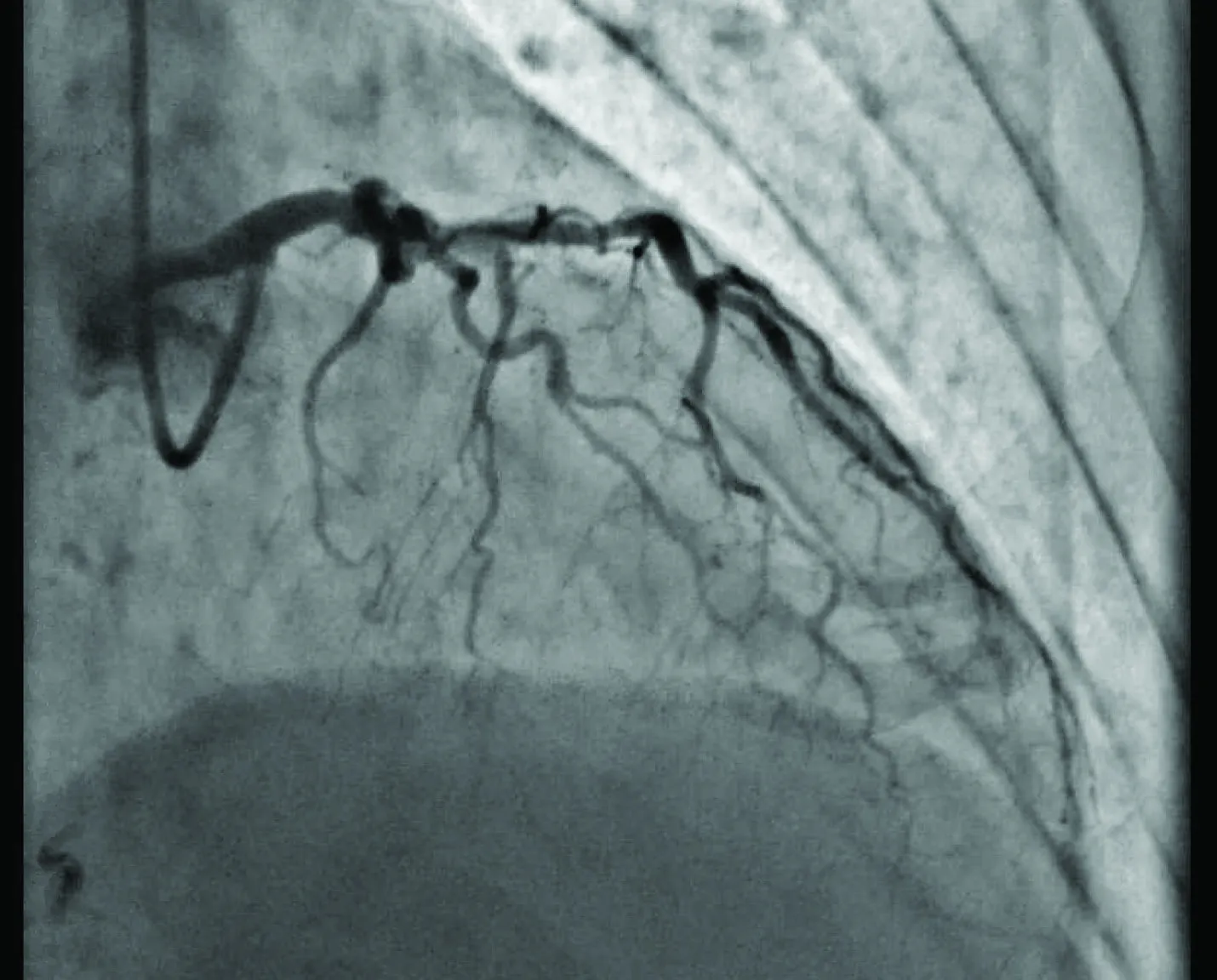
Figure 1. Left coronary artery diagnostic angiogram.
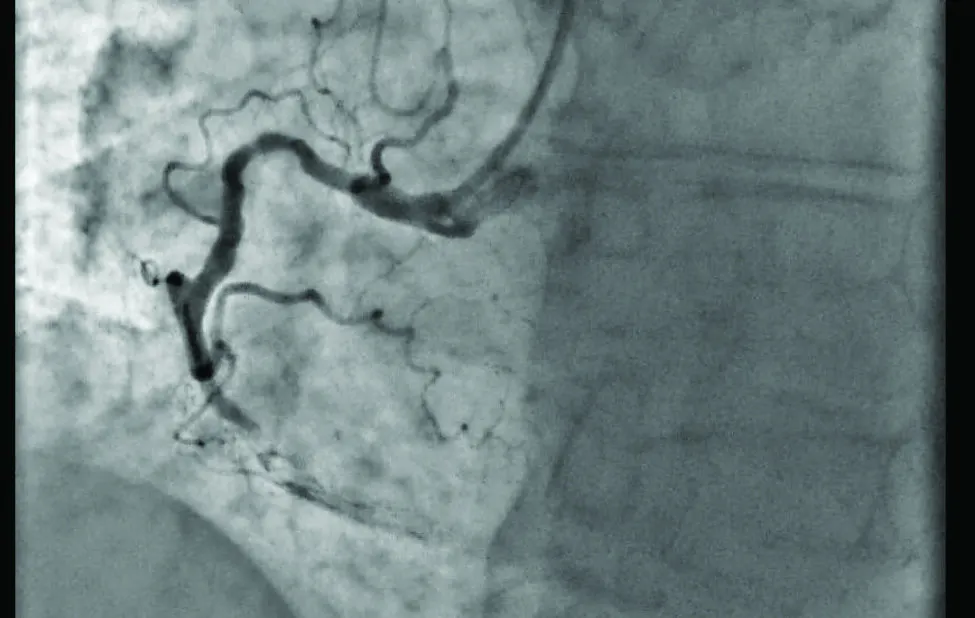
Figure 2. RCA diagnostic angiogram.
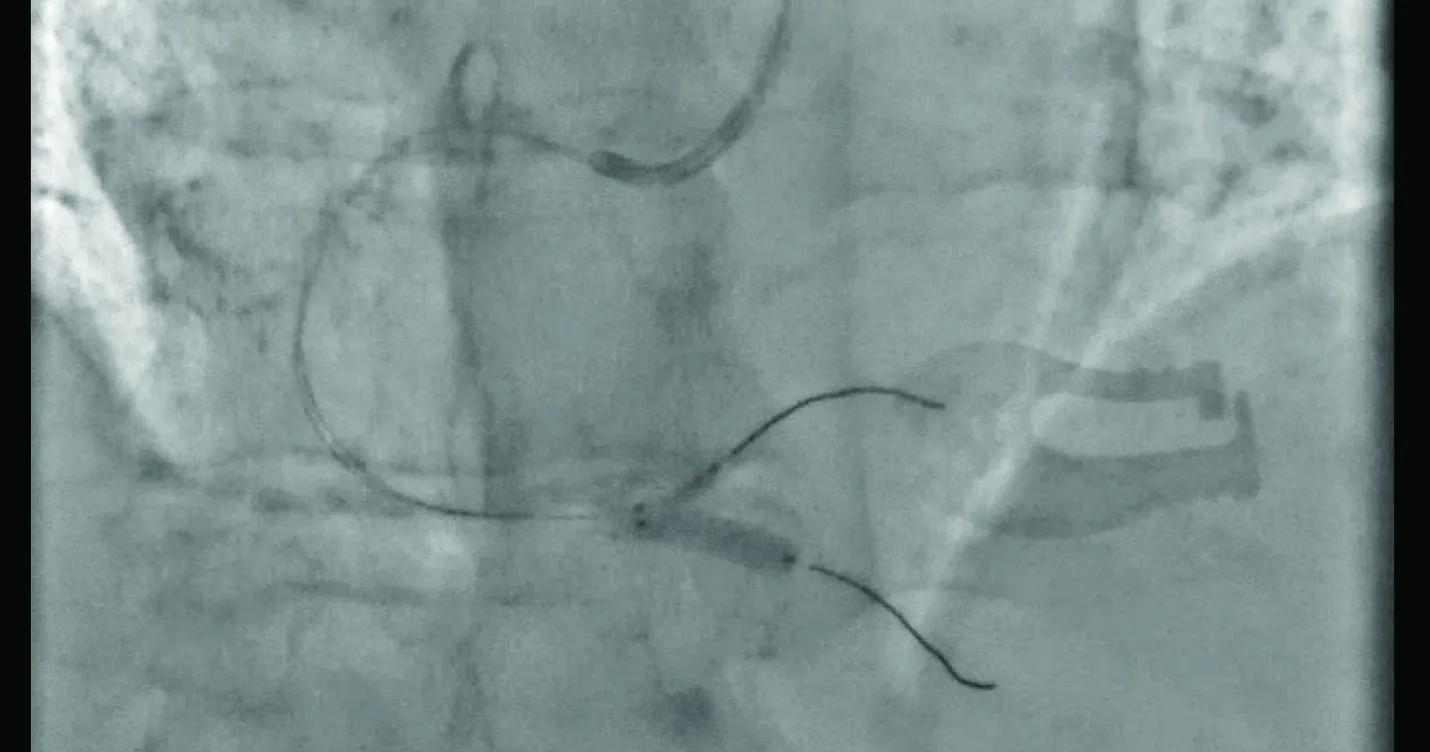
Figure 3. STEMI culprit RCA bifurcation PCI.
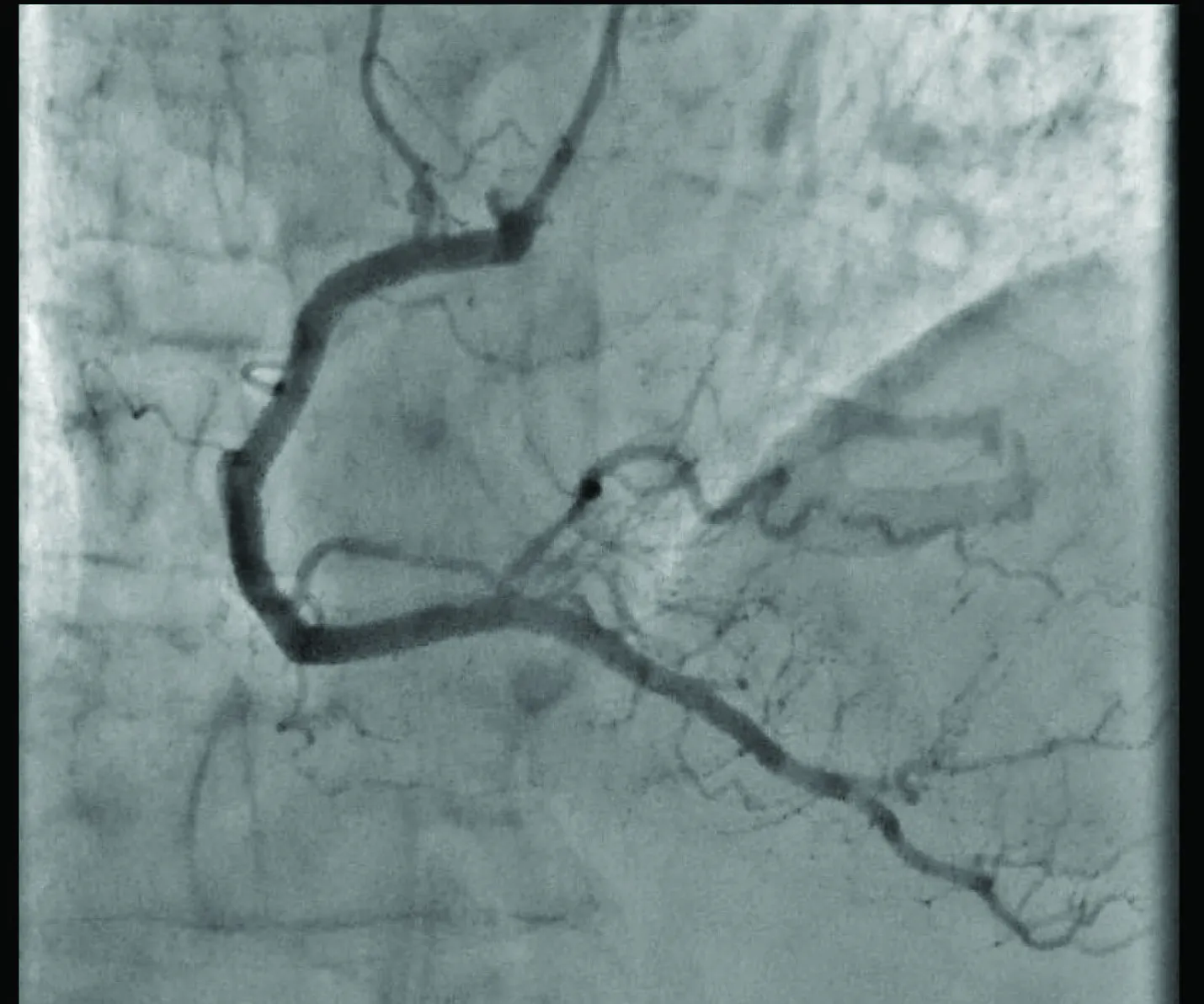
Figure 4. Final post-PCI angiogram of RCA.
PRACTICAL CONSIDERATIONS
The Ikari catheter comes in both left and right versions, with sizing (eg, Ikari Left 3.5, 3.75, 4.0, and 4.5) chosen based on aortic root size and patient anatomy, similar to other guiding catheter selection principles. Operators transitioning from standard shapes should expect a brief adaptation period to learn the specific clockwise and counterclockwise torque maneuvers used to seat the catheter in each coronary ostium. Anatomic variants, such as an unusually large or small aortic root, or anomalous coronary origins may still necessitate alternative catheter shapes in select cases. It should be noted that the Ikari Left catheter can only be used from a right radial artery approach, and it cannot be used from a left radial or femoral approach. It bears keeping in mind that for PCI of complex, tortuous, and calcified lesions, there is a learning curve with the Ikari Left catheter—especially for those who are used to the “backup” support provided by catheters such as the extra backup category—because it does not have the degree of support offered by some of the “aggressive or stiffer” guide shapes. The advantage here is that the Ikari Left guide has a relatively softer and somewhat less traumatic catheter tip. With the use of guide extension catheters such as GuideLiner (Teleflex) or Guidezilla (Boston Scientific Corporation), the relative lack of backup support can be easily negated.
CONCLUSION
The Heartrail Ikari Left catheter represents a thoughtful, anatomy-driven innovation tailored to the realities of transradial coronary intervention. By enabling a single catheter to engage both the left and right coronary arteries, it reduces procedure time, radiation exposure, vascular trauma, and cost, while maintaining the flexibility needed for complex PCI. For interventional cardiologists looking to streamline their transradial practice, the Ikari Left catheter offers a compelling option worth incorporating into routine practice.

Advertisement
Advertisement