Advertisement
Advertisement
May/June 2026
An Interview With Nidhi Madan, MD, MPH
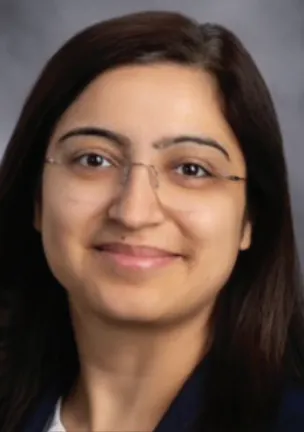
Dr. Madan discusses her work building a rural structural heart program; her research at the center of structural heart disease, advanced cardiac imaging, and health equity; her perspective on the evolving role of the structural interventionalist; and more.
What unique challenges and opportunities have come from building and sustaining a structural heart program in a rural academic medical center setting?
My journey in structural heart disease has taken me through multiple distinct institutional environments, and each has shaped my understanding of what it truly takes to grow a program with purpose and sustainability. Building and expanding a structural heart program at a smaller, more rural medical center has been one of the most rewarding and humbling experiences of my career. The constraints are real: a leaner referral base, longer travel distances for patients, fewer layers of subspecialty support, and the need to make a compelling case for resources that larger urban programs often take for granted. Every process matters here and requires a precision that high-volume centers can sometimes afford to overlook. Patient selection, imaging strategy, heart team communication, postprocedural follow-up, and referring physician engagement all must be thoughtfully designed, not improvised.
I have come to understand that those constraints are also a crucible, sharpening clinical judgment and forcing you to build systems that are practical, scalable, and sustainable, not merely technically sophisticated. There is profound opportunity here. In rural communities, access is not an abstract policy issue. It is the difference between a patient receiving a life-changing structural intervention close to their family or spending a full day traveling to a major urban center (if they go at all). Being able to provide that care locally is clinically meaningful and life-changing for these patients and their families.
There is also an institutional agility at smaller centers that I genuinely value. When you want to implement a new imaging protocol, refine your heart team workflow, or pilot an educational initiative, you can move with a speed and intentionality that is often harder to achieve in a large quaternary system. You wear many hats, and while that can be exhausting, it also makes you a more complete physician and leader. You build every protocol, every heart team workflow, and every imaging pathway with intention; when it works, you can see your fingerprints on it in a way that is genuinely rare in larger academic systems.
When we successfully deliver a transcatheter aortic valve replacement (TAVR), a transcatheter mitral intervention, or a left atrial appendage occlusion close to home for a patient, we are reshaping what is possible for an underserved population. That is the work I came here to do, and I do not take it lightly for a single day.
How would you describe the focus of your current research, and what questions are you most driven to answer right now?
My research lives at the intersection of structural heart disease, advanced cardiac imaging, and health equity, three areas that, for me, are inseparable. On the imaging and outcomes side, my work on contemporary cardiac CT (CCT) training1 reflects a core conviction that the quality of imaging education in this field is uneven in ways that directly affect patient care; we need rigorous, data-driven strategies to address it systematically, not just at elite centers. I am deeply interested in how multimodality imaging, particularly CCT, can move us beyond descriptive anatomy and toward genuinely predictive procedural planning: anticipating complications before we enter the laboratory, refining patient selection with greater precision, and making complex interventions more standardized and reproducible across institutions of varying size and resource availability.
However, the questions that drive me most urgently sit at the intersection of imaging science and equity. My Master of Public Health (MPH) from the Johns Hopkins Bloomberg School of Public Health gave me the methodological framework to study these questions rigorously, and I feel a profound professional obligation to apply that lens. Who is not reaching our structural heart programs, and why? The patients invisible in our outcomes databases (eg, rural, elderly, underinsured, from historically marginalized communities) carry a disproportionate burden of structural heart disease and never arrive at a heart team conversation. Improving outcomes means very little if we are optimizing care only for those already finding their way to us. That is the question I am most driven to answer, and the one I believe carries the greatest potential consequence for the field.
Education is, and has been, an important pillar of your career. How has your own training experience shaped how you approach education today?
My training path was long, deliberate, and genuinely humbling. Completing general cardiology, interventional, and structural heart fellowships at Rush University Medical Center, and prior to that pursuing my MPH and internal medicine residency, meant spending the better part of a decade in the role of learner while also contributing as a clinician and researcher. Beyond the clinical knowledge itself, that experience gave me a deep appreciation for what it actually feels like to not yet know something and for how profoundly the culture of a training environment can either support or undermine a learner’s development.
My public health training added a dimension that I think is underrepresented in how we prepare interventional cardiologists, making me attentive to systems, outcomes, equity, and the broader context in which we deliver care. I came to understand that technical competence is only one dimension of what excellent training produces. As an educator, whether in the simulation lab, at the American College of Cardiology (ACC) board review course where I have served as faculty, at the Society for Cardiovascular Angiography and Interventions (SCAI) Fellows Course, or through my committee work with SCAI Women in Innovations (WIN) and the ACC Education Standards and Outcomes Committee, I lead with the “why” before the “how.” I want trainees who can think clearly and adapt confidently when the textbook anatomy does not appear in the catheterization laboratory, because in structural heart disease, it frequently does not.
The most consequential thing I can give a trainee is not a technique. It is a framework for sound reasoning under uncertainty, and the confidence to use it.
My work chairing the Society of Cardiovascular Computed Tomography (SCCT) Fellow and Resident Leaders of SCCT (FiRST) Committee, cochairing the SCAI-WIN Education Subcommittee, and serving on the ACC Education Standards and Outcomes Committee reflects a deeper conviction, that excellent education should not be a privilege of the highest-volume programs. Trainees and early career physicians deserve rigorous, accessible educational infrastructure regardless of where they train or practice. I have spent a significant part of my early career trying to build and extend that infrastructure, and I intend to continue doing so.
How do you define the evolving role of the structural interventional cardiologist?
When I completed my structural heart fellowship, the defining identity of the structural cardiologist was still primarily procedural, and that made sense given where the field stood. TAVR was establishing its broad-risk evidence base, transcatheter mitral and tricuspid therapies were graduating from investigational to clinically mainstream, and the specialty was actively constructing its professional identity around technical excellence in the catheterization laboratory.
Today, the role is categorically more expansive and, I would argue, more intellectually demanding and more consequential than at any prior point in the specialty’s history. We are simultaneously advanced imagers, decision architects, heart team leaders, patient advocates, and clinical scientists, often within a single clinic day. My board certifications across cardiovascular CT, echocardiography, nuclear cardiology, and interventional cardiology and my training in structural heart disease reflect the genuine multidisciplinary nature of this role today. This is not a specialty you can practice through a narrow procedural lens and do justice to your patients or your field. The explosion of transcatheter options for mitral and tricuspid disease, the maturation of TAVR across the full spectrum of surgical risk, and the central role of advanced imaging in procedural planning have made this a truly integrated intellectual enterprise.
What strikes me most about this evolution is that the modern excelling structural operator is not simply someone with extraordinary catheterization laboratory technique. They are someone who can interrogate a complex CT data set, lead a nuanced and sometimes difficult multidisciplinary conversation, communicate transparently with a patient navigating genuinely uncertain trade-offs, perform technically demanding procedures across the full spectrum of structural pathology, and contribute meaningfully to the evidence base shaping the next generation of guidelines. That evolution raises the bar profoundly for training programs, for continuing education, and for how we define excellence. I find it, without reservation, the most intellectually exciting era in the history of our field.
Last year, you were recognized as a SCAI “30 in Their 30s,” an award celebrating interventionalists with exceptional leadership, clinical excellence, and commitment to teamwork and service. How have national leadership programs influenced the kind of leader you’re striving to become?
The SCAI “30 in Their 30s” recognition was one of the most genuinely meaningful moments of my early career, not because of the accolade itself but because of what it represents and the community it placed me within. It arrived at a point when I had been building something I deeply believed in, and to have that work recognized by a society I hold in the highest regard was both humbling and clarifying.
The national leadership experiences that have shaped me most profoundly (the ACC Leadership Cohort, the SCCT Future Leaders Program, my time as Chair of the SCCT FiRST Committee, my work with the ACC/American Heart Association Task Force on Clinical Data Standards) were not checkbox experiences. Each placed me in conversation with physicians operating at the intersection of clinical excellence and institutional courage, and each forced me to examine what I actually stand for as a leader, not just what I aspire to.
Collectively, those experiences crystallized that the most effective physician leaders are defined not by procedural volume or publication count but by consistency, trust, follow-through, and the ability to create conditions in which others can do their best work. They listen carefully, communicate with clarity, bring people together around shared goals, and are willing to do the less visible work that makes teams genuinely function. I received a Patient Service Excellence Award early in my attending career, and that recognition matters to me in a particular way, because service is not something I associate primarily with leadership programs. It is the organizing principle of why I entered this field. Every committee meeting, mentorship conversation, and interaction with a trainee trying to find their footing is an opportunity to either embody or fall short of the values I claim to hold. National programs have given me a broader frame of reference for what exceptional leadership looks like. The daily work of living up to it belongs entirely to me.
Which patient populations do you think represent the biggest unmet need in mitral intervention right now, and how might emerging techniques or innovations help address them?
This is a question I engage with both in the clinic and in my published work, including publications on percutaneous mitral valve repair in women and expanding indications in contemporary mitral transcatheter edge-to-edge repair (TEER).2,3 My answer keeps returning to the same core tension: We have developed remarkable therapies, but the patients who need them most are often precisely those for whom current options are least applicable.
Several populations represent particularly urgent unmet needs. Patients with advanced functional mitral regurgitation in the setting of severely reduced ejection fraction and adverse ventricular remodeling occupy a difficult space. The benefit of edge-to-edge repair is real but modest in the most extreme phenotypes, and the risk-benefit calculus is genuinely uncertain. Patients with complex degenerative anatomy (eg, heavily calcified leaflets, unfavorable coaptation geometry, prior surgical repair with distorted architecture) frequently fall outside device instructions for use, without a good alternative. Patients with severe mitral annular calcification remain among the most challenging in all of structural cardiology. Critically, patients in rural communities and those who are underinsured or from historically underrepresented populations carry a substantial burden of mitral disease and never reach a heart team evaluation. This gap troubles me as much as any anatomic limitation.
Transcatheter mitral valve replacement holds genuine transformative promise for many of these patients, but the anatomic constraints (eg, left ventricular outflow tract obstruction risk, annular sizing complexity, the extraordinary heterogeneity of mitral anatomy) require patient-specific, CT-based modeling of a sophistication that is only now becoming sufficiently reliable. The future lies in better matching therapy to mechanism and anatomy. This involves continued refinement of TEER, growth of transcatheter replacement platforms, improved delivery systems, and the kind of precise CT- and echo-based phenotyping that allows us to identify prospectively who benefits from repair, who may be better served by replacement, and who may not benefit from intervention at all. Mitral intervention is still less mature than TAVR, and that is precisely why it remains such a vital frontier for innovation.
You’ve been very involved with the SCCT over the years. What do you think are the biggest obstacles facing the field of CCT in the years to come, and how is the society prepared to tackle these challenges?
My relationship with SCCT has been among the most formative of my career. I chaired the FiRST Committee from 2021 to 2024, led (and subsequently published) international surveys on CCT training,1 participated in the SCCT Future Leaders Program, served as invited faculty and Session Chair at multiple SCCT annual scientific meetings, and served as Chair for planning early career sessions at the 2025 SCCT meeting. Currently, I serve on the SCCT Education and Membership committees and am Associate Editor of the Journal of Cardiovascular Computed Tomography (JCCT). That longitudinal engagement has given me a perspective on the field’s challenges that is both granular and deeply personal.
The first and most pressing obstacle is workforce development and the integration gap. Despite the now-indisputable centrality of CCT to structural heart planning, coronary physiology assessment, and cardiovascular risk stratification, its incorporation into training curricula, clinical workflows, and reimbursement structures remains alarmingly uneven. Many programs still treat CCT as a boutique subspecialty service rather than a core clinical competency. As procedural applications expand, that gap becomes increasingly costly in terms of patient outcomes and trainee preparedness. My published survey data bear this out directly. Trainees across the international CCT community report significant variability in educational exposure that reflects institutional culture far more than individual effort or interest.1 SCCT is the right organization to close that gap, and the Education Committee is actively developing competency frameworks and accessible curricula designed to reach physicians across all program types and geographies.
The second major challenge is navigating the artificial intelligence (AI) reckoning with rigor and integrity. AI-assisted CT analysis is advancing at a pace that is simultaneously exhilarating and sobering. The promise is real: faster interpretation, enhanced quantitative phenotyping, and consistency that can exceed human visual assessment in specific domains. But validation standards are immature, generalizability across scanner platforms and diverse patient populations is largely unproven, and the regulatory and medicolegal frameworks have not kept pace with deployment. SCCT has the scientific credibility and stakeholder relationships to lead the standard-setting conversations this moment demands, not to impede innovation but to ensure that AI tools entering clinical practice are held to the same evidentiary rigor we expect of any diagnostic test or therapeutic device. That responsibility is one I take seriously, and one I am proud to contribute to.
The use of advanced imaging to enhance procedural planning and improve patient outcomes is a key area of interest for you. How has the growing sophistication of CCT changed the way you approach structural interventions?
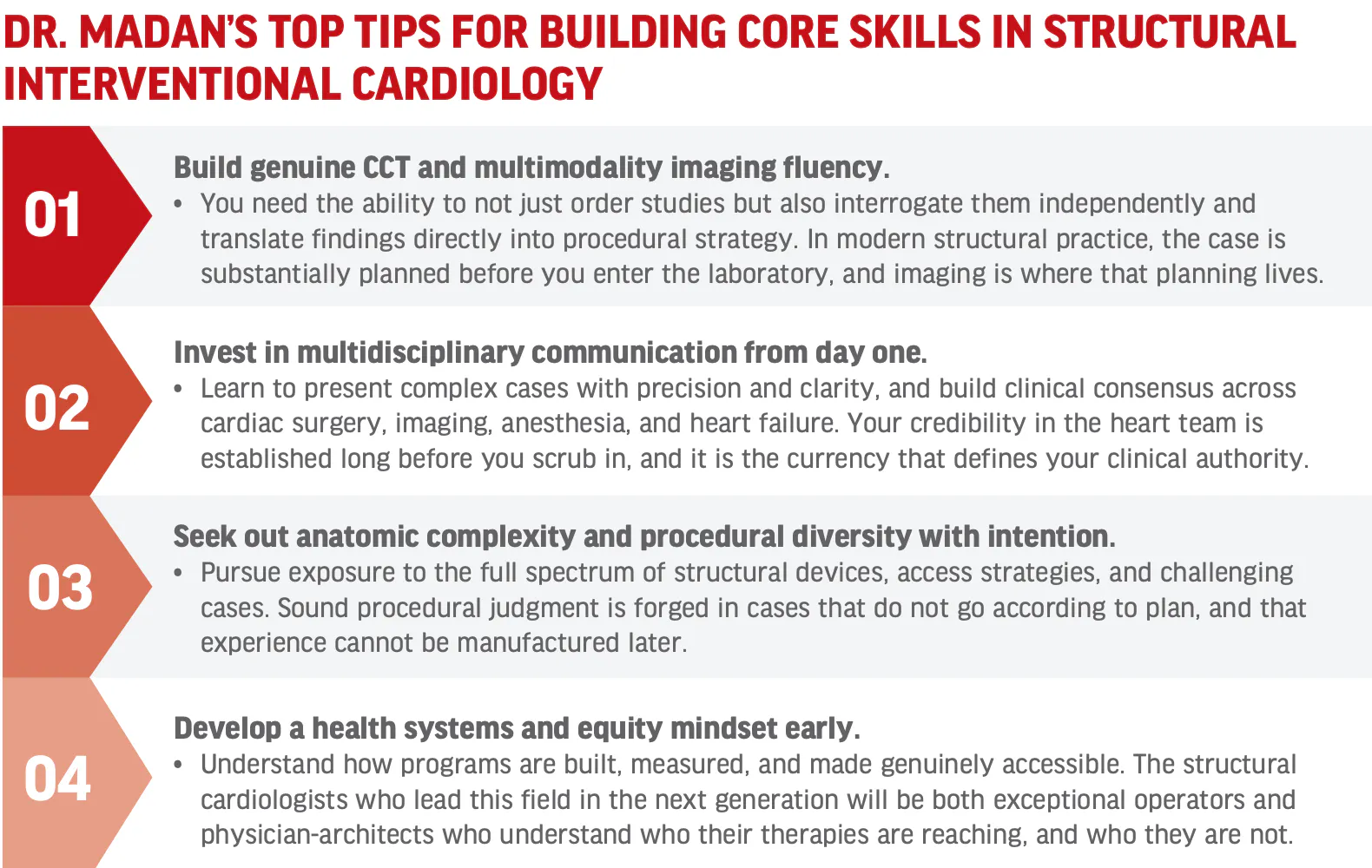
CCT has fundamentally restructured the cognitive architecture of structural intervention, moving us from a largely reactive procedural mindset to a genuinely anticipatory one. When I approach a TAVR, left atrial appendage occlusion, or transcatheter mitral procedure at Bassett, the CT data set is the strategic blueprint from which the entire procedural plan is constructed. Annular sizing, coaxiality optimization, vascular access assessment, anticipated conduction system risk zones, device selection, and expected fluoroscopic angles are all meaningful decisions that are made before the patient arrives in the catheterization laboratory. The quality of those decisions is a direct function of imaging precision and interpretive depth.
My board certification in CCT, years leading the SCCT FiRST Committee, editorial role at JCCT, and published research on CCT training all reflect a conviction I hold with increasing confidence: Imaging fluency is a foundational skill for the modern structural cardiologist. CT has been especially transformative in complex cases, including coronary risk assessment in redo valve procedures, annular and vascular characterization in challenging anatomy, and understanding patient-specific geometry in situations that would previously have required significant intraprocedural improvisation. I have presented complex cases at TCT, PCR London Valves, ACC, and Pediatric and Congenital Interventional Cardiovascular Society on the topics of paravalvular leak closure, transcatheter valve-in-valve procedures, and tricuspid valve interventions. Those experiences reinforce every time how profoundly a rigorous CT-derived roadmap changes what is navigable and what is not.
More broadly, CT has helped bring an objective, reproducible precision to a field that previously relied more heavily on experience-based intuition alone. We are now approaching a moment where patient-specific, three-dimensional reconstructions will be integrated into preprocedural planning and real-time intraprocedural navigation. For the most anatomically challenging structural cases, that convergence will be genuinely life-saving. I consider advanced CT fluency nonnegotiable for the next generation of structural interventionalists, and I advocate for it explicitly in every educational forum I participate in.
When you think about the next 10 to 15 years, what do you hope your career will represent?
I hope my career will represent proof that you can build something genuinely excellent in a place that others might overlook, that a structural heart program at a smaller academic center like Bassett Medical Center can deliver care with the same precision, intellectual rigor, and human compassion as any program in the country. I hope it will stand as evidence that geography does not need to be destiny for patients with complex valvular disease, and that a committed physician-leader with the right team and the right vision can meaningfully change that reality for an entire region.
I hope my career will also represent an uncompromising commitment to equity as a clinical and scientific principle and a central organizing framework for how I practice, research, and teach. The therapies our field is developing are extraordinary. But if their benefits accrue primarily to patients who are already advantaged (eg, insured, connected to academic referral networks, comfortable navigating complex medical systems), then we have not actually succeeded. We have built a more sophisticated version of the inequity that already exists.
Most deeply, I hope that in 15 years I can point to a generation of structural cardiologists who are technically superb, intellectually humble, and fiercely committed to their patients and their communities and know that I played a meaningful role in their formation. I hope my career represents substance and work that is clinically meaningful, educationally valuable, and genuinely lasting. That, more than any publication or procedural milestone, is the measure I care most about.
If you could go back and pursue an additional degree or skill set to better prepare for your current role, what might it be, and why?
Let me start with what drew me to this field in the first place, because it shapes how I think about this question. From early in my training, I was captivated by valvular heart disease in a way that felt different from other areas of cardiology. There is something remarkable about a disease process that is anatomically visible, mechanistically understandable, and increasingly treatable through technologies that did not exist a generation ago. The ability to intervene on a diseased valve and meaningfully alter the trajectory of a patient’s life through a carefully planned transcatheter procedure felt like exactly the kind of work I wanted to dedicate my career to. That passion for valve disease and its evolving treatment options was the gravitational center that pulled me toward structural heart disease and has kept me energized in it ever since.
But I came to understand relatively early that excellent individual patient care, as essential as it is, was not sufficient for the kind of physician I wanted to be. I wanted to think about not only the patient in front of me but also the population that patient belongs to. Who else is living with this disease? Who is not being diagnosed, referred, or offered the therapies we have worked so hard to develop? That broader lens is precisely what my MPH gave me, the methodological tools to ask population-level questions with rigor and the intellectual framework to hold individual clinical excellence and systems-level thinking simultaneously. It remains one of the most important investments I have made in my own development.
And yet, if I could add one more dimension, it would sit at the intersection of a Master of Business Administration (MBA) and formal training in health systems engineering and implementation science. My clinical and research skill sets are strong. What I navigate most acutely, particularly in building and scaling a structural program at Bassett, are questions that belong to an entirely different domain. How do you build a financially sustainable program in a resource-constrained environment? How do you make the business case for capital investment in structural heart infrastructure to hospital leadership? How do you design workflows, align incentives, manage teams, and scale operations without losing clinical quality or mission focus? An MBA-level understanding of health care finance, organizational behavior, and strategic management, combined with the operational rigor of health systems engineering and implementation science, would have given me a far more powerful toolkit for the institutional work that turns clinical vision into durable programmatic reality. Many of us learn these lessons on the job, often the hard way. I would have wanted that foundation earlier, and I am actively working to build it now.
1. Madan N, Hur DJ, Gannon MP, et al. Contemporary cardiovascular computed tomography (CCT) training: serial surveys of the international CCT community by the Fellow and Resident Leaders of the Society of Cardiovascular Computed Tomography (SCCT) Committee (FiRST) and SCCT Future Leaders Program (FLP). J Cardiovasc Comput Tomogr. 2023;17:226-230. doi: 10.1016/j.jcct.2023.03.006
2. Lowenstern AM, Madan N, Chung CJ. Approach and effects of percutaneous mitral valve repair in women. Interv Cardiol Clin. 2025;14:127-136. doi: 10.1016/j.iccl.2024.08.010
3. Tiwari N, Shabbir MA, Madan N. Contemporary mitral TEER and expanding indications. Cardiac Interv Today. 2024;18:45-48. https://citoday.com/articles/2024-sept-oct/contemporary-mitral-teer-and-expanding-indications
Advertisement
Advertisement
Interested in reading more interviews?
To read more interviews with thought leaders in the interventional cardiology field, check out our Profiles & Perspectives hub.
Read More