Advertisement
Advertisement
March/April 2026
Targeting Aortic Stenosis Care
Insights from the Target: Aortic Stenosis initiative on best practices and barriers across the aortic stenosis care continuum.
By Mohammad Forouzannia, MD; Yousif Ahmad, MD; and Sammy Elmariah, MD, MPH
Aortic stenosis (AS) is the most common valvular heart disease (VHD) in the United States, and its burden continues to rise as the population ages.1-3 To date, quality of care in AS has largely been assessed on the basis of aortic valve replacement (AVR) outcomes, as tracked by the Society of Thoracic Surgeons/American College of Cardiology (STS/ACC) TVT Registry and the STS Adult Cardiac Surgery Database.4,5 Although essential for evaluating procedural safety and effectiveness, these registries primarily reflect patients who undergo intervention and offer limited visibility into earlier stages of the AS care continuum. Consequently, we have remained largely blind to the potentially larger population of patients who never reach intervention despite having an indication for treatment.6,7
Cumulative data show that these upstream gaps translate into substantial underdiagnosis and undertreatment. Nearly 60% of patients with echocardiographic evidence of AS are not assigned an AS-related diagnostic code,8 and 30% to 50% of patients with severe AS and class I or IIa indications for AVR never undergo intervention, with associated increases in hospitalization and mortality.6,9 Recognizing these limitations, professional societies have called for performance measures that extend beyond procedural outcomes and span the full AS care continuum, from diagnosis to treatment.10-12 Target: Aortic Stenosis is a national initiative led by the American Heart Association (AHA) designed to address this need. In this article, we review insights from this initiative and outline strategies to improve timely, guideline-directed care for patients with AS.
TARGET: AORTIC STENOSIS—A NATIONAL QUALITY INITIATIVE
Target: Aortic Stenosis is a multifaceted initiative designed to enhance awareness and engagement at the patient level, improve delivery of guideline-directed care at the provider level, and enable system-level implementation of quality measures aligned with contemporary VHD guidelines.10 The initiative’s overarching goal is to identify, measure, and report on care processes spanning the initial echocardiographic diagnosis of AS through definitive treatment, with the long-term aim of improving outcomes and mitigating disparities (Figure 1).
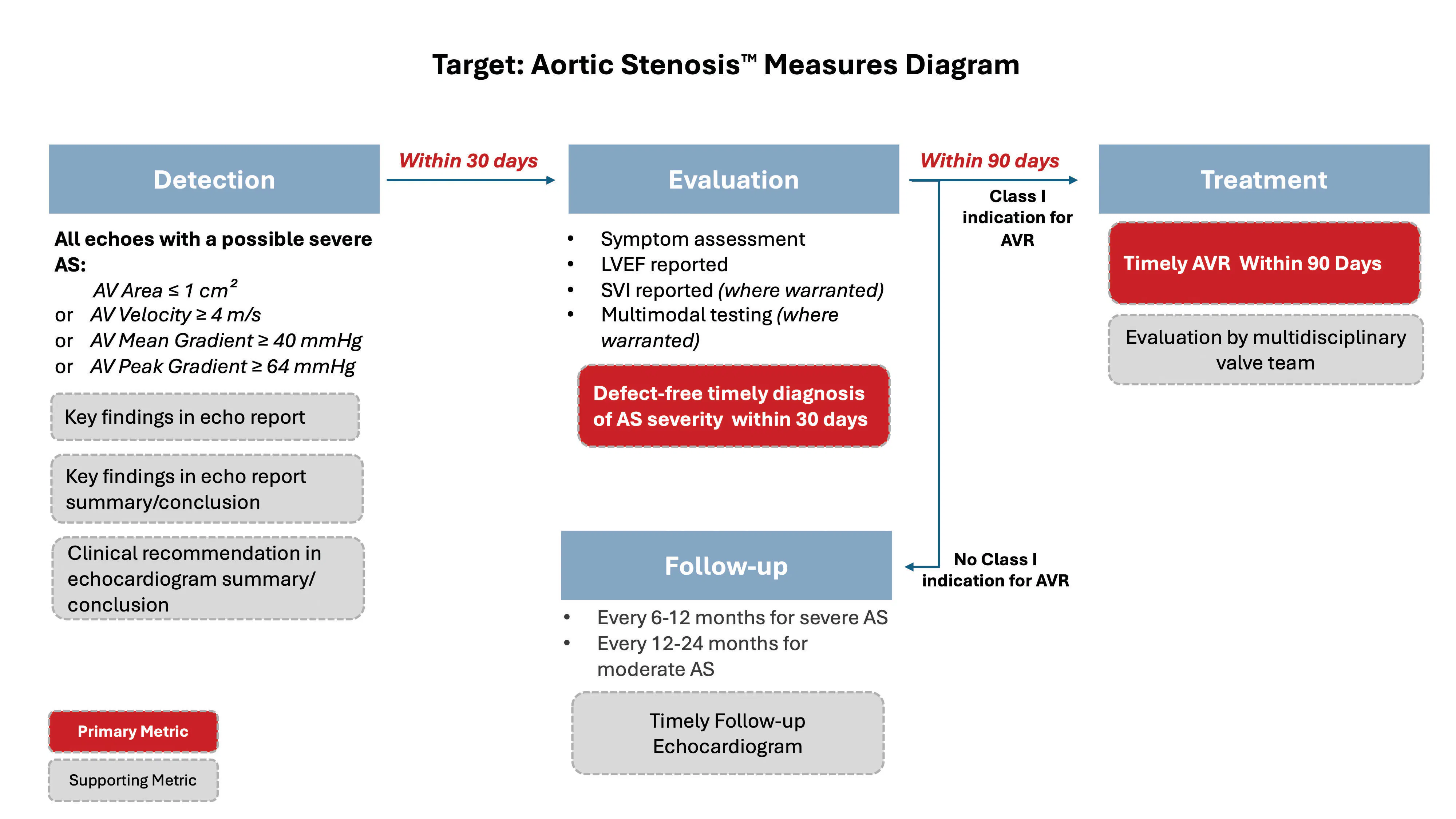
Figure 1. The AS care pathway and Target: Aortic Stenosis measures. AV, aortic valve; LVEF, left ventricular ejection fraction; SVI, stroke volume index.
Pilot Phase
The pilot phase of Target: Aortic Stenosis was announced at the AHA Scientific Sessions in 2019. Fifteen sites nationwide, diverse in geography, size, and patient demographics, enrolled more than 2,700 patients with moderate or severe AS in a learning collaborative designed to test new measures and data collection methods. Overall, patients with moderate and severe AS received follow-up echocardiography (95.6% within 24 months, 90.8% within 12 months). Echocardiography reports were largely complete (91.8%), and 68.4% underwent multidisciplinary evaluation for asymptomatic severe AS within 60 days. However, only about half (51.8%) of the patients underwent AVR within 90 days of diagnosis, highlighting ongoing gaps in timely referral and intervention.10 This pilot phase proved invaluable in identifying real-world implementation challenges. Through an interactive learning collaborative and engagement of multiple stakeholders, the scientific advisory group refined the program’s metrics and implementation strategies, laying the foundation for broader national adoption.
Phase II
Building on lessons learned during the pilot phase, Target: Aortic Stenosis identified three primary barriers to optimal, guideline-directed care: (1) echocardiographic identification of moderate or severe AS; (2) delayed referral to heart valve teams; and (3) challenges in multidisciplinary evaluation and shared decision-making. To address these gaps, the initiative refined its measures for phase II, which was announced at the AHA Scientific Sessions in 2022 (Figure 2). The primary performance metrics include:
- Timely treatment for severe AS, defined as the percentage of patients with a class I indication for AVR who receive definitive treatment (surgical aortic valve repair or transcatheter aortic valve replacement [TAVR]) within 90 days of initial diagnosis.
- Defect-free timely diagnosis of AS severity, defined as percentage of echocardiograms indicating potential severe AS in which all warranted diagnostic assessments are completed within a specific time frame.
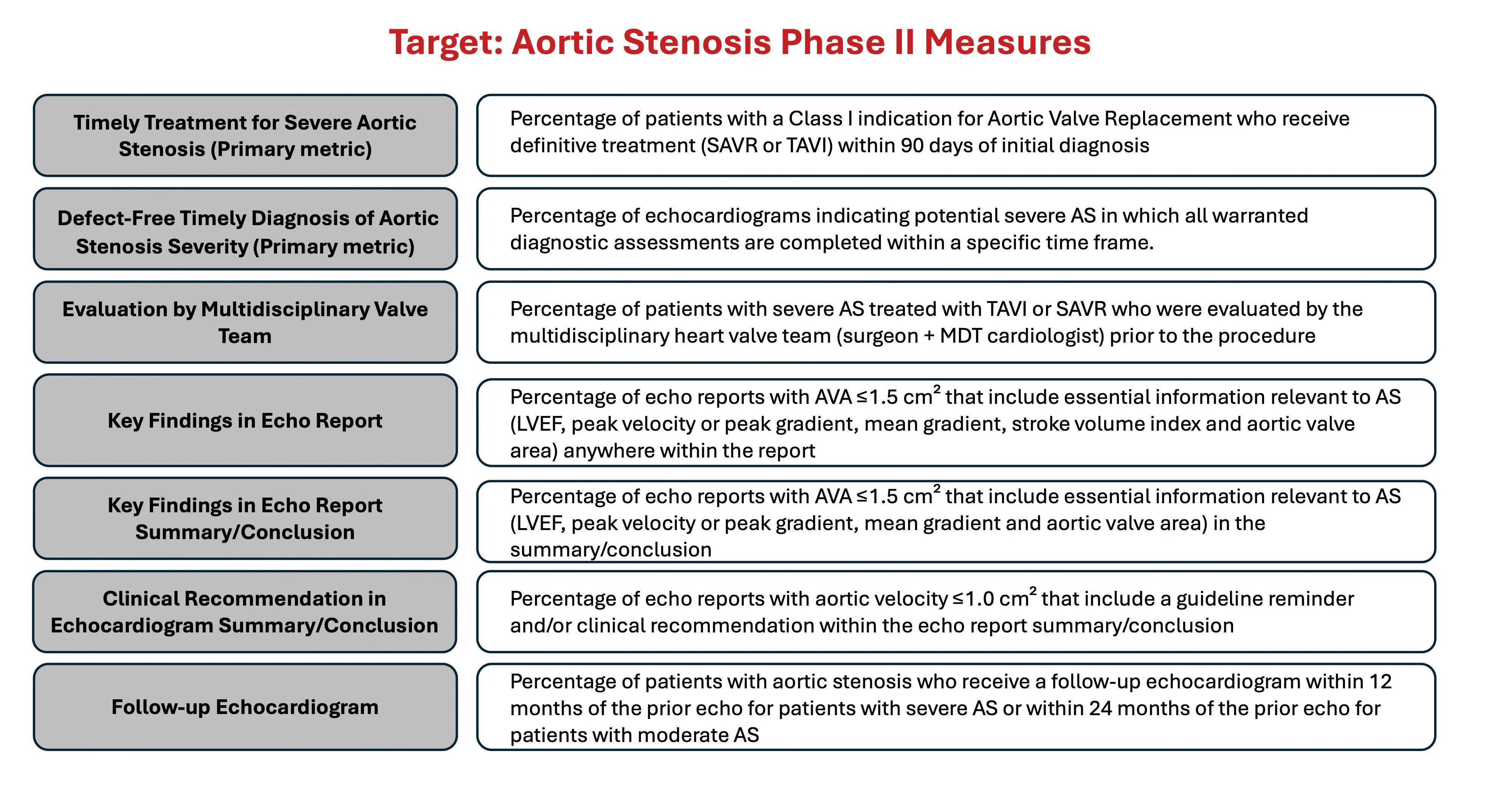
Figure 2. Performance measures of Target: Aortic Stenosis. AVA, aortic valve area; LVEF, left ventricular ejection fraction; MDT, multidisciplinary team; SAVR, surgical aortic valve replacement; TAVI, transcatheter aortic valve implantation.
Supporting measures include documentation of key aortic valve findings in the echocardiography report, completeness of the report summary, multidisciplinary heart valve team evaluation, and timely follow-up echocardiography. To date, Target: Aortic Stenosis has expanded to 80 hospitals across the United States, encompassing more than 14,000 patients. This growth reflects both the recognized need for systematic quality improvement in AS care and the practical value that participating sites have found in the program’s framework.
As the next step, the AHA introduced the Heart Valve Initiative at the 2025 AHA Scientific Sessions, with the aim of extending the program beyond AS to the broader spectrum of VHD and expanding participation to 200 hospitals. The key target goals of the new initiative over the next 5 years include improving adherence to guideline-directed management of VHD; expanding data collection within the existing Target: Aortic Stenosis registry to enhance measurement of asymptomatic and moderate AS; establishing a guideline-based heart valve certification program for hospitals; driving high-quality VHD care by expanding hospital recognition and public reporting, providing multimedia education for both health care professionals and patients; and launching a nationwide awareness campaign to improve public understanding of heart valve disease and support informed decision-making. Together, these efforts aim to ultimately drive earlier diagnosis and more timely, evidence-based treatment across the continuum of valve care.
KEY TAKEAWAYS FROM TARGET: AORTIC STENOSIS
Importance of Timing in AS Care
One of the most important contributions of Target: Aortic Stenosis is its explicit emphasis on timeliness in AS care. The initiative establishes clear benchmarks, including timely evaluation of AS severity within 30 days of initial echocardiographic detection and definitive treatment (ie, AVR) within 90 days for patients with class I indications. These time frames are consistent with the natural history of symptomatic severe AS, in which delayed AVR is associated with substantial clinical and economic consequences.13,14 Retrospective data demonstrated that delayed TAVR (> 90 days from diagnosis) was associated with higher 3-year mortality (19.5% vs 13.7%; hazard ratio [HR], 1.50; P < .01) and heart failure hospitalizations (38.4% vs 26.5%; HR, 1.59; P < .01) compared with timely TAVR. Delayed treatment was also associated with $36,740 in excess health care costs over 3 years, largely driven by increased hospitalizations. Importantly, these findings remained significant in analyses restricted to elective procedures.13 By defining concrete, time-based metrics, Target: Aortic Stenosis provides health care systems with actionable goals and enables meaningful performance measurement.
Don’t Wait for Symptoms
The Target: Aortic Stenosis population is intentionally defined using echocardiographic criteria that capture all patients with “potential” severe AS, thereby including individuals with either moderate or severe AS regardless of symptom status. This proactive approach promotes earlier consultation with (or referral to) the multidisciplinary heart valve team, based on clinical rationale.15
First, discordant echocardiographic measures or heterogeneous report interpretations of AS severity (eg, moderate-to-severe AS, restricted leaflet motion, paradoxical low-gradient AS) may generate uncertainty and do not necessarily alter management decisions. In some cases, the true severity of AS cannot be reliably determined from resting echocardiography alone, necessitating additional confirmatory testing.
Second, symptom assessment in the typically elderly AS population may be challenging, particularly in patients with limited mobility or multiple comorbidities. Symptoms may be underrecognized or misattributed and may not accurately reflect the hemodynamic burden of AS. Importantly, strong evidence indicates that by the time classic AS symptoms emerge, irreversible cardiac damage extending beyond the aortic valve may already be present.16
Third, early referral to the multidisciplinary team facilitates timely treatment planning and selection of the most appropriate intervention strategy. Even when AVR is not initially indicated or is deferred, proactive completion of pre-AVR assessments (such as gated CT angiography, evaluation of concomitant valvular or coronary disease, and dental clearance) minimizes delays if the patient later warrants intervention.
Finally, consistent with the latest recommendations of the European guidelines for management of VHD, recent randomized trials provide growing evidence that early AVR (either surgical or transcatheter) benefits selected asymptomatic patients with severe AS.17,18 Compared with conservative medical management, early intervention reduces composite cardiovascular events, driven largely by fewer cardiovascular hospitalizations and heart failure events.18,19 However, evidence supporting early intervention in patients with moderate AS remains limited and is the subject of ongoing investigation.20-22 The inclusion of moderate AS within surveillance protocols further underscores the need for proactive monitoring, ensuring timely follow-up echocardiography to detect disease progression before acute decompensation occurs.
Multidisciplinary Team and Shared Decision-Making
Target: Aortic Stenosis emphasizes the multidisciplinary heart valve team as a cornerstone of best-practice decision-making in AS management. The multidisciplinary team brings together cardiac surgeons, interventional cardiologists, imaging specialists, and other members of the care team to collaboratively assess disease severity, procedural risk, and treatment options. ACC/AHA guidelines for management of VHD recommend multidisciplinary evaluation for patients with severe VHD when intervention is considered (class I), and when treatment options are being discussed in: (1) asymptomatic patients with VHD; (2) patients who may benefit from valve repair versus valve replacement; and (3) patients with multiple comorbidities for whom valve intervention is considered (class IIa).23
In the context of expanding indications for valve intervention and the absence of established biomarkers and risk stratification tools, consultation with or referral to the multidisciplinary team is critical to ensure evidence-based discussion with patients regarding treatment options that integrate their preferences and goals of care. This requires transparent communication of procedural risks and benefits, comparison of reasonable treatment strategies, and consideration of timing. Results from the ongoing IMPACT SDM randomized trial are expected to provide evidence on the effectiveness of decision aid toolkits and clinician shared decision-making training in improving decision quality among patients with severe AS.24
Pragmatic Solutions: The Role of Artificial Intelligence and Digital Tools
The Target: Aortic Stenosis initiative underscores the need for pragmatic, scalable solutions to integrate quality measures into routine clinical workflows. Manual chart review and data abstraction, which were used during the pilot phase, are resource-intensive and difficult to sustain at scale.10 As the initiative expands, electronic health record–integrated notifications and automation are expected to play a growing supporting role. The DETECT AS trial demonstrated how a simple electronic nudge, highlighting echocardiographic findings suggestive of significant AS paired with patient-specific, guideline-based recommendations, can substantially increase rates of AVR among patients with severe AS, while also mitigating age- and sex-based disparities in AVR utilization.25 The effectiveness of automated screening and referral tools is also currently under active investigation.
Rapid advances in artificial intelligence (AI) offer even greater potential to strengthen and scale these approaches. AI-augmented tools could enable systematic screening of multimodal diagnostic data, including echocardiographic images, electrocardiograms, and phonocardiograms; support prediction of disease progression; identify reports missing key diagnostic parameters; and prioritize patients at higher risk of adverse outcomes or delayed treatment.26-31 When thoughtfully designed and validated, these tools can help mitigate disparities in care by reducing variability in clinical decision-making associated with provider bias and ensuring that all patients who meet predefined criteria receive appropriate attention.32
FUTURE DIRECTIONS
The Target: Aortic Stenosis initiative represents a paradigm shift in how quality care for AS is defined and measured. By expanding the focus beyond procedural outcomes to encompass the entire care continuum, it provides a framework for identifying and addressing the systematic gaps that leave many patients undertreated. Emerging data from this quality initiative and related research will highlight substantial opportunities for improvement at every stage of the patient journey. Notably, the initiative’s emphasis on measuring and reporting outcomes across diverse patient populations creates accountability for addressing disparities. By examining not only who receives treatment but also who does not, it brings visibility to inequities in earlier stages of care that have historically remained unmeasured.
Feedback from participating sites suggests that this framework enhances awareness, streamlines workflows, strengthens cross-team coordination, and elevates overall approaches to AS management. Looking ahead, the continued evolution of Target: Aortic Stenosis will be critical to achieving its ultimate goal: ensuring that every patient with significant AS receives timely, optimal, guideline-directed care.
1. Kodali SK, Velagapudi P, Hahn RT, et al. Valvular heart disease in patients ≥80 years of age. J Am Coll Cardiol. 2018;71:2058-2072. doi: 10.1016/j.jacc.2018.03.459
2. Osnabrugge RLJ, Mylotte D, Head SJ, et al. Aortic stenosis in the elderly: disease prevalence and number of candidates for transcatheter aortic valve replacement: a meta-analysis and modeling study. J Am Coll Cardiol. 2013;62:1002-1012. doi: 10.1016/j.jacc.2013.05.015
3. Nkomo VT, Gardin JM, Skelton TN, et al. Burden of valvular heart diseases: a population-based study. Lancet. 2006;368:1005-1011. doi: 10.1016/S0140-6736(06)69208-8
4. Iribarne A, Zwischenberger B, Hunter Mehaffey J, et al. The Society of Thoracic Surgeons adult cardiac surgery database: 2024 update on national trends and outcomes. Ann Thorac Surg. 2025;119:1139-1150. doi: 10.1016/j.athoracsur.2025.03.011
5. Carroll JD, Mack MJ, Vemulapalli S, et al. STS-ACC TVT Registry of transcatheter aortic valve replacement. Ann Thorac Surg. 2021;111:701-722. doi: 10.1016/j.athoracsur.2020.09.002
6. Lindman BR, Lowenstern A. The alarm blares for undertreatment of aortic stenosis: how will we respond? J Am Coll Cardiol. 2022;79:878-881. doi: 10.1016/j.jacc.2021.12.024
7. Tanguturi VK, Hung J. More TAVRs or targets in aortic stenosis? A call for targeted data tracking to improve our care of valvular heart disease. Circ Cardiovasc Qual Outcomes. 2023;16:e010073. doi: 10.1161/CIRCOUTCOMES.123.010073
8. Crousillat DR, Amponsah DK, Camacho A, et al. Racial and ethnic differences in the clinical diagnosis of aortic stenosis. J Am Heart Assoc. 2022;11:e025692. doi: 10.1161/JAHA.122.025692
9. Li SX, Patel NK, Flannery LD, et al. Trends in utilization of aortic valve replacement for severe aortic stenosis. J Am Coll Cardiol. 2022;79:864-877. doi: 10.1016/j.jacc.2021.11.060
10. Lindman BR, Fonarow GC, Myers G, et al. Target Aortic Stenosis: a national initiative to improve quality of care and outcomes for patients with aortic stenosis. Circ Cardiovasc Qual Outcomes. 2023;16:e009712. doi: 10.1161/CIRCOUTCOMES.122.009712
11. Jneid H, Chikwe J, Arnold SV, et al. 2024 ACC/AHA clinical performance and quality measures for adults with valvular and structural heart disease: a report of the American Heart Association/American College of Cardiology Joint Committee on Performance Measures. Circ Cardiovasc Qual Outcomes. 2024;17(4):e000129. doi: 10.1161/HCQ.0000000000000129
12. Lansac E, Veen KM, Joseph A, et al. The first International Consortium for Health Outcomes Measurement (ICHOM) standard dataset for reporting outcomes in heart valve disease: moving from device- to patient-centered outcomes. Innovations (Phila). 2025;20:133-147. doi: 10.1177/15569845241269309
13. Vemulapalli S, Russo M, Murphy S, et al. The clinical and economic consequences of delayed transcatheter aortic valve replacement. Struct Heart. Published online October 25, 2025.
14. Sethi A, Elmariah S, Gunnarsson C, et al. The cost of waiting for a transcatheter aortic valve replacement in Medicare beneficiaries with severe aortic stenosis. Struct Heart. 2024;8:100321. doi: 10.1016/j.shj.2024.100321
15. Cook CM, Pibarot P, Tarantini G, et al. Proactive management and treatment of aortic stenosis: an international expert perspective. J Am Coll Cardiol. 2026;87:414-438. doi: 10.1016/j.jacc.2025.10.074
16. Généreux P, Pibarot P, Redfors B, et al. Staging classification of aortic stenosis based on the extent of cardiac damage. Eur Heart J. 2017;38:3351-3358. doi: 10.1093/eurheartj/ehx381
17. Praz F, Borger MA, Lanz J, et al. 2025 ESC/EACTS guidelines for the management of valvular heart disease. Eur Heart J. 2025;46:4635-4736. doi: 10.1093/eurheartj/ehaf194
18. Généreux P, Banovic M, Kang DH, et al. Aortic valve replacement in asymptomatic severe aortic stenosis: a systematic review and meta-analysis. J Soc Cardiovasc Angiogr Interv. 2025;4:103663. doi: 10.1016/j.jscai.2025.103663.
19. Généreux P, Schwartz A, Oldemeyer JB, et al. Transcatheter aortic-valve replacement for asymptomatic severe aortic stenosis. N Engl J Med. 2025;392:217-227. doi: 10.1056/NEJMoa2405880
20. Van Mieghem NM, Elmariah S, Spitzer E, et al. Transcatheter aortic valve replacement in patients with systolic heart failure and moderate aortic stenosis: TAVR UNLOAD. J Am Coll Cardiol. 2025;85:878-890. doi: 10.1016/j.jacc.2024.10.070
21. Jean G, Van Mieghem NM, Gegenava T, et al. Moderate aortic stenosis in patients with heart failure and reduced ejection fraction. J Am Coll Cardiol. 2021;77:2796-2803. doi: 10.1016/j.jacc.2021.04.014
22. Khan KR, Khan OA, Chen C, et al. Impact of moderate aortic stenosis in patients with heart failure with reduced ejection fraction. J Am Coll Cardiol. 2023;81:1235-1244. doi: 10.1016/j.jacc.2023.01.032
23. Otto CM, Nishimura RA, Bonow RO, et al. 2020 ACC/AHA guideline for the management of patients with valvular heart disease: a report of the American College of Cardiology/American Heart Association Joint Committee on Clinical Practice Guidelines. Circulation. 2021;143:e72-e227. doi: 10.1161/CIR.0000000000000923
24. Sepucha K, Elmariah S, Valentine KD, et al. The improving treatment decisions for patients with aortic stenosis through shared decision making (IMPACT SDM) study: study protocol for a cluster randomized stepped wedge trial. Trials. 2024;25:820. doi: 10.1186/s13063-024-08640-6
25. Tanguturi VK, Abou-Karam R, Cheng F, et al. Electronic provider notification to facilitate the recognition and management of severe aortic stenosis: a randomized clinical trial. Circulation. 2025;151:1498-1507. doi: 10.1161/CIRCULATIONAHA.125.074470
26. Chorba JS, Shapiro AM, Le L, et al. Deep learning algorithm for automated cardiac murmur detection via a digital stethoscope platform. J Am Heart Assoc. 2021;10:e019905. doi: 10.1161/JAHA.120.019905
27. Elias P, Poterucha TJ, Rajaram V, et al. Deep learning electrocardiographic analysis for detection of left-sided valvular heart disease. J Am Coll Cardiol. 2022;80:613-626. doi: 10.1016/j.jacc.2022.05.029
28. Kwon J, Lee SY, Jeon K, et al. Deep learning-based algorithm for detecting aortic stenosis using electrocardiography. J Am Heart Assoc. 2020;9:e014717. doi: 10.1161/JAHA.119.014717
29. Poterucha TJ, Jing L, Ricart RP, et al. Detecting structural heart disease from electrocardiograms using AI. Nature. 2025;644:221-230. doi: 10.1038/s41586-025-09227-0
30. Yang F, Chen X, Lin X, et al. Automated analysis of doppler echocardiographic videos as a screening tool for valvular heart diseases. JACC Cardiovasc Imaging. 2022;15:551-563. doi: 10.1016/j.jcmg.2021.08.015
31. Sengupta PP, Shrestha S, Kagiyama N, et al. A machine-learning framework to identify distinct phenotypes of aortic stenosis severity. JACC Cardiovasc Imaging. 2021;14:1707-1720. doi: 10.1016/j.jcmg.2021.03.020
32. Forouzannia SM, Faggioni M, Zier LS, Elmariah S. Turning awareness into action: information technology-based solutions to address care gaps and disparities in valvular heart disease. J Heart Valve Soc. 2025;2:392-402. doi: 10.1177/30494826251399512
Advertisement
Advertisement