Advertisement
Advertisement
March/April 2026
Preparing Health Systems for Broader TAVR Access
A three-pillar framework for diagnostics, clinical workflows, and operational planning to support expanding TAVR eligibility.
By Sumit R. Kumar, MD, MPA; Natalia C. Berry, MD, MBA, FACC; James T. DeVries, MD, FACC; Henry J. Tannous, MD; and Michael N. Young, MD, FACC, FSCAI, RPVI
Over the past 2 decades, transcatheter aortic valve replacement (TAVR) has fundamentally reshaped the management of aortic stenosis (AS). Initially reserved for patients at prohibitive or high surgical risk, TAVR indications have expanded to lower-risk populations, supported by randomized evidence demonstrating noninferiority to surgical aortic valve replacement. More recently, findings from the EARLY TAVR trial marked a pivotal inflection point by evaluating earlier intervention in patients with asymptomatic severe AS, challenging the traditional paradigm of symptom-triggered intervention and supporting a more proactive strategy in carefully selected patients.1 In light of EARLY TAVR, the Centers for Medicare & Medicaid Services recently reopened the National Coverage Determination for TAVR to include this asymptomatic patient population. Although the initial feedback window has concluded, the process remains active and will reopen for public comment and regulatory revision following release of the proposed decision memo in the ensuing year.2
Building on this momentum, the PROGRESS and EXPAND TAVR II trials seek to extend intervention earlier in the disease course by evaluating TAVR in patients with symptomatic moderate-severity disease.3,4 As TAVR moves upstream in the natural history of AS, the field’s focus shifts from the microcosm of the procedure to the vantage point of a larger health system regarding access to care. The central challenge will be streamlining clinical workflows, diagnostic pathways, and procedural throughput. Importantly, the operational infrastructure needs to evolve in a way that supports a rapidly expanding population of patients eligible for TAVR across the AS disease spectrum.
To address this challenge, we propose a three-pillar framework to support scalable TAVR workflows across the health system, proactive diagnostics, integrated clinical workflows, and operational strategies (Figure 1).
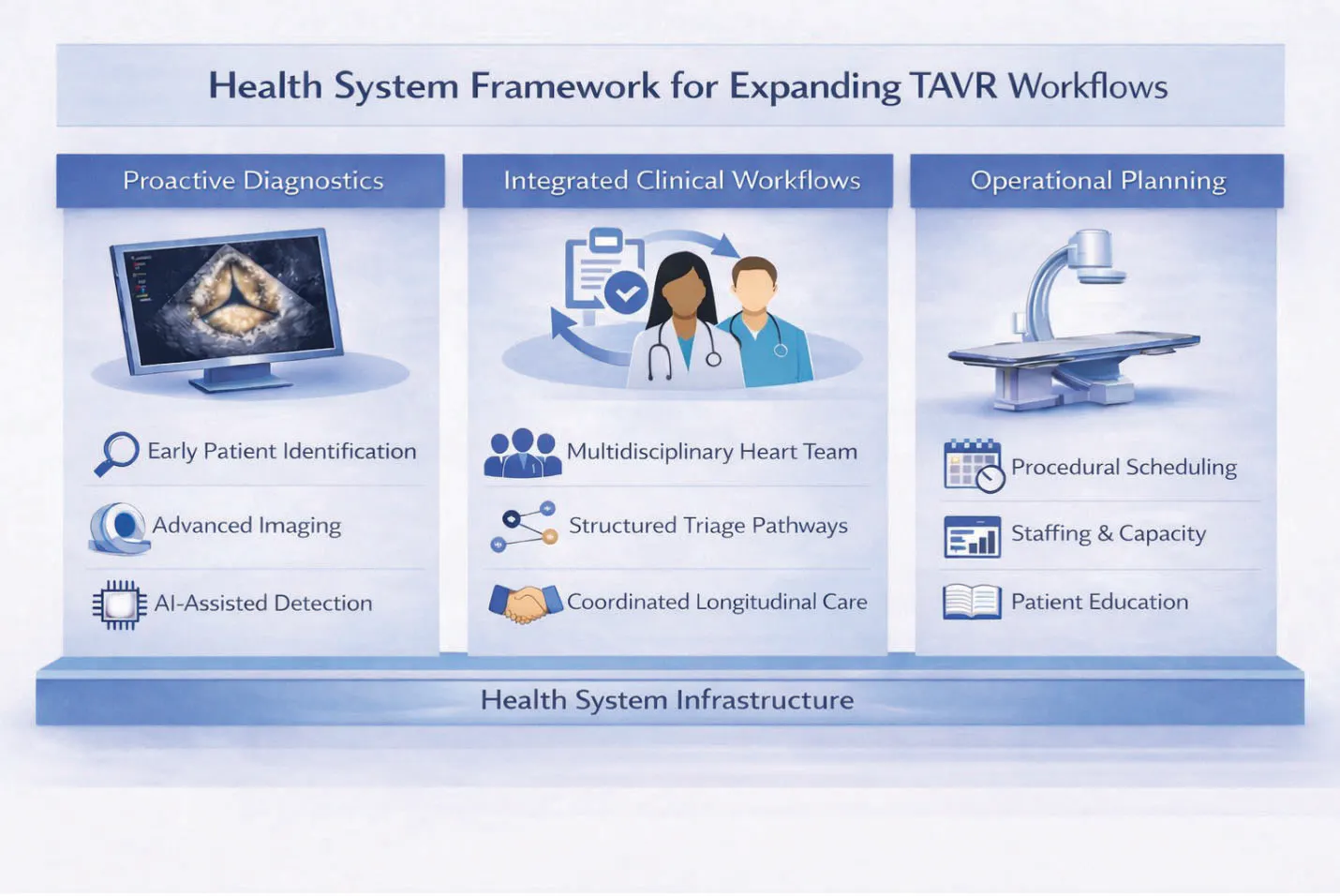
Figure 1. Three-pillar framework to support expanding TAVR workflows across the health system. Image generated with assistance from ChatGPT.
PILLAR 1: PROACTIVE DIAGNOSTICS
As TAVR moves earlier in the disease course, diagnostic strategies must evolve from episodic case finding and referral to system-level identification and longitudinal risk stratification. One promising approach is the incorporation of automated echocardiography triggers embedded within the electronic medical record (EMR). A randomized trial of EMR notification to providers after echocardiography improved recognition of severe AS, increased rates of earlier intervention, and reduced delays to treatment. This supports the concept that system-level interventions can meaningfully alter care pathways.5 Although this EMR intervention targeted severe disease, similar trigger-based approaches may become increasingly effective as the eligible population expands upstream. Furthermore, there are emerging artificial intelligence (AI)–based technologies that may aid in the early detection of AS from standard 12-lead electrocardiograms.6
In parallel, health systems should standardize multimodality imaging pathways to reduce diagnostic ambiguity. Transthoracic echocardiography remains foundational, but earlier stage disease and low-flow states increase the frequency of discordant findings. Guideline-aligned pathways support aortic valve calcium scoring by cardiac CT to adjudicate severity when echocardiographic parameters are inconclusive, particularly in low-gradient phenotypes.7 Consistent acquisition and reporting standards, as emphasized by the American Society of Echocardiography, are essential to ensure downstream clinical decisions are reliable and reproducible.8 Cardiac MRI has demonstrated noninferiority to CT for TAVR procedural planning in selected patients and offers a contrast and radiation sparing alternative that may be particularly useful in patients with chronic kidney disease.9 By integrating echocardiography, CT, and cardiac MRI into defined pathways, health systems can move toward improving timely TAVR referrals as indications expand.
With growing interest in earlier intervention, efforts to identify at-risk populations have increased. Polygenic risk scores for AS have been developed; however, the most recent models demonstrate only modest improvements in discrimination and are not yet suitable for routine clinical use.10 From a health system standpoint, Target Aortic Stenosis is a national initiative supported by the American Heart Association that aims to improve earlier detection and treatment of AS, thereby reducing gaps and disparities in care.11
PILLAR 2: INTEGRATED CLINICAL WORKFLOWS
As treatment pathways shift upstream, clinical workflows must adapt to accommodate increasing patient volume without sacrificing quality and outcomes. Structural heart programs must function as longitudinal, multidisciplinary care platforms rather than episodic procedural consult services focused solely on intervention. Guidelines from North American and European societies emphasize multidisciplinary heart teams and dedicated valve centers in the management of valvular heart disease.12,13
Contemporary analyses of heart team models further emphasize improved interdisciplinary collaboration, guideline adherence, and shared decision-making and provide practical guidance on building and optimizing these teams.14 As TAVR indications continue to expand, the heart team treatment paradigm should shift from a purely binary procedural decision to a more holistic strategy—providing trajectory management, prognosticating disease progression, and engaging continued shared decision-making over time. In this way, heart teams operate as adaptive clinical decision frameworks, synthesizing multimodality imaging, clinical status, and patient-centered considerations to guide indication, timing, and appropriateness of intervention.
Pragmatically, structured triage algorithms can help categorize patients according to disease severity and risk:
- Symptomatic severe AS
- Symptomatic severe AS with high-risk features (eg, rapid progression, reduced left ventricular strain
- Moderate AS with left ventricular dysfunction or other markers of adverse remodeling (eg, myocardial fibrosis, pulmonary hypertension, markers of “cardiac damage”)
These categories should inform urgency of evaluation, selection of ancillary testing (including exercise testing in selected asymptomatic patients), and timing of multidisciplinary discussion. Embedded AI-facilitated triage logic within EMR order sets and clinic templates—supported by nurse coordinators or advanced practice providers—may streamline patient flow, reduce delays, and minimize duplicative testing. Furthermore, the creation of institution-specific EMR panels may allow for the comprehensive tracking of each patient’s course from time of referral, to diagnostic testing and treatment, to longitudinal follow-up. Ultimately, multidisciplinary valve conferences remain essential to decisions on treatment approach and timing, particularly for the most complex AS cases. This team-based discussion ensures alignment across imaging findings, disease severity, heart failure status, and procedural considerations.
PILLAR 3: ENHANCED OPERATIONAL PLANNING
The final pillar addresses the operational realities of expanded TAVR eligibility. Earlier intervention will increase demand for valve surveillance, structural evaluations, and procedures, requiring proactive operational planning across multiple service lines. From a procedural standpoint, catheterization laboratories may require dedicated TAVR blocks, expanded anesthesia availability for higher-risk cases, and staffing models that support more efficient throughput without compromising safety. Imaging services, particularly echocardiography laboratories, will face parallel pressure as more patients enter longitudinal surveillance pathways, underscoring the need for protocolized follow-up intervals and optimized scheduling templates. Echocardiography laboratories will also remain central to TAVR cases requiring dedicated transesophageal imaging, like BASILICA (bioprosthetic or native aortic scallop intentional laceration to prevent iatrogenic coronary artery obstruction). From a radiology perspective, the high demands for cardiac CTA, which can often be the gatekeeper to TAVR access, are anticipated to increase as well.
The Vancouver 3M (multidisciplinary, multimodality, but minimalist) clinical TAVR pathway served as a pioneering model on how to streamline periprocedural care in a safe, expedient, and systems-conscious manner.15 This minimalist pathway has translated to significant in-hospital and 30-day cost savings.16 In 2022, investigators with Cleveland Clinic published a study and protocol that demonstrated the feasibility of a same-day discharge pathway for TAVR.17 Furthermore, the minimalist TAVR movement is not limited solely to systems throughput; it can also be applied to intraprocedural care delivery such as nurse-led and local sedation. The DOUBLE-CHOICE trial demonstrated that a “minimalist approach” for TAVR (ie, local sedation) was noninferior when compared to “standard of care” conscious sedation with respect to safety and 30-day outcomes.18
Programmatically, health systems can leverage historical imaging and referral data to model projected growth in AS evaluations and TAVR volume, aligning resources with anticipated demand rather than reacting to downstream bottlenecks. Earlier intervention may also have the potential to shift utilization patterns and costs. For example, in EARLY TAVR, proactive treatment reduced unplanned cardiovascular hospitalizations compared with clinical surveillance, suggesting that upstream capacity investment may offset downstream acute care utilization.1
Last but not least, patient engagement is a critical operational consideration. As intervention moves earlier, many patients will be asymptomatic or minimally symptomatic, making shared decision-making more complex and nuanced. Structured educational tools, patient decision aides, and longitudinal counseling are essential to ensure patients understand the rationale, benefits, risks, and uncertainties associated with earlier intervention.
CONCLUSION
AS management is at an important inflection point. With randomized evidence supporting earlier intervention in asymptomatic severe AS and ongoing trials exploring treatment in moderate disease, traditional diagnostic and care pathways are no longer sufficient. The implications extend beyond the catheterization laboratory, impacting outpatient practices, imaging services and other diagnostic testing, and system-level capacity planning. Health systems must evolve toward proactive and integrated diagnostics, coordinated clinical workflows, and thoughtful operational planning. This three-pillar framework provides a practical roadmap for adapting to this new era. By embracing interdisciplinary coordination and system-level redesign, cardiovascular service lines can deliver timely, evidence-aligned care to an expanding population of patients, improving outcomes while redefining standards in valvular heart disease management.
1. Généreux P, Schwartz A, Oldemeyer JB, et al; EARLY TAVR Trial Investigators. Transcatheter aortic-valve replacement for asymptomatic severe aortic stenosis. N Engl J Med. 2025;392:217-227. doi: 10.1056/NEJMoa2405880
2. Centers for Medicare & Medicaid Services. Transcatheter aortic valve replacement (TAVR) (CAG-00430R). Medicare coverage database. Accessed February 17, 2026. https://www.cms.gov/medicare-coverage-database/view/nca.aspx?ncaid=321
3. PROGRESS: management of moderate aortic stenosis by clinical surveillance or TAVR. Clinicaltrials.gov website. Accessed February 23, 2026. https://clinicaltrials.gov/study/NCT04889872
4. Evolut™ EXPAND TAVR II pivotal trial. Clinicaltrials.gov website. Accessed March 6, 2026. https://clinicaltrials.gov/study/NCT05149755
5. Tanguturi VK, Abou-Karam R, Cheng F, et al. Electronic provider notification to facilitate the recognition and management of severe aortic stenosis: a randomized clinical trial. Circulation. 2025;151:1498-1507. doi: 10.1161/CIRCULATIONAHA.125.074470
6. Segar MW, Lambeth KD, Postalian A, et al. Validation and longitudinal trajectory analysis of an AI-based ECG model for aortic stenosis: from community screening to pre-TAVR risk stratification. Eur Heart J Digit Health. 2026;7:ztag018. doi: 10.1093/ehjdh/ztag018
7. Elkaryoni A, Huded CP, Saad M, et al. Normal-flow low-gradient aortic stenosis: comparing the U.S. and European guidelines. JACC Cardiovasc Imaging. 2024;17:926-936. doi: 10.1016/j.jcmg.2024.03.005
8. Baumgartner H, Hung J, Bermejo J, et al. Recommendations on the echocardiographic assessment of aortic valve stenosis: a focused update from the European Association of Cardiovascular Imaging and the American Society of Echocardiography. J Am Soc Echocardiogr. 2017;30:372-392. doi: 10.1016/j.echo.2017.02.009
9. Reindl M, Lechner I, Holzknecht M, et al. Cardiac magnetic resonance imaging versus computed tomography to guide transcatheter aortic valve replacement: a randomized, open-label, noninferiority trial. Circulation. 2023;148:1220-1230. doi: 10.1161/CIRCULATIONAHA.123.066498
10. Small AM, Melloni GEM, Kamanu FK, et al. Novel polygenic risk score and established clinical risk factors for risk estimation of aortic stenosis. JAMA Cardiol. 2024;9:357-366. doi: 10.1001/jamacardio.2024.0011
11. Lindman BR, Fonarow GC, Myers G, et al. Target Aortic Stenosis: a national initiative to improve quality of care and outcomes for patients with aortic stenosis. Circ Cardiovasc Qual Outcomes. 2023;16:e009712. doi: 10.1161/CIRCOUTCOMES.122.009712
12. Otto CM, Nishimura RA, Bonow RO, et al. 2020 ACC/AHA guideline for the management of patients with valvular heart disease: executive summary: a report of the American College of Cardiology/American Heart Association Joint Committee on Clinical Practice Guidelines. Circulation. 2021;143:e35-e71. Published correction appears in Circulation. 2021;143:e228; Circulation. 2021;143:e784. doi: 10.1161/CIR.0000000000000932
13. Vahanian A, Beyersdorf F, Praz F, et al; ESC/EACTS Scientific Document Group. 2021 ESC/EACTS guidelines for the management of valvular heart disease. Eur Heart J. 2022;43:561-632. Published correction appears in Eur Heart J. 2022;43:2022. doi: 10.1093/eurheartj/ehab395
14. Lee C, Tully A, Fang JC, et al. Building and optimizing the interdisciplinary heart team. J Soc Cardiovasc Angiogr Interv. 2023;2:101067. doi: 10.1016/j.jscai.2023.101067
15. Wood DA, Lauck SB, Cairns JA, et al. The Vancouver 3M (multidisciplinary, multimodality, but minimalist) clinical pathway facilitates safe next-day discharge home at low-, medium-, and high-volume transfemoral transcatheter aortic valve replacement centers: the 3M TAVR study. JACC Cardiovasc Interv. 2019;12:459-469. doi: 10.1016/j.jcin.2018.12.020
16. Butala NM, Wood DA, Li H, et al; 3M-TAVR Investigators. Economics of minimalist transcatheter aortic valve replacement: results from the 3M-TAVR economic study. Circ Cardiovasc Interv. 2022;15:e012168. doi: 10.1161/CIRCINTERVENTIONS.122.012168
17. Krishnaswamy A, Isogai T, Agrawal A, et al. Feasibility and safety of same-day discharge following transfemoral transcatheter aortic valve replacement. JACC Cardiovasc Interv. 2022;15:575-589. doi: 10.1016/j.jcin.2022.01.013
18. Feistritzer HJ, Ender J, Lauten P, et al. Peri-interventional anesthesia strategies for transcatheter aortic valve implantation: a multicenter, randomized, controlled, noninferiority trial. Circulation. 2025;152:1526-1537. doi: 10.1161/CIRCULATIONAHA.125.076557
Advertisement
Advertisement