Advertisement
Advertisement
July/August 2026
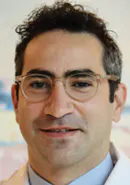
An Interview With Jesse Kane, MD
Dr. Kane discusses simulation-based training for interventional cardiology, innovation in complex PCI and CTO, and the importance of team growth and development in the cath lab.
What drew you to interventional cardiology, and what aspects have kept you engaged through the course of your career?
Management of ST-segment elevation myocardial infarction (STEMI) and cardiogenic shock is really what sparked my interest. The ability to rapidly change the clinical outcome and see immediate results right before your eyes was amazing to me.
I love to work with my hands, use my brain, and connect with people. I’ve found that interventional cardiology allows you to develop a practice across all three of these, and that is what has kept me engaged.
What questions are you most eager to answer in your clinical research these days?
It’s not exactly clinical research, but my biggest focus right now is on developing a simulation course and models, almost like flight simulators, for interventional cardiologist and cath lab teams.
It can be challenging in the moment to face complications. Complication scenarios are encountered relatively rarely, and the cath lab team then has to try managing them in life-threatening circumstances. We need to develop simulations and models that make complications feel routine, so we can make the right decisions in the moment. My current goal is to create team-based models and comprehensive simulators that allow interventional cardiologists and cath lab teams to practice complication management and better understand the toolbox for these challenges.
You’ve placed a clear priority on mentorship and professional community for your career. What advice would you share for someone looking to approach mentorship in a mutually beneficial way? For early career physicians, what are some practical ways to start building a strong professional community?
Some people learn from books or interacting with artificial intelligence, and others learn from videos or hands-on experience. But, there is no replacement for human connection and mentorship. I am a product of the amazing people who trained me. I like to think I have taken parts of their practices with me into every patient encounter.
From starting to mentor people myself, I’ve learned that the greatest gift a mentee can provide is enthusiasm, a true interest in the field, and coachability. I would encourage early career physicians to find someone whose work or practice really inspires you, reach out, and see how you can learn from them. Explore ways to collaborate with research, or work with them in a clinical setting. Figure out how you can contribute to a potential mentor’s mission. Prioritize direct interactions (phone or in-person) over emails. Prioritize relationships over titles, positions, and building a curriculum vitae.
You have been integral to the development of the complex percutaneous coronary intervention (PCI) program at University of Vermont (UVM). What do you think are the key building blocks to a successful PCI program?
- Pick the right practice and environment: When I first visited UVM, I had a sense that this was a group already doing some innovative and cool things and that they wanted to grow. They had the underlying resources to build a complex coronary tool kit and a committed staff who knew how to manage complex patients. In other words, the building blocks were already there, and all I had to do was help to put things together.
- Build relationships: Our program would not have reached this point if I worked in a silo. My partners and nursing team have been extremely supportive of this work, in part because of the investment I had made to try to make our institution better. Partners have scrubbed with me for new challenges, and nurses have been willing to go the extra mile for a longer case. We all have different goals in our work, and those goals are met through collaboration. The better our whole system functions, the better our complex PCI program will be. A rising tide lifts all boats.
- Teach, teach, teach: To be successful, you really need to have all team members practicing at the highest scopes of their practices. Teaching techniques, equipment, procedural steps, and theory is essential and helps develop the people around you.
- Demonstrate impact: Show the impact of your work, whether through patient testimonials or overall improvement in success and outcomes for patients. Having your group and the greater region being aware of the work we do and the impact it has on patients’ lives helps bring energy to the program.
- Keep building: I am very grateful for the program we have developed over the past years, but there is always room for improvement, efficiency, and impact. It’s important to continue evolving. I am always trying to learn from other programs and operators to see what is working from their perspective. I can then bring those successes to my own lab.
What do you think are the most promising new frontiers in the world of complex PCI?
Safety of procedures and durability of results. I think the question for complex PCI and chronic total occlusion (CTO) interventions has shifted from, “Can we get these arteries open successfully?” to “How can we do this more safely, and how can we keep the arteries open?”
Over recent years, there has been an evolution for CTO PCI, with staging procedures such as STAR (subintimal tracking and reentry) and SPM (subintimal plaque modification). Although these techniques need to be explored further, I think they help provide potentially safer CTO PCI approaches. I have also been excited about recent drug-coated balloon (DCB) studies, including hybrid stent and DCB strategies in diffuse disease and DCBs in bifurcation lesions. Although many questions remain, I am excited to see more trial outcomes data in this space.
CTO PCI is a primary clinical interest of yours, and you’ve recently been exploring use of the subintimal space and “investment” procedures. What signals tell you when a case is better served as an investment procedure rather than a complete revascularization attempt? How has having investment procedures as an option changed your overall approach to CTO PCI?
First are the anatomic and patient factors: Is the patient elderly? Do they have renal disease? What is their overall cardiac function? What collaterals do they have to the occluded territory? Will I have to cross an epicardial or a sole collateral where ischemia may not be tolerated?
Second are technical factors. Do they have reasonable antegrade or retrograde options? WilI I have the guide support needed to complete the procedure? Have other steps of the algorithm failed?
As these factors add up, I will often consider a staged procedure either up front or as a bailout to a traditional algorithmic approach. The key concept here is to ensure you change the game and increase the probability for success if success cannot be reached safely in a single procedure.1
In a recent publication, you and colleagues evaluated trends in use of a microaxial flow pump (mAFP) for select patients with STEMI complicated by cardiogenic shock, suggesting that mortality benefit is not uniform across all patient groups.2 Where do you think the field most lacks clarity when it comes to who benefits from these devices? How does this influence your decision-making for patient selection for mechanical circulatory support (MCS)?
Our study essentially demonstrated that patients aged > 75 years did not derive the same benefit of mAFP that younger patients did.2 The key challenge of MCS and mAFP is not the lack of therapeutic/hemodynamic benefit but rather the inability to tolerate the therapy.
While patients get great hemodynamic support with these devices, they often face challenges that can increase mortality rates: limb ischemia, hemolysis, renal injury, and bleeding complications. The question really is not which patient will benefit from these devices, but rather who will be able to tolerate the therapy and for how long. In many cases, very sick or crashing patients will have not a clear alternative to placement of these devices, but we need to focus on quickly removing them and developing systems and teams that can manage and limit the complications. Hopefully, in the years ahead, we will have devices that are better tolerated by patients.
What practical advice would you give regarding integrating advanced techniques while keeping care aligned with each patient’s individual needs and goals?
Complex PCI is just as much about the conversations you have outside of the cath lab as it is the techniques and tools you use in the lab. Understanding a patient’s overall health and functional status is a key place to start. You then really need to understand the patient’s overall goals, values, and preferences for therapy. Once the informed and shared decision is made, you will know what your aim is for therapy, whether a procedure is appropriate, and what work to take on in the lab. This really is the art of medicine.
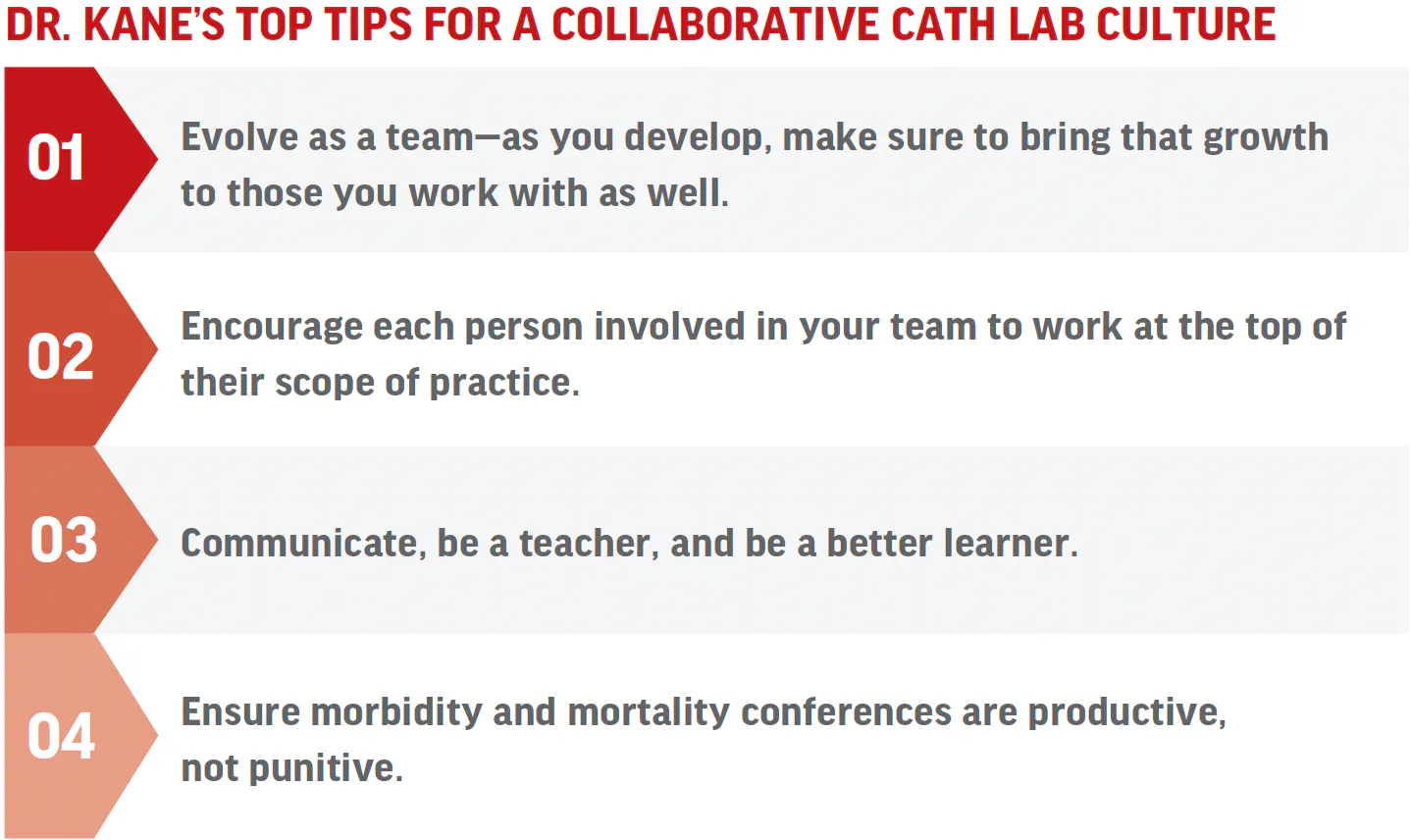
I review the films closely and will often try to talk out the plan for the case with a fellow or the team I am working with. I also try to have these complex cases be a routine part of my practice. You are what you do often, and if that is complex and challenging cases, then at a certain point, this will start to feel more routine.
What are some routines that help you stay balanced on busy and/or stressful case days?
I think the answer to this question has shifted throughout my career. I have a 10-month-old at home, so I wouldn’t say I have the ideal health and lifestyle routine going for me at this time. I try to take a few moments every day to ask myself big questions about the meaning, purpose, and values that I wish to cultivate in the work I do. Having a deeper understanding of my day to day helps me find focus and eases much of the stress of the work.
1. Kane JA, Tiwana J, Carlino M, et al. Sub-intimal tracking and re-entry and investment procedures: current applications and future directions. Am J Cardiol. 2024;232:26-33. doi: 10.1016/j.amjcard.2024.09.009
2. Cordova Sanchez A, Kane J, Gupta T, et al. National trends in Impella utilization for older adult patients with ST-elevation myocardial infarction complicated by cardiogenic shock. J Soc Cardiovasc Angiogr Interv. 2025;5:104056. doi: 10.1016/j.jscai.2025.104056
Advertisement
Advertisement
Interested in reading more interviews?
To read more interviews with thought leaders in the interventional cardiology field, check out our Profiles & Perspectives hub.
Read More