Advertisement
Advertisement
January/February 2026
Severe Calcifications in Chronic Total Occlusions
Is perfection the enemy of good?
The presence of a coronary chronic total occlusion (CTO), defined as the complete occlusion of an artery with thrombolysis in myocardial infarction (TIMI) 0 flow for at least 3 months, is associated with adverse long-term cardiovascular outcomes.1-3 In patients with refractory angina, CTO percutaneous coronary intervention (PCI) can provide significant improvement in angina and overall quality of life.4 Despite advances in technology and techniques, CTO PCI can continue to present a significant challenge for operators due to ambiguity of the proximal cap location and vessel course, as well as the histopathologic characteristics of occlusions that include a mixture of organized thrombus, fibrofatty components, and calcified plaque.5,6 Significant calcification is present in up to 59% of CTOs7,8 and is more prevalent in occlusions of longer duration and vessels with a prior bypass graft, which is attributed to accelerated native vessel atherosclerosis and reduced shear stress due to competitive flow from the graft. Calcification in CTOs is associated with lower procedural success rates and increased complications. Several multivariate analyses from large CTO registries have shown calcium to be a consistent independent predictor of both success and safety, resulting in it being a key component of several CTO complexity scores.9-11 In non-CTO PCI, multiple studies have shown that coronary calcification is associated with a higher prevalence of stent underexpansion, contributing to higher rates of stent failure and long-term adverse cardiovascular events.12,13 The objective of this article is to discuss, specifically in CTO PCI, the identification and quantification of calcium, the procedural challenges it presents, the efficacy and safety of calcium modification strategies, and future approaches to improve procedural outcomes.
IDENTIFICATION AND ASSESSMENT OF CALCIUM IN CTOs
Although calcium can be detected on coronary angiography, sensitivity and specificity are low in nonocclusive disease, particularly with mild-to-moderate calcification. In contrast, with the high prevalence of severe calcium in CTOs, angiographic assessment is more sensitive. Coronary CTA (CCTA) is a valuable noninvasive diagnostic tool to assess coronary anatomy. In addition, in CTO PCI, preprocedural CCTA with three-dimensional reconstruction can supplement dual-injection coronary angiography in clarifying the vessel course and anatomic characteristics of the occlusive segment. Recent advances in CCTA acquisition and analysis allow more precise identification of calcium location, distribution, mass, and density within the artery (Figure 1). Multiple studies have now shown that the presence of > 50% cross-sectional calcium on CCTA is an independent predictor of CTO PCI failure.14,15 Preprocedural calcium analysis allows an operator to anticipate problems crossing the proximal cap and navigating the occlusive segment, facilitate planning for the use of the most appropriate crossing techniques, and consider the need and appropriateness of advanced calcium modification devices. The key limitation is the current lack of randomized data to confirm the impact of preprocedural CCTA on CTO PCI outcomes.
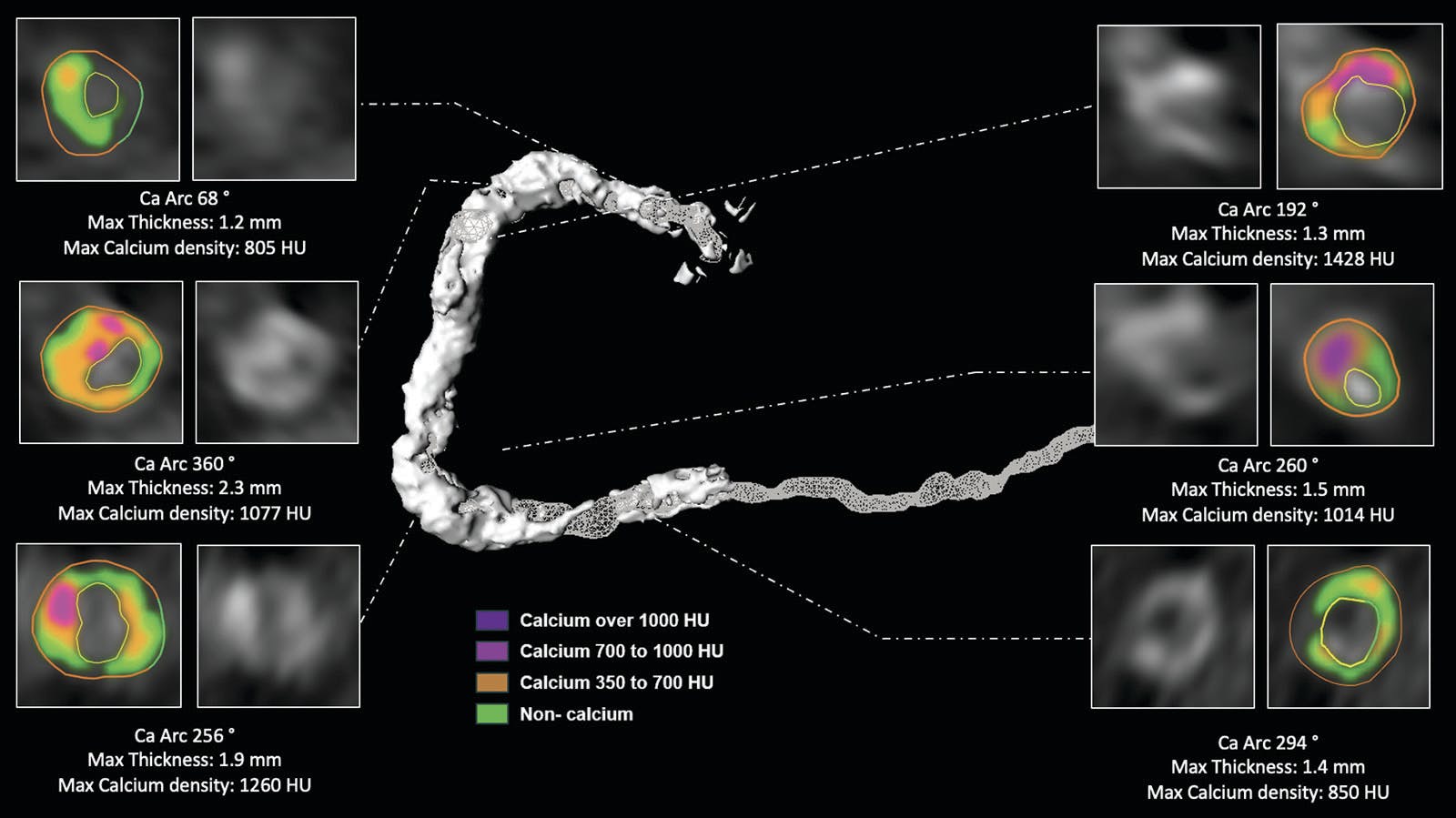
Figure 1. Calcium distribution in a right coronary artery CTO.
After crossing an occlusive segment with a guidewire, intravascular imaging is critical to characterize the composition of the occlusive plaque and determine whether the track is entirely intraplaque or there is extraplaque tracking. Intravascular ultrasound (IVUS) remains the main imaging modality in CTO PCI, avoiding the potential risk of expanding the extraplaque space with the hydraulic force required to clear blood when using optical coherence tomography (OCT). In the PROGRESS-CTO registry, OCT was used in 3% compared to IVUS in 38% of all CTO PCIs.16
IVUS has high sensitivity, detecting calcium in up to 96% of CTOs compared to 61% on angiography.17 In addition, IVUS can identify the location and distribution of calcium, which is thought to be most prevalent at the proximal cap, then within the occlusive segment, and least prevalent at the distal cap.18 The exception is in vessels with a prior bypass graft where the distal cap, like the proximal cap, is more likely to be calcified due to its exposure to aortic pressure. Furthermore, IVUS allows both the morphology and severity of calcium to be determined, with multiple morphologies frequently seen within long occlusive segments (Figure 2). After crossing a CTO intraplaque, the approach to assessing and treating the calcified plaque is the same as in nonocclusive disease. However, this is not the case after crossing extraplaque. The technique of dissection reentry, tracking extraplaque around the occlusive plaque, and reentering the lumen is itself a form of plaque modification, displacing the intimal calcified plaque and creating a pseudonodule (Figure 2). This results in a vulnerable apposing vessel wall, issues with wire bias, reduced efficacy, and increased risk with all the calcium modification devices.
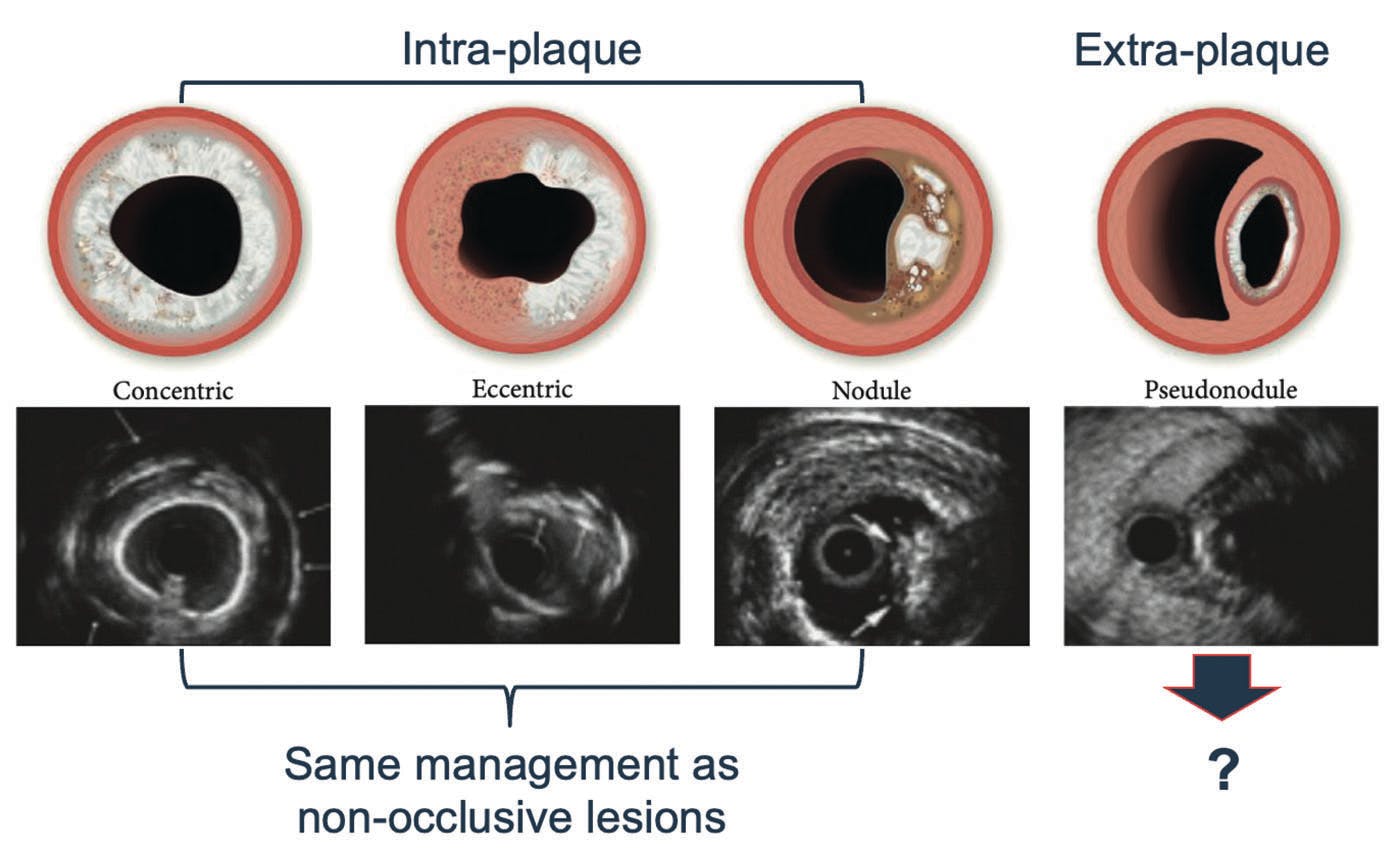
Figure 2. Calcium management in CTO lesions. Adapted from Øksnes A, Cosgrove C, Walsh S, et al. Intravascular lithotripsy for calcium modification in chronic total occlusion percutaneous coronary intervention. J Interv Cardiol. 2021;2021:9958035. doi: 10.1155/2021/9958035
CALCIUM AND CTO PCI PROCEDURAL CHALLENGES
The upfront knowledge from angiography or CCTA that a CTO is severely calcified significantly influences the procedural setup and planning, allowing the operator to anticipate the need for more antegrade guide and guide extension support and more advanced crossing techniques.
With the knowledge that there is severe calcium at the proximal cap, an operator would anticipate the need for early escalation to higher tip load wires, the use of techniques to go around the cap (balloon-assisted subintimal entry [BASE], side-BASE, or scratch-and-go), or to switch to a retrograde approach. The detection of calcium at the proximal cap by CCTA or IVUS can be helpful when the location of the cap is ambiguous. Intraprocedurally, with IVUS, this requires the presence of a side branch at the proximal cap that is large enough to accommodate an imaging catheter.
When performing antegrade wiring, the guidewire should be escalated and deescalated as needed. Once across the proximal cap and into the occlusive segment, wire deescalation or the use of knuckle wires is advised to reduce the risk of wire exit and perforation. Sometimes, the severity of the calcium can necessitate the use of high tip load wires to track through the entire segment of resistant plaque. This should be done with caution, especially in the presence of vessel course ambiguity. If the wire punctures the proximal cap and initially tracks intraplaque, the wire can later be deflected by resistant calcium within the occlusion or at the distal cap and become extraplaque. When using a knuckle wire in calcified segments, this will sometimes require the power knuckle technique, inflating a balloon alongside the microcatheter to pin it in place within the vessel and allow the knuckle wire to be advanced forward with increased force.
Severely calcified segments can pose significant challenges with equipment delivery and performance. Microcatheter tips may become compressed and deformed, leading to wire entrapment and consequently loss of the guidewire position. Calcium also increases the difficulty of performing dissection reentry. In antegrade dissection reentry, delivery of the Stingray balloon catheter (Boston Scientific Corporation) can be challenging, necessitating predilation and expansion of the extra-plaque space, which together with the presence of calcified plaque at the reentry site can make successful reentry difficult. In retrograde dissection reentry, the main challenge is equipment delivery and tracking through a noncompliant vessel with resistant plaque.
CALCIUM MODIFICATION STRATEGIES IN CTO PCI
Once the guidewire is across the occlusion, predilation with a noncompliant balloon is usually performed. In most cases, this results in adequate plaque modification. At this stage in the procedure, it is important to perform IVUS to understand whether the occlusion was crossed entirely intraplaque or whether there was extraplaque tracking, as this will influence further decisions regarding calcium modification. In addition, IVUS will allow an assessment of calcium morphology and severity to guide the need for any more advanced modification devices. After intraplaque crossing, additional modification should be performed as in nonocclusive disease (Figure 3).19 Before proceeding with calcium modification, careful review of the IVUS should be performed to look for evidence of vessel injury during crossing and, if identified, a period of vessel healing with a staged completion procedure should be considered to allow for adequate and safe calcium modification (Figure 4). This approach may reduce the risk of main vessel perforation in severely calcified CTOs.
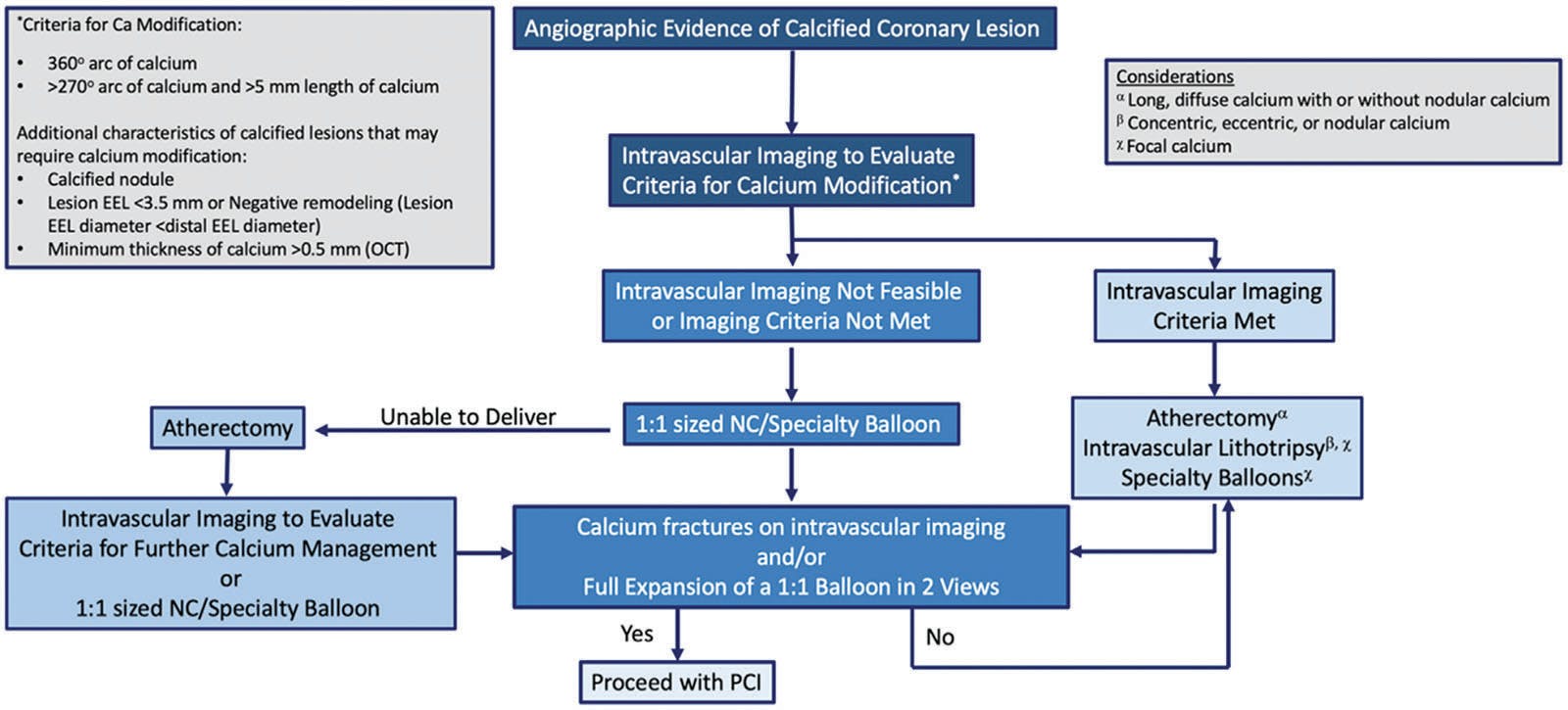
Figure 3. Treatment algorithm for calcified coronary lesion. Abbreviations: Ca, calcium; EEL, external elastic lamina; NC, noncompliant; PCI, percutaneous coronary intervention. Adapted with permission from Riley RF, Patel MP, Abbott JD, et al. SCAI expert consensus statement on the management of calcified coronary lesions. J Soc Cardiovasc Angiogr Interv. 2024;3:101259. doi: 10.1016/j.jscai.2023.101259. https://www.jscai.org/article/S2772-9303(23)01319-4/fulltext
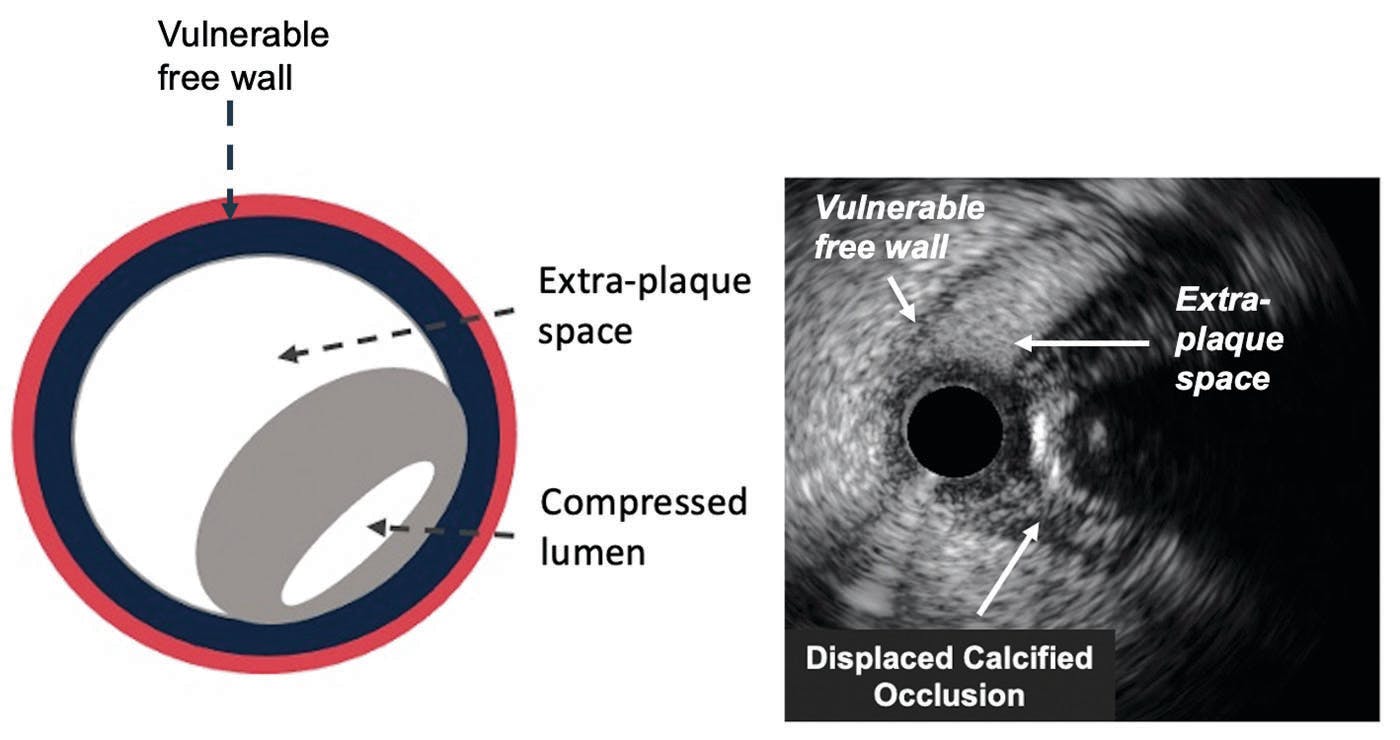
Figure 4. Pseudonodular calcium in CTO.
After extraplaque tracking, the use of additional modification devices should be cautiously considered, with all devices likely to be associated with lower efficacy and higher risk of perforation. As with intraplaque nodules and eccentric calcium, understanding wire bias either toward or away from the displaced intima and pseudonodule is important (Figure 4). If the wire bias is unfavorable, most calcium modification devices, and particularly rotational atherectomy (RA), will be less effective and higher risk. Although cutting, scoring, or high-pressure balloons will more predictably impact the plaque, exposure of the vulnerable extraplaque vessel wall to bioptomes, scoring elements, or super high pressure carries a significant risk of perforation. Furthermore, while in theory intravascular lithotripsy (IVL) may be a safer option, efficacy in the extraplaque space is also uncertain.
Looking specifically at atherectomy, a meta-analysis reported outcomes after RA were similar in CTO compared to non-CTO lesions with respect to procedural success, in-hospital major adverse cardiac events (MACE), and all-cause mortality, although with an increased risk of coronary perforation in CTO lesions.20 The most common complication with RA is slow or no reflow, which can occur in up to 17% when used during CTO PCI.21 RA should be used with caution in long tortuous occlusions and through subintimal tracks where the risk of perforation is highest.
Orbital atherectomy (OA) uses an eccentrically mounted, diamond-coated crown that rotates on an orbit and allows bidirectional ablation with lower rotational speed that is thought to reduce slow flow. Despite these advantages, the location of the crown on the side of the drive shaft back from the nose can limit its use in uncrossable lesions. In addition, in the extraplaque space despite the differential ablation, the orbiting motion carries a significant risk of perforation of the vulnerable wall. In the PROGRESS-CTO registry, OA was used in only 0.2% of cases.22
Excimer laser atherectomy can be useful in uncrossable or undilatable calcified lesions by generating a photochemical, photothermal, and photokinetic reaction. In CTO PCI, while it can be useful to assist crossing a resistant proximal cap or in occlusive in-stent restenosis,23 the efficacy is unpredictable.
IVL uses ultrasonic acoustic pressure waves to modify calcified plaques.24,25 IVL is technically easy to use, has a significantly lower risk of distal embolization, and has been increasingly used in non-CTO PCI. Case series and registry data have provided some support for its effectiveness and safety.26 Although the current device is for use in balloon-crossable lesions, devices currently under investigation (eg, Javelin, Shockwave Medical) may be useful for proximal cap modification and in modifying balloon-uncrossable lesions.27
ASSESSING CALCIUM MODIFICATION AND STENT OUTCOMES
Adequate calcium modification is critical for atraumatic stent delivery and optimal expansion. Stents can be damaged or stripped off undeployed with aggressive attempts to deliver them through inadequately prepared calcified segment, and subsequent stent underexpansion is the most important predictor of target lesion failure. The use of IVUS to confirm appropriate lesion preparation and adequate stent expansion in both non-CTO PCI and CTO PCI is associated with improved clinical outcomes, including reduced stent failure and MACE.28-30
Asymmetric stent expansion can occur in up to 50% of lesions while in the presence of calcified nodules or eccentric calcium.31 However, stent asymmetry and eccentricity alone are not associated with adverse long-term outcomes.32 In the context of achieving an adequate minimal stent area, further attempts to aggressively postdilate an eccentric stent increases the risk of perforation without any proven long-term benefit. This is especially important in CTO PCI where crossing the CTO may have been associated with significant vessel injury, hematoma, or near perforation. In addition, when a calcified CTO has been crossed extraplaque creating a pseudonodule, eccentric stent expansion is expected, and further attempts to modify this will inevitably result in vessel perforation or rupture (Figure 4).
FUTURE ADVANCEMENTS
Multiple devices are currently in development and under investigation to facilitate the crossing and plaque modification of calcified CTO. Guidewire technology continues to improve, increasing the proportion of occlusions that can be crossed with intraplaque wiring. This consequently can allow calcium modification to be approached as in non-CTO PCI, although this also creates a larger proportion of balloon uncrossable lesions to be treated. New iterations of microcatheters specifically designed to engage, cross, and modify calcium are in development and could be one solution.33 An IVL device with a low profile and the capability to delivery therapy close to the tip may facilitate crossing of resistant proximal caps and uncrossable lesions.27 While the expanding availability and use of photon-counting CT will allow for more robust procedural planning, operationalizing the ability to use combined real-time CT and fluoroscopy imaging could be of further assistance in more complex anatomy.34 Finally, changes in the strategic approach to PCI in severely calcified CTOs, such as the use of a planned antegrade modification procedure (investment procedure) followed by a staged completion procedure in selected cases, can improve procedural success and reduce complications.35
CONCLUSIONS
Despite advances in CTO PCI technology and techniques, severely calcified occlusions continue to pose a significant challenge even for the experienced operator. The deliverability, efficacy, and safety of calcium modification devices in CTO PCI are reduced compared to that in non-CTO PCI. The upfront use of CCTA is becoming increasingly useful for calcium characterization and procedural planning, and the subsequent use of intravascular imaging after crossing is essential to guide the appropriate and safe use of modification devices and optimize procedural outcomes.
1. Gold DA, Sandesara PB, Jain V, et al. Long-term outcomes in patients with chronic total occlusion. Am J Cardiol. 2024;214:59-65. doi: 10.1016/j.amjcard.2023.12.052
2. Tajstra M, Pyka L, Gorol J, et al. Impact of chronic total occlusion of the coronary artery on long-term prognosis in patients with ischemic systolic heart failure: insights from the COMMIT-HF registry. JACC Cardiovasc Interv. 2016;9:1790-1797. doi: 10.1016/j.jcin.2016.06.007
3. Behnes M, Schmidberger M, Mashayekhi K, et al. Coronary chronic total occlusions affect long-term prognosis in heart failure with mildly reduced ejection fraction. J Am Heart Assoc. 2025;14:e042368. doi: 10.1161/JAHA.125.042368
4. Lawton JS, Tamis-Holland JE, Bangalore S, et al. 2021 ACC/AHA/SCAI guideline for coronary artery revascularization: executive summary: a report of the American College of Cardiology/American Heart Association joint committee on clinical practice guidelines. Circulation. 2022;145:e4-e17. doi: 10.1161/CIR.0000000000001039
5. Tran P, Phan H, Shah SR, et al. Applied pathology for interventions of coronary chronic total occlusion. Curr Cardiol Rev. 2015;11:273-276. doi: 10.2174/1573403X11666150909110915
6. Sawan MA, Steinberg R, Finn AV. Histopathology of coronary artery chronic total occlusions and its relevance to percutaneous recanalization techniques. Interv Cardiol Clin. 2026;15:11-20. doi: 10.1016/j.iccl.2025.09.002
7. Karacsonyi J, Karmpaliotis D, Alaswad K, et al. Impact of calcium on chronic total occlusion percutaneous coronary interventions. Am J Cardiol. 2017;120:40-46. doi: 10.1016/j.amjcard.2017.03.263
8. Morino Y, Abe M, Morimoto T, et al. Predicting successful guidewire crossing through chronic total occlusion of native coronary lesions within 30 minutes: the J-CTO (Multicenter CTO registry in Japan) score as a difficulty grading and time assessment tool. JACC Cardiovasc Interv. 2011;4:213-221. doi: 10.1016/j.jcin.2010.09.024
9. Danek BA, Karatasakis A, Karmpaliotis D, et al. Development and validation of a scoring system for predicting periprocedural complications during percutaneous coronary interventions of chronic total occlusions: the prospective global registry for the study of chronic total occlusion intervention (PROGRESS CTO) complications score. J Am Heart Assoc. 2016;5:e004272. doi: 10.1161/JAHA.116.004272
10. Szijgyarto Z, Rampat R, Werner GS, et al. Derivation and validation of a chronic total coronary occlusion intervention procedural success score from the 20,000-patient EuroCTO registry: the EuroCTO (CASTLE) score. JACC Cardiovasc Interv. 2019;12:335-342. doi: 10.1016/j.jcin.2018.11.020
11. Kostantinis S, Rempakos A, Simsek B, et al. Impact of calcium on the procedural techniques and outcomes of chronic total occlusion percutaneous coronary intervention. Int J Cardiol. 2023;390:131254. doi: 10.1016/j.ijcard.2023.131254
12. Ng P, Maehara A, Kirtane AJ, et al. Management of coronary stent underexpansion. J Am Coll Cardiol. 2025;85:625-644. doi: 10.1016/j.jacc.2024.12.009
13. Souteyrand G, Mouyen T, Honton B, et al. Stent underexpansion is an underestimated cause of intrastent restenosis: insights from RESTO registry. J Am Heart Assoc. 2024;13:e036065. doi: 10.1161/JAHA.124.036065
14. Opolski MP, Achenbach S. CT angiography for revascularization of CTO: crossing the borders of diagnosis and treatment. JACC Cardiovasc Imaging. 2015;8:846-858. doi: 10.1016/j.jcmg.2015.05.001
15. Rolf A, Werner GS, Schuhbäck A, et al. Preprocedural coronary CT angiography significantly improves success rates of PCI for chronic total occlusion. Int J Cardiovasc Imaging. 2013;29:1819-1827. doi: 10.1007/s10554-013-0258-y
16. Karacsonyi J, Alaswad K, Jaffer FA, et al. Use of intravascular imaging during chronic total occlusion percutaneous coronary intervention: insights from a contemporary multicenter registry. J Am Heart Assoc. 2016;5:e003890. doi: 10.1161/JAHA.116.003890
17. Fujii K, Ochiai M, Mintz GS, et al. Procedural implications of intravascular ultrasound morphologic features of chronic total coronary occlusions. Am J Cardiol. 2006;97:1455-1462. doi: 10.1016/j.amjcard.2005.11.079
18. Dash D. Coronary chronic total occlusion intervention: a pathophysiological perspective. Indian Heart J. 2018;70:548-555. doi: 10.1016/j.ihj.2018.01.021
19. Riley RF, Patel MP, Abbott JD, et al. SCAI expert consensus statement on the management of calcified coronary lesions. J Soc Cardiovasc Angiogr Interv. 2024;3:101259. doi: 10.1016/j.jscai.2023.101259
20. Devireddy RR, Qaqish O, Pannikottu K, et al. Chronic total occlusion rotational atherectomy (CTO RA) versus non-CTO RA in coronary artery disease: a meta-analysis of clinical outcomes and complications. Am Heart J Plus. 2023;36:100345. doi: 10.1016/j.ahjo.2023.100345
21. Azzalini L, Dautov R, Ojeda S, et al. Long-term outcomes of rotational atherectomy for the percutaneous treatment of chronic total occlusions. Catheter Cardiovasc Interv. 2017;89:820-828. doi: 10.1002/ccd.26829
22. Xenogiannis I, Karmpaliotis D, Alaswad K, et al. Usefulness of atherectomy in chronic total occlusion interventions (from the PROGRESS-CTO registry). Am J Cardiol. 2019;123:1422-1428. doi: 10.1016/j.amjcard.2019.01.054
23. Yeung JYK, Chiang M. Current role of excimer laser coronary angioplasty atherectomy in calcified coronary artery disease management. JACC Case Rep. 2025;30:103025. doi: 10.1016/j.jaccas.2024.103025
24. Ali ZA, Nef H, Escaned J, et al. Safety and effectiveness of coronary intravascular lithotripsy for treatment of severely calcified coronary stenoses: the Disrupt CAD ii study. Circ Cardiovasc Interv. 2019;12:e008434. doi: 10.1161/CIRCINTERVENTIONS.119.008434
25. Hill JM, Kereiakes DJ, Shlofmitz RA, et al. Intravascular lithotripsy for treatment of severely calcified coronary artery disease. J Am Coll Cardiol. 2020;76:2635-2646. doi: 10.1016/j.jacc.2020.09.603
26. Øksnes A, Cosgrove C, Walsh S, et al. Intravascular lithotripsy for calcium modification in chronic total occlusion percutaneous coronary intervention. J Interv Cardiol. 2021;2021:9958035. doi: 10.1155/2021/9958035
27. FORWARD CAD IDE Study. Clinicaltrials.gov website. Accessed January 3, 2026. https://clinicaltrials.gov/study/NCT06662500
28. Hong SJ, Kim BK, Shin DH, et al. Effect of intravascular ultrasound-guided vs angiography-guided everolimus-eluting stent implantation: the IVUS-XPL randomized clinical trial. JAMA. 2015;314:2155-2163. doi: 10.1001/jama.2015.15454
29. Chugh Y, Buttar R, Kwan T, et al. Outcomes of intravascular ultrasound-guided versus angiography-guided percutaneous coronary interventions in chronic total occlusions: a systematic review and meta-analysis. J Invasive Cardiol. 2022;34:E310-E318. doi: 10.25270/jic/21.00198
30. Jang JS, Song YJ, Kang W, et al. Intravascular ultrasound-guided implantation of drug-eluting stents to improve outcome: a meta-analysis. JACC Cardiovasc Interv. 2014;7:233-243. doi: 10.1016/j.jcin.2013.09.013
31. Chambers JW, Feldman RL, Himmelstein SI, et al. Pivotal trial to evaluate the safety and efficacy of the orbital atherectomy system in treating de novo, severely calcified coronary lesions (ORBIT II). JACC Cardiovasc Interv. 2014;7:510-518. doi: 10.1016/j.jcin.2014.01.158
32. Fujimura T, Matsumura M, Witzenbichler B, et al. Stent expansion indexes to predict clinical outcomes: an IVUS substudy from ADAPT-DES. JACC Cardiovasc Interv. 2021;14:1639-1650. doi: 10.1016/j.jcin.2021.05.019
33. Sidik N, McEntegart M, Joshi F, et al. Safety and effectiveness of a novel microcatheter in coronary chronic total occlusions - the BIOMICS study. J Soc Cardiovasc Angiogr Interv. 2024;3:102017. doi: 10.1016/j.jscai.2024.102017
34. Ghoshhajra BB, Takx RAP, Stone LL, et al. Real-time fusion of coronary CT angiography with x-ray fluoroscopy during chronic total occlusion PCI. Eur Radiol. 2017;27:2464-2473. doi: 10.1007/s00330-016-4599-5
35. Øksnes A. INVEST-CTO: effectiveness and safety of a planned investment procedure in high‐risk CTO PCI. Presented at: Transcatheter Cardiovascular Therapeutics 2025; October 28, 2025; San Francisco, California.
Advertisement
Advertisement