Advertisement
Advertisement
March/April 2025
Prepping the Room for PE Interventions
What (and who) to always have ready.
By Rohan Mundkur, MD; Akash Patel, MD; and Jonathan Paul, MD
The landscape of catheter-based therapies for pulmonary embolism (PE) is continuing to evolve. Current interventions can broadly be categorized into simple catheter-directed thrombolysis (CDT), ultrasound-assisted CDT (USCDT), pharmacomechanical CDT (PCDT), or large-bore thrombectomy (LBT). Common CDT devices include the Cragg-McNamara infusion catheter (Medtronic), Uni-Fuse infusion catheter (AngioDynamics), and Fountain infusion catheter (Merit Medical Systems, Inc.). USCDT using the Ekos endovascular system (Boston Scientific Corporation) and PCDT using the Bashir catheter (Thrombolex, Inc.) have captured a large share of the CDT market. Commonly used LBT devices include the FlowTriever system (Inari Medical), Lightning computer-assisted vacuum thrombectomy (CAVT) system (Penumbra, Inc.), and AlphaVac system (AngioDynamics, Inc.). A number of novel devices are currently under development or in clinical trials.
Although anatomic, provider, and hospital considerations may influence device selection, available data suggest LBT is more prevalent in patients with higher PE Severity Index scores and malignancy. That said, mortality and complication outcomes are not significantly different between the interventions.1 Provider experience, availability of ancillary services such as extracorporeal membrane oxygenation (ECMO), and hospital economics also play a significant role in which device is chosen for a PE procedure.
Because decompensation from PE typically results from obstructive shock and right heart failure, the risk of such an outcome must be considered prior to undertaking an intervention. Furthermore, there is a high prevalence of “normotensive shock” in this population, with as many as 44% of patients who underwent invasive therapy meeting criteria for cardiogenic shock (CS) when a right heart catheterization (RHC) was performed prior to intervention.2,3 Thus, an understanding of individual patient hemodynamics, in addition to traditional metrics such as right ventricular (RV) enlargement, cardiac biomarker positivity, and abnormal vital signs, is important to prepare for and avoid complications. A hemodynamics-first approach (including a full RHC) is taken at our institution, and such an invasive assessment has identified a number of patients whose risk classification is increased based on the findings. As an example, a recent young patient in our hospital with tachycardia and a “normal” blood pressure was found to have a cardiac index of 1.5 L/min/m2 (Figure 1), consistent with CS. Understanding such data is critical prior to determining the appropriate therapy for each individual patient and can be used to guide therapy during and after conclusion of the index procedure.
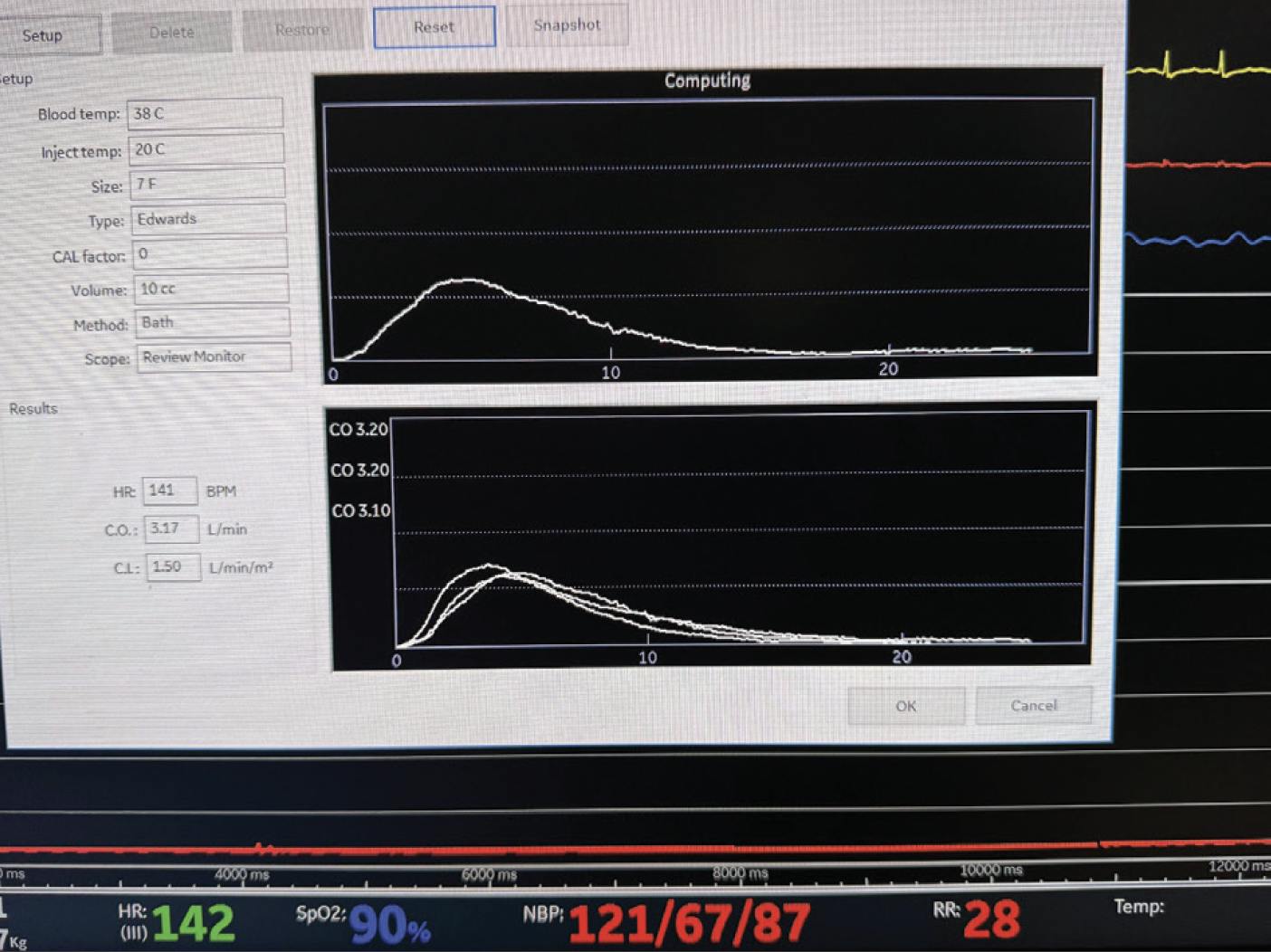
Figure 1. “Normotensive shock” in a young patient with intermediate-risk PE, as defined by a cardiac index < 2.2 L/min/m2.
CATH LAB CONSIDERATIONS
When a decision is made to activate the cardiac catheterization laboratory (CCL) for intervention, we begin by ensuring adequate nurse and technician staff for the procedure. The room is prepared by these essential team members while the patient is transported to the CCL. Perfusion and/or ECMO teams are notified and on standby in case of clinical deterioration with need for venoarterial (VA)-ECMO cannulation in higher-risk patients.
Procedural planning, including review of the CTA and echocardiograms, if available, will help determine which therapy to pursue. Factors such as thrombus burden, RV function/enlargement, involvement of proximal and/or distal vasculature, stability of the patient, bleeding risk, and comorbidities all impact the procedural and long-term success of the procedure. At our institution, mechanical thrombectomy (MT) is considered when thrombus is primarily proximal, the RV is not severely dilated (due to risk of worsening RV failure with placement of a large-bore sheath), and if the staff/operator has sufficient experience with management of large-bore vascular access. As the majority of patients with intermediate-high–risk PE have both proximal and distal pulmonary arterial involvement, the use of thrombolytics is considered a primary strategy in most cases.
Sedation is typically accomplished with midazolam and fentanyl boluses of 1 mg and 50 µg, respectively. Oversedation is avoided, as is the use of positive-pressure ventilation to avoid decreasing respiratory drive and placing high afterload on an already failing RV. In high-risk cases, anesthesia is consulted early and plans for safe intubation (if absolutely necessary) are discussed prior to starting the procedure. Vascular access is obtained via ultrasound-guided modified Seldinger technique using a micropuncture needle. Typically, access is obtained via the femoral vein, although intrajugular (IJ) approaches are sometimes used for CDT catheter placement due to smaller size. After access is secured, we begin with invasive hemodynamic monitoring with a Swan-Ganz catheter (or an alternative balloon-tipped pulmonary artery [PA] catheter) with standard end-expiratory measurements (in nonintubated patients) of right atrial, RV, and PA pressures. Pulmonary capillary wedge pressures are typically not measured to avoid excessive interaction of the balloon with thrombus. Cardiac output is calculated by both indirect Fick and thermodilution methods.
After hemodynamic assessment, direct pulmonary angiography to characterize clot distribution is performed. Although CTA assists in this, direct angiography in the CCL provides multiple advantages. It is not uncommon for thrombus to have shifted distally since the time of the CTA, and the degree of hypoperfusion can be easily assessed with invasive PA angiography. Using a power injector, a 50/50 contrast/saline mixture is injected at a rate up to 20 mL/sec in an anteroposterior or slightly ipsilateral angulation (approximately 15°-20° left anterior oblique or right anterior oblique). In our experience, high-volume/flow pulmonary angiography is well tolerated and very helpful in catheter choice and proper placement.
If using bilateral CDT devices up to 6 F, we prefer a 12-F dual-lumen sheath so that only a singular access site is required for both devices. This approach is preferred to preserve contralateral femoral venous access in the event the patient requires cannulation for VA-ECMO. In patients with elevated PA pressures, invasive hemodynamic measurements are often obtained during the subsequent infusion of thrombolytic agent by placing an additional PA catheter via the IJ approach. These data are valuable to determine the stopping point of infusion, as significant variability in response is present in patients receiving CDT. All catheters that are to be left in place are covered with a protective sleeve and secured in place using adhesive dressings.
If using a thrombectomy device, the common femoral vein is most often chosen for vascular access. We perform initial hemodynamic measurements with a 0.035-inch–compatible, balloon-tipped catheter, and this is exchanged for a standard angiographic (eg, JR4) catheter to assist with navigating the pulmonary vascular tree when necessary. Finally, a 0.035-inch stiff wire (eg, Amplatz Super Stiff [Boston Scientific Corporation] with straight floppy tip) is used for device tracking and placement. While the device is in place, prior to and between aspiration attempts, we perform interval PA pressure measurements and saturations to help determine improvement and stopping point.
Regardless of device used, frequent monitoring of vital signs, PA pressure, and PA oxygen saturation are helpful to determine whether the patient is improving or worsening. Calculation of an indirect Fick cardiac output using a PA oxygen saturation and an arterial (or noninvasive) oxygen saturation is helpful to gain a better understanding of the need for additional or alternative approaches.
THERAPY ADMINISTRATION AND POST-CCL MANAGEMENT CONSIDERATIONS
For CDT procedures, we typically bolus 1 to 2 mg of tissue plasminogen activator via catheter followed by a drip at 0.5 mg/hour to 1.0 mg/hour per catheter. Total infusion typically ranges from 12 to 20 mg total and often runs for 8 to 16 hours. Once the patient is transferred to our cardiac critical care unit, leveled right atrial, RV, and PA pressure measurements are taken every hour to monitor for improvement, and PA saturations are drawn every 4 hours to calculate cardiac output for the duration of therapy. Devices are removed at least 2 hours after completion of therapy, at bedside, followed by hemostasis via manual pressure or placement of a figure-of-eight stitch.
In most MT cases, closure of the vessel is accomplished by deployment of two Perclose Proglide devices (Abbott) prior to large sheath placement or placement of a figure-of-eight stitch when the sheath is removed. For MT procedures, blood loss is tracked carefully. Using a blood filtration device such as the FlowSaver (Inari Medical) can mitigate blood loss, although the effects of autotransfusing filtered blood are largely unknown. Penumbra’s CAVT technology may also decrease the amount of blood loss seen in MT procedures, using microprocessors and proprietary clot detection algorithms. Determining a stopping point for MT largely depends on improvements in vital signs, PA pressure/cardiac output, and improvements in thrombus burden and lung perfusion seen by repeat pulmonary angiography, typically performed with a hand injection of contrast through the aspiration thrombectomy catheter.
CONCLUSION
Given the multiple disciplines that participate in acute PE management, it is prudent to emphasize the importance of a protocolized approach to acute PE interventions. Iterative hemodynamic assessments during acute intervention and subsequent thrombolytic infusion can identify normotensive shock and help personalize treatment. Although access considerations are dependent on device selection, we prefer single-access intervention to preserve central vasculature for VA-ECMO cannulation in the event of patient decompensation. Finally, considering the heterogeneity of patients presenting with intermediate-high and high-risk PE, further investigation into optimal choice of initial therapy, predictors of response to therapy, and long-term outcomes is ongoing and will be crucial in guiding therapies in this ever-evolving field.
1. Feroze R, Arora S, Tashtish N, et al. Comparison of large-bore thrombectomy with catheter-directed thrombolysis for the treatment of pulmonary embolism. J Soc Cardiovasc Angiogr Interv. 2023;2:100453. doi: 10.1016/j.jscai.2022.100453
2. Bangalore S, Horowitz JM, Beam D, et al. Prevalence and predictors of cardiogenic shock in intermediate-risk pulmonary embolism: insights from the FLASH registry. JACC Cardiovasc Interv. 2023;16:958-972. doi: 10.1016/j.jcin.2023.02.004
3. Shah P, Jacob J, Corrigan FE. C-49: traditional measures do not predict cardiogenic shock in submassive pulmonary embolism. J Soc Cardiovasc Angio Interv. 2023;2:100837. doi: 10.1016/j.jscai.2023.100837
Advertisement
Advertisement