Advertisement
Advertisement
March/April 2025
Advances and Challenges in Aortic Regurgitation
Epidemiologic trends, current guidelines, and future directions.
By Joanna Bartkowiak, MD; Jonas Lanz, MD; Thomas Pilgrim, MD; and Fabien Praz, MD
Aortic regurgitation (AR) presents significant diagnostic and therapeutic challenges due to its multifactorial etiology, which can involve the valve alone or in conjunction with a dilated aortic root. Historically, infectious and rheumatic causes were predominant, whereas nowadays AR in high-income countries is mainly attributed to degenerative and genetic causes. This article explores the epidemiologic trends, limitations of current guidelines, and recent advances in treatment modalities for AR, with a particular focus on emerging transcatheter interventions (Figure 1).
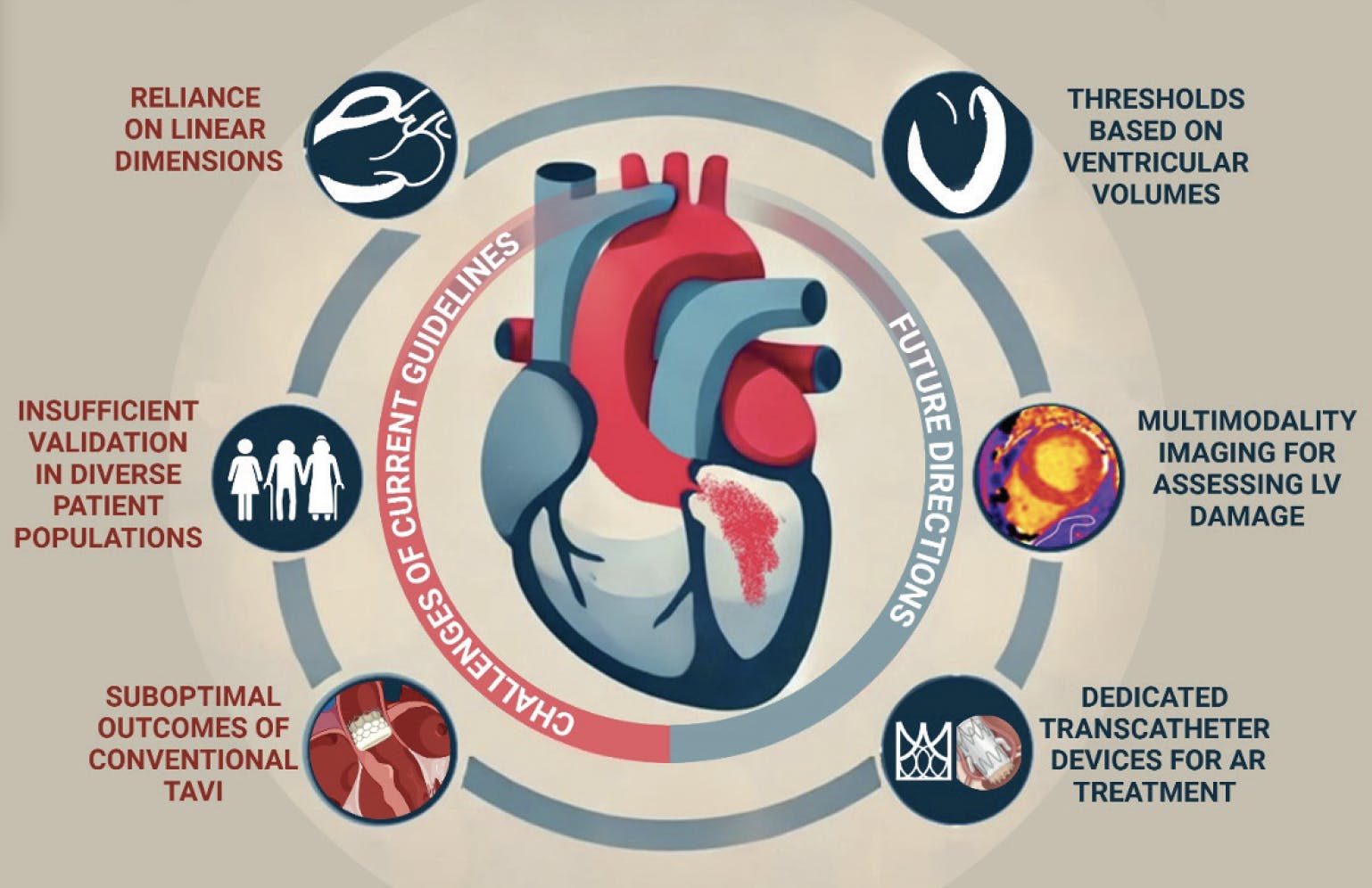
Figure 1. Advances and challenges in the management of AR.
HISTORICAL INSIGHTS AND EPIDEMIOLOGY
AR was first described in 1705 by the English surgeon and anatomist William Cowper, who identified a pathophysiologic relationship between thickened, insufficient aortic valves and markedly dilated human hearts.1 Interest in AR grew substantially during the 18th and 19th centuries, spurred by widespread outbreaks of syphilis across Europe. Syphilitic aortitis often led to aortic root dilatation and subsequent valve dysfunction, frequently documented in clinical reports during this period. Later, rheumatic heart disease emerged as the primary cause of AR in many parts of the world, further shaping our understanding of the disease.
Although the global burden of rheumatic heart disease has significantly declined due to improved health care access and the advent of antibiotic prophylaxis, it continues to be a leading cause of AR in low- and middle-income countries with fragile health care systems.2 A prospective international registry of 3,343 patients hospitalized for rheumatic heart disease revealed that nearly 50% had AR, predominantly mild in severity and frequently occurring as part of multivalvular involvement.3 In high-income countries, AR is the third most frequent nonrheumatic valvular heart disease,2 observed in 1.1% to 1.8% of individuals aged ≥ 60 years.4 Bicuspid aortic valve disease and aortic root pathologies account for the majority of AR cases.5 Bicuspid valves, present in approximately 1% of the population, are prone to regurgitation, particularly in men, and are often associated with dilatation of the ascending aorta.6 Approximately 30% of patients with bicuspid valve disease have moderate or greater AR at first presentation.6 Calcific aortic valve disease, often associated with stenosis, may also present with regurgitation due to age-related degenerative changes in the valve structure. As life expectancy increases, the overall prevalence of degenerative AR is likely to rise, underscoring the importance of early detection and effective management strategies.
CURRENT GUIDELINES
The management of AR is guided by clearly defined surgical indications outlined in the European Society of Cardiology/European Association for Cardio-Thoracic Surgery (ESC/EACTS) and American College of Cardiology/American Heart Association (ACC/AHA) guidelines.7,8 Severe symptomatic AR is associated with significantly increased mortality if left untreated. Consequently, both the ESC/EACTS and ACC/AHA guidelines classify surgical intervention for severe symptomatic AR as a class I indication, emphasizing its critical importance once symptoms occur. In asymptomatic patients, surgery is indicated when there is evidence of left ventricular (LV) dysfunction, assessed through key echocardiographic parameters. According to the ESC/EACTS guidelines, intervention is recommended if the LV ejection fraction (LVEF) decreases to ≤ 50% or the LV end-systolic diameter (LVESD) exceeds 50 mm (or > 25 mm/m2 when indexed for body surface area). For patients with an LVEF ≤ 55% or an indexed LVESD > 20 mm/m2, surgery may still be considered but with a lower class of recommendation and supporting evidence (IIb C). In contrast, the ACC/AHA guidelines adopt a different threshold for intervention, with a class I recommendation for surgery when the LVEF falls to ≤ 55%. Additionally, in patients with severe AR who are undergoing other cardiac procedures, such as coronary artery bypass grafting or surgery for other valvular conditions, aortic valve surgery is also recommended during the same operation. Finally, in asymptomatic patients with severe AR who do not meet the above-mentioned thresholds but demonstrate progressive LV remodeling and decline in LVEF or increase in end-diastolic dimensions (> 65 mm), surgery may also be considered to prevent long-term cardiac damage according to ACC/AHA guidelines.
Limitations of Current Guidelines
Recent research has brought attention to several limitations of the current guidelines for AR management. The evidence suggests that the thresholds for intervention may be too high, potentially delaying surgery in asymptomatic patients at low surgical risk who could benefit from earlier treatment. A retrospective study of 356 consecutive patients undergoing surgery for AR showed that the adjusted 10-year survival was better among patients without operative indication or with a class II recommendation compared to patients with class I recommendation (89% vs 85% vs 71%, respectively; P = .010).9 Several large echocardiographic studies confirmed that the risk of adverse outcomes increases when LVEF decreases to 55% or the indexed LVESD increases to > 22 mm/m2.9-11 Therefore, delaying intervention until after these thresholds have been reached may expose select patients to a risk of adverse events exceeding the risk of early surgery. Moreover, both the ESC/EACTS and ACC/AHA guidelines currently assess progressive LV dilatation exclusively through two-dimensional echocardiographic parameters. This reliance on linear measurements has notable limitations because these metrics are prone to measurement errors depending on image quality and affected by the geometric pattern of LV remodeling.12 As a result, critical changes in LV structure and function may be underestimated or missed. In contrast, LV volumes, in particular when measured by cardiac MRI, provide a more accurate and reproducible assessment of LV size. Studies of advanced imaging modalities, such as three-dimensional echocardiography and cardiac MRI,13 have identified a higher rate of adverse events when the indexed LV end-systolic volume exceeded 40 to 45 mL/m2.
Another frequently debated aspect is the quantification of severe AR. Traditional thresholds were established based on relatively small cohorts of young male patients with bicuspid valves and aortic root dilatation. Consequently, the existing cutoff values have not been sufficiently validated in other demographic groups.12 A recent cardiac MR study indicated that the risk of adverse outcomes begins to rise when the regurgitant fraction exceeds 35% or the regurgitant volume reaches 45 mL.12 These thresholds are lower than the current criteria for severe AR, which may be particularly relevant for women and older patients.
Additionally, women with AR display distinct patterns of LV remodeling, characterized by less LV dilatation compared to men.14 When dilatation does occur, it is often observed only in more advanced stages of the disease. Consequently, alternative parameters—such as myocardial strain, indexed LV volumes, or cardiac MR–based tissue characterization—may offer a more precise evaluation of LV remodeling and disease progression in this subgroup and deserve further validation.
FUTURES DIRECTIONS: TOWARD LESS INVASIVE TREATMENT
AR has long presented a significant therapeutic challenge in older patients and those with prohibitive surgical risk due to the lack of an alternative to open-heart surgery. Off-label use of transcatheter aortic valve replacement (TAVR) using valves developed for the treatment of calcific AS has yielded suboptimal results, with 12.4% of patients experiencing device migration or embolization, 9.5% developing moderate or greater residual AR, and an in-hospital mortality rate of 5%.15 Consequently, there is no recommendation for TAVR in the management of native AR in current clinical guidelines.
However, the development of dedicated valve systems may offer minimally invasive options for patients who are ineligible for surgery. The J-Valve (JC Medical) was the first device to demonstrate promising outcomes in a single-center study (procedural success in 96.3% with trace or mild residual AR in 98.3% of patients).16
A significant breakthrough came with the introduction of the current-generation JenaValve (JenaValve Technology, Inc.), a transcatheter heart valve designed for AR treatment via transfemoral access (Figure 2). Results from a prospective, single-arm study (N = 180) reported promising outcomes, which may open the path toward a safe and effective, less invasive solution for selected high-risk patients.17 Despite these encouraging results, it is important to note that a high proportion of patients were excluded from study participation due to ineligible aortic annulus or aortic anatomy. The JenaValve has a maximum treatable annular diameter of 28.5 mm, and therefore a substantial subset of AR patients falls outside the size ranges of currently available devices, leaving them without viable treatment options. Another important limitation is the high rate of new permanent pacemaker implantation (approximately 25% of patients), likely related to the high projection of the valve stent frame extending into the LV outflow tract.
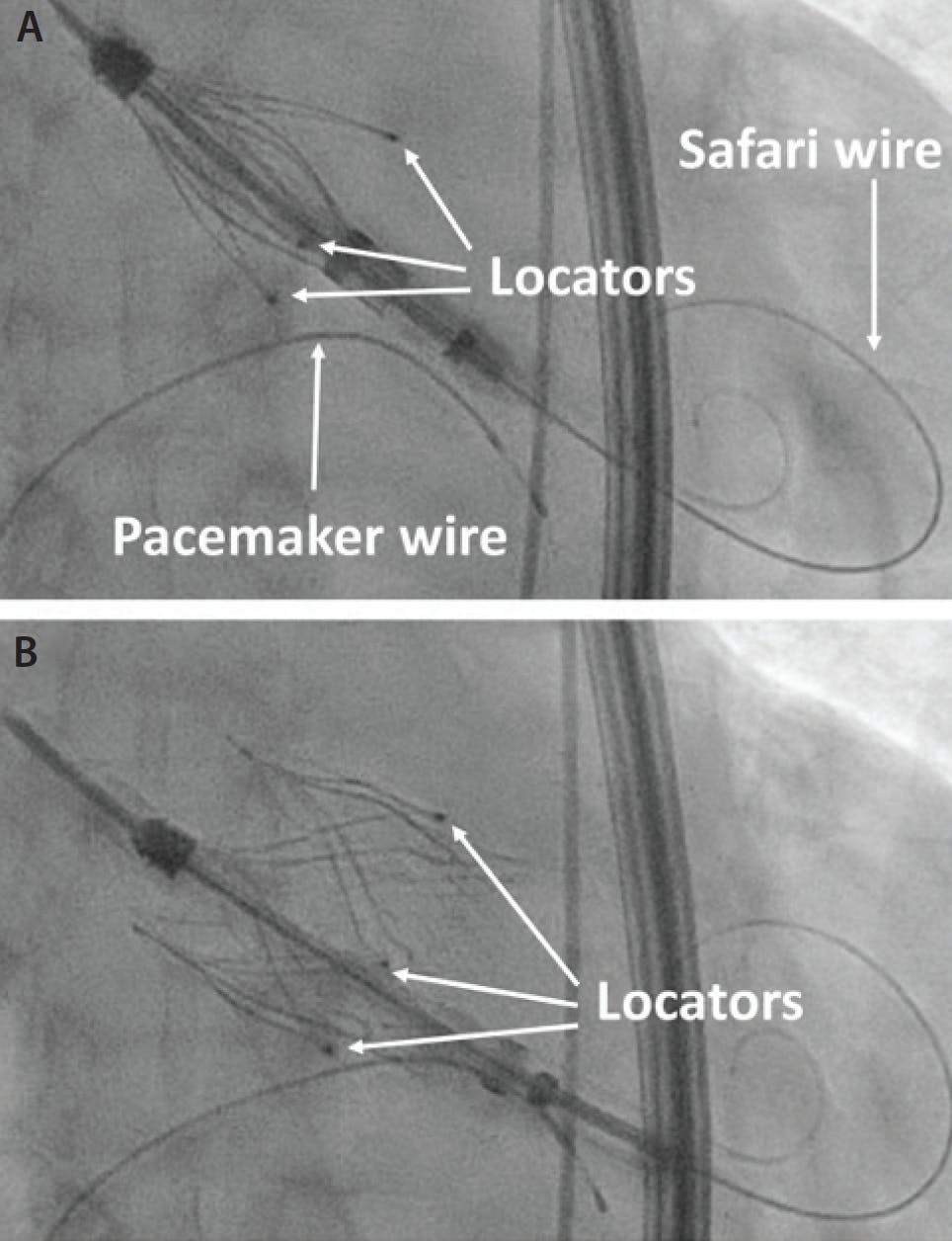
Figure 2. The JenaValve is a transcatheter aortic valve prosthesis designed for the treatment of native AR. The JenaValve positioned prior to deployment, with the locators aligned within the aortic valve cusps (Safari wire, Boston Scientific Corporation) (A). The valve fully deployed and secured in the correct anatomic position (B).
Endo-Bentall is an interesting innovation for patients with acute or chronic secondary AR due to aortic aneurysm. This involves still-preliminary methods for transcatheter treatment of aortic root pathologies that combine an endovascular stent graft with a fenestrated TAVR prosthesis to ensure coronary flow. Several groups have recently reported first-in-human procedures using different techniques that allow for simultaneous treatment of the ascending aorta and the aortic valve.18-20
Even if not yet fully mature, technological innovations offer tailored and effective therapeutic solutions for high-risk patients with anatomies suitable for treatment, addressing an important therapeutic gap in this vulnerable population. Consequently, it is essential that referring cardiologists stay informed about these novel developments and promptly refer patients to tertiary care centers when significant AR is suspected.
Accurate grading of AR presents considerable challenges due to the eccentric nature of the regurgitant jet and the dependence on optimal Doppler alignment, which can lead to an underestimation of its severity. With the availability of new treatment options, the emphasis must shift toward achieving more precise diagnoses and ensuring timely referrals for elderly patients with AR. Early referral upon suspicion of significant AR allows for comprehensive evaluation and ultimately optimizes patient management.
Transcatheter therapies for aortic stenosis were initially developed for high-risk or inoperable patients and have since been extended to moderate and low-risk groups. Whether a similar progression will occur with AR devices remains uncertain. In younger, lower-risk patients, AR is often associated with bicuspid valves or aortic dilation—conditions that currently pose challenges for transcatheter approaches. Nonetheless, ongoing innovations are expected to adapt to these complexities and potentially expand indications to lower-risk patients. However, before this expansion occurs, prospective long-term trials are needed to confirm the safety and durability of the new devices.
CONCLUSION
AR remains a complex clinical entity shaped by changing epidemiologic trends, improved understanding of disease, and evolving treatment modalities. While current guidelines provide a solid framework, new evidence underscores the need for earlier intervention and more precise diagnostic criteria. The development of new-generation transcatheter heart valves specifically designed to abolish AR may address an unmet clinical need. Continued innovation and refinement of technologies will be critical in meeting the versatile needs of the complex population of patients presenting with AR.
1. Vaslef SN, Roberts WC. Early descriptions of aortic regurgitation. Am Heart J. 1993;125:1475-1483. doi: 10.1016/0002-8703(93)91037-f
2. Coffey S, Roberts-Thomson R, Brown A, et al. Global epidemiology of valvular heart disease. Nat Rev Cardiol. 2021;18:853-864. doi: 10.1038/s41569-021-00570-z
3. Zuhlke L, Engel ME, Karthikeyan G, et al. Characteristics, complications, and gaps in evidence-based interventions in rheumatic heart disease: the Global Rheumatic Heart Disease Registry (the REMEDY study). Eur Heart J. 2015;36:1115-1122a. doi: 10.1093/eurheartj/ehu449
4. Santangelo G, Bursi F, Faggiano A, et al. The global burden of valvular heart disease: from clinical epidemiology to management. J Clin Med. 2023;12:2178. doi: 10.3390/jcm12062178
5. Akinseye OA, Pathak A, Ibebuogu UN. Aortic valve regurgitation: a comprehensive review. Curr Probl Cardiol. 2018;43:315-334. doi: 10.1016/j.cpcardiol.2017.10.004
6. Kong WK, Regeer MV, Ng AC, et al. Sex differences in phenotypes of bicuspid aortic valve and aortopathy: insights from a large multicenter, international registry. Circ Cardiovasc Imaging. 2017;10. doi: 10.1161/CIRCIMAGING.116.005155
7. Vahanian A, Beyersdorf F, Praz F, et al. 2021 ESC/EACTS guidelines for the management of valvular heart disease. Eur Heart J. 2022;43:561-632. doi: 10.1093/eurheartj/ehab395
8. Otto CM, Nishimura RA, Bonow RO, et al. 2020 ACC/AHA guideline for the management of patients with valvular heart disease: a report of the American College of Cardiology/American Heart Association Joint Committee on Clinical Practice Guidelines. Circulation. 2021;143:e72-e227. doi: 10.1161/CIR.0000000000000923
9. de Meester C, Gerber BL, Vancraeynest D, et al. Do guideline-based indications result in an outcome penalty for patients with severe aortic regurgitation? JACC Cardiovasc Imaging. 2019;12:2126-2138. doi: 10.1016/j.jcmg.2018.11.022
10. Mentias A, Feng K, Alashi A, et al. Long-term outcomes in patients with aortic regurgitation and preserved left ventricular ejection fraction. J Am Coll Cardiol. 2016;68:2144-2153. doi: 10.1016/j.jacc.2016.08.045
11. Yang LT, Michelena HI, Scott CG, et al. Outcomes in chronic hemodynamically significant aortic regurgitation and limitations of current guidelines. J Am Coll Cardiol. 2019;73:1741-1752. doi: 10.1016/j.jacc.2019.01.024
12. Malahfji M, Saeed M, Zoghbi WA. Aortic regurgitation: review of the diagnostic criteria and the management guidelines. Curr Cardiol Rep. 2023;25:1373-1380. doi: 10.1007/s11886-023-01955-x
13. Malahfji M, Crudo V, Kaolawanich Y, et al. Influence of cardiac remodeling on clinical outcomes in patients with aortic regurgitation. J Am Coll Cardiol. 2023;81:1885-1898. doi: 10.1016/j.jacc.2023.03.001
14. Kammerlander AA, Dona C, Nitsche C, et al. Sex differences in left ventricular remodeling and outcomes in chronic aortic regurgitation. J Clin Med. 2020;9. doi: 10.3390/jcm9124100
15. Poletti E, De Backer O, Scotti A, et al. Transcatheter aortic valve replacement for pure native aortic valve regurgitation: the PANTHEON International Project. JACC Cardiovasc Interv. 2023;16:1974-1985. doi: 10.1016/j.jcin.2023.07.026
16. Liu L, Yao X, Peng Y, et al. One-year outcome after transcatheter aortic valve replacement for aortic regurgitation: a single-center study. J Card Surg. 2022;37:882-892. doi: 10.1111/jocs.16238
17. Vahl TP, Thourani VH, Makkar RR, et al. Transcatheter aortic valve implantation in patients with high-risk symptomatic native aortic regurgitation (ALIGN-AR): a prospective, multicentre, single-arm study. Lancet. 2024;403:1451-1459. doi: 10.1016/S0140-6736(23)02806-4
18. Leshnower BG, Duwayri YM, Nicholson WJ, et al. Endo-Bentall procedure using off-the-shelf catheter devices to repair an aorto-atrial fistula. Circ Cardiovasc Interv. 2023;16:e012848. doi: 10.1161/CIRCINTERVENTIONS.122.012848
19. Ghoreishi M, Chahal D, Shah A, et al. First-in-human endovascular aortic root repair (Endo-Bentall) for acute type A dissection. Circ Cardiovasc Interv. 2023;16:e013348. doi: 10.1161/CIRCINTERVENTIONS.123.013348
20. Felipe Gaia D, Bernal O, Castilho E, et al. First-in-human Endo-Bentall procedure for simultaneous treatment of the ascending aorta and aortic valve. JACC Case Rep. 2020;2:480-485. doi: 10.1016/j.jaccas.2019.11.071
Advertisement
Advertisement