Advertisement
Advertisement
January/February 2025
An Interview With Suzanne J. Baron, MD, MSC
Dr. Baron discusses health care economics and measuring the value and benefit of a new device, her vision for the SCAI Scientific Oversight Committee, the importance of integrating patient-reported outcomes into clinical practice and research, steps to improving the representation of females in clinical trials, and more.

One of your primary interests is health care economics in the setting of new device evaluation, having published cost-effectiveness analyses using data from landmark valvular trials. What were some of the experiences that led you down this path, and why did you decide to make this a focus?
My interest in health care economics began during my interventional fellowship training, where I experienced firsthand the seemingly endless introduction of new technologies. Seeing these devices being evaluated and used in a clinical setting sparked me to spend a year with the FDA Center for Devices and Radiological Health, where I learned about the process of device approval and regulation. In the catheterization laboratory, it is hard to not become caught up in the enthusiasm for innovative ways to treat our patients. Nevertheless, I also saw how these tremendous technologic advances could present complexities in terms of cost, accessibility, and overall value to an individual health care system, as well as to society as a whole, particularly in the current United States health care environment. In fact, I regularly encountered situations where new devices and interventions were being adopted, but there was often little evidence available to assess their cost-effectiveness. It was this gap in knowledge between clinical efficacy and economic sustainability that led me focus my research on the value assessment of novel treatment strategies.
When evaluating cost-effectiveness and health care resource use, how do you define the “value” of a new device? Can you share some examples of what this has looked like in practice?
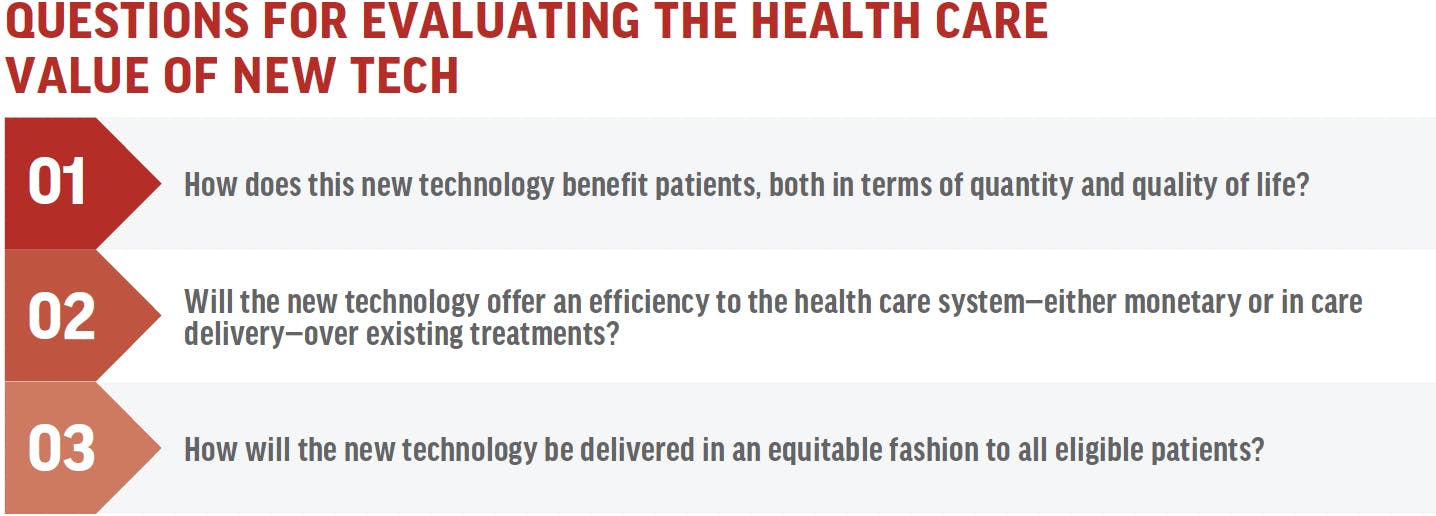
The value of a new device should reflect the balance between the health benefits it provides and the resources it consumes. In terms of resources, this involves not only assessing the direct costs associated with the device itself but also the costs related to treatment pathways, hospitalizations, follow-up care, and medications. It is also important to think about how we define the benefit of a new device, and this can vary depending on how the device affects patient outcomes. Obviously, improving survival is important; however, there is growing recognition that an intervention’s benefit shouldn’t be measured only in terms of survival. Health-related quality of life (QOL) also needs to be considered and incorporated into this metric, particularly because many patients, especially the elderly, who comprise a large portion of the cardiac population, have been shown to value QOL as much or more than quantity of life.
The most common way of combining both QOL and survival into a single metric is with the use of quality-adjusted life-years (QALYs). A QALY is a measure of disease burden in which the quantity of life is weighted by the valuation of the quality of life that a person experiences. Accordingly, the results of cost-effectiveness analyses are often reported as an incremental cost-effectiveness ratio (ICER), the units of which are usually cost per QALY gained. In the United States health care system, it is accepted that an ICER ≤ $50,000 per QALY gained is considered to be of high economic value, while an ICER ≥ $150,000 per QALY gained is considered to be of low economic value.
If we look at the case example of the cost-effectiveness of transcatheter mitral edge-to-edge repair (mTEER) versus medical therapy for the treatment of patients with severe, symptomatic, functional mitral regurgitation studied in the landmark COAPT trial, mTEER was found to be cost-effective over medical therapy to the tune of an ICER of $55,600 per QALY gained over a patient’s lifetime.1 This finding is consistent with mTEER being of high economic value and was largely due to the improved survival and lower follow-up costs associated with mTEER in this patient population.
This economic analysis highlights a couple of important points regarding cost-effectiveness research.1 First, it is important to consider the longer-term costs and benefits of an intervention, especially if the benefits are expected to accrue slowly over time. If we only looked at the costs and benefits associated with the mTEER index hospitalization, then the high costs of the mTEER device would certainly have outweighed the clinical benefits because the full mortality and QOL benefit would have been cut short. Second, this analysis clearly shows us that cost-effectiveness does not necessarily mean cost saving. In our analysis, patients who were treated with mTEER were estimated to utilize over $45,000 more health care dollars over their lifetime than patients treated with medical therapy alone. This finding was partially related to the cost of the mTEER device, but also to the fact that mTEER was associated with improved survival. Studies have estimated that the average adult aged > 70 years who reports a single limitation in an activity of daily living uses approximately $22,000/year in health care dollars. It follows then that the benefit of prolonging life in any patient population, but especially one such as this, will come at the price of more health care resource utilization. Accordingly, innovation may not lead to cost savings in all cases, and so the value of a new therapy is determined by how effectively it can improve patient outcomes while offering a reasonable return on investment in terms of both clinical benefits and financial sustainability for health care systems. Cost-effectiveness analyses help us make these value determinations and thus are a vital component of novel device evaluation.
Surveying the state of interventional cardiology (IC), where do the biggest questions remain related to treatment cost versus benefits?
Over the last 15 years, the field of IC has made tremendous strides with the advent of new technologies and therapies, particularly in the structural heart disease space. Alongside this technologic evolution, there has been an increased focus on various definitions of “benefit,” with a greater emphasis on patient-reported outcomes (PROs) (eg, QOL) and patient-centered outcomes (eg, days alive and out of the hospital). The importance of this shift on what constitutes benefit has become especially important when we consider the value of percutaneous tricuspid interventions, interatrial shunt devices for the treatment of heart failure, and wearable devices that allow for remote monitoring since these treatments will likely have larger effects on QOL as opposed to quantity of life. Because ICERs place a larger emphasis on survival, we may need to consider modifying the current cost-effectiveness analysis framework to more appropriately quantify the value these interventions bring to our society.
You are very involved in the Society for Cardiovascular Angiography & Interventions (SCAI) and, among other responsibilities, are Co-Chair of the SCAI Scientific Oversight Committee. What do you see as your role on this committee, and what is your vision for the group during your term?
I am so honored to be serving as Co-Chair of the SCAI Scientific Oversight Committee and believe that the committee has a critical role to play in advancing the quality of IC care delivery and science across the world. This year, the committee is focusing on identifying strategically important topics for the Board and Publications Committee to consider for consensus and guideline documents, as well as developing an online research curriculum that will be accessible for fellows and early career members across the globe. In line with my broader commitment to PROs, I also hope to work with the committee to integrate PROs more thoroughly into the guidelines and educational resources that SCAI offers, thereby ensuring that clinicians consider the full spectrum of patient well-being. I am deeply committed to helping SCAI continue to lead the way in advancing the practice of IC, and I am excited about the opportunity to work with my colleagues to achieve these goals and make a lasting impact on the profession and the patients we serve.
As you’ve mentioned, PROs are a crucial component of your research. Can you walk us through what this looks like for you? Where do you think PROs are most needed, and how might that impact practice?
I believe that PROs are integral to understanding the true impact of cardiovascular treatments on society. Accordingly, I feel strongly that PROs need to be integrated into the evaluation of any new device or treatment strategy, and this involves collecting PROs at multiple time points because a treatment may affect a patient’s QOL differently in the immediate versus the long term. Because you cannot collect this type of data retrospectively, I think that it is imperative that PROs be considered very early on in the clinical trial design process, and I am a huge advocate for this in my work on trial steering committees.
As a clinician, PROs enable me to have a more thorough discussion with my patients about all the risks and benefits of a treatment, thereby allowing me to engage in a better shared decision-making process with my patient. I have also found that acknowledging the importance of a patient’s well-being and values in these conversations creates the opportunity for more open, empathetic discussions and leads to a stronger trust between the patient and provider. On a larger scale, aggregating PRO data across populations enables researchers and health care systems to better understand the broad impact of treatments and interventions. This can lead to evidence-based guidelines that emphasize not just clinical outcomes but also patient QOL, which is crucial for holistic care delivery. In my opinion, research on PROs and health care value go hand in hand. PROs give a direct voice to patients regarding the impact of treatments on their own health and QOL, and this informs us as to how we can fully define the true value of treatment strategy or new device from a societal perspective.
Throughout your career, you have been a strong advocate for women in IC—both patients and clinicians. Regarding the female cardiac patient, one oft-discussed issue is underrepresentation in clinical trials. On an individual level, what are some ways clinicians and study designers can combat this equity issue?
This is a critical issue, and addressing the underrepresentation of females in clinical trials is essential to ensure that the observed benefits of new therapies are applicable to all our patients. I wish that there was a method that could address these inequities in one fell swoop, but the reality is that there are many contributing factors to the low enrollment of women in clinical trials at a patient, provider, health care system, and societal level.
From a clinical trial design standpoint, I believe that it is crucial for researchers to ensure that their protocols are inclusive of both sexes and that they account for how biologic and physiologic differences may affect outcomes. Because we know that women may face different social constraints, having a supportive trial design that minimizes logistical barriers to participation for women (eg, option of virtual follow-up visits) may be key. Additionally, study designers should have an up-front plan to report outcomes by sex and gender to ensure that clinicians and patients can make informed treatment decisions based on sex-specific evidence.
At the local site level, research has shown that female patients are more likely to participate in a clinical trial when the site investigator is female; thus, improving the diversity of research staff is likely key to improving female participation. Female and male site investigators alike need to make it a priority to approach female patients and allow them the space and time to ask questions and make an informed decision regarding trial participation. By making changes such as these, I do believe we can ensure that our clinical research better reflects the diversity of our patient population and ultimately improves cardiac care for all.
Efforts have been made to improve gender diversity among interventional cardiologists, but the number of female interventional cardiologists is still low. What advice would you share with a female trainee who is hesitant to join the field?
Ultimately, my advice would be to pursue your passion! If you love IC (and it is an amazing field), then you should do it! Obviously, there are many reasons why women may feel less inclined to choose IC as a career, such as prolonged training programs, perception of inflexibility within the job, lack of female role models, and inadequate education on radiation safety.
That said, now more than ever, there are resources for women interested in pursuing careers in IC and cardiology as a whole. We’re seeing thriving subsections of societies (SCAI Women in Innovations and American College of Cardiology Women in Cardiology) as well as stand-alone groups (Women as One). Not only do these groups offer a community for networking and professional/personal advice, but they also offer opportunities for mentorship and career development. I strongly encourage any female trainees to access these resources.
The percentage of female fellows in IC has doubled over the last decade, with women making up almost 20% of IC fellows. Our representation within the field is growing, but we need to keep the momentum up so we can provide the best care for all our cardiac patients, male and female alike.
1. Baron SJ, Wang K, Arnold SV, et al; COAPT Investigators. Cost-effectiveness of transcatheter mitral valve repair versus medical therapy in patients with heart failure and secondary mitral regurgitation: results from the COAPT trial. Circulation. 2019;140:1881-1891. doi: 10.1161/CIRCULATIONAHA.119.043275
Advertisement
Advertisement
Interested in reading more interviews?
To read more interviews with thought leaders in the interventional cardiology field, check out our Profiles & Perspectives hub.
Read More