Advertisement
Advertisement
September/October 2024
The Frontier of Tricuspid Imaging: Utility of TEE and ICE
Tools for starting a new transcatheter tricuspid valve program.
By Nishath Quader, MD; Tsuyoshi Kaneko, MD; and Alan Zajarias, MD
Transcatheter tricuspid valve interventions (TTVIs) are transforming the management of severe tricuspid regurgitation (TR), offering a promising alternative for high-risk patients who are not suitable candidates for traditional surgical options. The success of TTVI procedures depends on the accuracy and comprehensiveness of imaging from preprocedural assessment, to intraprocedural guidance, to postprocedure follow-up. Two critical imaging modalities in this context are transesophageal echocardiography (TEE) and intracardiac echocardiography (ICE). This article highlights the roles of TEE and ICE in TTVI and provides a guide for establishing a robust imaging program focusing on infrastructure, training, workflow integration, and quality assurance.
ROLE OF TEE IN TTVI
TEE is fundamental in the preprocedural assessment of patients undergoing TTVI. It provides detailed, high-resolution images of the tricuspid valve and its surrounding structures, which are critical for planning the intervention. Given the complexity of the tricuspid valve, detailed anatomic information must be obtained, including the morphology of the tricuspid leaflets, the size and shape of the annulus, and the degree of annular dilation. In addition, other features such as right ventricular (RV) function, leaflet prolapse, coaptation gaps, and presence of any thrombi or vegetation should be noted because these can influence device selection and procedural strategy (Figure 1).1 Quantification of TR is also essential and should be routinely performed on transthoracic echocardiography and TEE.
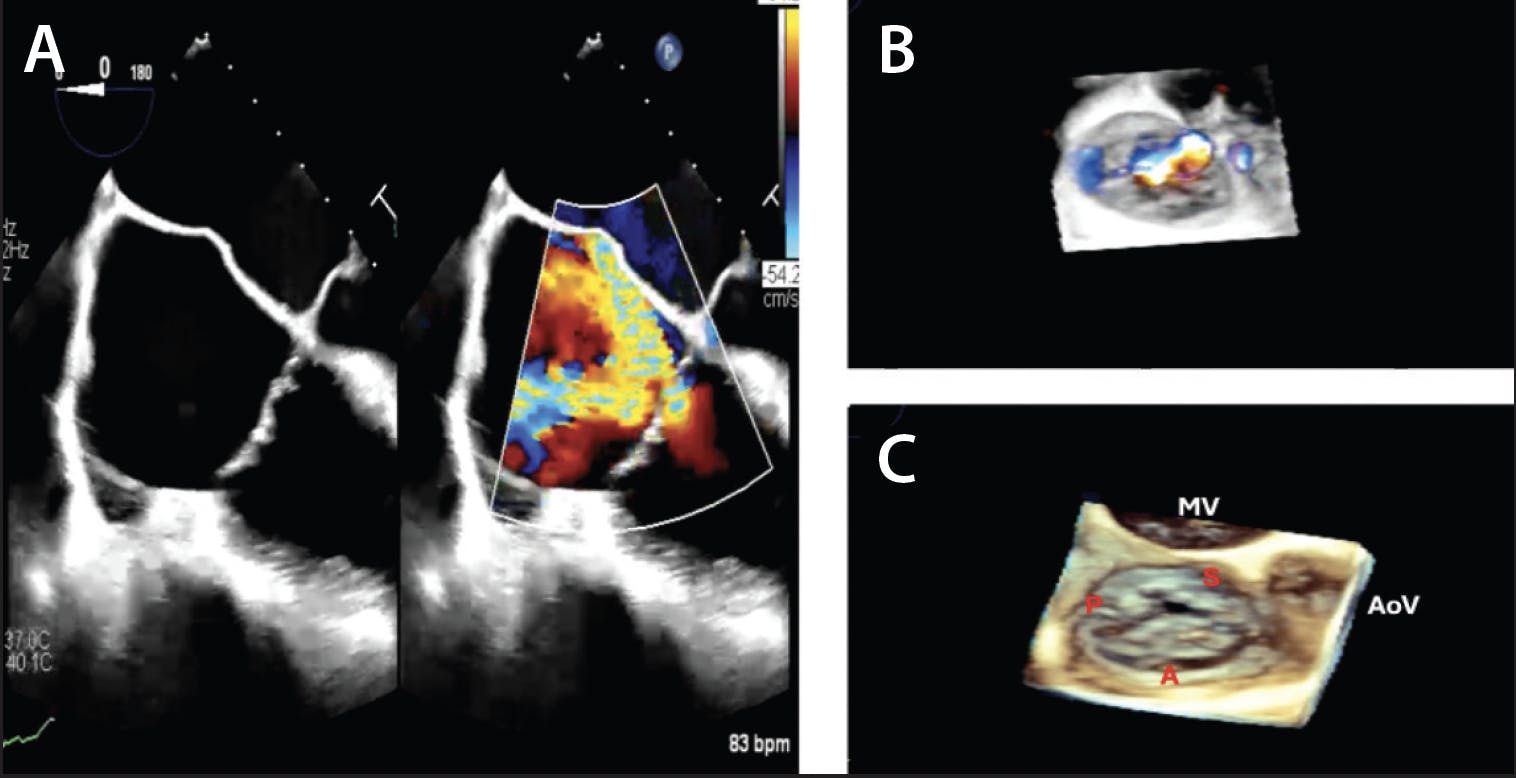
Figure 1. A 0° midesophageal TEE view with and without color Doppler and severe TR where the jets splay out into the right atrium (A). Three-dimensional views of the tricuspid valve with and without color Doppler where there is a coaptation defect centrally (B, C). A, anterior leaflet; AoV, aortic valve; MV, mitral valve; P, posterior leaflet; S, septal leaflet.
TEE is also utilized for real-time device positioning, whether it be transcatheter tricuspid edge-to-edge repair or transcatheter tricuspid valve replacement (TTVR). Optimal device placement requires knowledge of the anatomy of the tricuspid valve from the gastric and esophageal views. Device placement also requires the echocardiographer to be facile with three-dimensional (3D) imaging and 3D multiplanar reconstruction (MPR) (Figure 2). In fact, 3D MPR is the primary imaging tool during TTVR, and thus knowledge of this TEE technique is quintessential to the success of these procedures (Figure 3).2
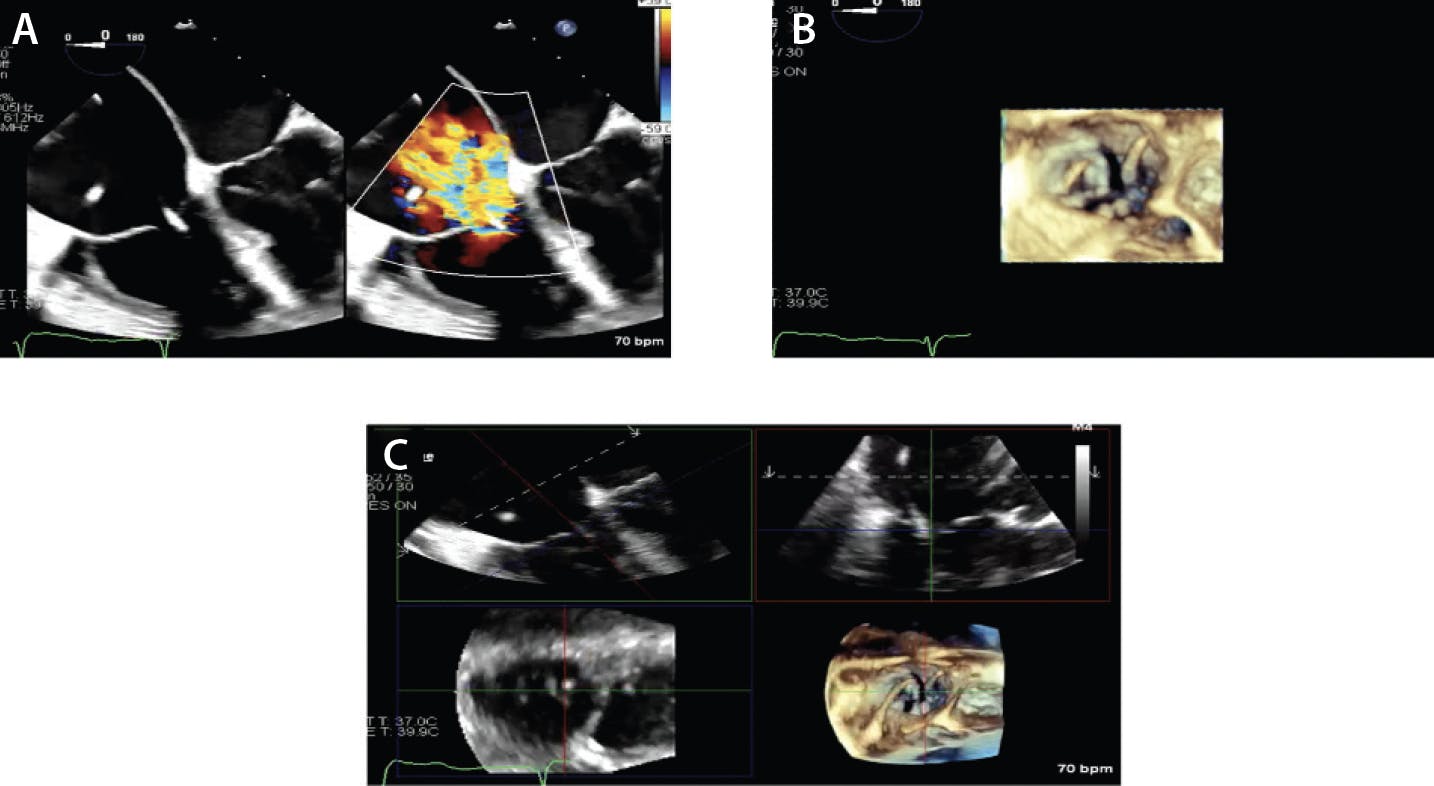
Figure 2. Midesophageal TEE view demonstrating severe TR along with a pacemaker lead (A). Three-dimensional and 3D MPR demonstrating that the pacemaker lead interacts with the septal leaflet of the tricuspid valve (B, C).
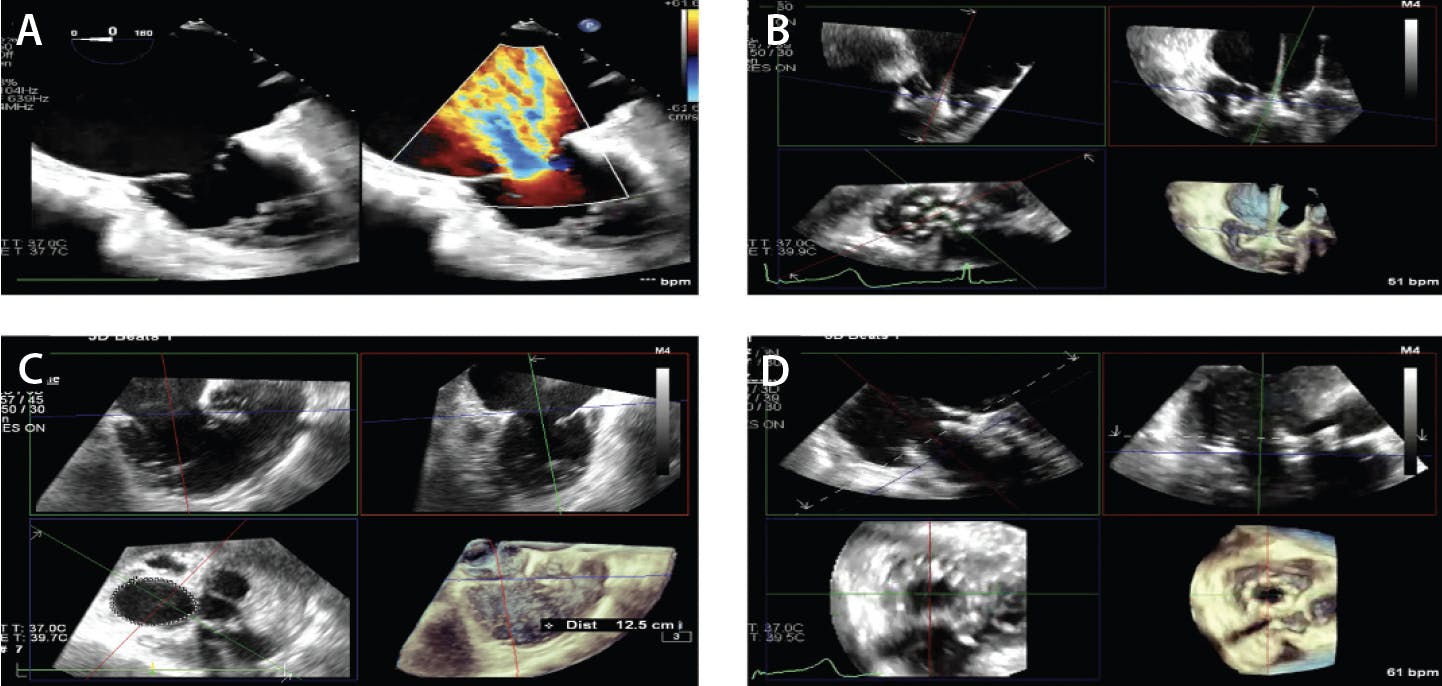
Figure 3. Deep esophageal view on TEE demonstrating severe TR (A). Tricuspid valve annular sizing via 3D MPR (B). TTVR guidance via 3D MPR visualizing the anchors and the leaflets (C). The valve is deployed under TEE guidance utilizing 3D MPR (D).
ROLE OF ICE IN TTVI
Tricuspid imaging by TEE can pose some challenges because the tricuspid valve is farthest from the TEE probe. To add to the complexity of imaging the tricuspid valve, the presence of pacemaker wires can make imaging extremely challenging. In recent years, ICE has emerged as a synergistic tool in not only preprocedural assessment of the tricuspid valve but also in guiding TTVI (Figure 4).3 Using ICE for preprocedural assessment of intraprocedural image guidance does require an extra level of expertise, usually by the implanting physician.
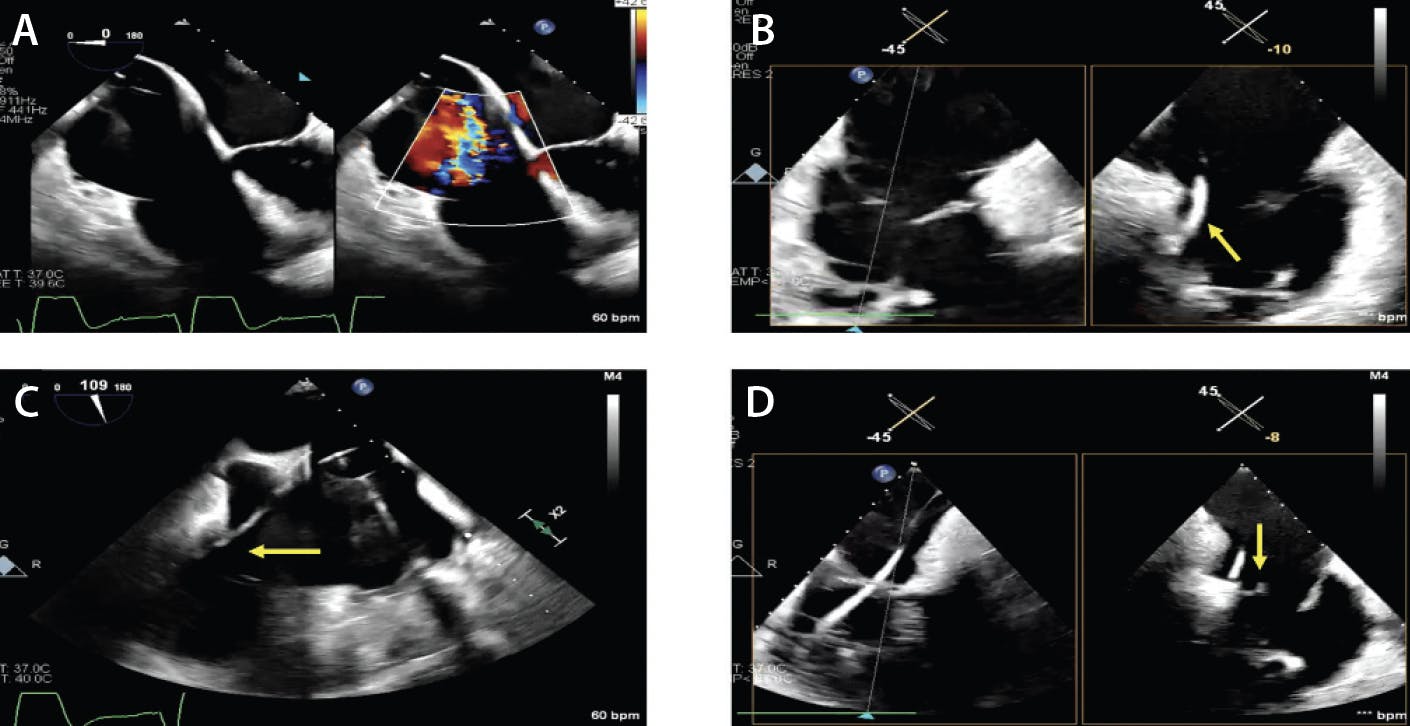
Figure 4. Midesophageal TEE view demonstrating significant TR; however, because of excessive shadowing, the leaflets are not well visualized (A). Nontraditional views of the tricuspid valve demonstrating interaction of the pacemaker lead with a leaflet (yellow arrow) (B). ICE imaging demonstrating again that the pacemaker lead is interacting with and impinging one of the leaflets (yellow arrow) (C). Further imaging via ICE demonstrates that there is also a flail leaflet (yellow arrow) (D).
ROLE OF CT IN TTVI
Although not used for intraprocedural image guidance, gated CT with contrast is essential for preprocedural assessment, especially in patients being considered for TTVR. A gated CT gives accurate measurements of the tricuspid annulus size along with information of the RV depth, location of the papillary muscles, and location of any intracardiac devices and interference with the leaflets. Thus, for patients who are being considered for TTVR, CT with contrast is part of the checklist of preprocedural imaging that needs to be performed for complete assessment (Figure 5).
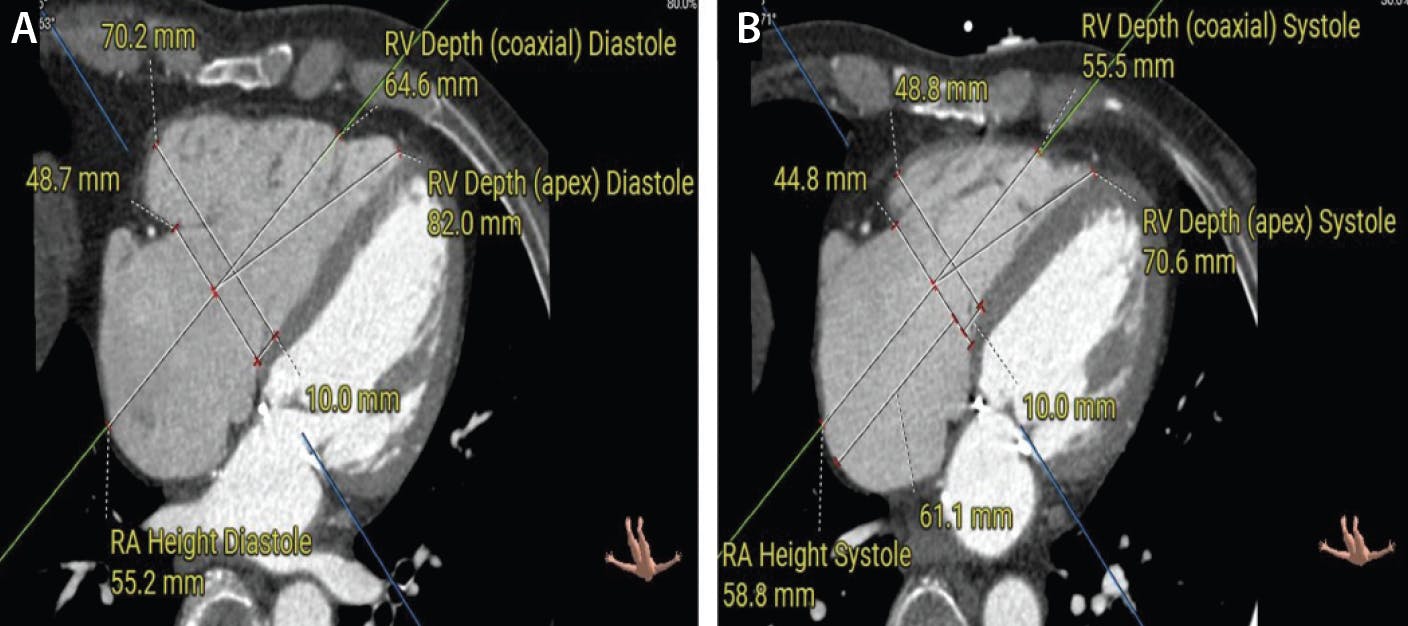
Figure 5. CT scan images for TTVR planning in diastolic phase (A) and systolic phase (B) with measurements needed for planning the procedure. RA, right atrial.
TOOLS NECESSARY FOR SETTING UP A TTVI PROGRAM
Infrastructure and Equipment
Given the heavy reliance of TTVI on TEE imaging preprocedurally and intraprocedurally, it is necessary for any program starting TTVI to invest in the latest technologies available in TEE equipment. These procedures heavily rely on 3D and 3D MPR; it is crucial that the TEE equipment in use have these capabilities. In addition, centers need to have ICE available because some cases may require the use of ICE exclusively or the use of ICE and TEE during the procedure. These imaging systems should be integrated with the cardiac catheterization lab or hybrid operating room to ensure seamless operation and visualization during the procedures. The ultrasound machines should be compatible with the ICE catheters being used. As such, most centers tend to choose the same vendor for their ICE catheters as their TEE machines to avoid purchasing a separate ultrasound console for ICE. Because the ICE catheters are disposable, the TTVI center should establish a reliable supply chain. The procedural rooms should be set up in a way that there is adequate visualization of fluoroscopy, ultrasound, and hemodynamics by all members of the implanting team.
Incorporating additional imaging modalities, such as cardiac CT and MRI, is essential for any transcatheter tricuspid program. Cardiac CT is the imaging modality of choice for evaluation of device-specific measurements, such as tricuspid annular sizing, leaflet morphology, coaptation gaps, vascular access, fluoroscopic angles, and catheter trajectory.4 Any new program needs to ensure they have cardiac CT capabilities, including knowledge about the appropriate protocols. Programs also need to be aware of lower-contrast protocols for patients with renal dysfunction. Cardiac MRI can provide comprehensive information about RV function and the extent of regurgitation. These modalities can be valuable for preprocedural planning and postprocedural follow-up.
Staff Training and Development
Given the complexity of the tricuspid valve, special training and expertise is required in imaging this valve and especially for transcatheter tricuspid procedure guidance. The interventional echocardiographer (IE) has to have detailed knowledge of the tricuspid valve5 and meet the competency standards set forth by the American Society of Echocardiography.6 It is crucial for the IE to attend industry-sponsored, device-specific training because this allows one to learn the views and techniques used during the procedures. Becoming facile with 3D and 3D MPR applies to not only intraprocedural image guidance but also preprocedural screening TEEs.
ICE-guided procedures add another level of complexity to these cases and thus require additional training. Traditionally, ICE has been used for atrial septal defect closures and left atrial appendage occlusion procedures. ICE guidance during tricuspid interventions requires specialized views of the tricuspid valve that have historically not been something the implanter has been familiar with. Any program setting up a TTVI program should have trained operators who are skilled in ICE and also facile in recognizing 3D views of the tricuspid valve.
Development of Protocols
Developing standardized protocols for imaging is crucial for ensuring consistency and optimizing procedural outcomes. Preprocedural protocols should outline imaging sequences for assessing valve anatomy, planning interventions, and selecting devices. These protocols should specify the required imaging views and measurements for accurate assessment and planning. Intraprocedural protocols usually are set forth by the device companies, and the entire procedural team should be familiar with the sequence of intraprocedural imaging steps. Postprocedural follow-up requires establishing imaging protocols that aim at assessing residual valve dysfunction and RV function.
Quality Assurance and Continuous Improvement
Implementing quality assurance measures is essential for maintaining high imaging standards. The TTVI team should collect detailed data on each procedure, including imaging quality, procedural outcomes, and patient safety. Regularly reviewing these data can help identify areas for improvement and refine imaging protocols. Establishing a feedback loop where imaging and procedural outcomes are discussed in postprocedure reviews can enhance the program’s effectiveness. There should be a focus on ongoing education for the procedural team; it is especially important for the imager to stay up to date on advancements in and guidelines on intraprocedural image guidance.
Reimbursement
As is the case for other structural heart disease procedures, reimbursement and compensation for time spent in these cases remains an issue. Any program that is embarking on establishing a TTVI program must realize that these procedures likely will require a greater time commitment as the center ramps up its case volumes. The program has to be cognizant of the IE’s time, especially in centers where compensation is based on work relative work units (wRVUs) because these may not reflect the amount of work required in these cases. Reimbursement/compensation plans should be in place for the IE to account for the specialized imaging skills needed during these procedures.
ICE also poses reimbursement issues. The cost of the disposable ICE catheter needs to be balanced with the fact that currently there are no Centers for Medicare & Medicaid Services billing codes for this procedure. In addition, unlike TEE, where the IE manages the TEE probe along with the ultrasound machine, ICE guidance requires a physician who manipulates the ICE catheter while another operator manipulates the ultrasound machine. Because the IE is usually the one manipulating the images on the ultrasound machine during transcatheter tricuspid procedures, new centers must have measures in place to account for the IE’s time spent in these cases. Depending on the volume of other structural heart disease procedures, these centers may need to investigate a salaried model for the IE rather than one based on wRVUs.
Radiation Safety
Radiation safety during these cases should also be at the forefront when setting up a TTVI program. Because of the positioning of the IE, the imager receives an incredible amount of radiation. There are now multiple publications demonstrating the detrimental effects of radiation over time.7-12 Any center that performs structural heart disease procedures needs to be cognizant of reducing radiation exposure to not only the IE but also the entire team. There should be radiation monitoring strategies such as dosimeters for all team members but also radiation mitigation strategies in place.13 This should include appropriate shielding, radiation protection systems, and education of the implanters on judicious use of fluoroscopy.
FUTURE DIRECTIONS
Research into the use of transcatheter therapies for less common tricuspid valve pathologies, such as congenital abnormalities, could expand the range of treatable conditions. Additionally, ongoing clinical trials and studies may lead to the development of new devices and techniques that will likely rapidly evolve the field of TTVI, and continuous research will likely bring new innovations and treatment options. Imaging during these procedures will continue to remain at the crux, and it will be crucial for the team to be up to date on all aspects of intraprocedural imaging.
CONCLUSION
The integration of advanced imaging modalities, including TEE and ICE, has significantly enhanced the precision and safety of TTVIs. By providing detailed anatomic insights and real-time guidance, these imaging tools play a crucial role in optimizing procedural outcomes and improving patient care. Establishing a comprehensive imaging program within a new center requires careful planning, investment in state-of-the-art equipment, and a commitment to staff training and protocol development. Focusing on these key areas will enable centers to maximize their imaging capabilities and improve the overall success of TTVI procedures.
1. Hahn RT, Saric M, Faletra FF, et al. Recommended standards for the performance of transesophageal echocardiographic screening for structural heart intervention: from the American Society of Echocardiography. J Am Soc Echocardiogr. 2022;35:1-76. doi: 10.1016/j.echo.2021.07.006
2. Agricola E, Asmarats L, Maisano F, et al. Imaging for tricuspid valve repair and replacement. JACC Cardiovasc Imaging. 2021;14:61-111. doi: 10.1016/j.jcmg.2020.01.031
3. Wong I, Chui ASF, Wong CY, et al. Complimentary role of ICE and TEE during transcatheter edge-to-edge tricuspid valve repair with TriClip G4. JACC Cardiovasc Interv. 2022;15:562-563. doi: 10.1016/j.jcin.2021.12.035
4. Rajiah PS, Reddy P, Baliyan V, et al. Utility of CT and MRI in tricuspid valve interventions. Radiographics. 2023;43:e220153. doi: 10.1148/rg.220153
5. Hahn RT. State-of-the-art review of echocardiographic imaging in the evaluation and treatment of functional tricuspid regurgitation. Circ Cardiovasc Imaging. 2016;9:e005332. doi: 10.1161/CIRCIMAGING.116.005332
6. Little SH, Rigolin VH, Garcia-Sayan E, et al. Recommendations for special competency in echocardiographic guidance of structural heart disease interventions: from the American Society of Echocardiography. J Am Soc Echocardiogr. 2023;36:350-365. doi: 10.1016/j.echo.2023.01.014
7. Ciraj-Bjelac O, Rehani MM, Sim KH, et al. Risk for radiation-induced cataract for staff in interventional cardiology: is there reason for concern? Catheter Cardiovasc Interv. 2010;76:826-834. doi: 10.1002/ccd.22670
8. Elmaraezy A, Ebraheem Morra M, Tarek Mohammed A, et al. Risk of cataract among interventional cardiologists and catheterization lab staff: A systematic review and meta-analysis. Catheter Cardiovasc Interv. 2017;90:1-9. doi: 10.1002/ccd.27114
9. Vano E, Kleiman NJ, Duran A, et al. Radiation cataract risk in interventional cardiology personnel. Radiat Res. 2010;174:490-495. doi: 10.1667/RR2207.1
10. Salaun E, Carles S, Bigand E, et al. High radiation exposure of the imaging specialist during structural heart interventions with echocardiographic guidance. JACC Cardiovasc Interv. 2017;10:626-627.
doi: 10.1016/j.jcin.2017.01.016
11. Kataoka A, Takata T, Yanagawa A, et al. Body surface radiation exposure in interventional echocardiographers during structural heart disease procedures. JACC Asia. 2023;3:301-309. doi: 10.1016/j.jacasi.2022.12.008
12. McNamara DA, Chopra R, Decker JM, et al. Comparison of radiation exposure among interventional echocardiographers, interventional cardiologists, and sonographers during percutaneous structural heart interventions. JAMA Netw Open. 2022;5:e2220597. doi: 10.1001/jamanetworkopen.2022.20597
13. Garcia-Sayan E, Jain R, Wessly P, et al. Radiation exposure to the interventional echocardiographers and sonographers: a call to action. J Am Soc Echocardiogr. 2024;37:698-705. doi: 10.1016/j.echo.2024.03.002
Advertisement
Advertisement