Advertisement
Advertisement
September/October 2024
Contemporary Mitral TEER and Expanding Indications
Expanding beyond the green zone.
By Nidhish Tiwari, MD; Muhammad Asim Shabbir, MD; and Nidhi Madan, MD, MPH
The mitral valve (MV) has a complex anatomy with intricate interactions among its different components. Mitral regurgitation (MR) is the most common valvular heart disease and occurs because of anatomic and/or functional disturbances of the MV itself or its supporting apparatus.1,2 Various trials, such as EVEREST II,3,4 COAPT,5 and MITRA-FR,6 have established conventional parameters and optimal candidacy for mitral transcatheter edge-to-edge repair (M-TEER). Currently, TEER is a class IIa recommendation for select patients at high surgical risk with severe primary MR, or select patients with secondary MR who remain symptomatic despite guideline-directed medical therapy.7
In recent years, an increase in the adoption of M-TEER and improved experience has led to an expansion of M-TEER indications to include challenging cases of cardiogenic shock (CS) with significant MR,8-10 atrial functional MR (AFMR),11 red zone/unfavorable MV anatomy,12 severe left ventricular (LV) dysfunction (LV ejection fraction < 20%) or dilation (LV end-systolic diameter > 7 cm), failed prior surgical intervention, congenital defects, and systolic anterior motion (SAM) of MV with hypertrophic cardiomyopathy (HCM).13,14 More recently, TEER has been evaluated in moderate MR with the thought of targeting the disease at an early stage to prevent LV remodeling. In this article, we highlight recent developments in M-TEER technology and its expanding indications beyond the conventional “green zone” (Figure 1).
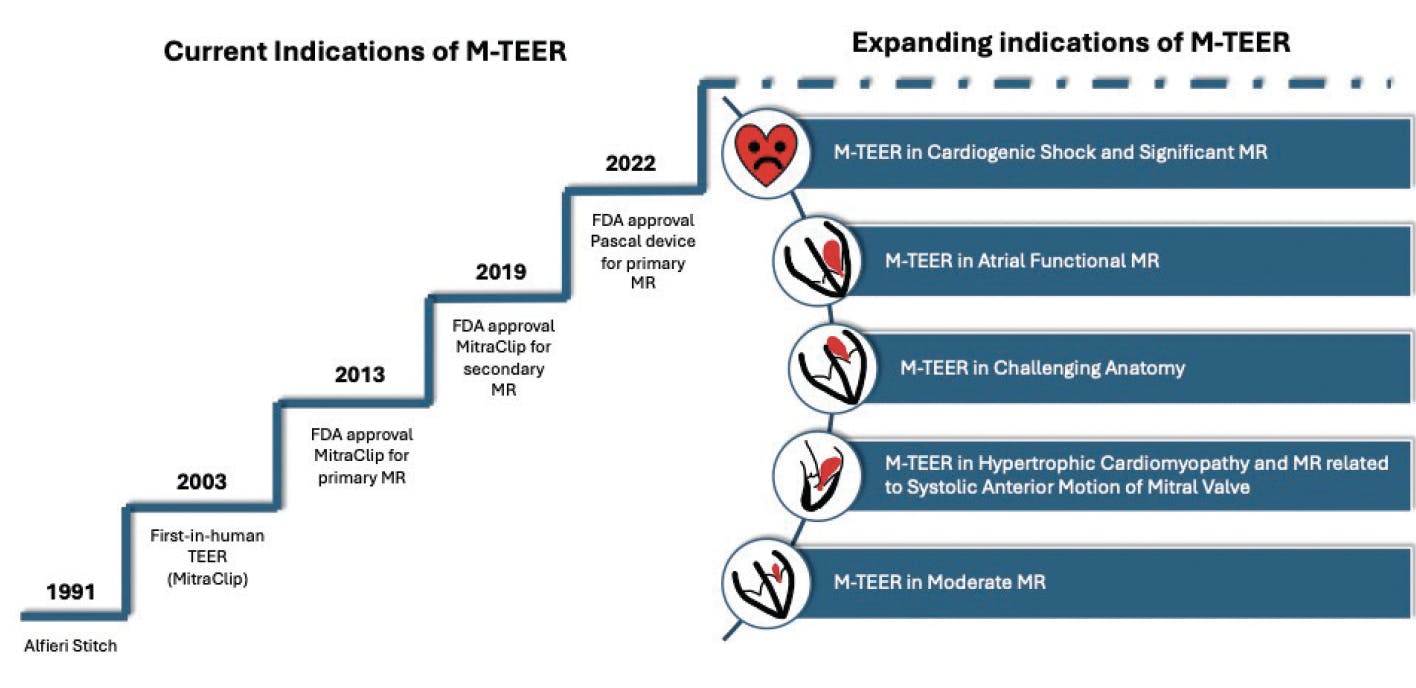
Figure 1. Current and expanding indications for M-TEER.
M-TEER IN CS AND SIGNIFICANT MR
In chronic severe MR, CS may be caused by a combination of volume overload, decreased forward cardiac output, elevated left atrial (LA) pressure, myocardial dysfunction, and compensatory mechanisms that fail to maintain adequate perfusion to vital organs.15 Conversely, acute severe MR causes an abrupt rise in LA volume and pressure, often leading to pulmonary edema. Treatment of these CS patients may involve the use of diuretics, vasodilators, inotropes, and/or mechanical circulatory support devices for hemodynamic stability. However, the definitive treatment involves addressing the underlying pathology or cause of CS. These patients with CS and significant MR have a devastating prognosis and carry high morbidity and mortality even when they are successfully bridged to MV surgery. In such instances, less invasive transcatheter therapy with M-TEER could serve as a promising strategy.16 Successful M-TEER in carefully selected patients may improve clinical outcomes by restoring hemodynamics through increased cardiac output and reduced LA pressure. This hemodynamic response becomes important in patients with CS17 as it can facilitate gradual weaning of inotropes and mechanical circulatory support.
Patients with severe MR and CS carry a poor prognosis and a very high mortality rate,18,19 rendering them very high-risk candidates for surgical intervention. Thus, there remains an unmet need to explore transcatheter approaches to treat MR in this population. There are no randomized trials directly comparing TEER with either surgery or medical therapy in these patients. The EVEREST II3,4 and COAPT trials5,20 excluded hemodynamically unstable patients in CS. Nonetheless, data have been accumulating on the safety and feasibility of TEER in severe MR patients presenting with CS.8-10 Jung et al showed the effectiveness of M-TEER in reducing MR in 88.7% of 141 patients with severe MR and CS at 14 institutions.8 Analysis from the STS/ACC TVT registry on a larger study cohort showed that M-TEER was safe and feasible in this population, and device success with M-TEER was associated with improved survival and heart failure hospitalizations at 1 year.21 A recent meta-analysis comprising 4,060 patients with CS showed that M-TEER reduced MR in 88% of patients.22 The ongoing CAPITAL MINOS is a multicenter, open-label, randomized controlled trial that will further shed light on the utility and outcomes of M-TEER compared with the standard of care medical therapy alone in such patients with CS and significant MR.23
M-TEER FOR AFMR
AFMR is a product of mitral annular dilation secondary to LA enlargement in the absence of LV dysfunction and may be associated with worse clinical outcomes.24,25 The most common etiologies of AFMR include chronic atrial fibrillation or heart failure with preserved ejection fraction (HFpEF). It starts with dilation of the left atrium, which hinders MV leaflet coaptation without impacting leaflet mobility.25 LA volume index is an independent predictor of prognosis in both atrial and ventricular functional MR.26 Observational data have suggested that M-TEER is safe and feasible in AFMR,27-30 although it can be technically challenging as atrial remodeling in these cases causes MV leaflets to have shallower tenting angles and height compared to ventricular functional MR. The multicenter Italian MITRA-TUNE registry of 87 patients undergoing M-TEER for AFMR demonstrated 97% technical success with a 30-day all-cause mortality of 5%.30 Residual MR ≤ 2+ was present in 89%, and there was improvement in New York Heart Association class I/II in 79% of patients. A single-center observational study including 118 patients with AFMR showed a procedural success rate of 94.1% and MR reduction to ≤ 1+ in 79.7% of patients.29 The in-hospital mortality rate was 2.5%. Large LA volume index and low leaflet-to-annulus index were associated with a lower reduction in MR grade after TEER for AFMR. These parameters may help in patient selection using a heart team approach. There are accumulating data that suggest M-TEER improves symptoms in patients with AFMR27,28 and may lead to positive reverse remodeling of the LA and mitral annular dimensions.30
Data from EXPAND registry (a prospective, real-world, multicenter registry) showed that TEER for AFMR was associated with significant MR reduction and improvement in quality of life and functional class, similar to patients with ventricular functional MR, underscoring its utility in this patient population of AFMR with symptomatic HFpEF.28
M-TEER IN HCM WITH MR RELATED TO SAM OF THE MV
HCM may be associated with MR due to SAM of the MV leaflet. The pathophysiology of SAM involves a complex relationship between HCM morphology, MV abnormalities, and dynamic LV outflow tract (LVOT) obstruction.31 Medical therapy is the first line of treatment. Septal reduction (either by myectomy or alcohol ablation) along with surgical edge-to-edge MV repair are traditional treatment options in cases refractory to medical management for LVOT obstruction and SAM.32 M-TEER has risen as a reasonable strategy to relieve LVOT obstruction and SAM-induced MR in these patients who are deemed high surgical risk or have septal anatomies ineligible for alcohol ablation.14
A case series of five HCM patients with SAM-induced MR demonstrated symptomatic improvement by reduction of SAM and MR.33 A hybrid surgical (myectomy) and transcatheter (M-TEER) approach could also be beneficial in select cases. A case study of three patients with HCM who underwent septal myectomy and developed recurrent MR showed that M-TEER successfully reduced MR to mild grade.34 Another case report highlighted the feasibility and success of M-TEER in a patient with nonobstructive HCM and significant MR.35
M-TEER IN CHALLENGING MV ANATOMY
With advancement in M-TEER device technology and increasing utilization, operator experience has improved to apply M-TEER in the management of challenging cases previously thought to be less suited/unfavorable for TEER. Some of these challenging anatomies include MV with low coaptation length, large or wide flail segment, small MV area, presence of mitral annular calcification, leaflet thickening due to valvulitis or rheumatic disease, leaflet calcification in grasping zone, broad MR jet, commissural MR, short or retracted posterior MV leaflet, or presence of chordae in the grasping area.
This expansion of the M-TEER technique to patients with more complex anatomies does raise concerns about inadequate MR reduction or procedural complications, such as leaflet injuries and single-leaflet device attachment. However, with the tremendous growth in device technology and refinements in procedural techniques, M-TEER can be safely performed for such anatomies previously considered outside the “green zone.” These techniques include the ability of independent and controlled gripper actuation with the fourth-generation MitraClip delivery system (Abbott) that allows operators to confirm and/or optimize leaflet grasping. The device also allows for continuous LA pressure monitoring through the guiding catheter to avoid complications and assess for hemodynamic response.
Transesophageal echocardiography plays a crucial role in not only assessing the morphology of MV leaflets but also providing intraprocedural guidance for proper guide/device steering, positioning of the delivery system, and avoiding risk of clip entrapment in the subvalvular apparatus (especially in medial scallops). Using simultaneous biplane tool and multiplanar imaging during intraprocedural transesophageal echocardiography can be particularly useful in optimizing M-TEER results. The availability of different device sizes also allows catering to different valve pathologies. For example, the short-arm devices (MitraClip NT or NTW) can be considered for commissural MR, whereas large flails may be addressed with longer-arm devices (MitraClip XT/XTW or Pascal [Edwards Lifesciences]). Adequate pre- and intraprocedural imaging guidance, optimal patient selection, and operator and procedural experience are pivotal in tackling these cases safely and providing a durable valve repair.
M-TEER IN MODERATE MR
Moderate MR reflects an earlier phenotype in the disease spectrum of secondary/functional MR, LV remodeling, and development of symptoms. With the success of M-TEER therapy in the treatment of secondary MR, there has been increasing focus on the most optimal timing of intervention to improve outcomes and prevent LV remodeling, which may make some patients less suitable for M-TEER therapy. Recently, 1-year outcomes from the EXPAND studies including 2,205 patients from the EXPAND and EXPAND G4 postmarket studies with the third- and fourth-generation MitraClip device (NTR/XTR and G4) were presented at the 2024 New York Valves Conference.36 This analysis consisted of 968 patients who had secondary MR, of whom 335 patients had moderate MR (2+) and 525 had severe MR (≥ 3+).36 There was significant improvement in MR, with 97% of patients with moderate MR at baseline experiencing reduction to mild or better (MR ≤ 1+). Moreover, the patients with moderate and severe MR had significant improvements in LV end-diastolic and end-systolic volumes after M-TEER. In patients with a very low ejection fraction, a greater reduction in LV volumes was seen in those with moderate MR at baseline compared to those with severe MR at baseline. At 1-year follow-up, all-cause mortality and heart failure hospitalizations were similar in those with moderate and severe MR treated with M-TEER.
These data show that even patients with moderate secondary MR at baseline gained significant improvement in symptoms and quality of life with M-TEER. This may open possibilities for a randomized trial to further ascertain the benefit of M-TEER in the less sick patient cohort of moderate MR. This is also hypothesis-generating for novel clinical strategies to treat MR, with M-TEER for moderate MR potentially alongside maximizing guideline-directed medical therapy (GDMT) rather than the contemporary approach of sequential TEER after GDMT has been optimized.
FUTURE DIRECTIONS
The newer generation of available devices, procedural advancements, improvement in adjunctive imaging capabilities, and increasing operator experience have expanded the range of patients who can be treated with M-TEER. Procedural risk is getting lower day by day, and the success rate is increasing even for those previously turned-down cases. The success of M-TEER relies heavily on thorough preprocedural planning and careful patient selection with a heart team approach. It will not be long before M-TEER will become first-line therapy for both primary and secondary MR. However, specific patient populations, as mentioned in this article, may particularly benefit from M-TEER. There remains a critical need for large-scale, randomized controlled trials focused on these distinct populations to better understand the short- and long-term clinical outcomes of M-TEER in these patient cohorts.
1. Nkomo VT, Gardin JM, Skelton TN, et al. Burden of valvular heart diseases: a population-based study. Lancet. 2006;368:1005-1011. doi: 10.1016/S0140-6736(06)69208-8
2. Enriquez-Sarano M, Akins CW, Vahanian A. Mitral regurgitation. Lancet. 2009;373:1382-1394. doi: 10.1016/S0140-6736(09)60692-9
3. Feldman T, Foster E, Glower DD, et al. Percutaneous repair or surgery for mitral regurgitation. N Engl J Med. 2011;364:1395-1406. doi: 10.1056/NEJMoa1009355
4. Feldman T, Kar S, Elmariah S, et al. Randomized comparison of percutaneous repair and surgery for mitral regurgitation: 5-year results of EVEREST II. J Am Coll Cardiol. 2015;66:2844-2854. doi: 10.1016/j.jacc.2015.10.018
5. Stone GW, Lindenfeld J, Abraham WT, et al. Transcatheter mitral-valve repair in patients with heart failure. N Engl J Med. 2018;379:2307-2318. doi: 10.1056/NEJMoa1806640
6. Obadia JF, Messika-Zeitoun D, Leurent G, et al. Percutaneous repair or medical treatment for secondary mitral regurgitation. N Engl J Med. 2018;379:2297-2306. doi: 10.1056/NEJMoa1805374
7. Otto CM, Nishimura RA, Bonow RO, et al. 2020 ACC/AHA guideline for the management of patients with valvular heart disease: executive summary: a report of the American College of Cardiology/American Heart Association Joint Committee on Clinical Practice Guidelines. J Am Coll Cardiol. 2021;77:450-500. doi: 10.1016/j.jacc.2020.11.035
8. Jung RG, Simard T, Kovach C, et al. Transcatheter mitral valve repair in cardiogenic shock and mitral regurgitation: a patient-level, multicenter analysis. JACC Cardiovasc Interv. 2021;14:1-11. doi: 10.1016/j.jcin.2020.08.037
9. Tang GHL, Estevez-Loureiro R, Yu Y, et al. Survival following edge-to-edge transcatheter mitral valve repair in patients with cardiogenic shock: a nationwide analysis. J Am Heart Assoc. 2021;10:e019882. doi: 10.1161/JAHA.120.019882
10. Falasconi G, Pannone L, Melillo F, et al. Use of MitraClip system for severe mitral regurgitation in cardiogenic shock: results from a multicentre observational Italian experience (the MITRA-SHOCK study). Eur Heart J. 2020;41. doi: 10.1093/ehjci/ehaa946.2635
11. Masiero G, Montonati C, Rubbio AP, et al. Impact of transcatheter edge-to-edge mitral valve repair on atrial functional mitral regurgitation from the GIOTTO registry. Am J Cardiol. 2024;211:219-227. doi: 10.1016/j.amjcard.2023.11.007
12. Seo M, Watanabe T, Kikuchi A, et al. Transcatheter mitral valve edge-to-edge repair for commissure prolapse successfully guided by stitch artifact technique. CASE (Phila). 2022;6:443-449. doi: 10.1016/j.case.2022.09.004
13. Wong N, Hamid N, Tang HC, Yeo KK. Killing two birds with one stone-MitraClip for flail P2 and systolic anterior motion of mitral valve: a case report. Eur Heart J Case Rep. 2018;2:yty146. doi: 10.1093/ehjcr/yty146
14. Shuvy M, Maisano F. Evolving indications for transcatheter mitral edge-to-edge repair. EuroIntervention. 2024;20:e230-e238. doi: 10.4244/EIJ-D-23-00700
15. Gaasch WH, Meyer TE. Left ventricular response to mitral regurgitation: implications for management. Circulation. 2008;118:2298-2303. doi: 10.1161/CIRCULATIONAHA.107.755942
16. Verma DR, Naik H, Byrne T, et al. TCT CONNECT-348 Percutaneous left ventricular assist device bridge to successful percutaneous mitral valve edge-to-edge repair in patients with severe mitral regurgitation and acute cardiogenic shock. J Am Coll Cardiol. 2020;76:B150. doi: 10.1016/j.jacc.2020.09.369
17. Shabbir MA, Tiwari N, Burdorf A, et al. Cardiogenic shock and severe secondary mitral regurgitation successfully treated with transcatheter edge-to-edge repair: a case report. Eur Heart J Case Rep. 2023;7:ytad240. doi: 10.1093/ehjcr/ytad240
18. Thompson CR, Buller CE, Sleeper LA, et al. Cardiogenic shock due to acute severe mitral regurgitation complicating acute myocardial infarction: a report from the SHOCK trial registry. J Am Coll Cardiol. 2000;36:1104-1109. doi: 10.1016/s0735-1097(00)00846-9
19. Flint K, Brieke A, Wiktor D, Carroll J. Percutaneous edge-to-edge mitral valve repair may rescue select patients in cardiogenic shock: findings from a single center case series. Catheter Cardiovasc Interv. 2019;94:E82-E87. doi: 10.1002/ccd.28089
20. Stone GW, Abraham WT, Lindenfeld J, et al. Five-year follow-up after transcatheter repair of secondary mitral regurgitation. N Engl J Med. 2023;388:2037-2048. doi: 10.1056/NEJMoa2300213
21. Simard T, Vemulapalli S, Jung R, et al. Transcatheter edge-to-edge mitral valve repair in patients with severe mitral regurgitation and cardiogenic shock. J Am Coll Cardiol. 2022;80:2072-2084. doi: 10.1016/ j.jacc.2022.09.006
22. Saito T, Kuno T, Ueyama HA, et al. Transcatheter edge-to-edge mitral valve repair for mitral regurgitation in patients with cardiogenic shock: a systematic review and meta-analysis. Catheter Cardiovasc Interv. 2024;103:340-347. doi: 10.1002/ccd.30944
23. Parlow S, Di Santo P, Jung RG, et al. Transcatheter mitral valve repair for inotrope dependent cardiogenic shock - design and rationale of the CAPITAL MINOS trial. Am Heart J. 2022;254:81-87. doi: 10.1016/j.ahj.2022.08.008
24. Kagiyama N, Mondillo S, Yoshida K, et al. Subtypes of atrial functional mitral regurgitation: imaging insights into their mechanisms and therapeutic implications. JACC Cardiovascular Imaging. 2020;13:820-835. doi: 10.1016/j.jcmg.2019.01.040
25. Zoghbi William A, Levine Robert A, Flachskampf F, et al. Atrial functional mitral regurgitation: a JACC: Cardiovascular imaging expert panel viewpoint. JACC Cardiovasc Imaging. 2022;15:1870-1882. doi: 10.1016/j.jcmg.2022.08.016
26. Okamoto C, Okada A, Nishimura K, et al. Prognostic comparison of atrial and ventricular functional mitral regurgitation. Open Heart. 2021;8:e001574. doi: 10.1136/openhrt-2021-001574
27. Doldi P, Stolz L, Orban M, et al. Transcatheter mitral valve repair in patients with atrial functional mitral regurgitation. JACC Cardiovasc Imaging. 2022;15:1843-1851. doi: 10.1016/j.jcmg.2022.05.009
28. Sodhi N, Asch FM, Ruf T, et al. Clinical outcomes with transcatheter edge-to-edge repair in atrial functional MR from the EXPAND study. JACC Cardiovasc Interv. 2022;15:1723-1730. doi: 10.1016/j.jcin.2022.07.023
29. Tanaka T, Sugiura A, Öztürk C, et al. Transcatheter edge-to-edge repair for atrial secondary mitral regurgitation. JACC: Cardiovasc Interv. 2022;15:1731-1740. doi: 10.1016/j.jcin.2022.06.005
30. Popolo Rubbio A, Testa L, et al. Transcatheter edge-to-edge mitral valve repair in atrial functional mitral regurgitation: insights from the multi-center MITRA-TUNE registry. Int J Cardiol. 2022;349:39-45. doi: 10.1016/j.ijcard.2021.11.027
31. Guigui SA, Torres C, Escolar E, Mihos CG. Systolic anterior motion of the mitral valve in hypertrophic cardiomyopathy: a narrative review. J Thorac Dis. 2022;14:2309-2325. doi: 10.21037/jtd-22-182
32. Nasseri BA, Stamm C, Siniawski H, et al. Combined anterior mitral valve leaflet retention plasty and septal myectomy in patients with hypertrophic obstructive cardiomyopathy. Eur J Cardiothorac Surg. 2011;40:1515-1520. doi: 10.1016/j.ejcts.2011.03.040
33. Sorajja P, Pedersen WA, Bae R, et al. First experience with percutaneous mitral valve plication as primary therapy for symptomatic obstructive hypertrophic cardiomyopathy. J Am Coll Cardiol. 2016;67:2811-2818. doi: 10.1016/j.jacc.2016.03.587
34. El-Sabawi B, Shah AS, Brinkley DM, et al. D-33 | Transcatheter edge-to-edge repair for patients with hypertrophic cardiomyopathy and severe mitral regurgitation following septal myectomy. J Soc Cardiovasc Angiogr Interv. 2023;2:100889.
35. Lucarelli K, Troisi F, Scarcia M, Grimaldi M. Transcatheter mitral valve repair for the treatment of severe mitral regurgitation and exertional pre-syncope in a patient with non-obstructive hypertrophic cardiomyopathy: a case report. Eur Heart J Case Rep. 2022;6:ytab446. doi: 10.1093/ehjcr/ytab446
36. O’Riordan M. Transcatheter edge-to-edge repair shows benefit in moderate MR. TCTMD. June 10, 2024. Accessed September 9, 2024. https://www.tctmd.com/news/transcatheter-edge-edge-repair-shows-benefit-moderate-mr
Advertisement
Advertisement